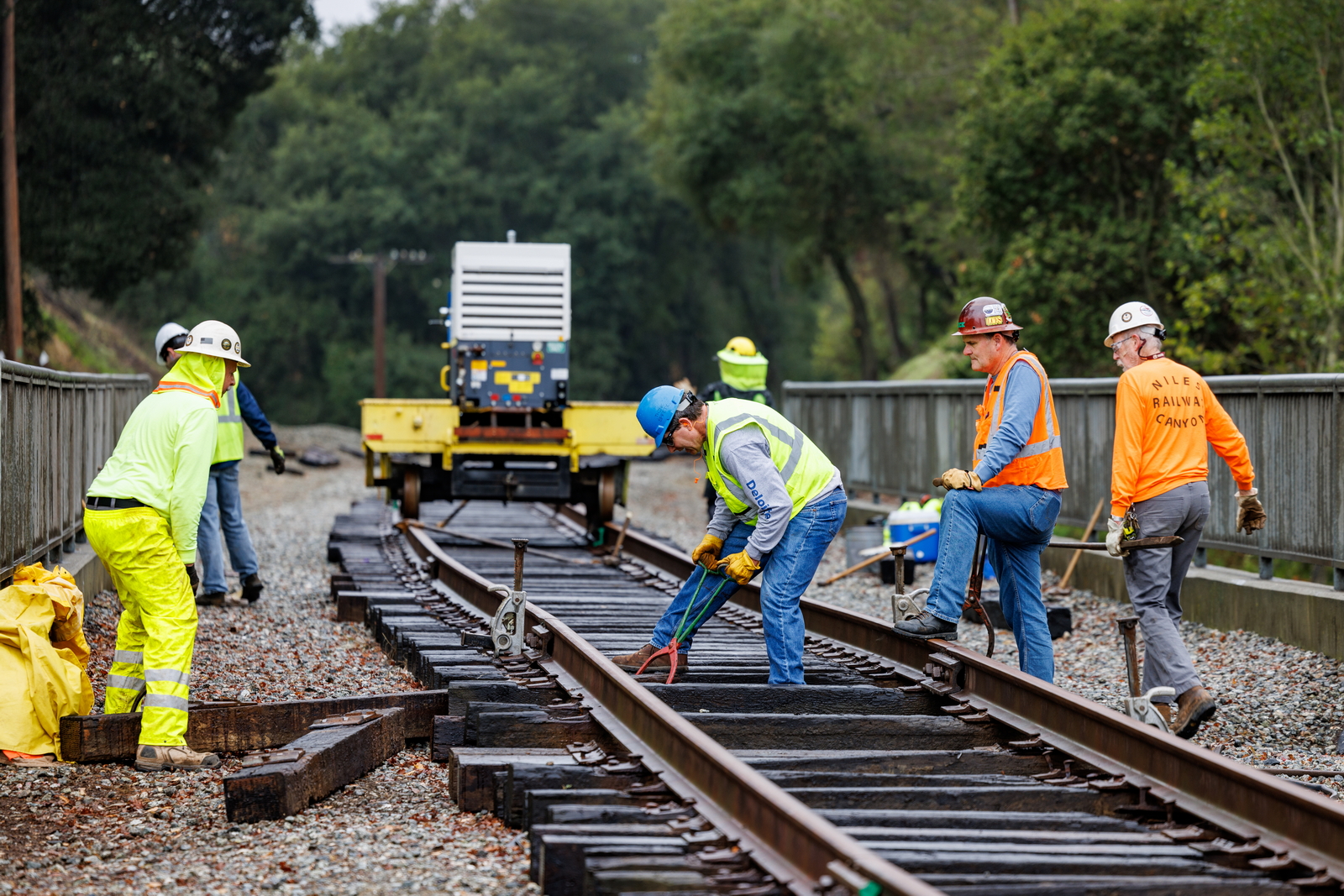
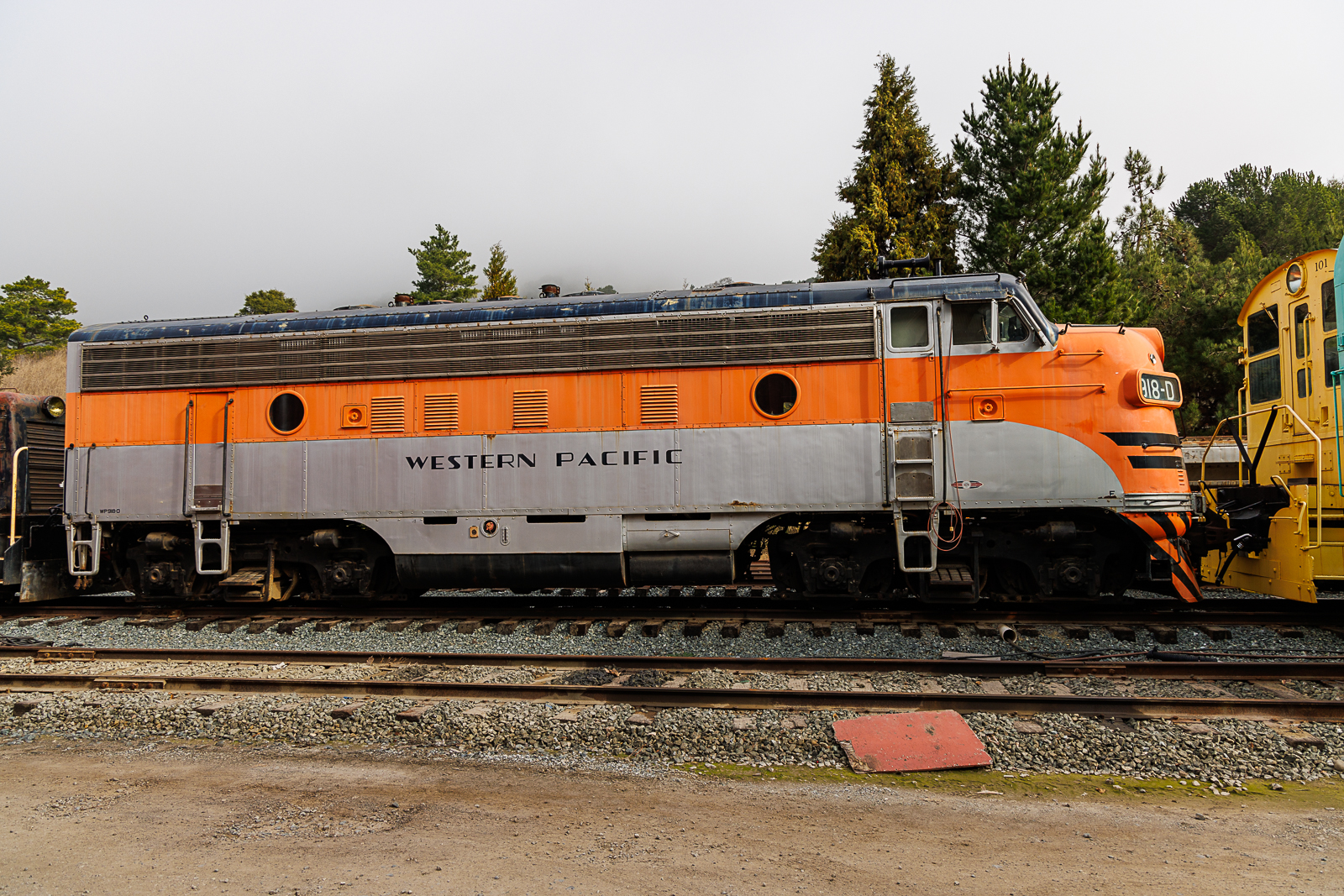
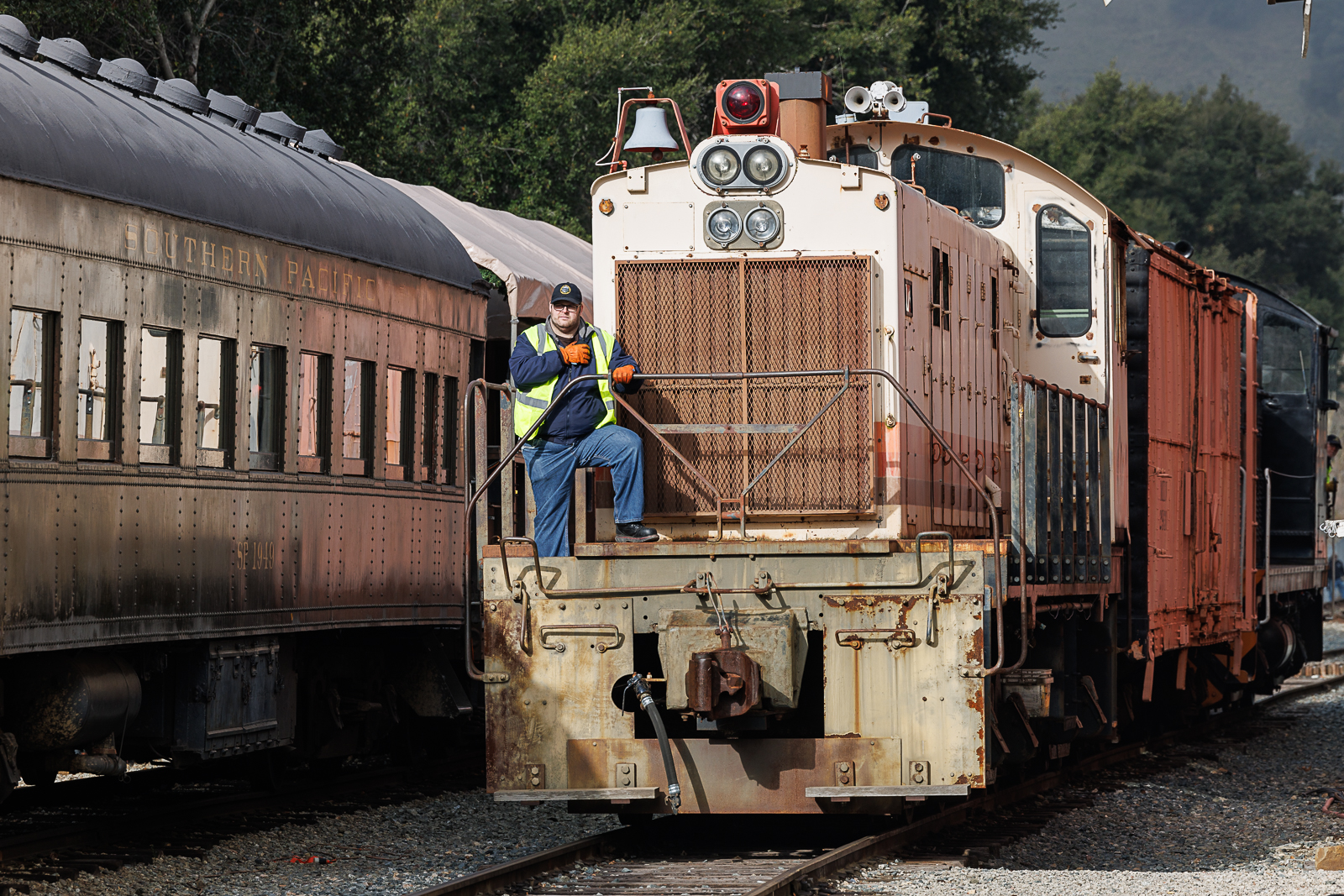
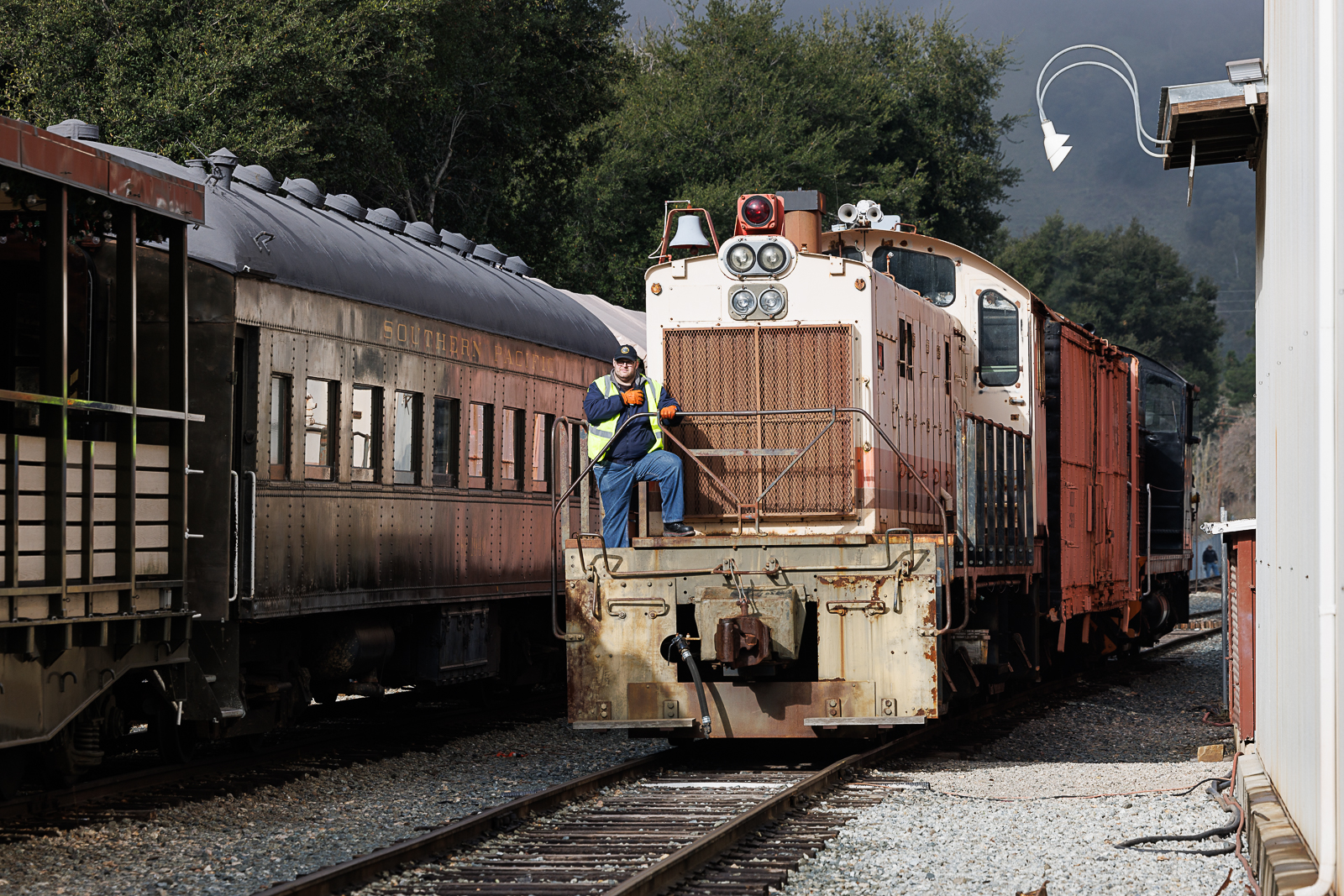
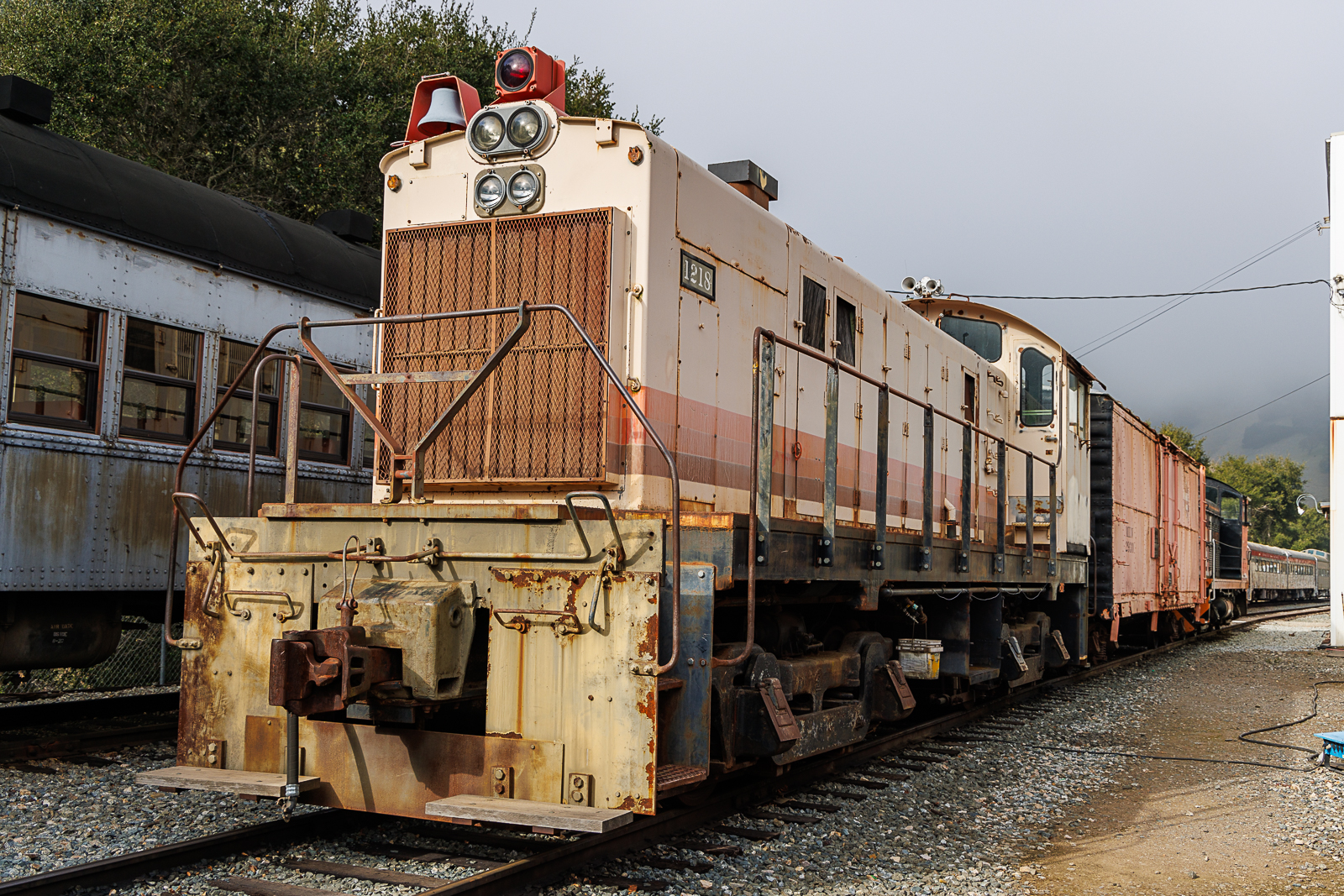
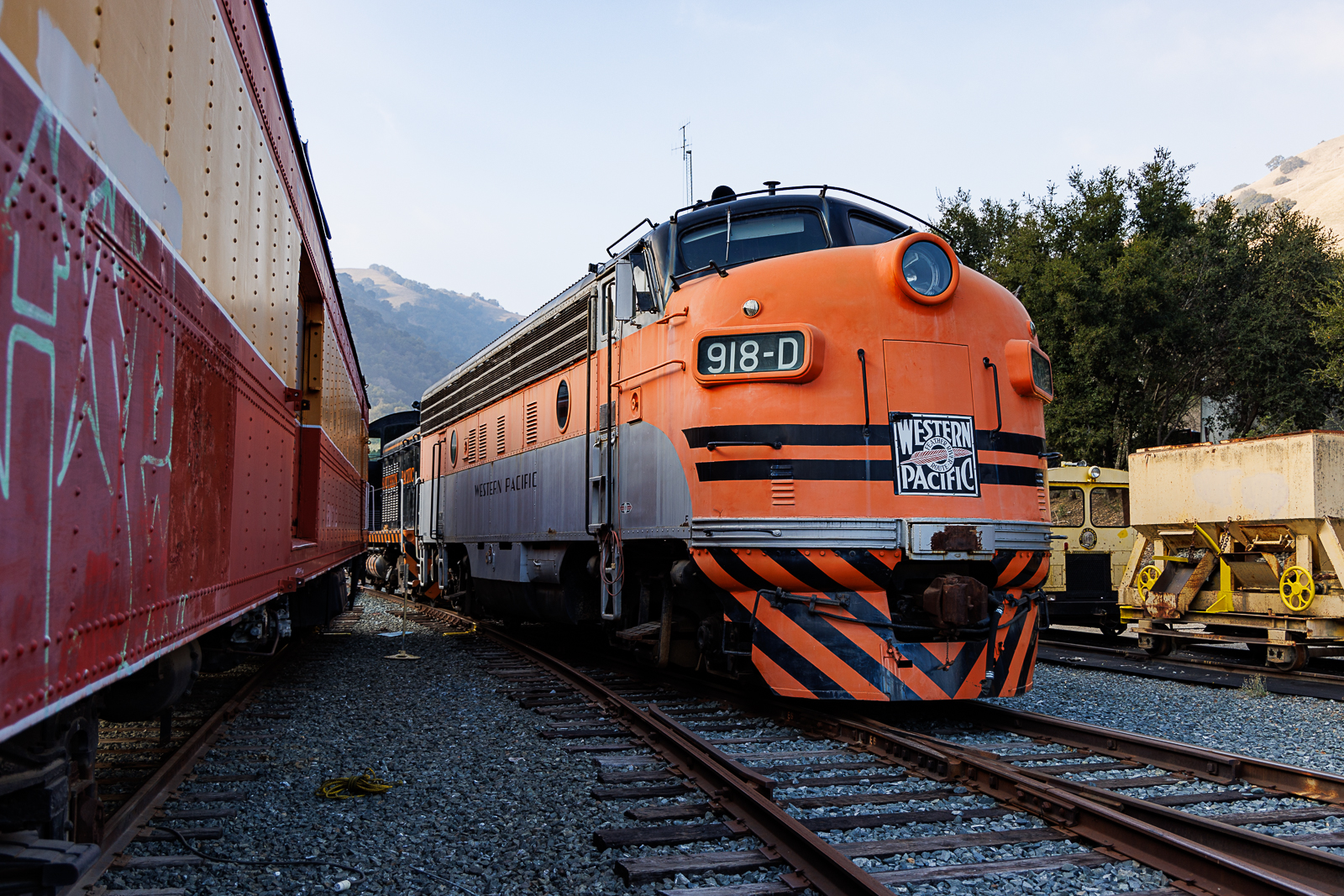
Help Us Get Started… We are working to raise a total of $30,000 to purchase new batteries for three locomotives: WP #918-D, SP #1218 and U.S. Army #1856. Would you please help us with a donation today? Learn more in this blog post.
Support the purchase of new locomotive starting batteries for WP #918-D, SP #1218 & U.S. Army #1856
Western Pacific Railroad #918-D runs east into Sunol. This is one of the 3 locomotives we are fundraising for new batteries for. Image by: Christopher Hauf – Used with permission
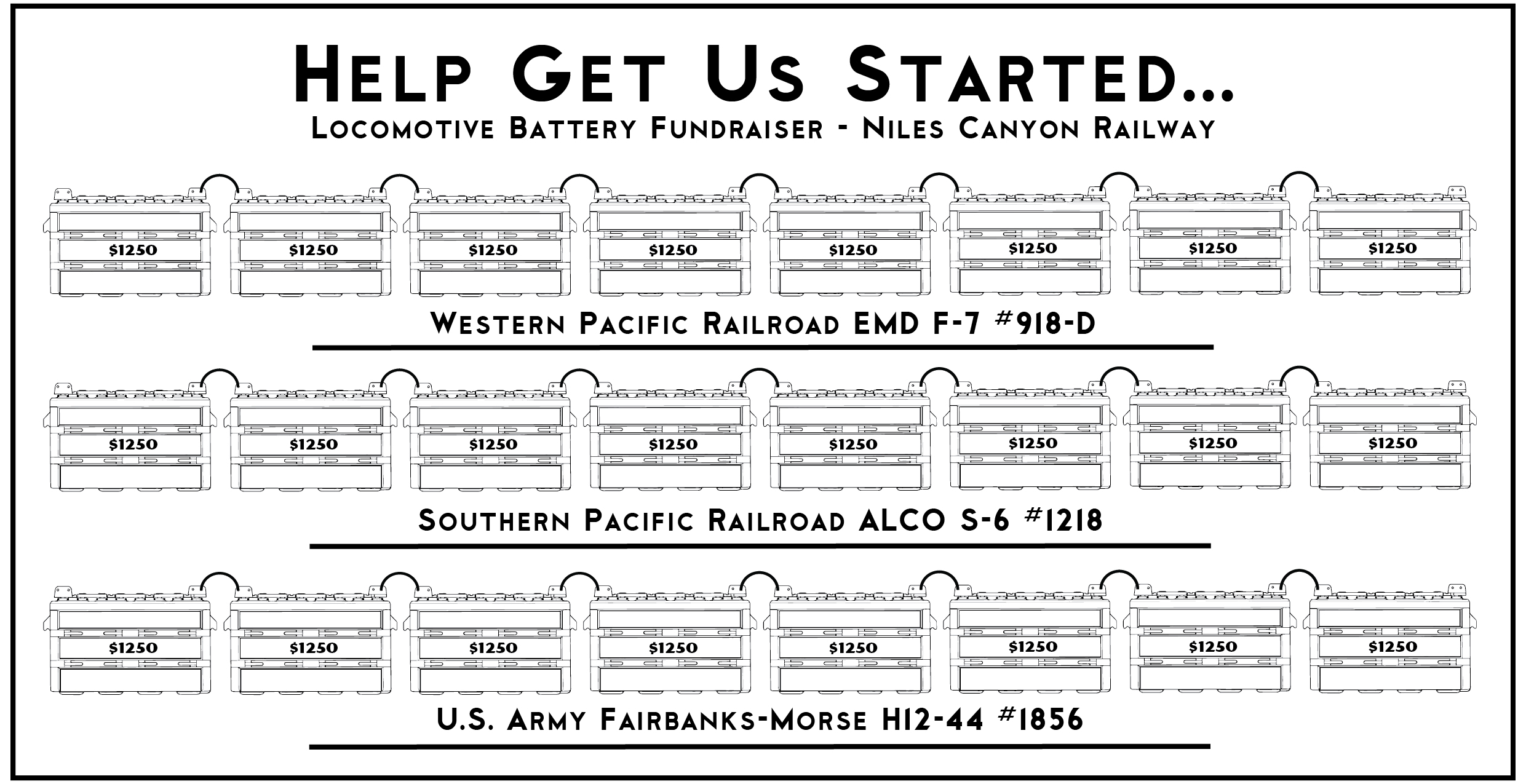
One of the most critical components to maintaining and operating a diesel locomotive is a solid set of starting batteries. Most of the diesel locomotives we operate use EIGHT large starting batteries. Each battery is 8 volts and weighs several hundred pounds. Currently, these starting batteries cost around $1250 each. With eight needed per locomotive, the cost is around $10,000 per locomotive.
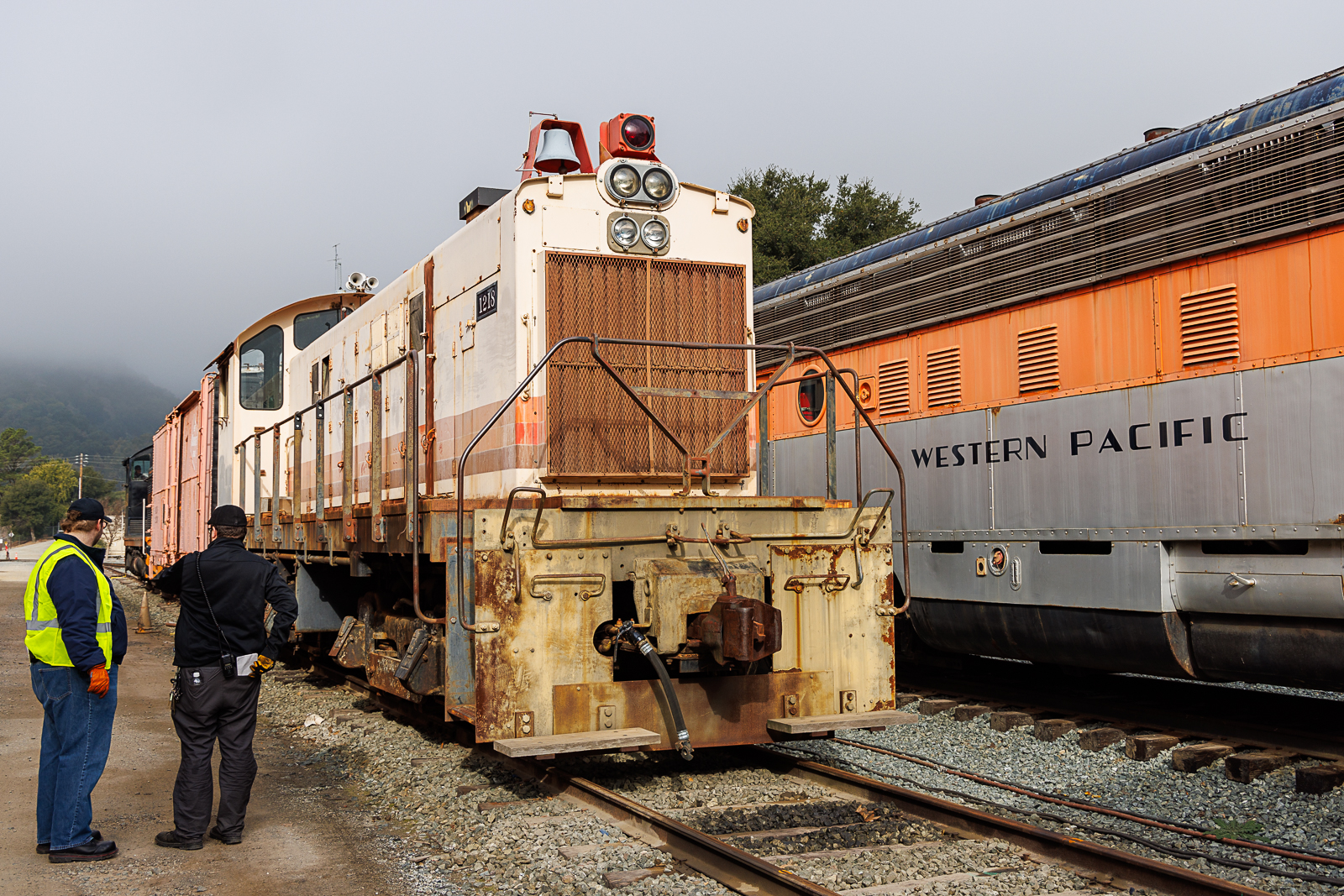
With some additional new volunteers joining our core of long time volunteers, we have started work to bring several of our locomotives back into active service. This includes Western Pacific Railroad EMD F-7 #918-D, Southern Pacific Railroad ALCO S-6 #1218, and U.S. Army Fairbanks-Morse H12-44 #1856. Each of these locomotives has a current set of batteries, but they are all close to or at the end of their life which makes it hard to do the work we need; sometimes where we may need to turn over or start the locomotive several times in one day.
Thus we are working to raise a total of $30,000 to purchase new batteries for all three locomotives. You can donate any amount or a $1250 donation will purchase one of the eight batteries for each engine. We are going to give you the chance to pick your favorite to donate to at one of the three buttons below via PayPal. We will update our progress graphic as we go on our Donate page where all of the same information as this blog post is included.
We gladly accept donations by mail. Please make checks payable to Pacific Locomotive Association (PLA). Please note which locomotive you wish you donation to be applied: WP 918-D, SP #1218 or USA #1856.
Mail to: Pacific Locomotive Association, P.O. Box 515, Sunol,CA 94586-0515
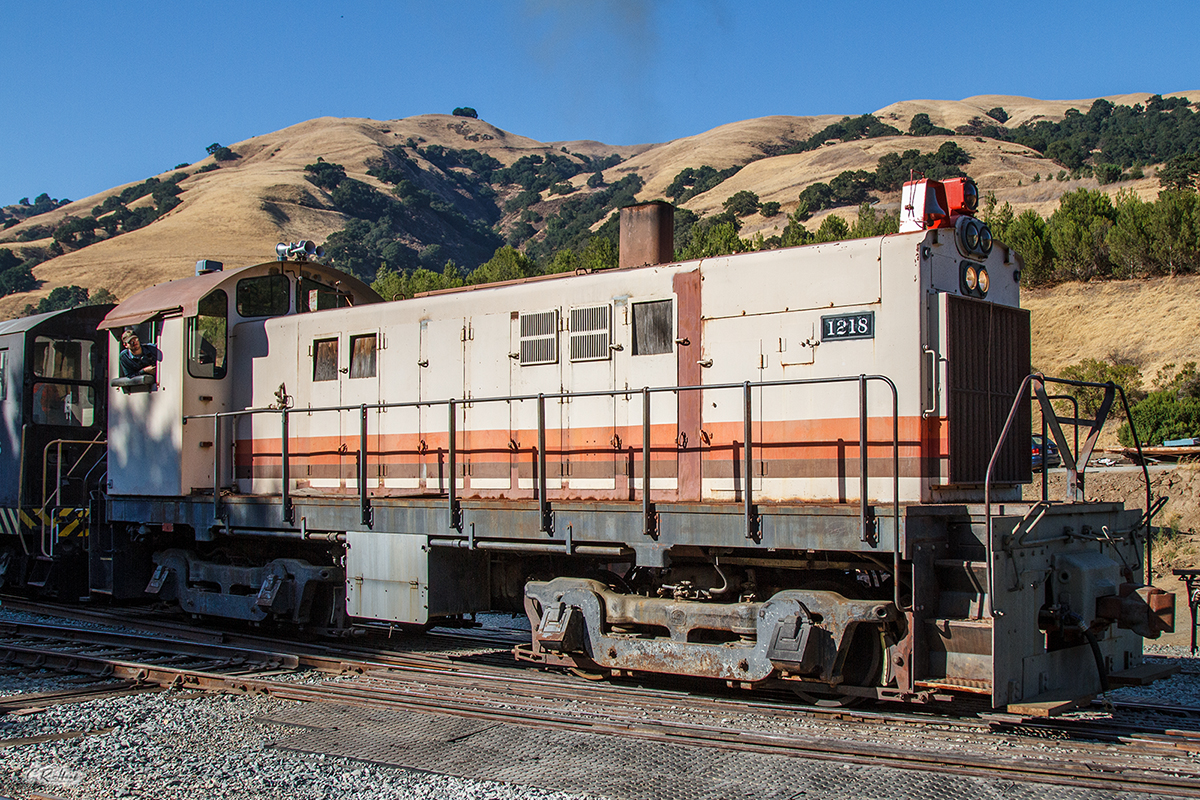
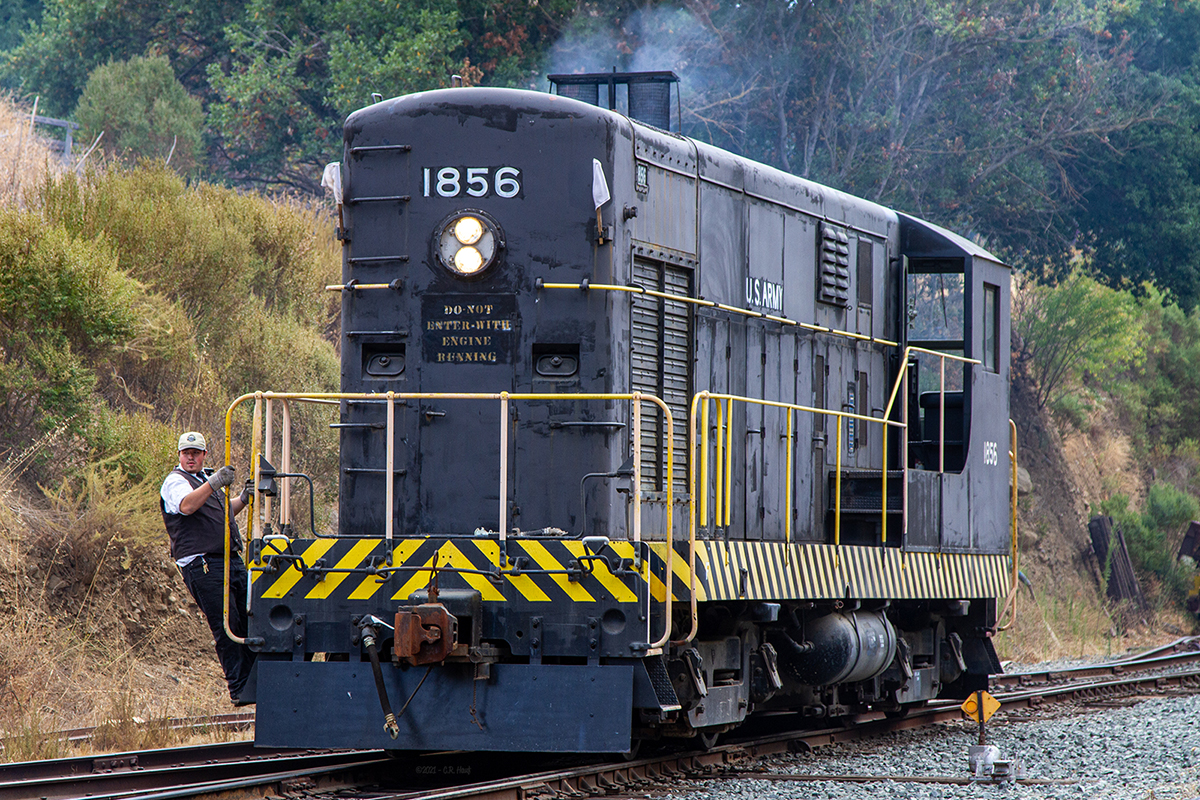
Southern Pacific Railroad ALCO S-6 #1218 in service in 2012 in our Brightside yard. Image by: Christopher Hauf – Used with permissionU.S. Army #1856 in service in our Brightside yard in 2013. Image by: Christopher Hauf – Used with permission
Pacific Locomotive Association is a 501(c)(3) nonprofit organization dedicated to preserving California’s rich railroad history.
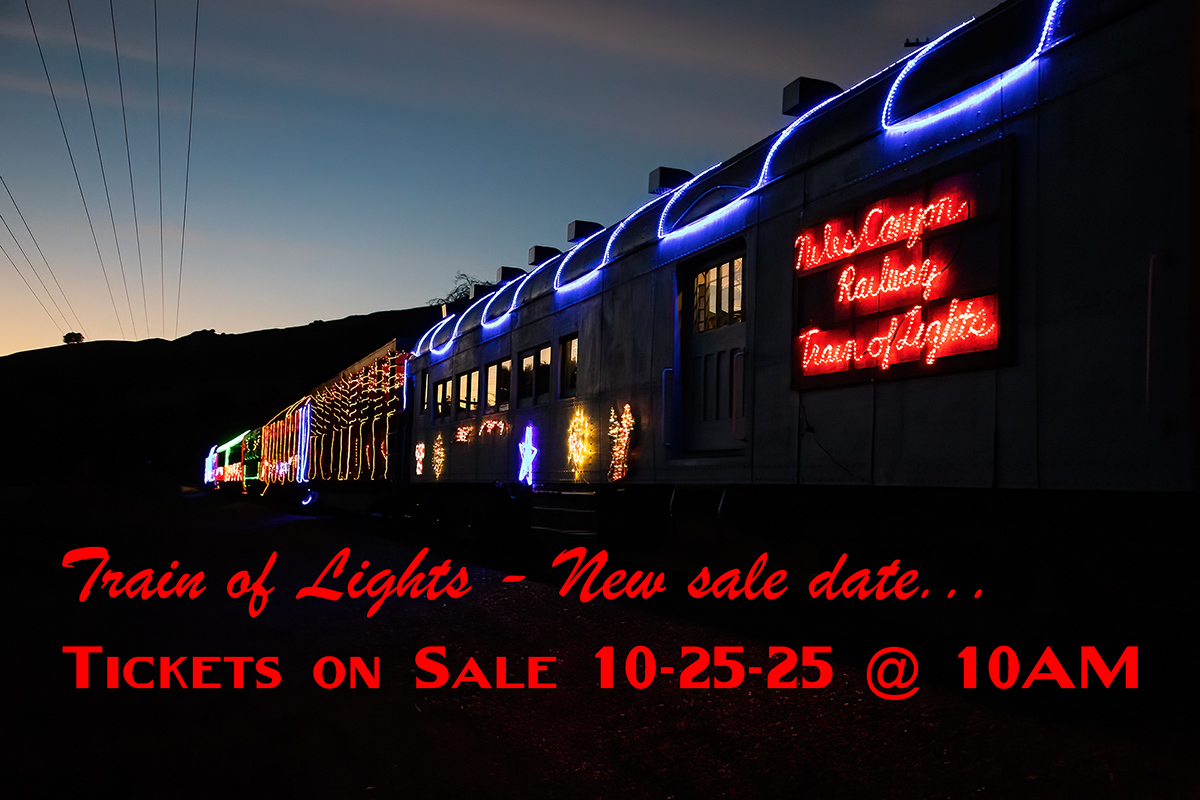
Due to vendor issue, we have decided to postpone the start of Train of Lights ticket sales until October 25, 2025. Read our new blog post for more details.
New Ticket on Sale Date Tickets now go on sale Saturday, October 25, 2025 @ 10AM
Through the past several months, we have worked very hard to improve the functionality behind our Train of Lights tickets sale including improvements to our website to better handle the intense demands on it at the start of the sale, and the functionality of our ticket seller’s website.
In testing this week, an issue was identified with one of our vendors that may have impacted some of our ticket purchasers. While a fix may have been ready by this coming Friday, we felt there would not be enough time to test and validate things before the start of the sale on Saturday.
To err on the side of safety, we have decided to postpone the sale until Saturday, October 25th at 10AM. This will give all parties enough time to ensure we have exactly the positive experience we want to deliver to our ticket purchasers this year.
Please accept our apologies for this delay, and we hope you will be there on the 25th to get your tickets for the 2025 Train of Lights! Our crews have already been working several weeks to get the train decorated inside and out!
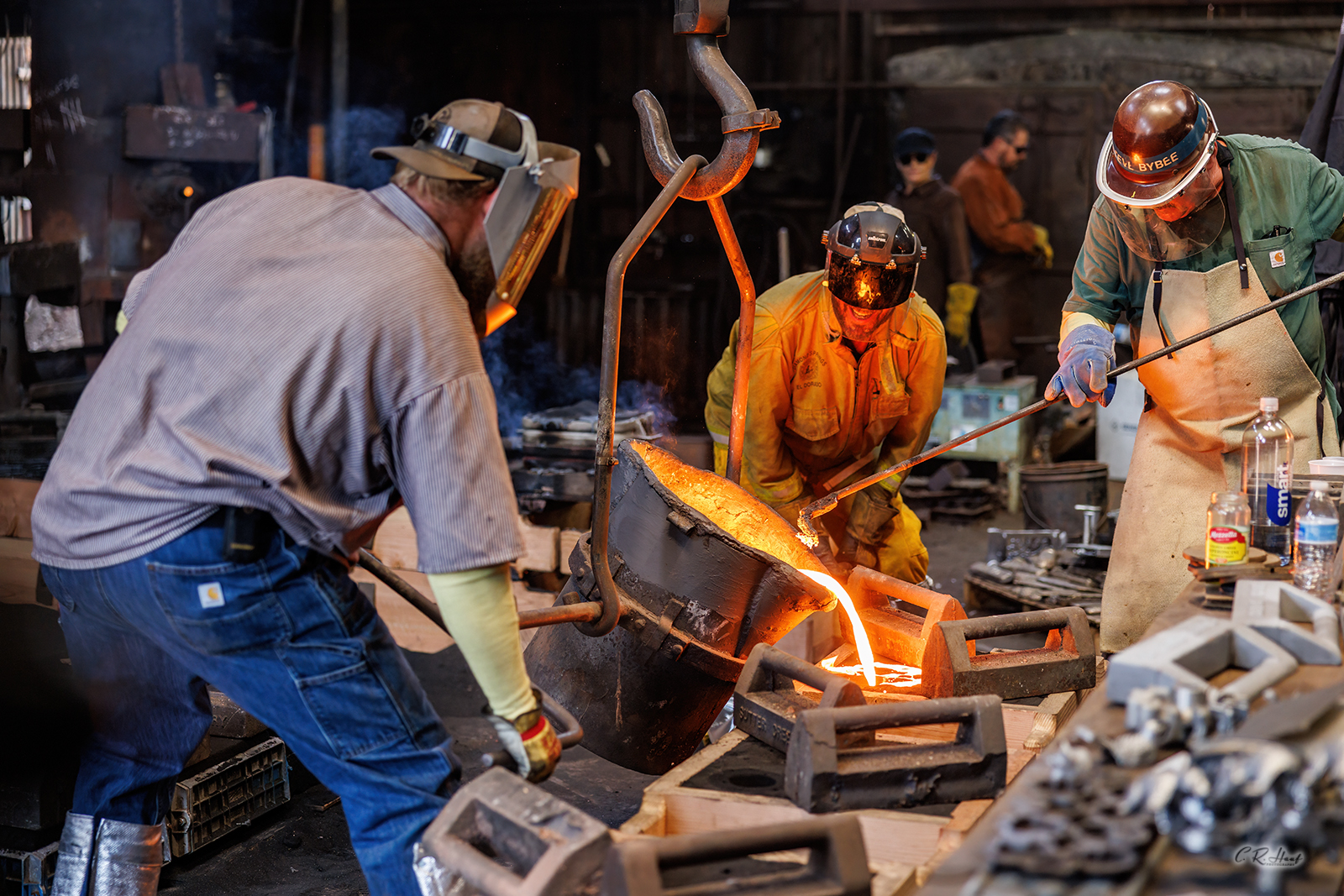
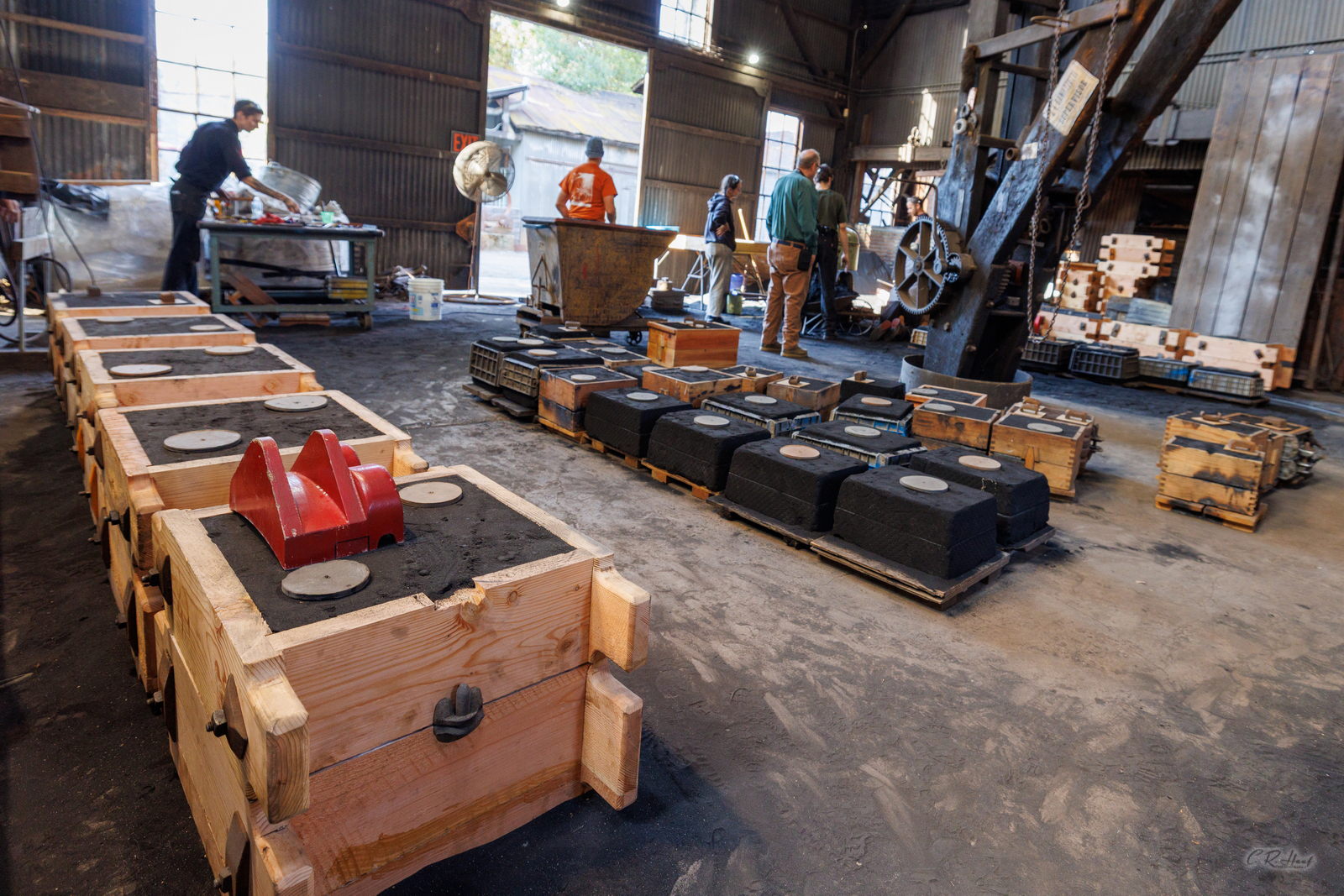
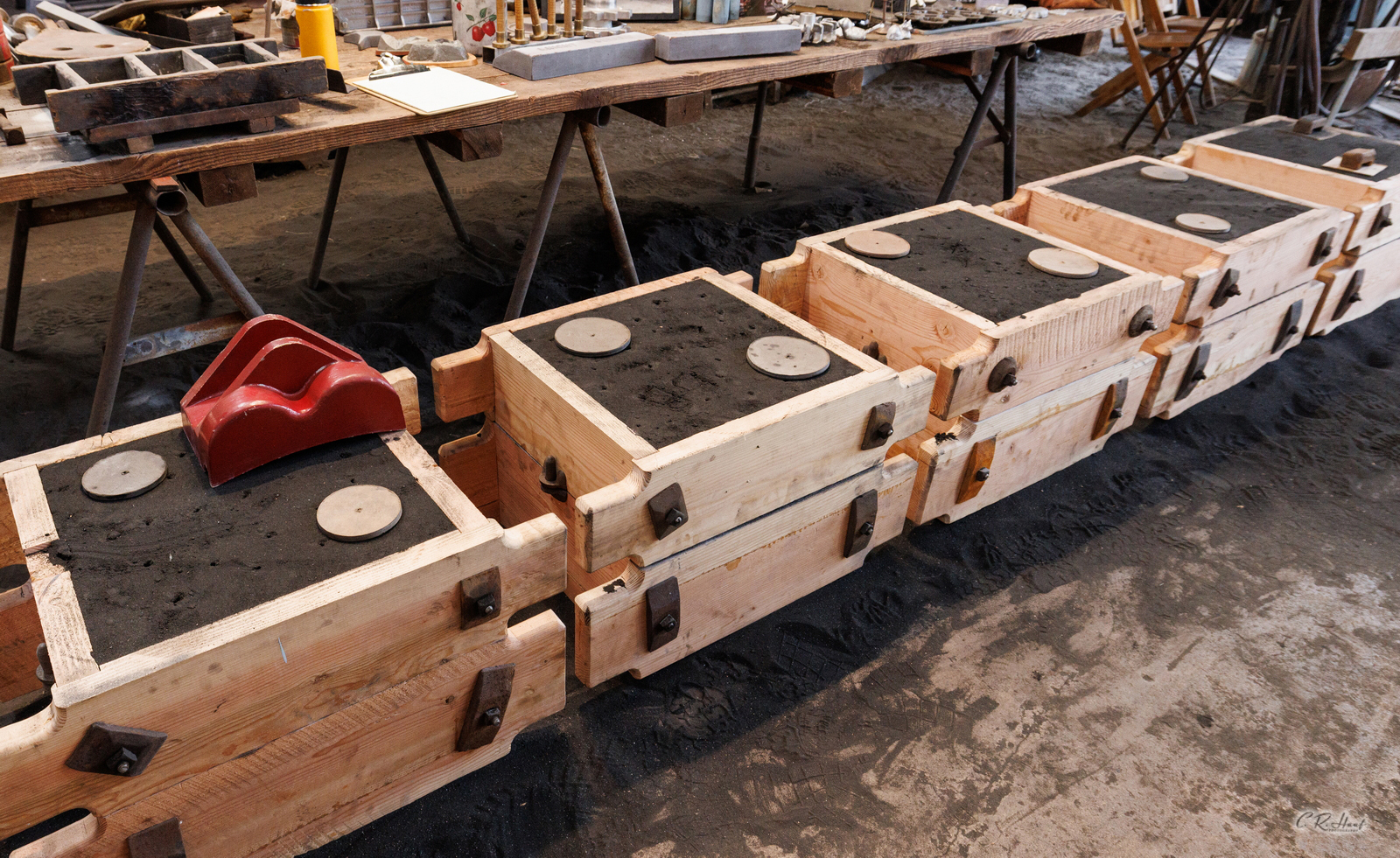
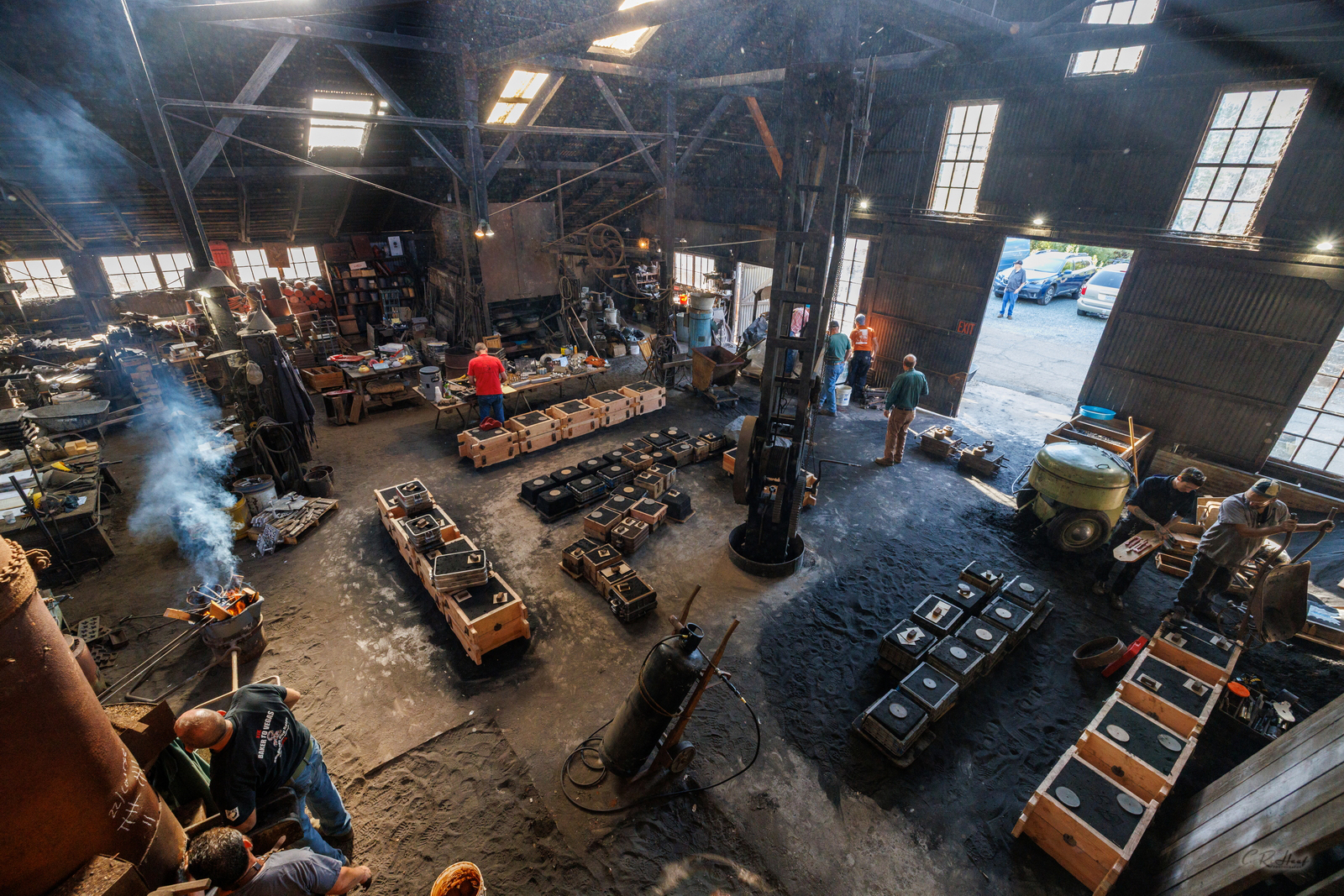
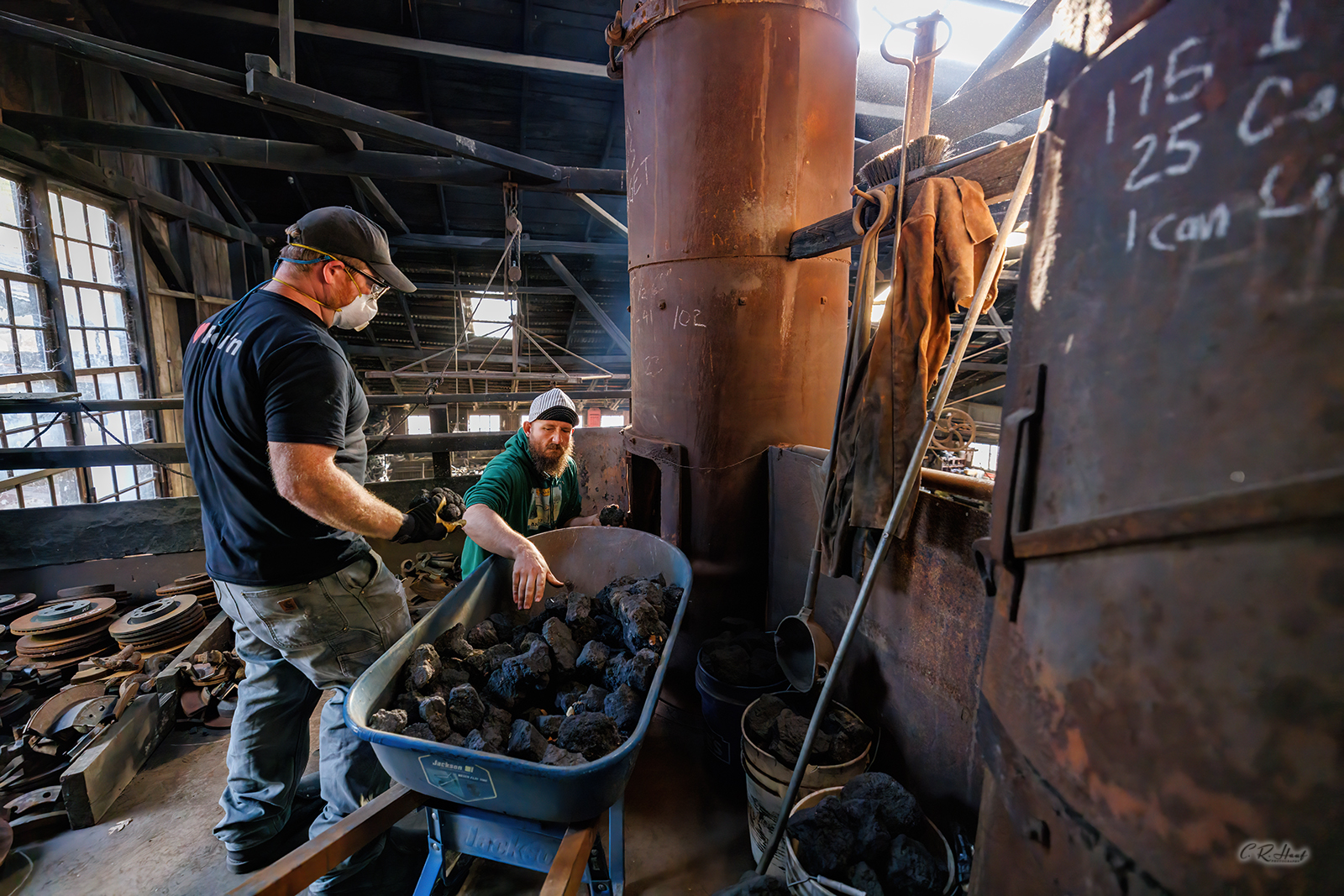
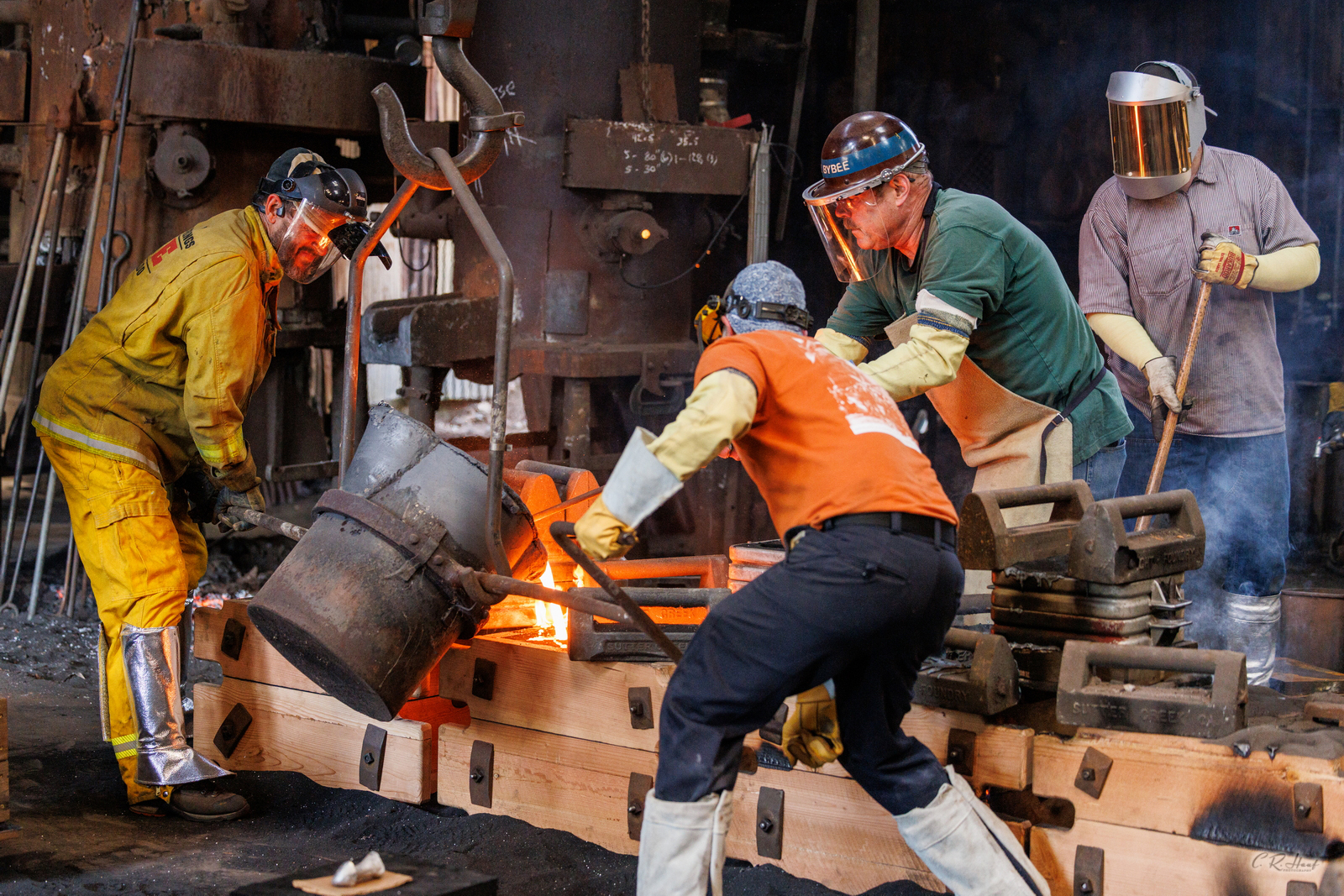
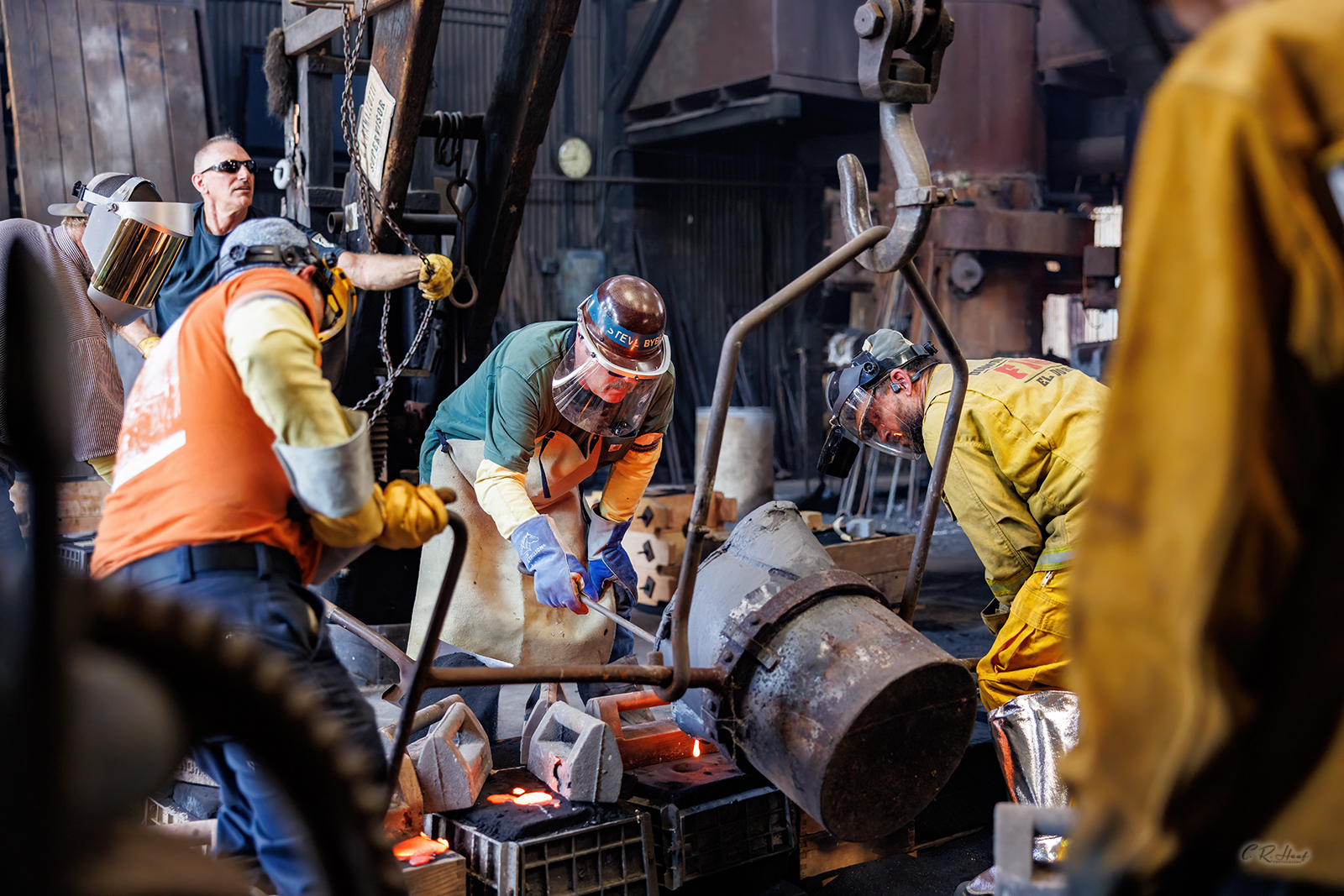
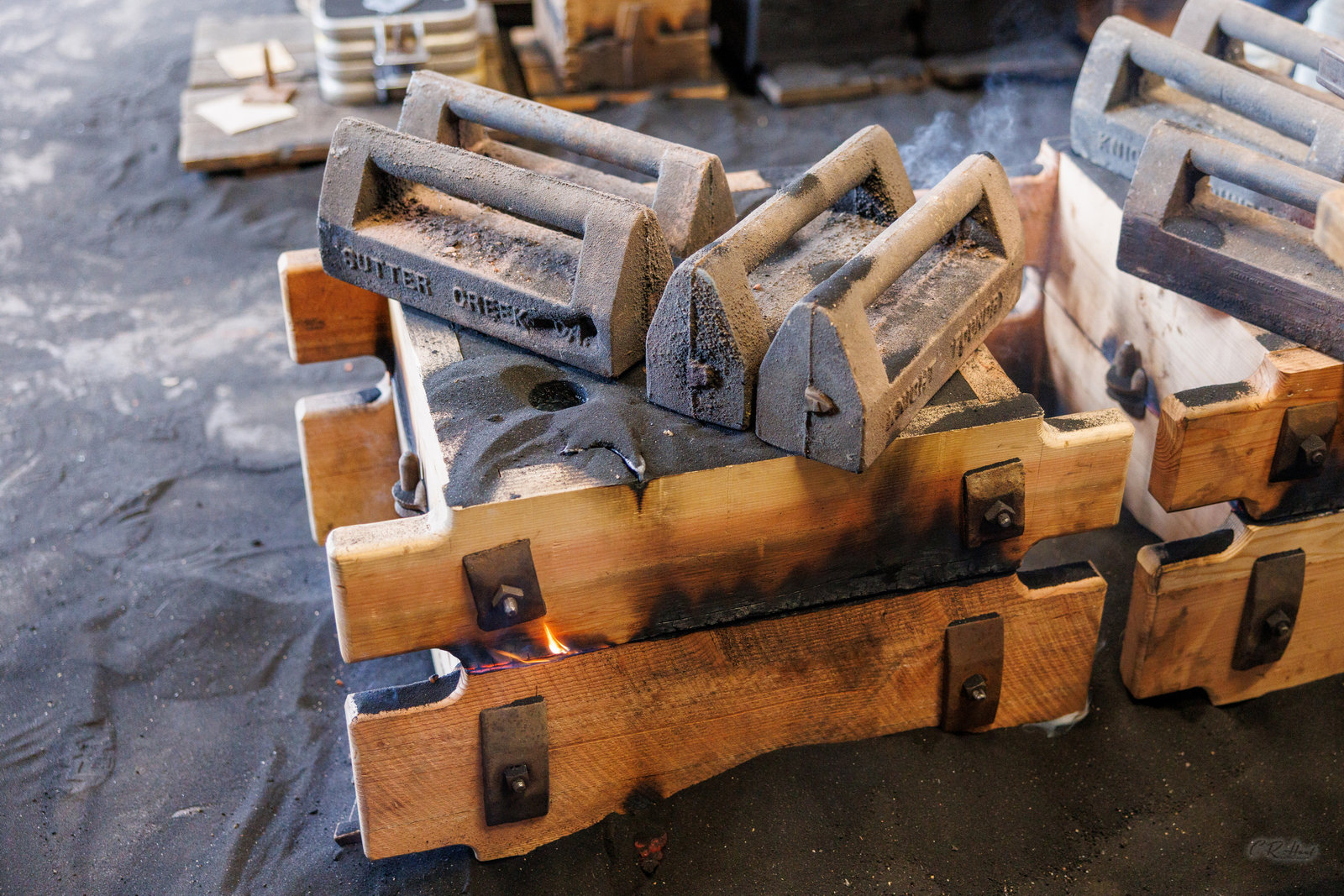
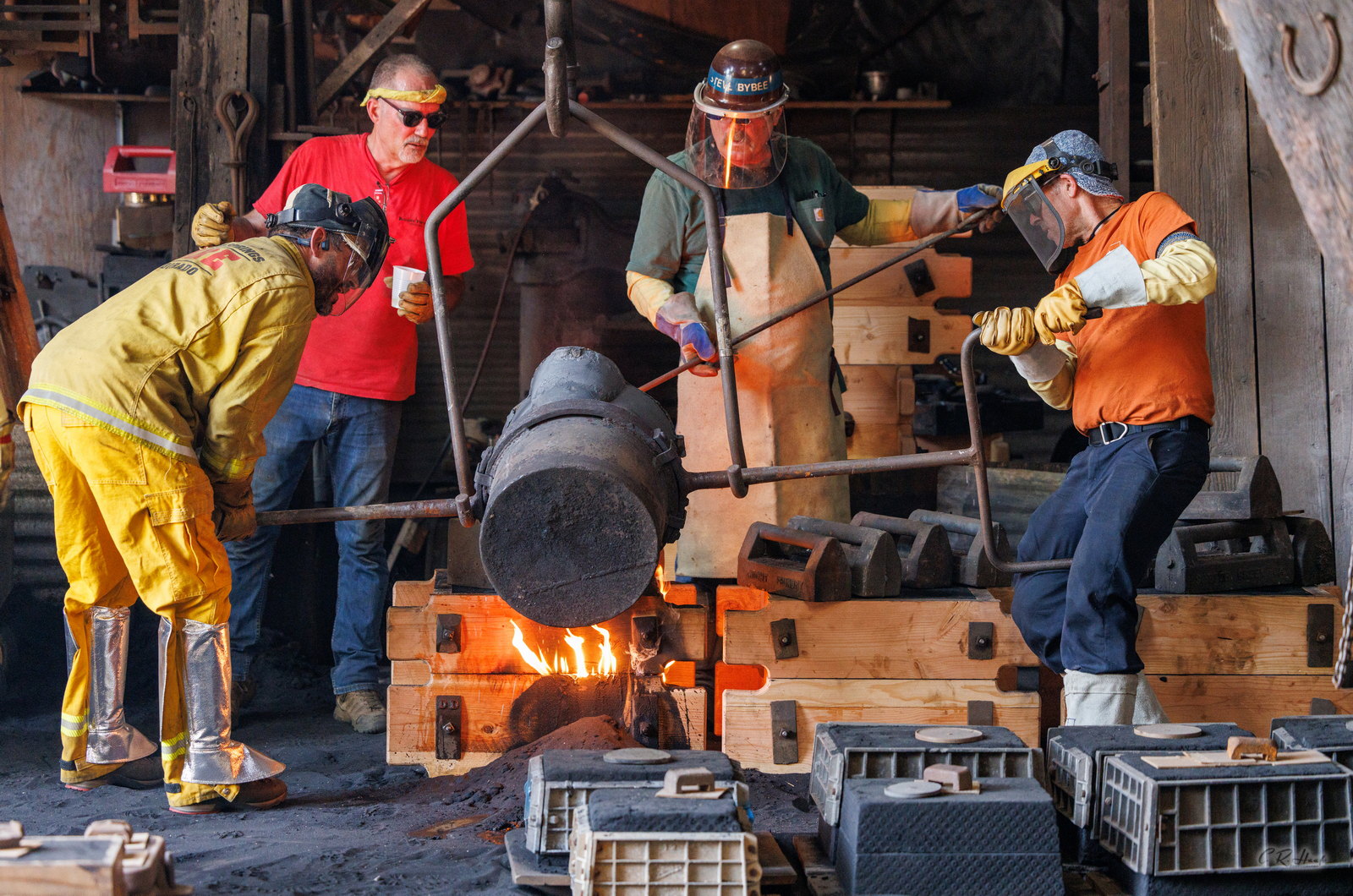
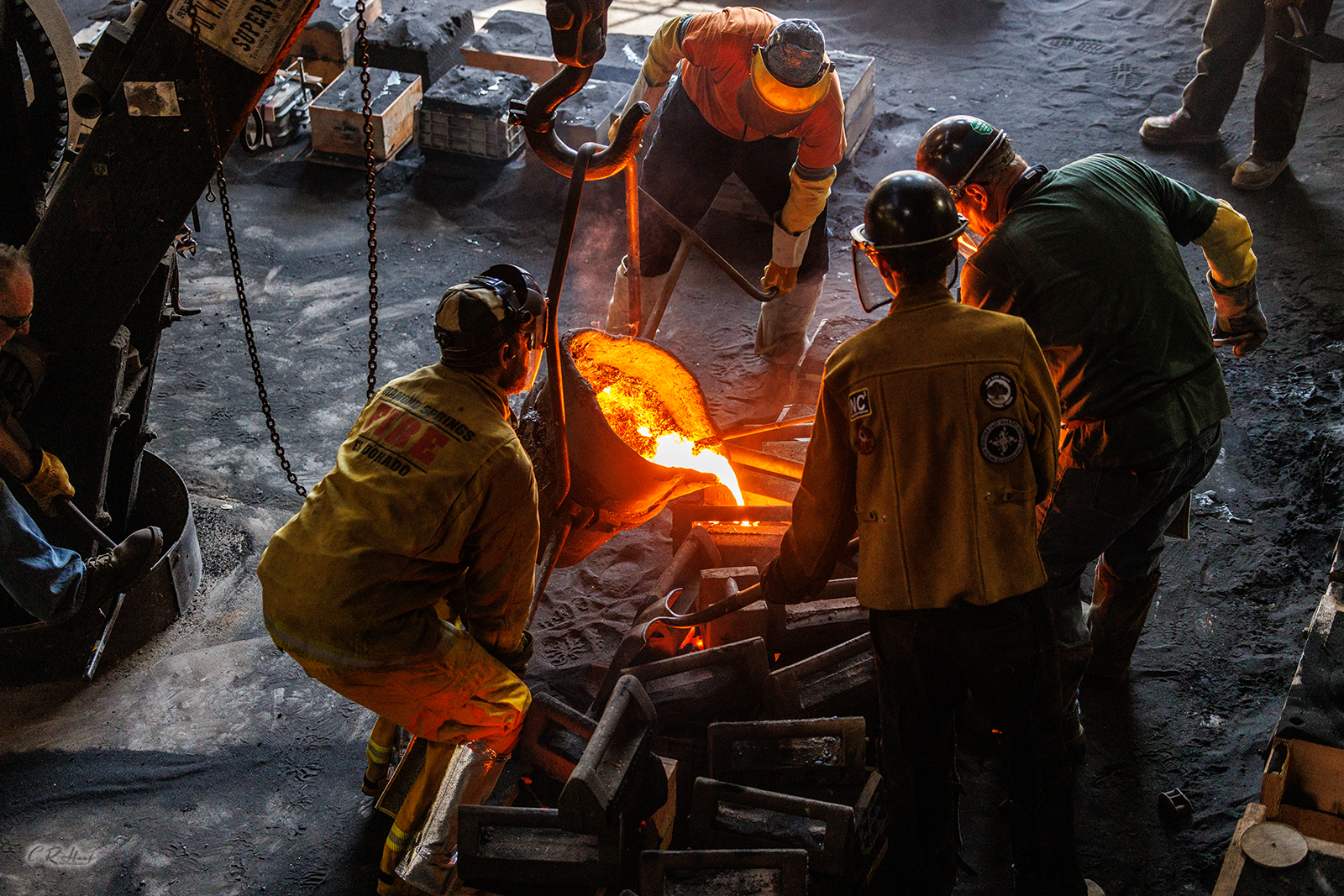
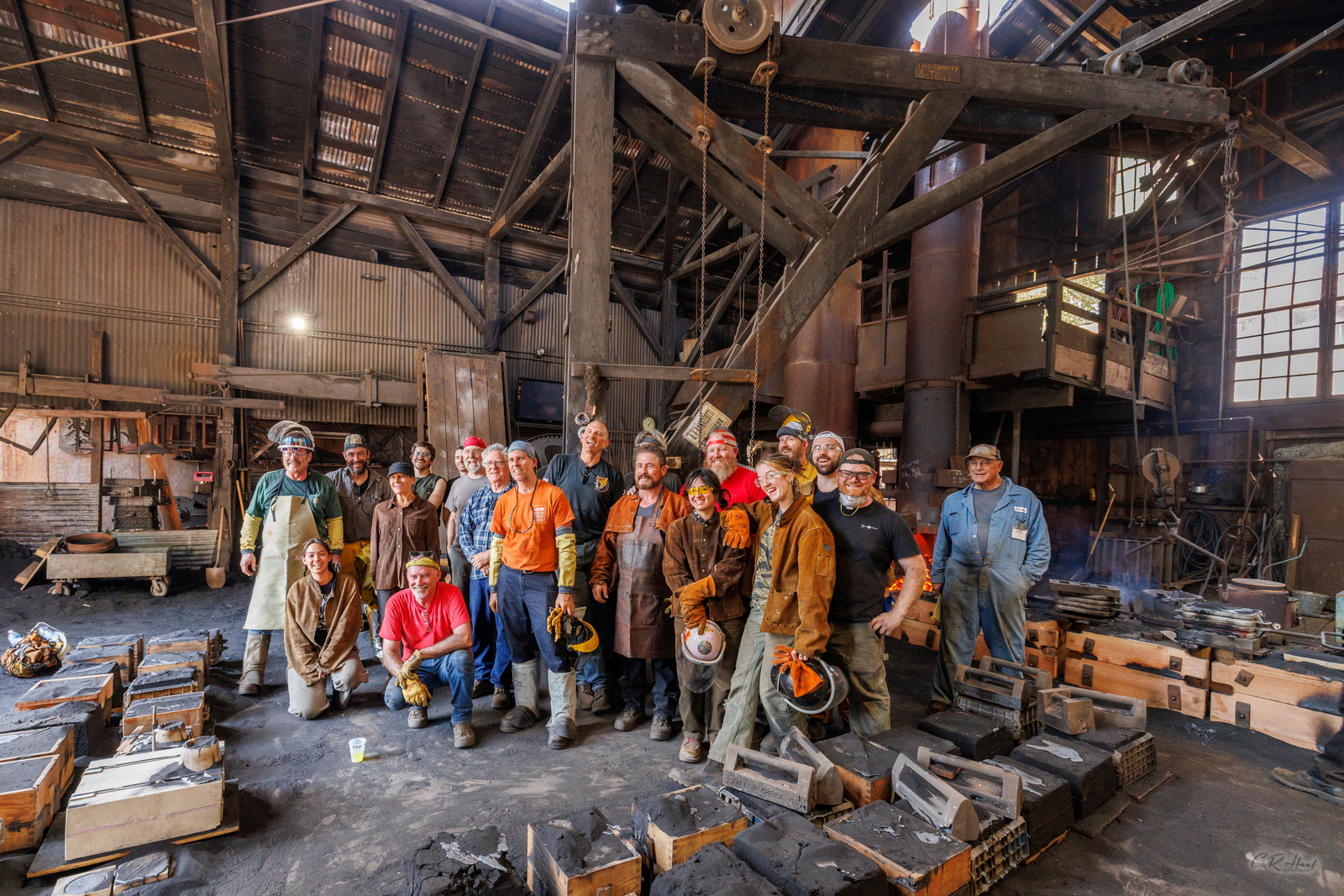
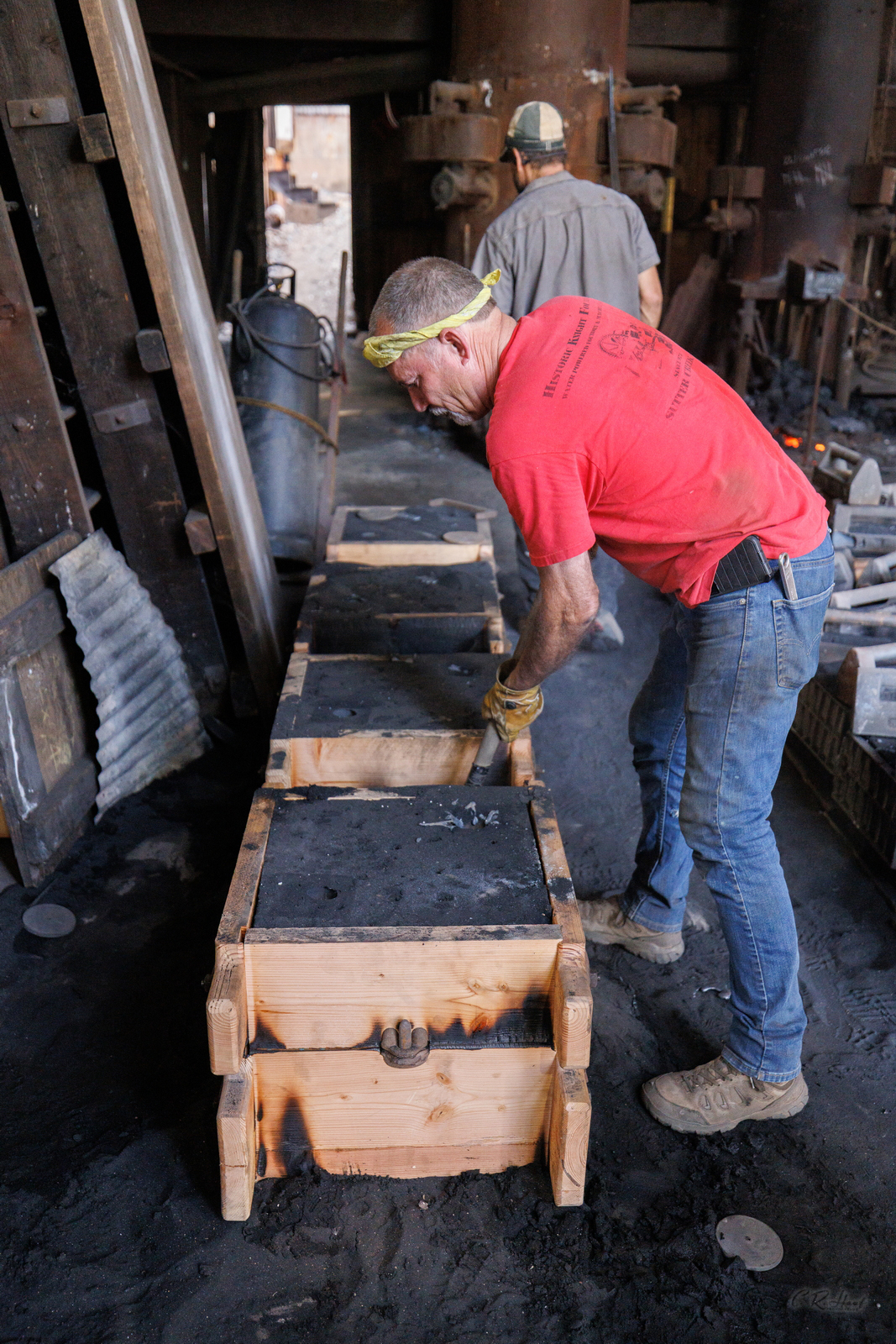
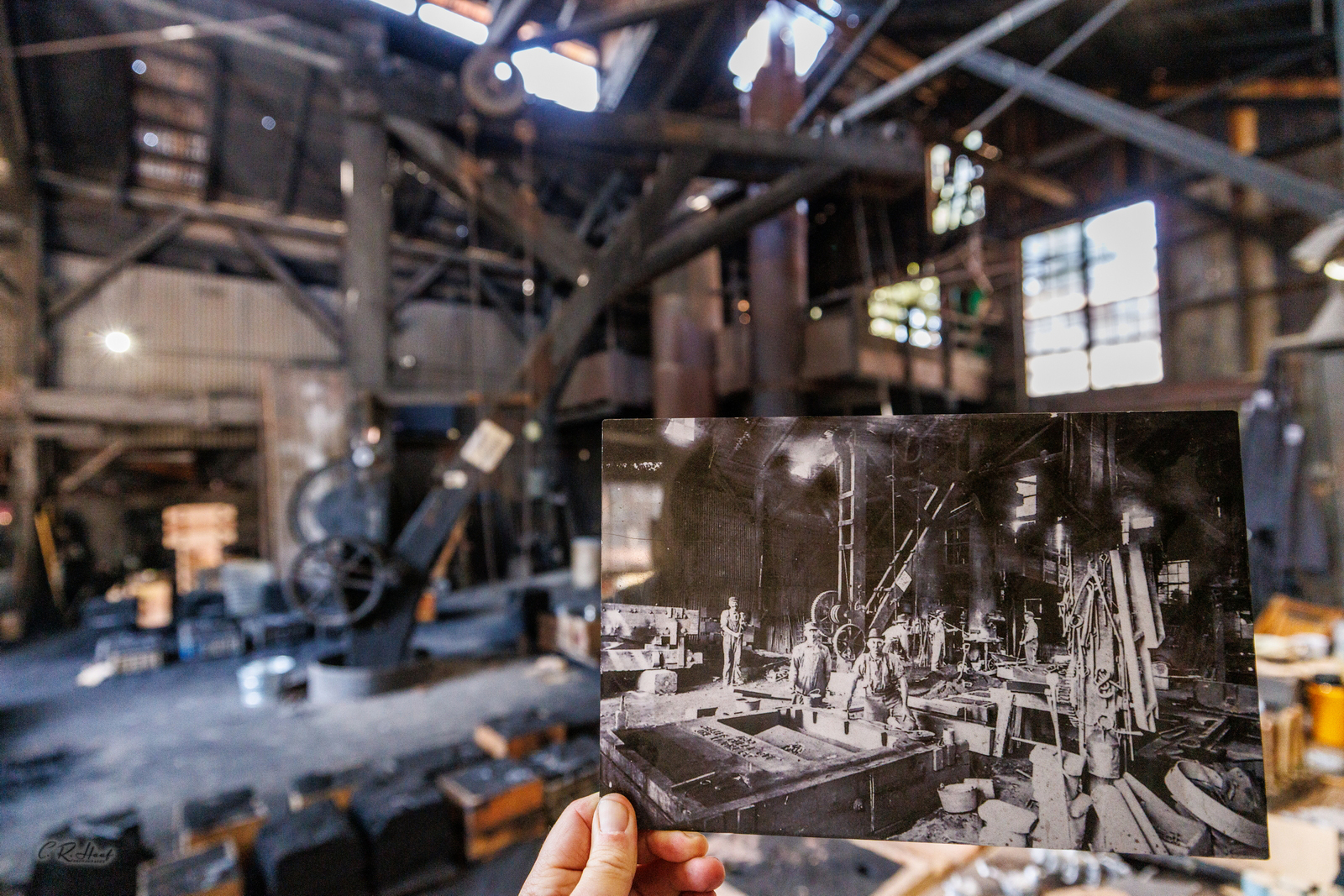
View some images taken at the Knight Foundry in Sutter Creek, CA on September 6, 2025, as this non-profit museum undertakes a second round of casting iron brake shoes for steam locomotive, Clover Valley Lumber Co. #4. Museums helping museums…
In January 2024, our Niles Canyon Railway partnered with the Knight Foundry in Sutter Creek, CA to cast some brake shoes for our Clover Valley Lumber Co. #4 steam locomotive. They also helped us with some other parts as well. We were lucky enough to attend that casting event. Alas, several of the molds for the large brake shoes failed in pouring resulting in parts not being fabricated.
Fast forward to September 6, 2025, where a second casting event was held. Why the large gap? The Knight Foundry after the previous event found some issues with their furnace and had to take a fairly extensive rebuild which took some time. We were again invited to Sutter Creek to watch the second casting event, and again, our Marketing Manager, Chris Hauf, attended with cameras in hand.
Here are some photos of the second casting event which appeared much more successful. We again want to thank the volunteers of the Knight Foundry along with some members of the The Crucible in Oakland, CA who also participated in this most recent pour for all of their hard work in making the molds and flasks while doing the very hot pouring.
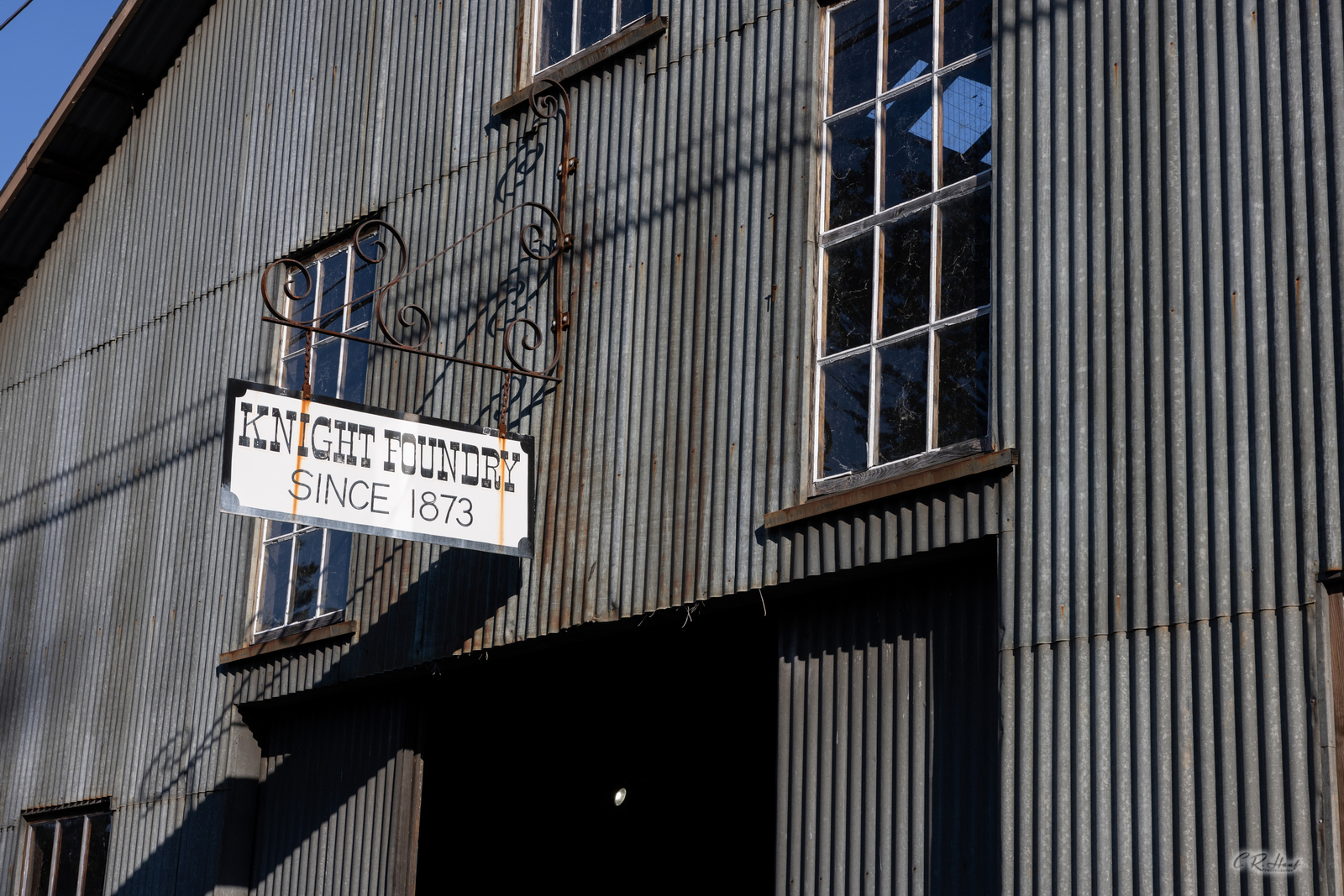
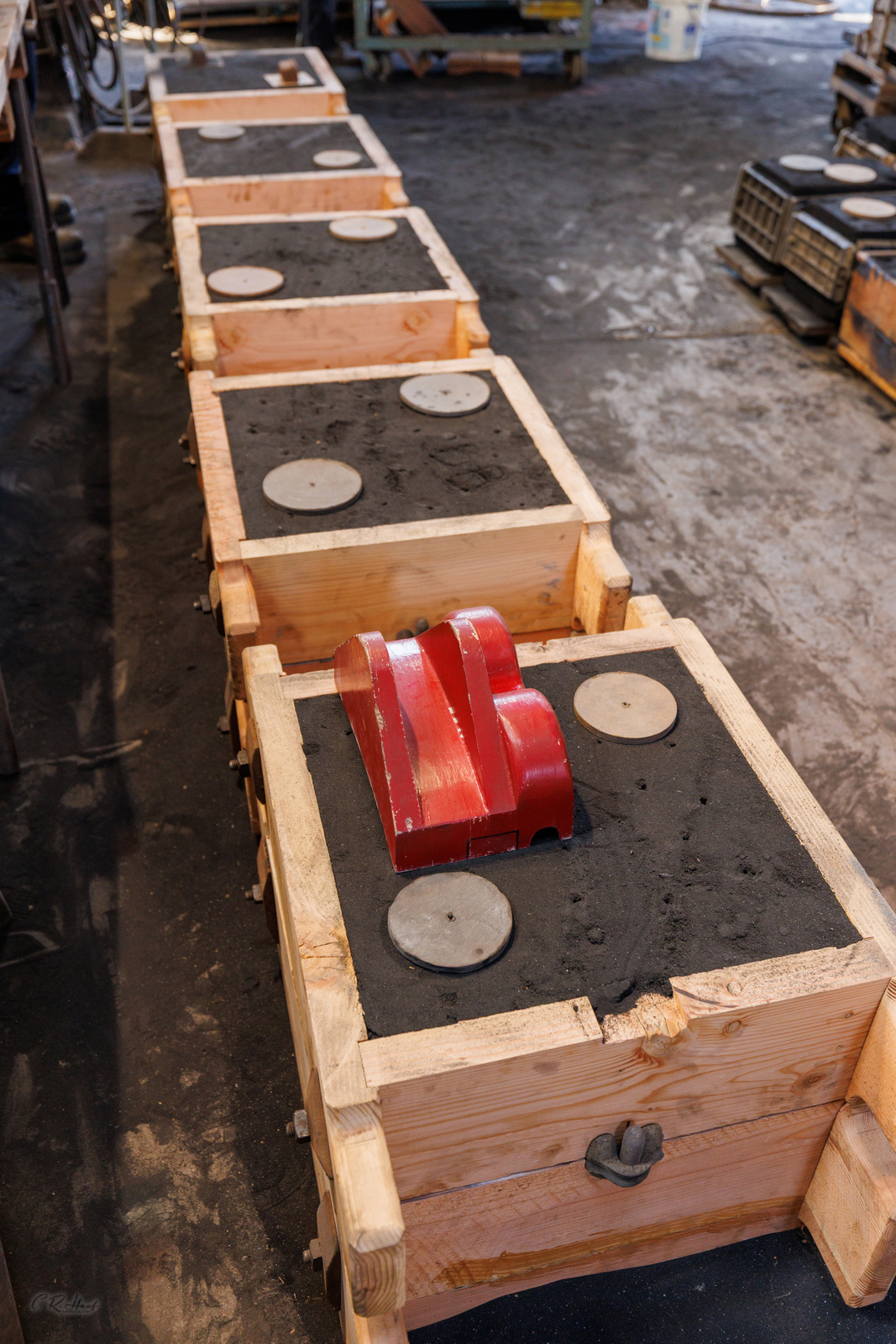
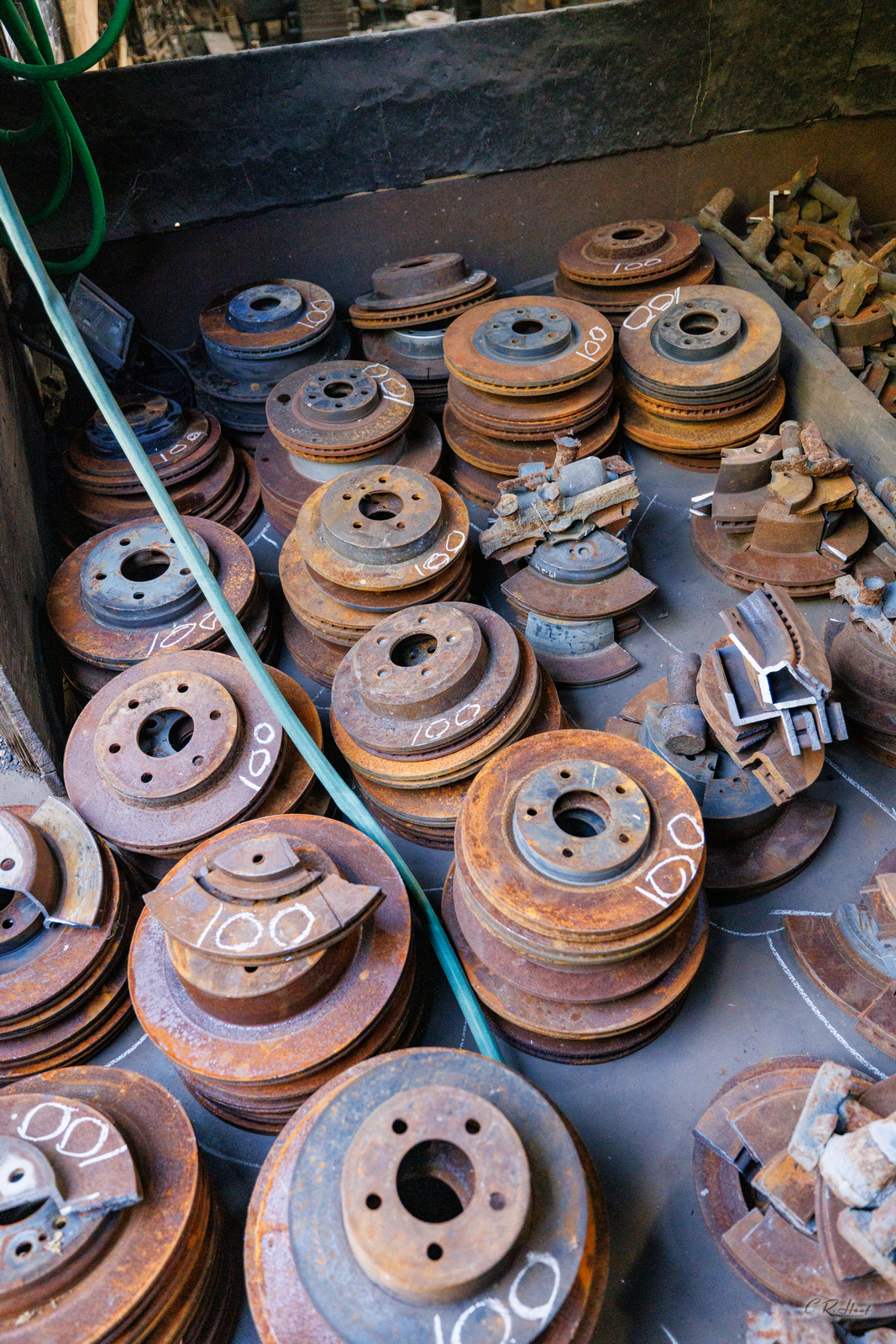
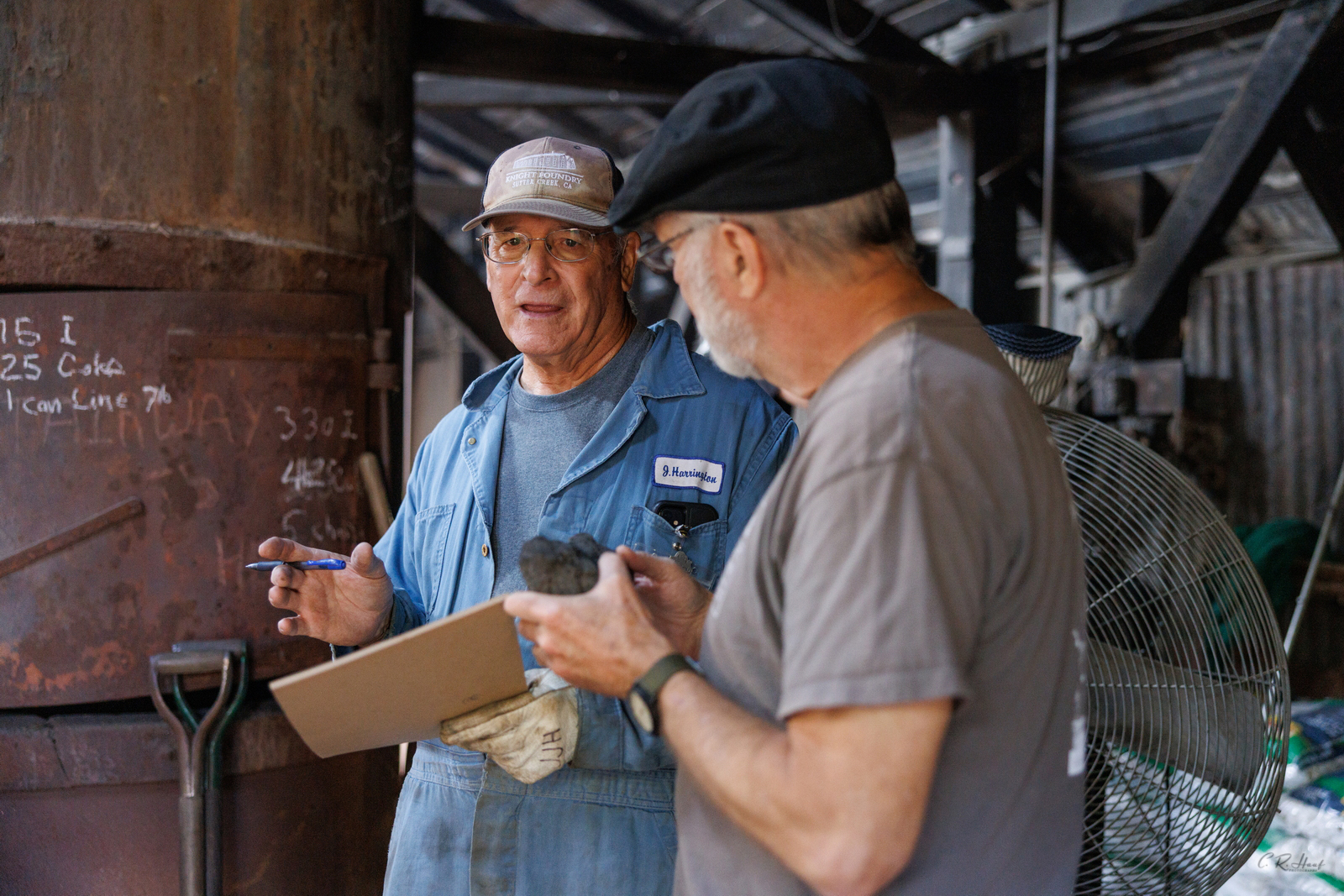
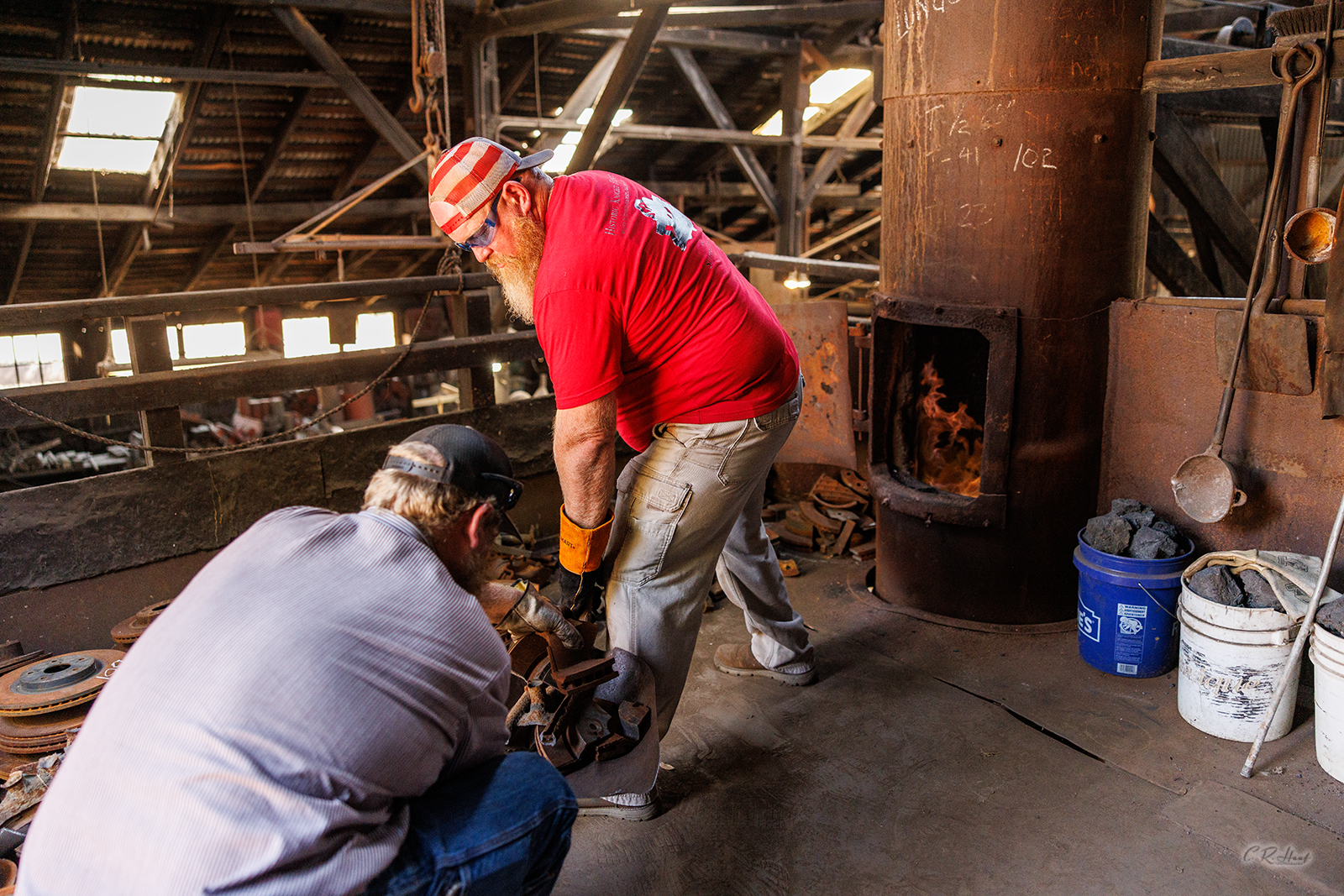
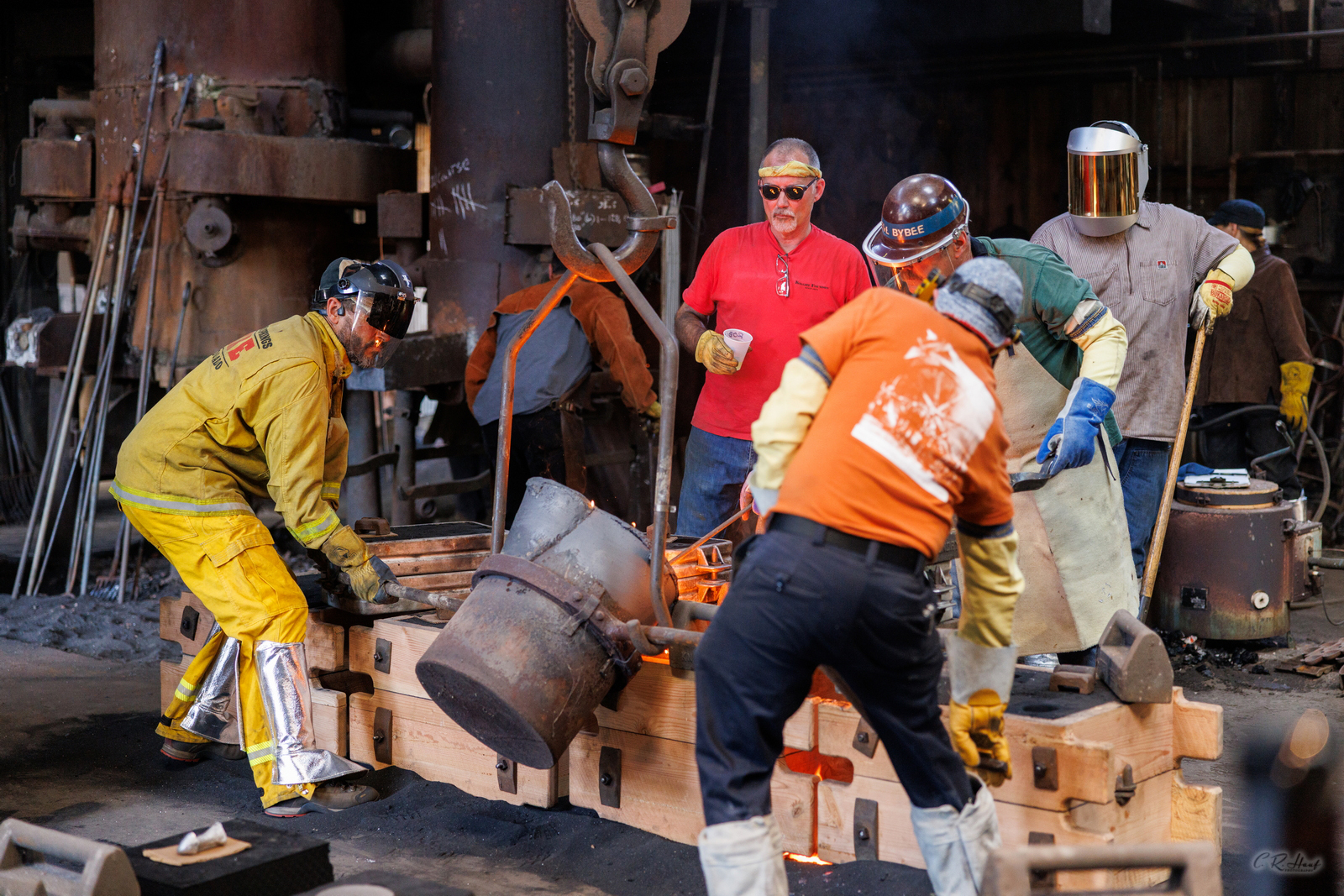
Welcome to the Knight Foundry in Sutter Creek, CA.The flasks containing the ready to pour molds for the #4’s brake shoes with the pattern in red sitting on top for illustration. The holes where the cast iron will be poured are covered to keep debris out prior to the pour.More of the flasks with molds on the casting floor.A view from the charging deck. This is where coke, limestone and iron are added as “charges” to the furnace during the casting process to keep renewing the supply of molten cast iron.Loading the initial load of coke into the furnace.The raw iron in this case are mostly scrap car and truck brake rotors. These will melt to form the iron to be pour. Each stack weighs 100 lbs and typically two stacks were added in a “charge” to properly fill a ladle of cast iron.Our museums actually share a few volunteers including the gentleman on the left who volunteers for both Knight Foundry and us.The initial charge of cast iron is going in. The coke is all lit, but the blower to increase the heat and intensity of the fire has yet to turned on. That would take place after a safety briefing.Let the pouring begin with some of our brake shoes.Pouring more brake shoes.Pouring some smaller flasks containing a variety of other objects for the museum and other people. Some included throwing weights used in Scottish Highland games.More brakes shoes being poured. Two people operate the ladle which is supported by the wood gantry crane. The gentleman in the green shirt works to prevent any slag from being poured into the molds.A poured flask. The weights are used to help hold the flash tight. Still the molten iron has found its way out of the interface of the top (the cope) and bottom (the drag) of the mold to the wood which has been scorched by the hot metal.More shoes being poured.With all of the charges in the furnace, our photographer was let on to the charging deck to get an overhead view of the work as the last of the molds were poured on the floor.The team of volunteers consisting of individuals from the Knight Foundry and The Crucible. We cannot thank them enough for their hard work. We certainly understand hot working in the cabs of our steam engines, but this is REALLY hot work! The wood flasks are removed about an hour after the casting process. The wood is taken out of the foundry and doused with water to both prevent fire and to hopefully reduce the damage to the flasks so there is a chance they can be used again. The sand molds would not be broken up until the next day.Then and now… This historic photo of the foundry was sitting on one of the tables. We could not help but make a comparison of then and now which looks just about the same.
View a short reel from Instagram of one of the brake shoe molds being poured.
Take a wander in 360 degrees around the foundry from the charging deck.
Watch the casting taking place in this 360 degree video.
We hope soon to be able to share some of the final results from the casting event with everyone.
Knight Foundry typically has two open Saturdays per month, and we encourage people to visit both the foundry and its historic machine shop. Sutter Creek is a ~2 hour drive from the Bay Area and less than an hour from Sacramento.
For the weekend of May 17th and 18th, 2025, our Niles Canyon Railway operated our weekend excursions out of our Niles Station in celebration of Charlie Chaplin Days in Niles, …
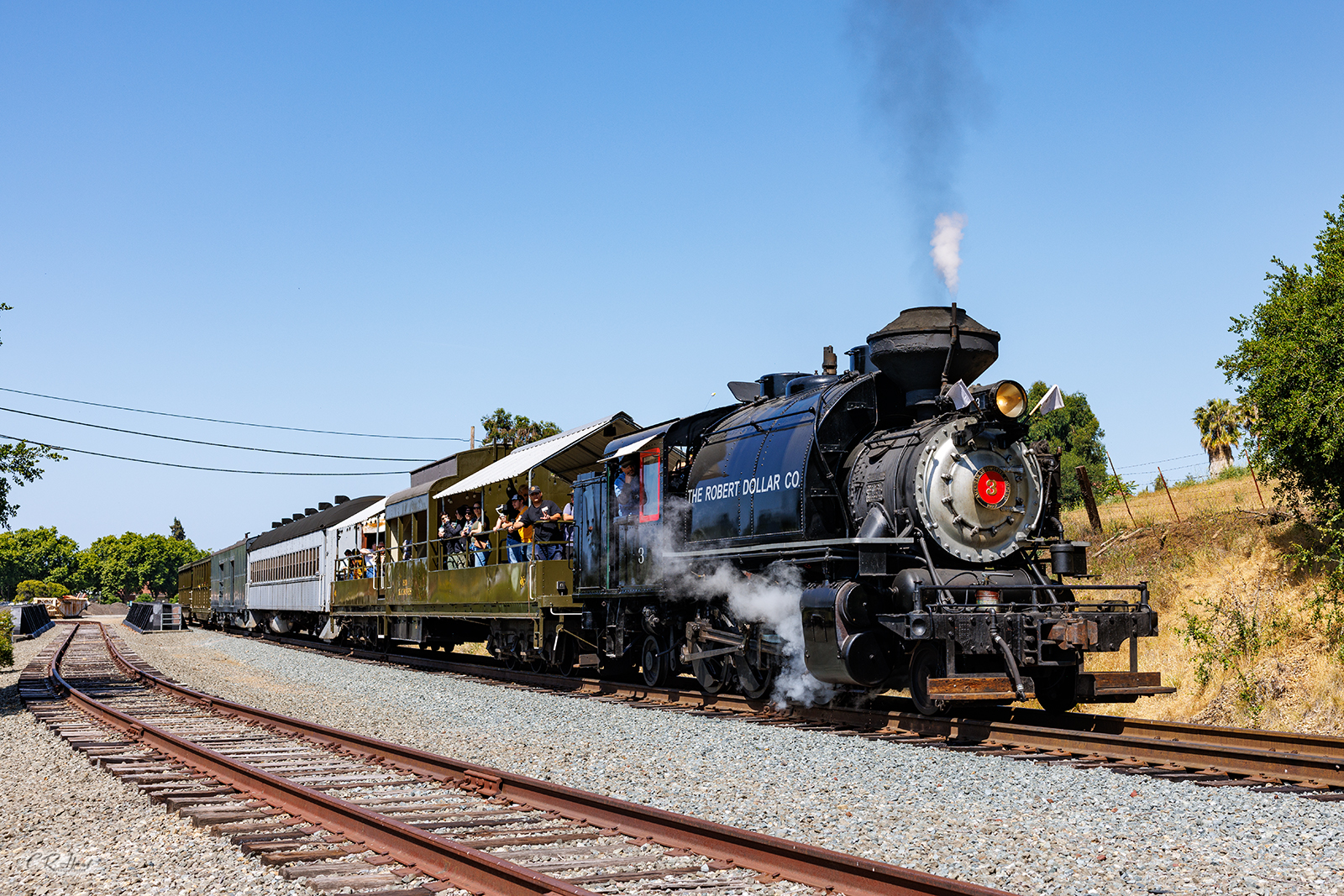
For the weekend of May 17th and 18th, 2025, our Niles Canyon Railway operated our weekend excursions out of our Niles Station in celebration of Charlie Chaplin Days in Niles, the location of early silent film production by Chaplin and Broncho Billy in the 1910s. For the Sunday rides, our steam locomotive, Robert Dollar Co. #3, led the trains.
Robert Dollar Co. #3 leads its train east over Mission Bridge as it departs Niles Station for Sunol on May 18, 2025. Image by Christopher Hauf – Used with permission
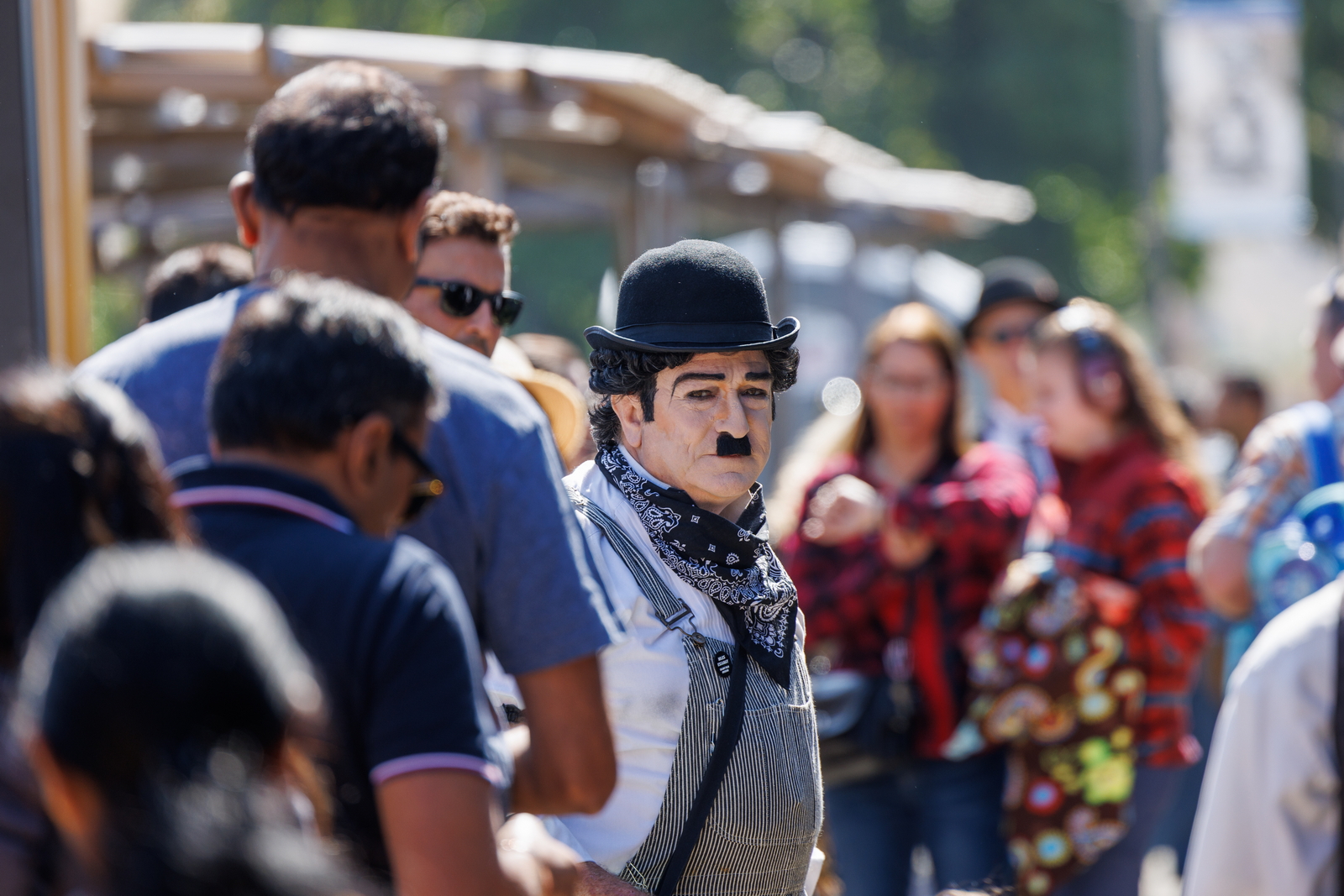
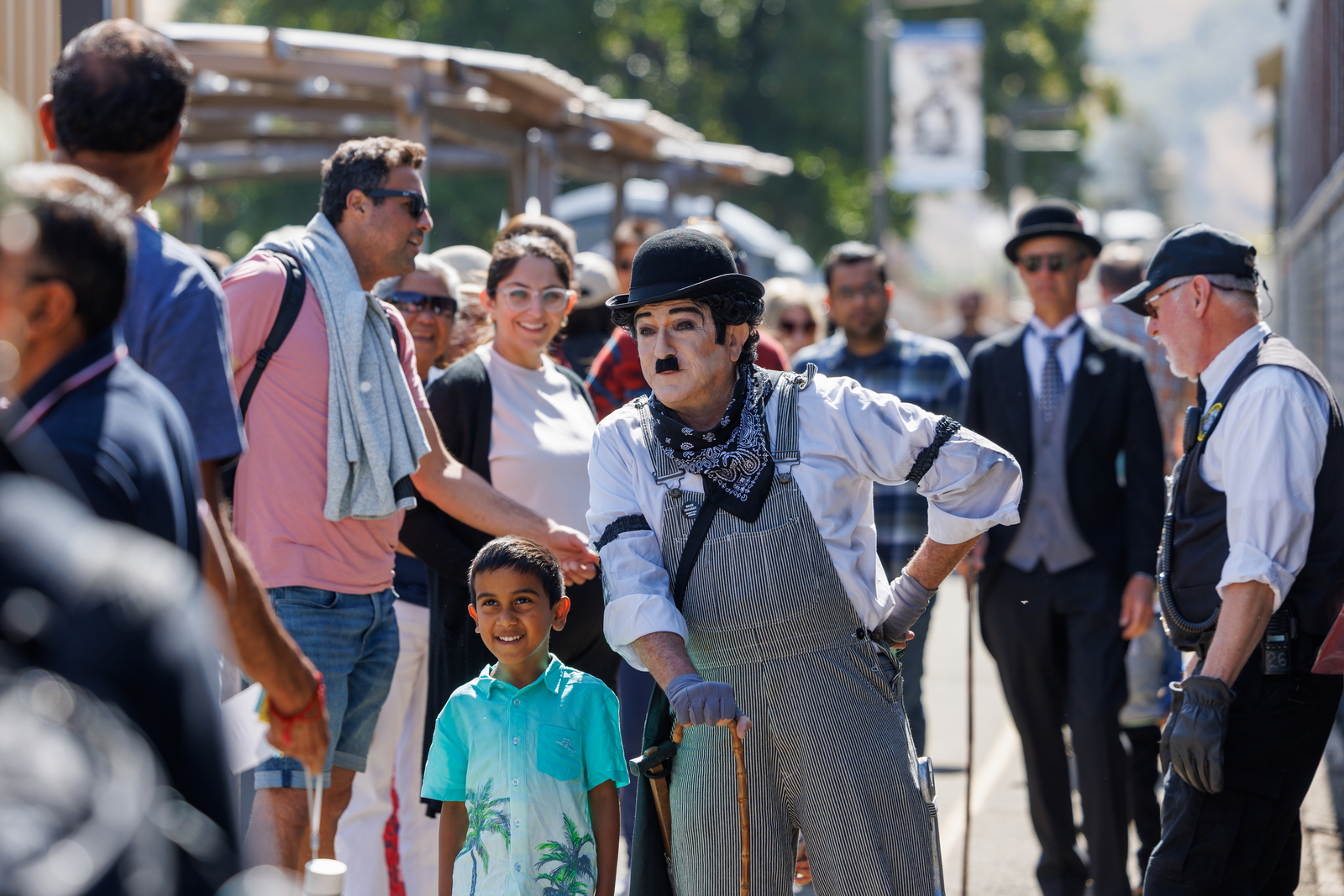
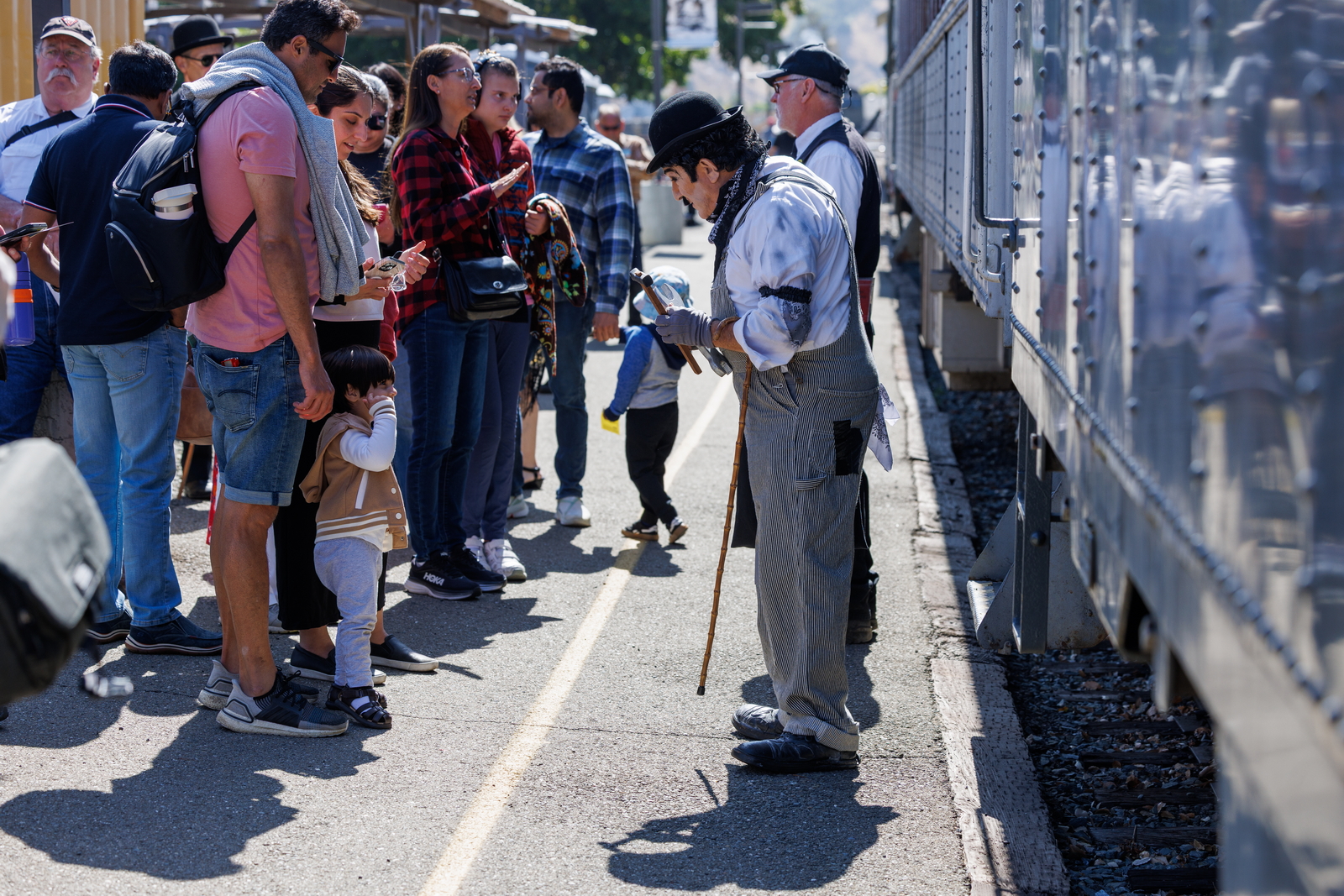
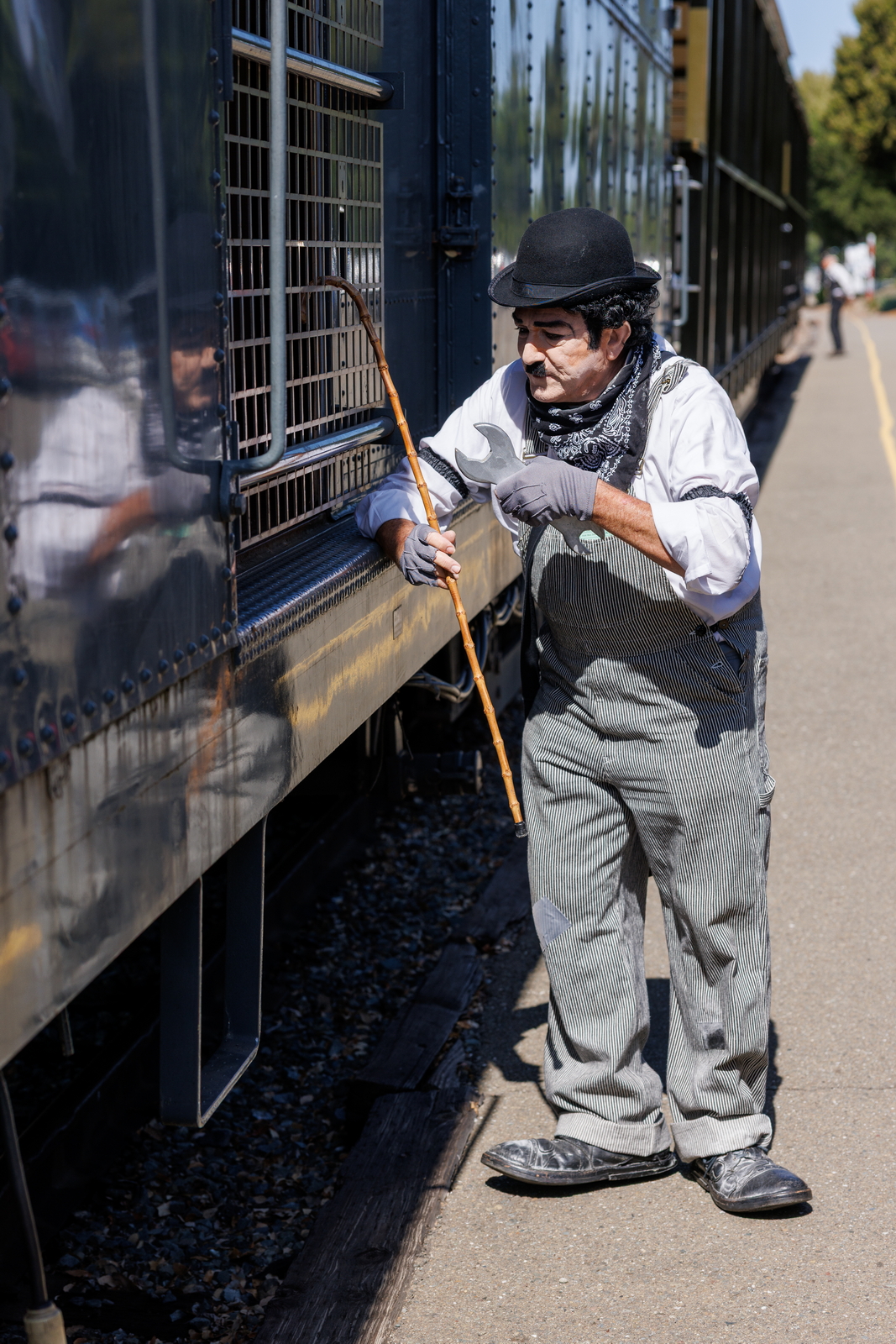
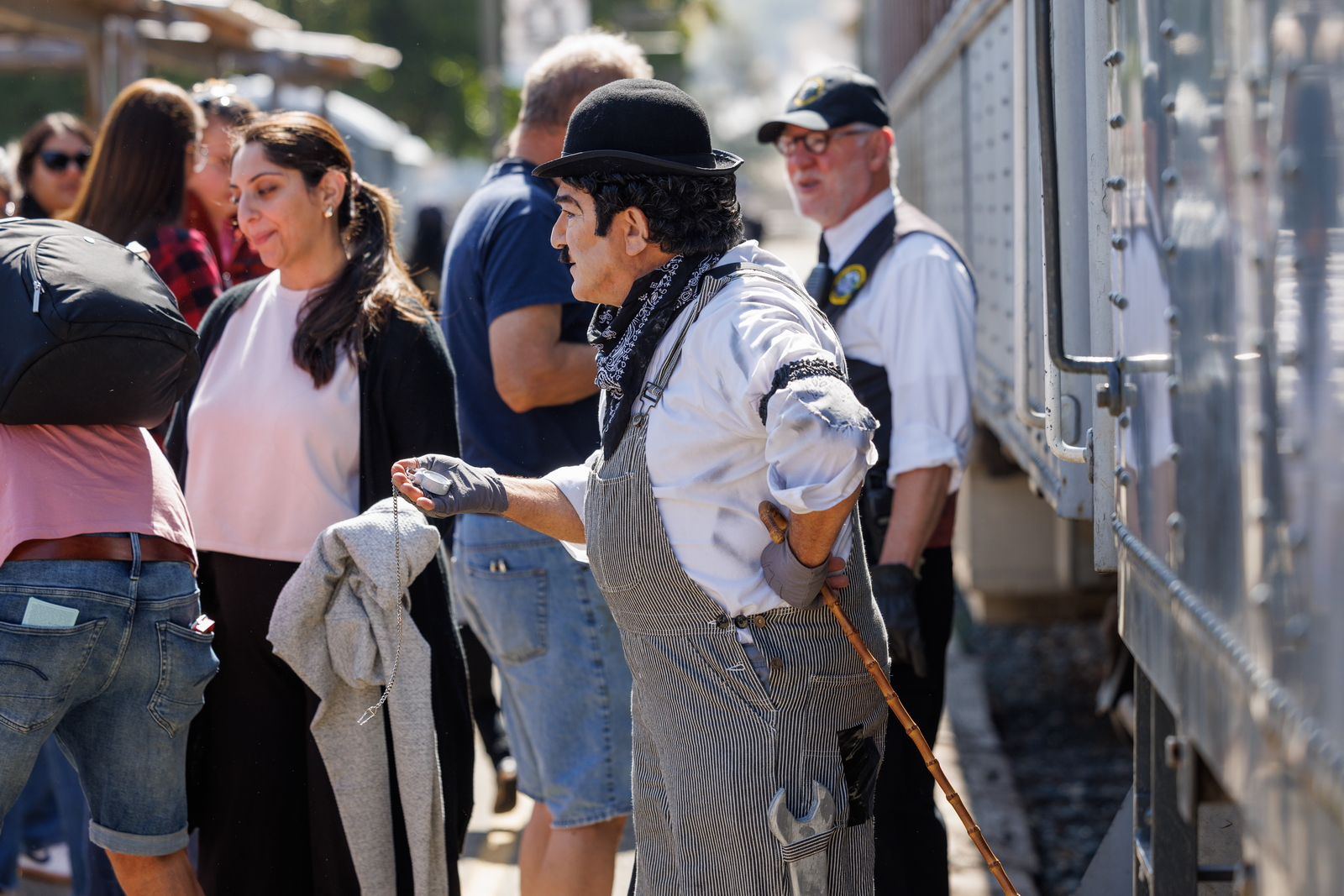
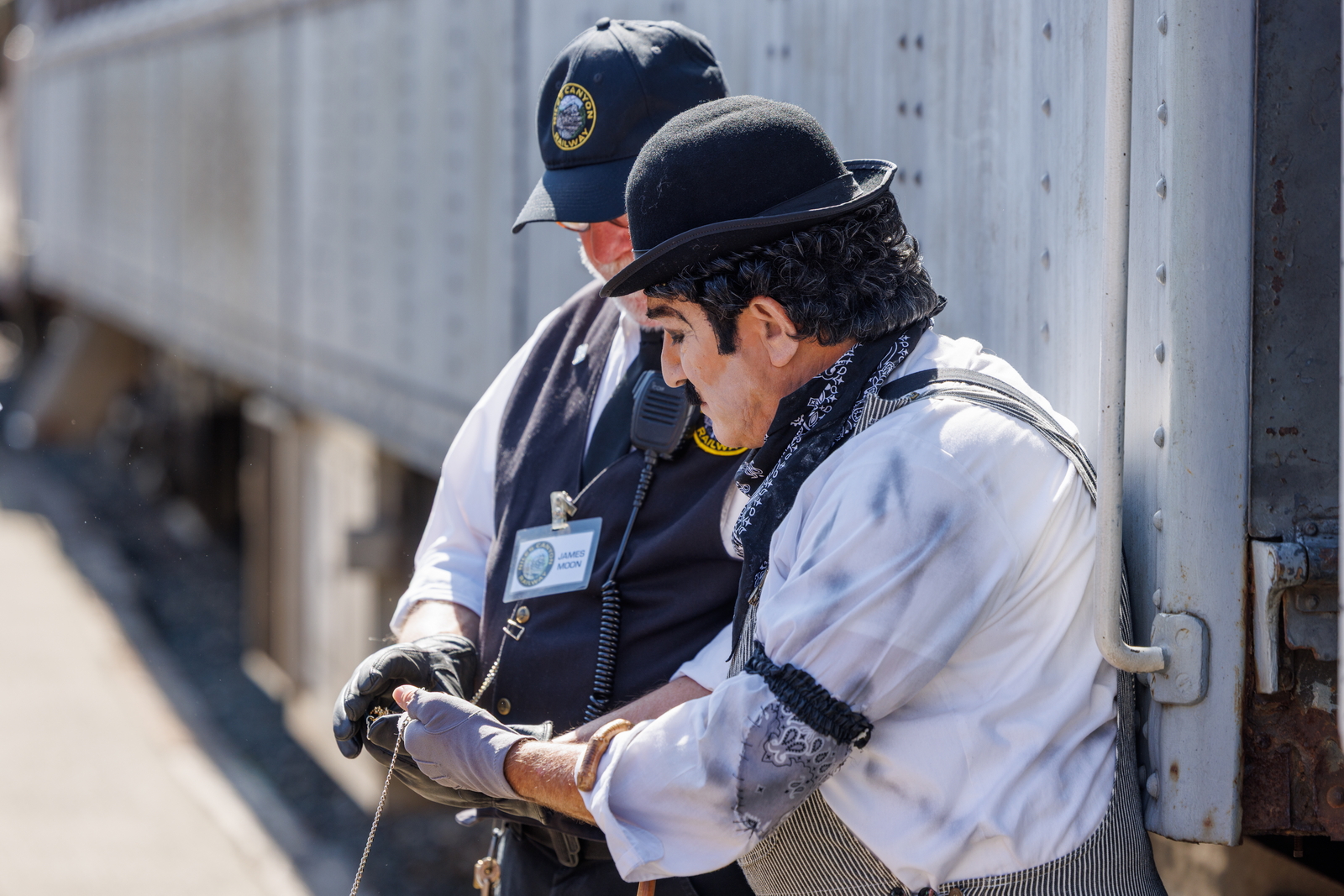
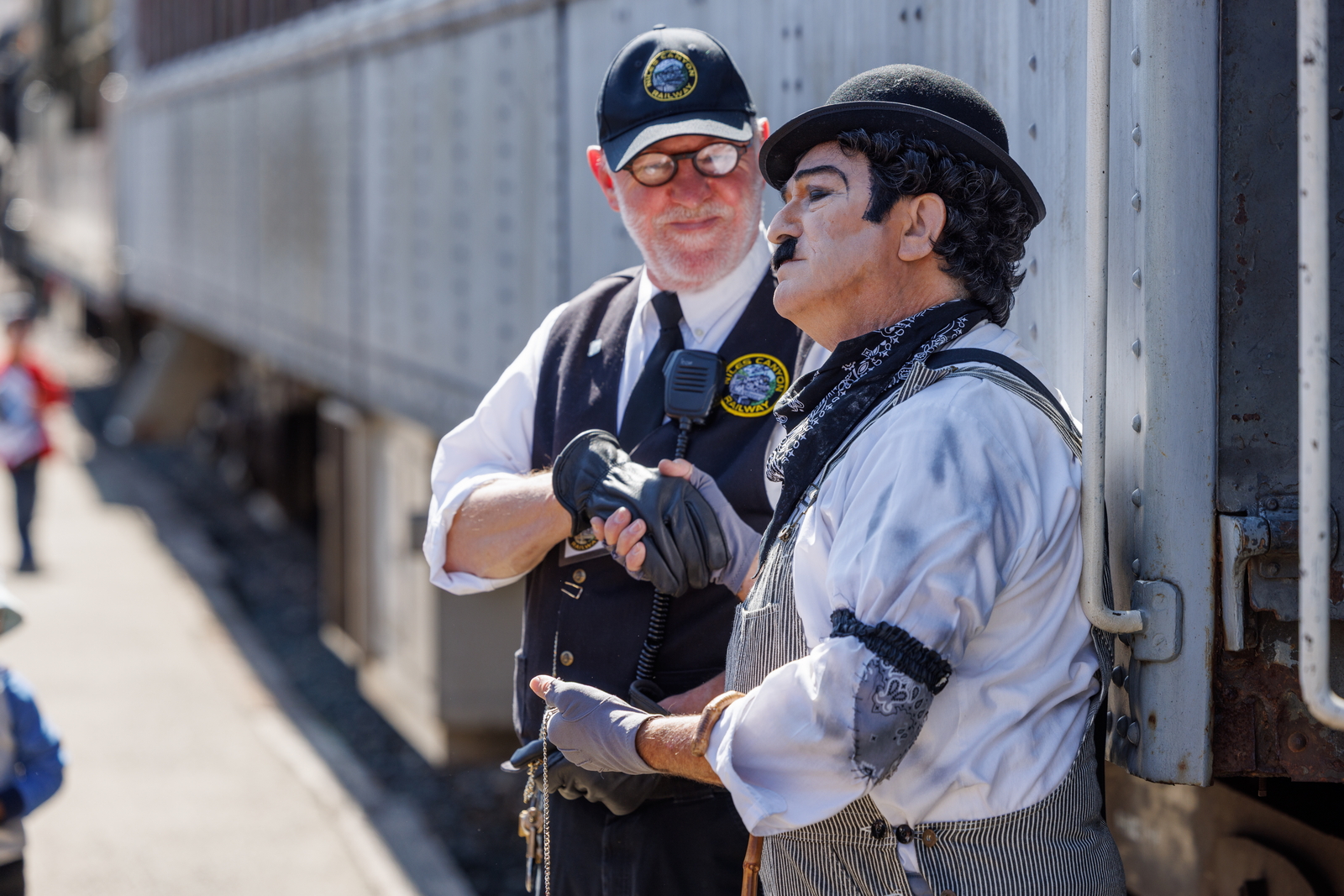
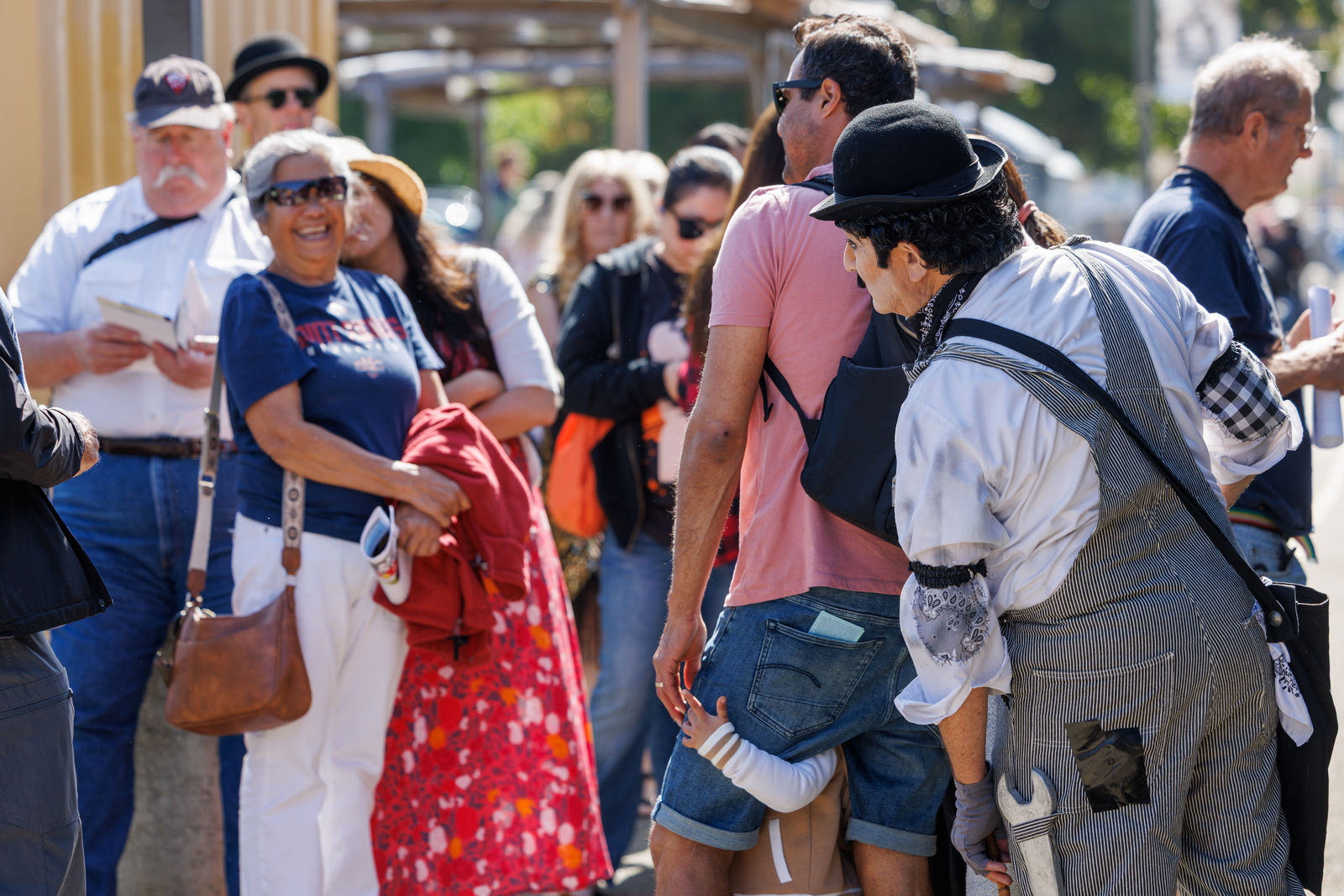
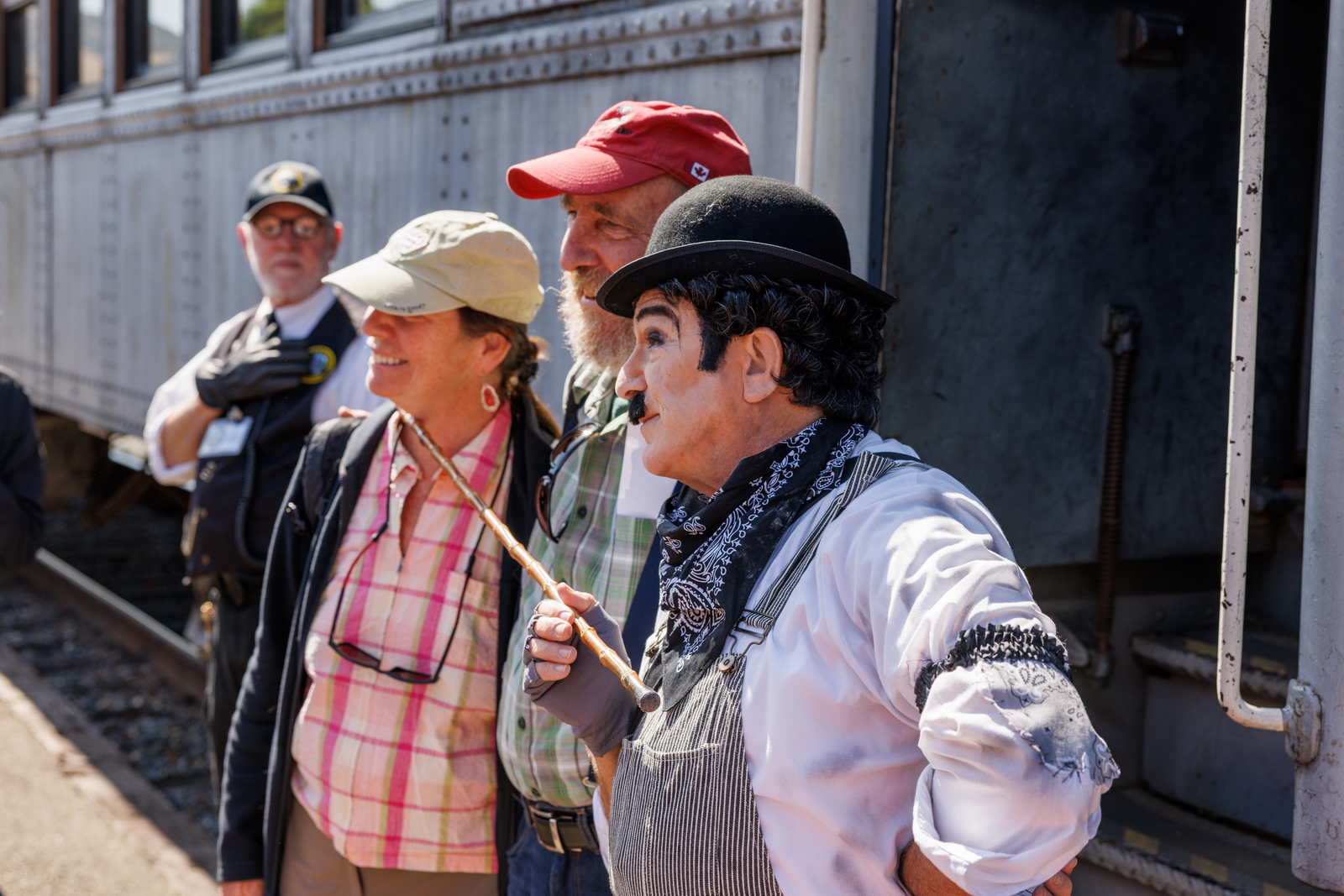
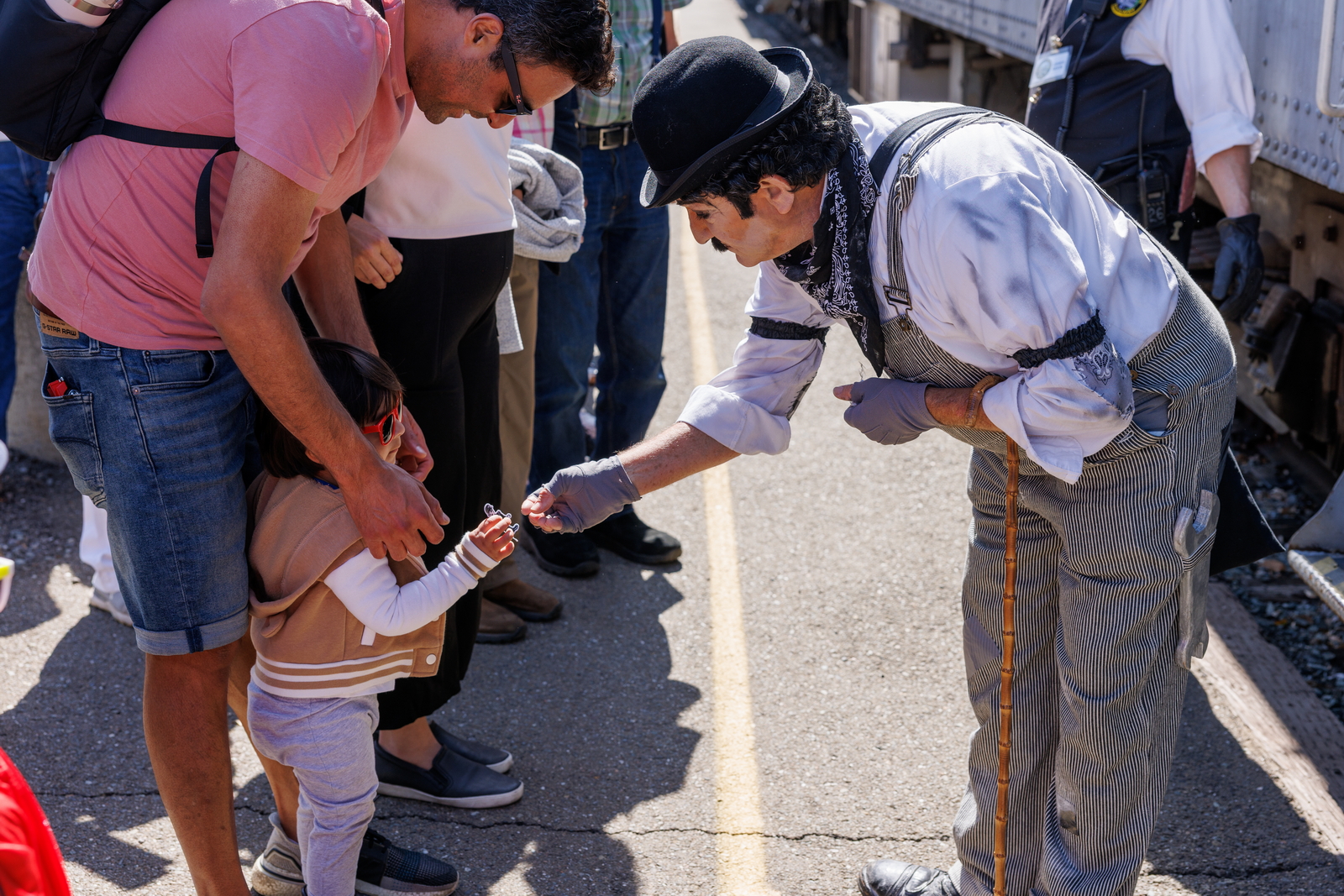
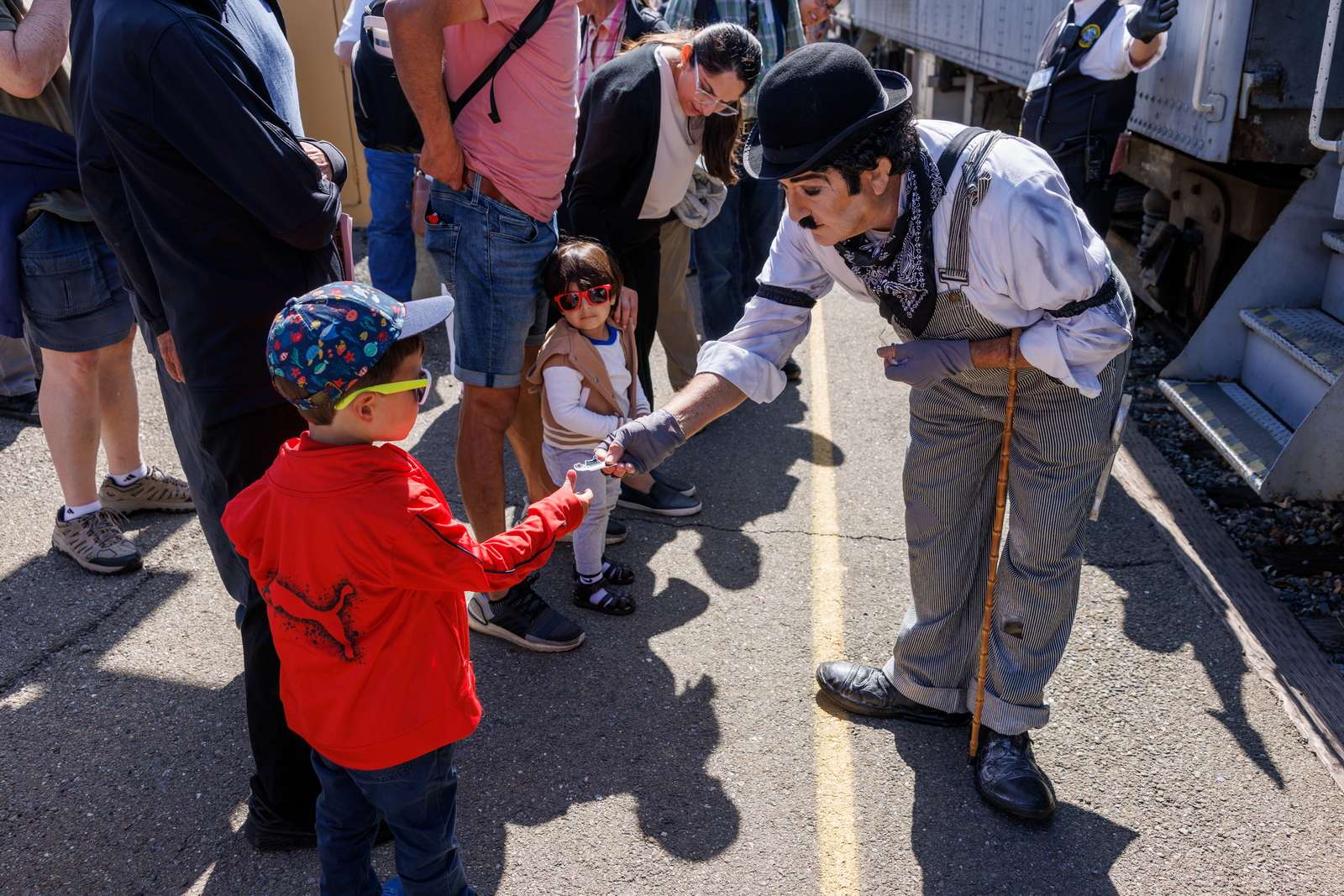
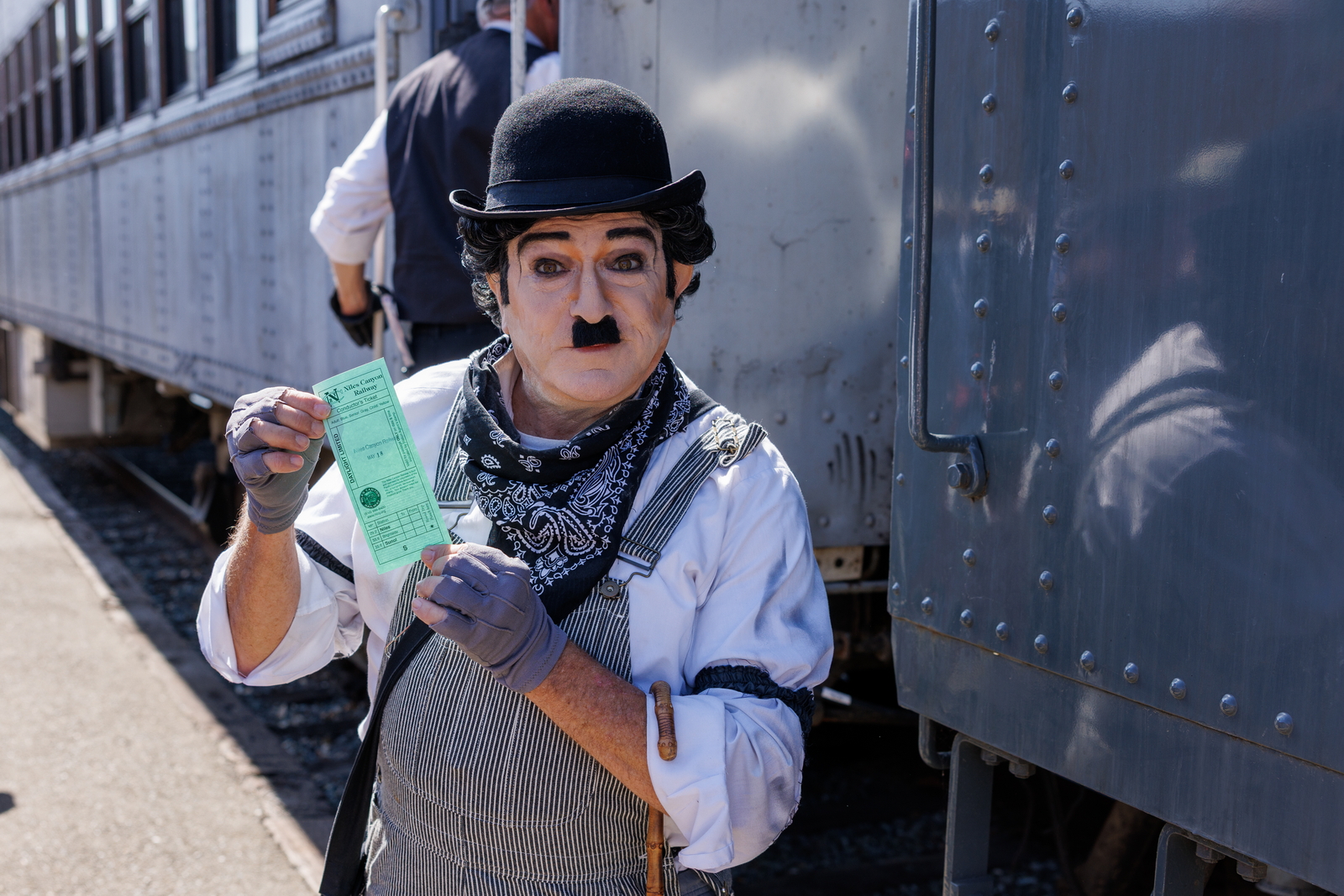
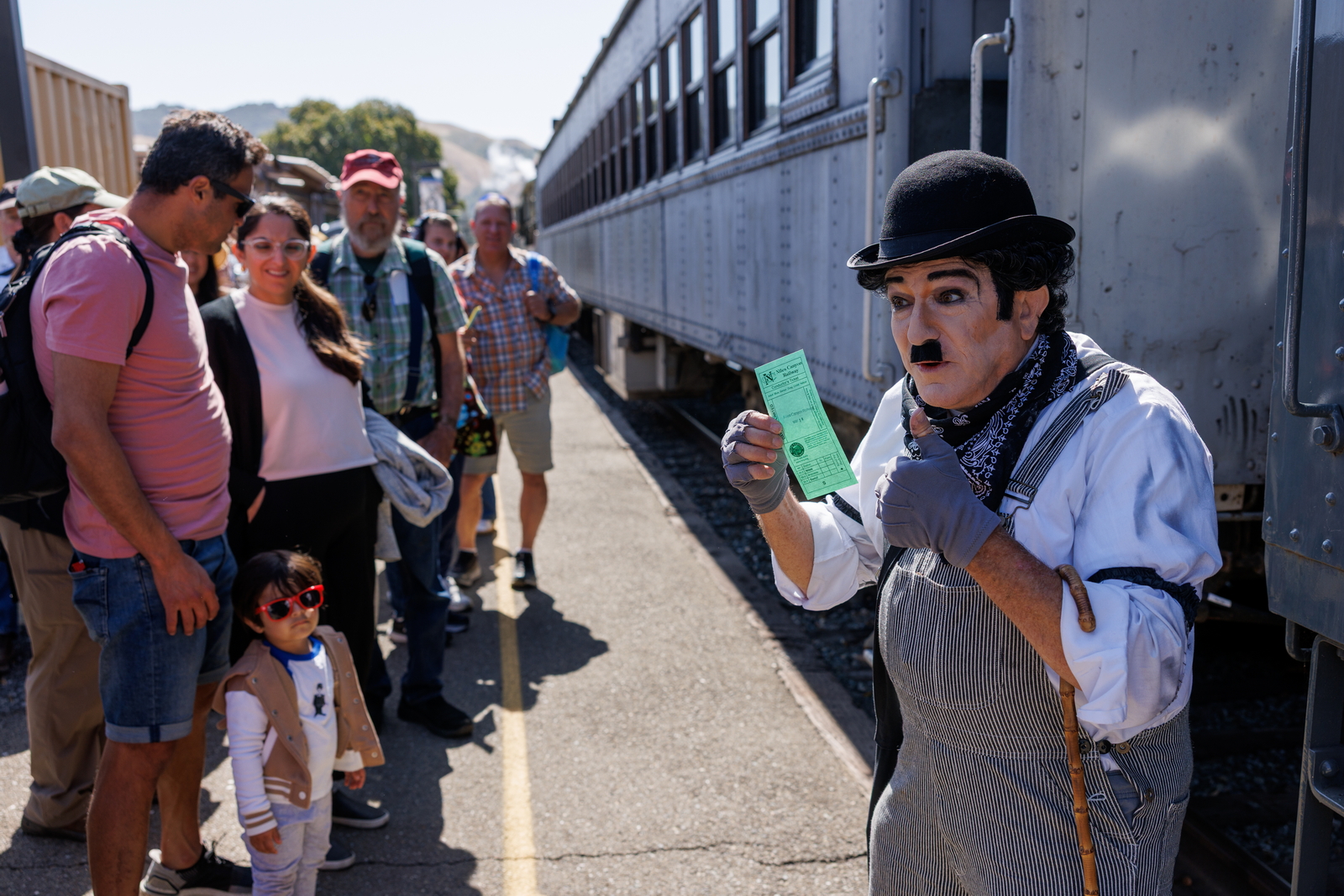
For our 10:30 AM departure, we noticed a familiar face in the crowd, the man of the weekend, Charlie Chaplin himself. Here is a set of photos of Mr. Chaplin interacting with our passengers and thanks for coming over from the Niles Essanay Silent Film Museum for a visit and ride. We encourage everyone to check out this wonderful museum in downtown Niles filled with local film history!
Our weekend train rides will move back to our standard Sunol departure station from June on. Steam will make a return on Sundays in September and October. Please visit our 2025 Rides Page to learn more.
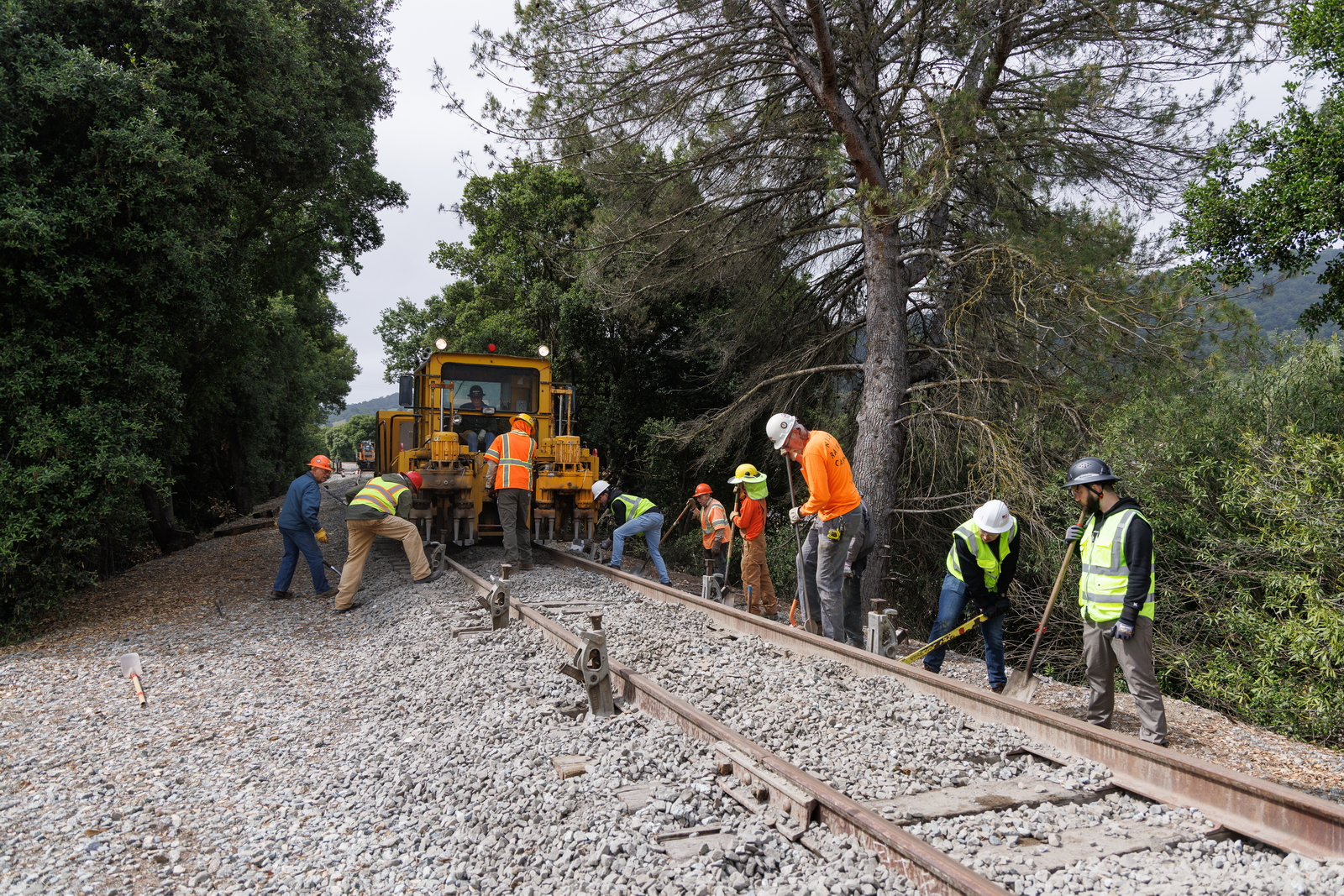
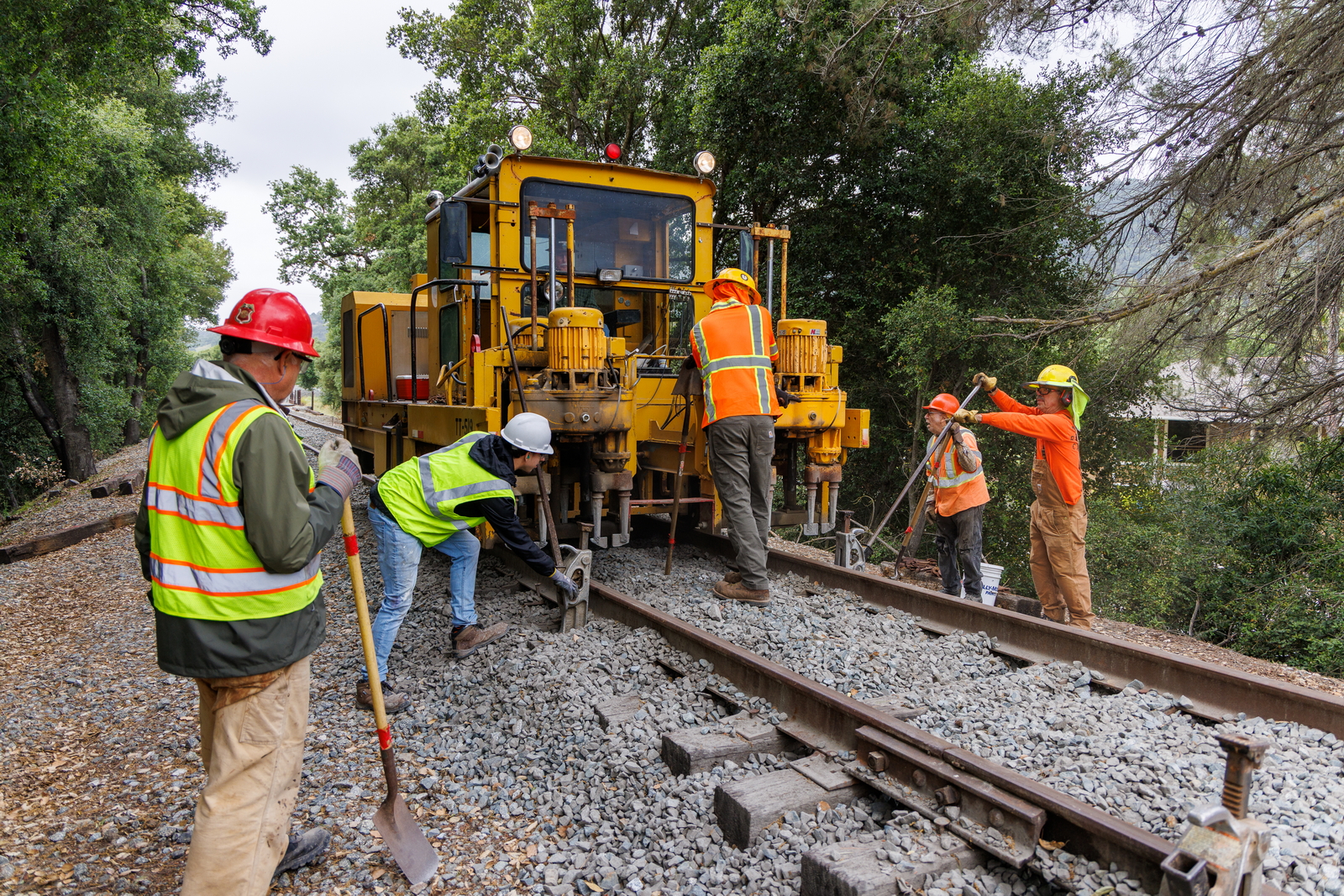
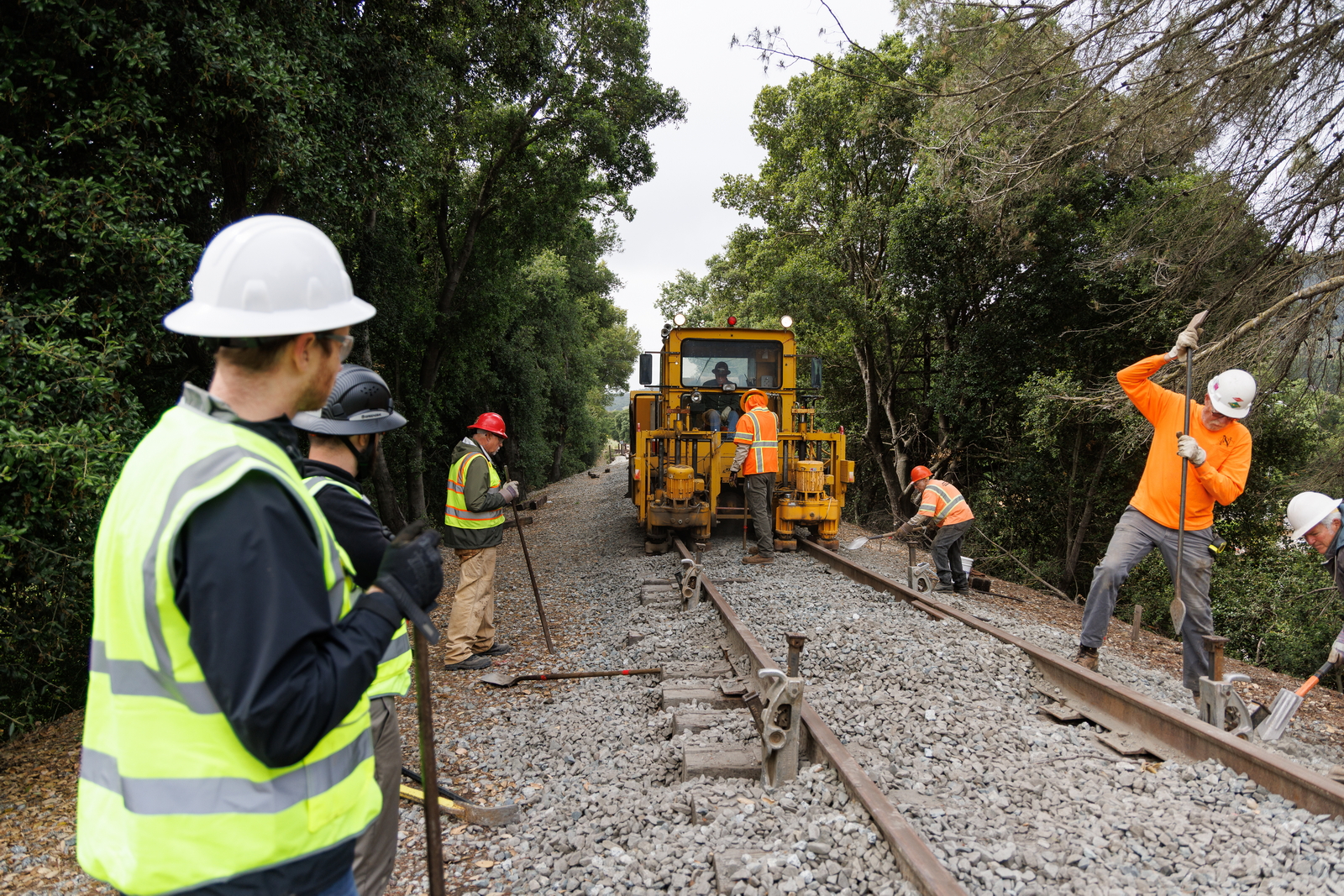
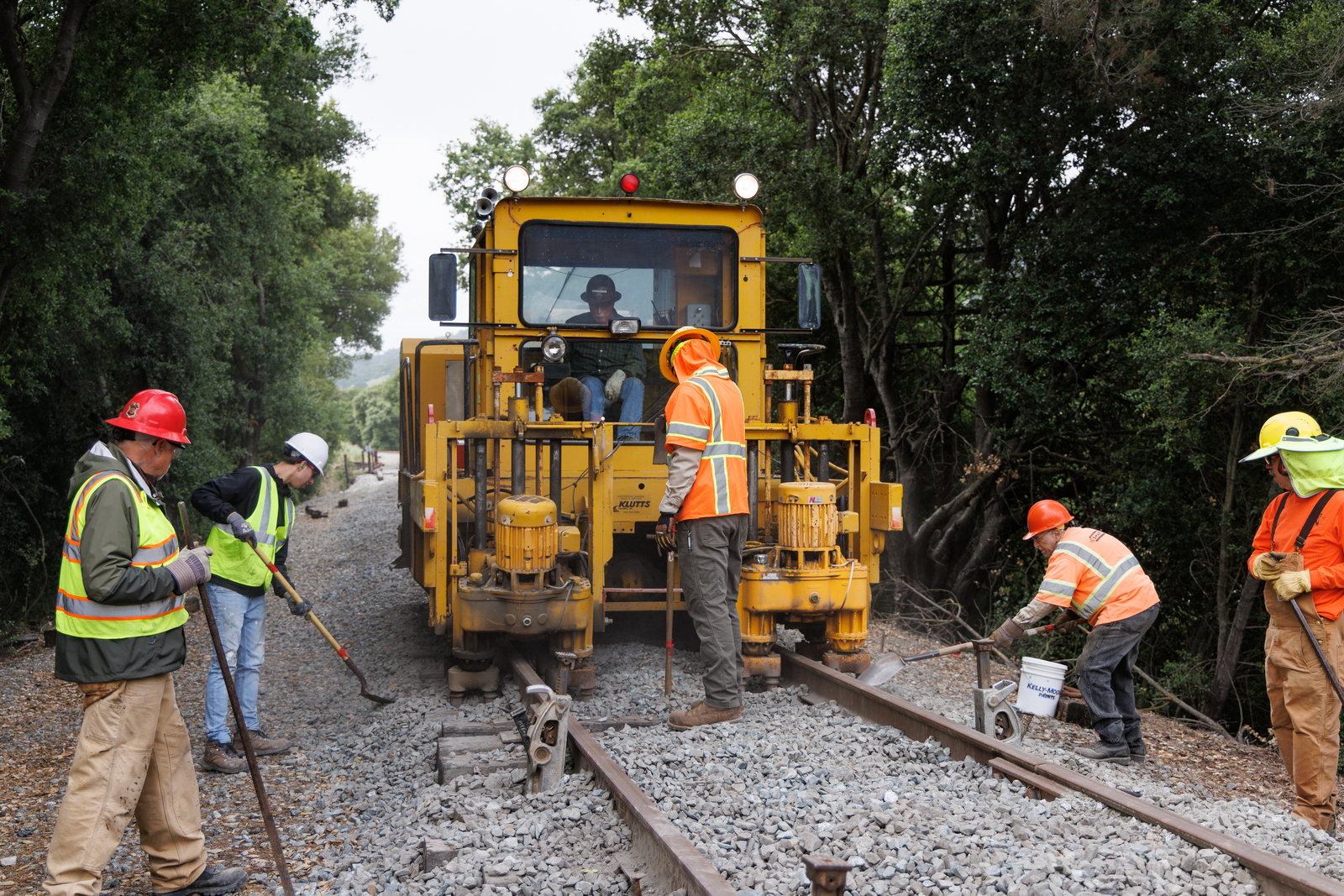
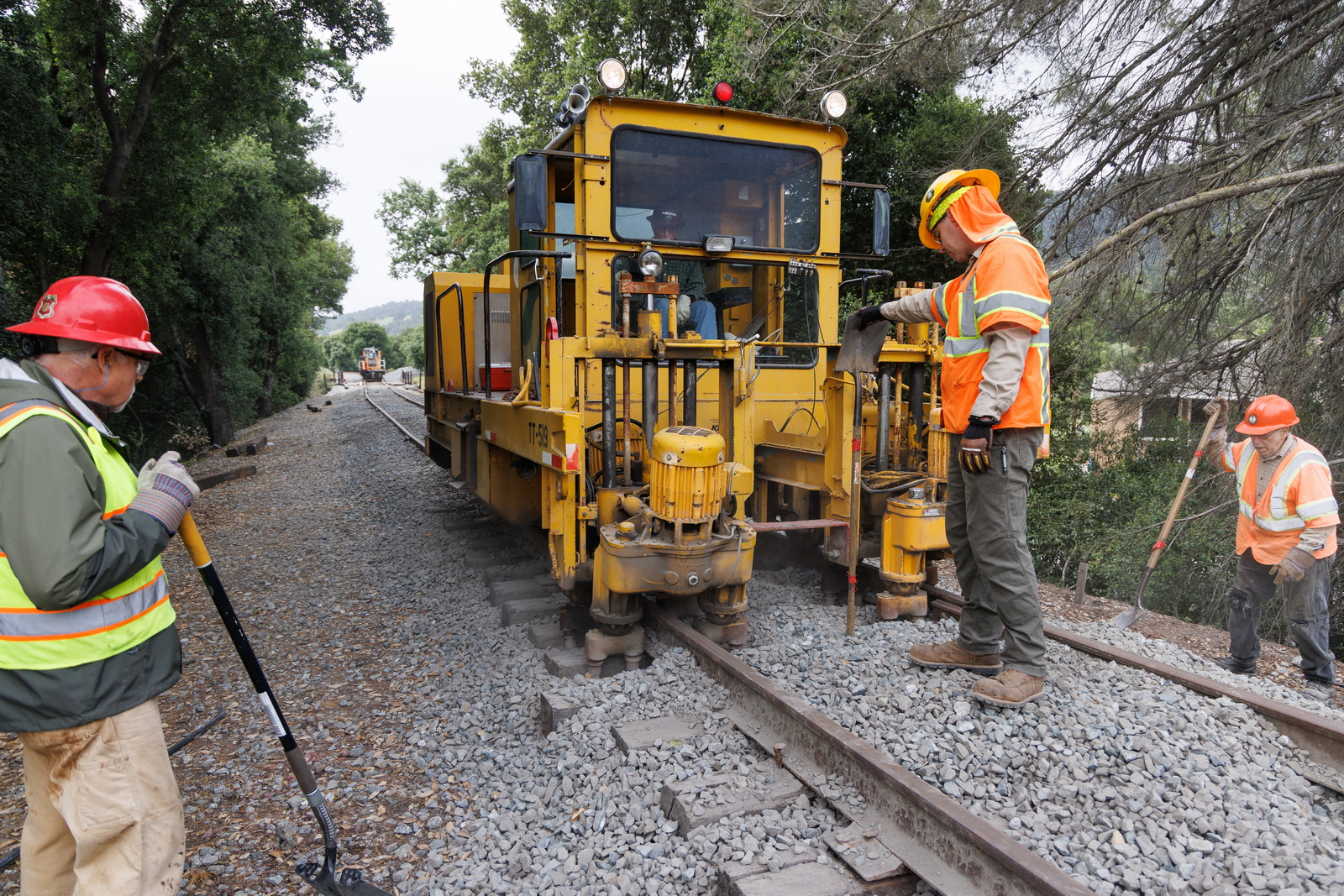
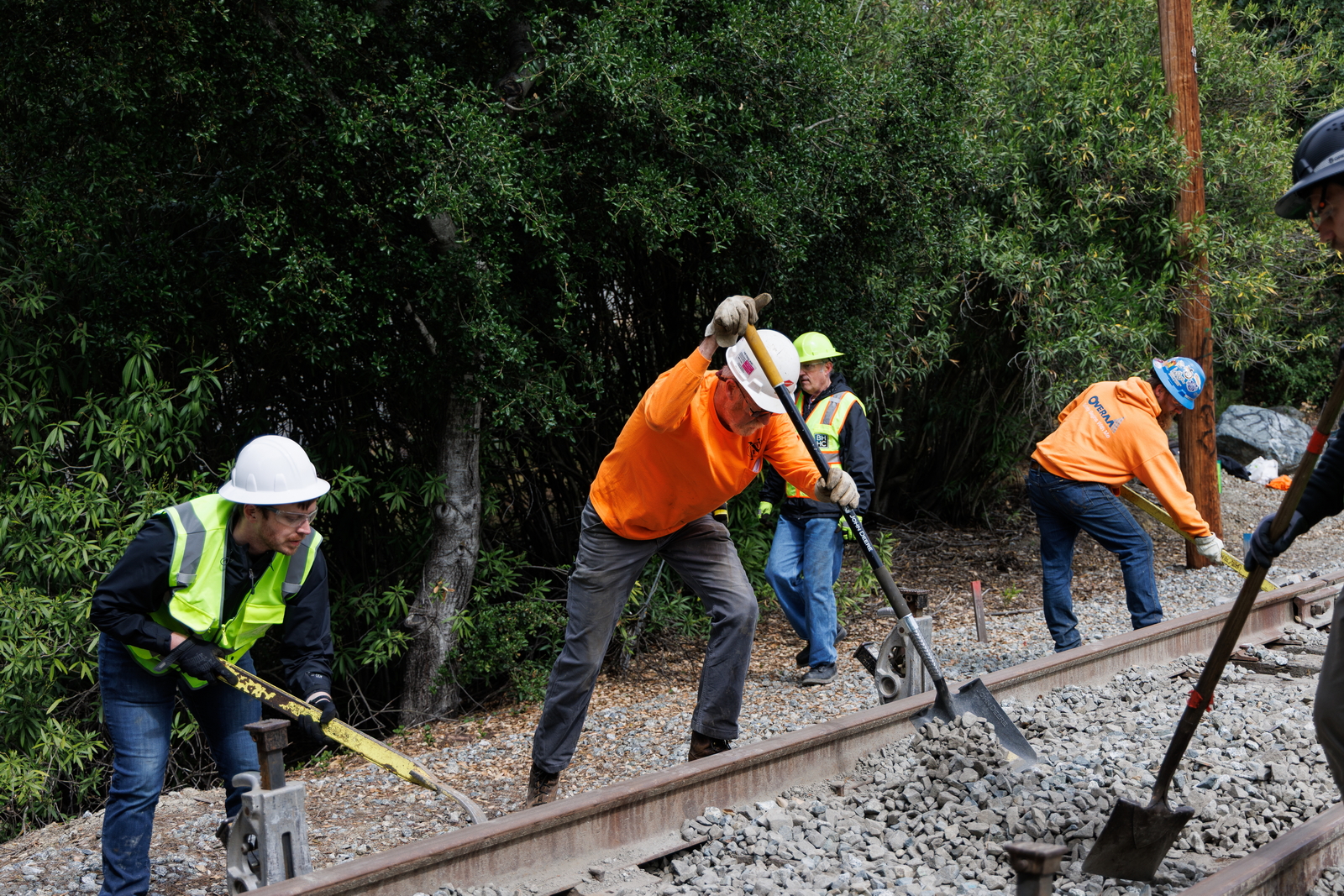
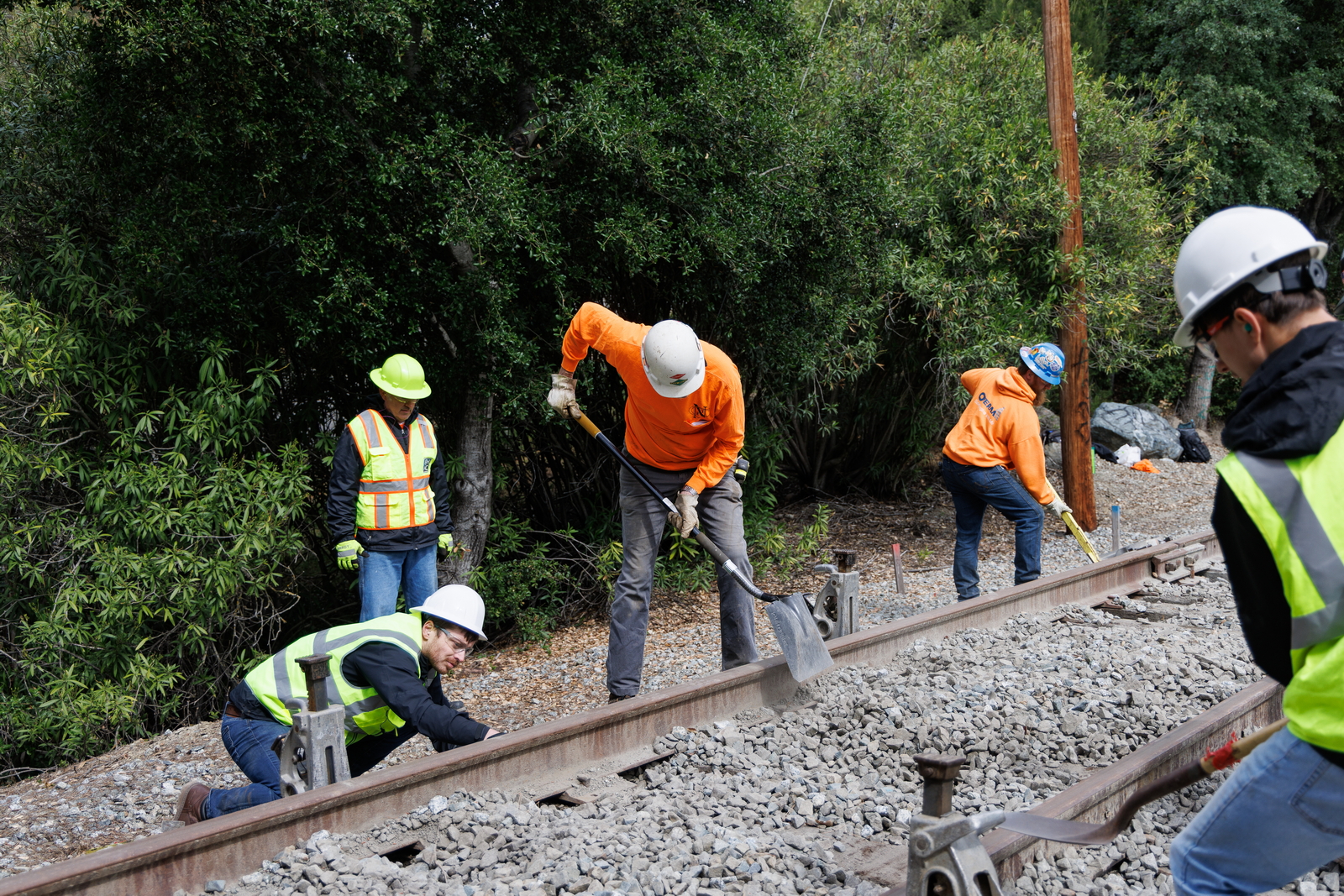
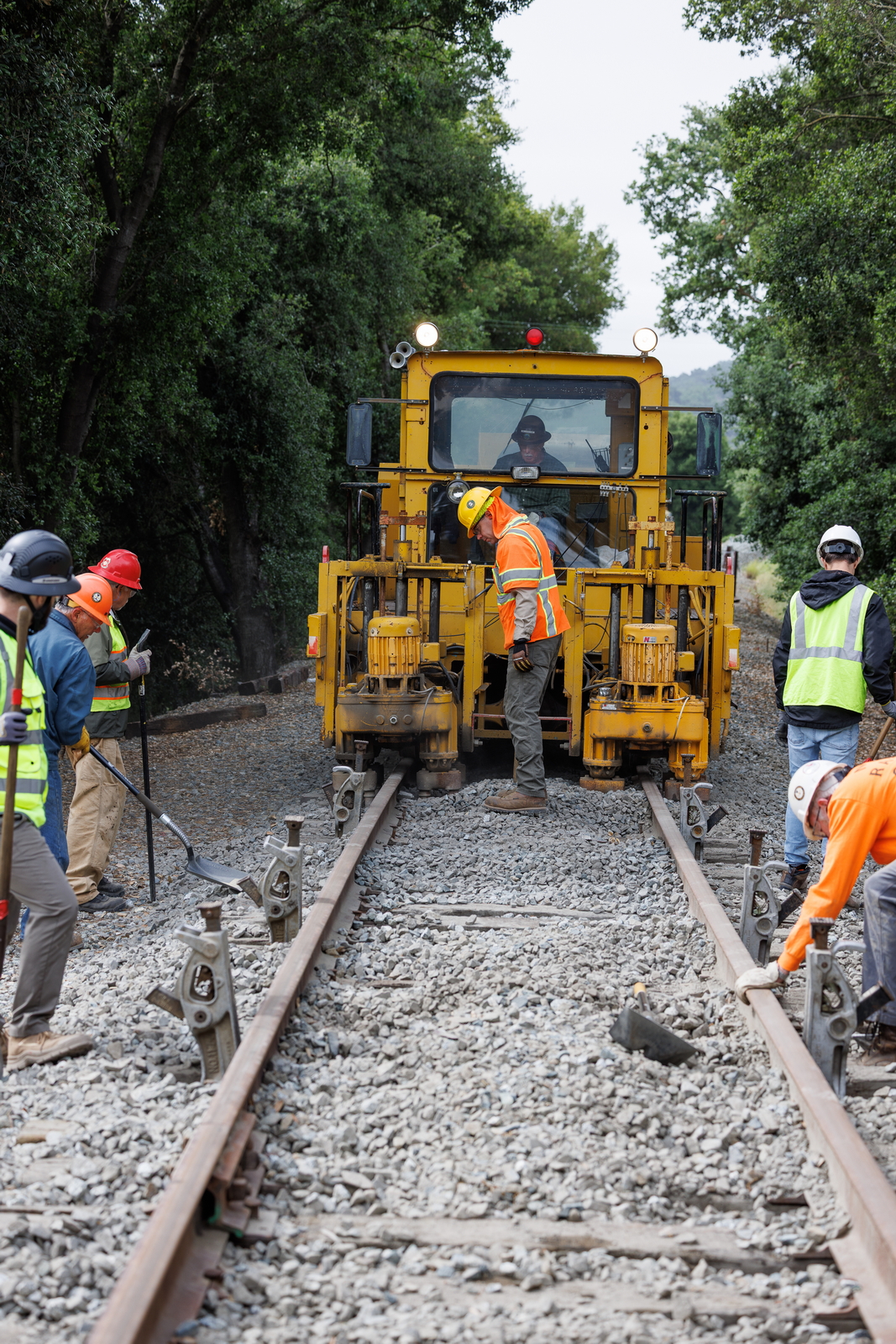
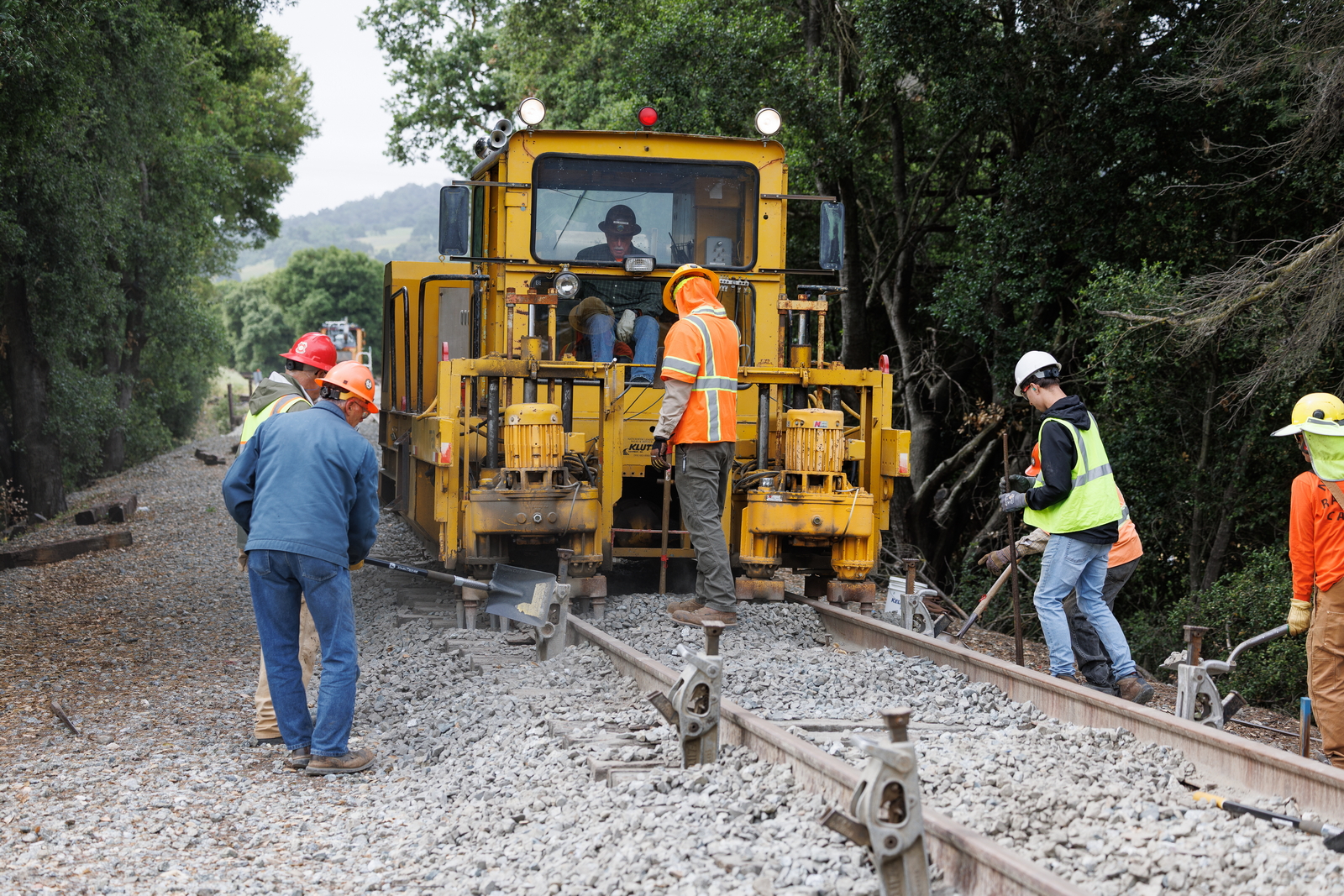
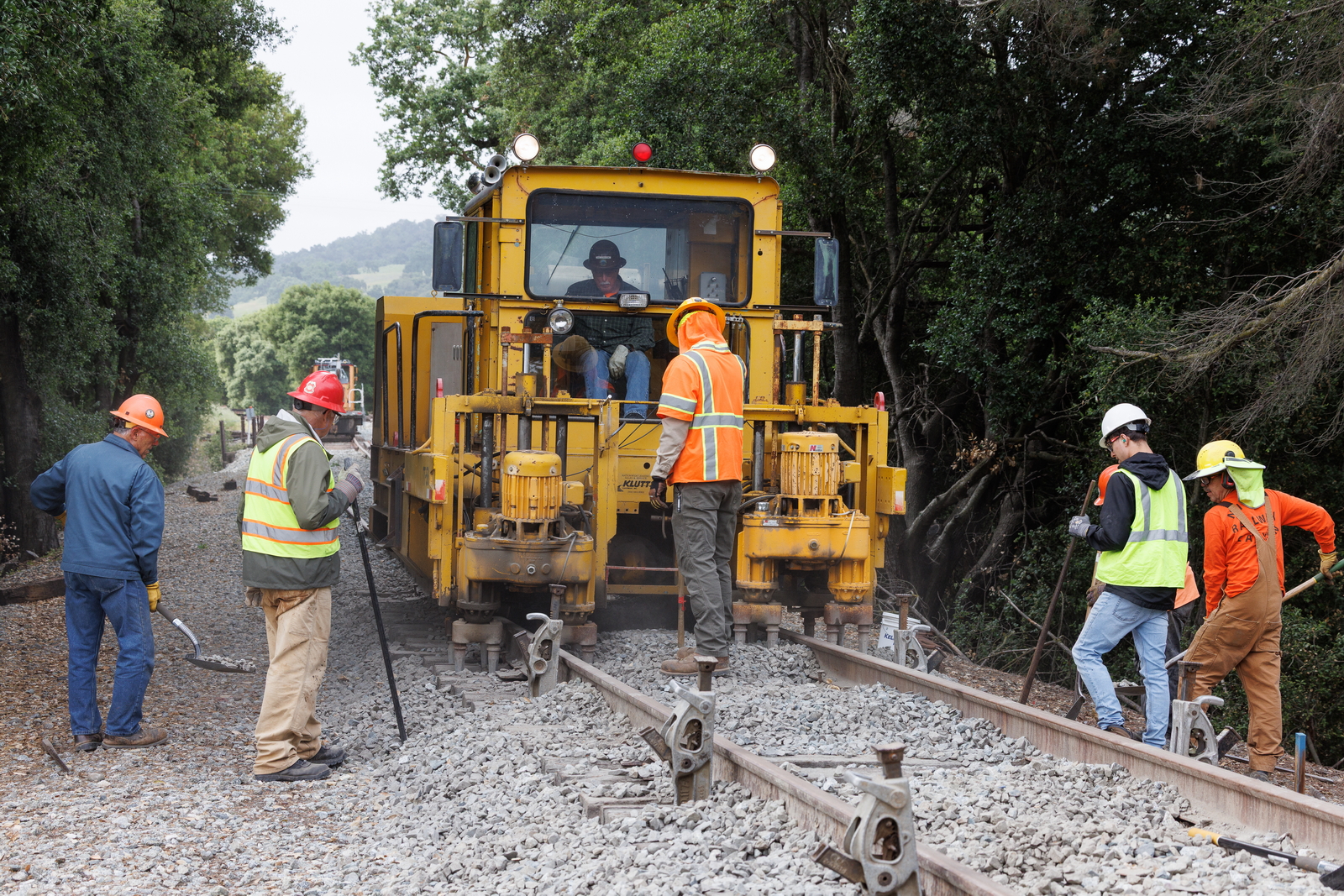
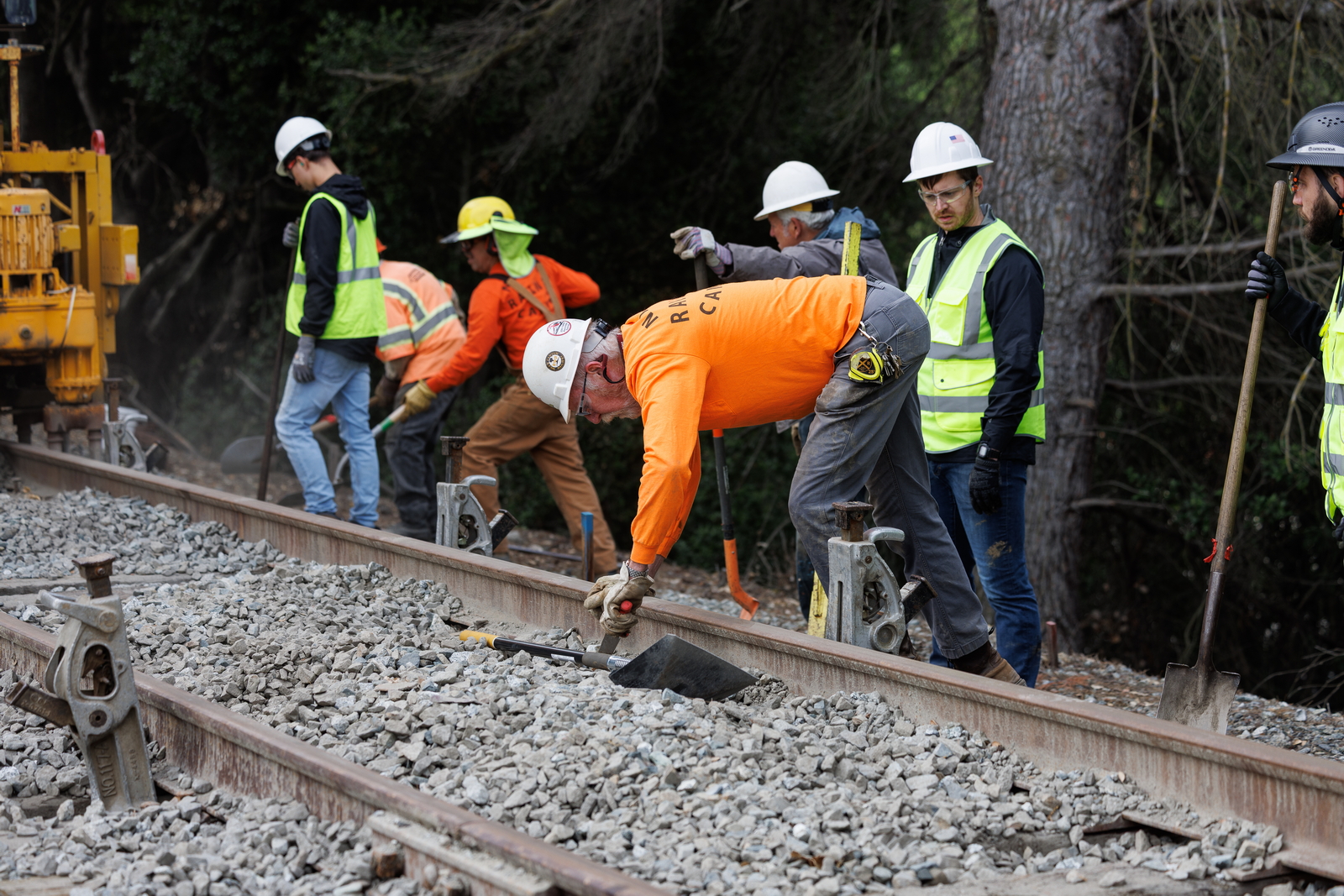
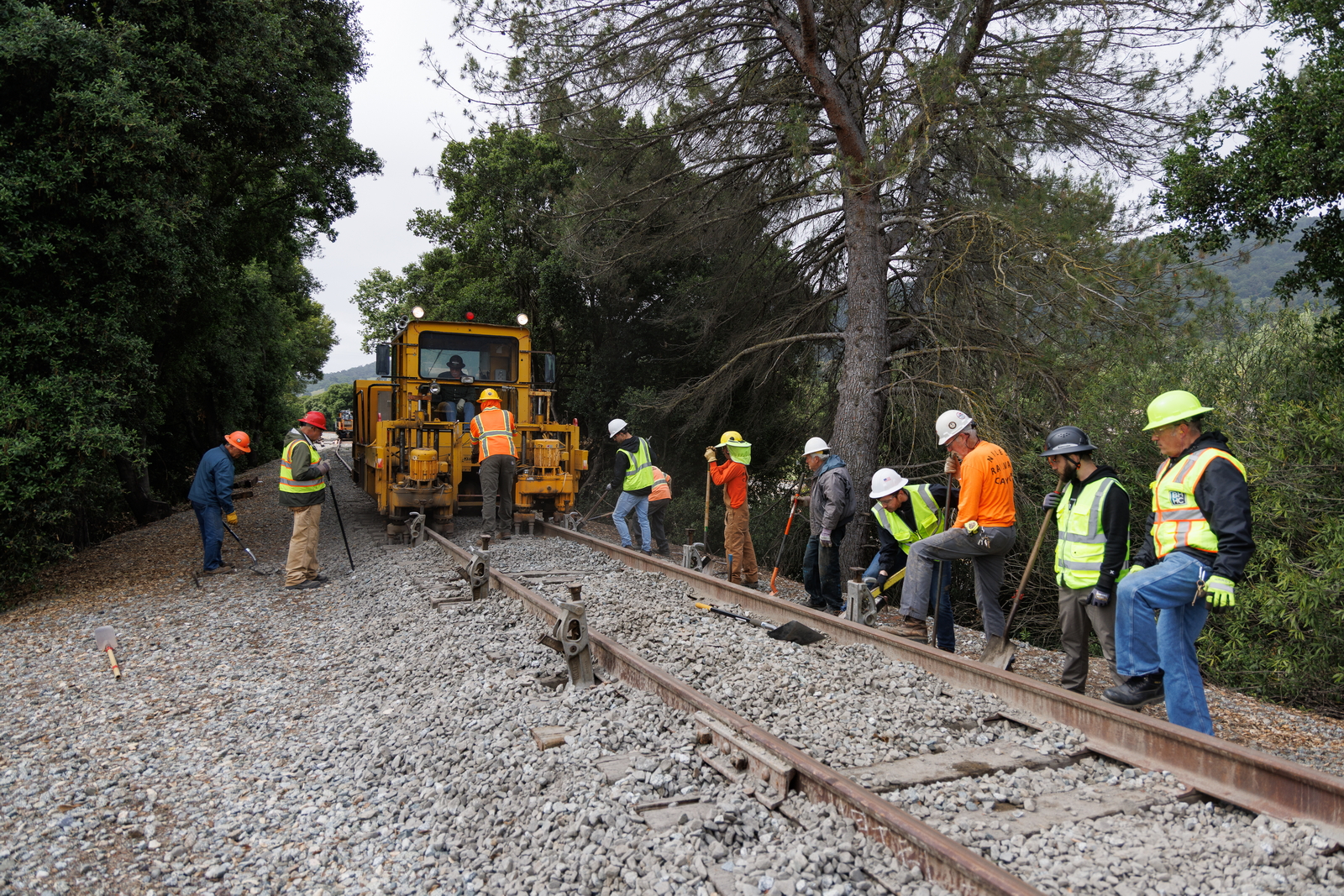
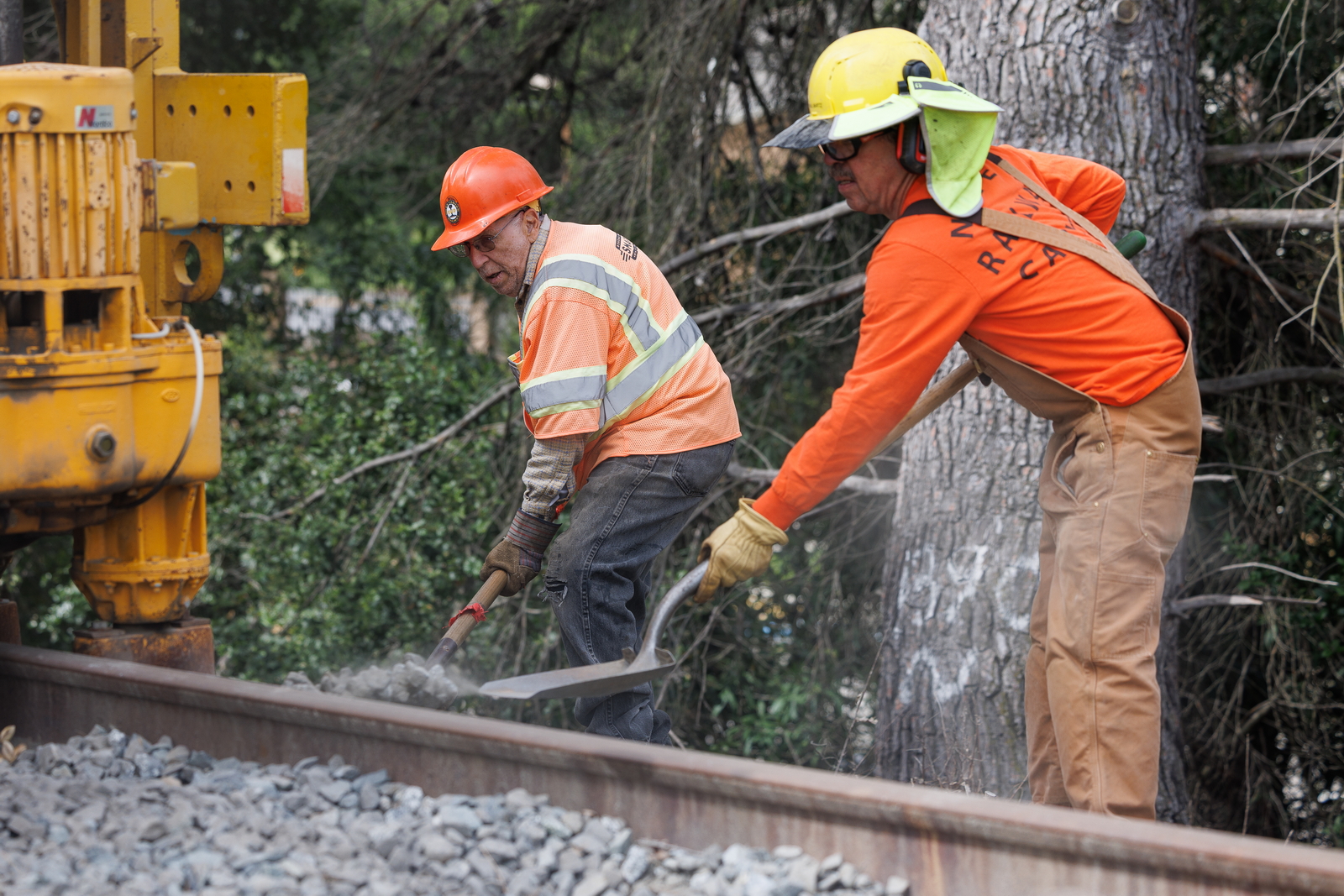
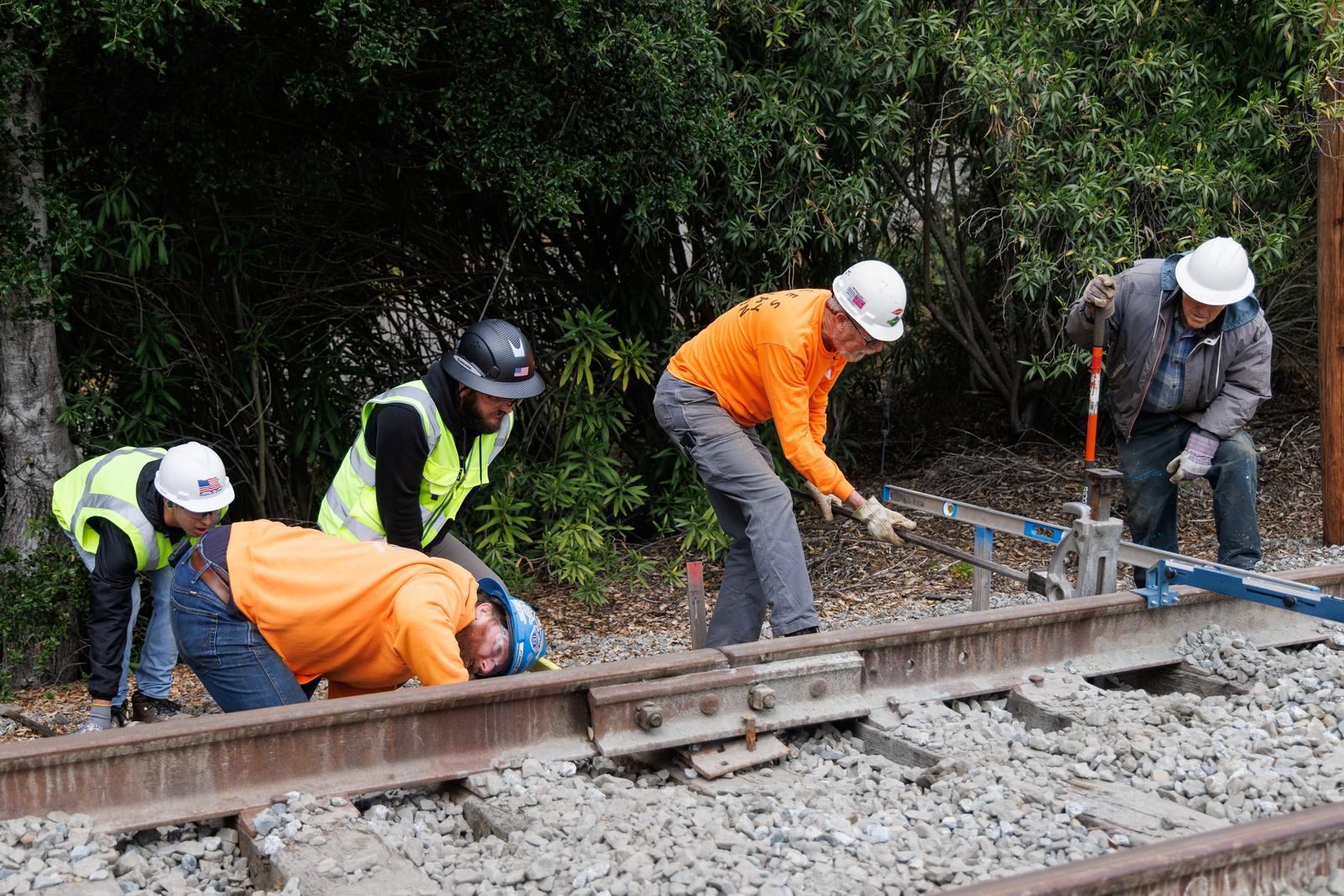
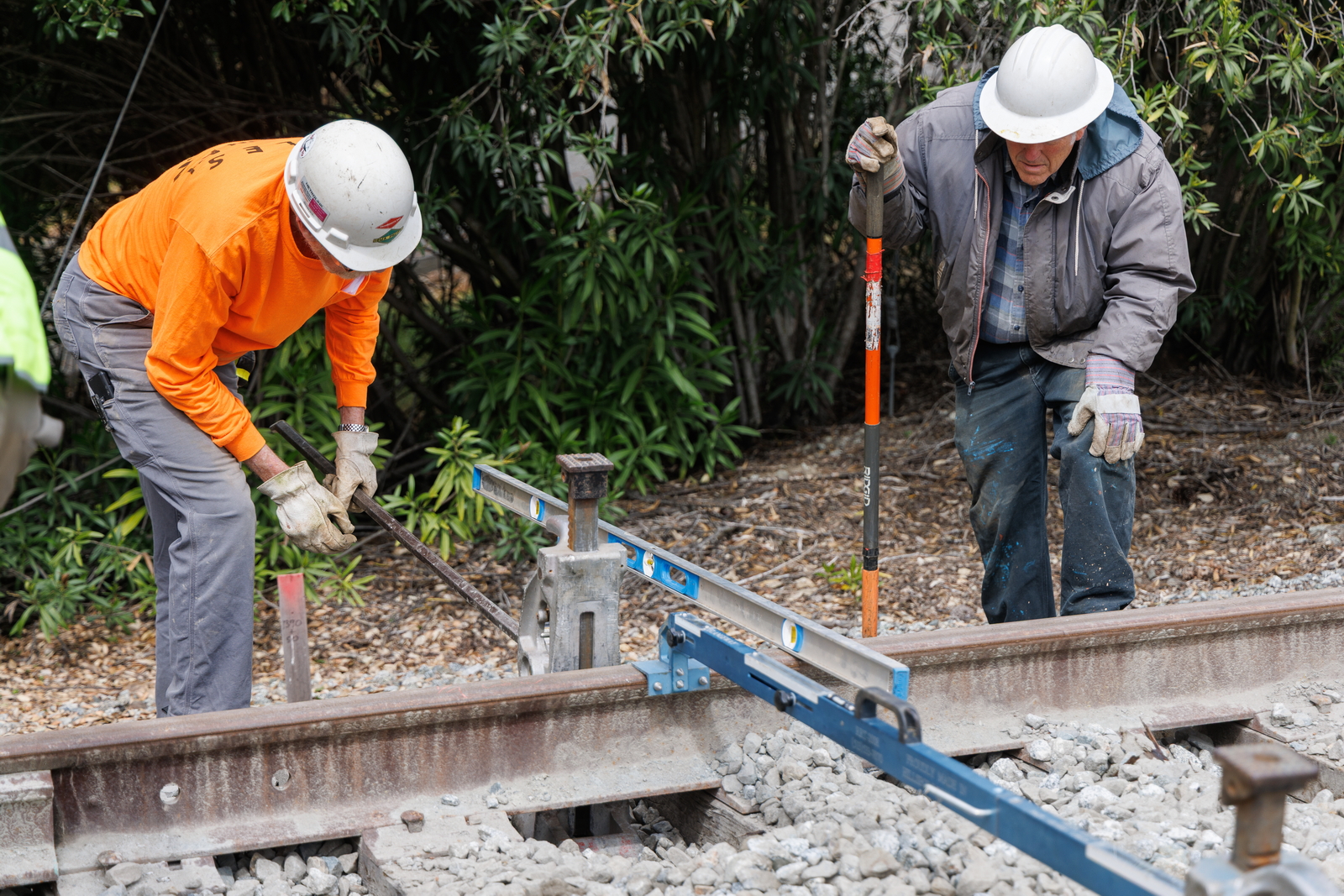
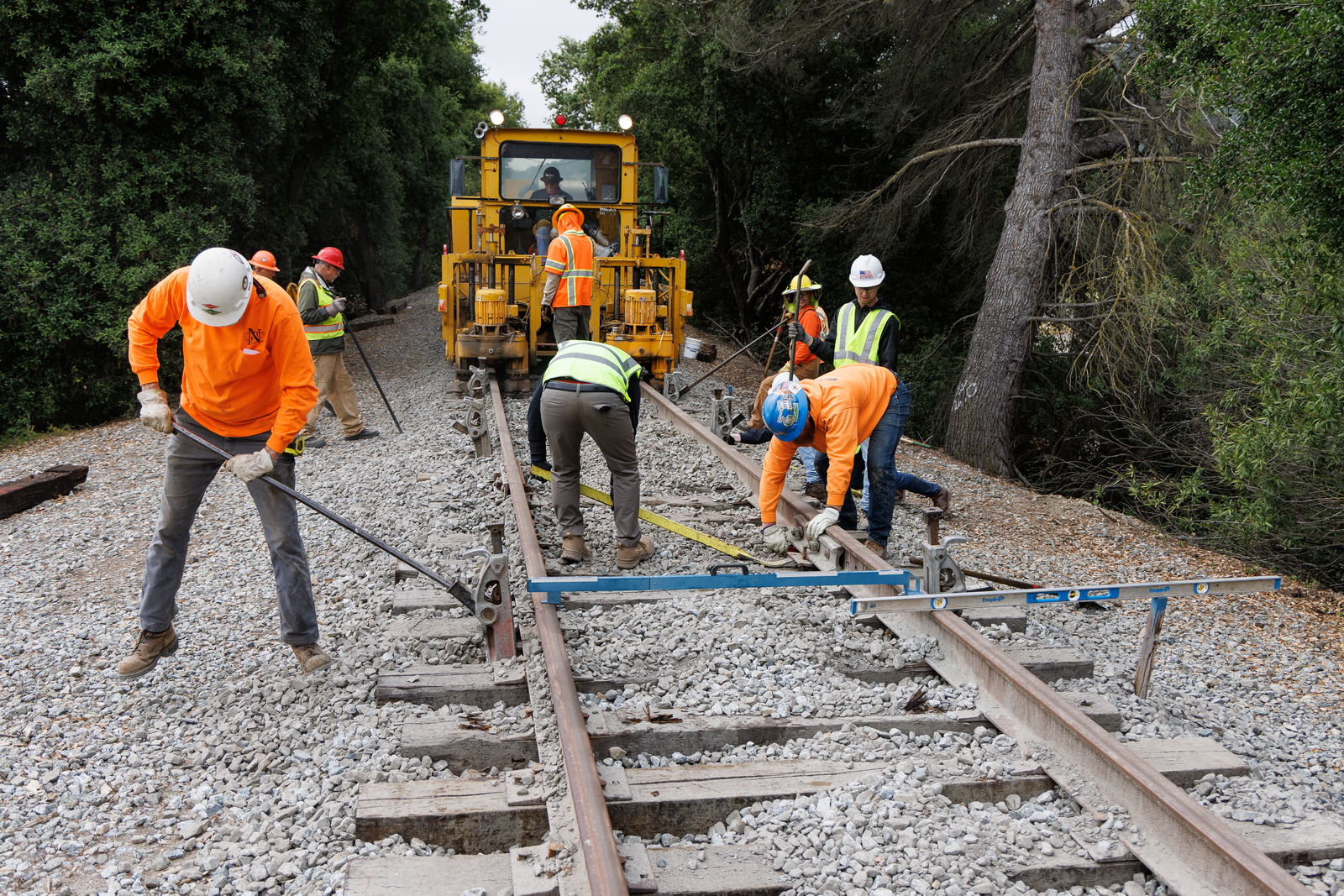
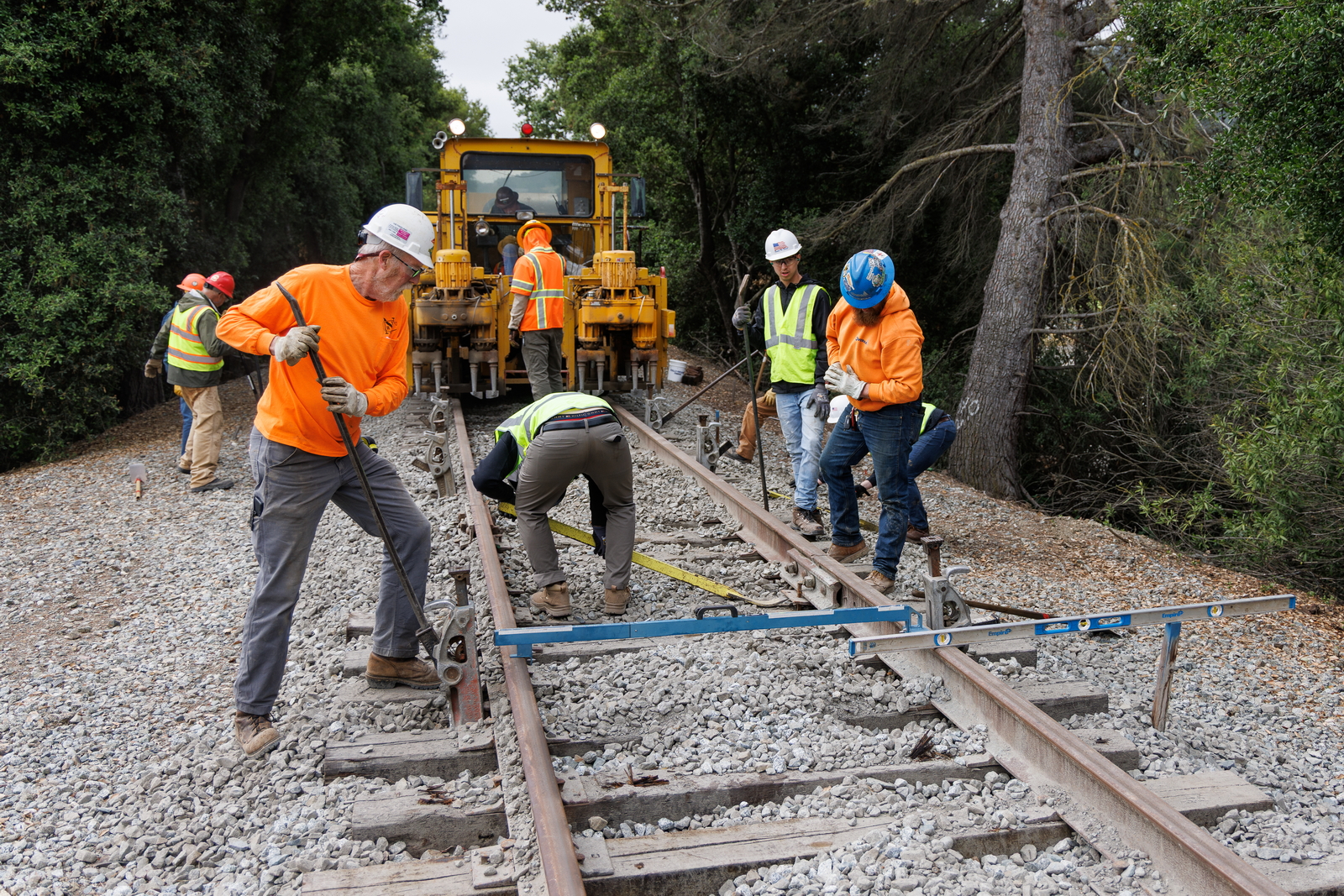
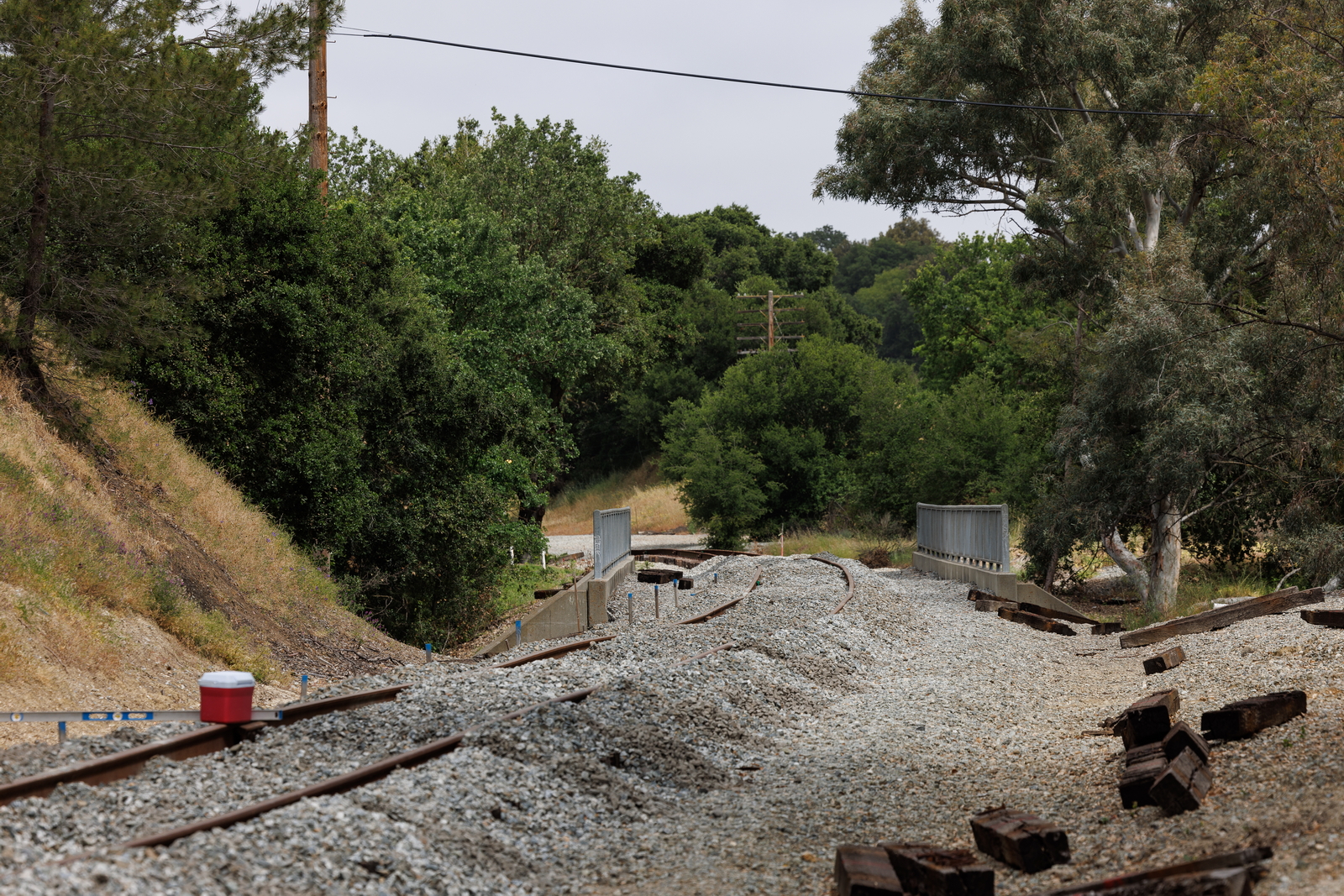
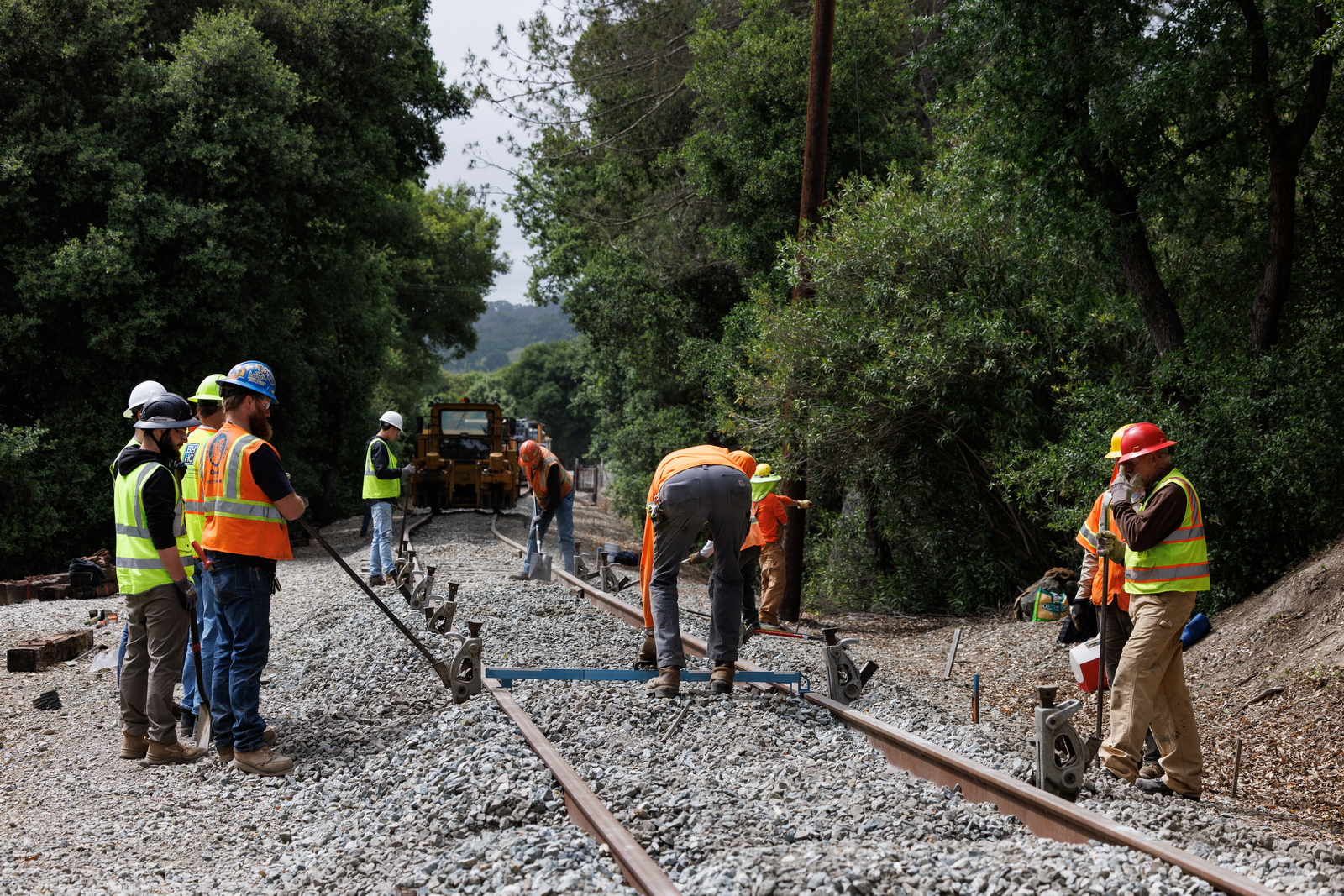
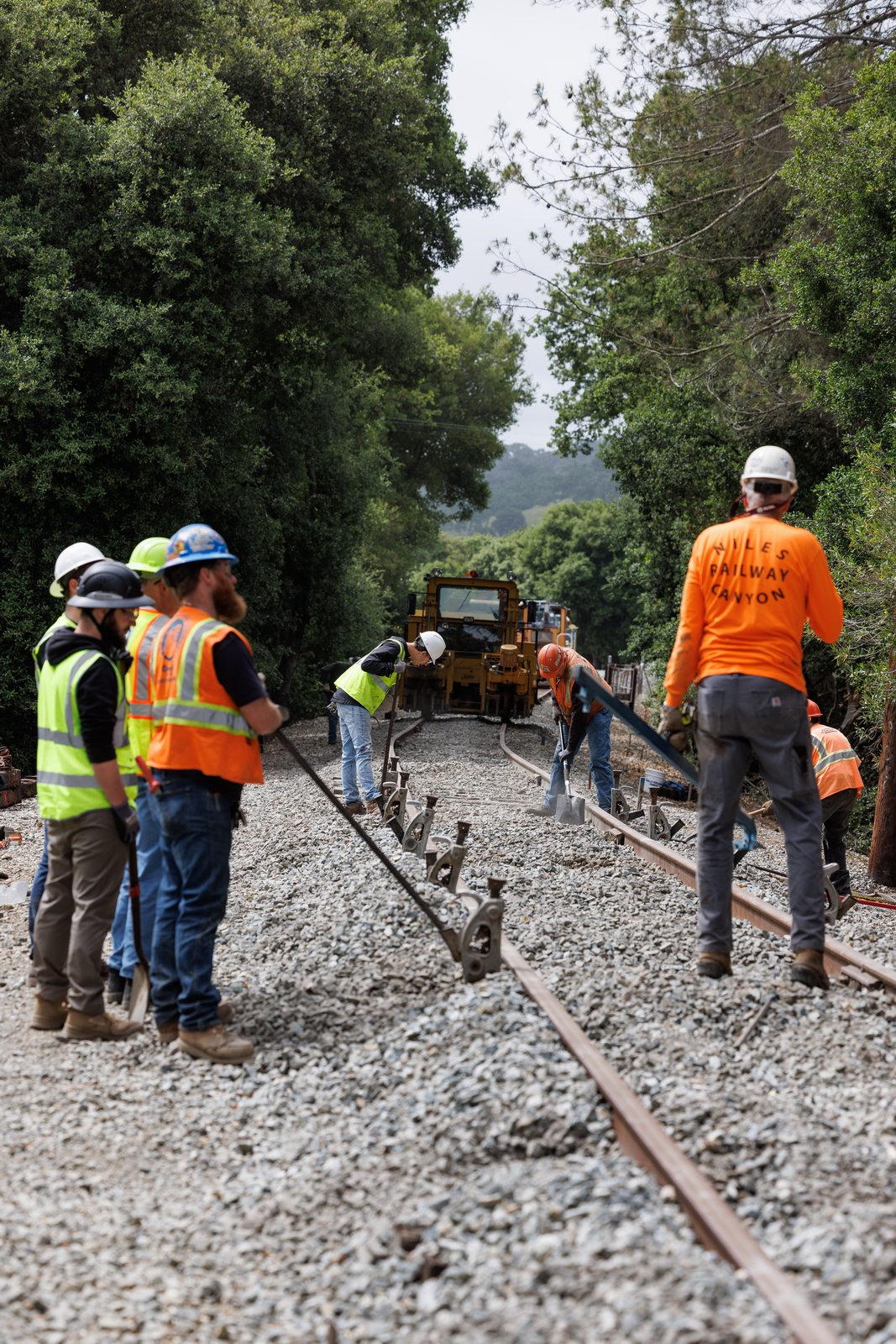
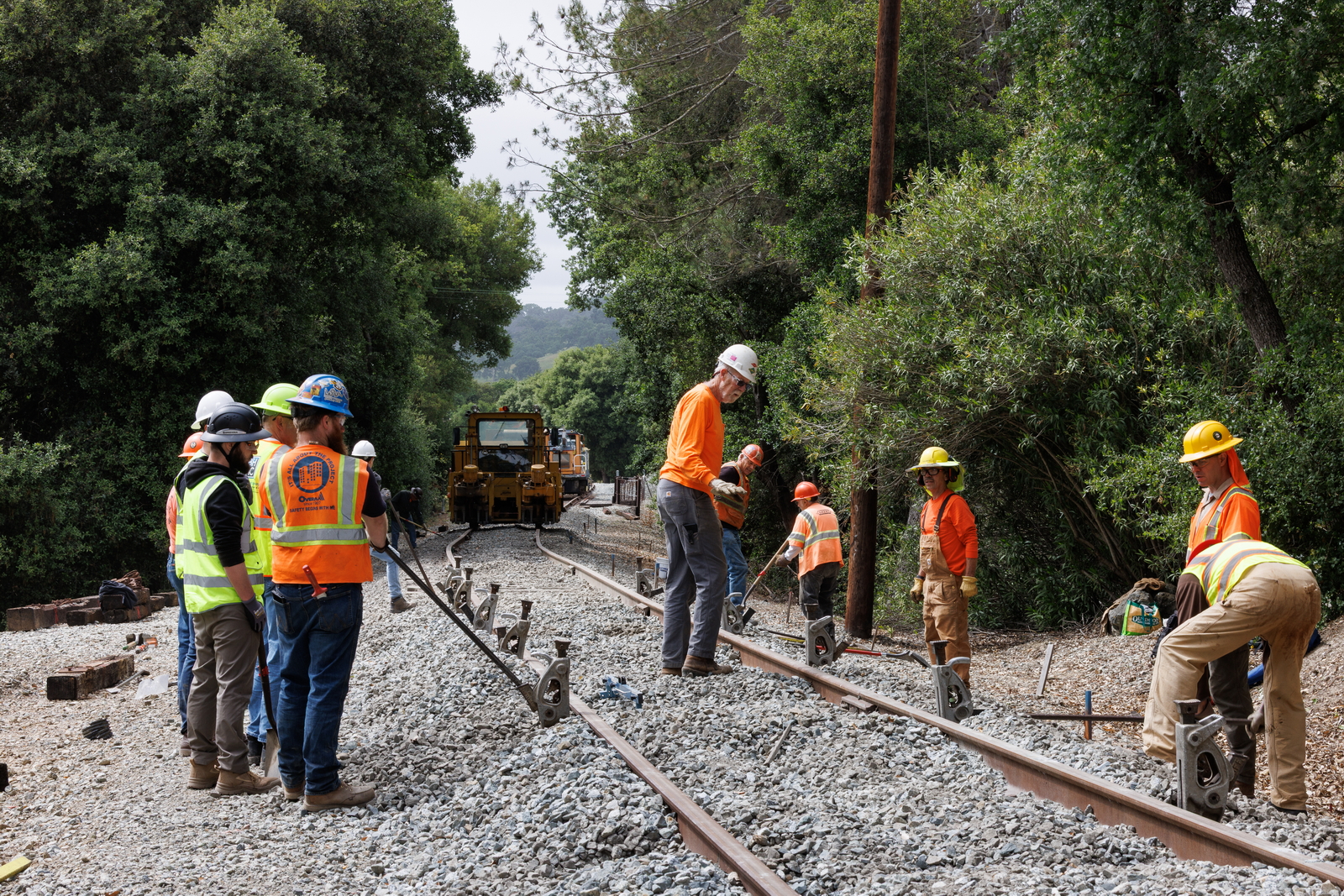
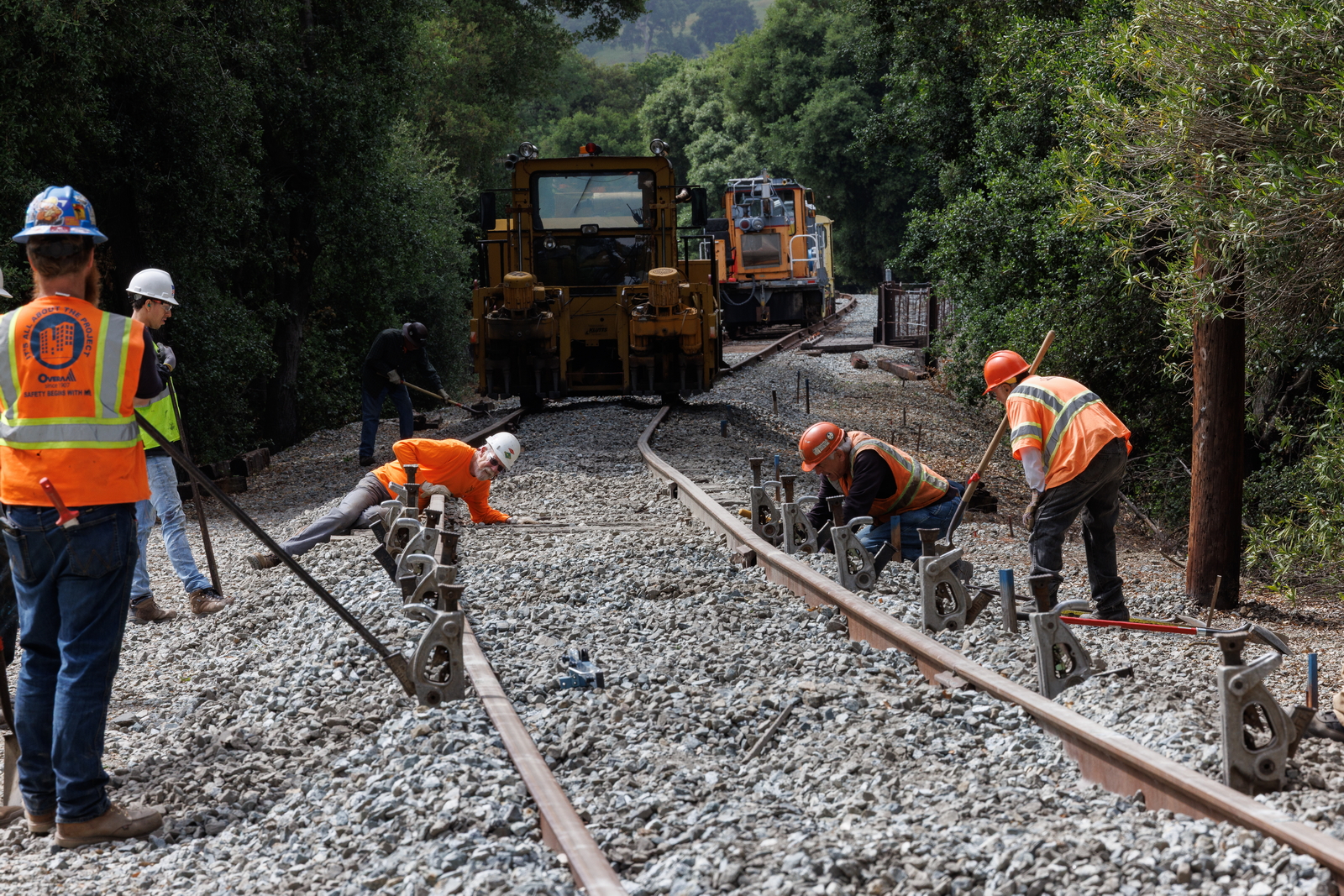
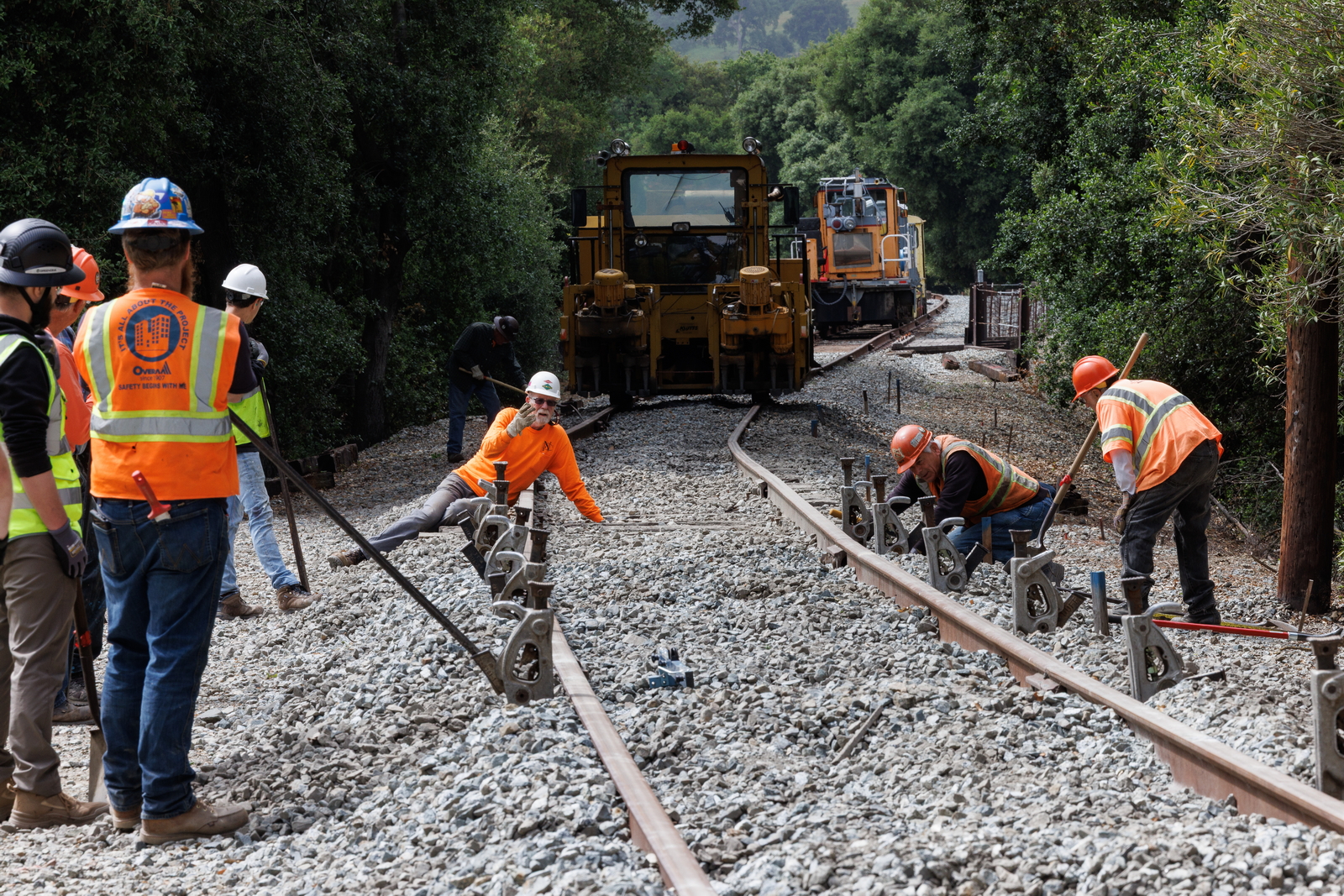
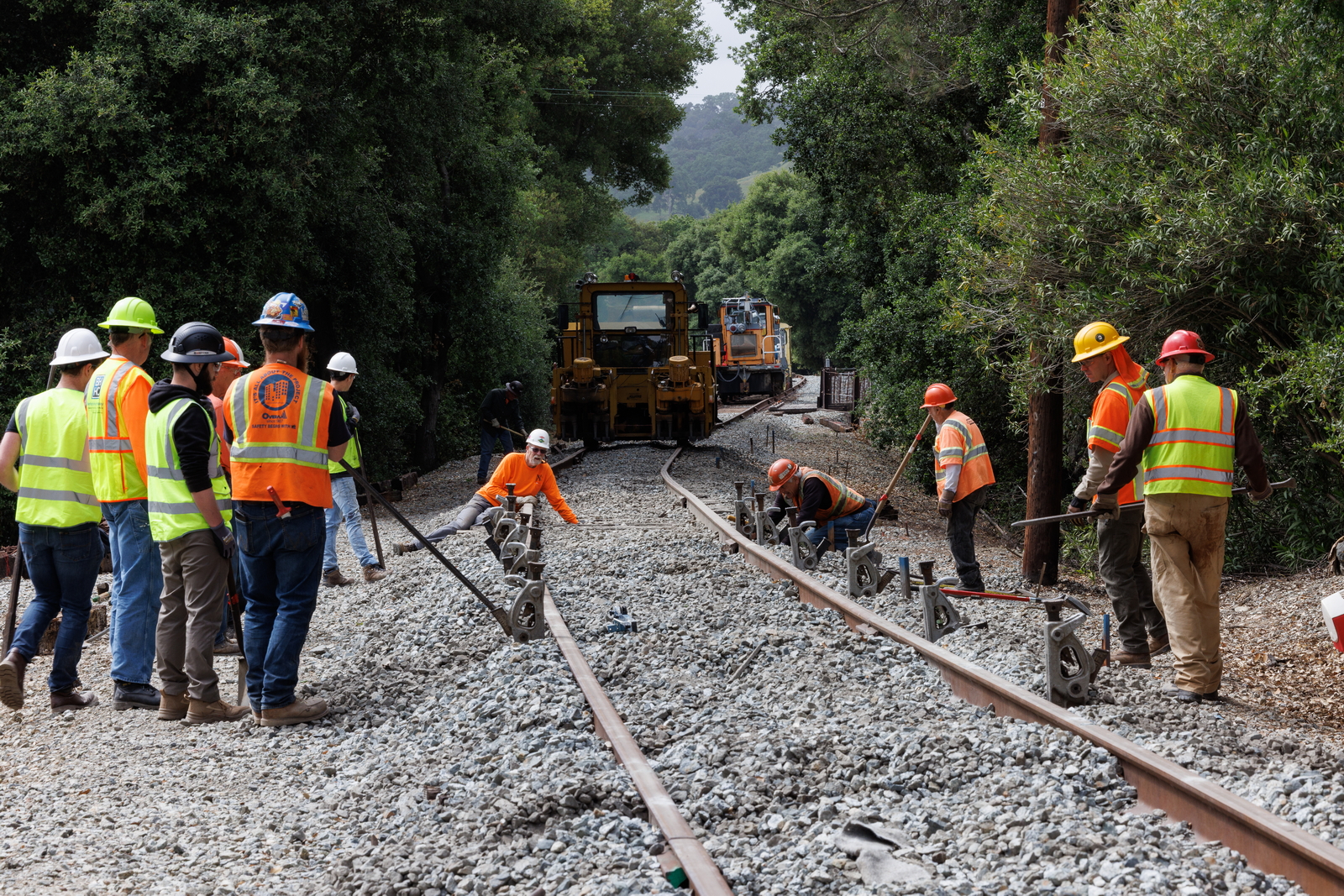
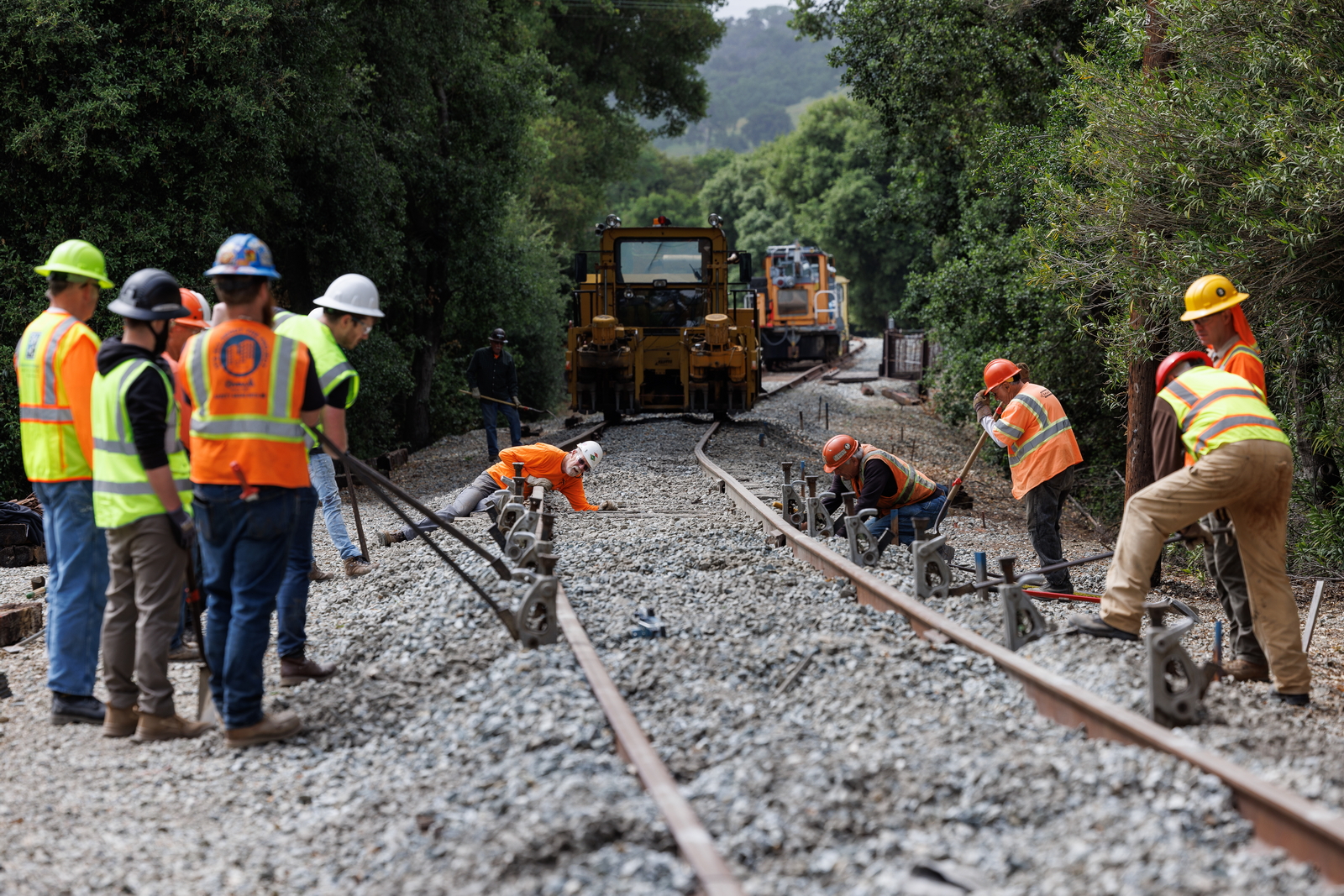
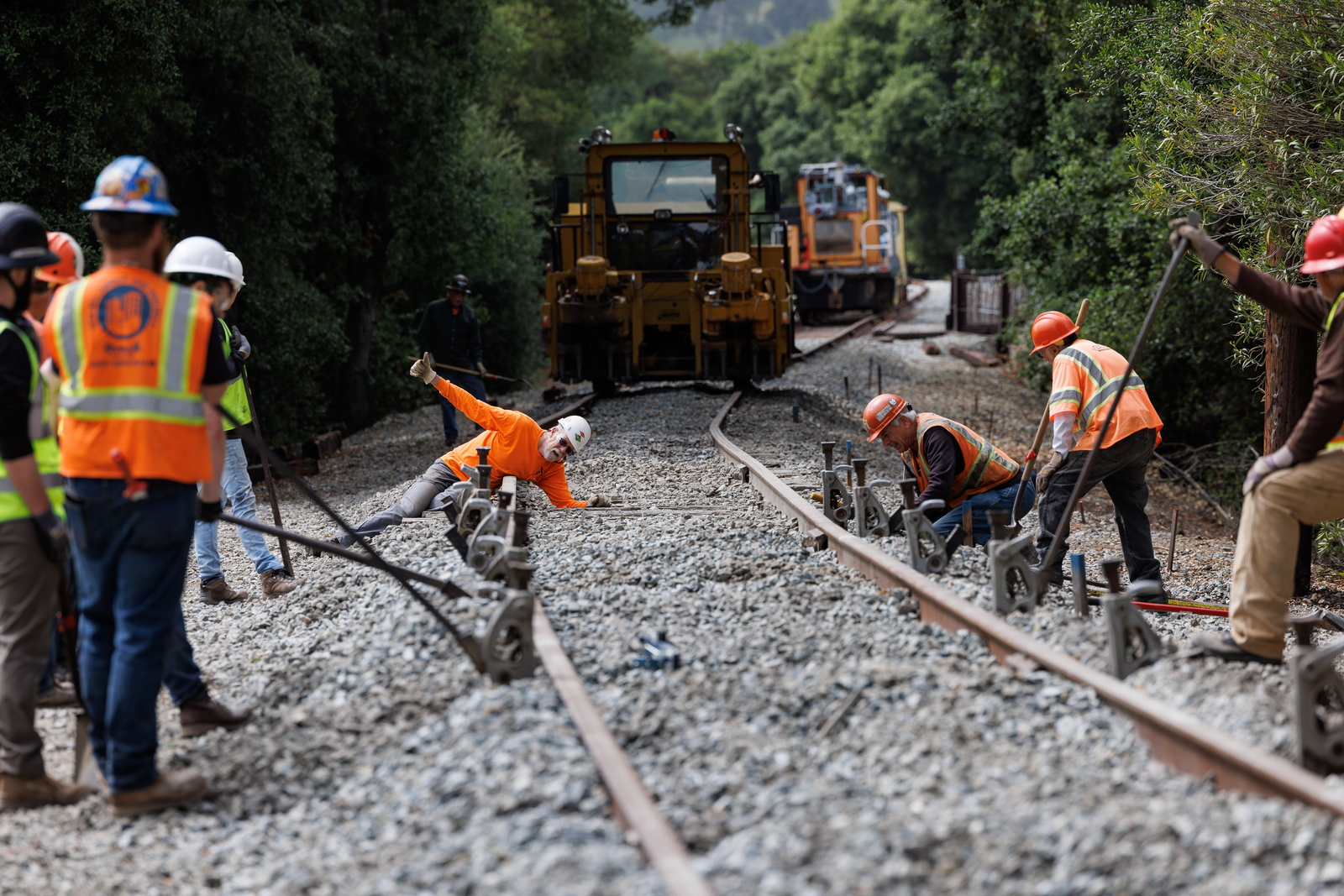
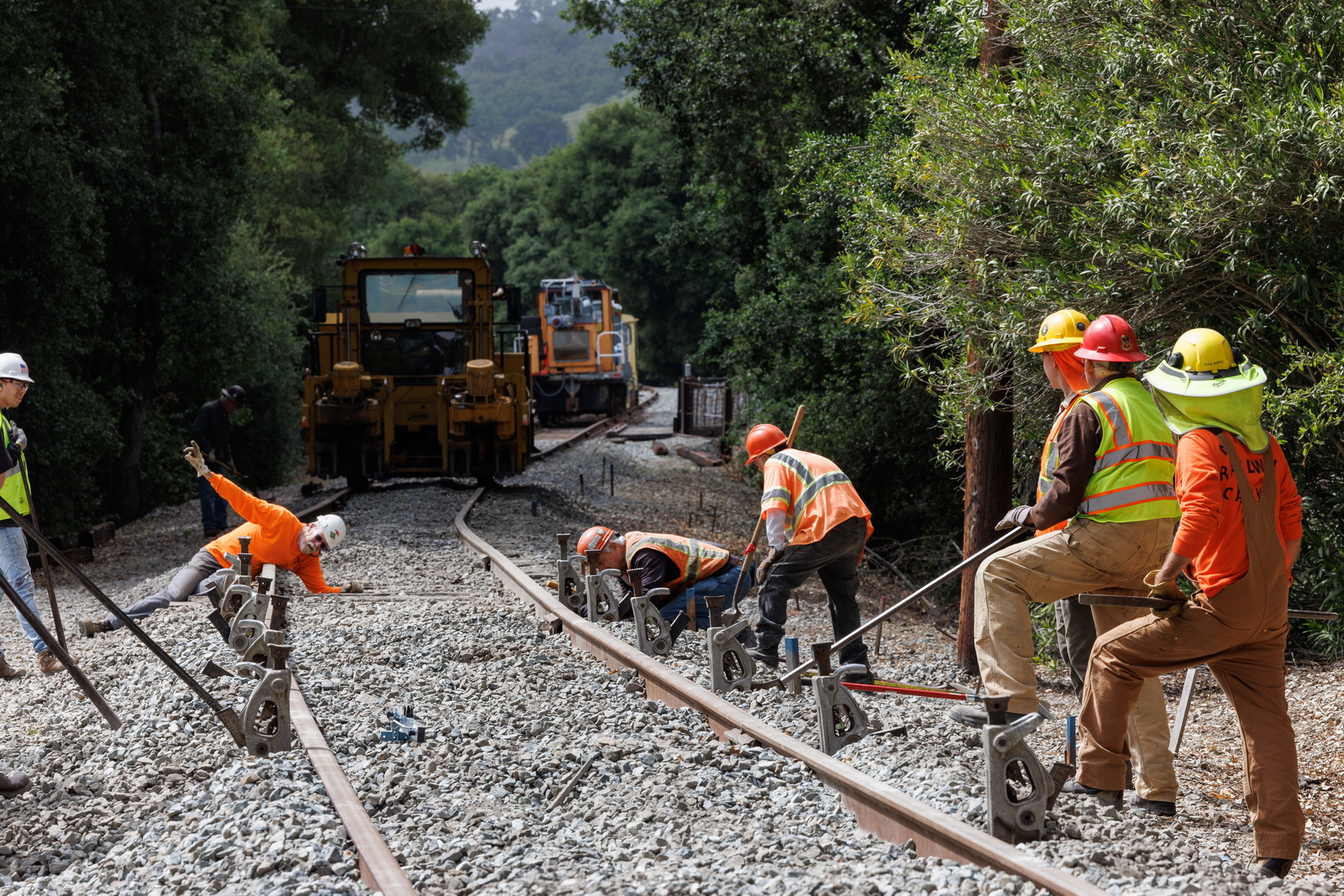
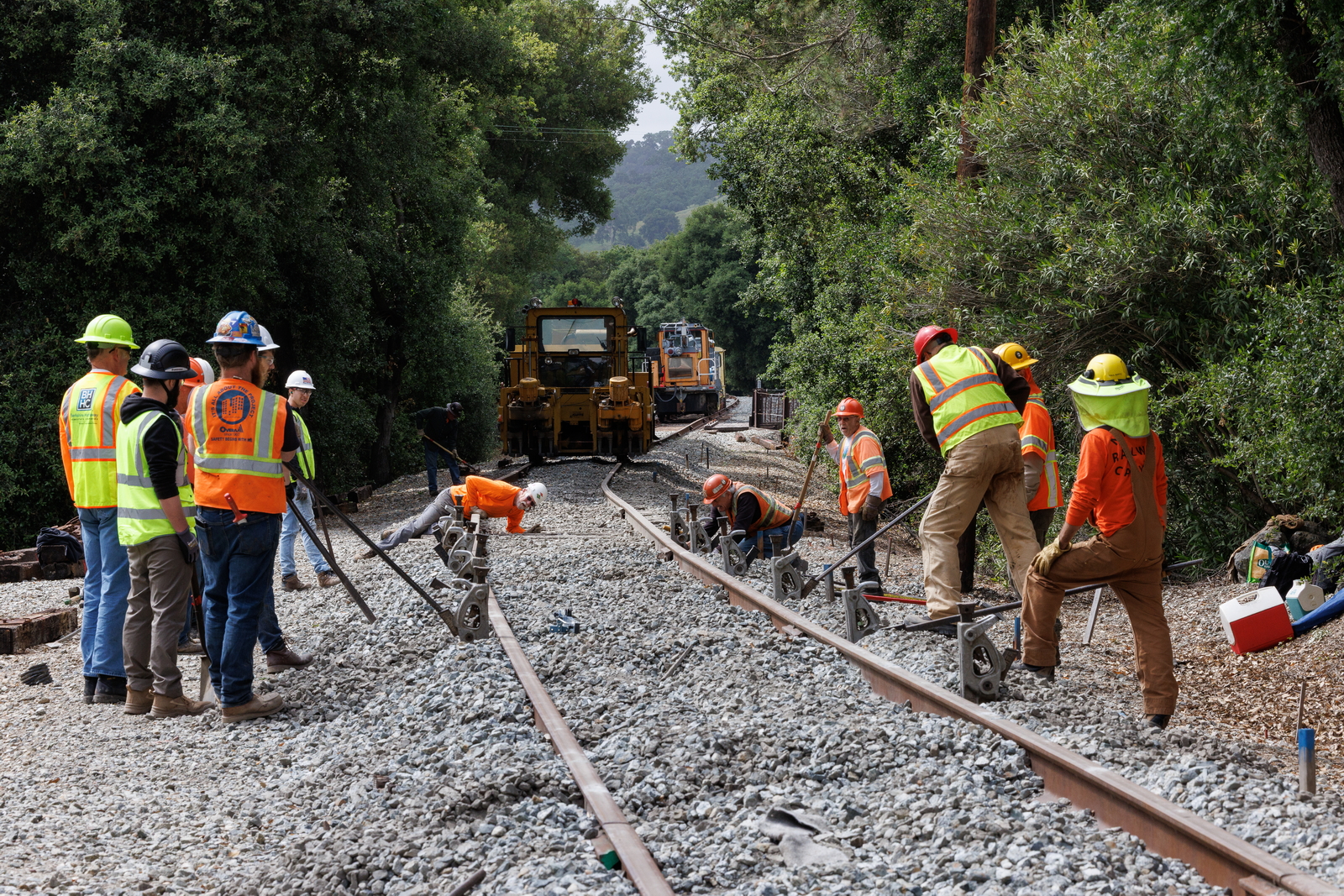
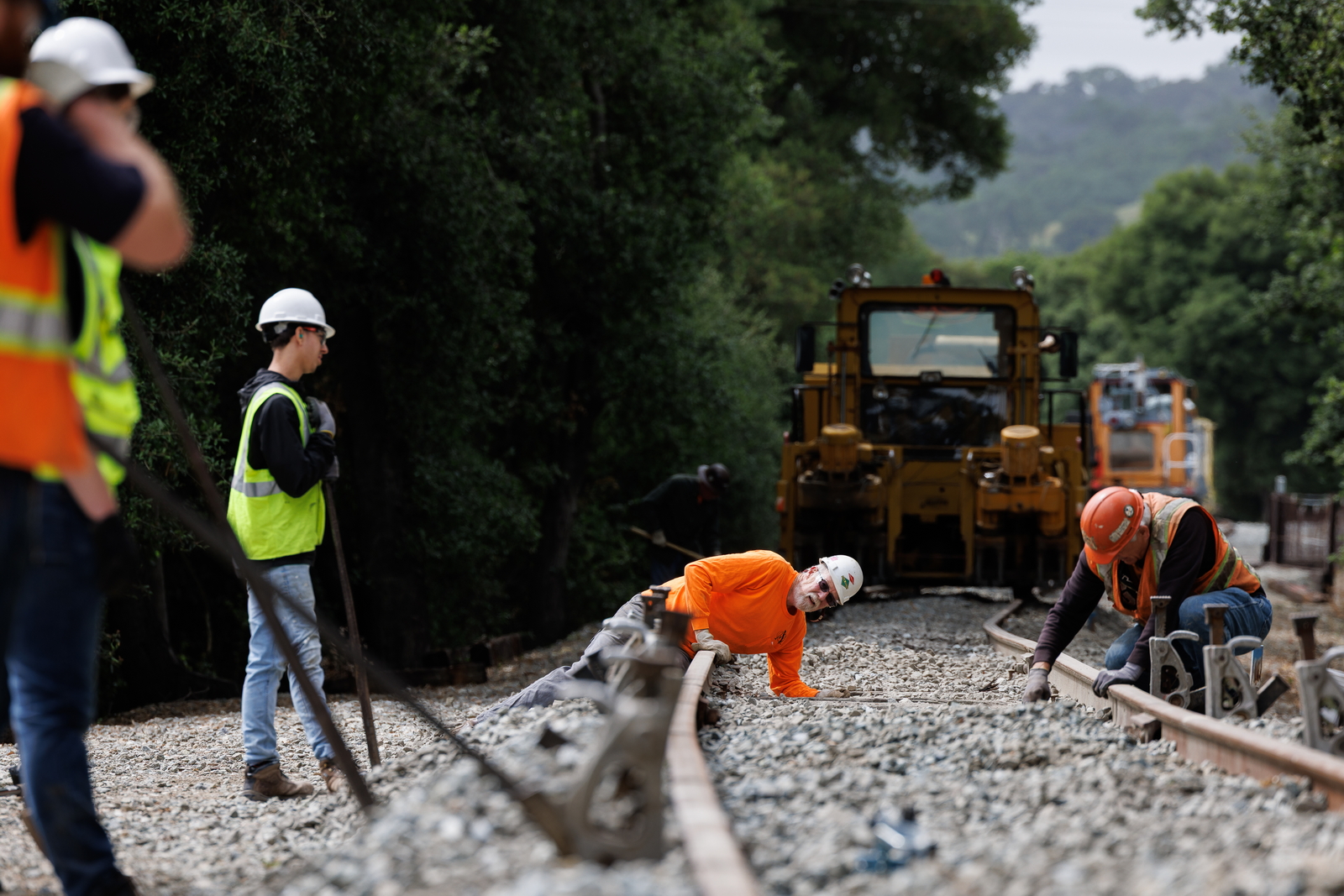
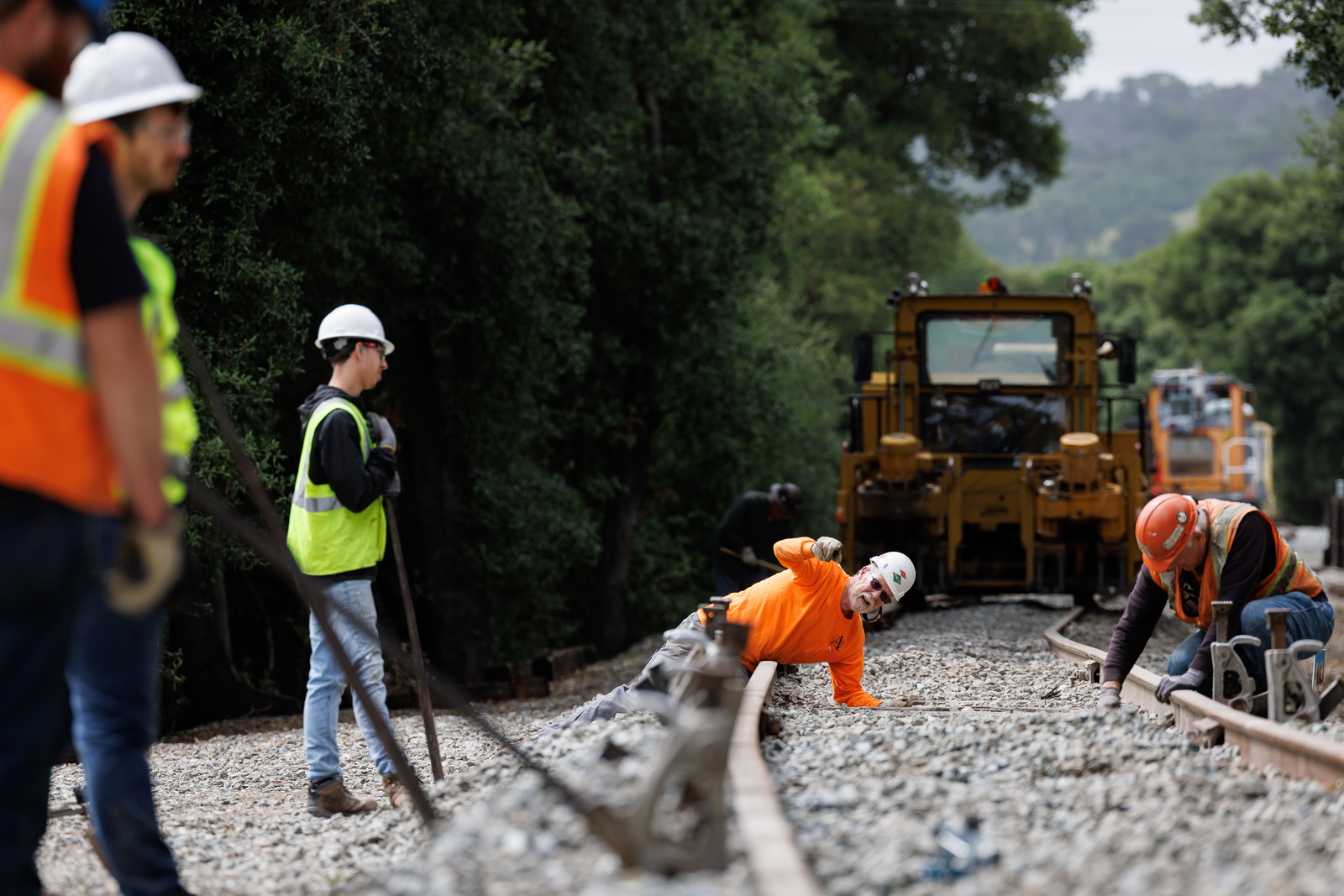
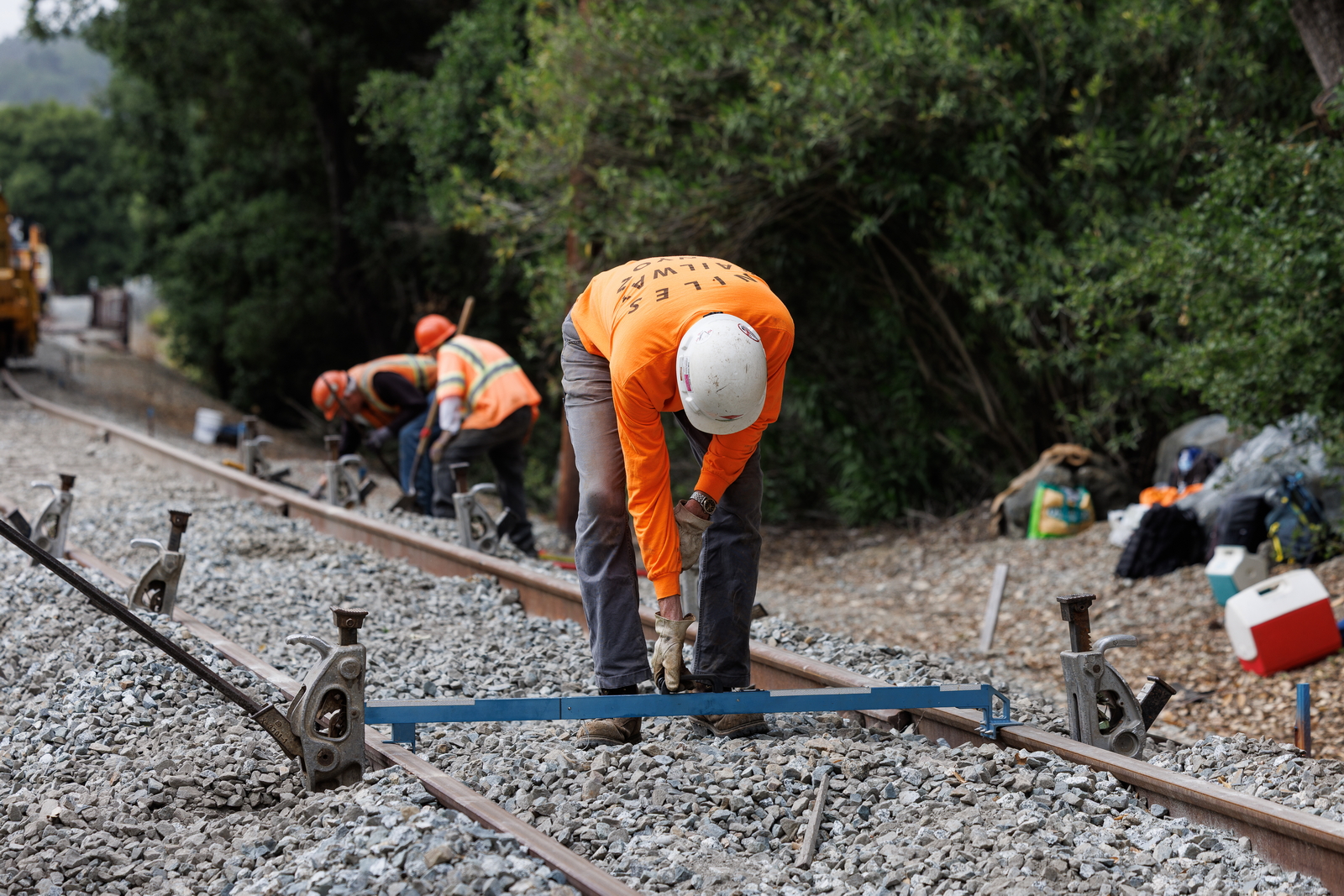
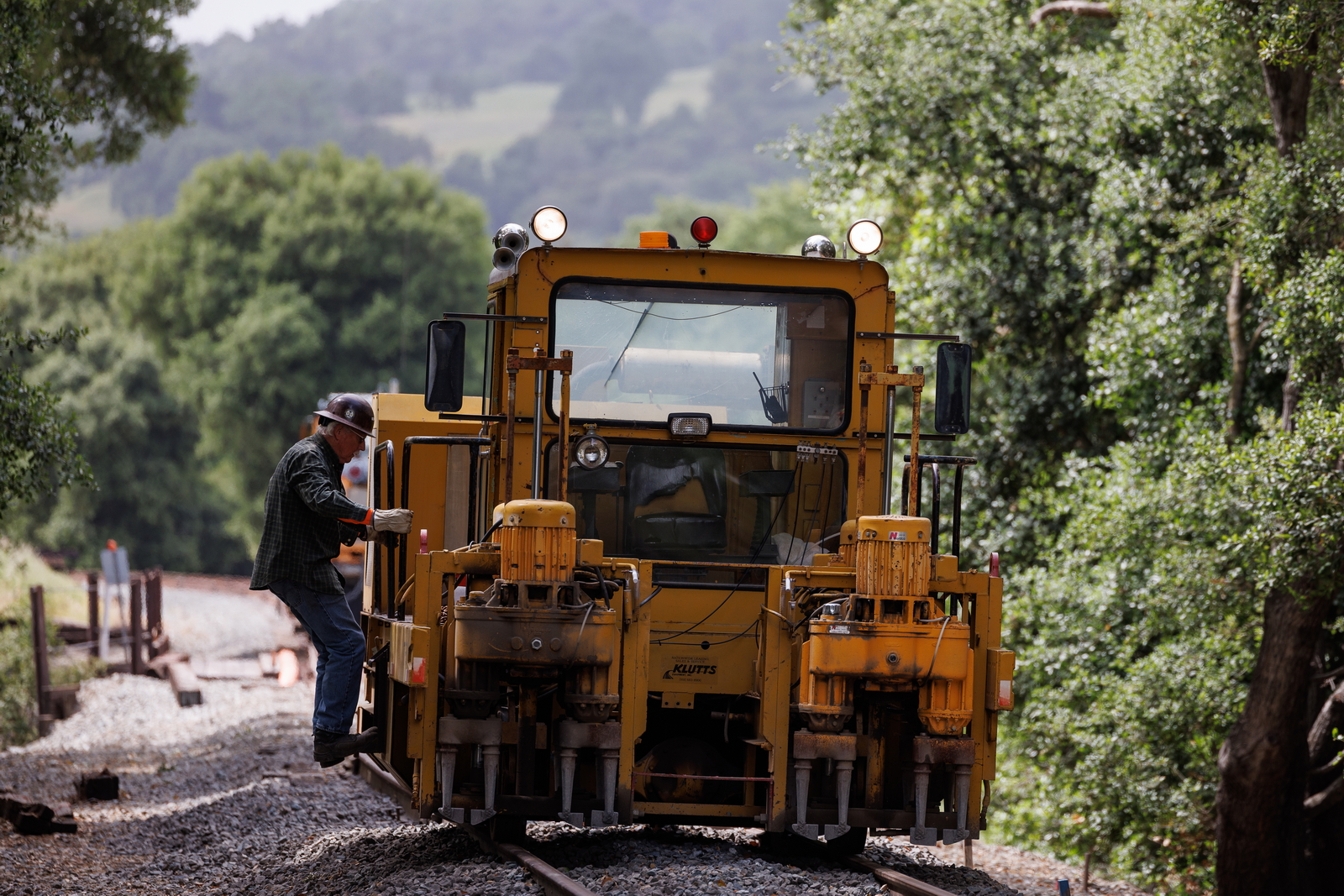
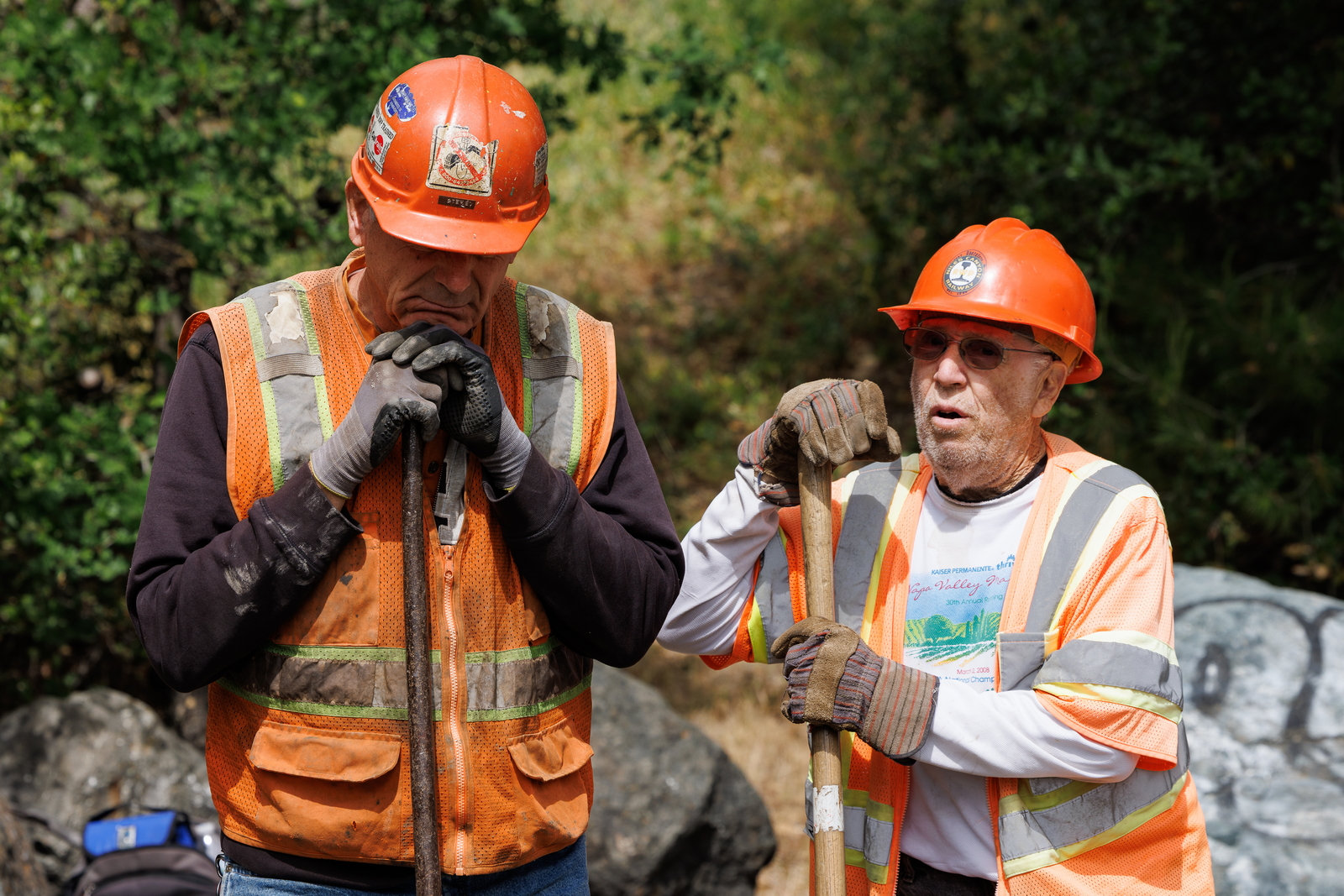
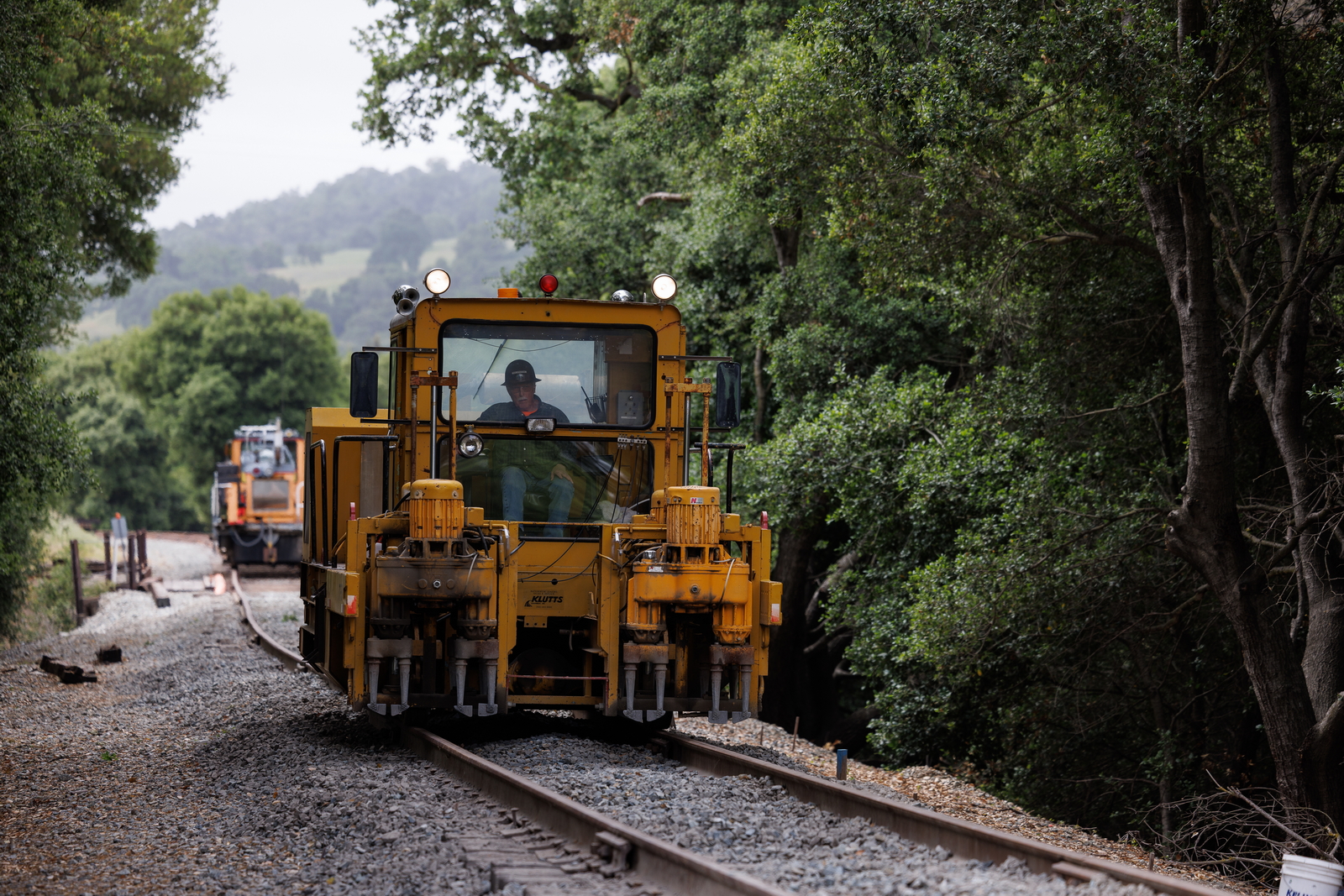
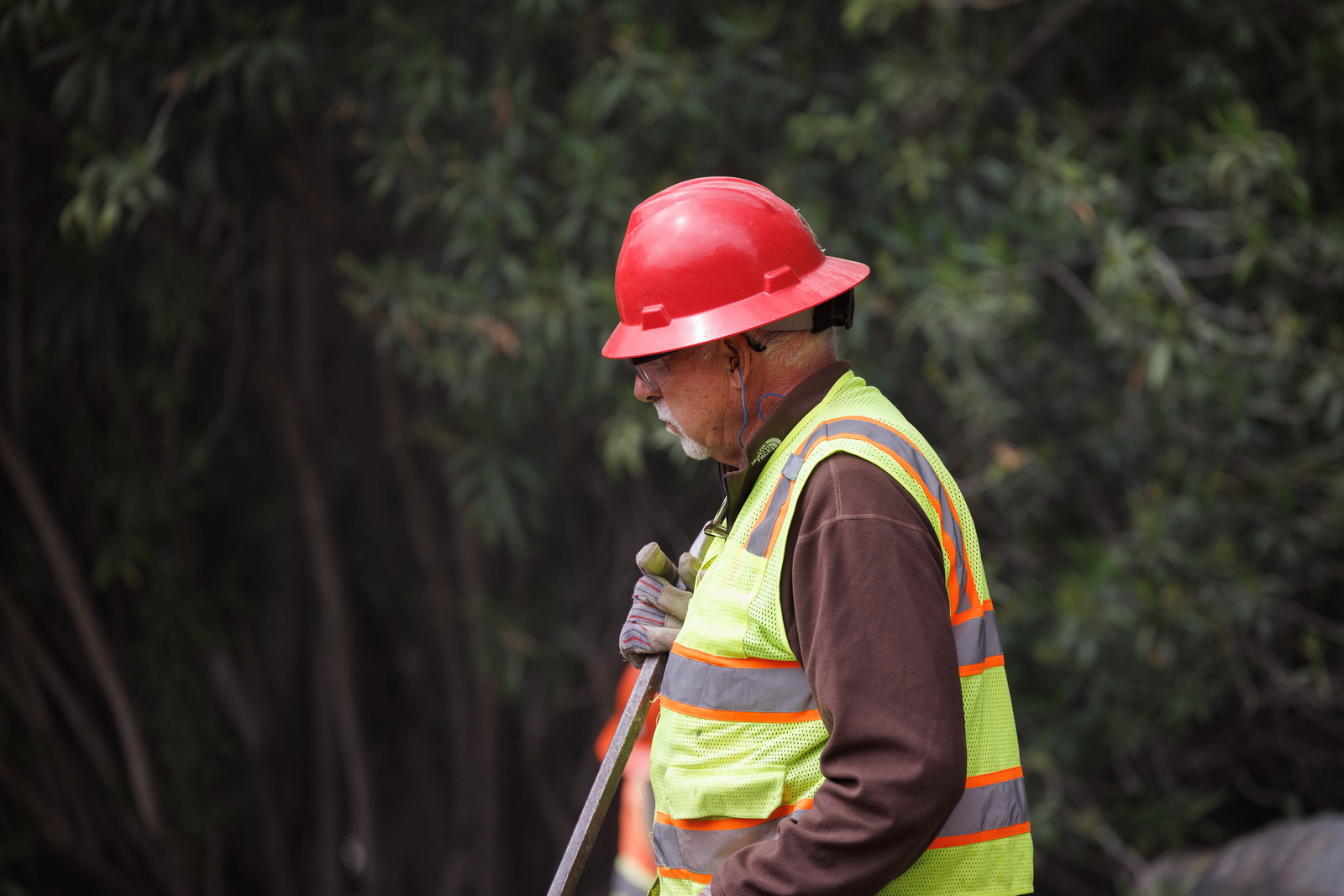
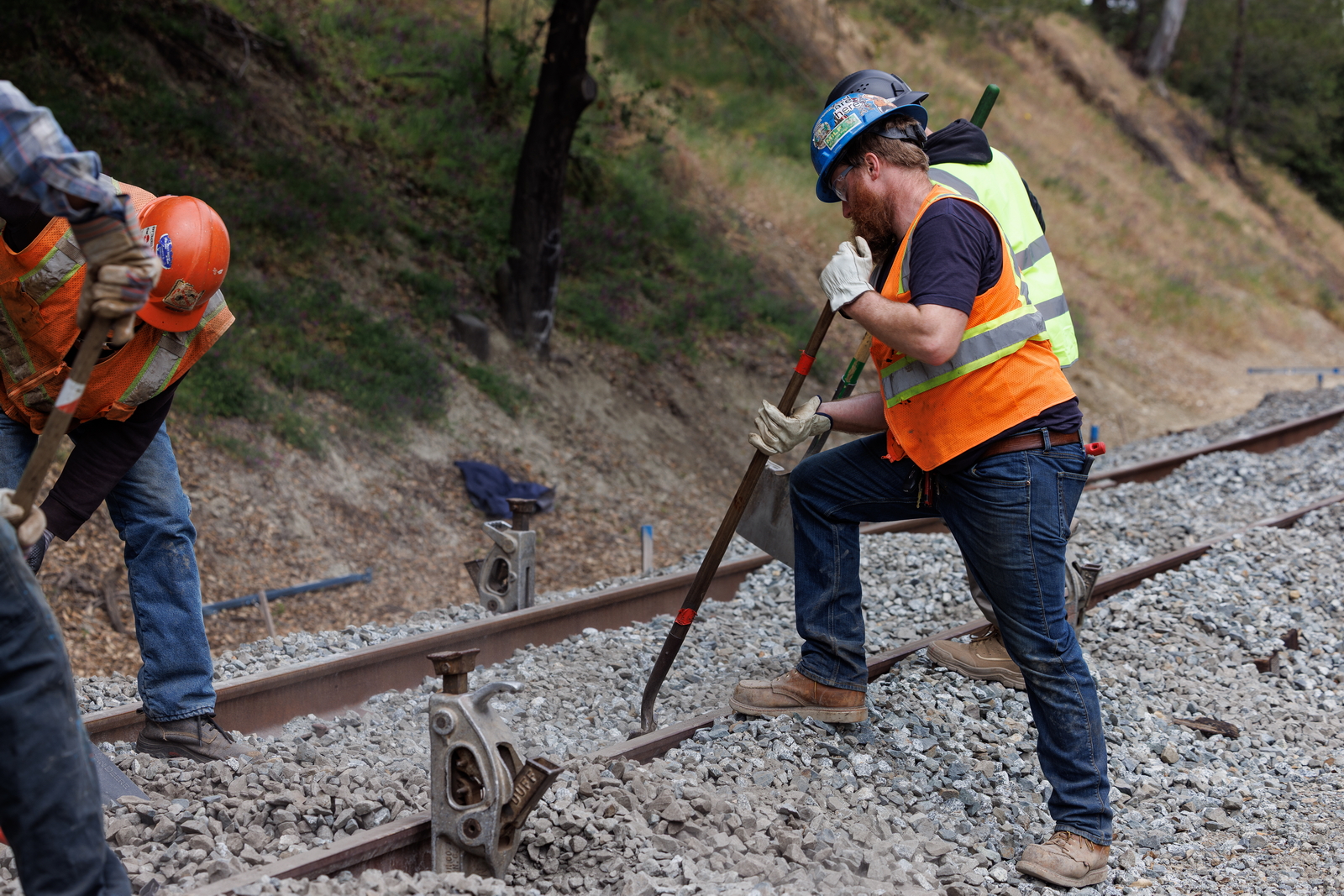
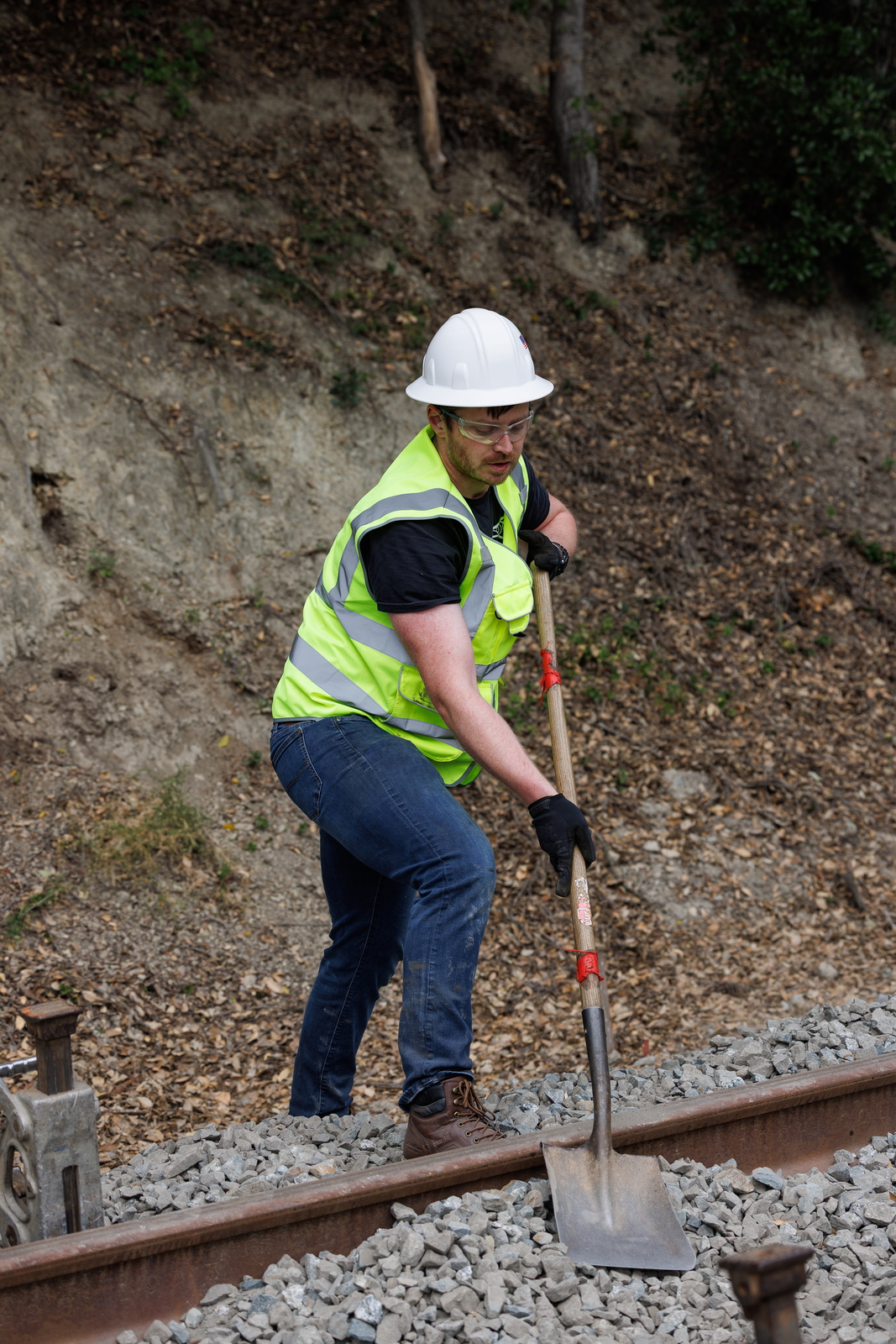
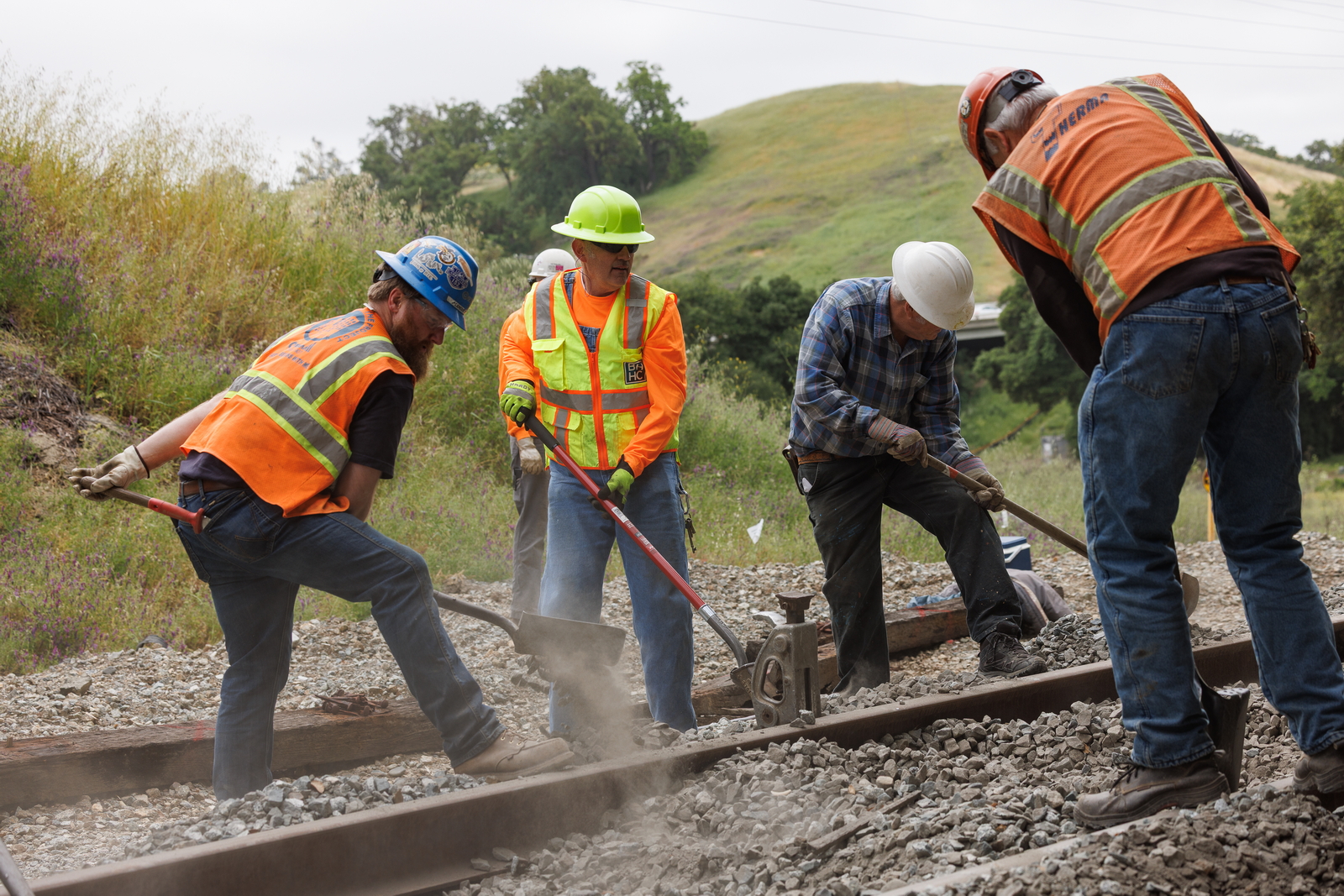
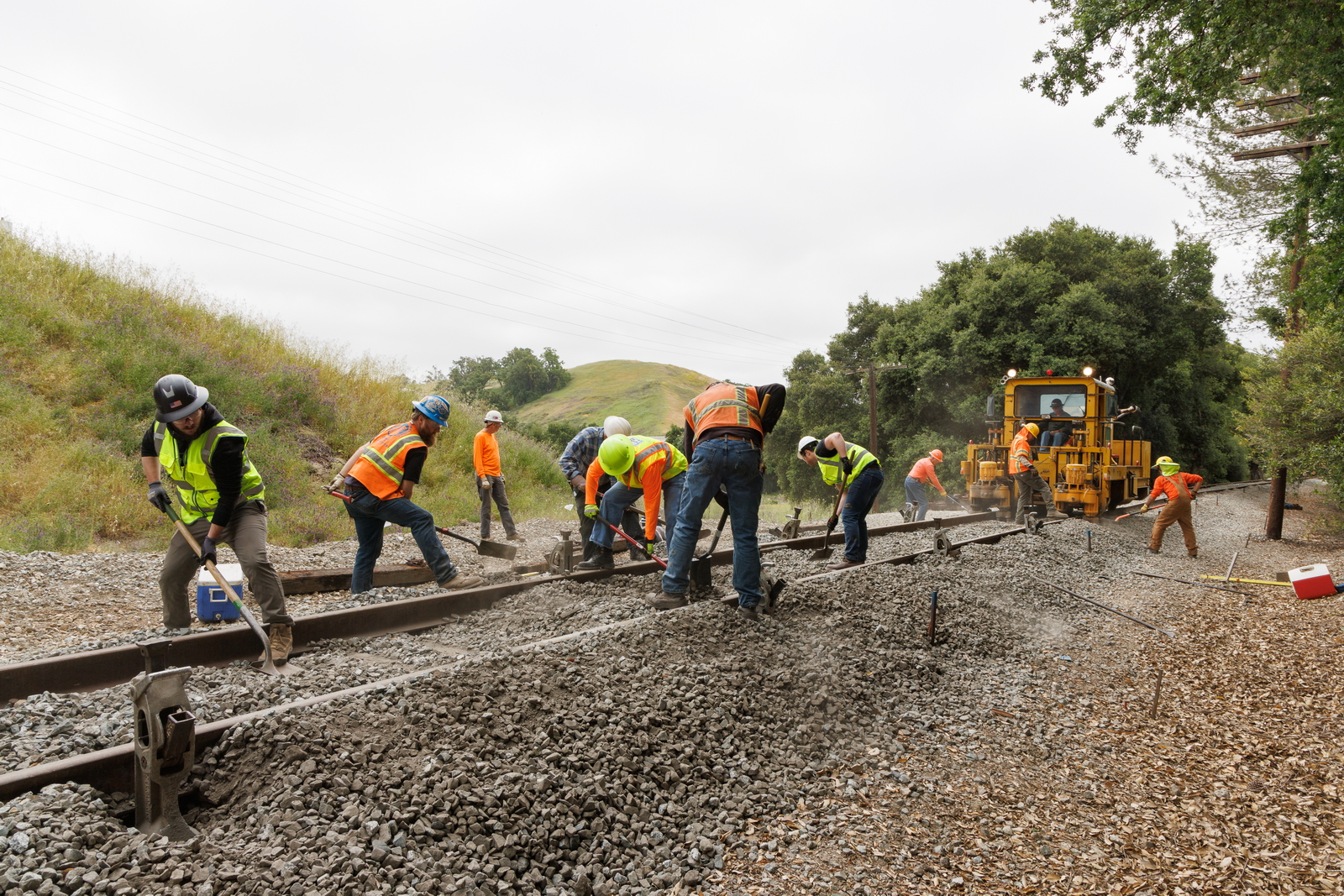
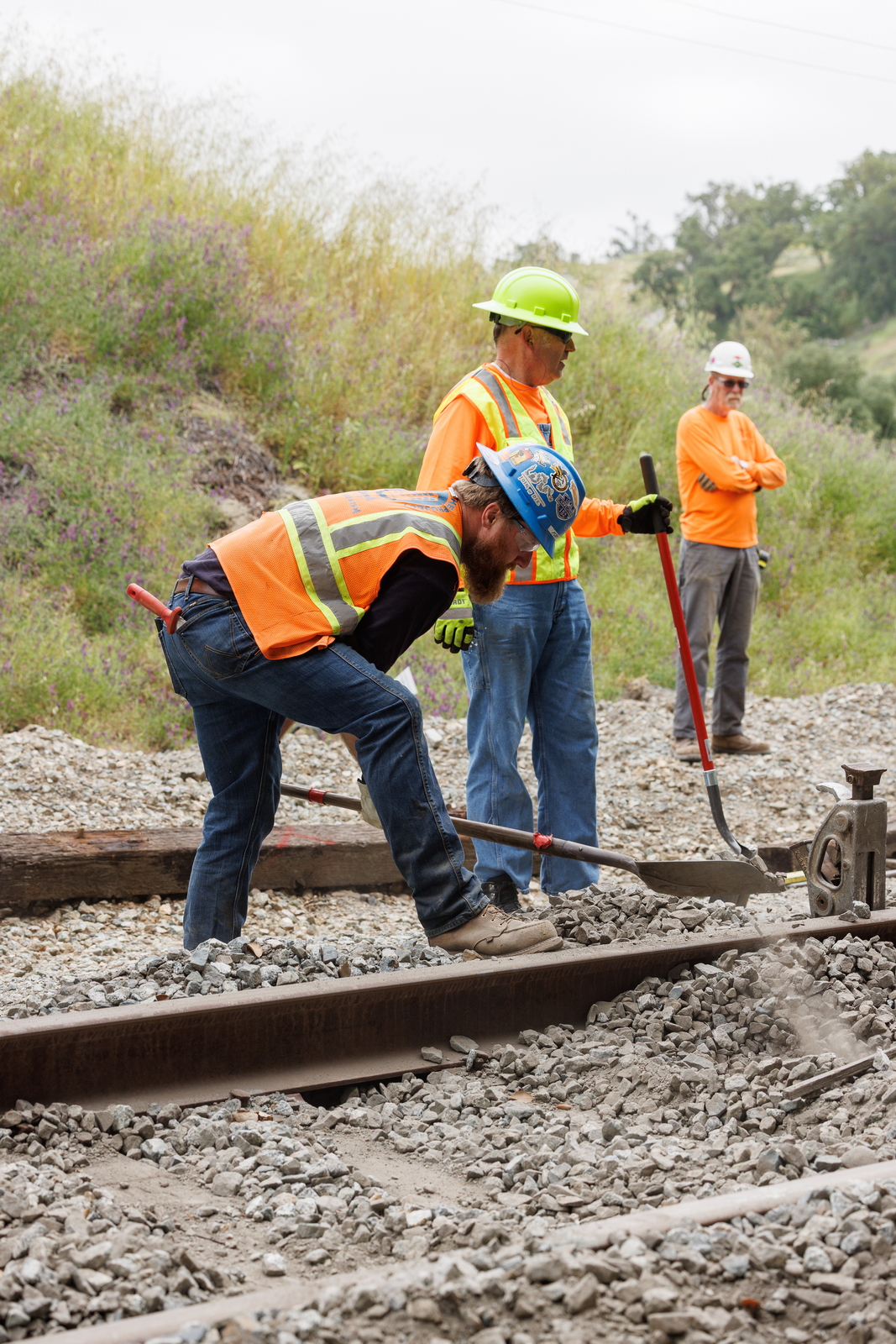
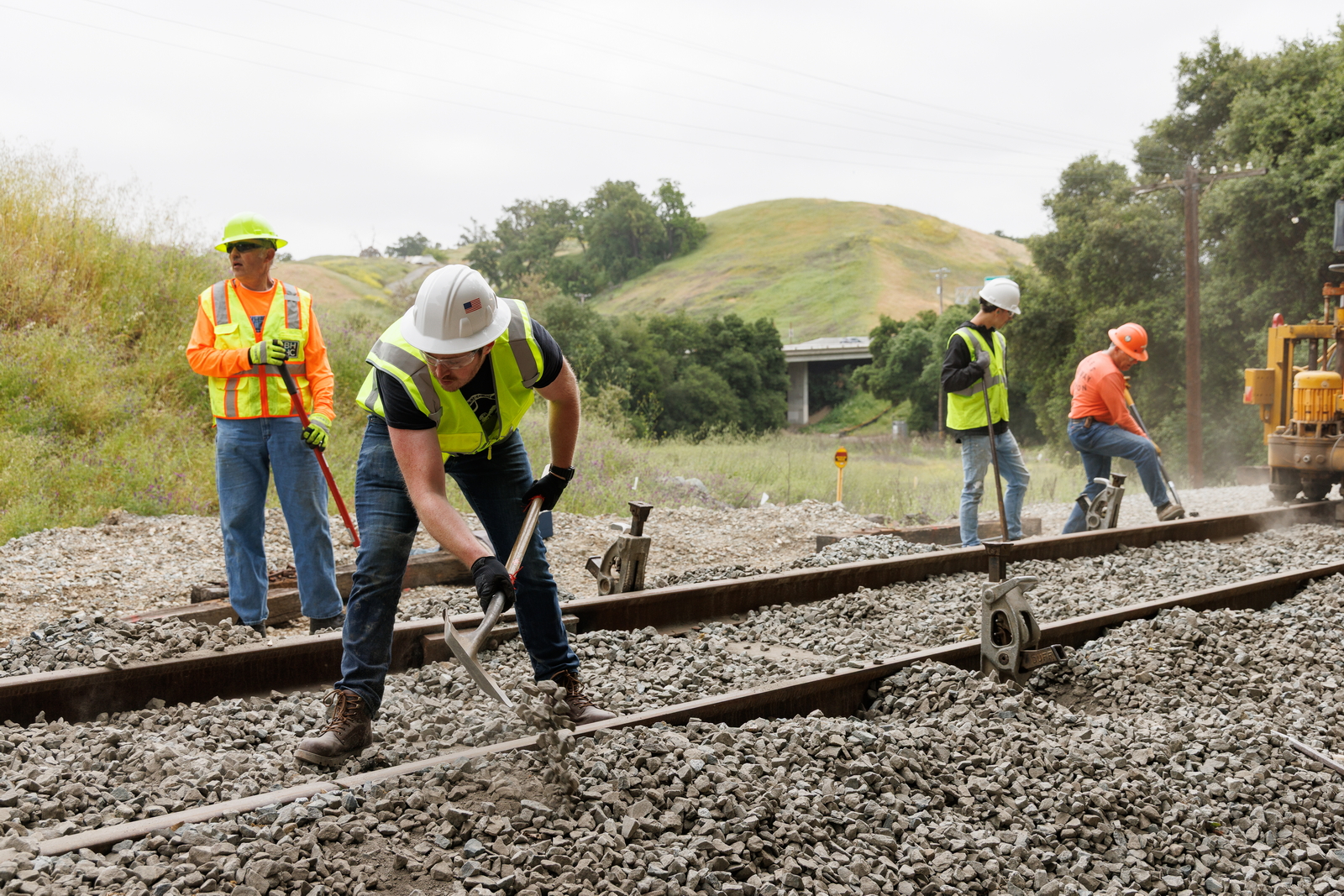
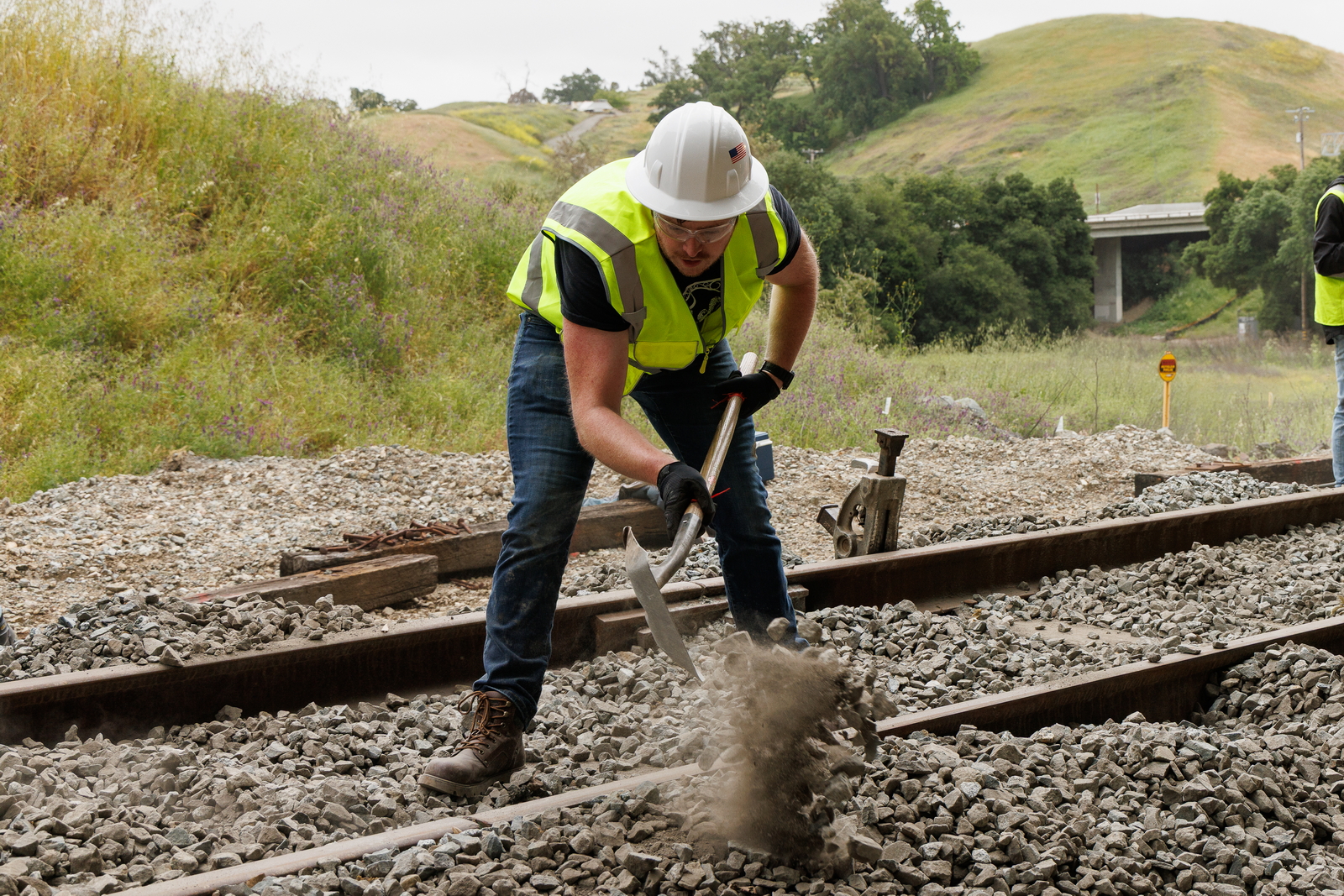
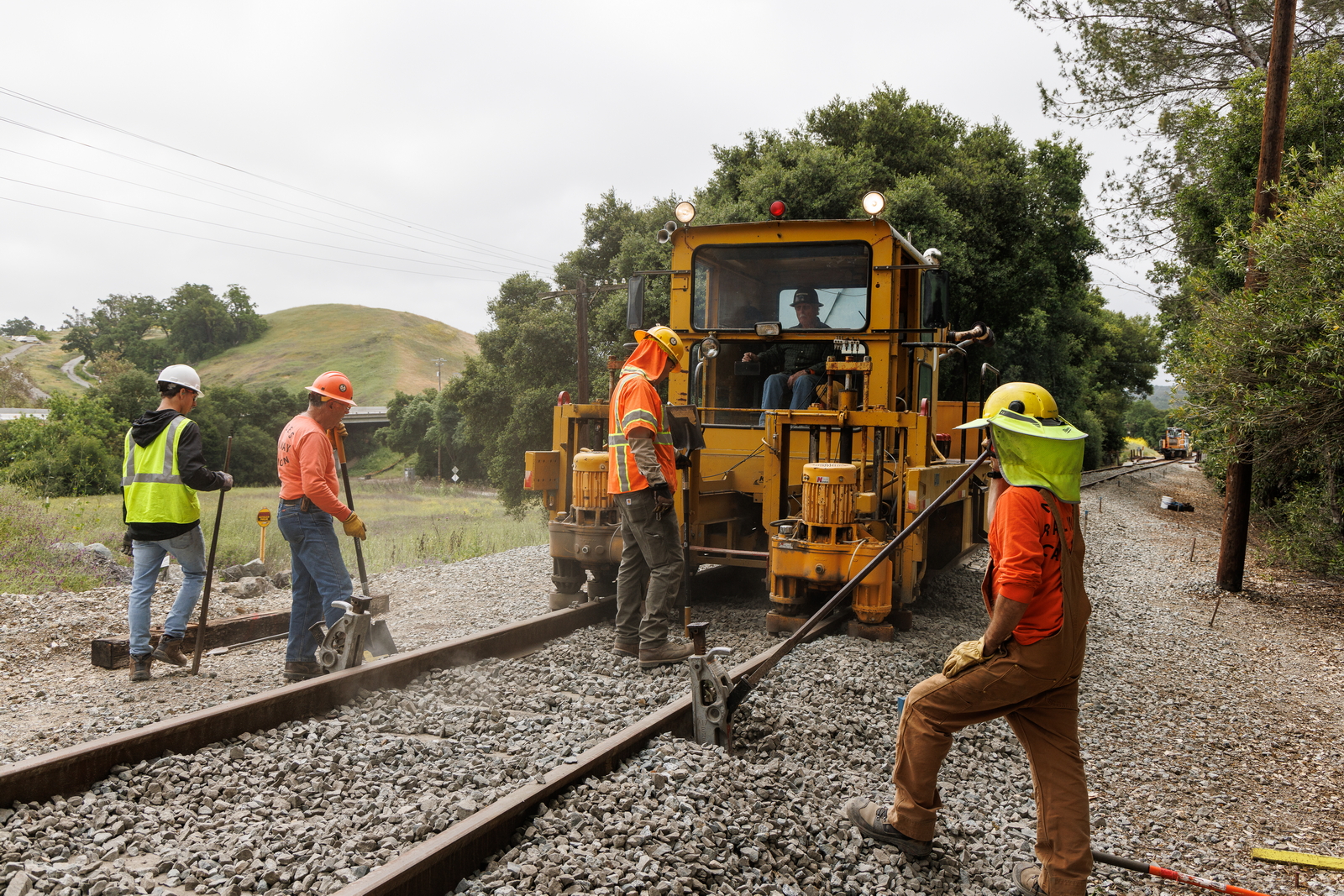
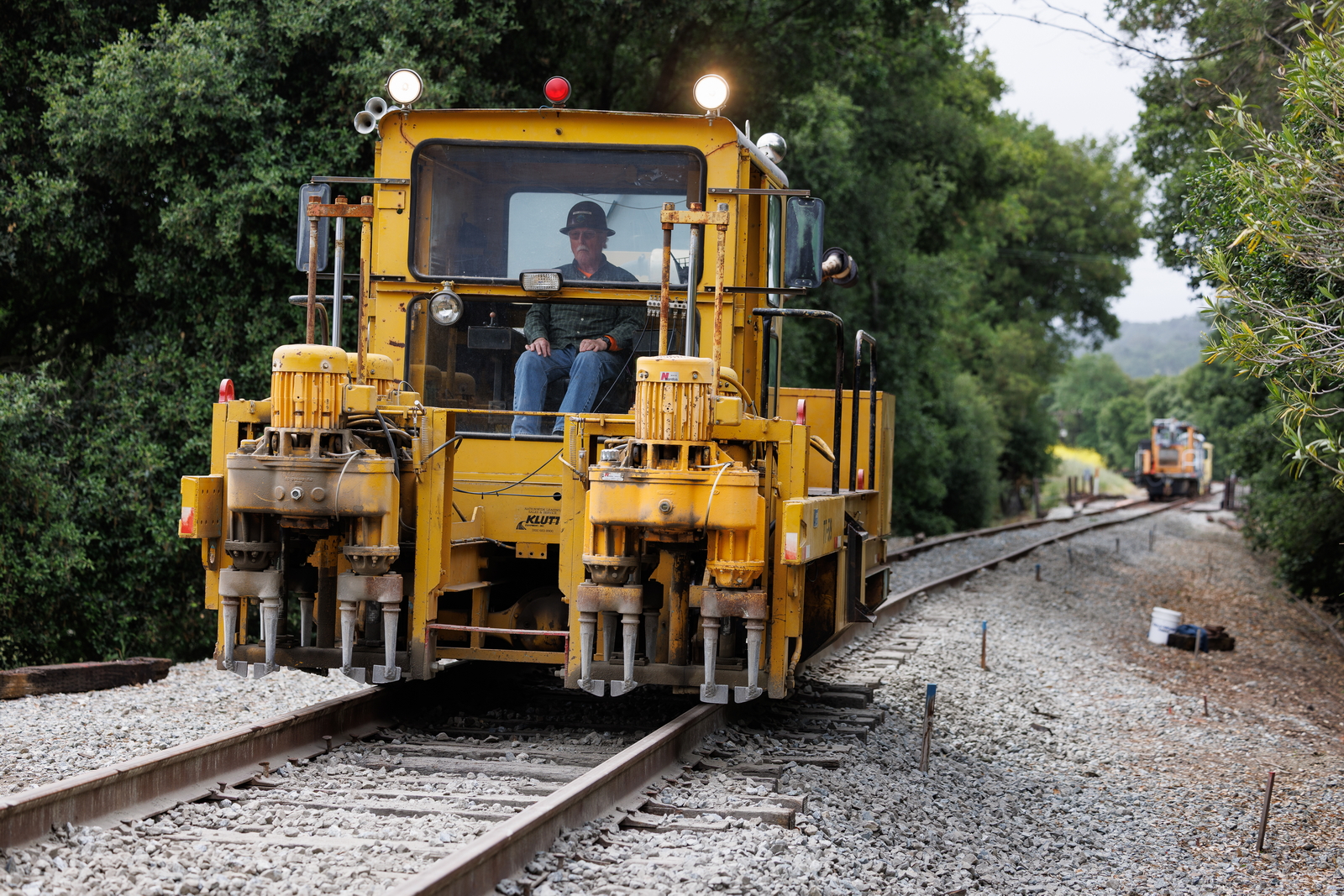
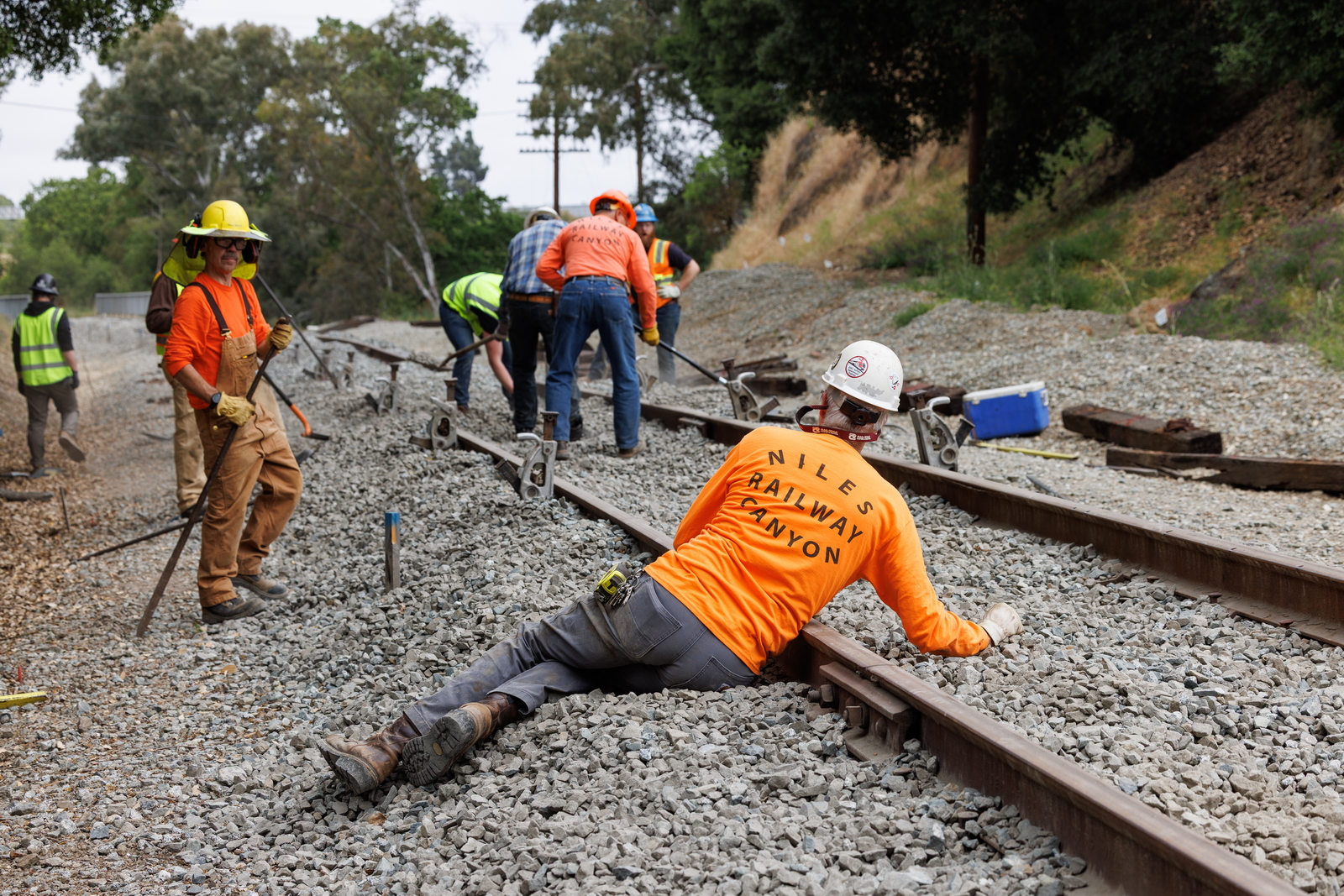
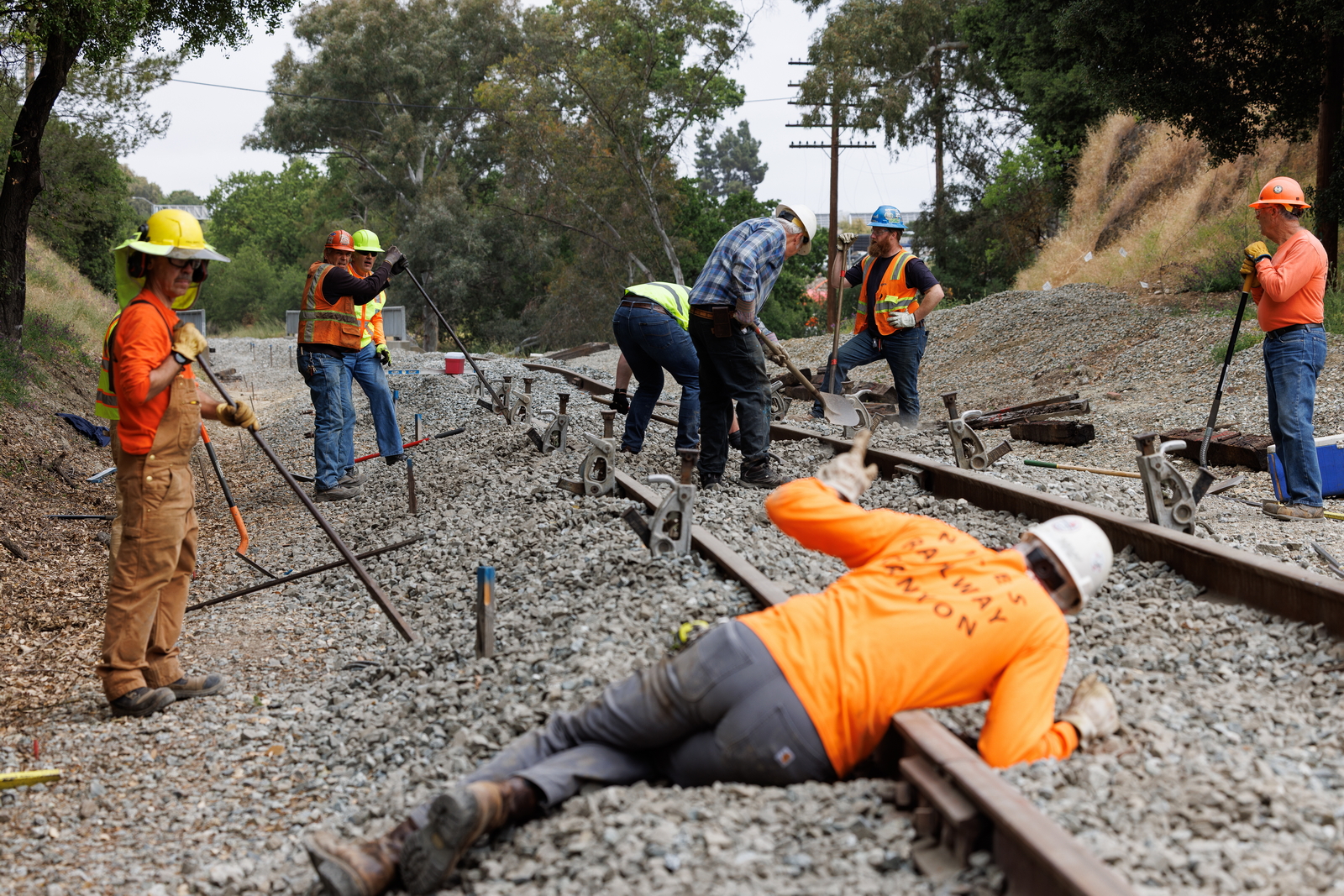
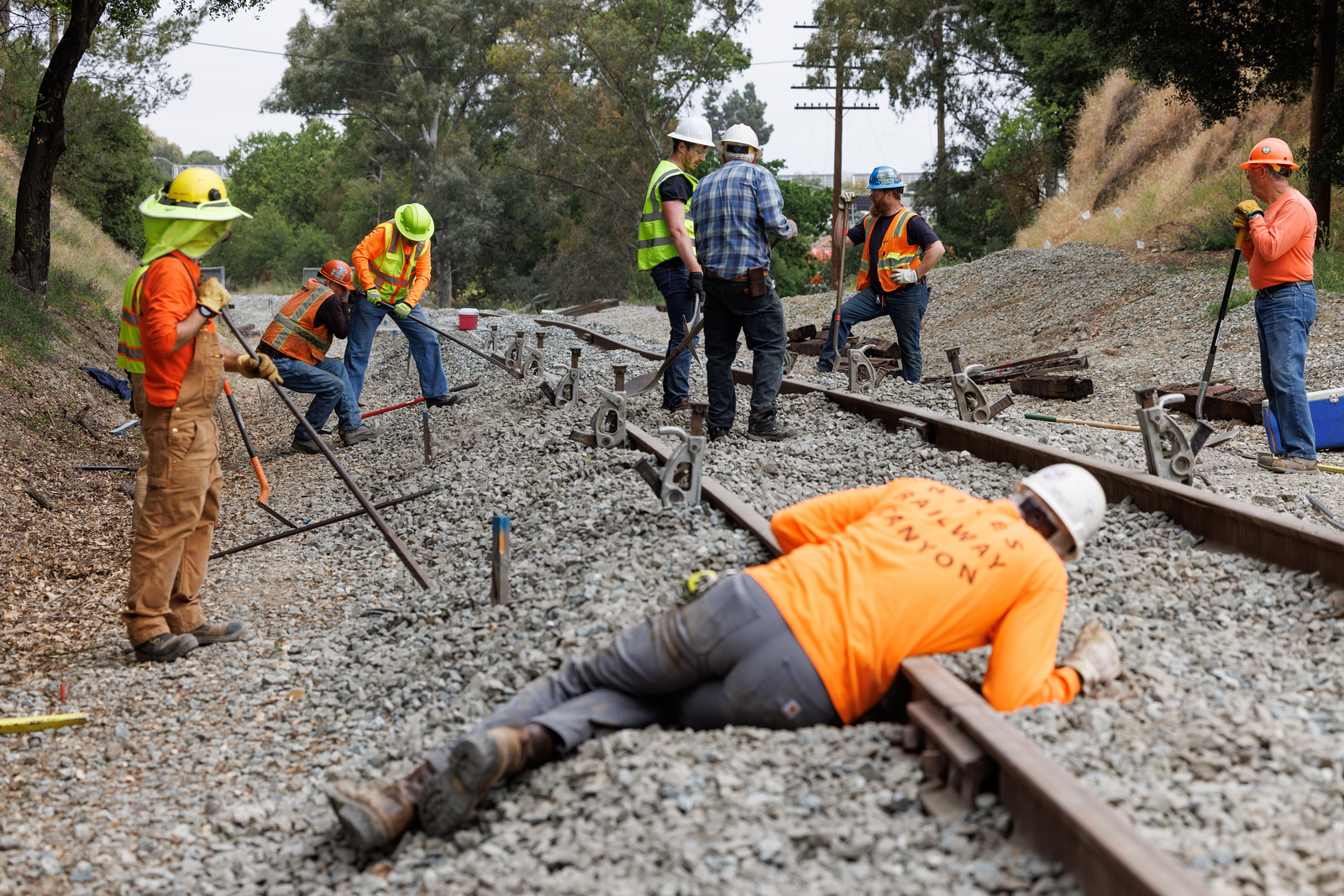
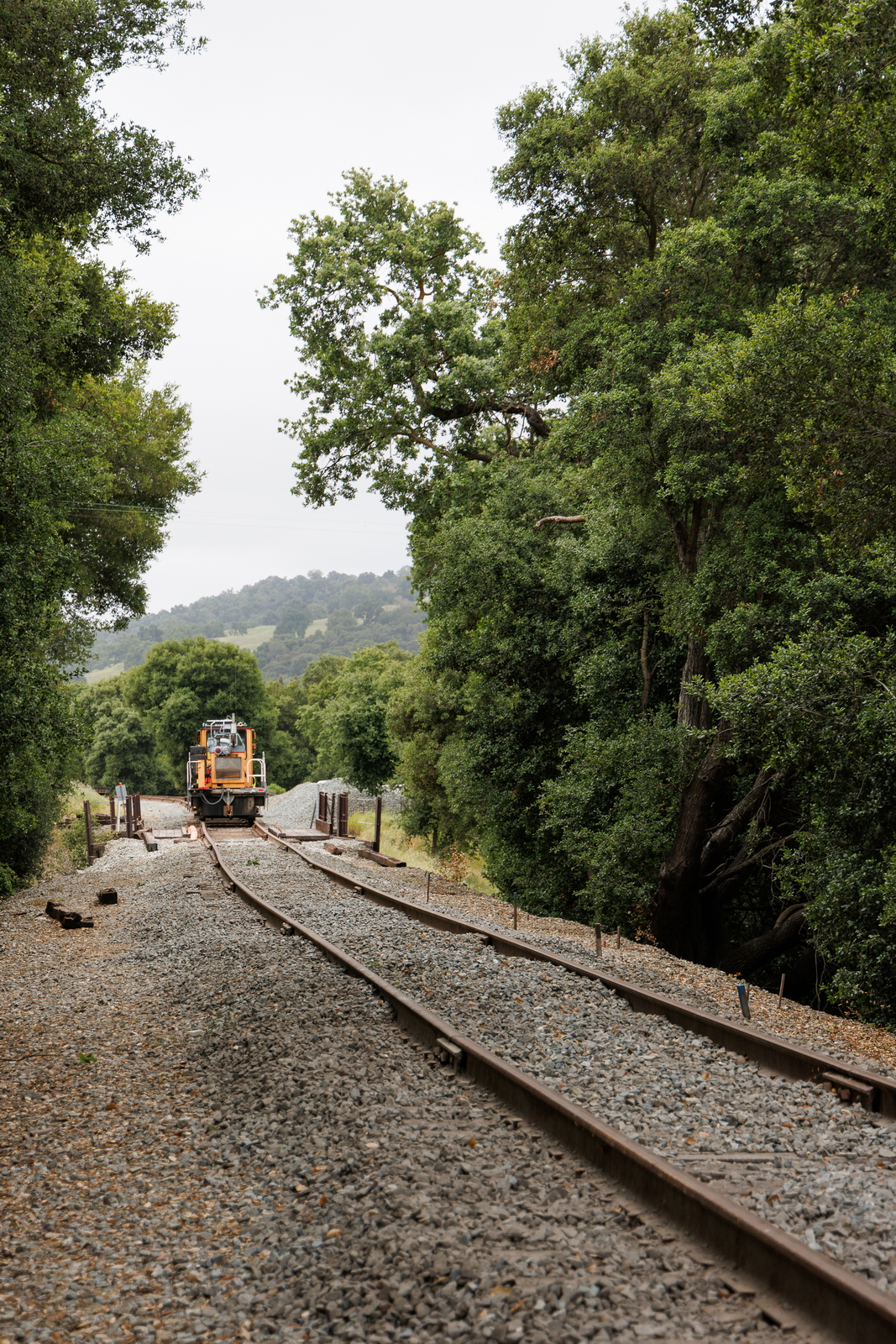
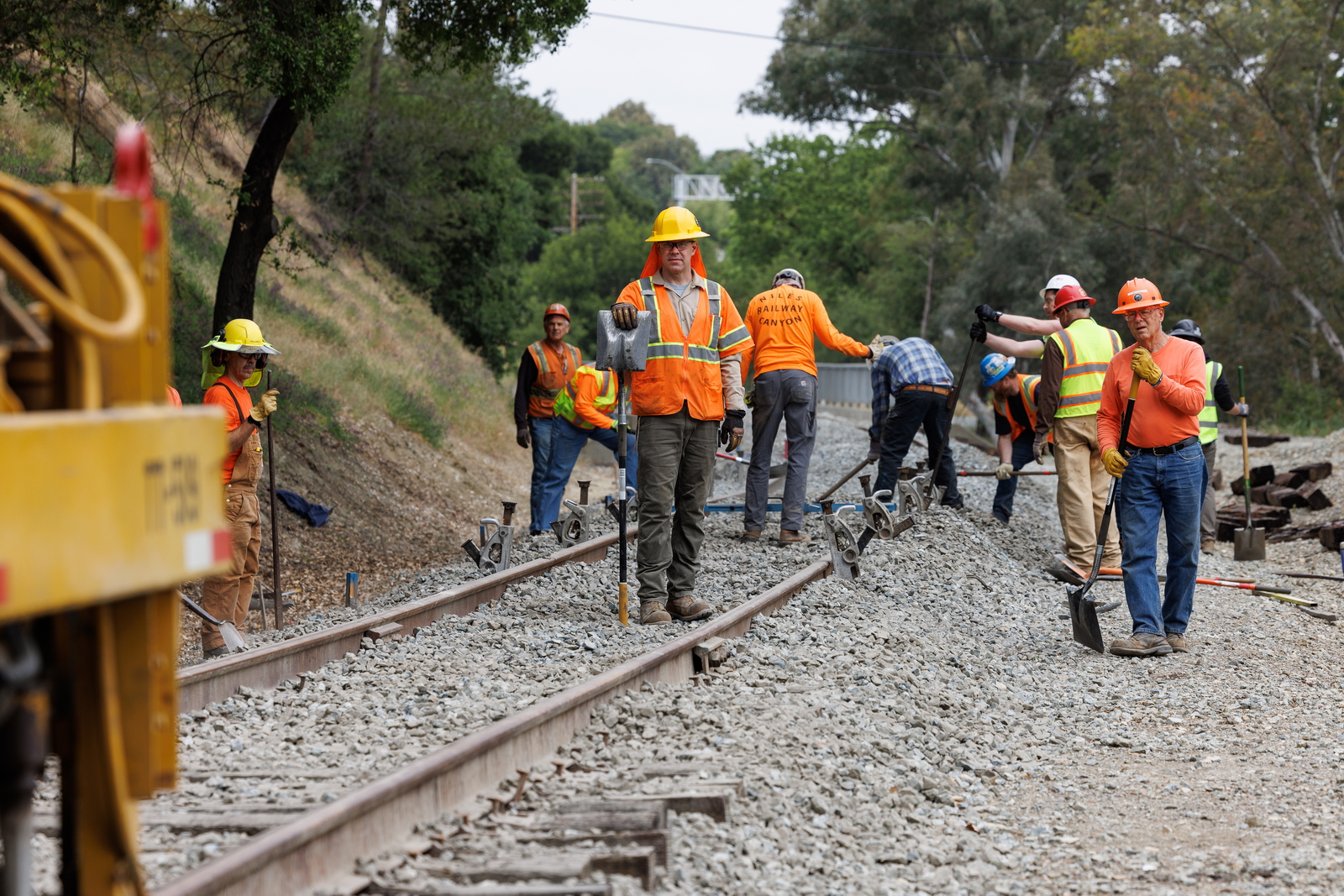
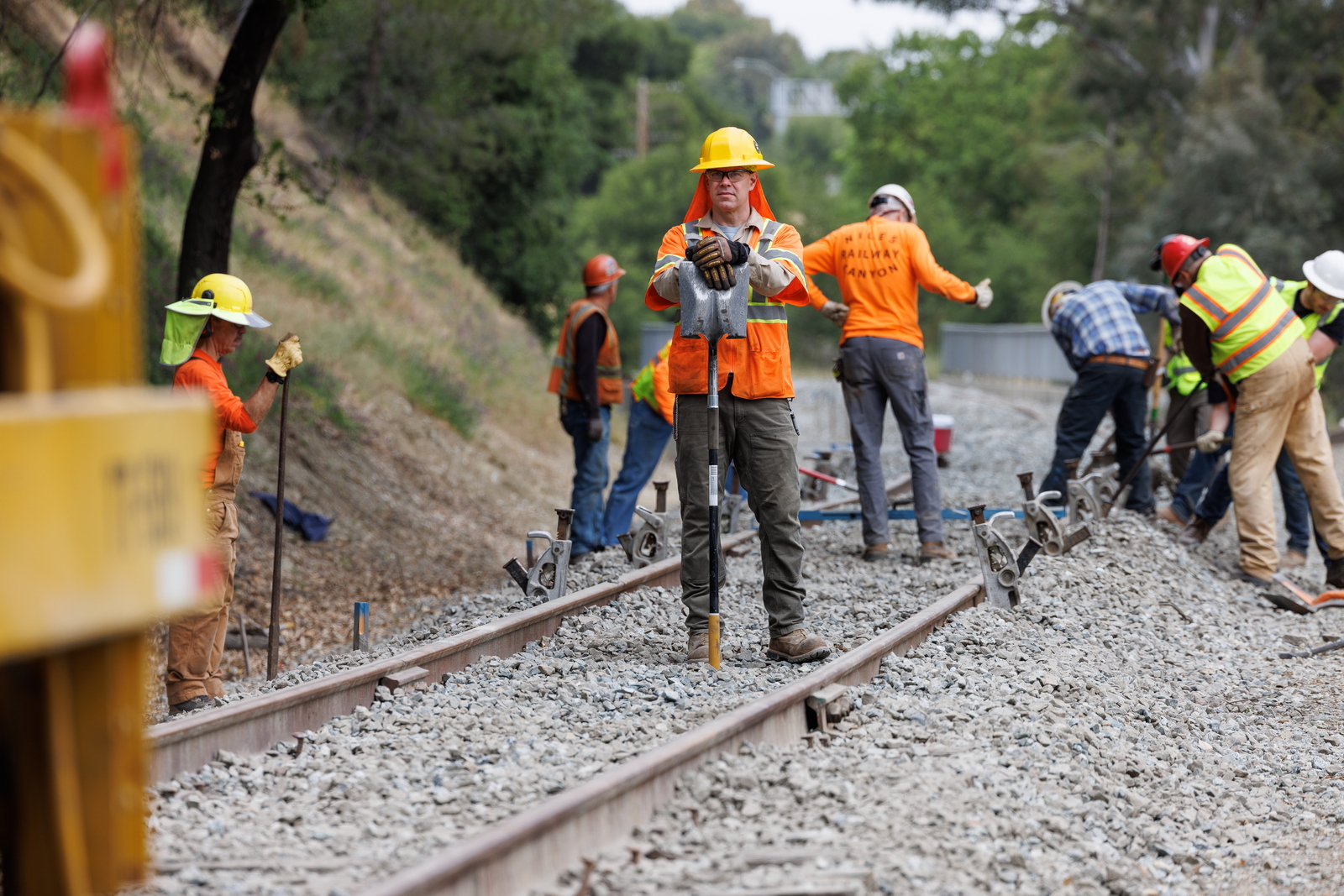
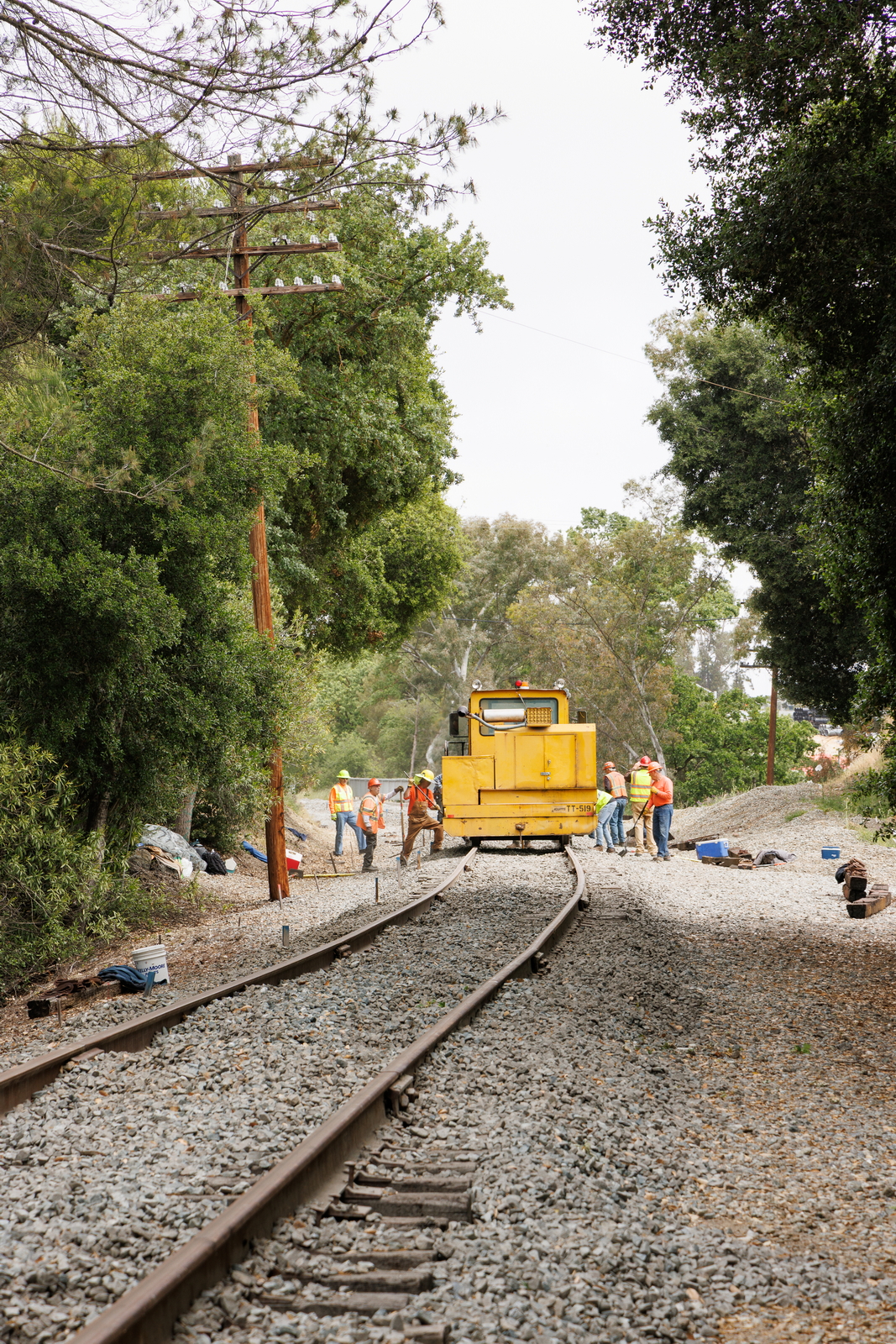
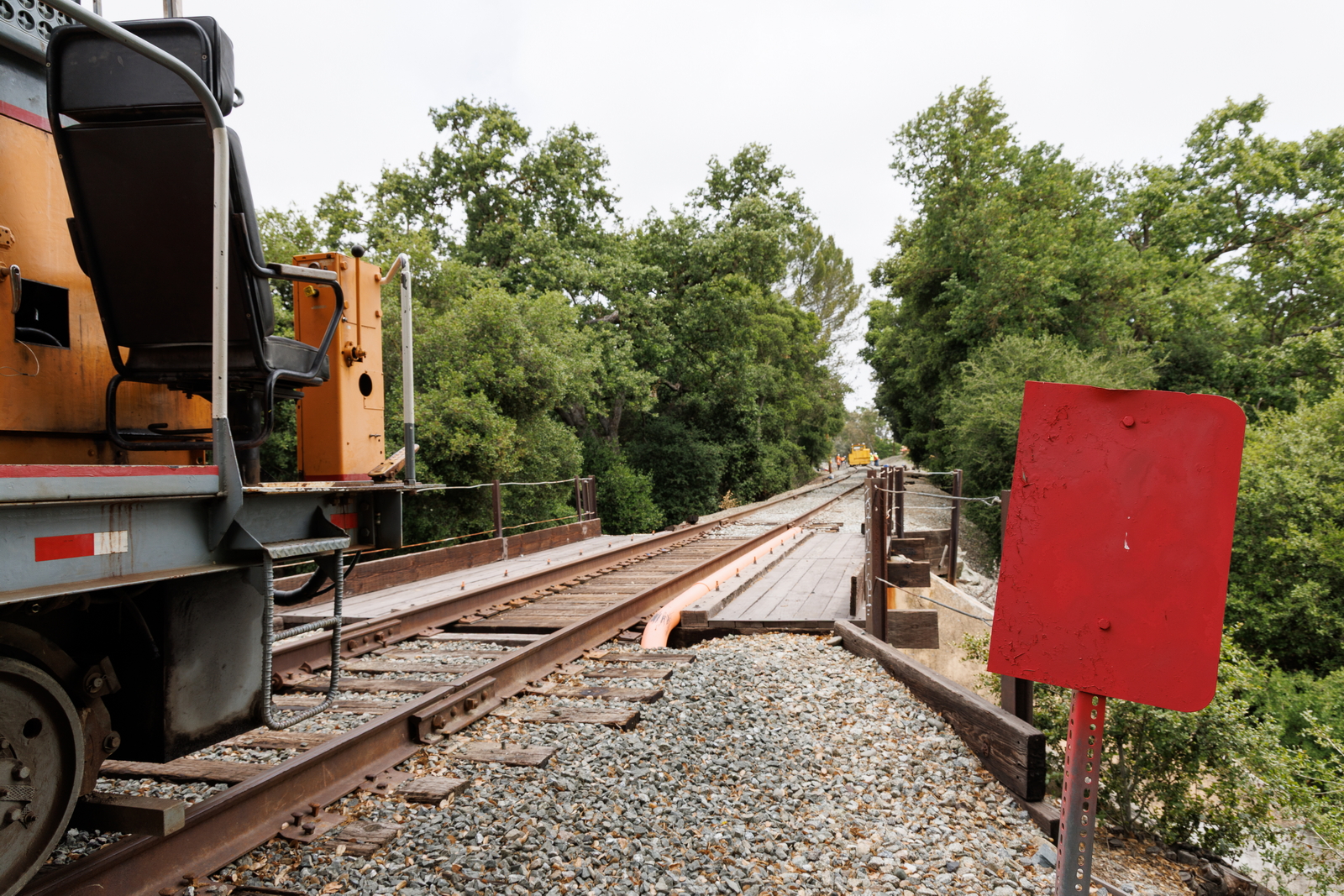
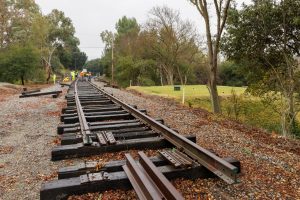
Our Build East Railroad Construction Crew was out for their usual first Saturday in May work session this past Saturday, May 3, 2025. With a crew of 13+ volunteers including some new to the NCRy, the order of the day was leveling and tamping the newly hardened track between Happy Valley Bridge and Castlewood Bridge.
Our Build East Railroad Construction Crew was out for their usual first Saturday of the month work session this past Saturday, May 3, 2025. With a crew of 13+ volunteers including some new to the NCRy, the order of the day was leveling and tamping the newly hardened track between Happy Valley Bridge and Castlewood Bridge.
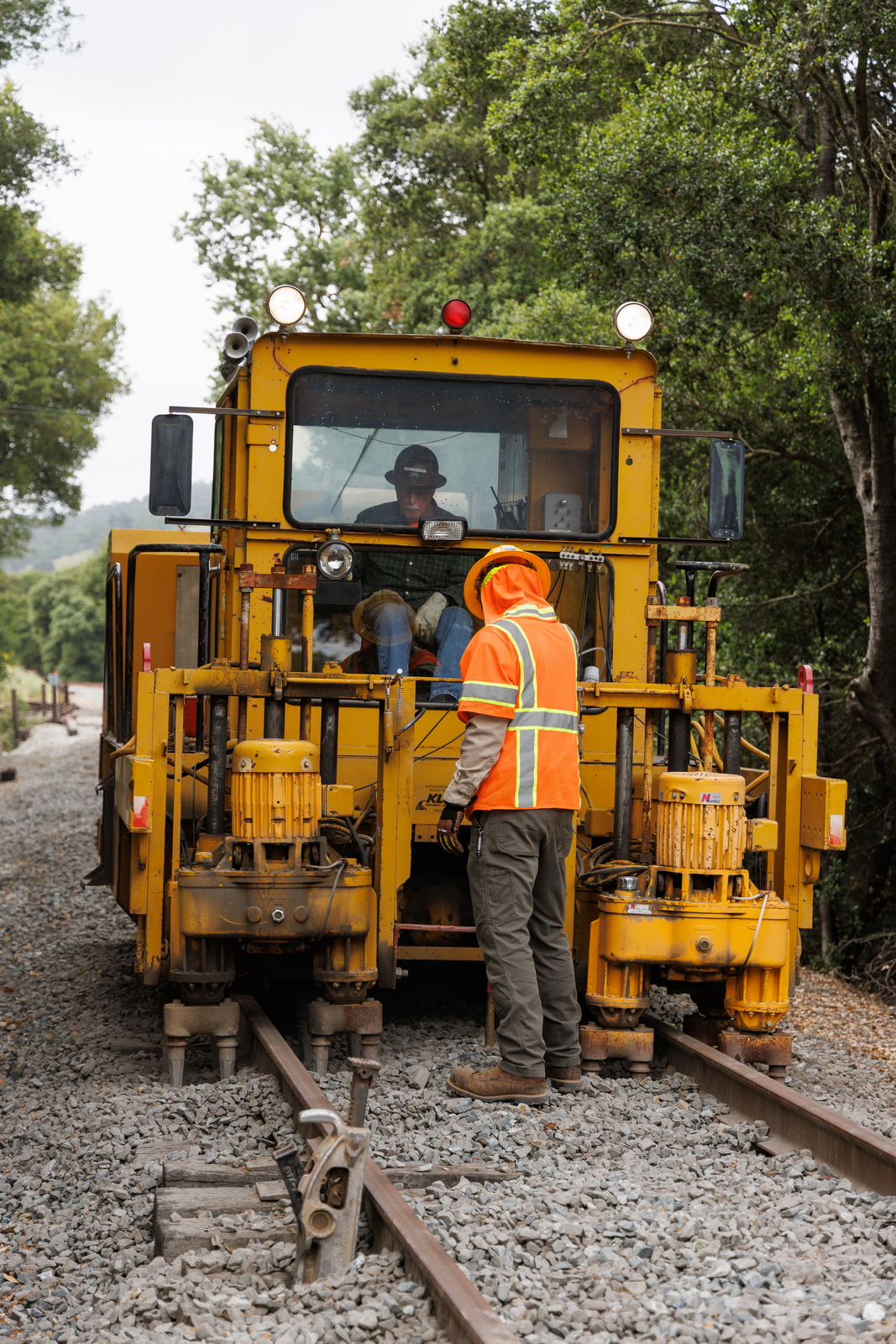
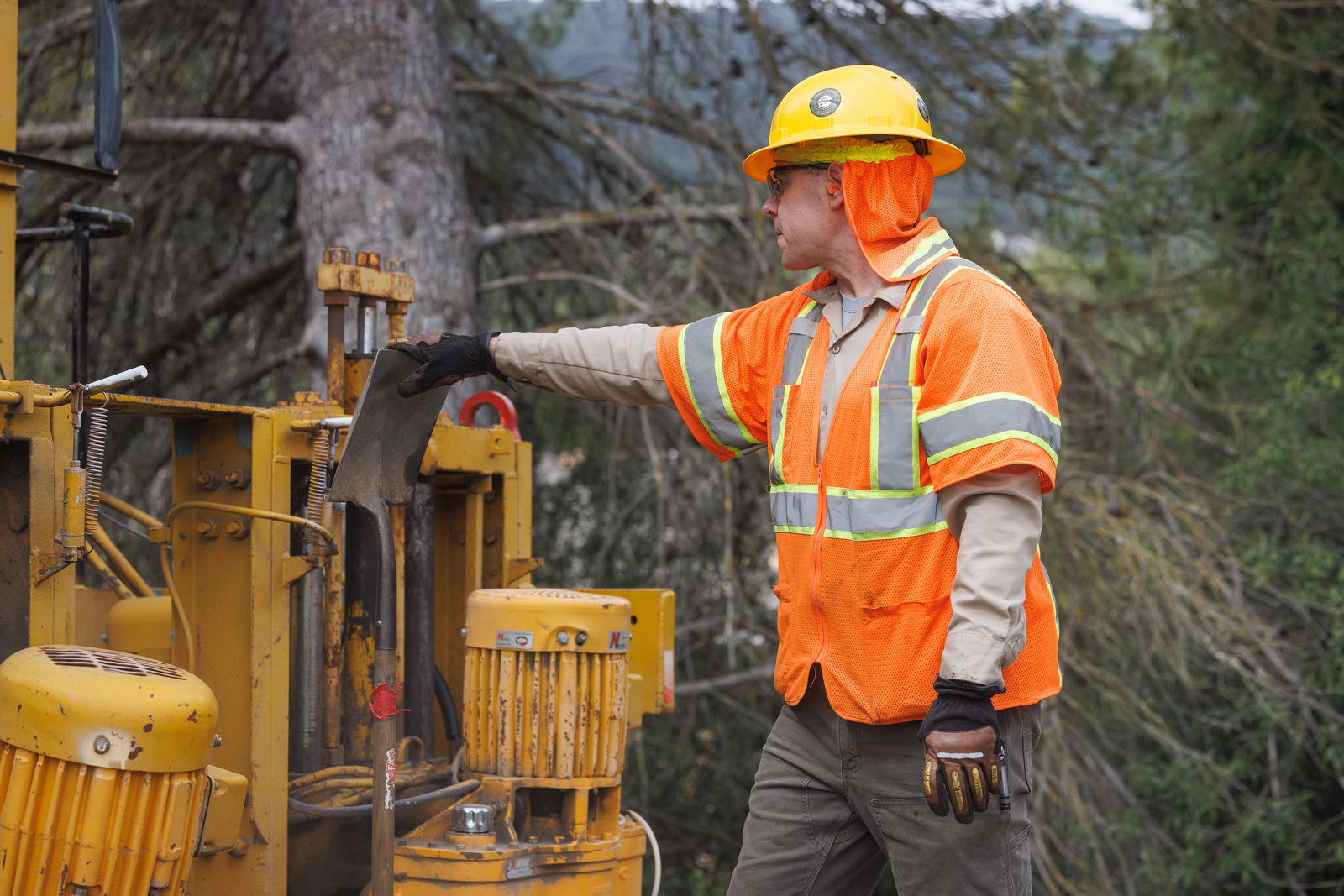
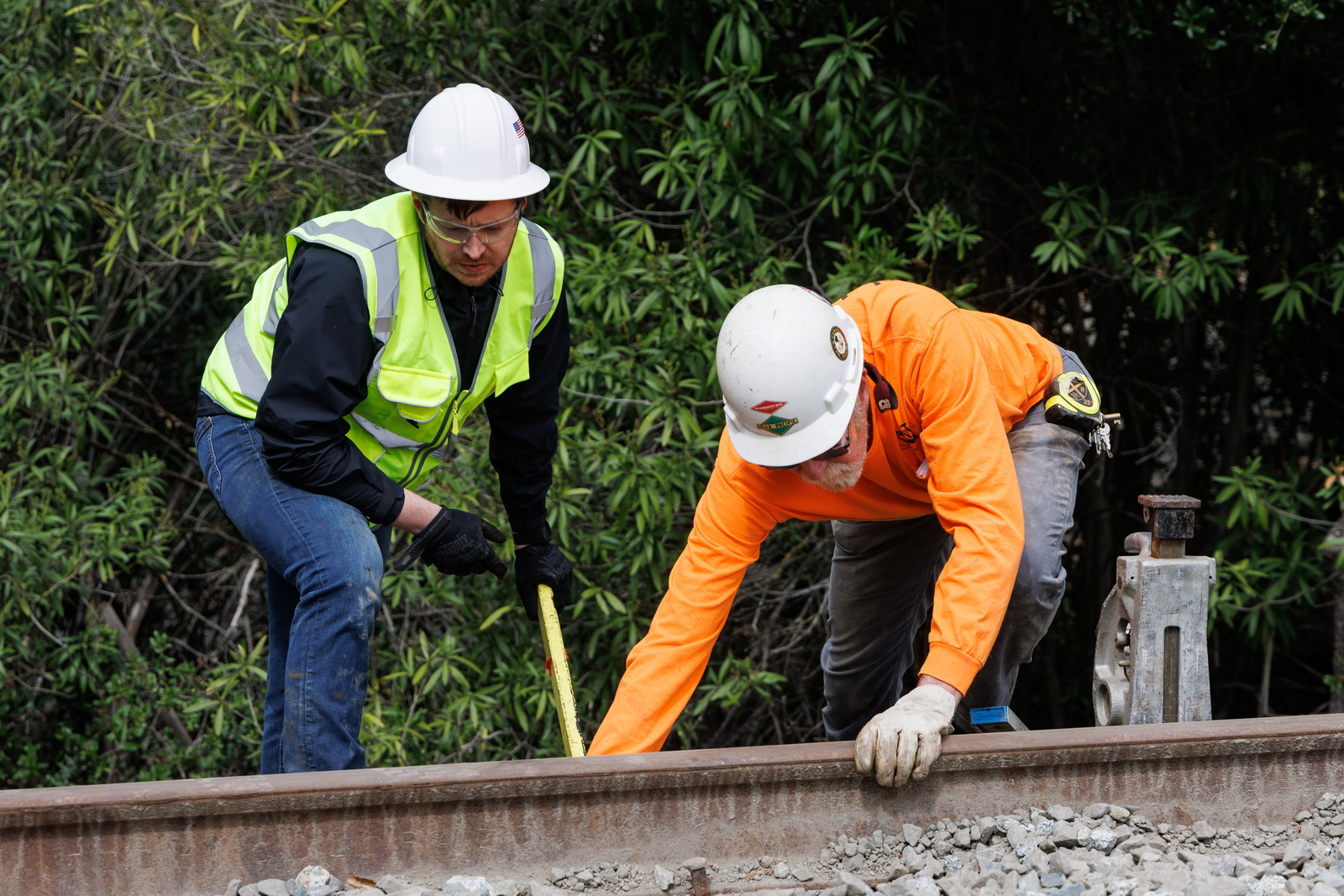
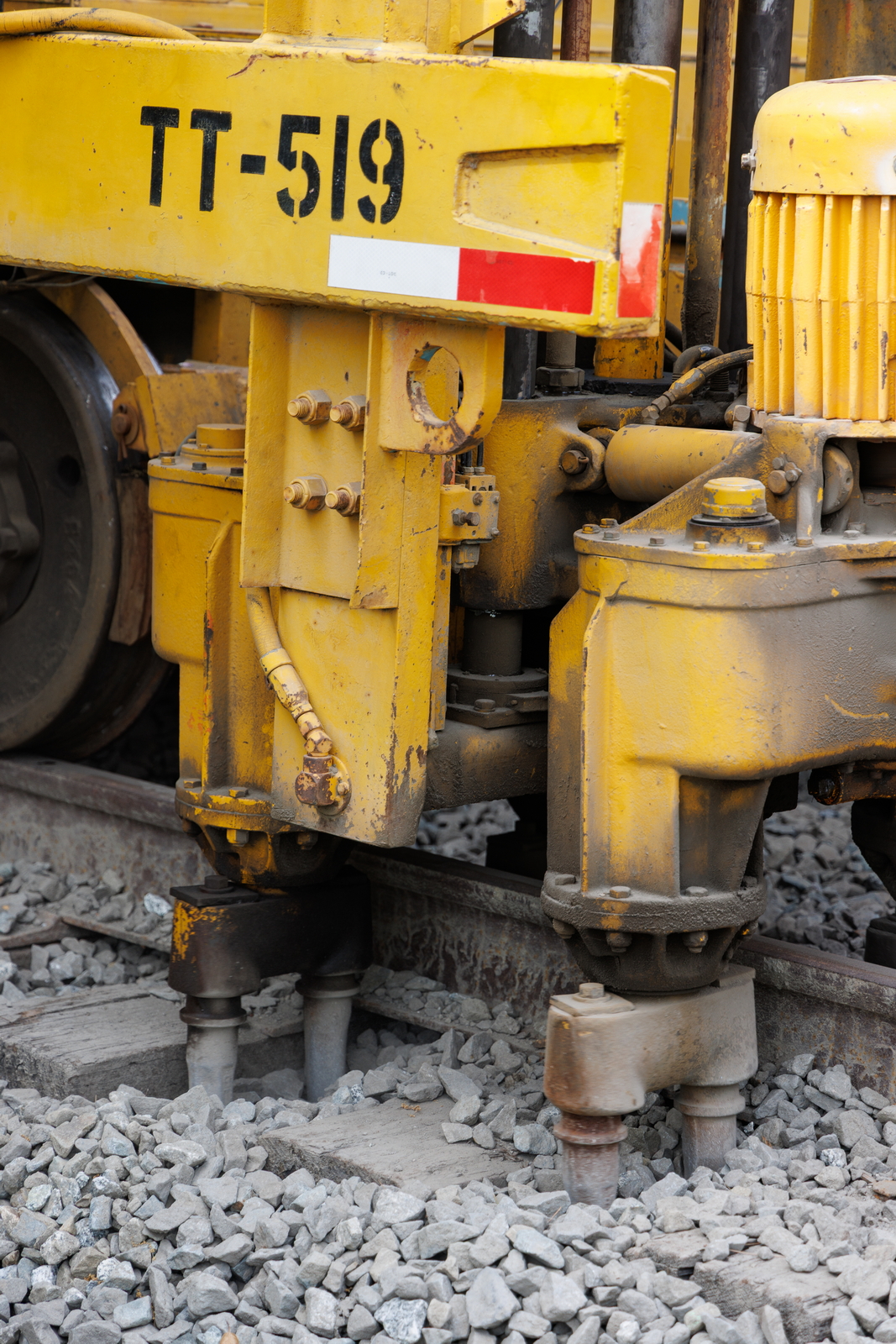
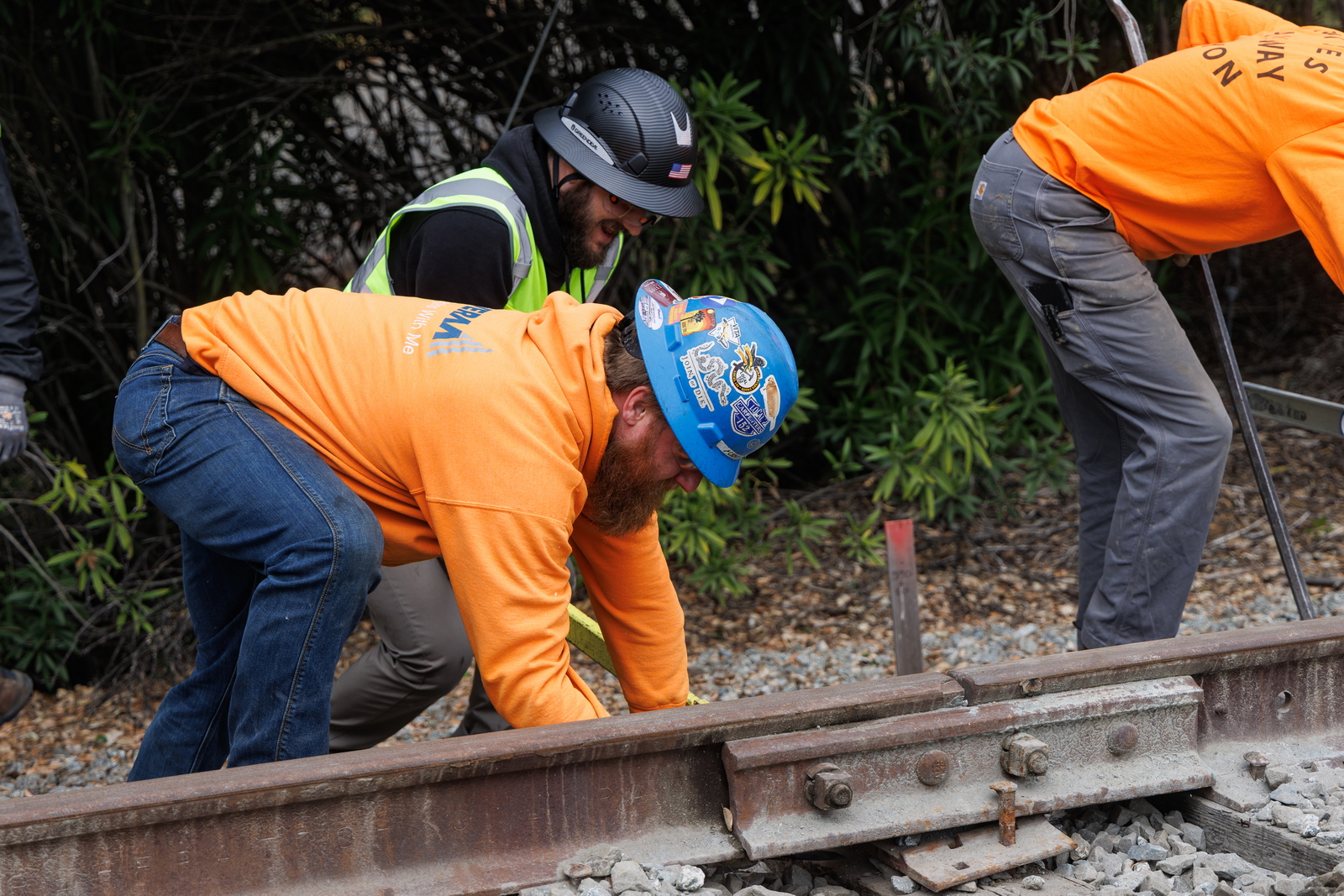
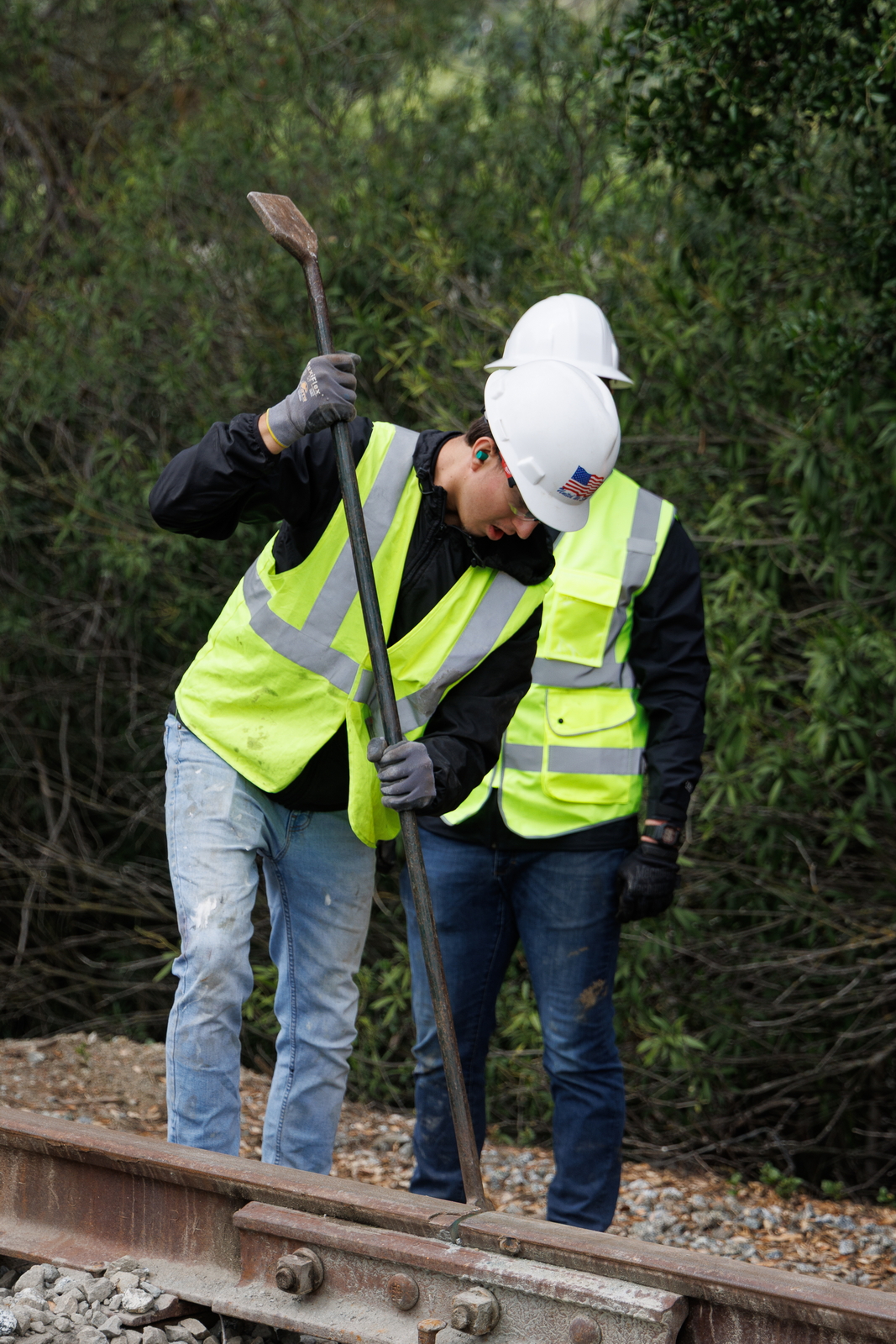
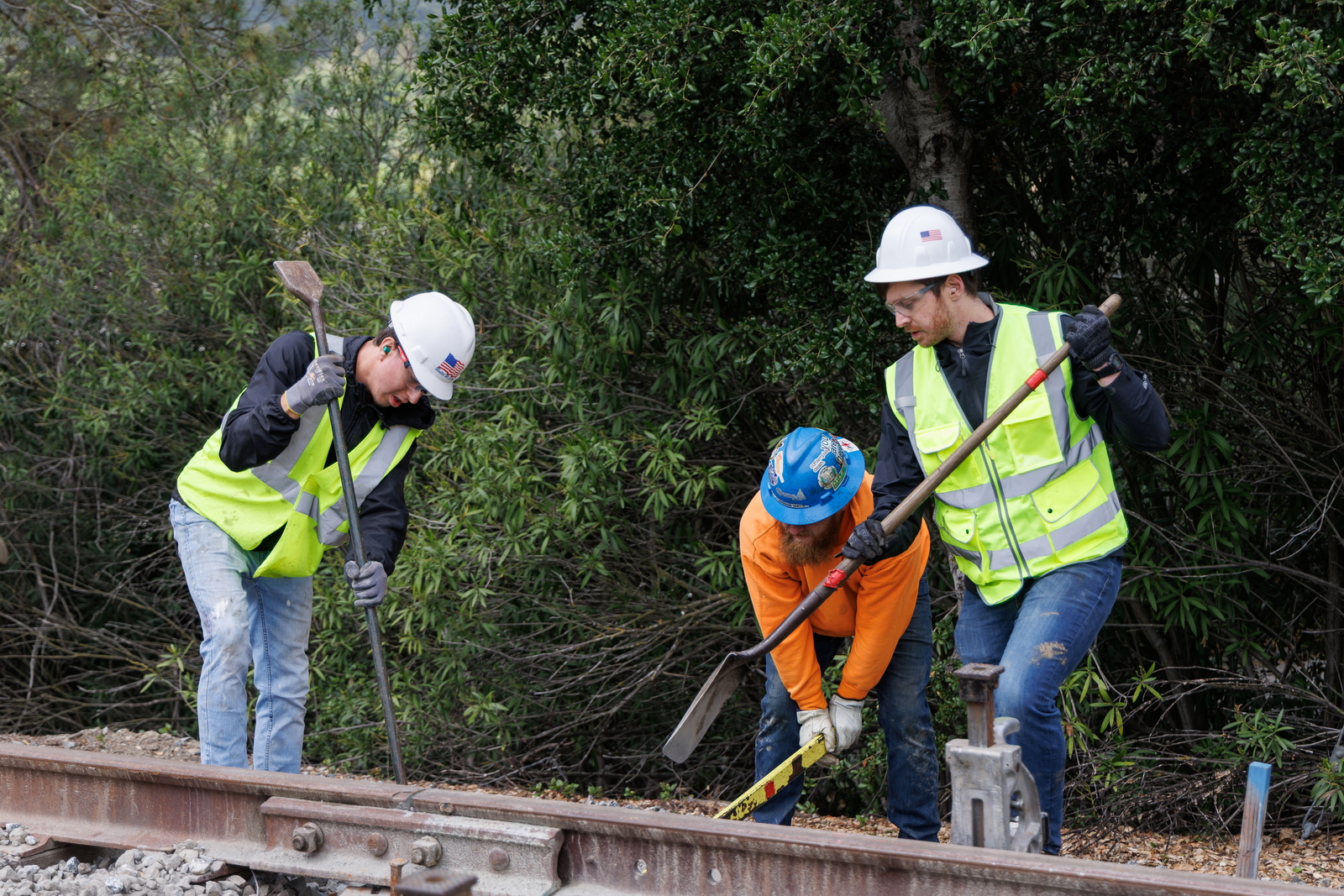
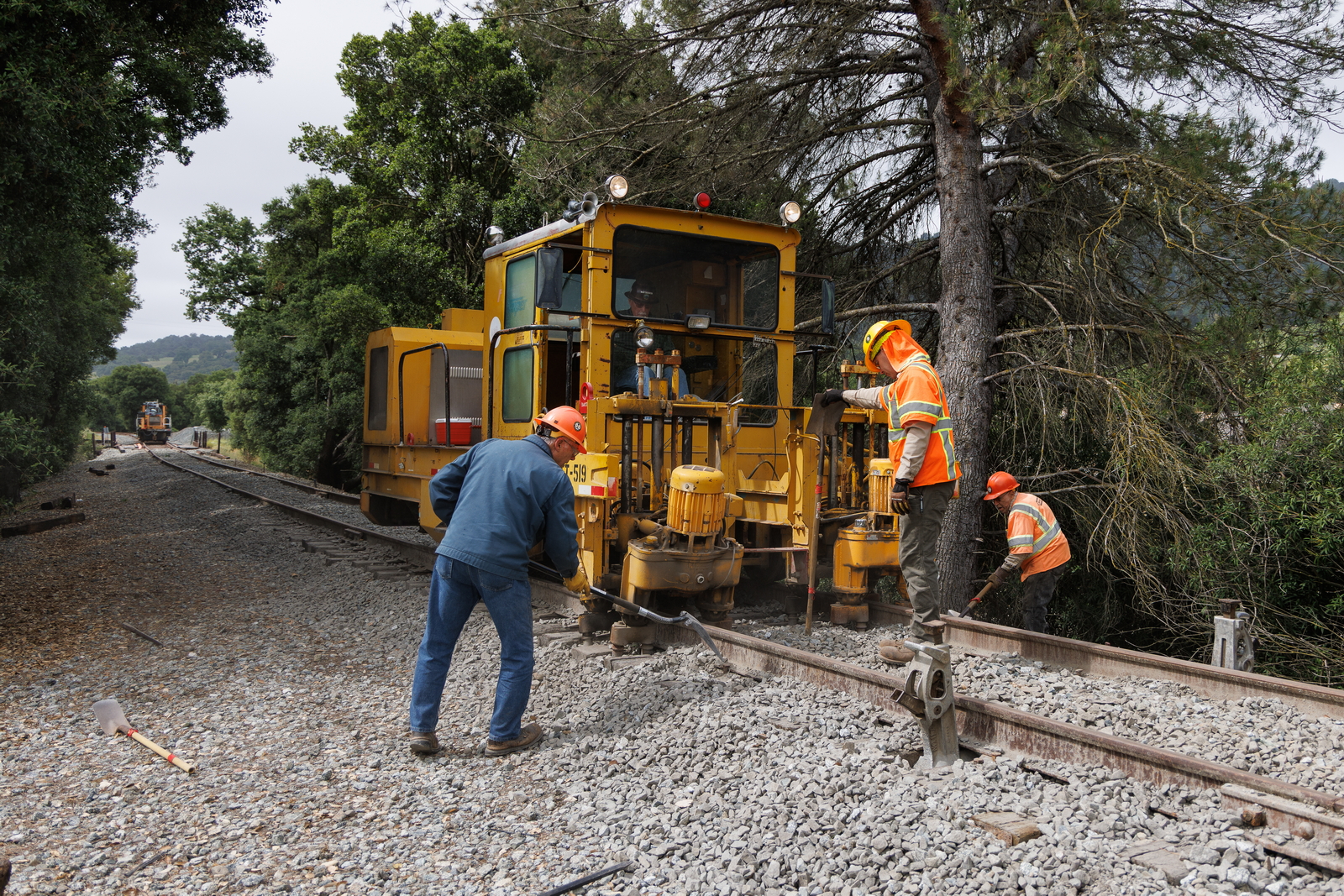
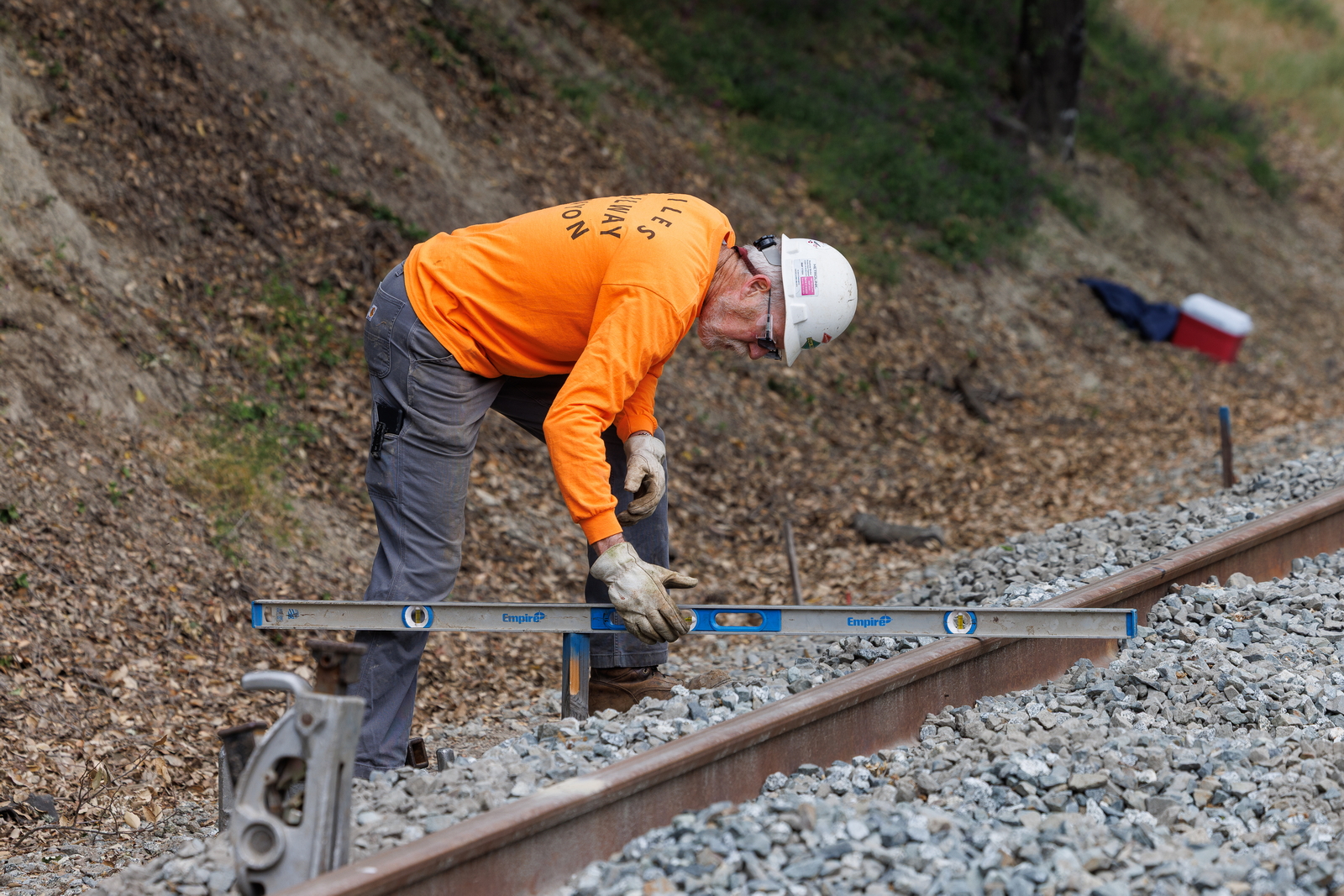
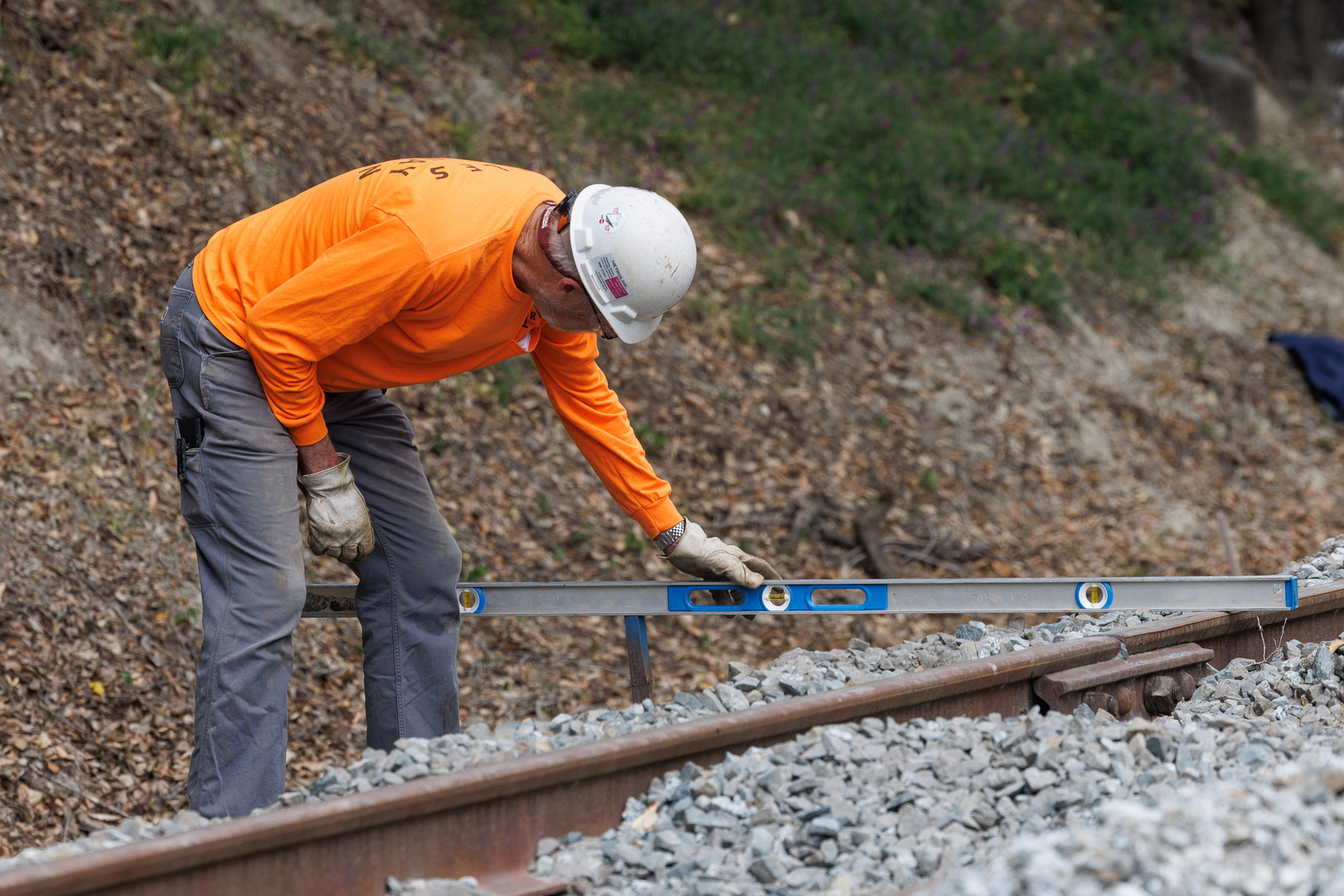
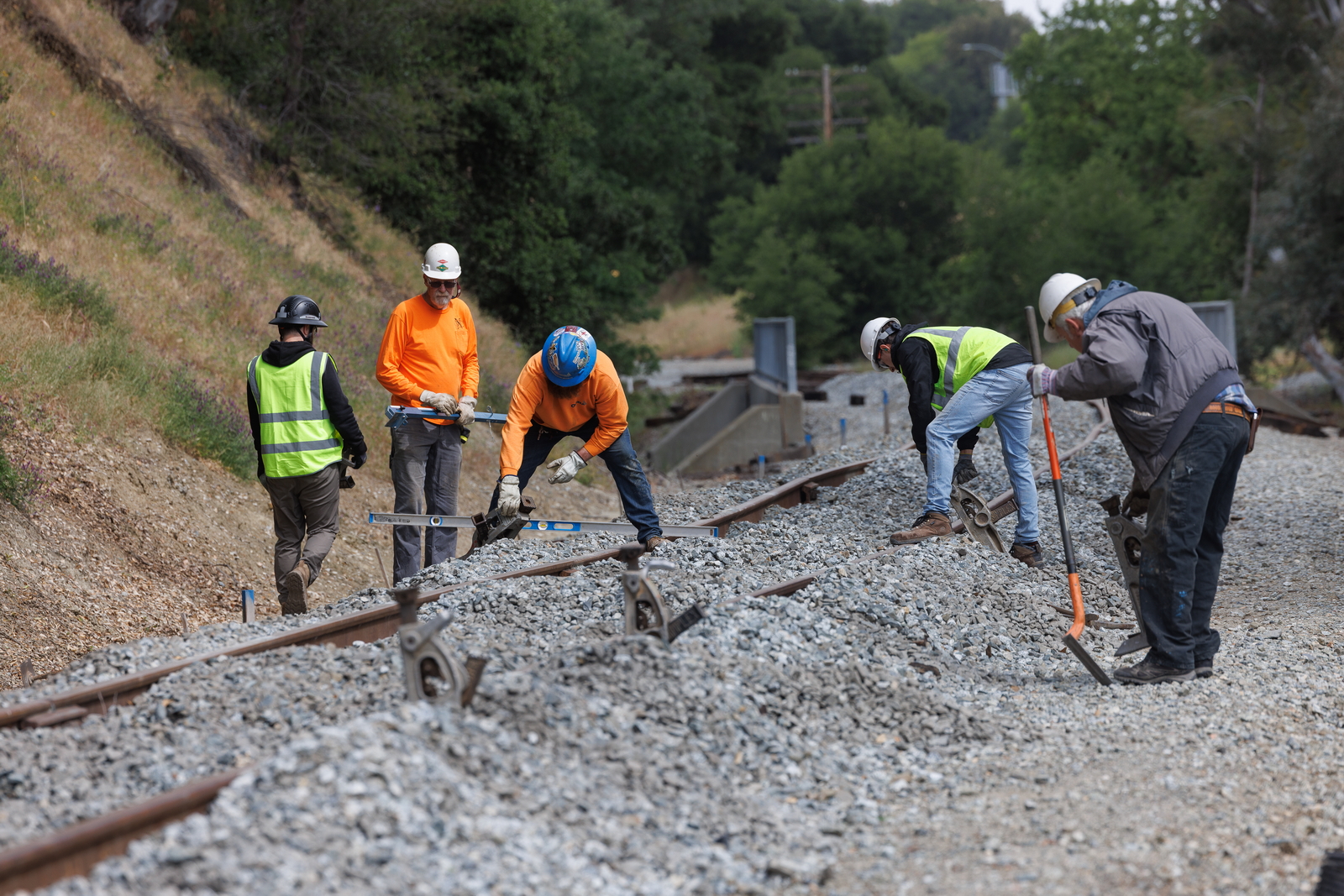
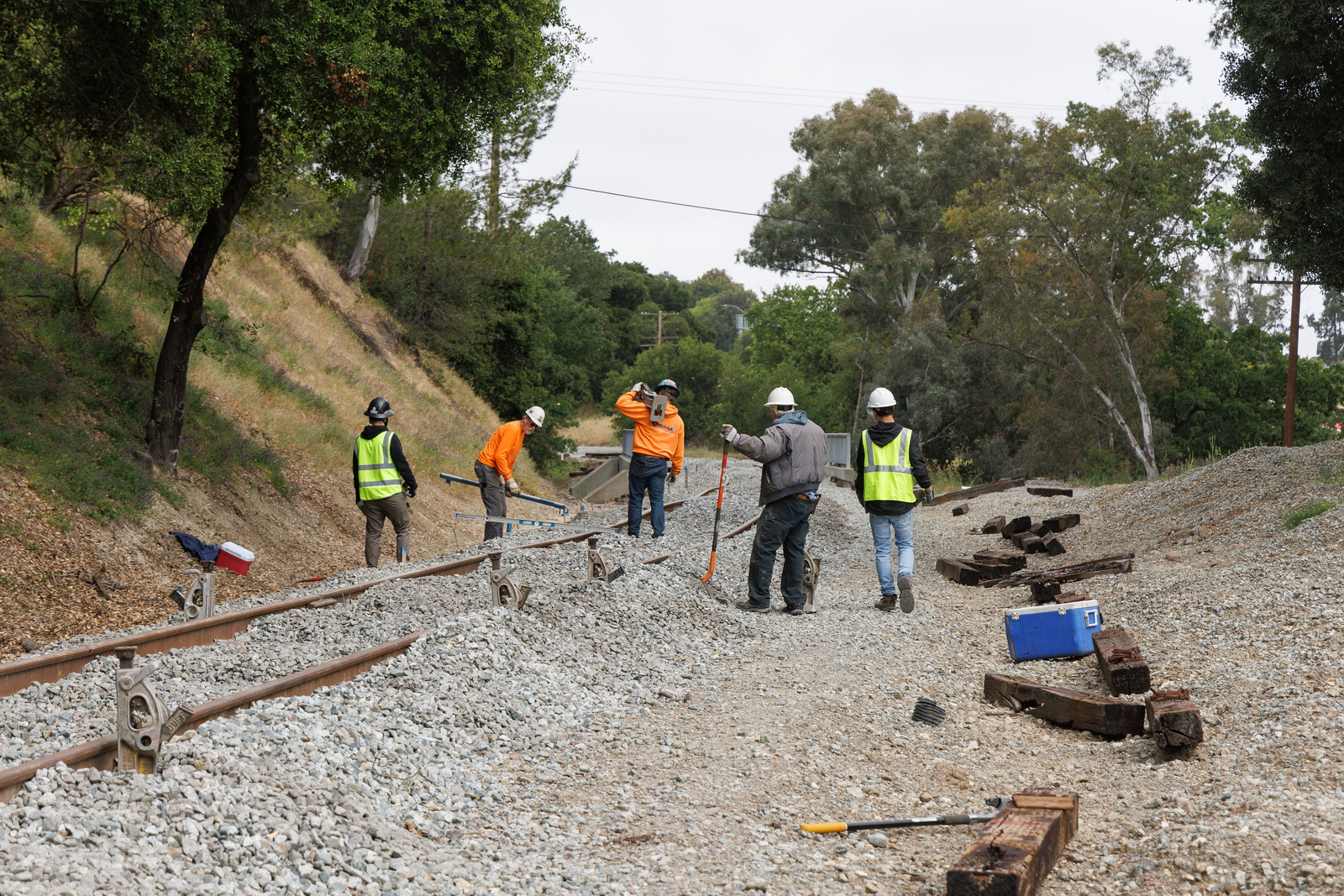
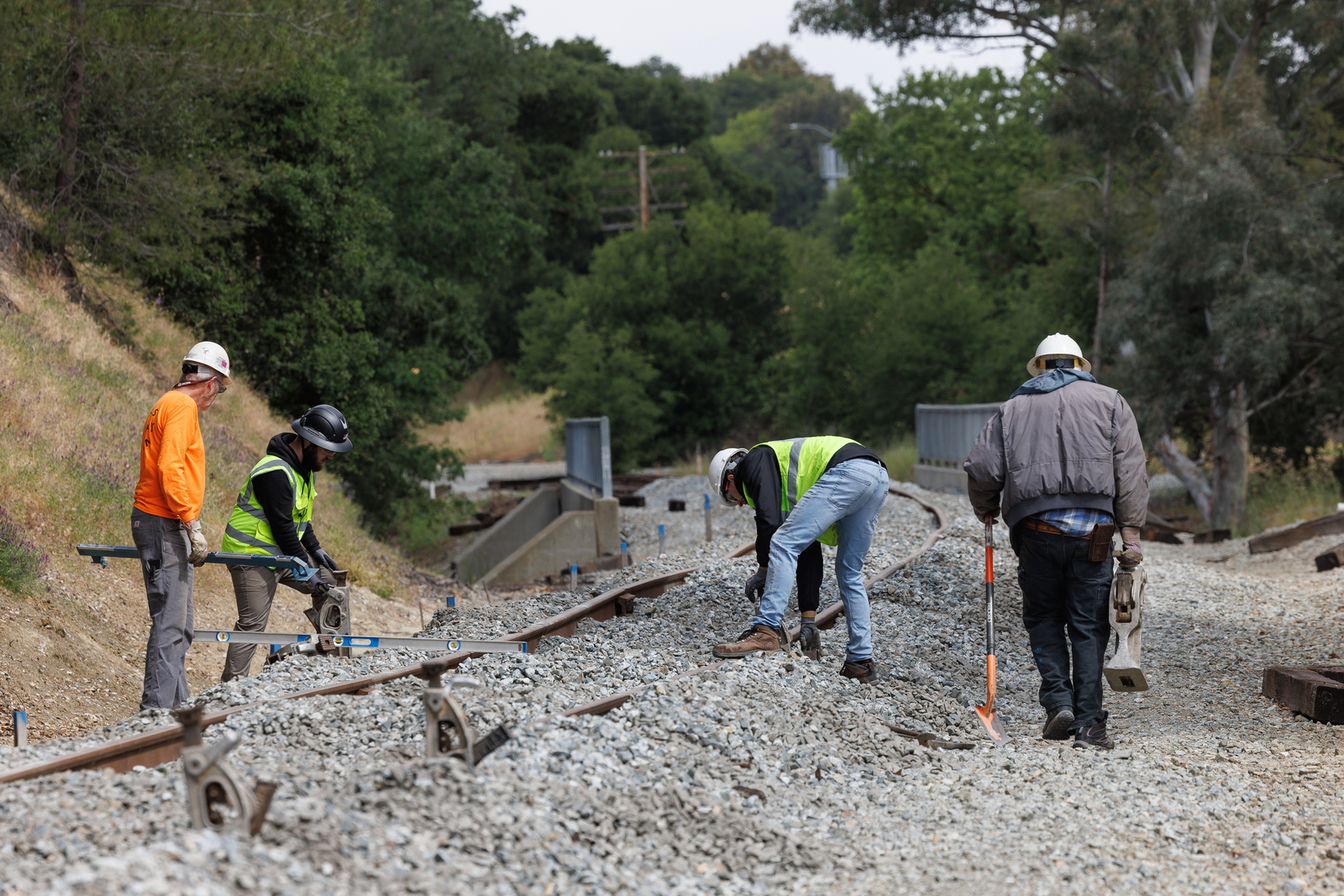
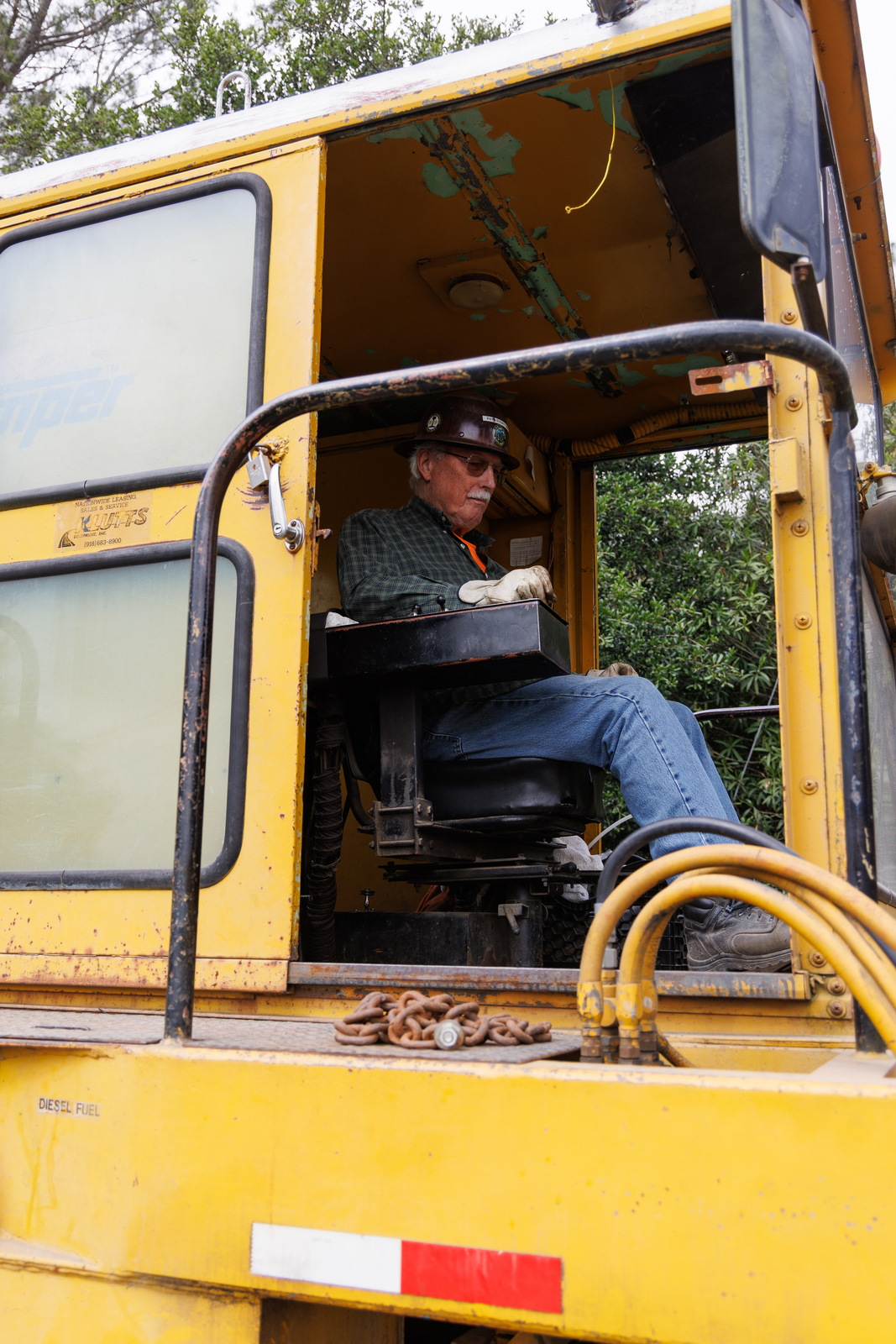
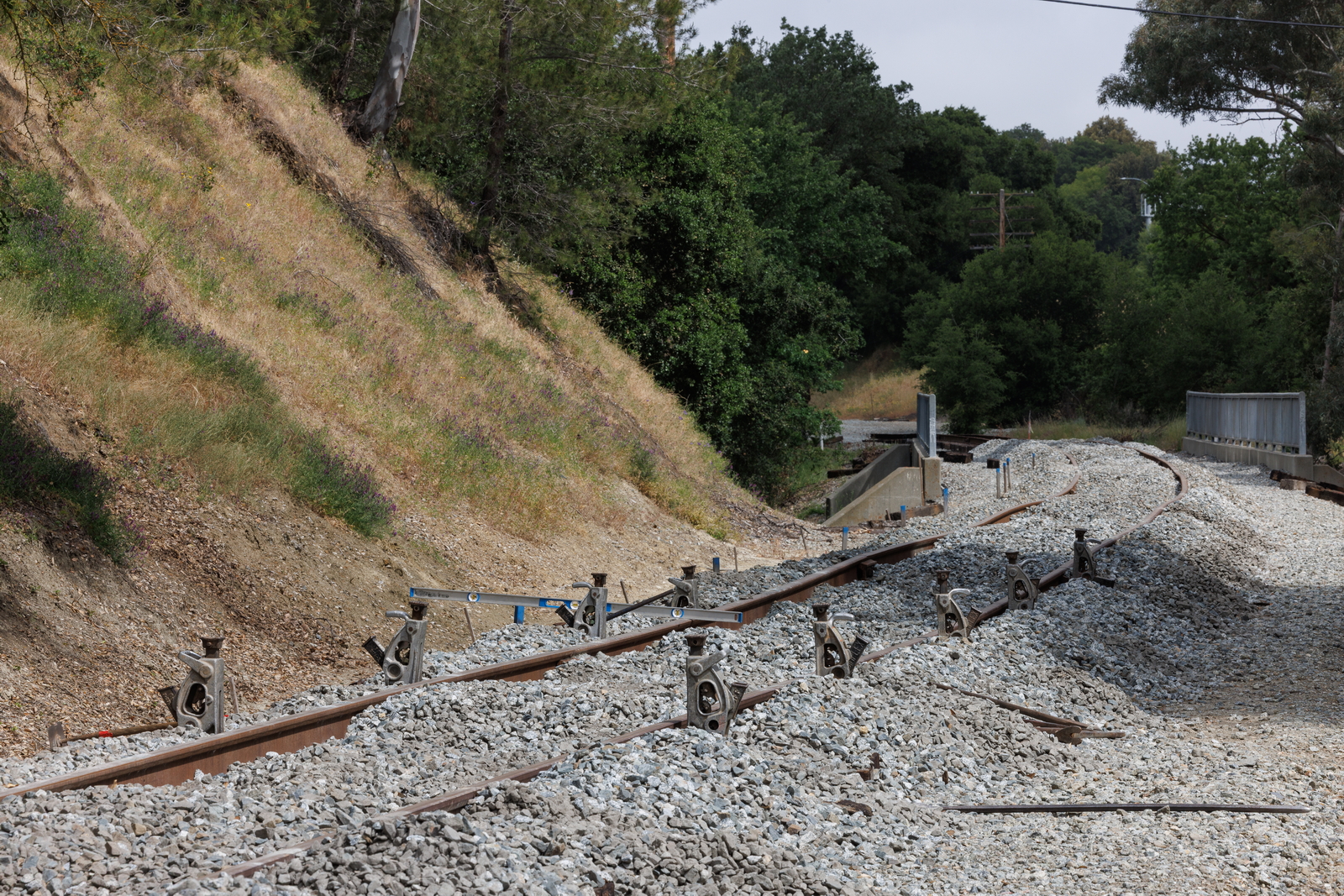
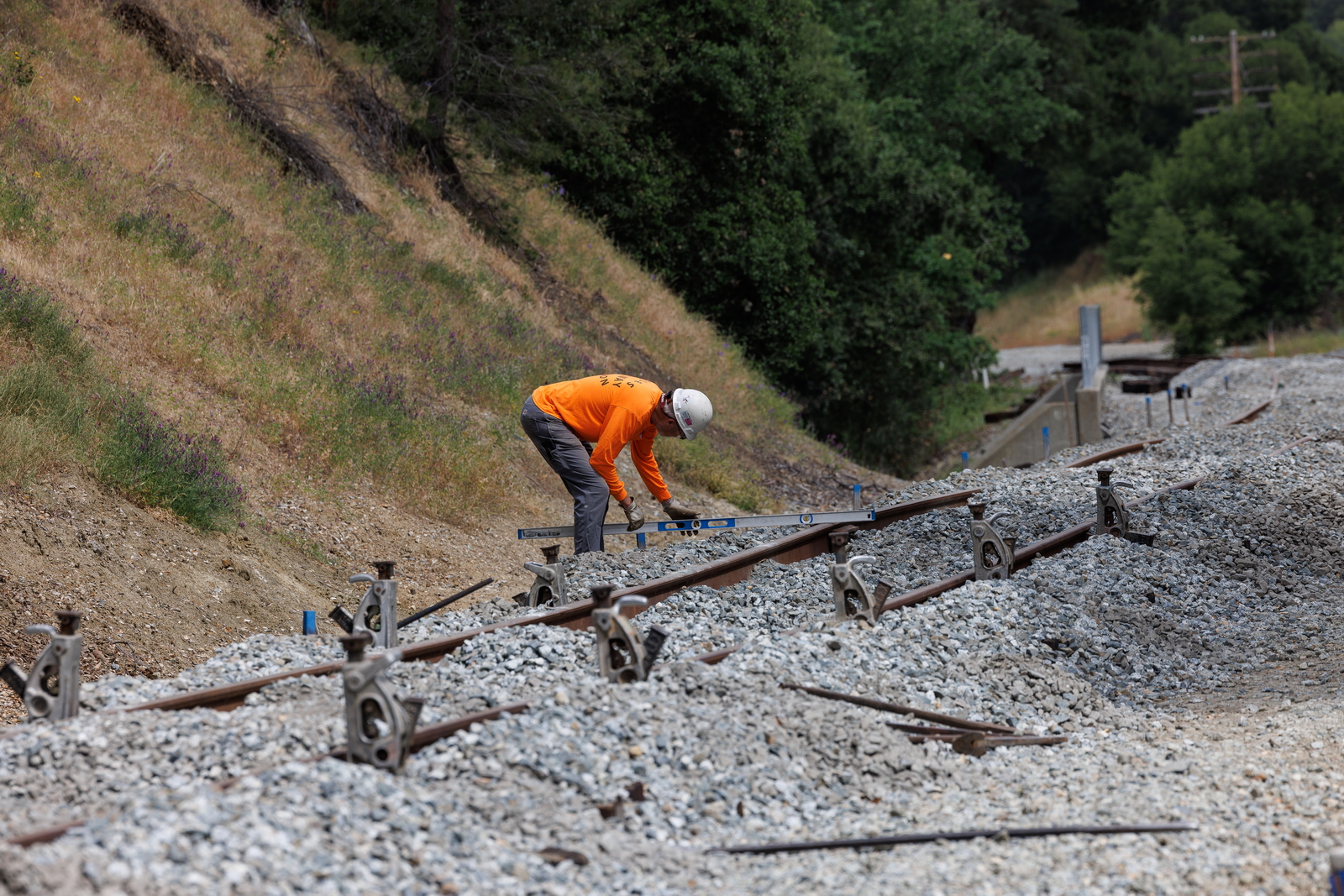
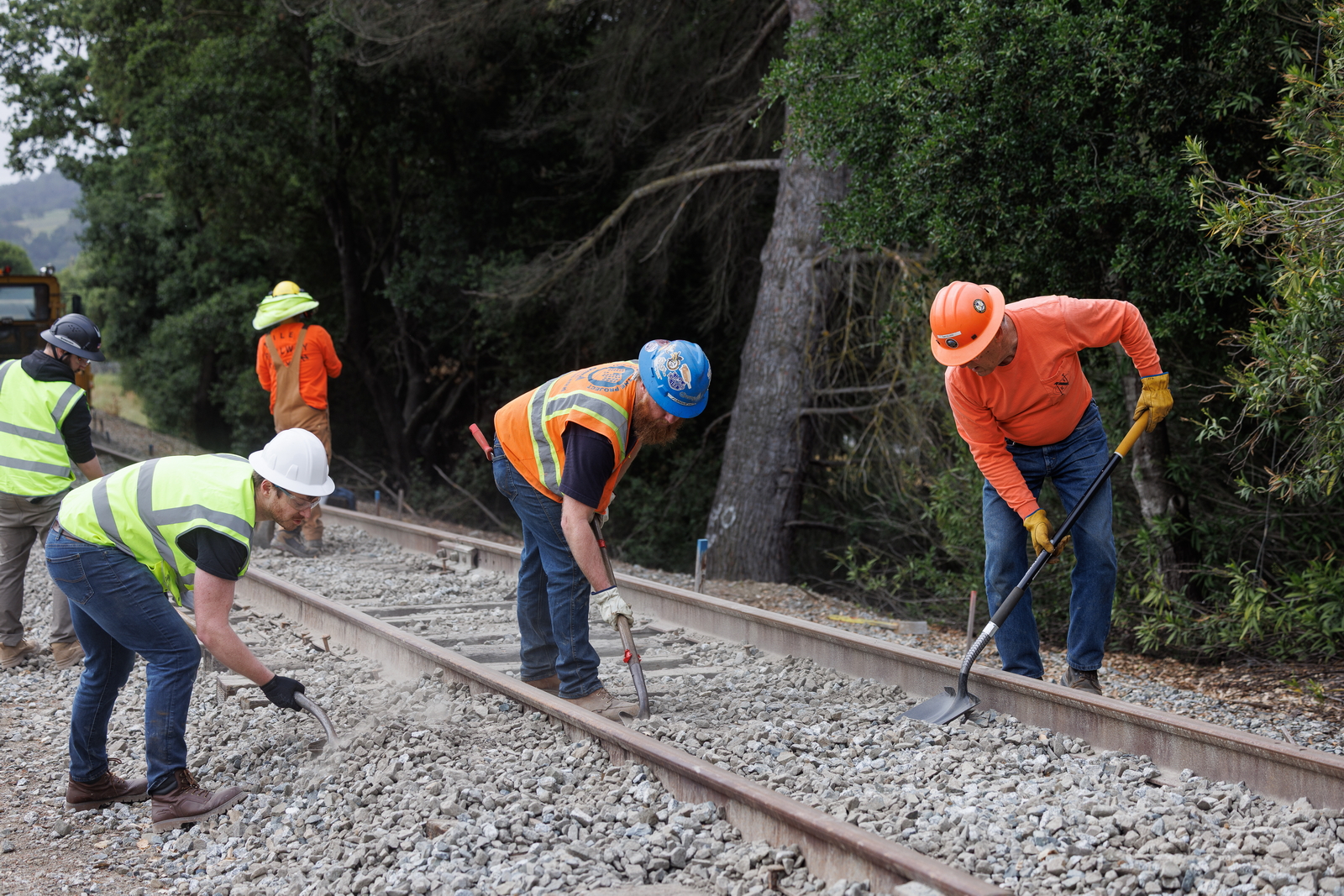
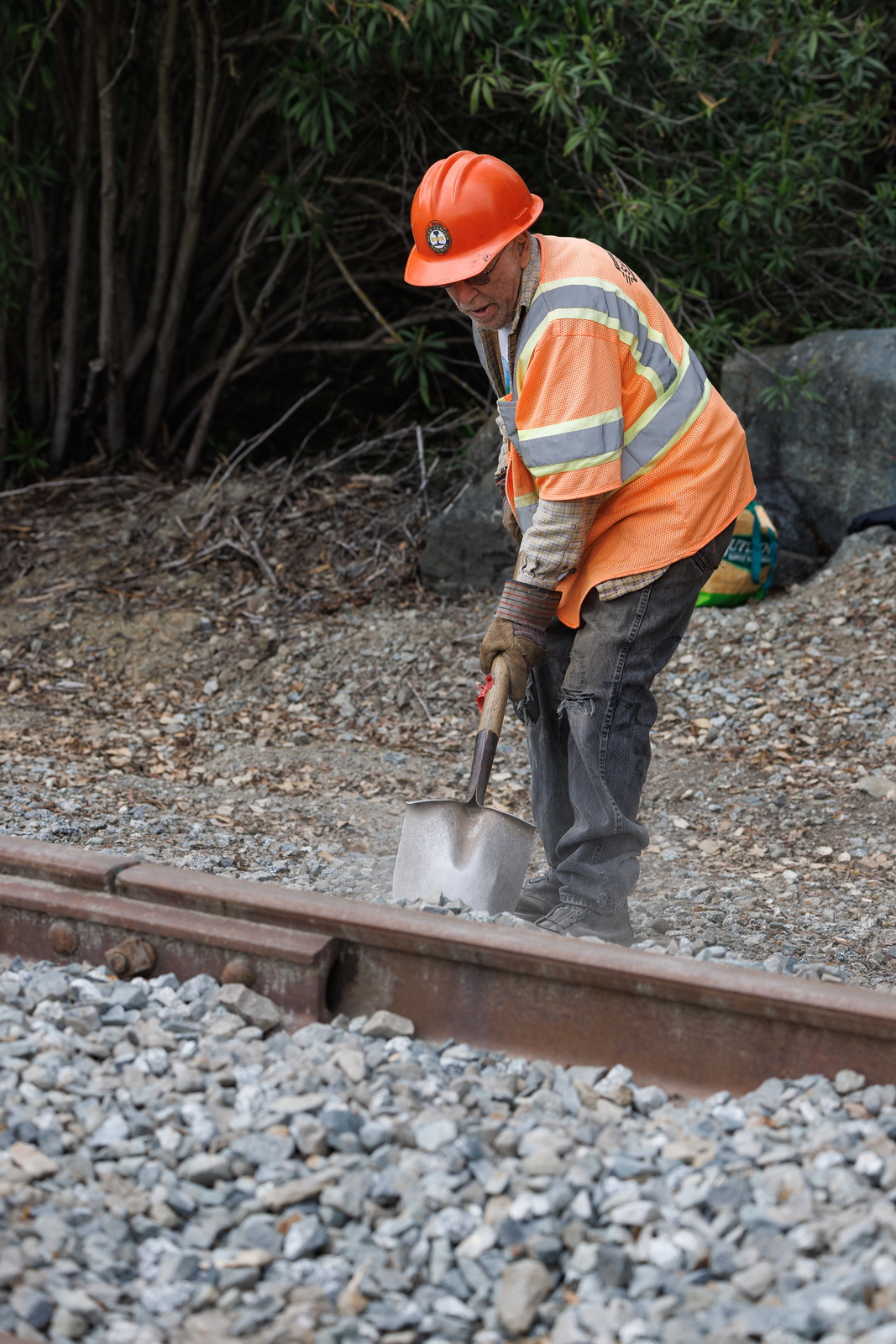
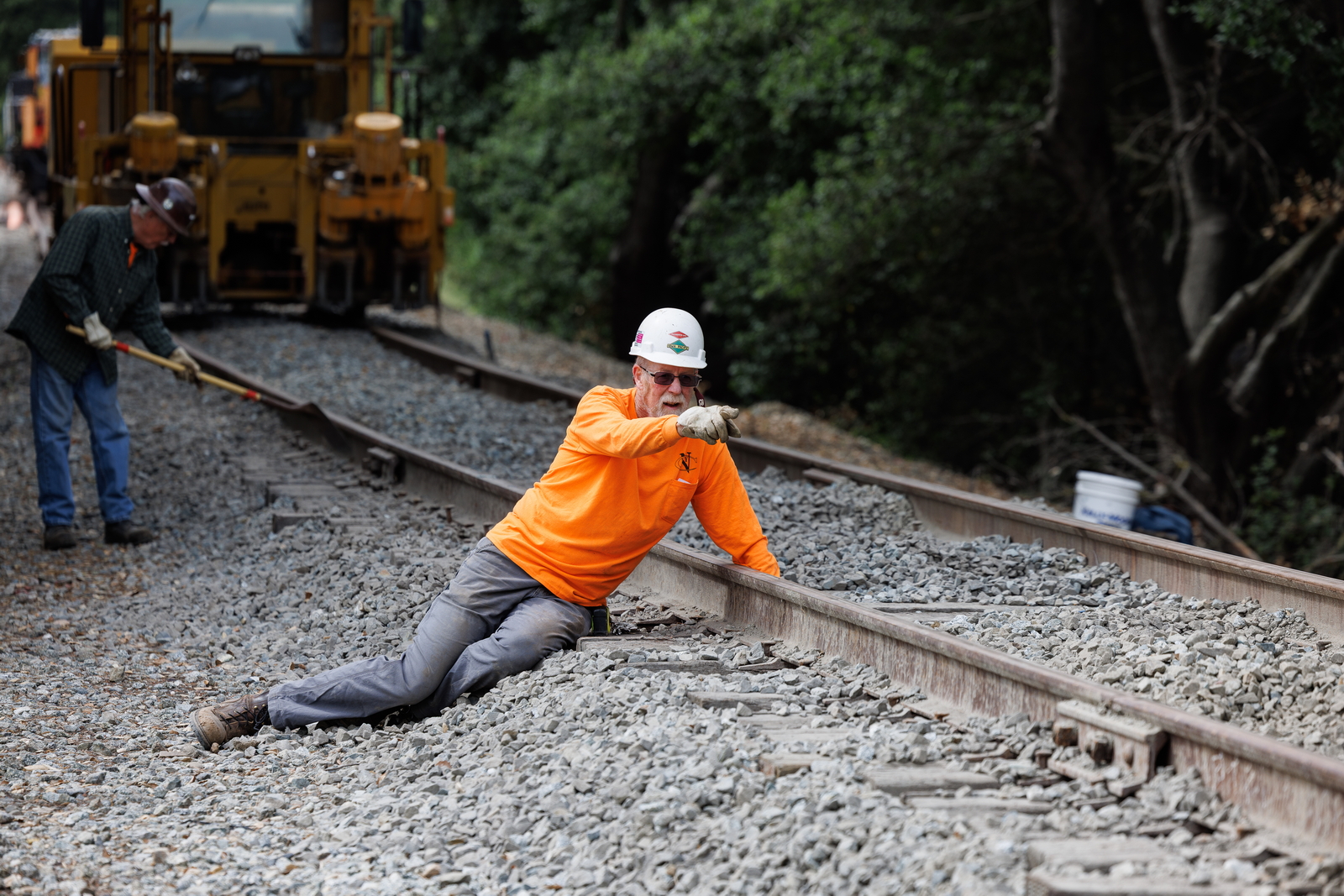
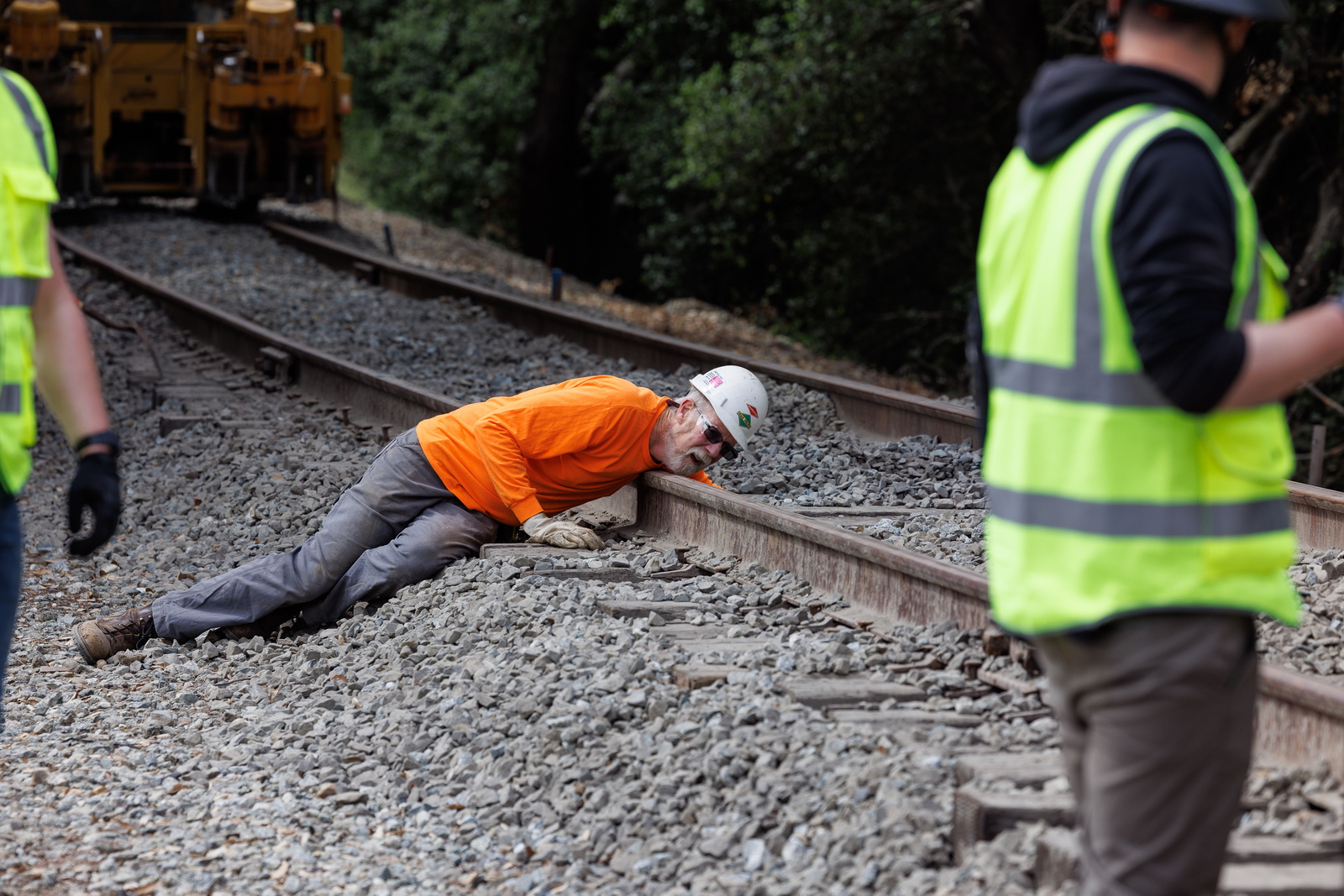
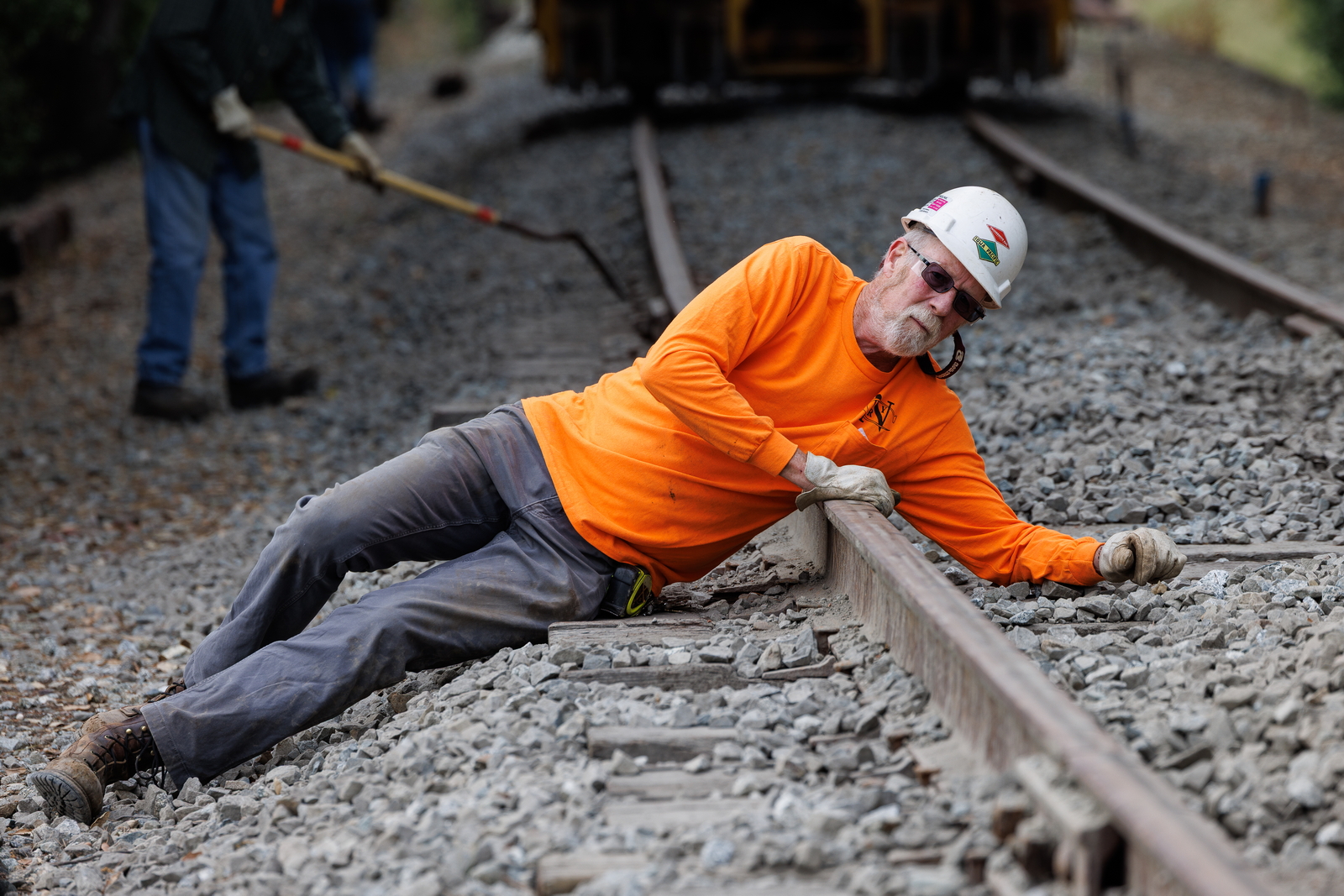
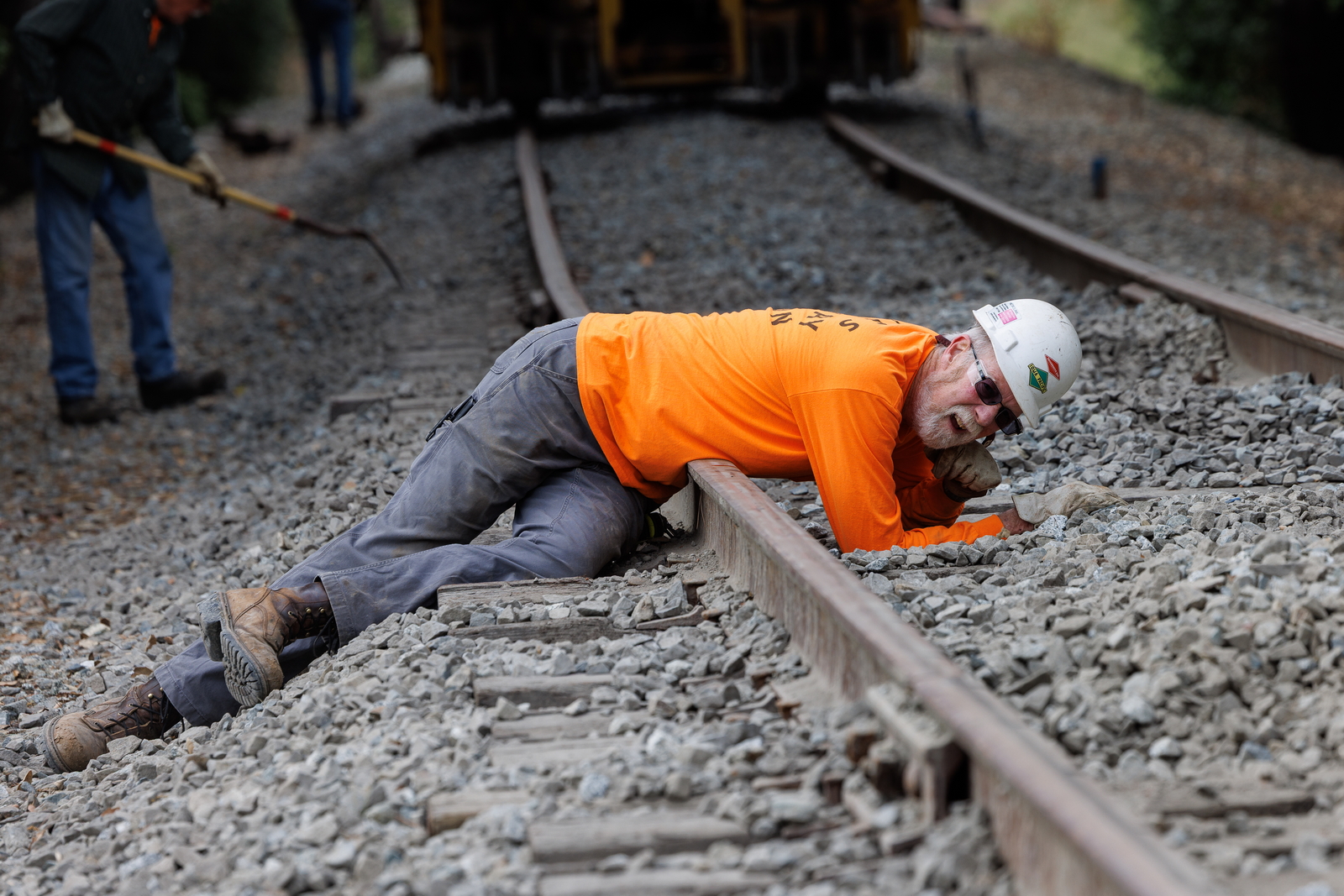
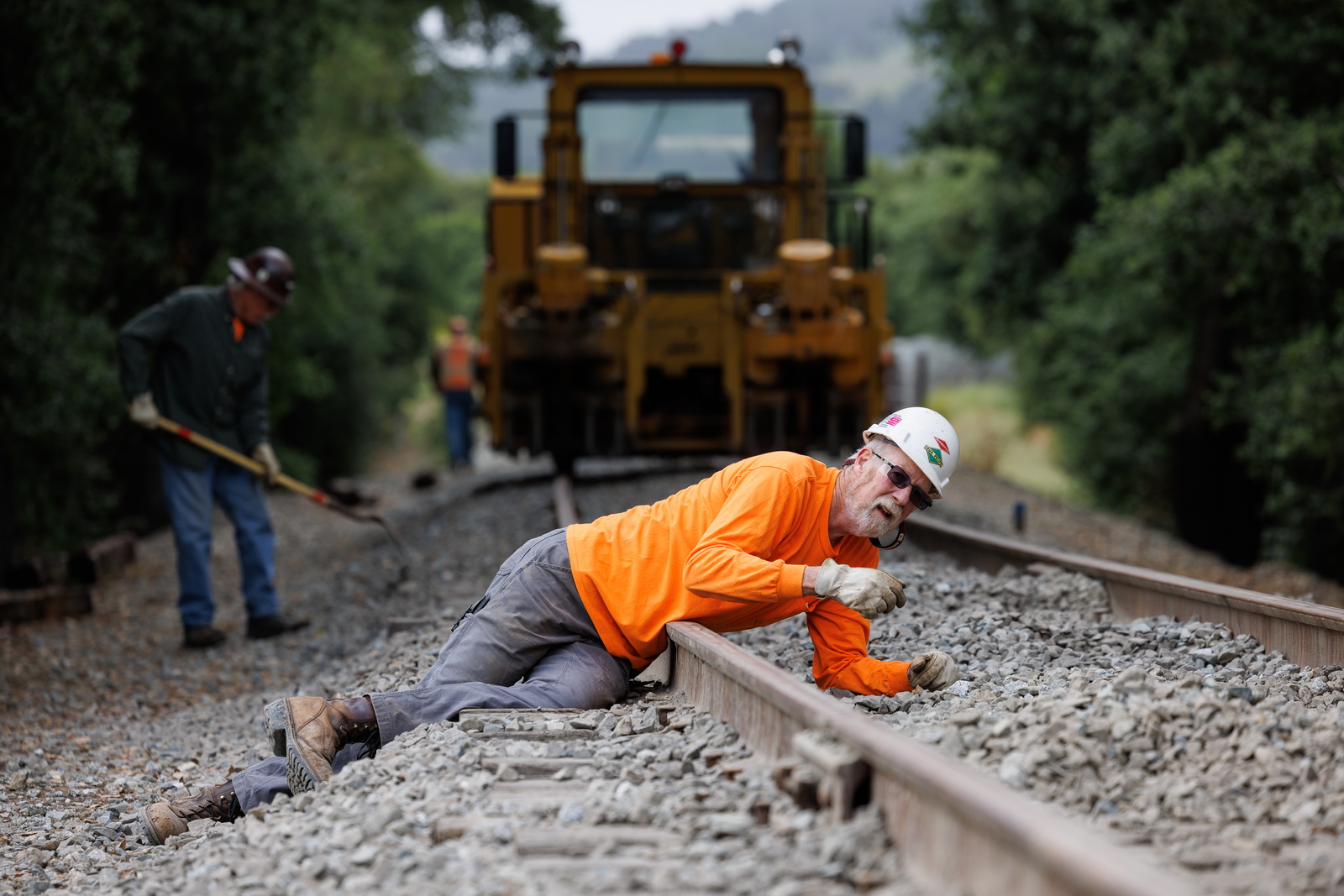
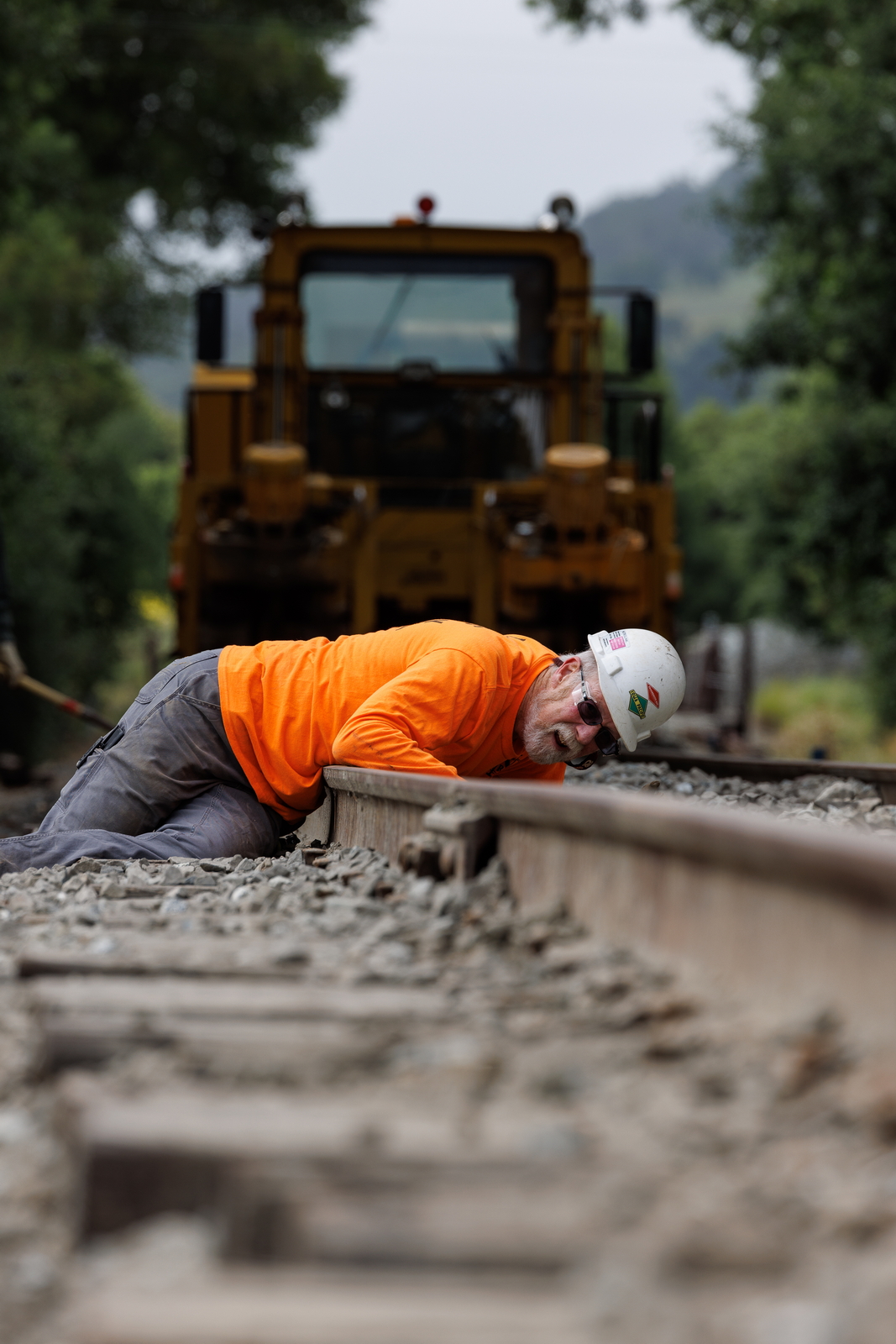
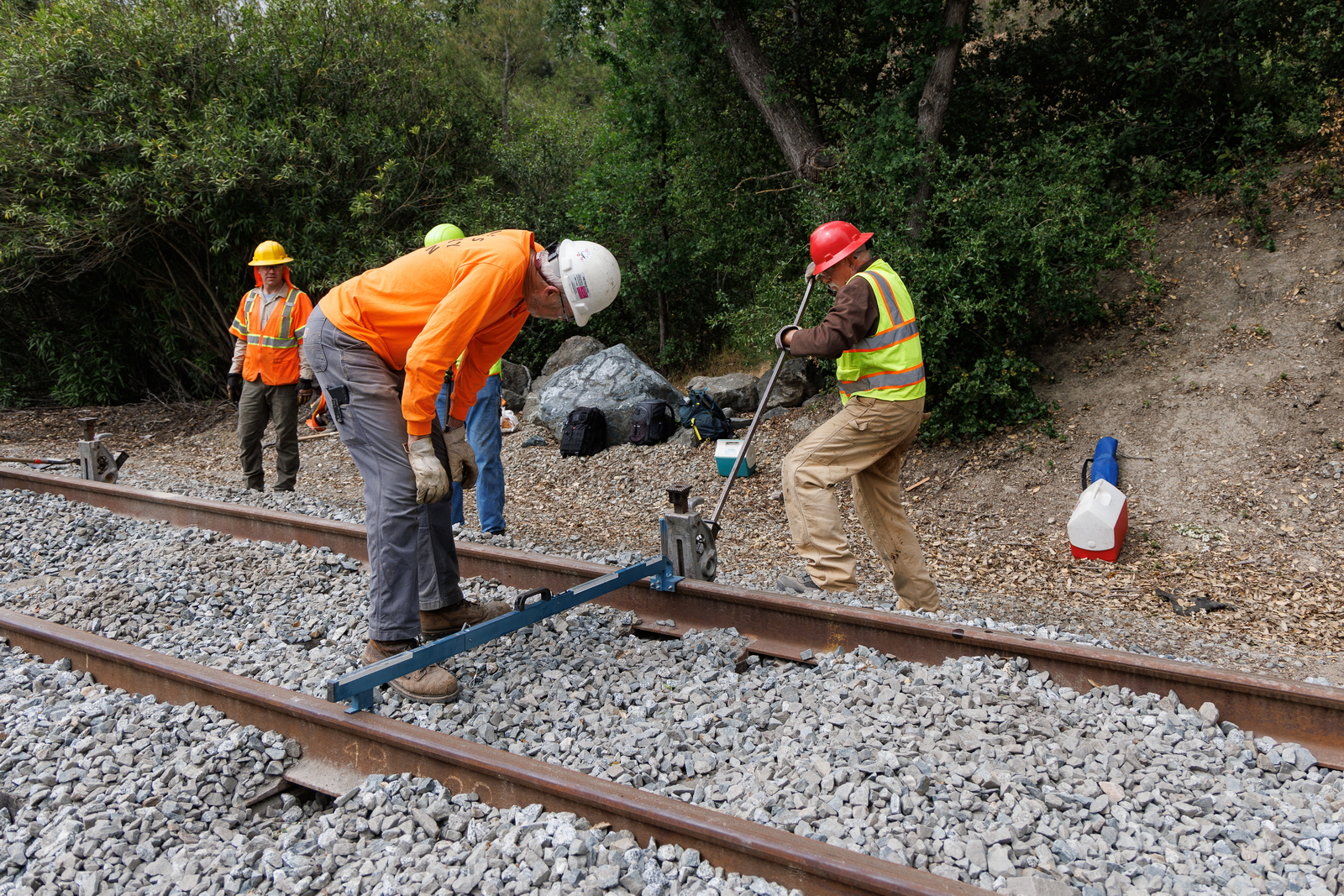
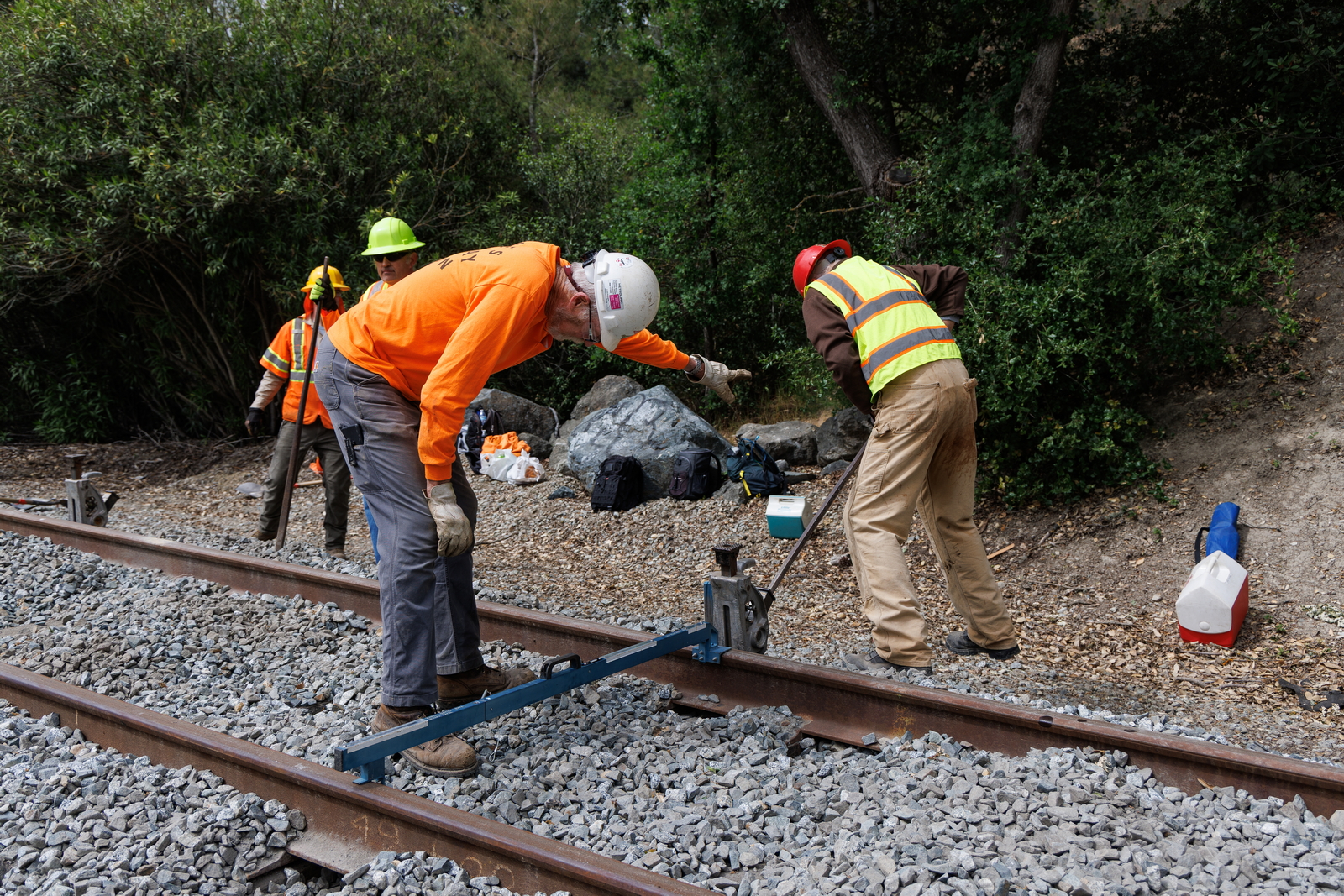
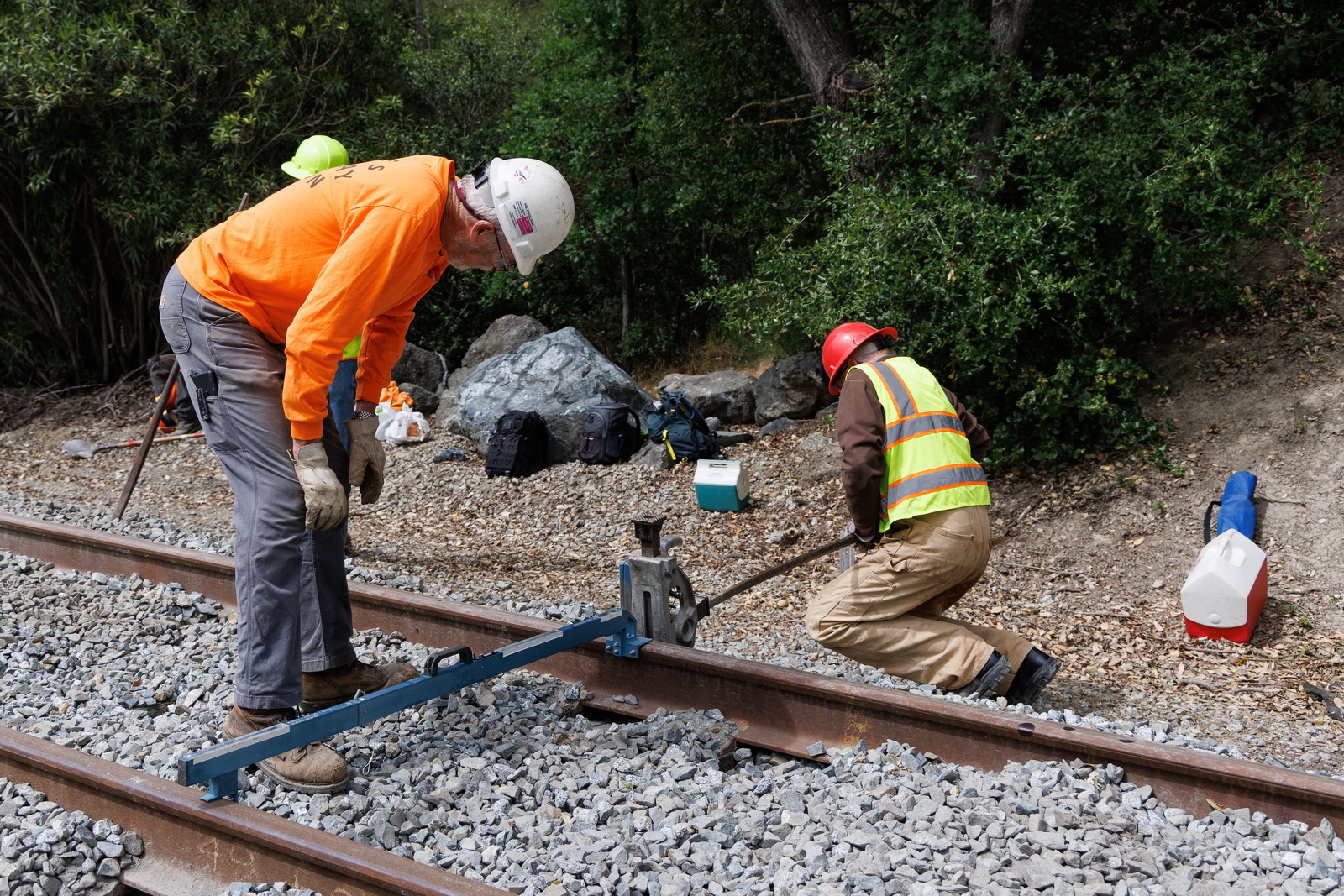
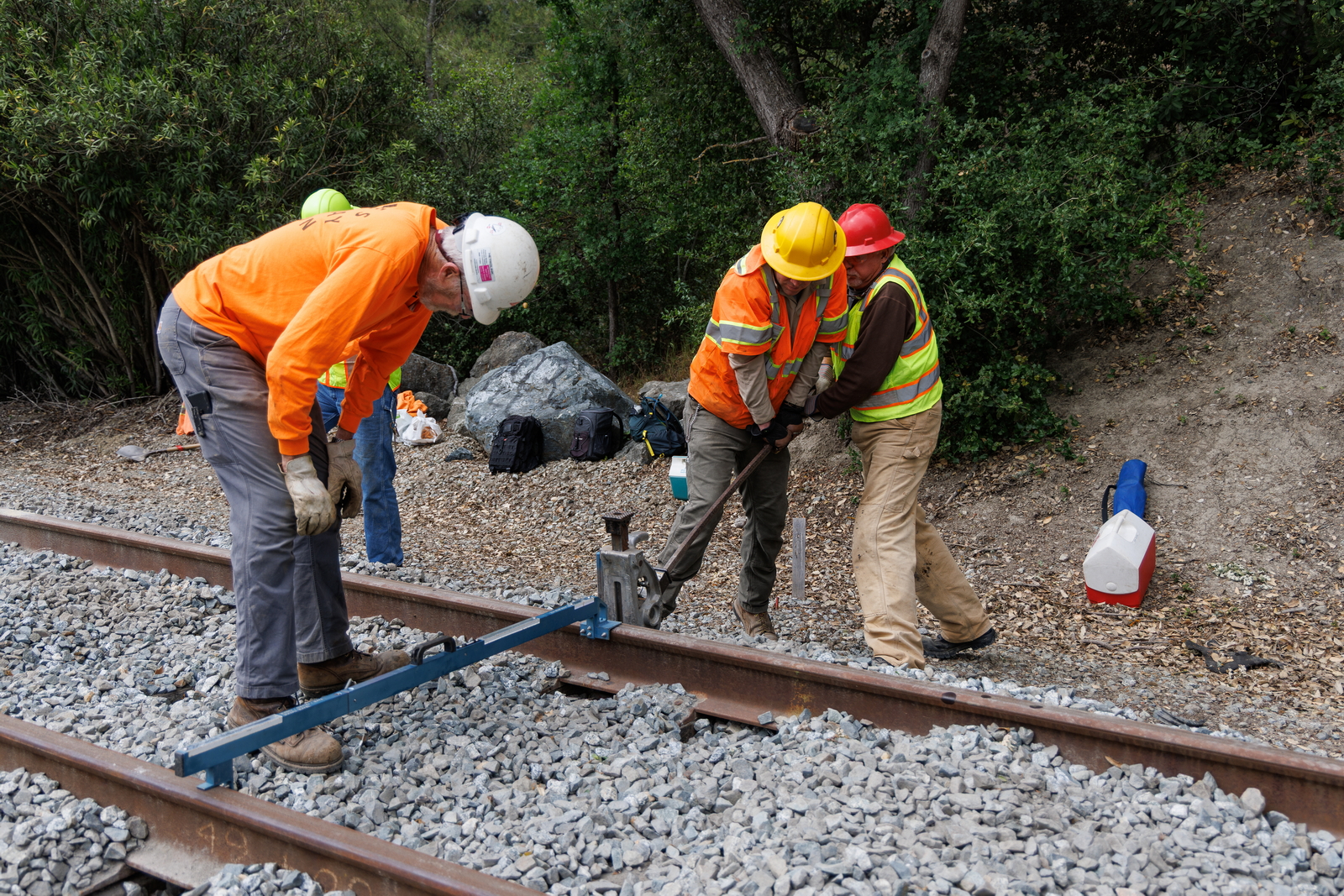
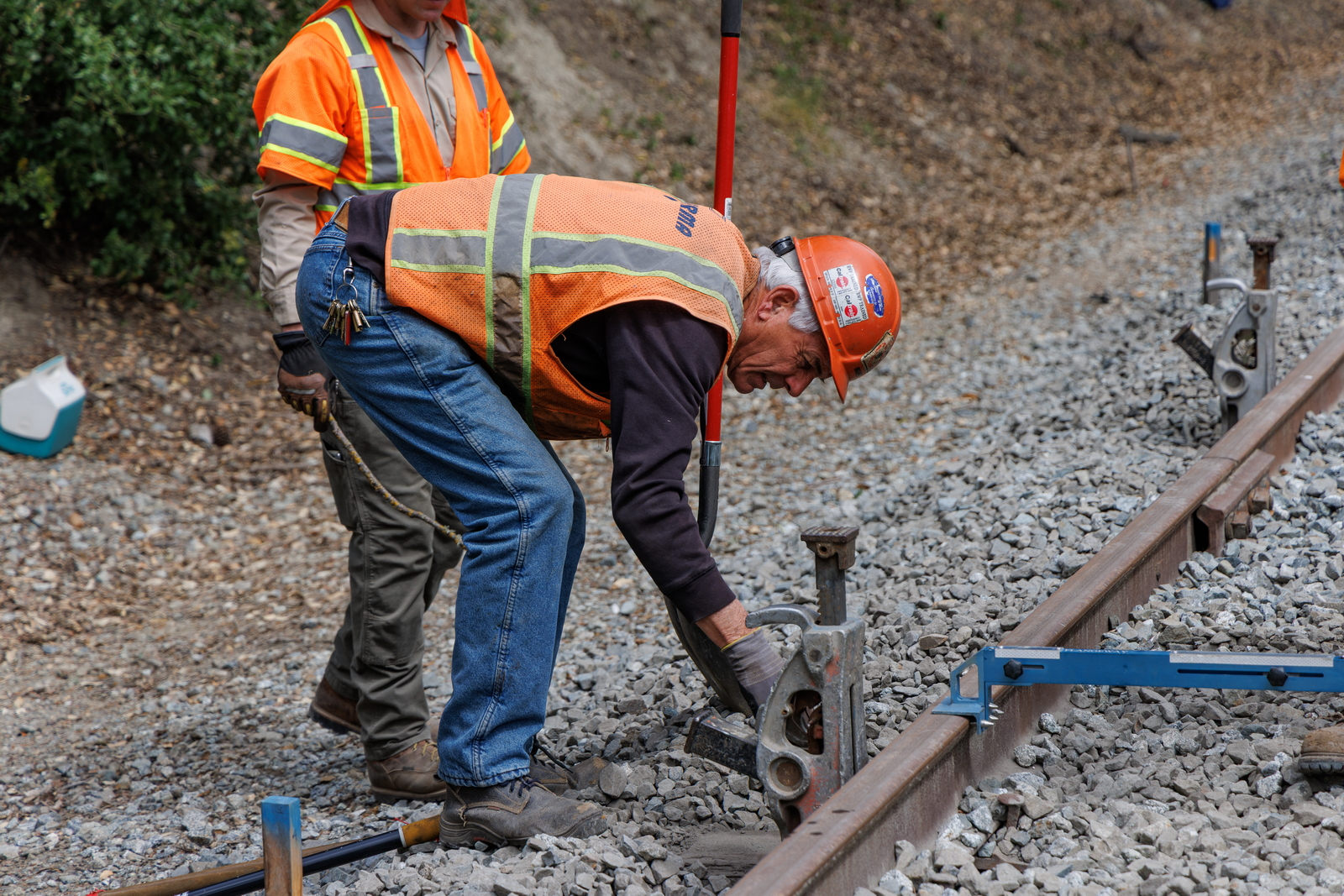
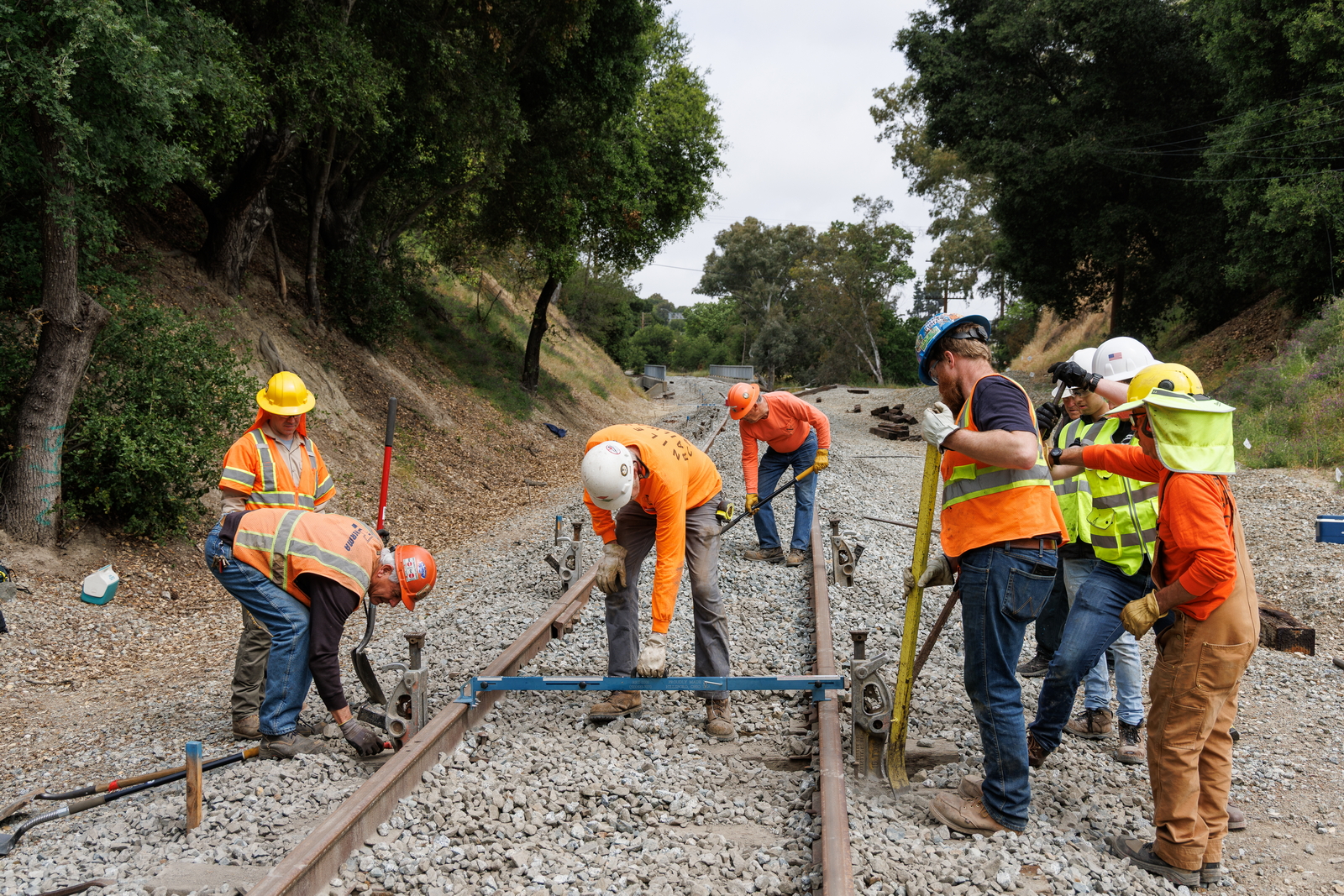
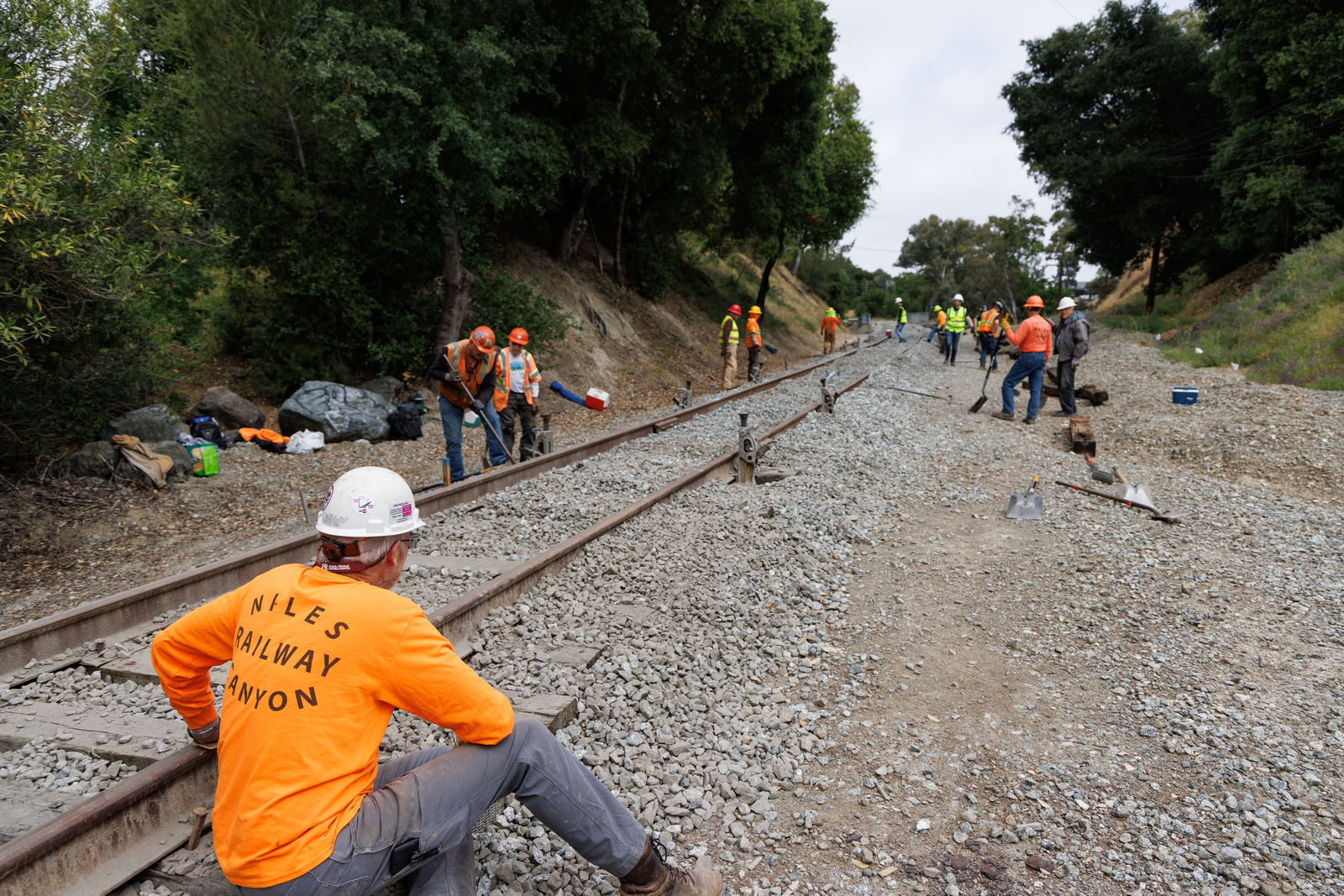
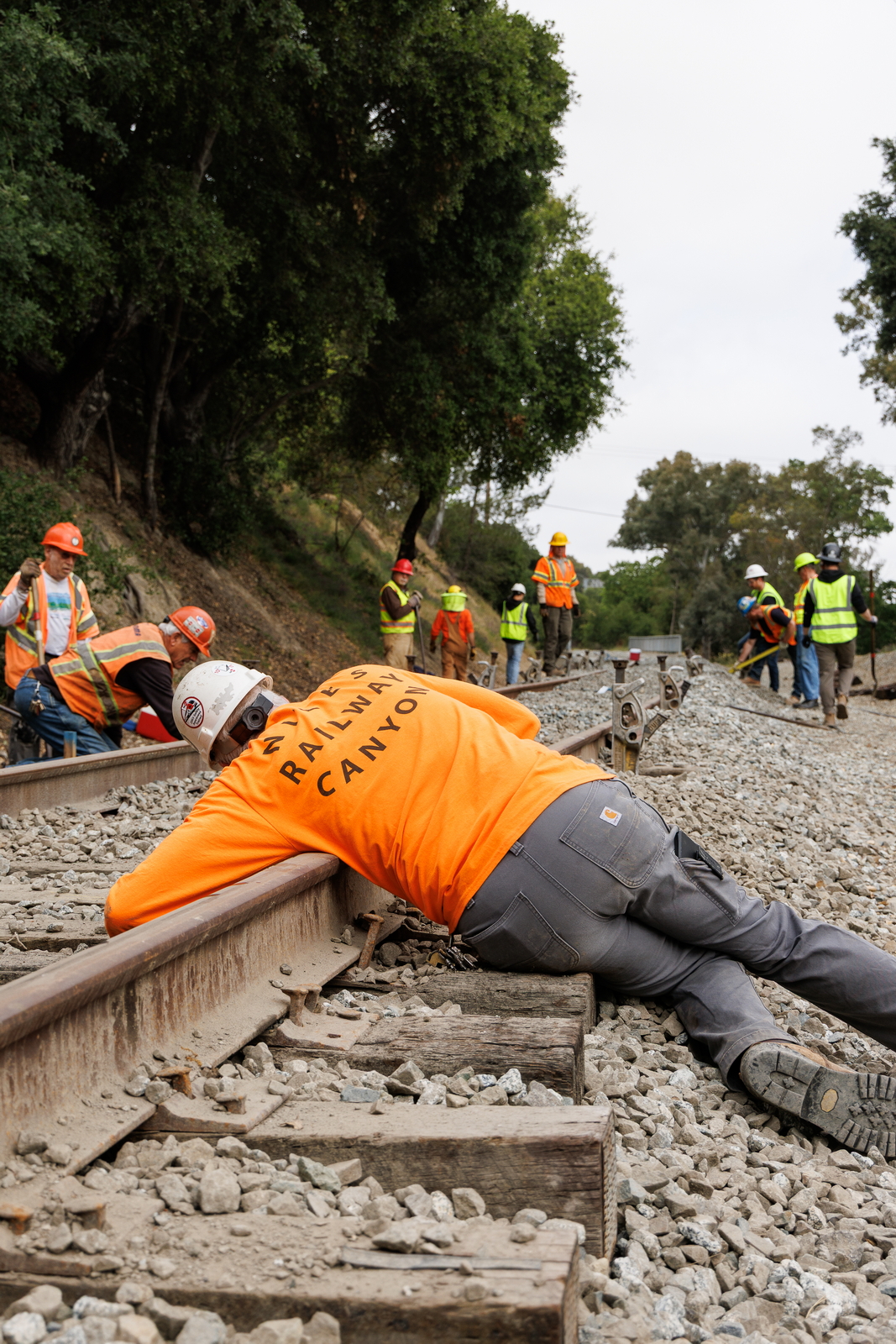
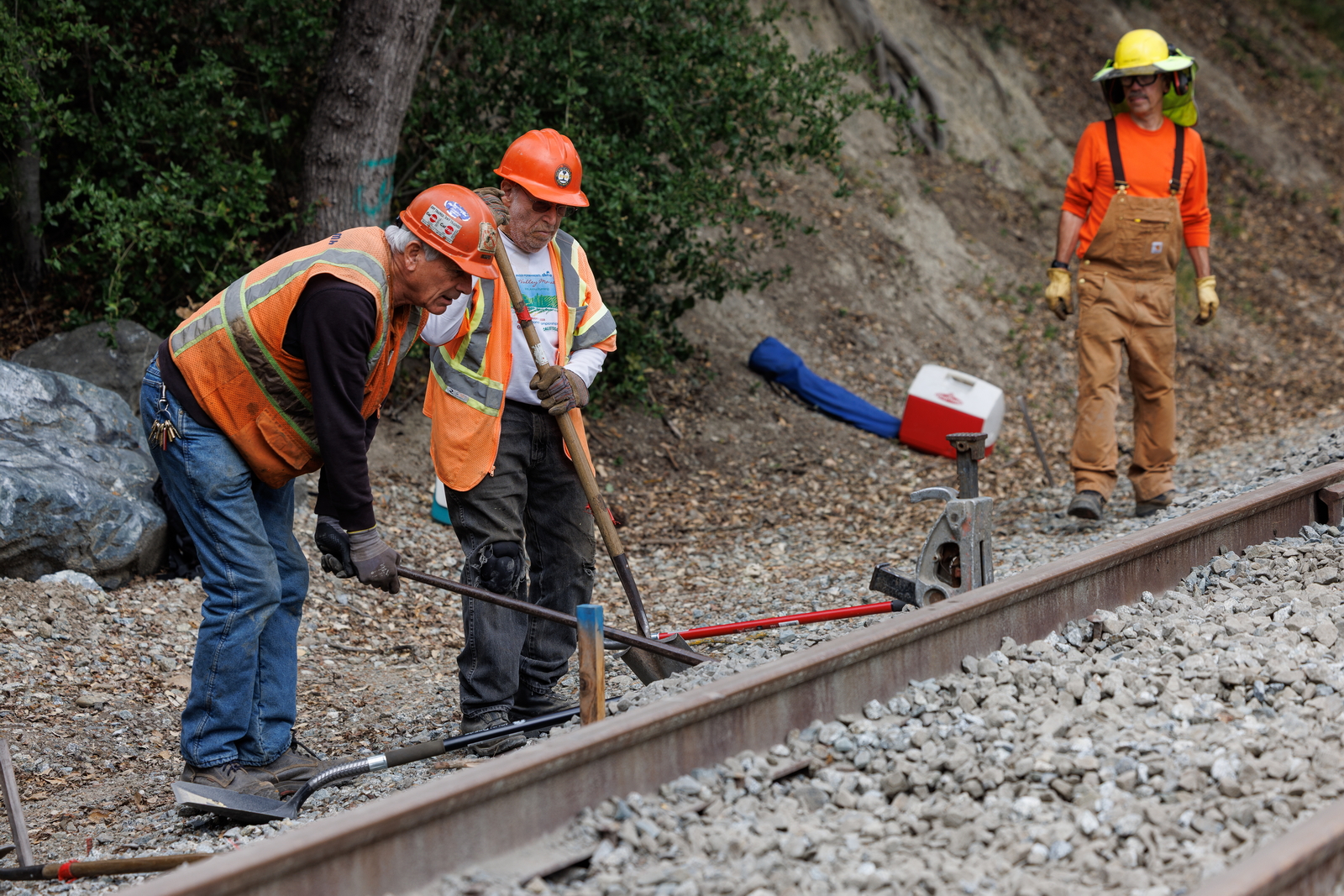
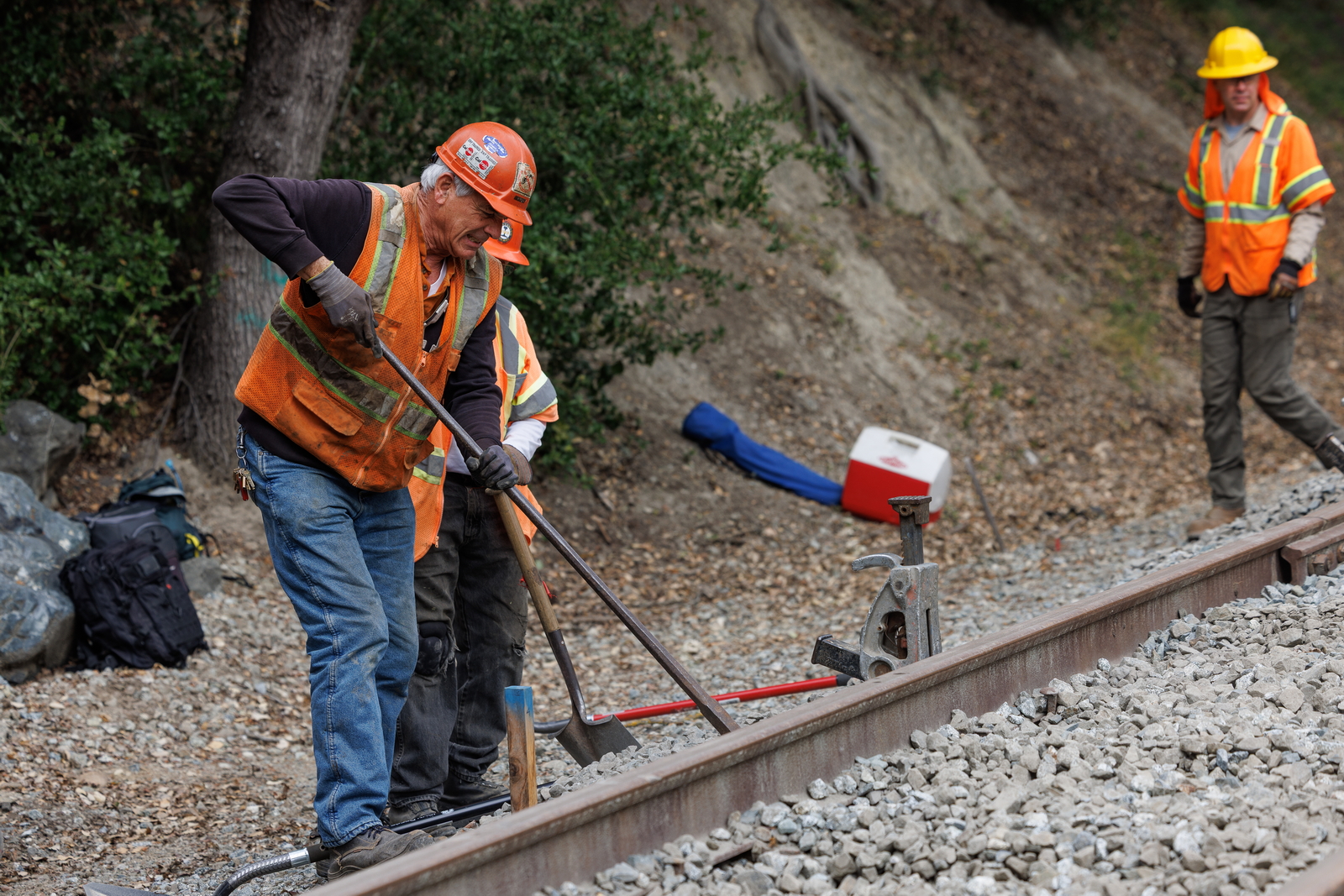
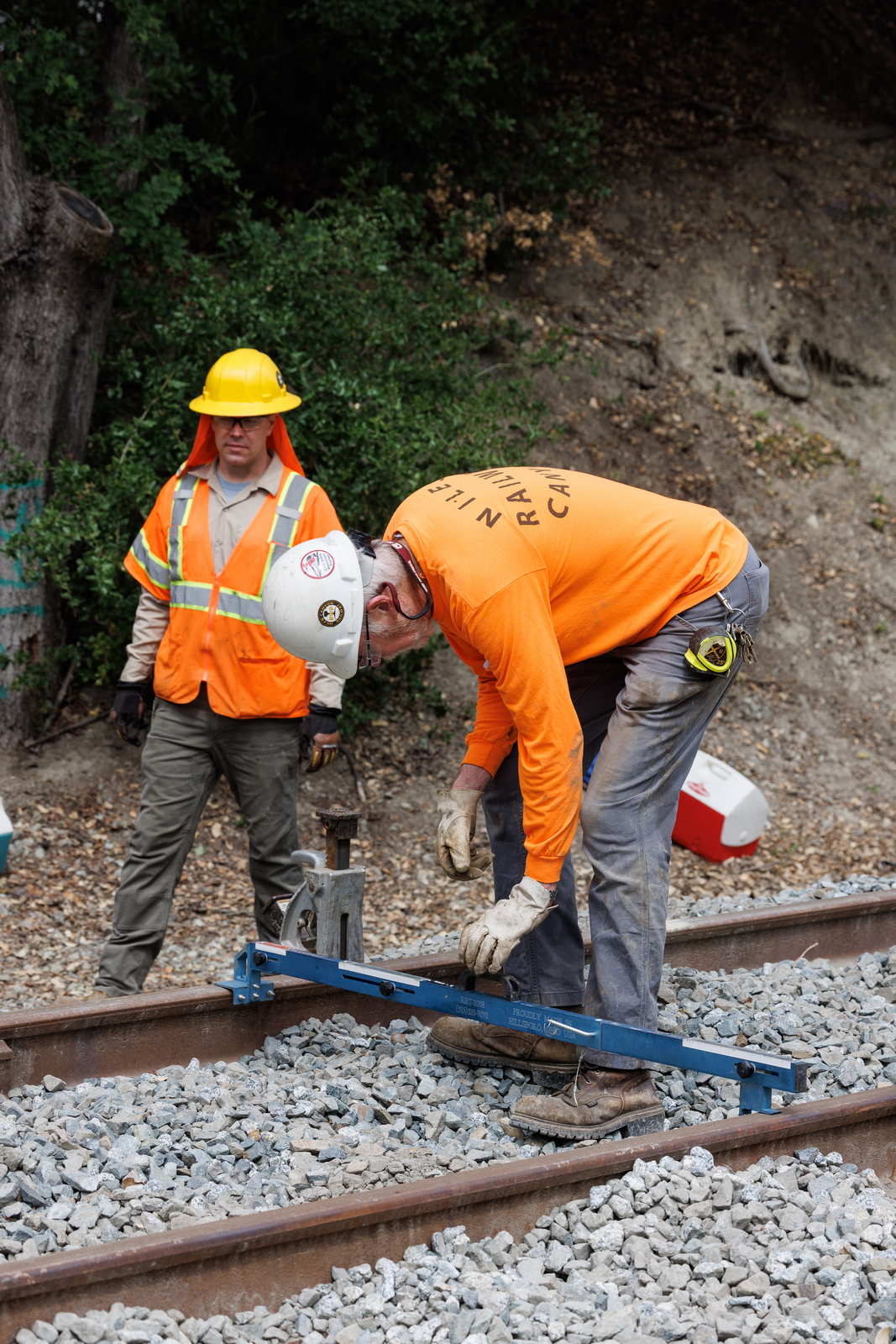
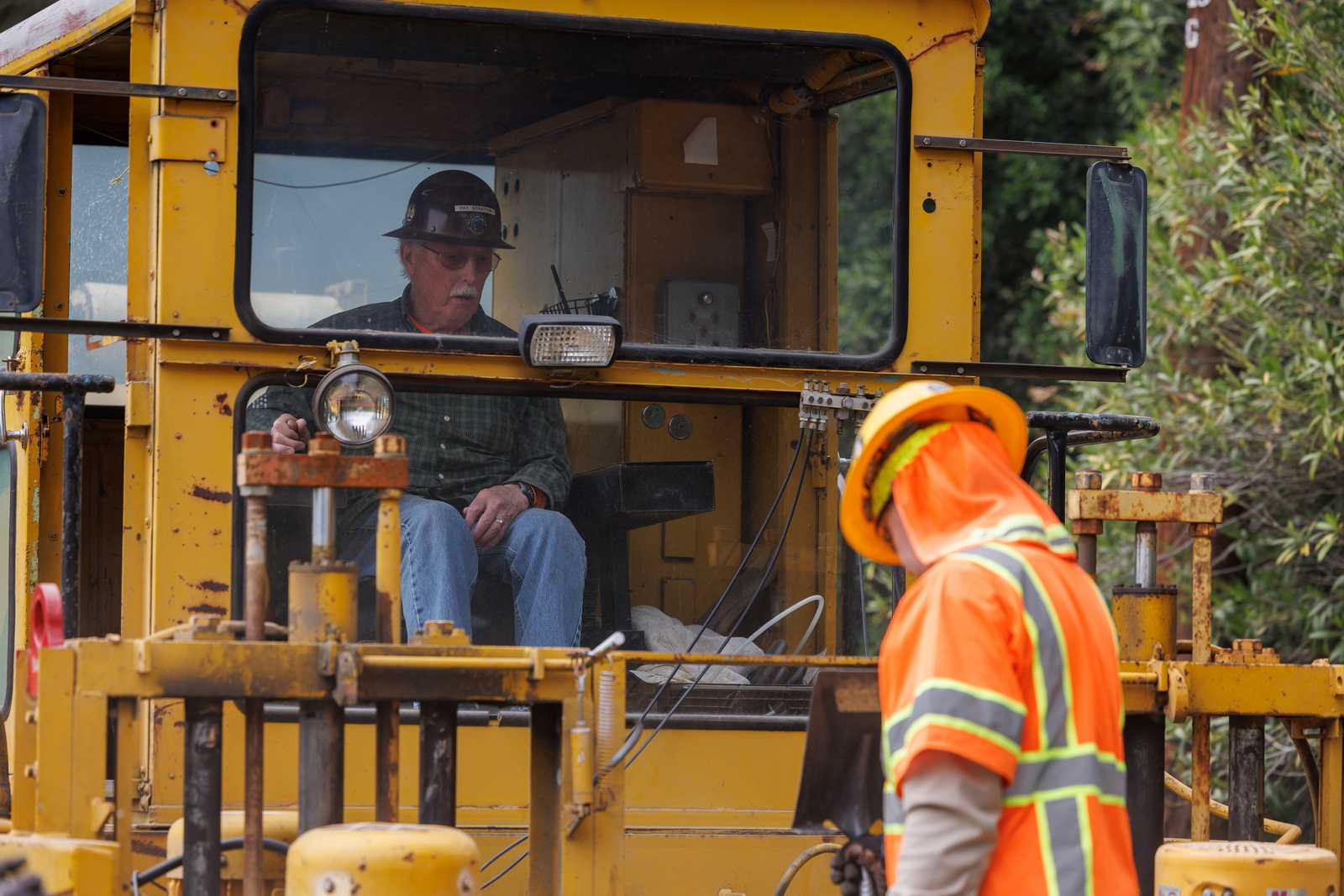
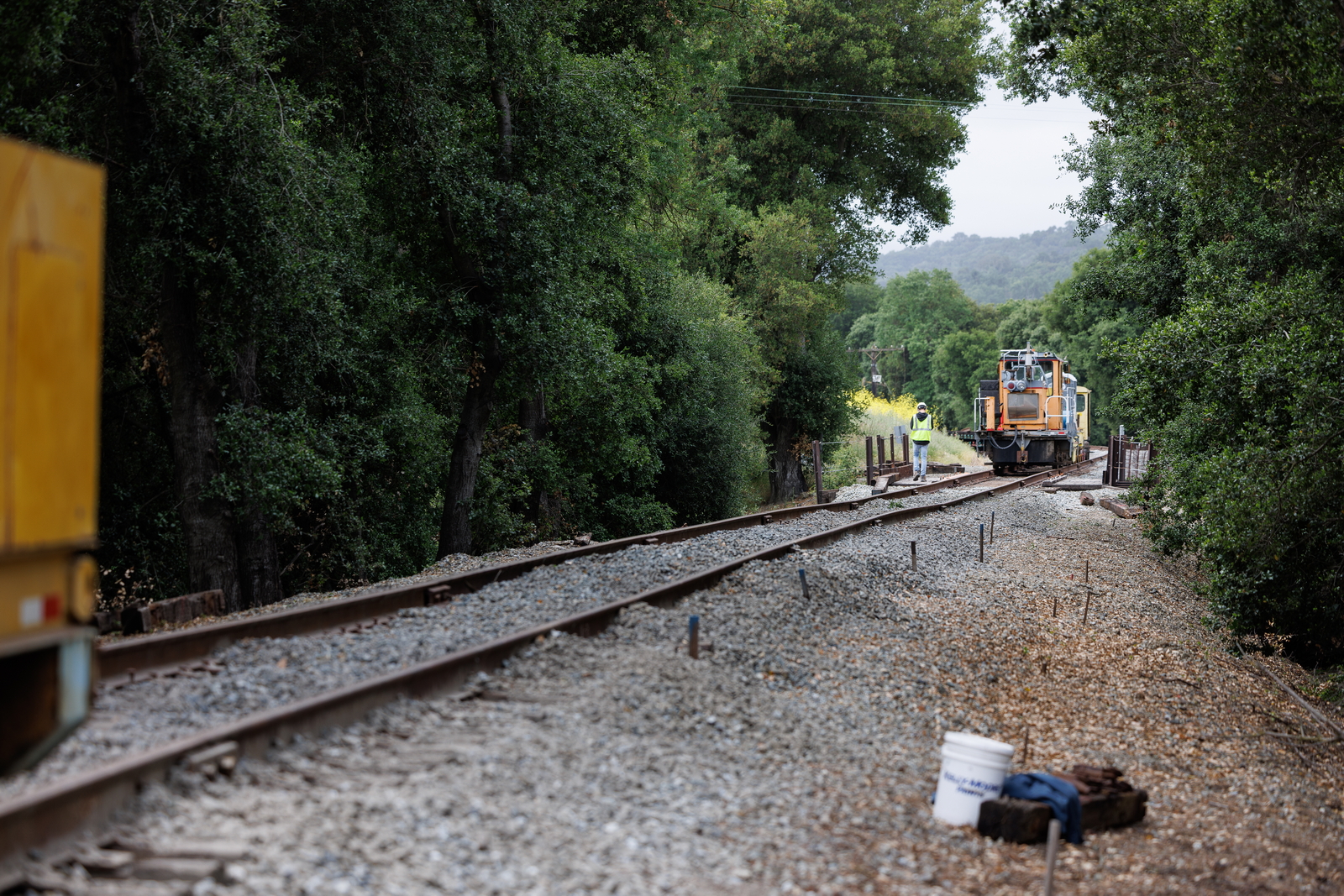
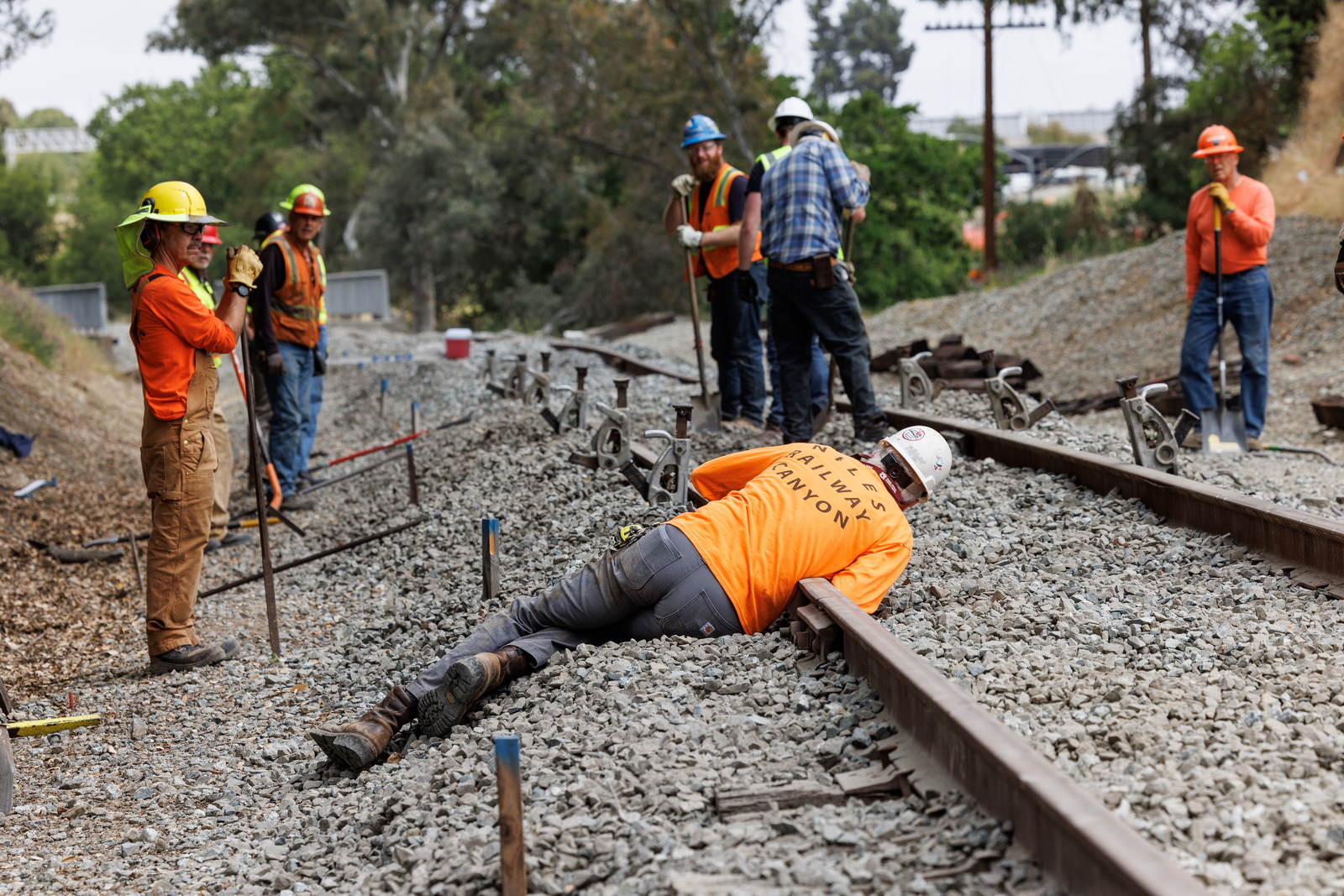
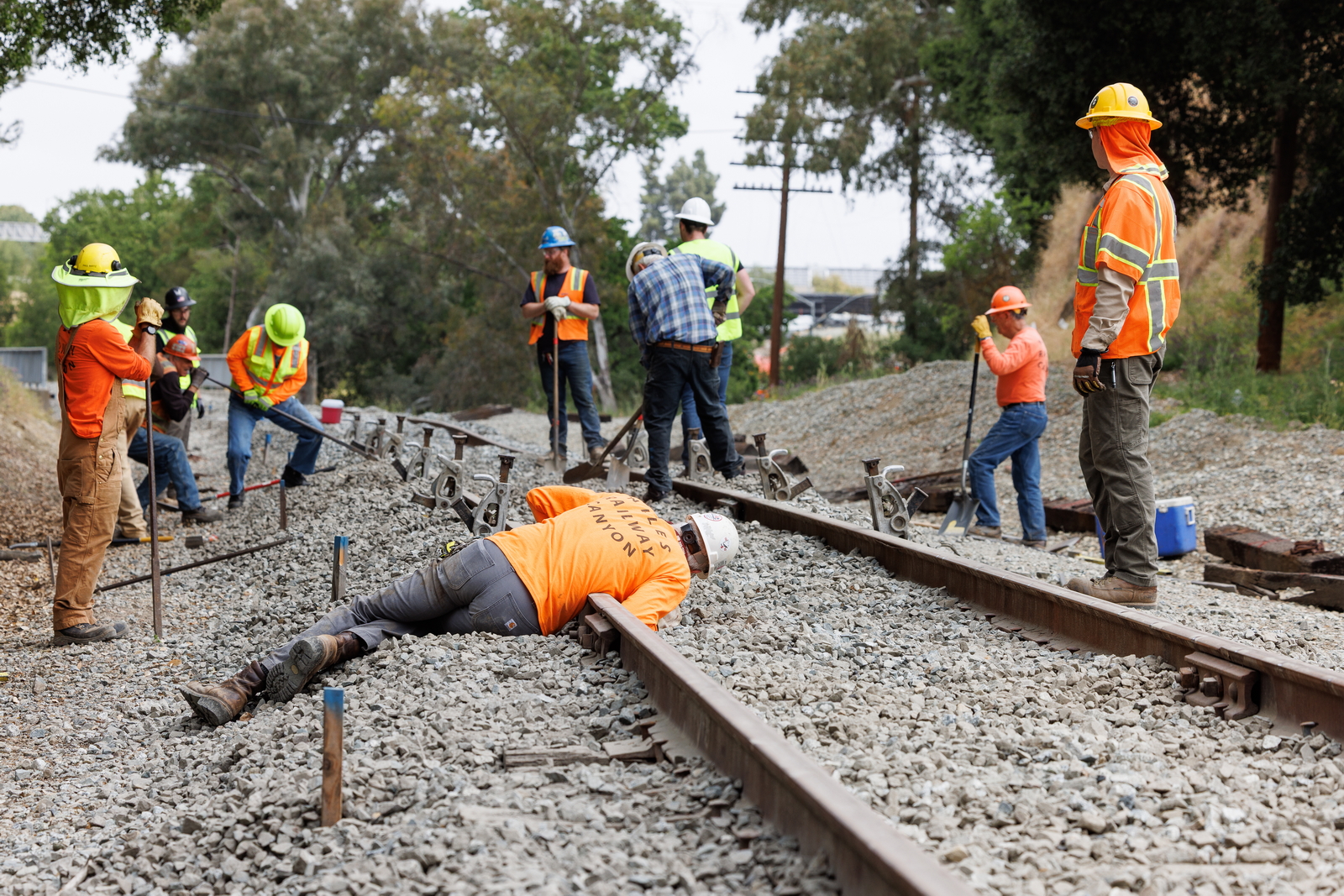
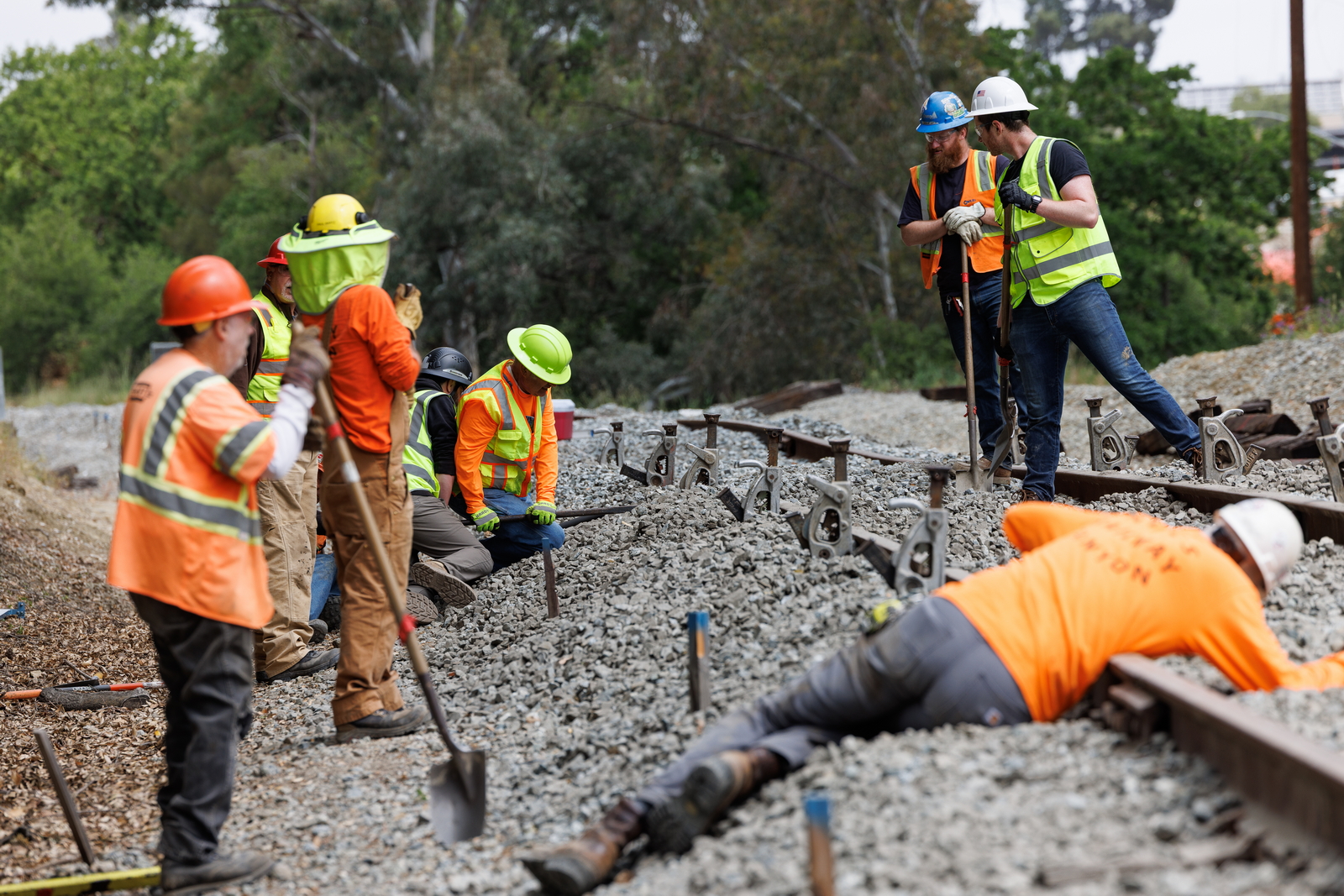
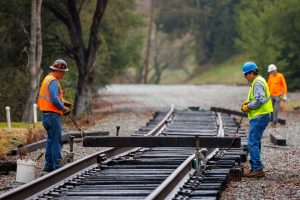
With good weather and a good crew, a lot of progress was made with a first pass on almost the entire section between the bridges. Here are a series of photos taken mid-morning as the crew and our tamper worked their way east. First jacking the track to meet the grade stakes places earlier and then using the tamper to set the stone solidly under the ties. Some ballast cleanup was also undertaken.
Our crew will again be back at it the first Saturday of June, and we always welcome new people to join the crew. It is a great workout! Questions? Please feel free to contact us.
All images by Christopher Hauf. Used with permission.
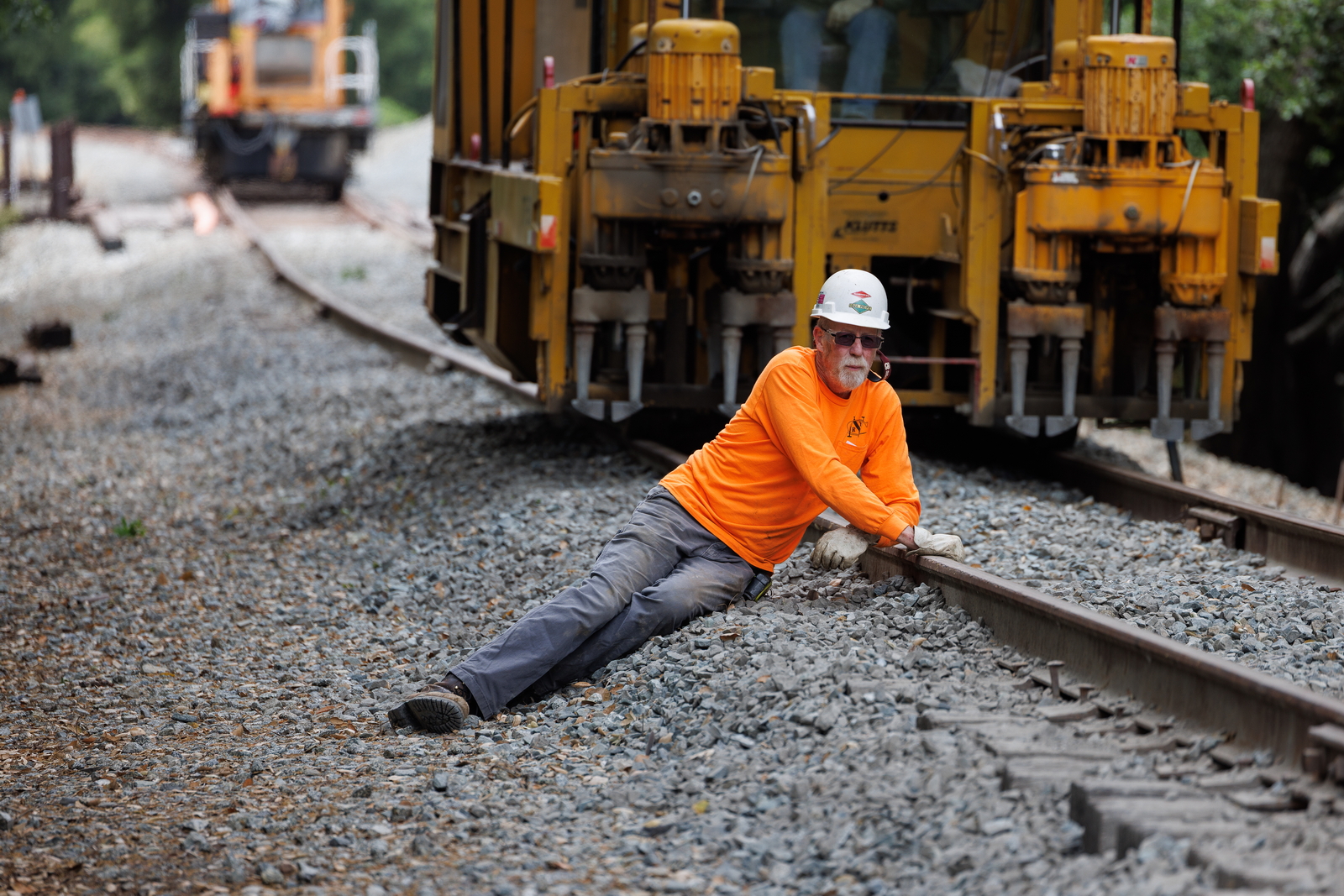
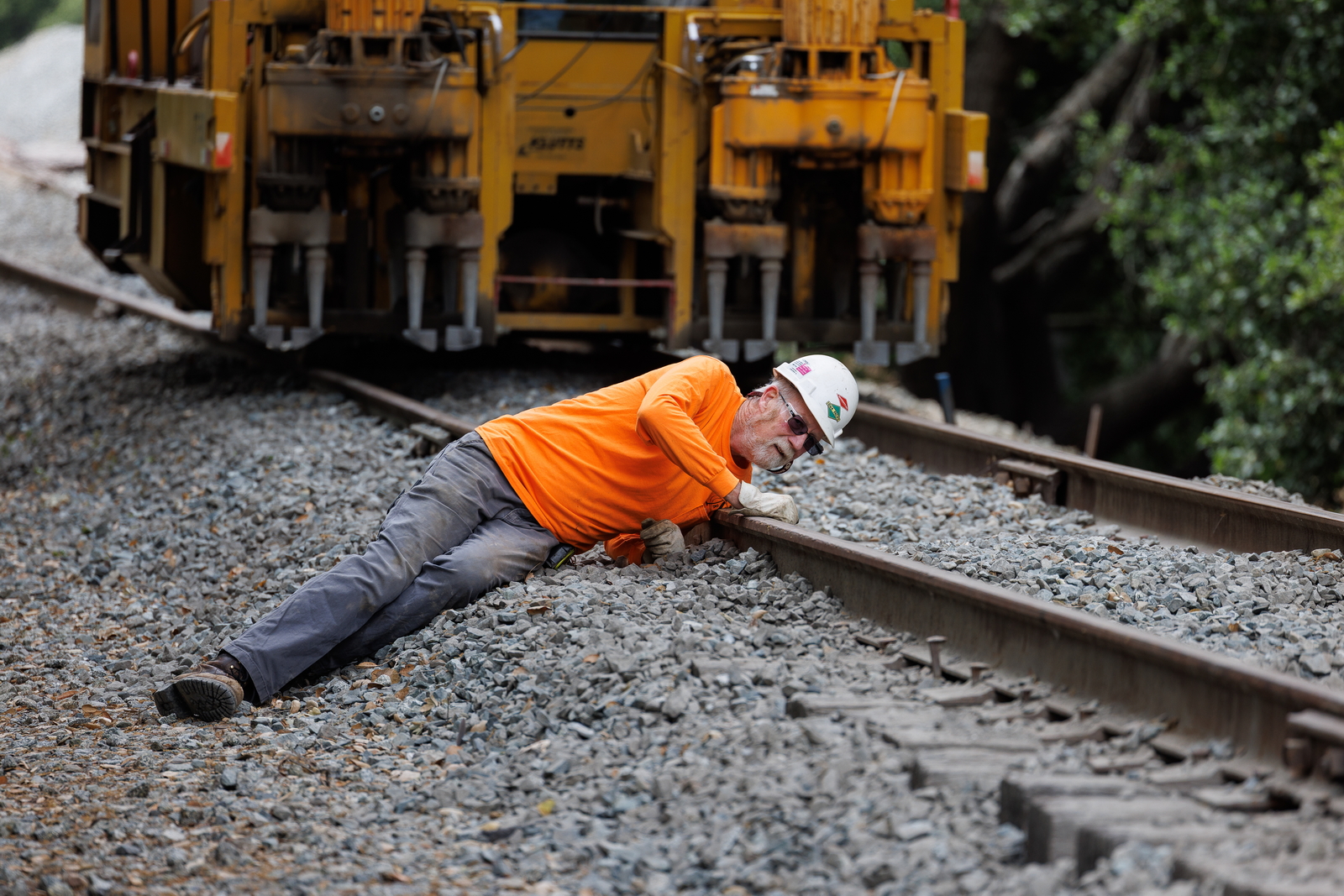
Just east of Happy Valley Bridge, our tamper works tie by tie to force stone under the ties providing a solid base for the track.To level the track, it is jacked into position. As the tamper gets closer to a set of jacks, they are removed since the track now under the tamper is sitting on a firm base.Jacks are set down the track to create the proper height and level.Yes there is a good amount of shovel work to get the ballast ready to be tamped.Occasionally a tie will come loose and the ballast needs to be cleaned out from between the rail and tie to allow the tie to be snugged back up tight.The vibratory forks of the tamper work and vibrate the ballast into a tight formation under the ties.Jacking to the right level based on grade stakes set by an earlier crew.Jacking to the right level based on grade stakes set by an earlier crew.Tamping stone by hand. Our tamper makes this one all human powered process much faster.More level checking…Working their way east, Castlewood Bridge is in the distance. At this point, they were setting jacks in the mid-point between the two bridges.Our tamper operator and NCRy Treasurer, Pat Stratton, concentrating on working each tie.Jacks are set waiting on the tamper.Sometimes the best way to check the level and set the jacks is just to get down and sight down the rail. There will be more than one photo of crew supervisor, Steve Hill, laying down on the job and setting the proper height of each rail.Sighting down the rail…Jacking to level…Turns out railroad track with ballast on it can be a little heavy.The crew awaits directions on setting jacks.Going up!Leveling out ballast to ensure the tamper has a proper amount to drive under the ties.The tamper waits during final jacking. The MOW train waits in the distance on the west side of Happy Valley Bridge.First pass tamped and leveled.Great progress by late AM.The current End of Track stop board at Happy Valley Bridge with the crew working in the distance.
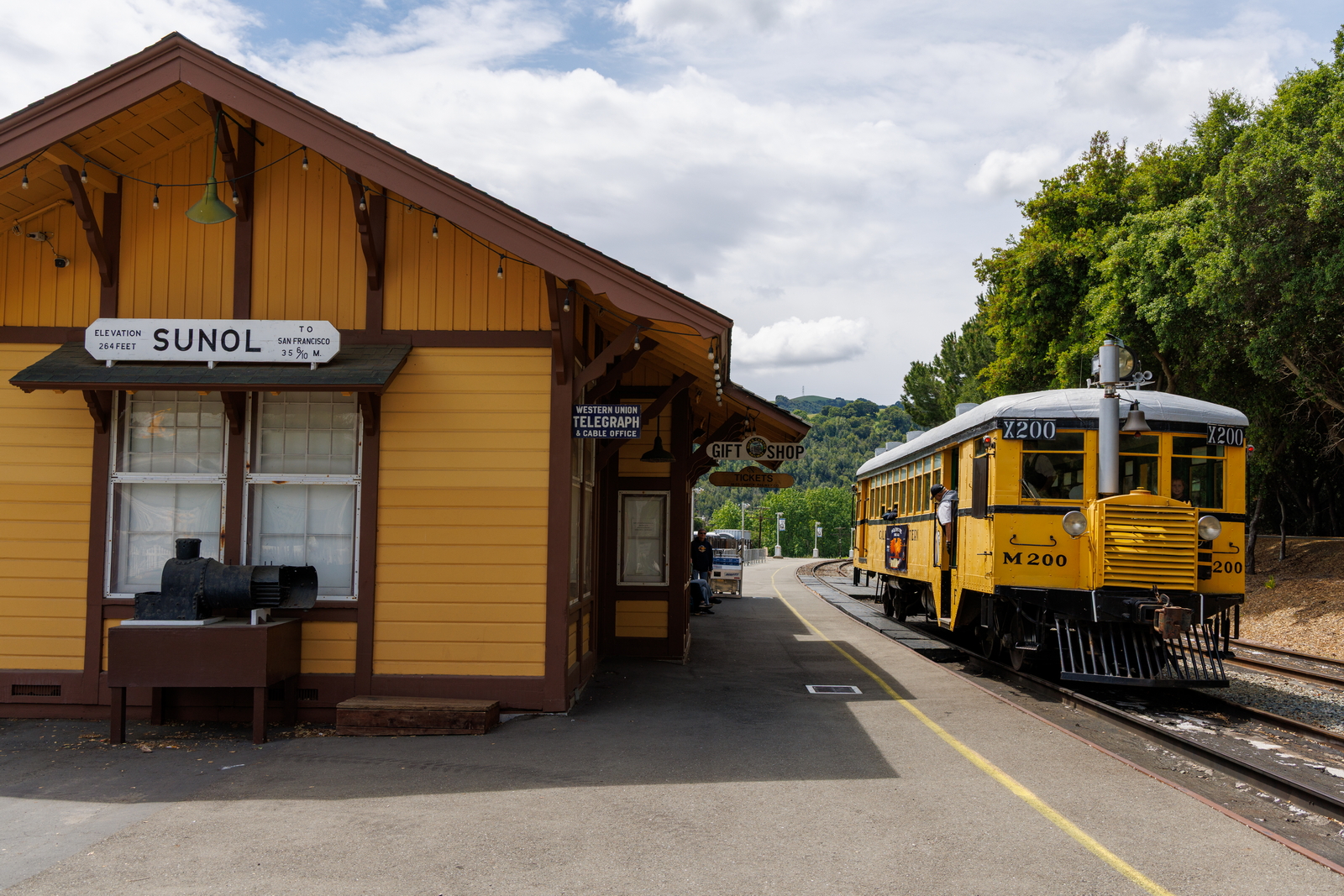
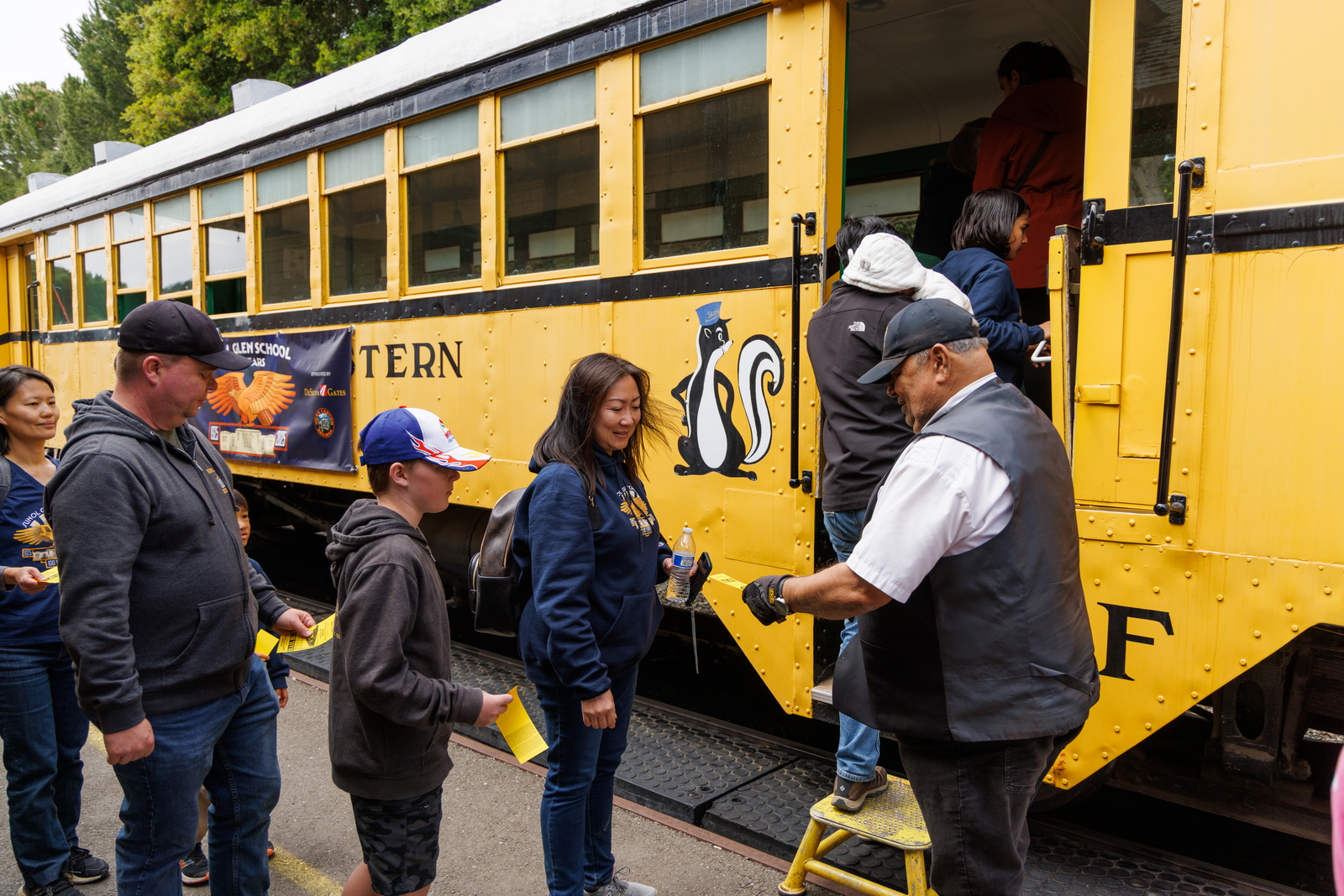
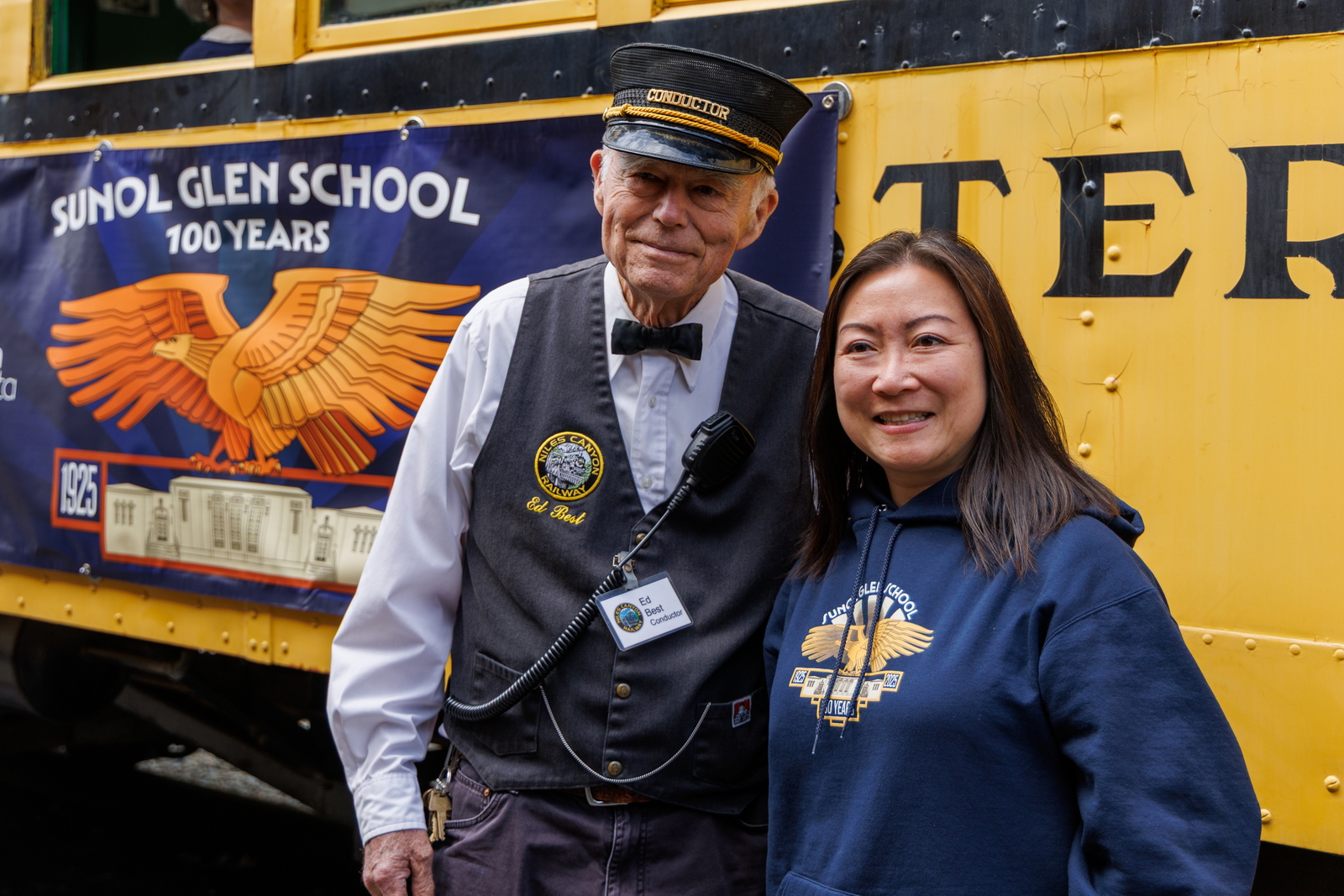
On April 26, 2025, the Niles Canyon Railway offered use of its M200 motorcar, its volunteer crew, and its railroad east of Sunol to the help the Sunol Glen School celebrate their 100th Anniversary. We are always happy to help the communities we serve and have our facilities in, and this was a cause worth supporting.
On April 26, 2025, the Niles Canyon Railway offered use of its M200 motorcar, its volunteer crew, and its railroad east of Sunol to the help the Sunol Glen School celebrate their 100th Anniversary. We are always happy to help the communities we serve and have our facilities in. This was a cause worth supporting!
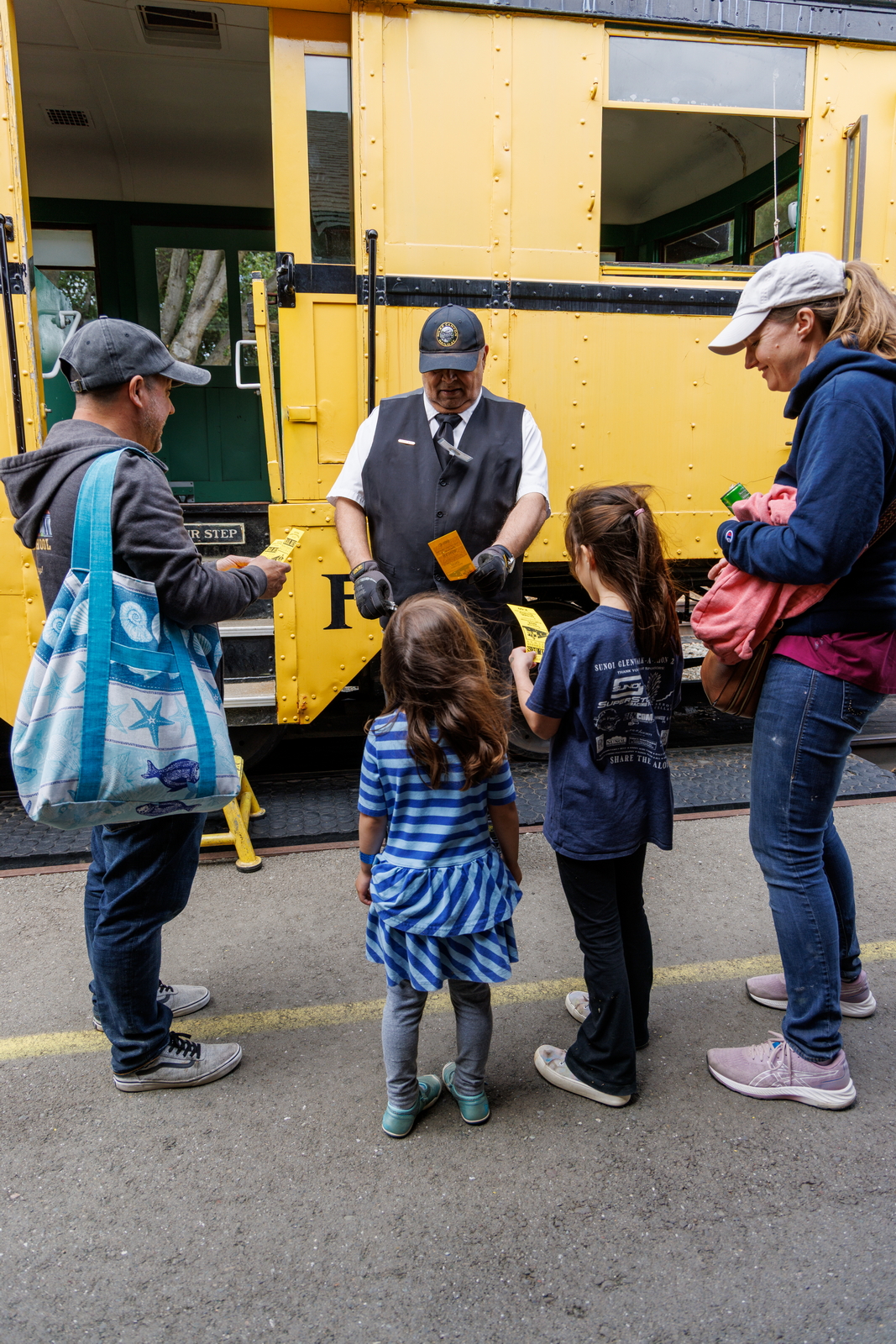
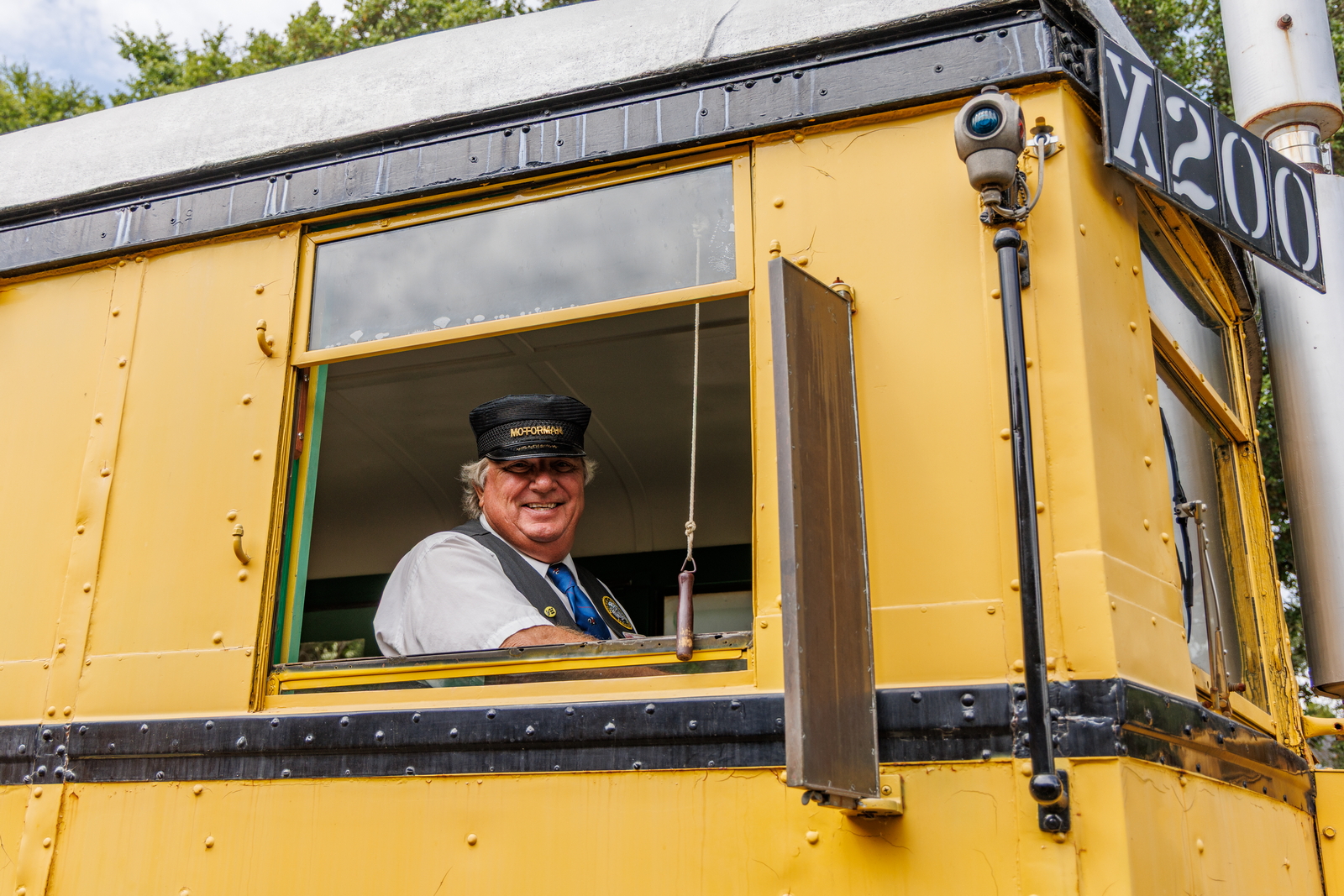
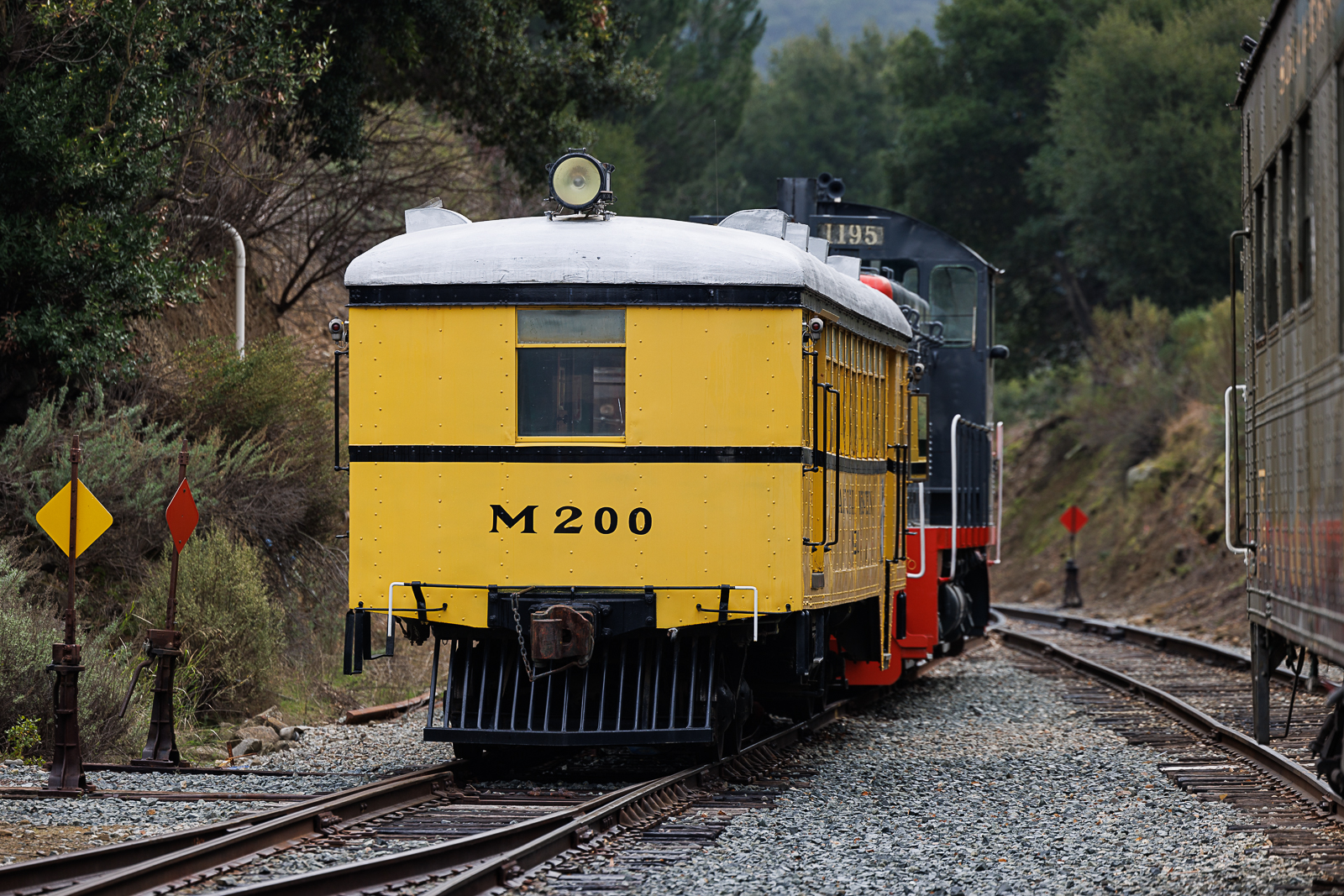
The M200 ran several trips east from Sunol for the event’s guests. Here are some photos from the one of the rides as the M200 boarded at our Sunol station.
We are hoping to have the possibility for the public to ‘Ride East” as early as this June with the M200 as another trip possibility during our regular operating with our regular Sunol to Niles trains. Please stay tuned for more details.
Meanwhile, please let us congratulate the Sunol Glen School again on their 100th Anniversary!
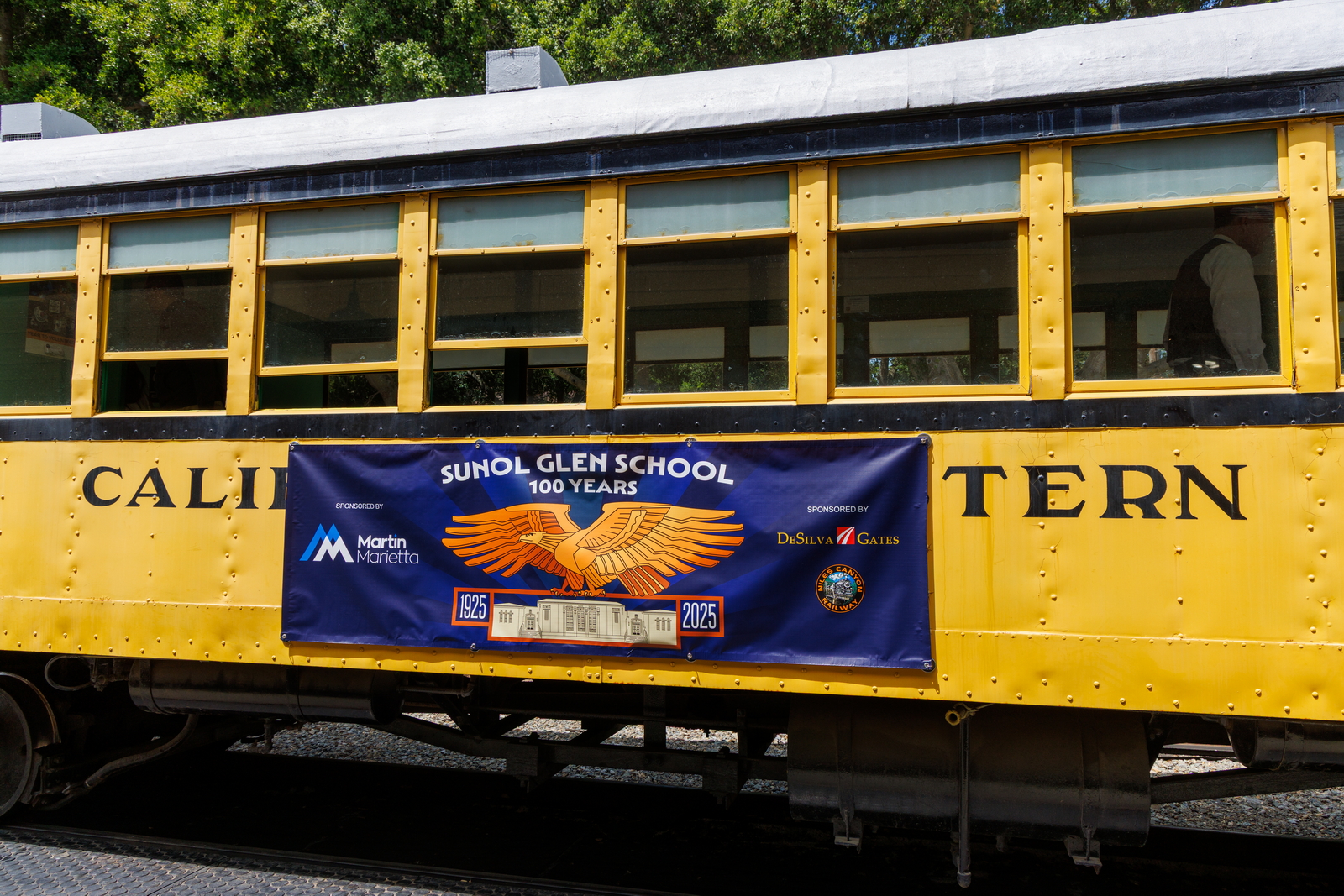
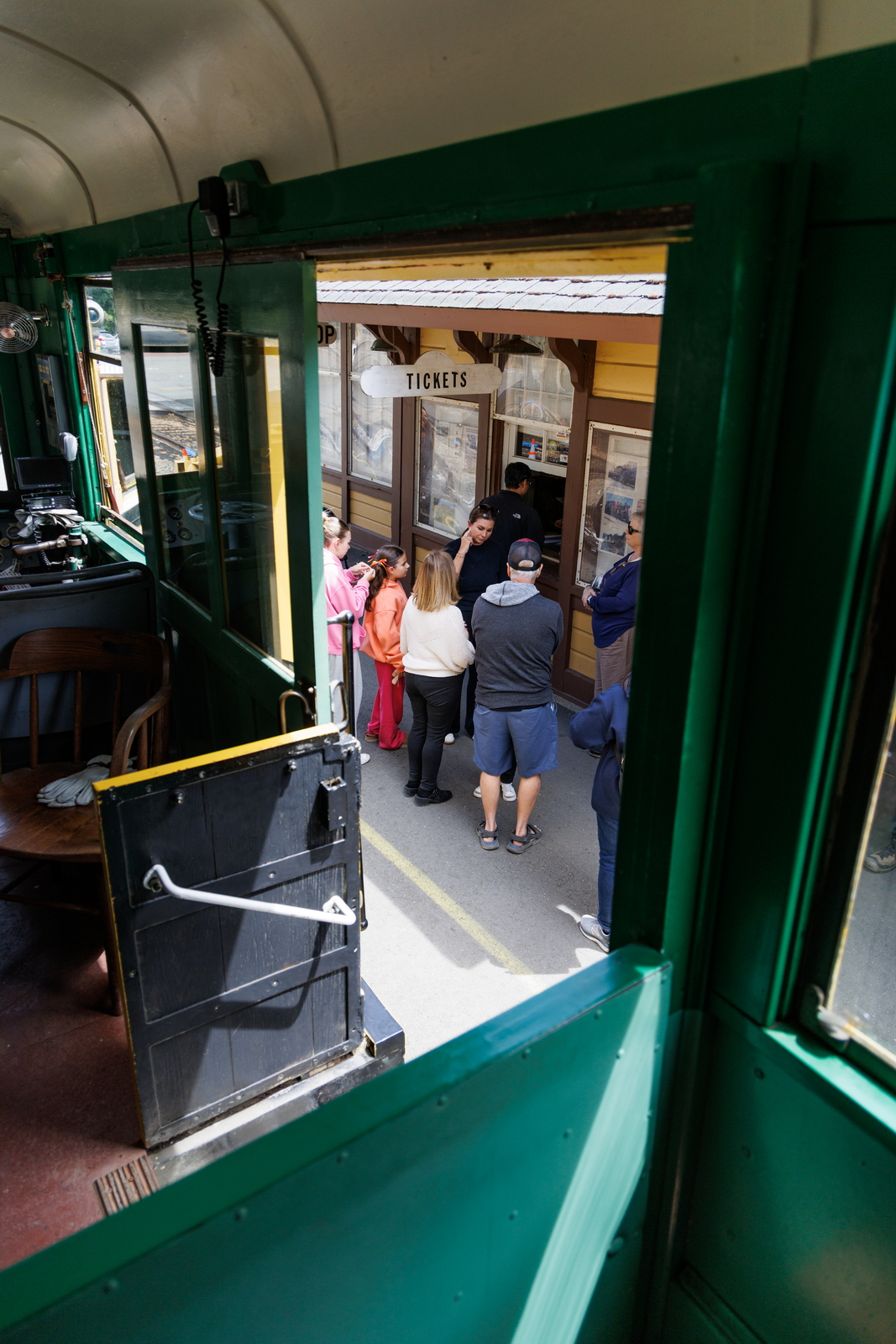
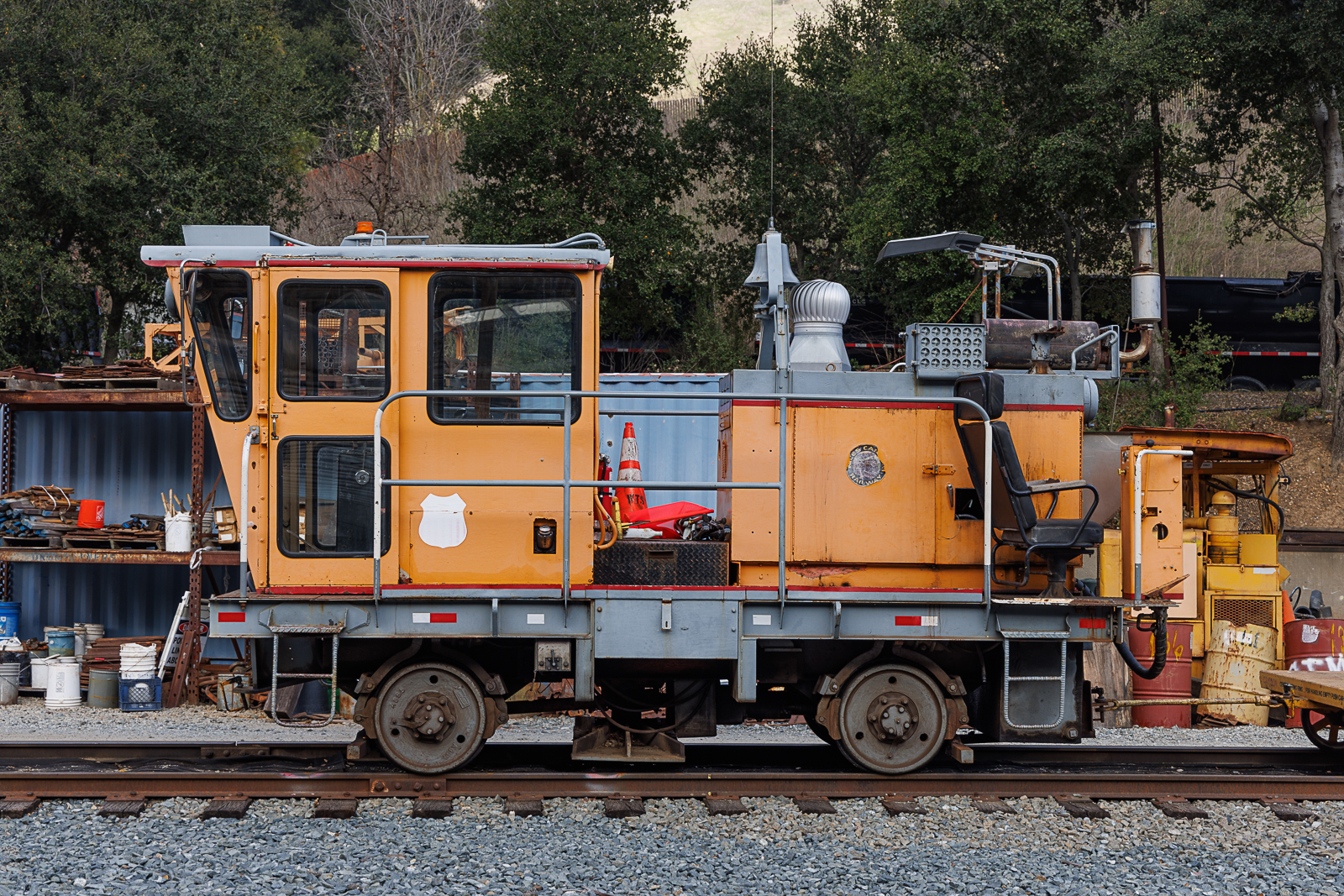
Our M200 motocar backs into Sunol on one of its return trip east of Sunol. Photo by: Christopher Hauf – Used with permissionThe banner marks the celebration and our support of the event. Photo by: Christopher Hauf – Used with permissionLooking from the inside out, the next set of riders picks up their tickets from our ticket window. Photo by: Christopher Hauf – Used with permissionAll Aboard… Photo by: Christopher Hauf – Used with permissionFour punches in their ticket to match their age. Photo by: Christopher Hauf – Used with permission Smiles all around… Photo by: Christopher Hauf – Used with permissionYour motorman and our Museum General Manager, Steve B., ready to take the M200 out on another run east. Photo by: Christopher Hauf – Used with permission
Our Build East Track Construction Crew was back out for its first Saturday work session in February which happened to coincide with the first day of the month. Alas it also coincided with an atmospheric river that was bringing rain to much of northern California, but still a lot of progress was made.
Our Build East Track Construction Crew was back out for its first Saturday work session in February which happened to coincide with the first day of the month. Alas it also coincided with an atmospheric river that was bringing rain to much of northern California. Still working through it, a lot of progress was made.
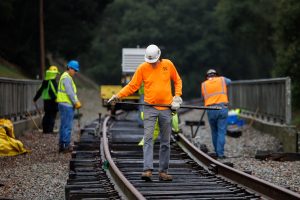
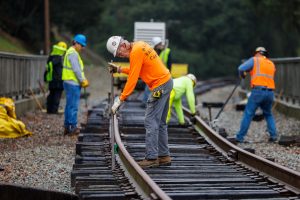
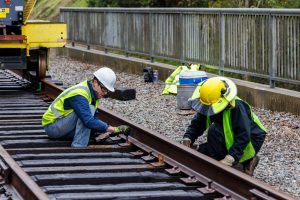
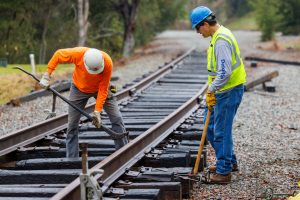
The early morning was somewhat dry allowing crews to remove their rain gear and get to work. Alas by the late morning and through the afternoon, the tides had turned to the damp and sometimes very damp. Still the crew was able to get a great amount of work done in the new section of track already placed between the bridge at Verona Road and the Castlewood Bridge. From replacing, plugging and installing new spikes to tie replacement and ballasting, all was done by the various volunteers throughout the day.
Here are some photos taken during the earlier morning portion of the work session.
All photos by: Chris Hauf – Used with permission
Inserting a replacement tie.
Inserting a tie.
Railroad with a view…
The current end of track with a tee box from Castlewood Country Club off to the right.
Checking on tie spacing.
Getting the ties spaced.
Since these ties have already been used, wooden plugs are used to fill the old spike holes prior to either driving new spikes into the holes or simply filling them to prevent water infiltration. A spike with its taper end cut off is used to drive the plugs down into the tie.
Given this was panel track when laid down, some of the spikes need to be removed and replaced. Here a spike is removed from the tie.
Spiking on Castlewood Bridge.
A tie is slid down the rails before it is inserted just before the current end of track east of Castlewood Bridge.
Setting spikes.
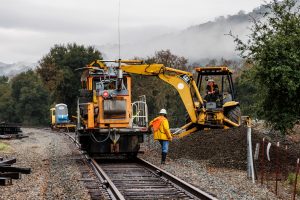
Loading up ballast from the stockpile just west of Verona Road where this section of track has been completed and is cleared for service. And yes, we bring a rail-borne Porta-Potty with us.
Loading up under the careful watch of NCRy General Manager, Steve B.
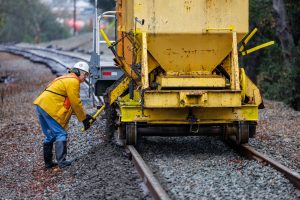
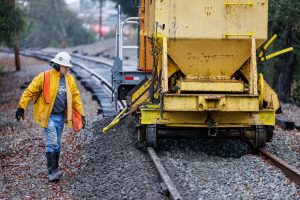
Foreman, Mike S., works one of the ballast shoots on our MOW ballast car as it is moved slowly down the track dumping ballast in the this case to the outside of the rails.
Dumping ballast.
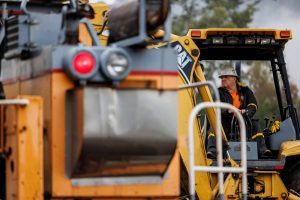
Museum General Manager, Steve B., works our Cat backhoe to pull the ballast stockpile back from the railroad and prepare it for loading into our ballast car.
Loading up with ballast.
Keeping a close eye… Possibly the luckiest guy on the crew was Steve K. who had the enviable task of running our MOW donkey, ‘Mongo” which was being used to handle the ballasting with our small ballast car. Here is the car is being loaded with new ballast just west of Verona Road.
Our Build East Team will be back again the first Saturday of March. We always welcome new hands so please visit our website to learn more how you can help volunteer with us to Build East!
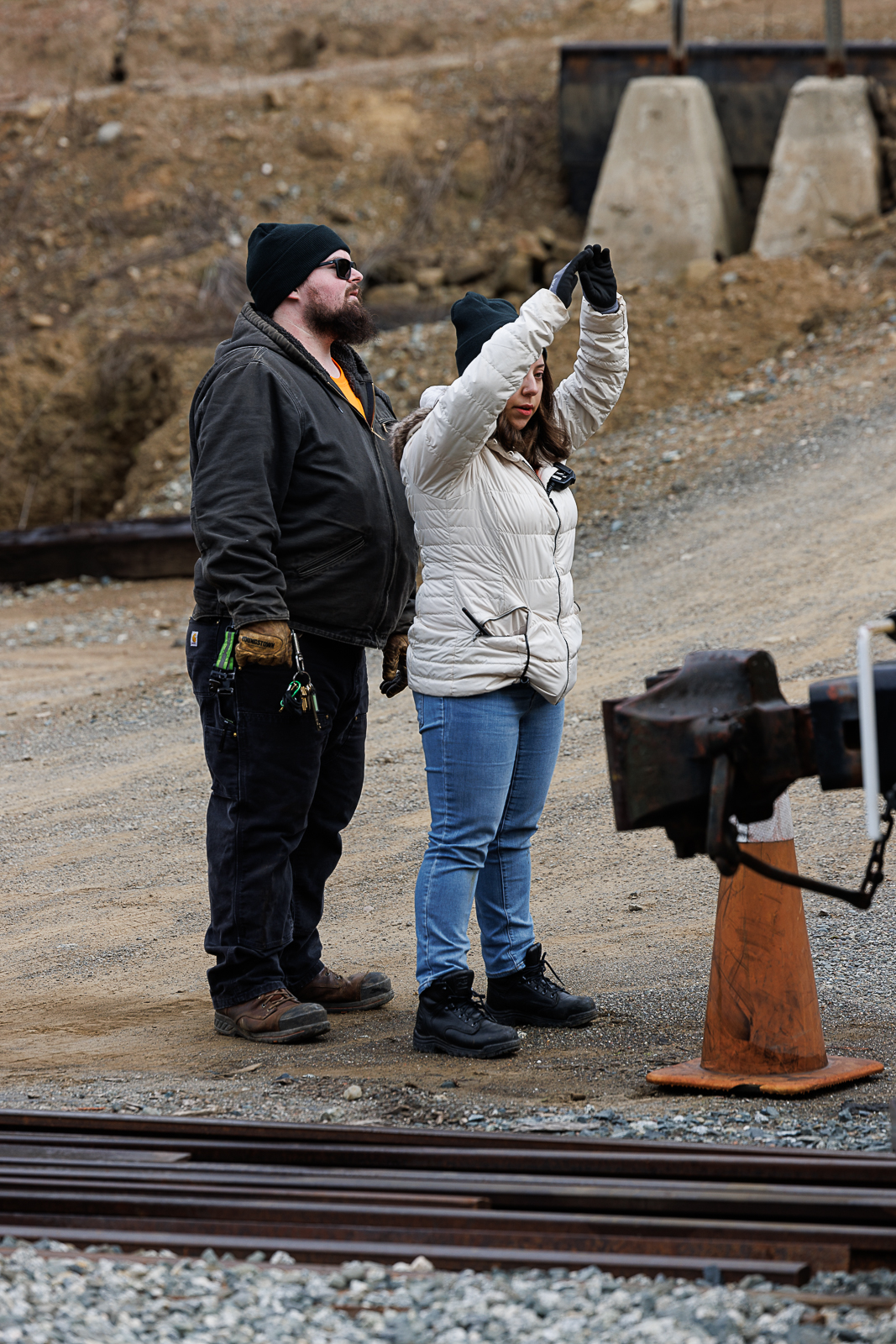
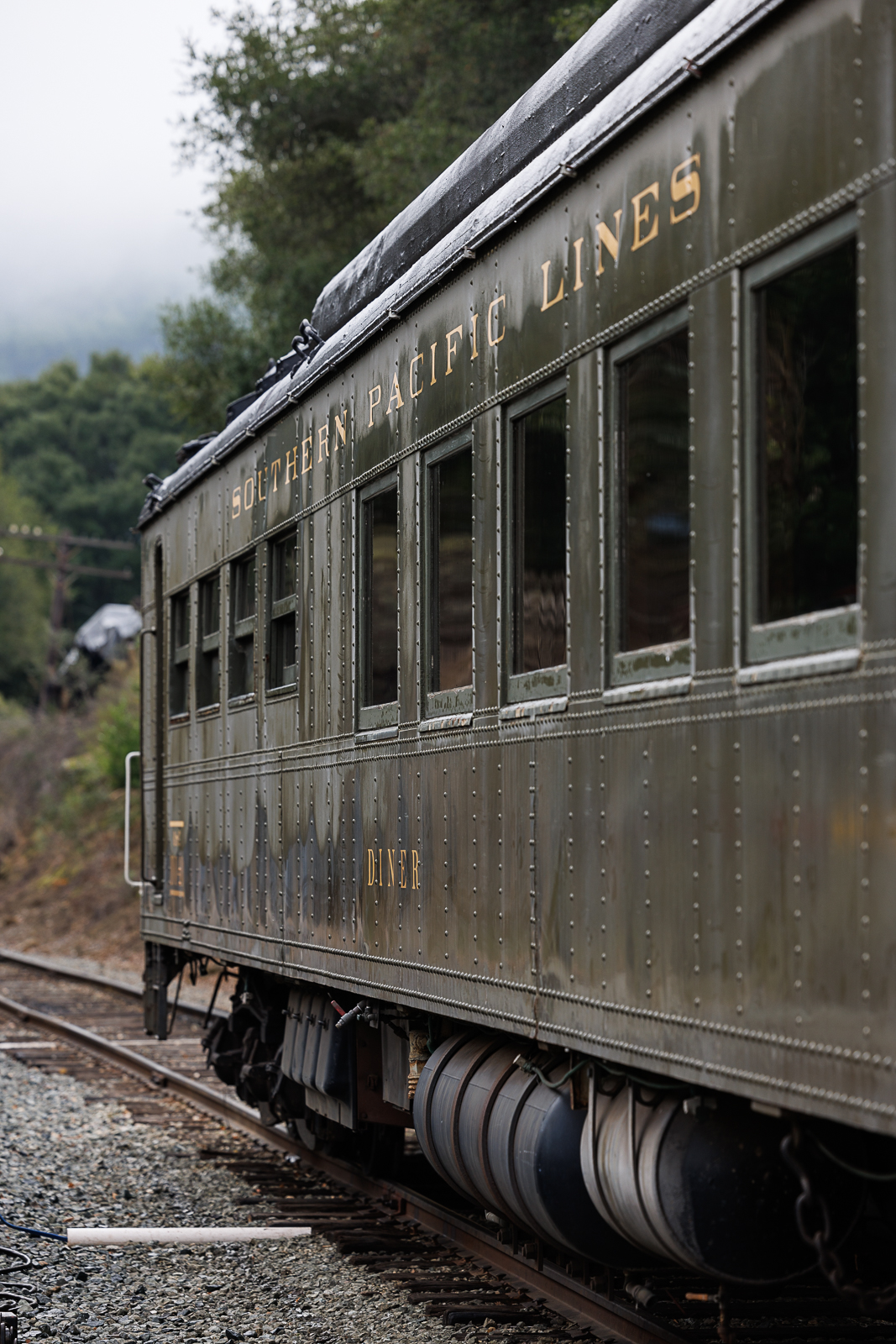
With the New Year here and Train of Lights season over, it was time to break up the TOL consist that has called our mainline in Brightside home for over two months. With a new operating season arriving in March, we need to get our regular season consist ready while storing away those cars we do not use as often. Take a look at the big switching operation held on Sunday, January 19, 2025 with three train crews operating across one very cold day in Niles Canyon.
With the New Year here and Train of Lights season over, it was time to break up the TOL consist that has called our mainline in Brightside home for over two months. With a new operating season arriving in March, we need to get our regular season consist ready while storing away those cars we do not use as often. Plus, we had to position several cars so our volunteers can get to work on them this season. This includes everything from a new generator under our concession car to new windows in our Western Pacific coach #315 to work on our locomotives to keep them in top form.
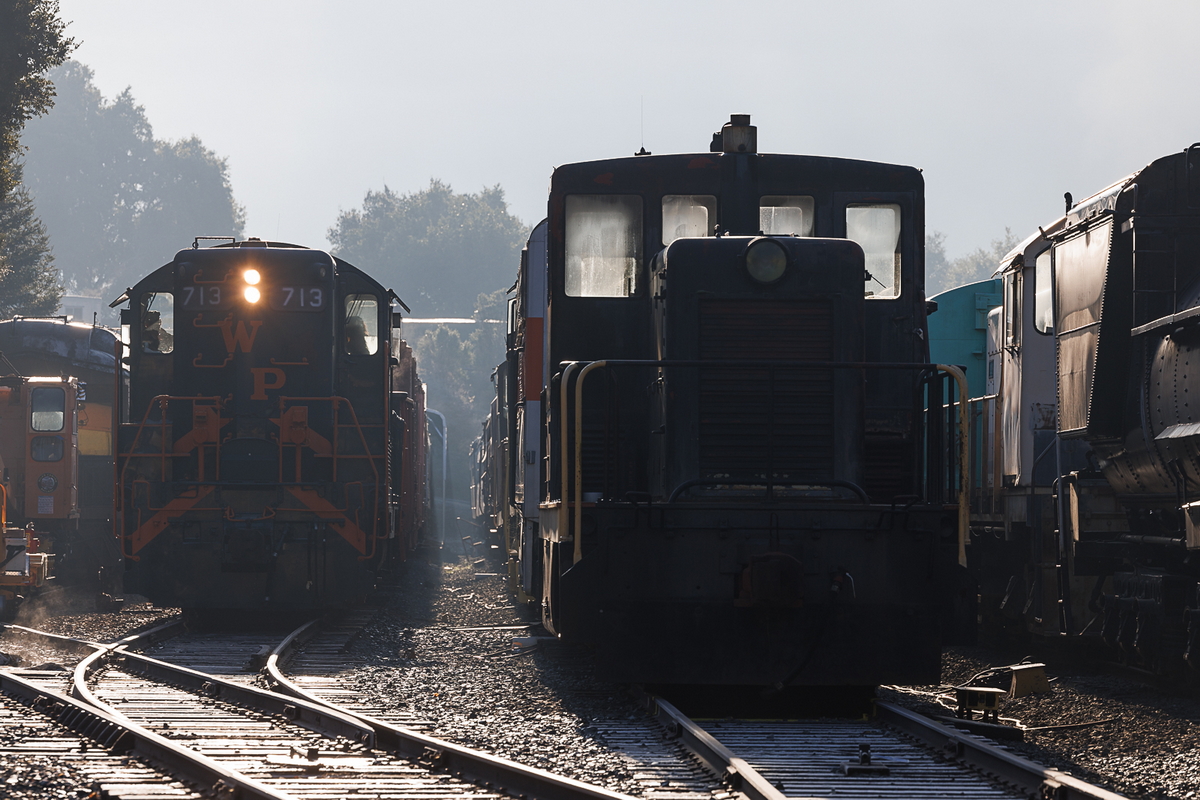
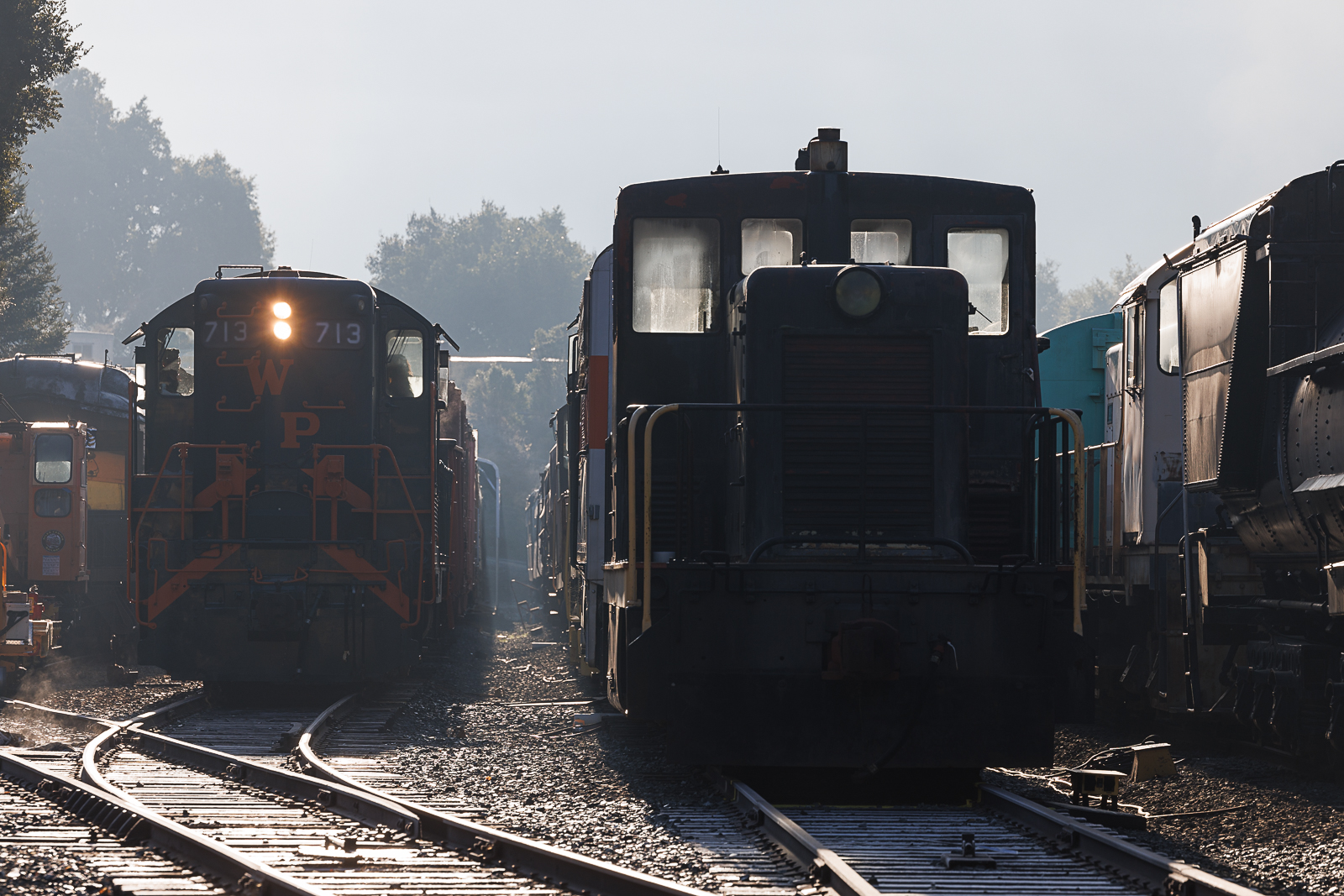
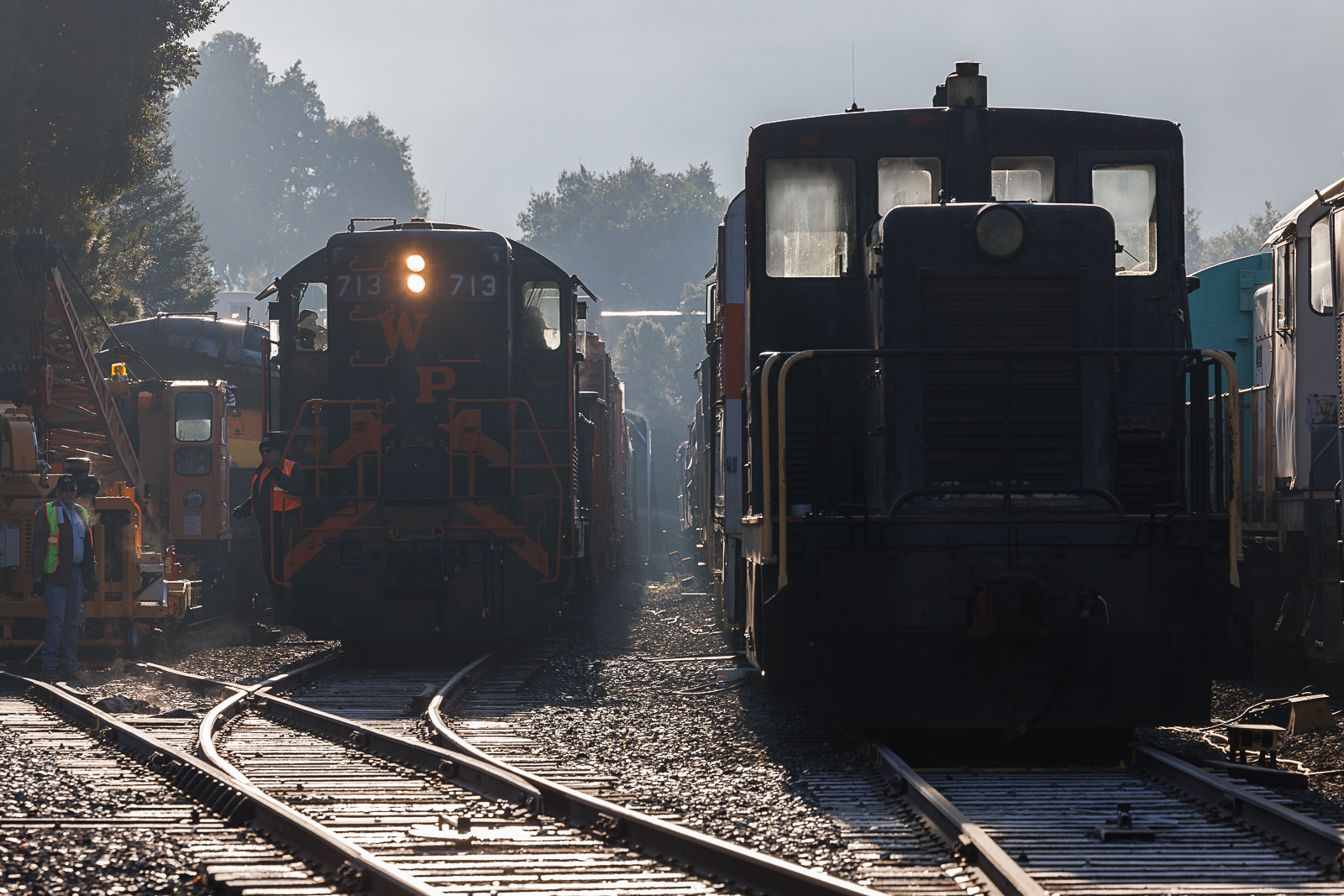
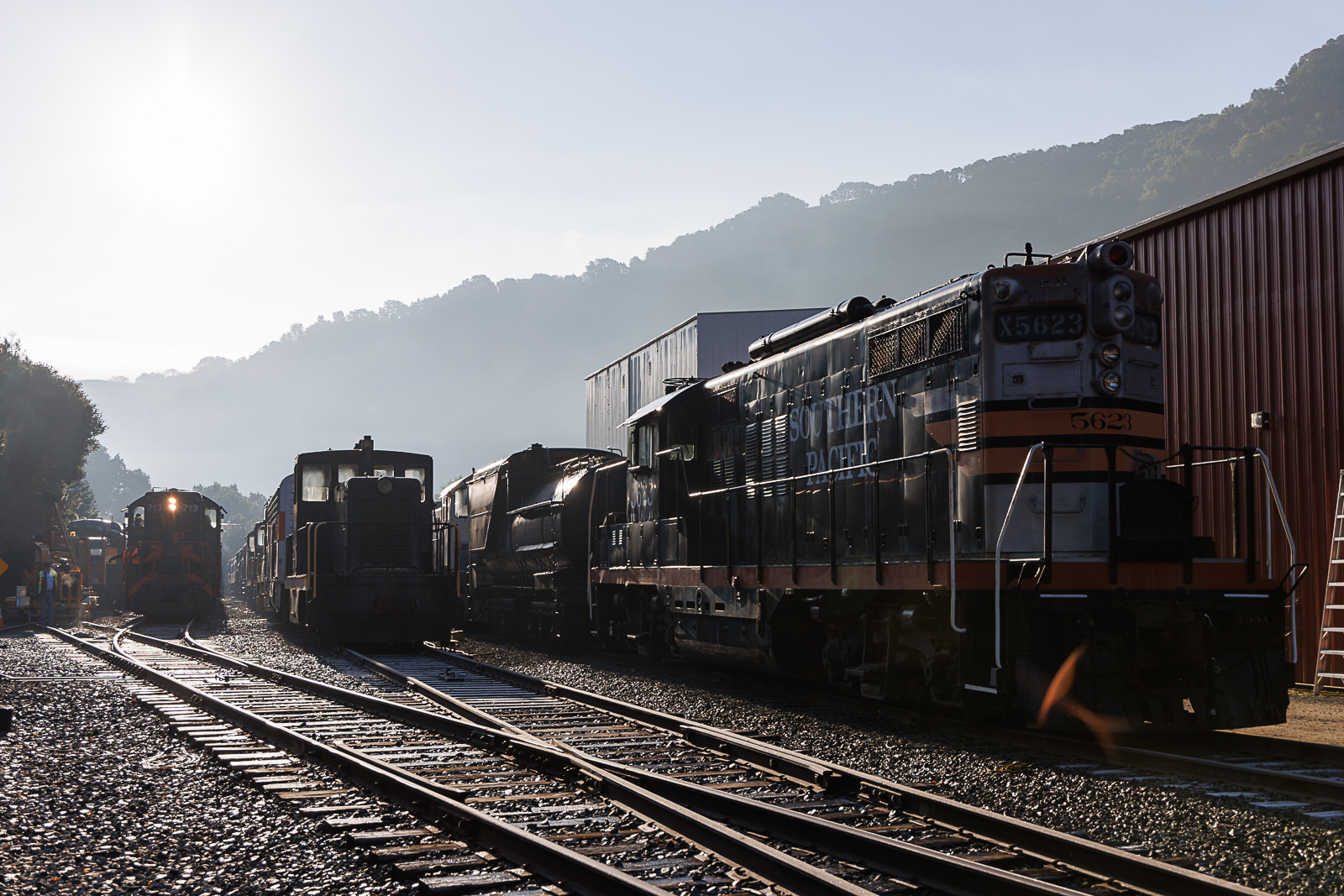
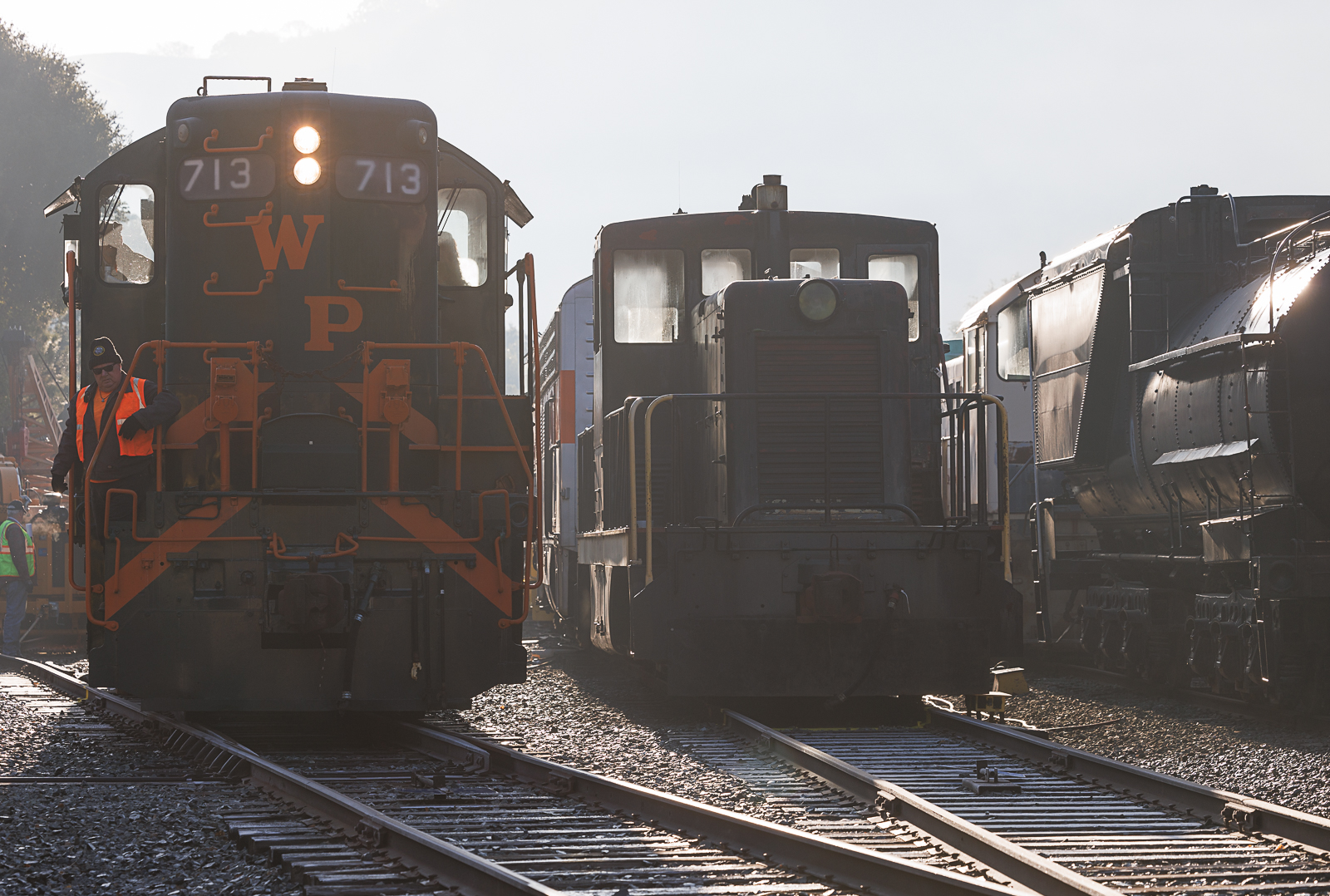
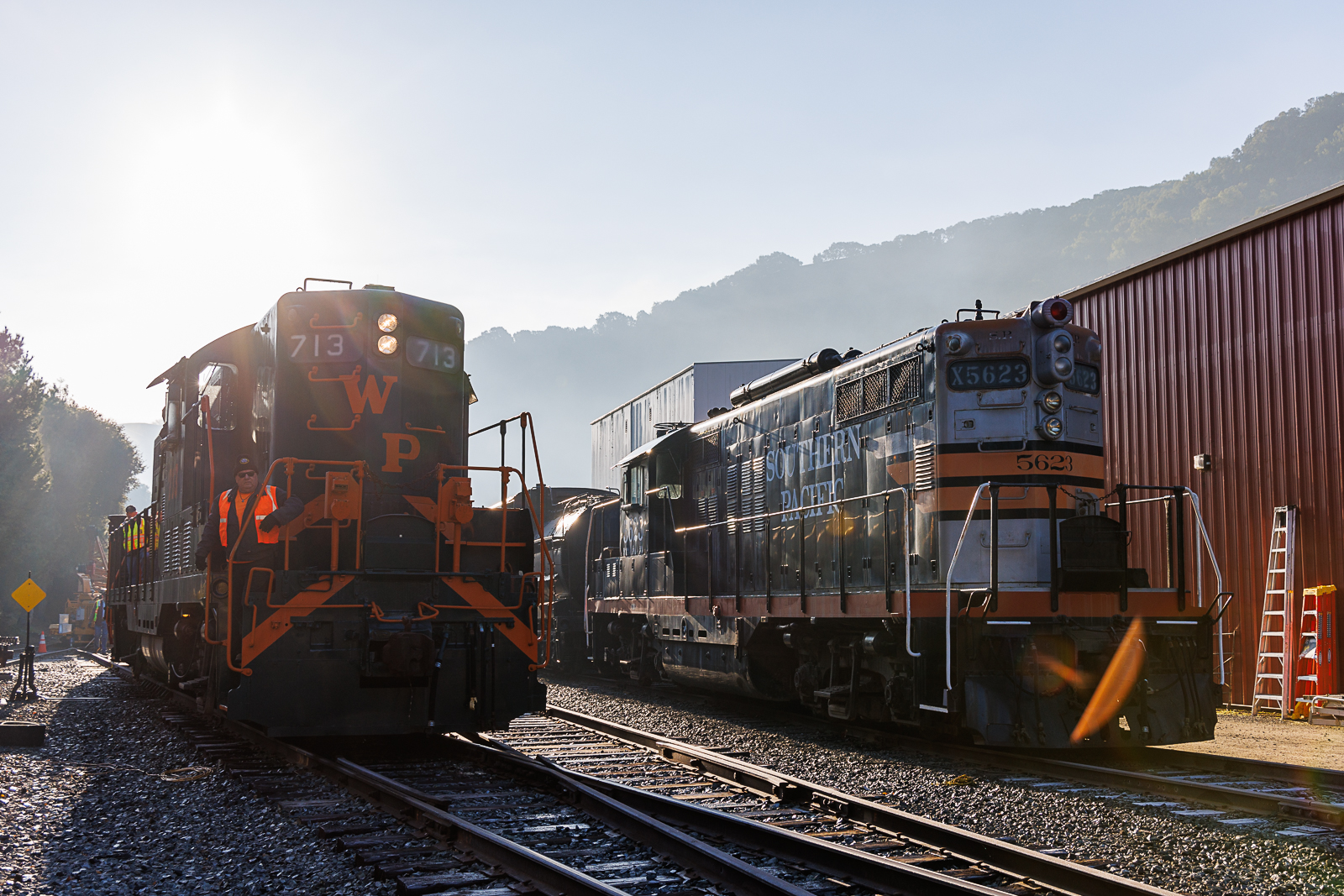
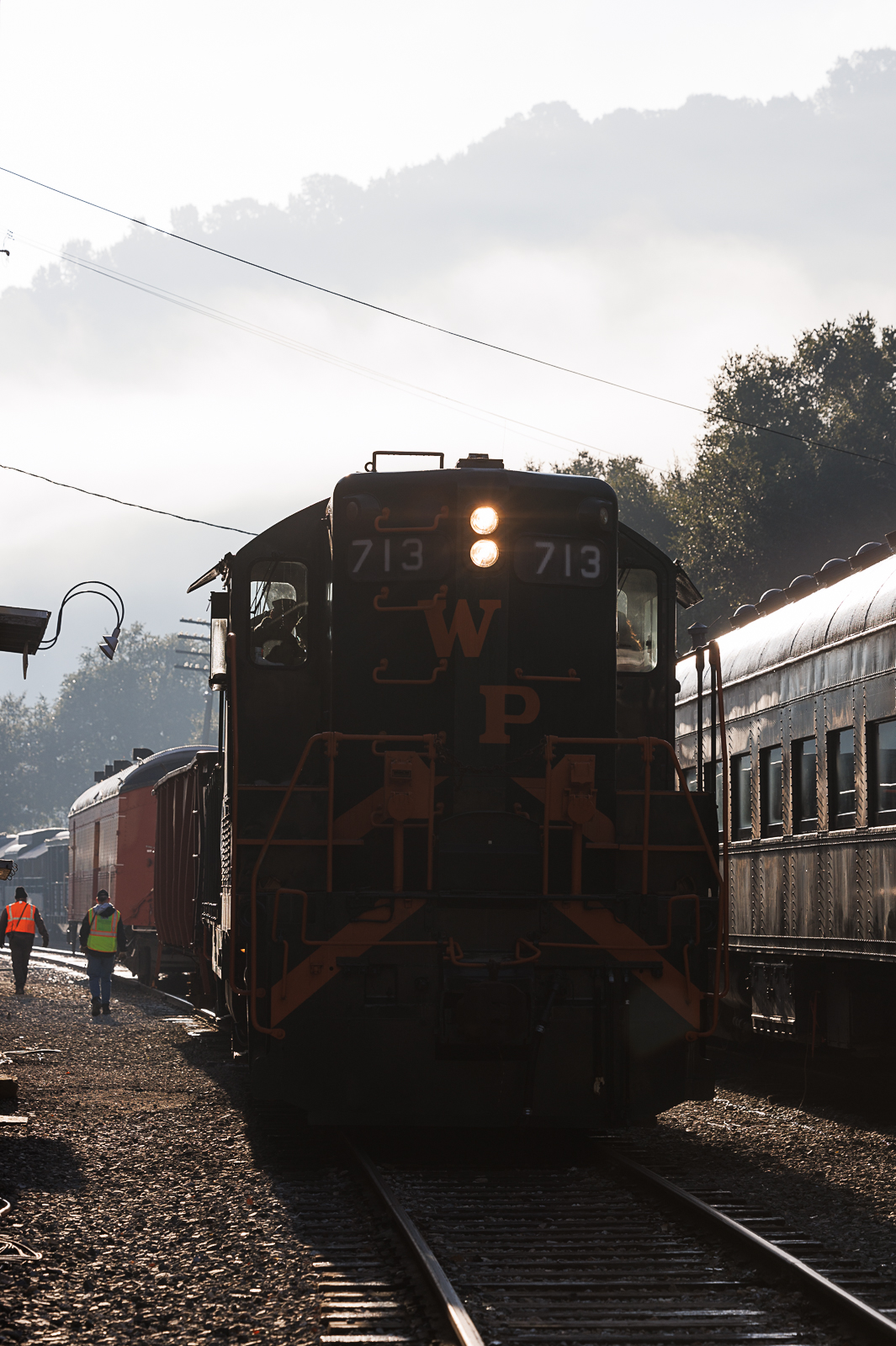
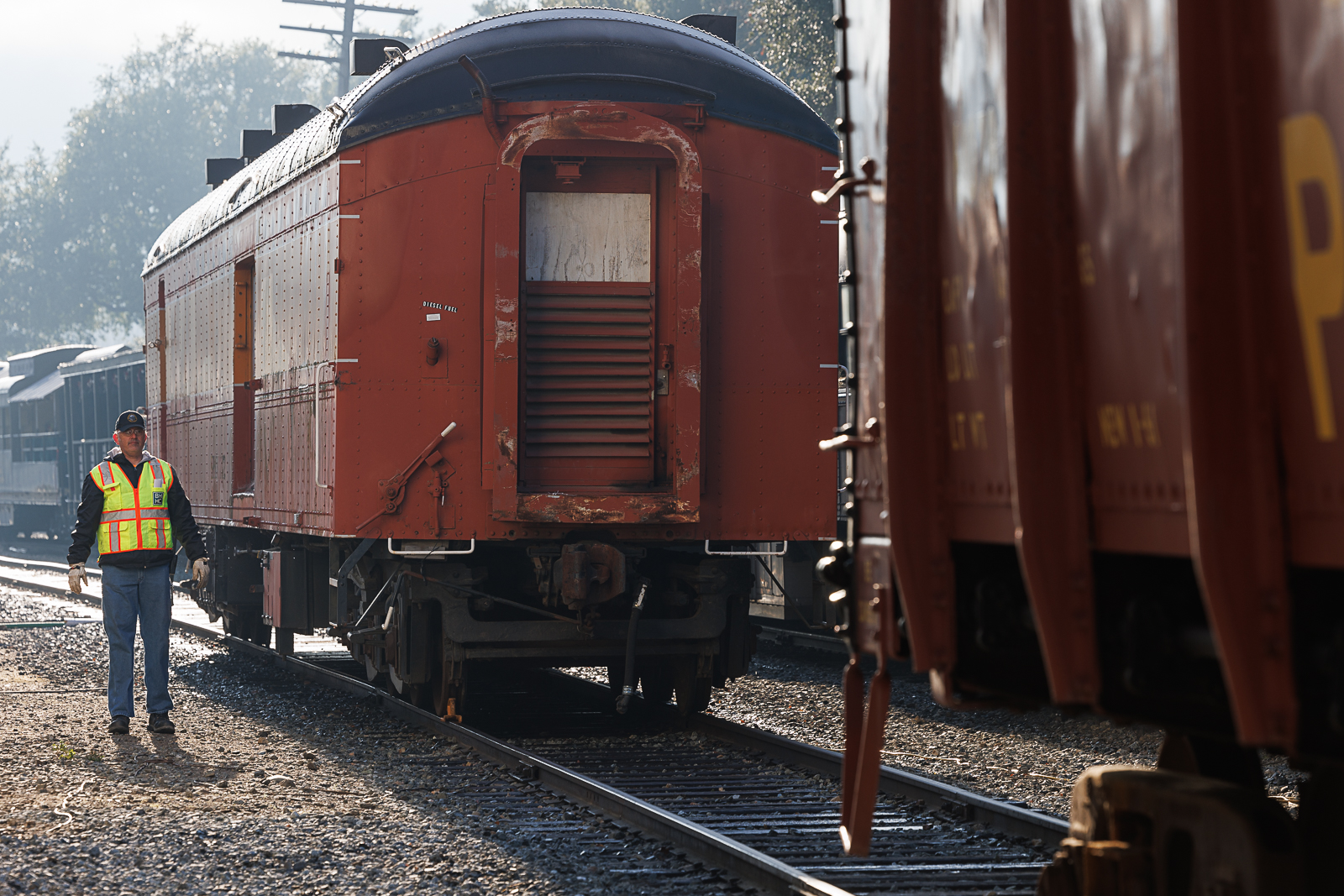
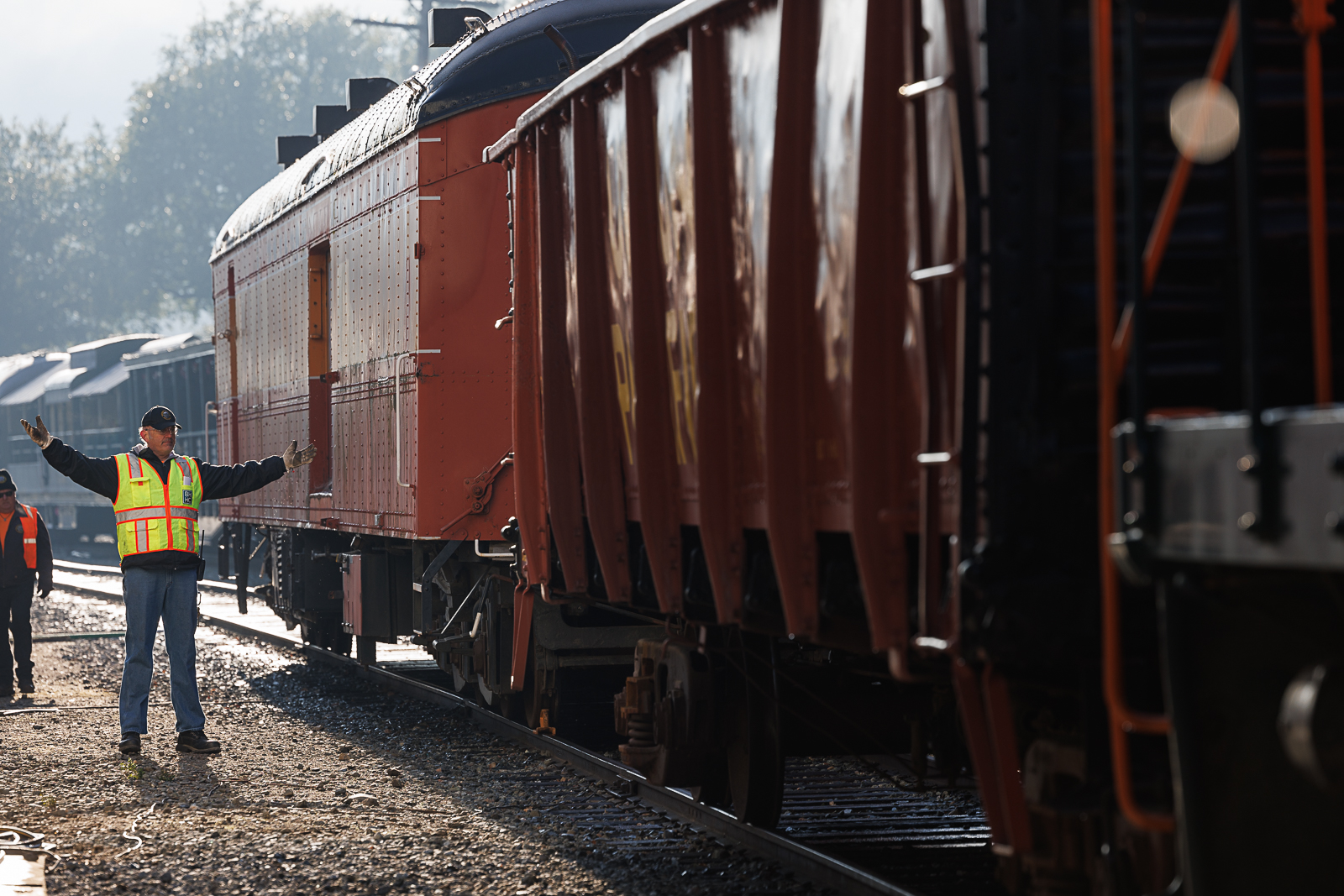
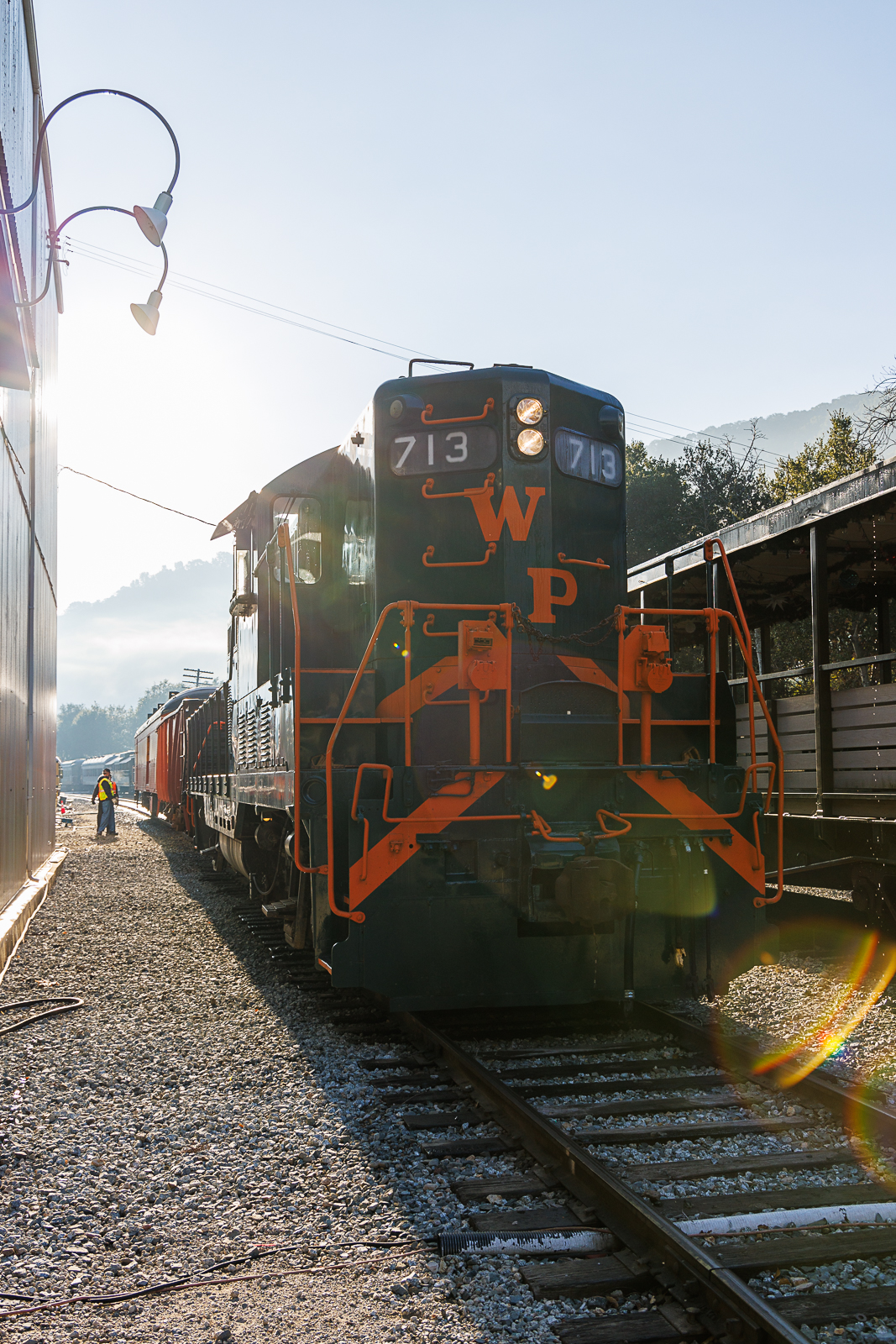
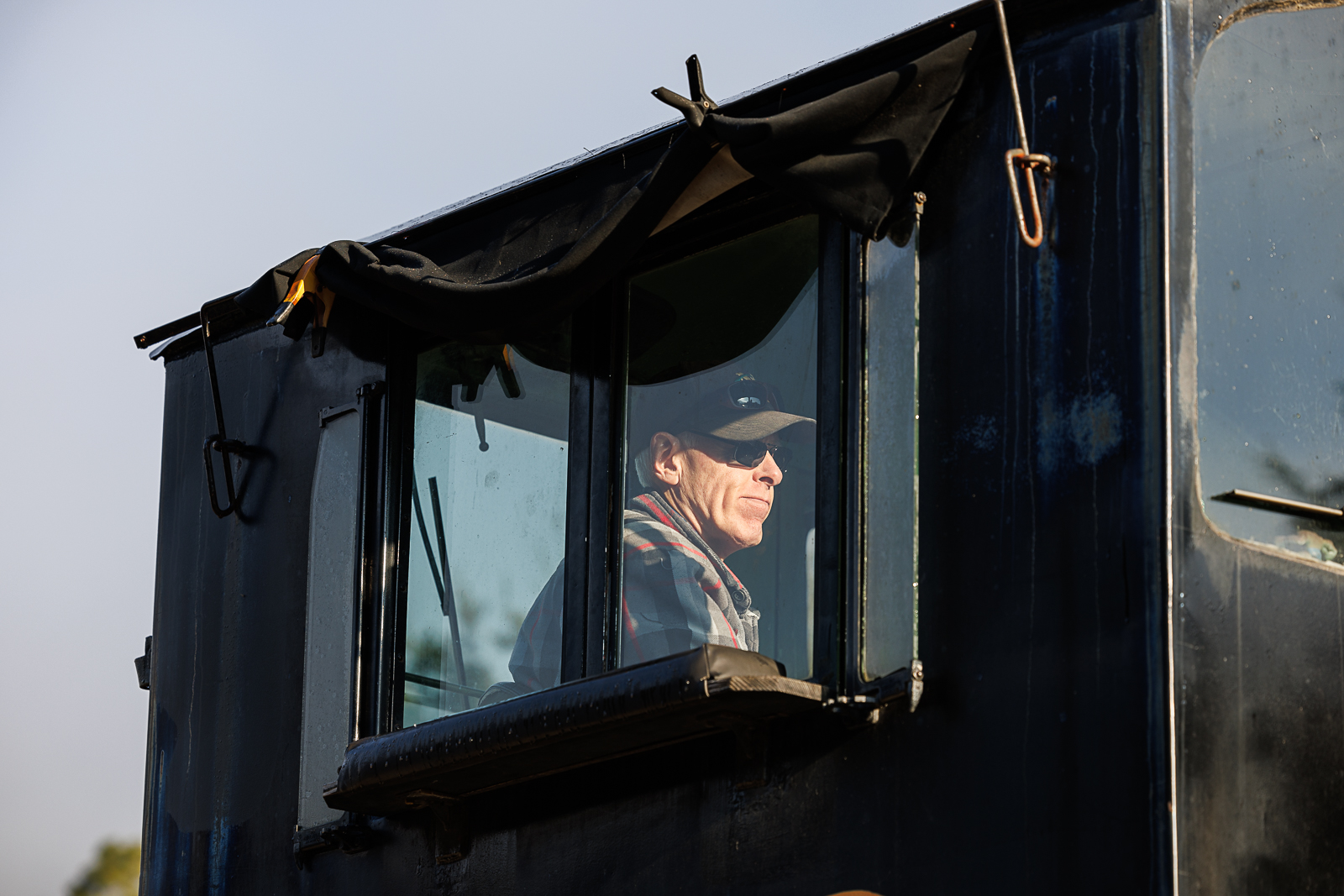
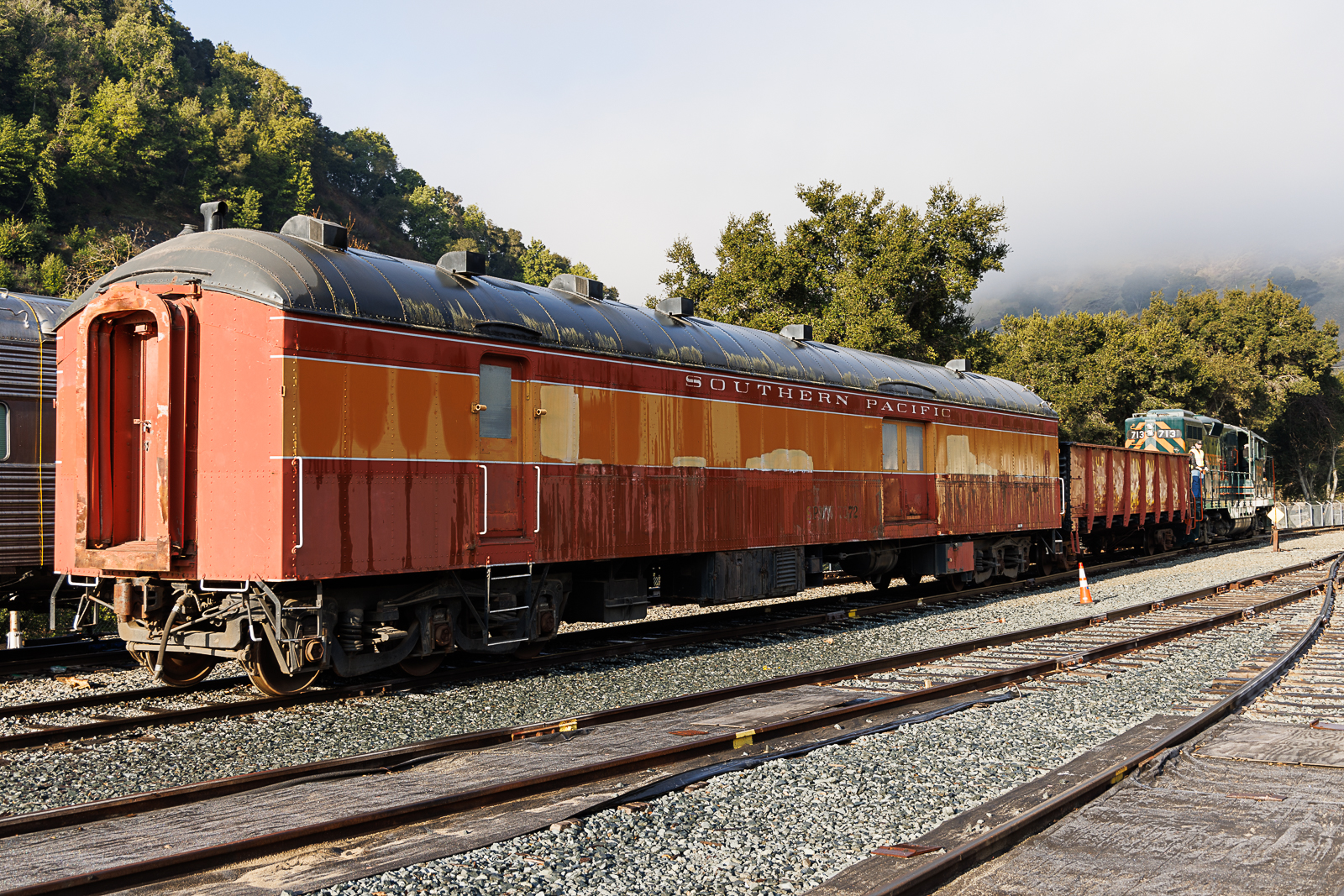
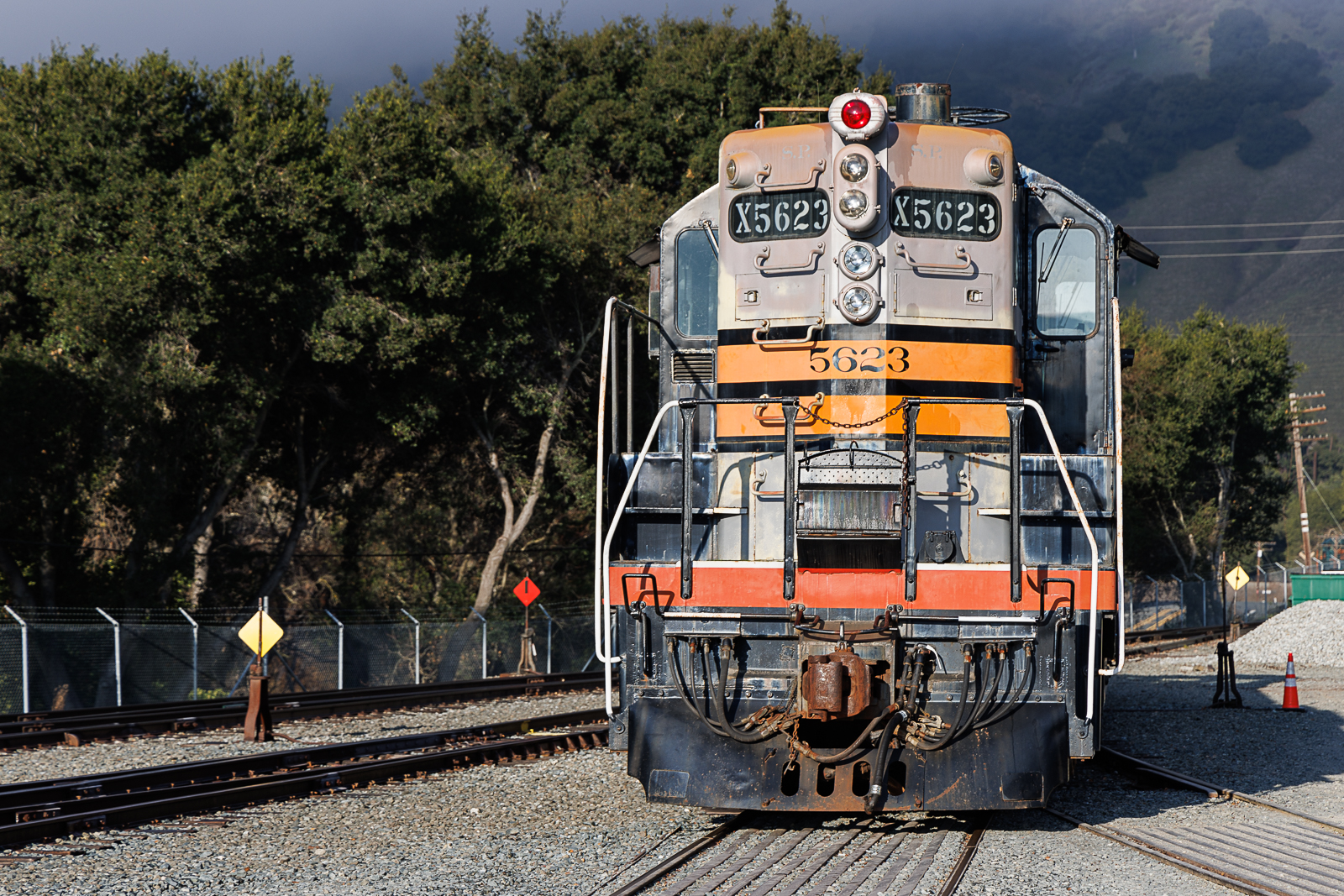
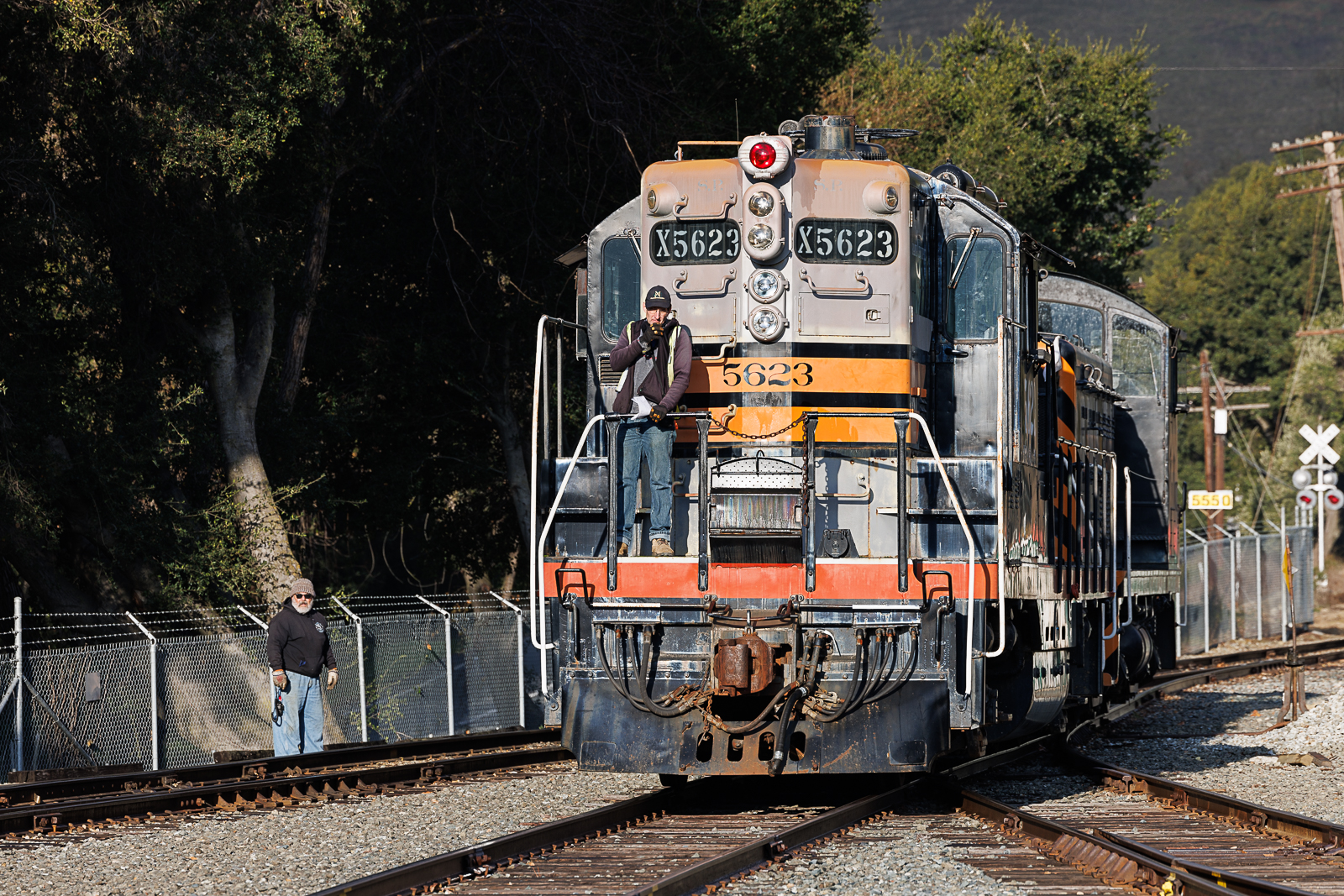
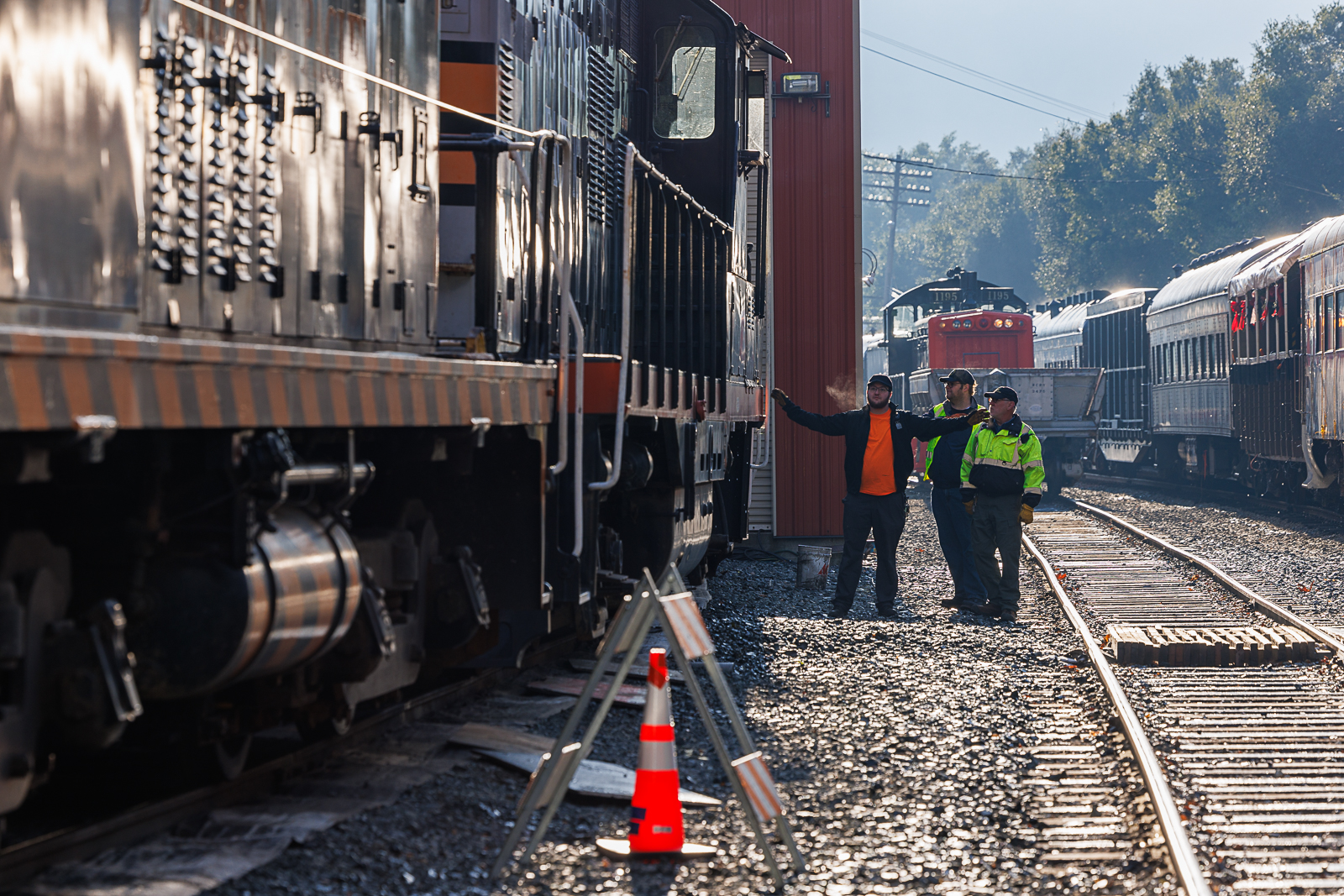
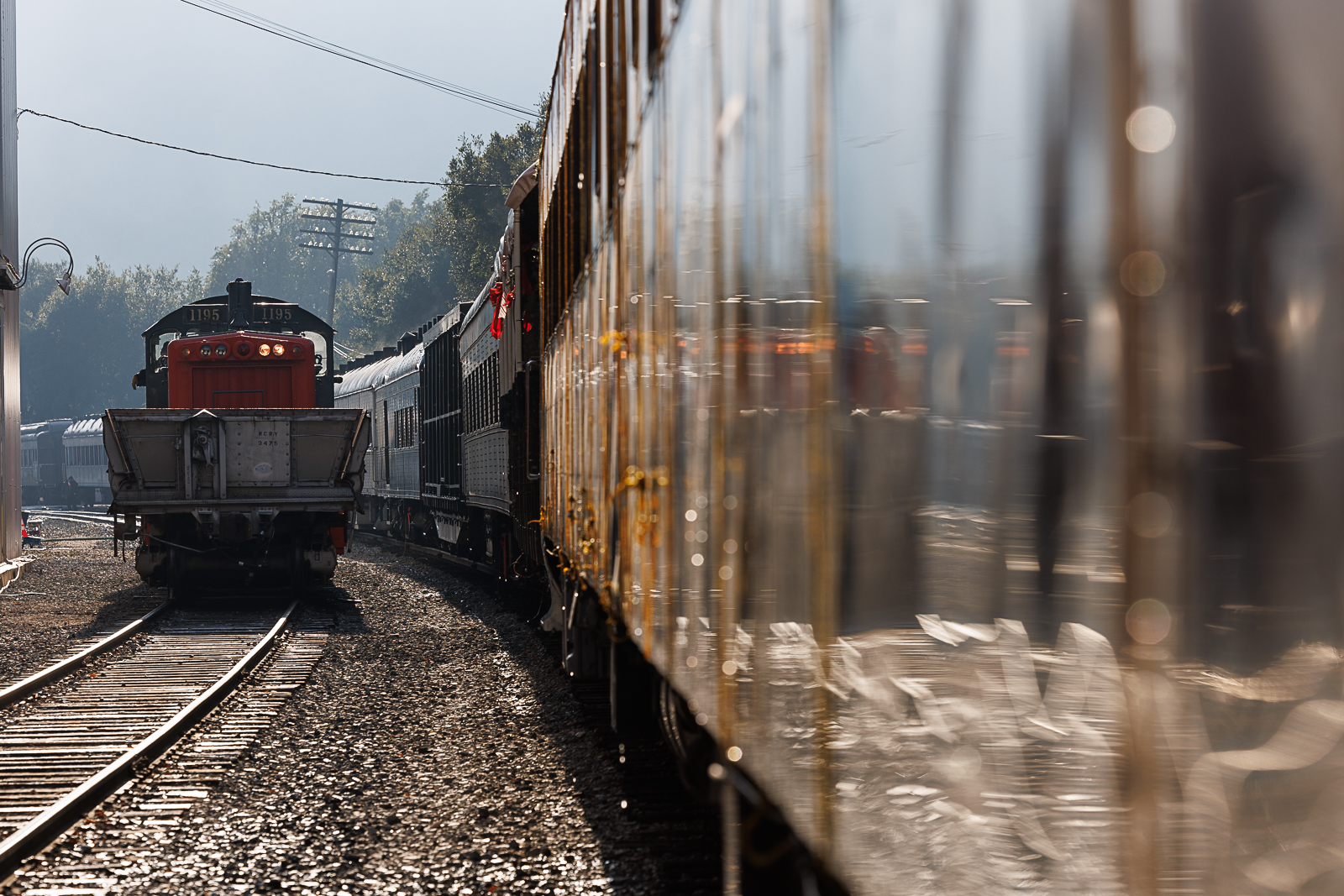
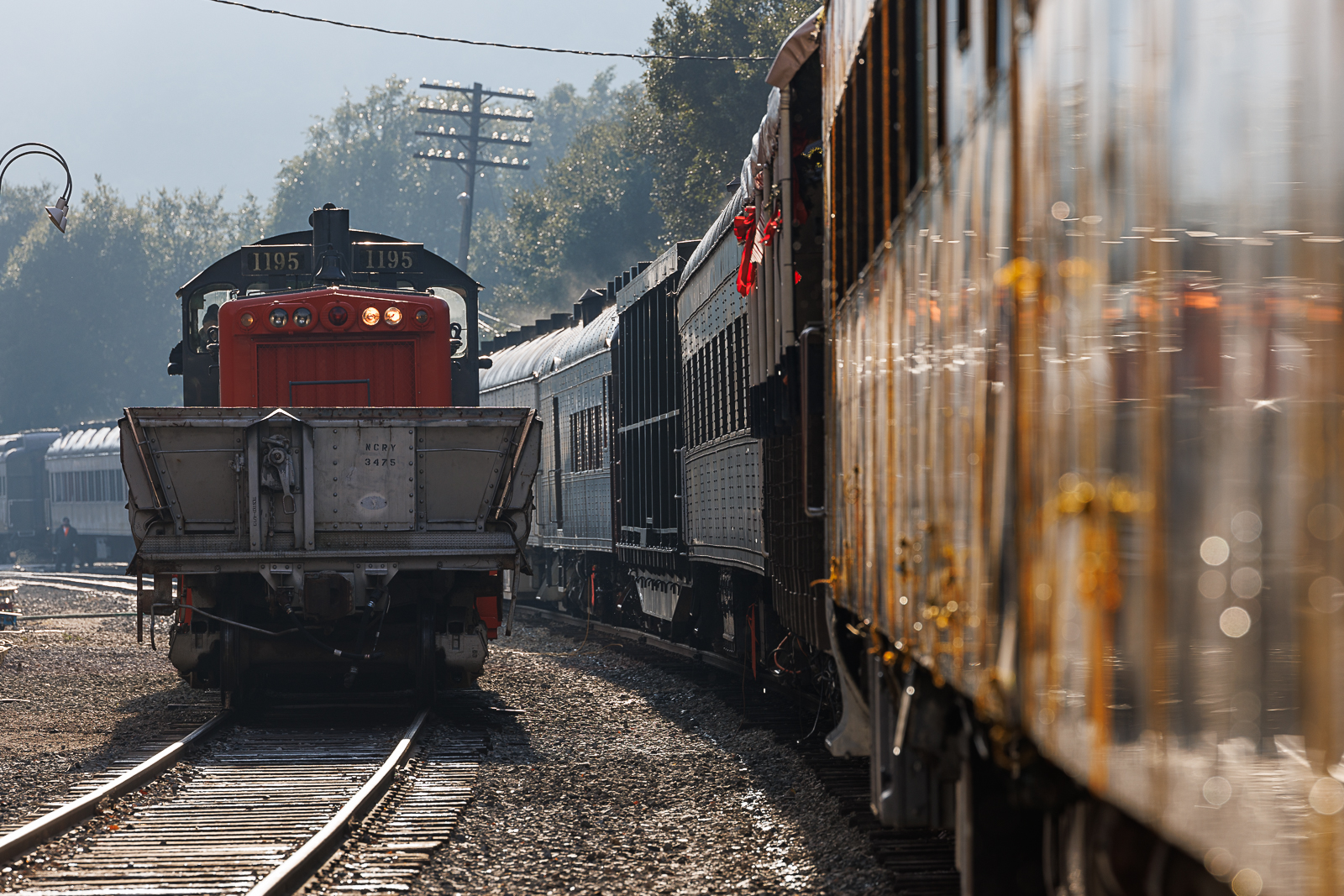
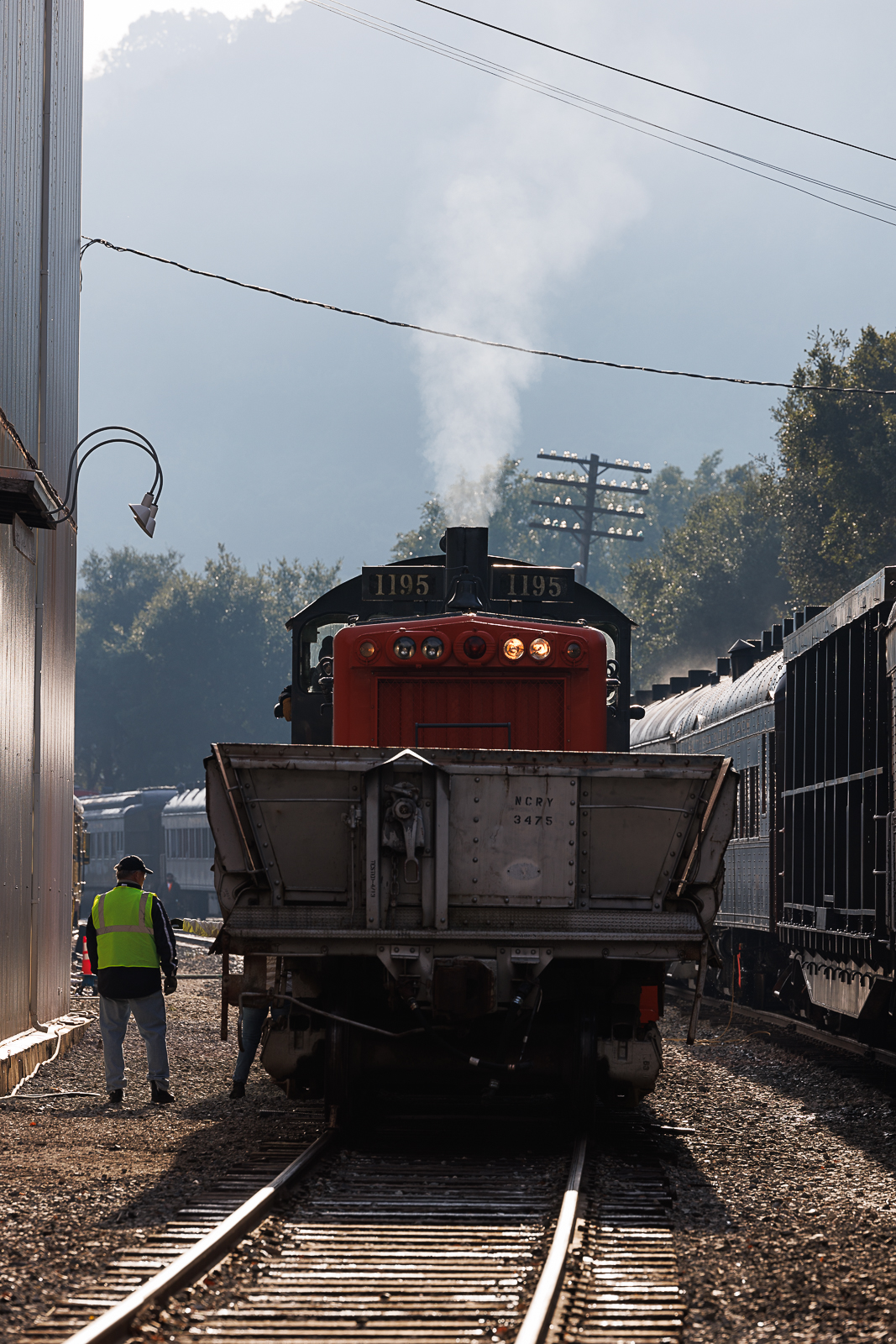
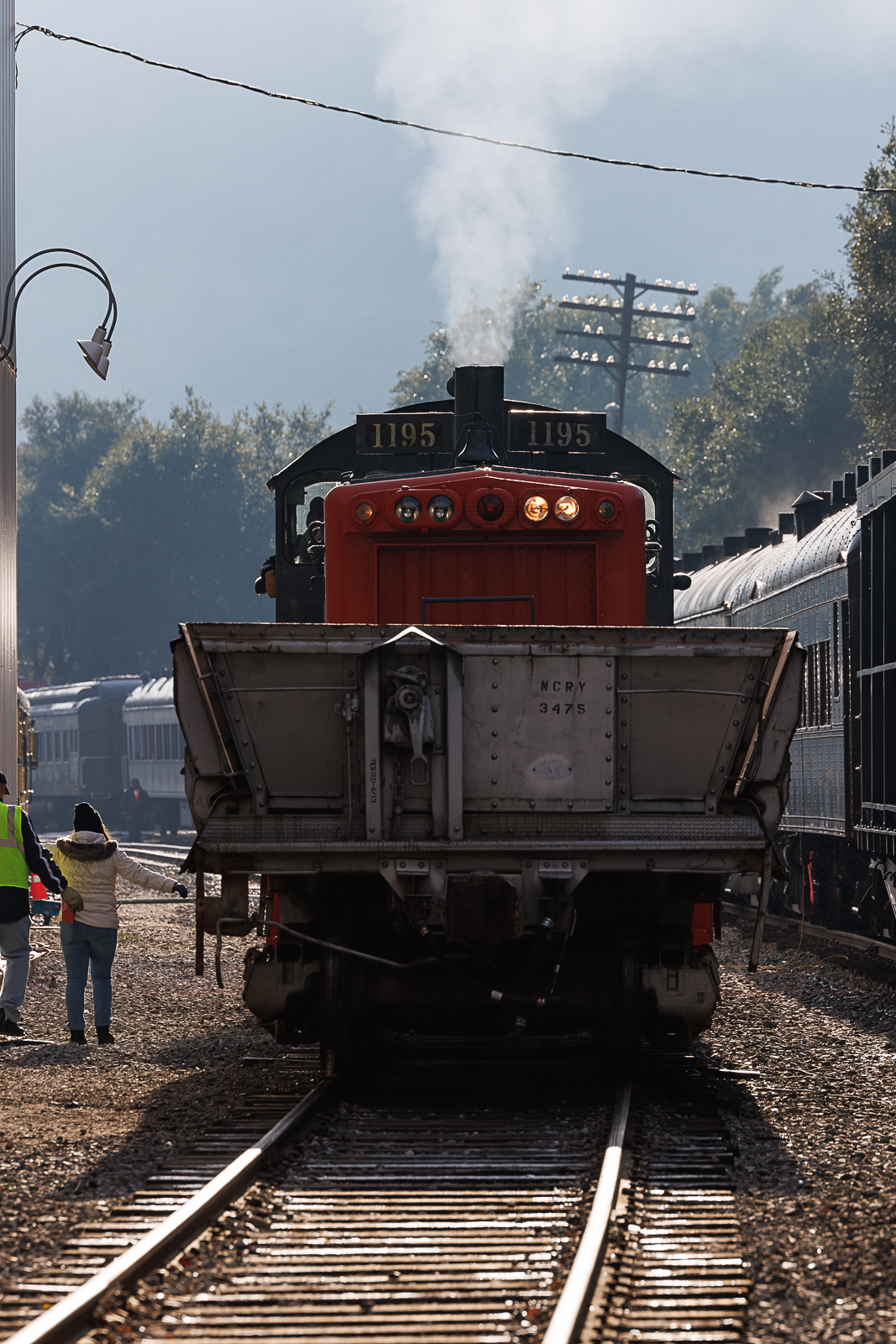
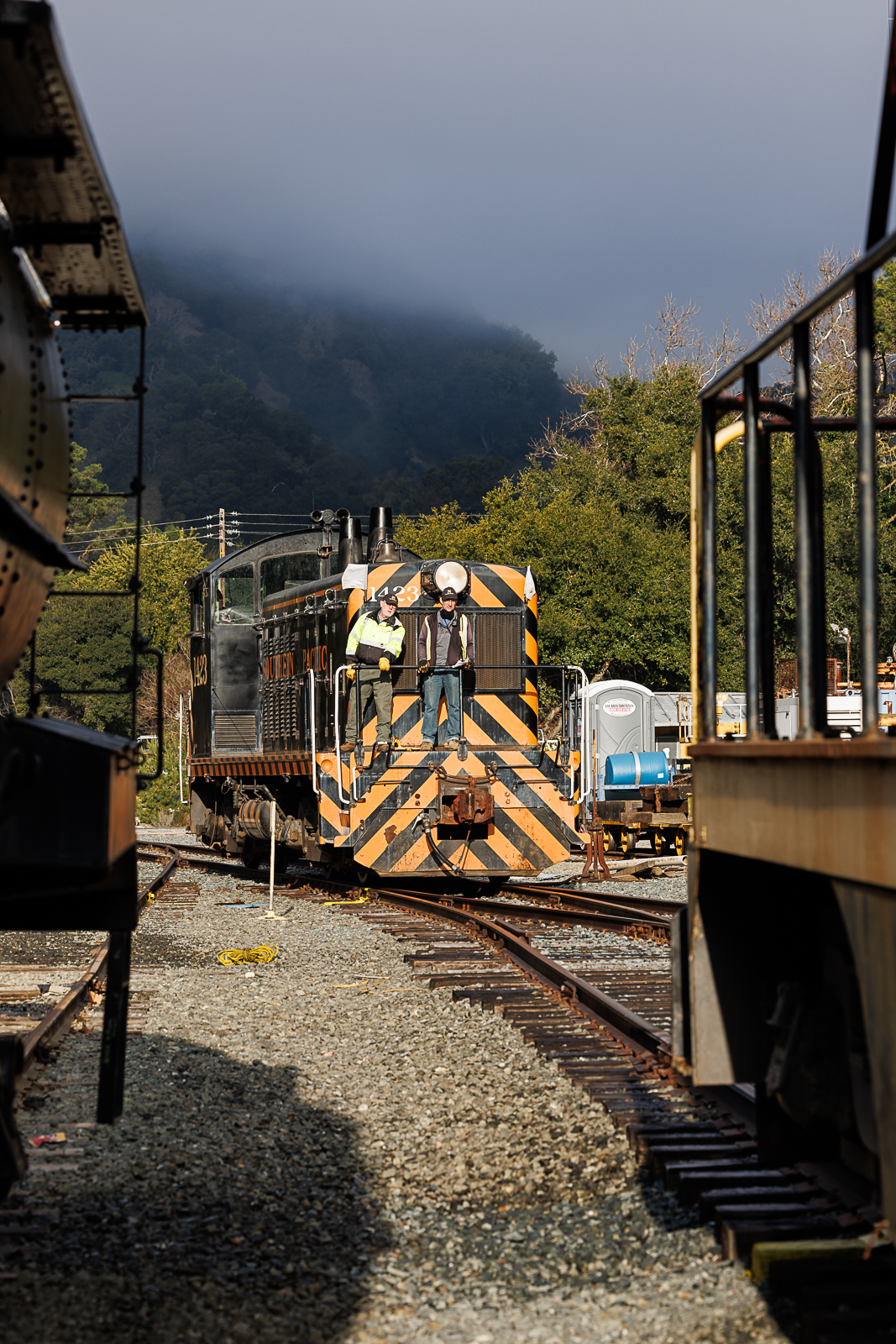
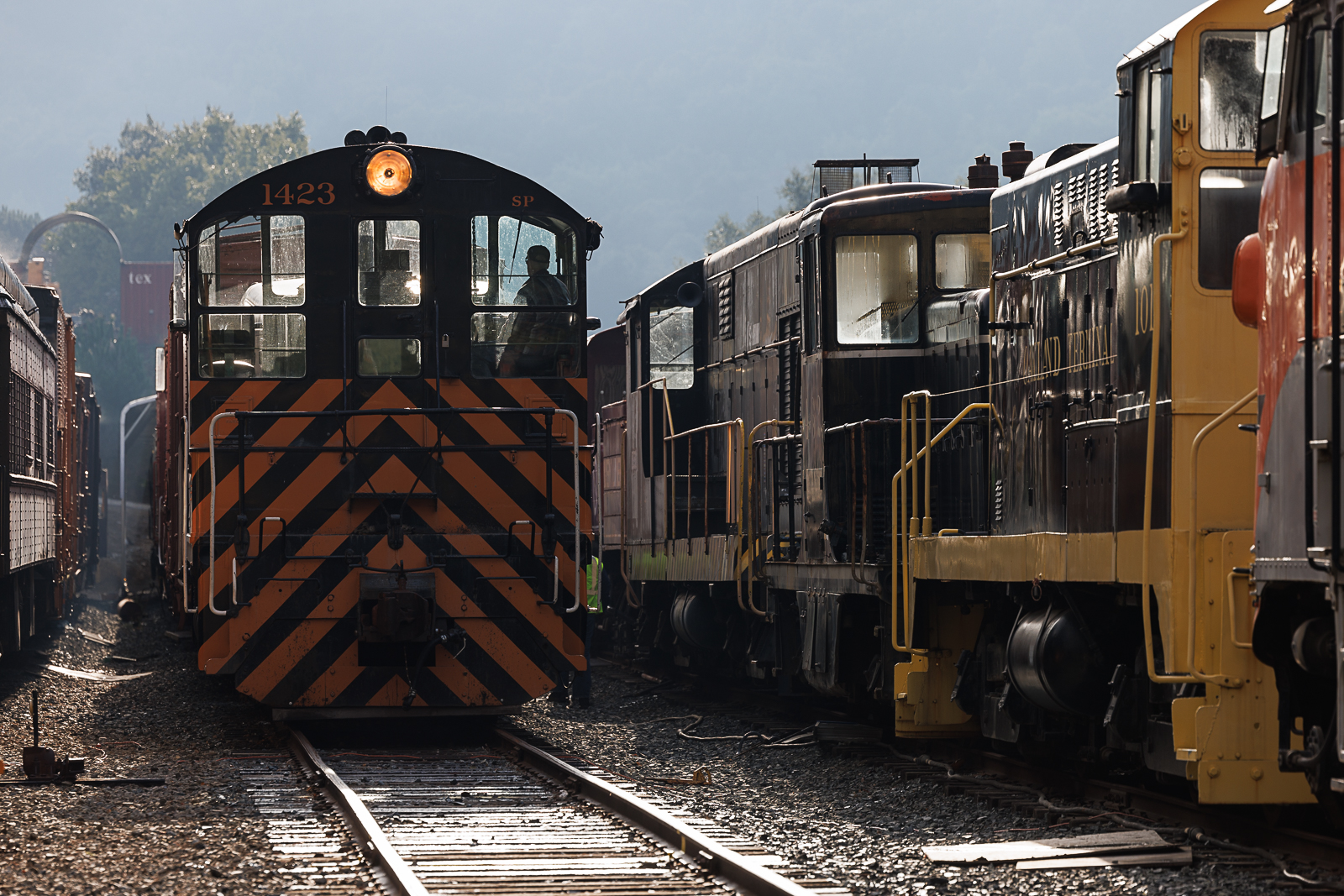
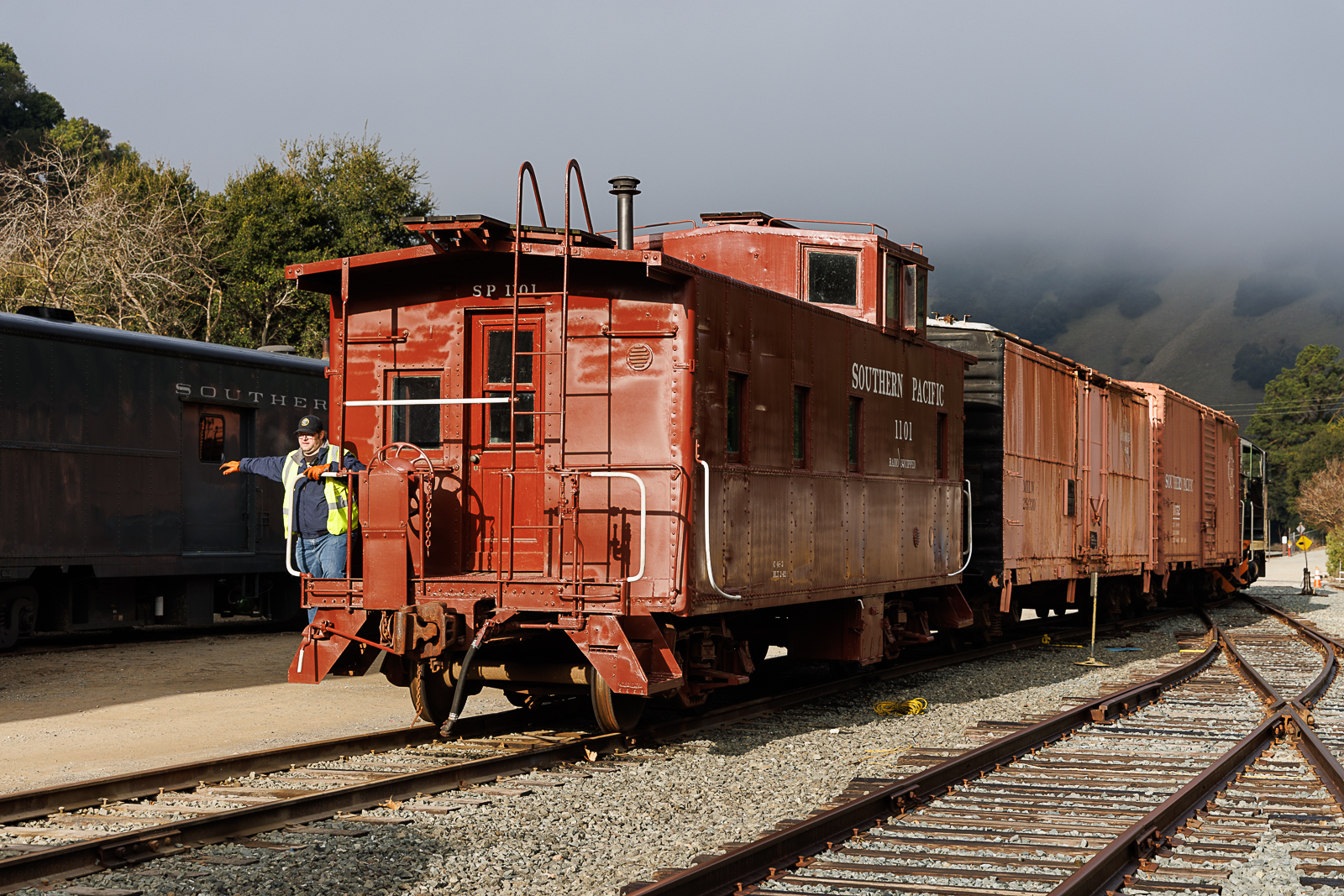
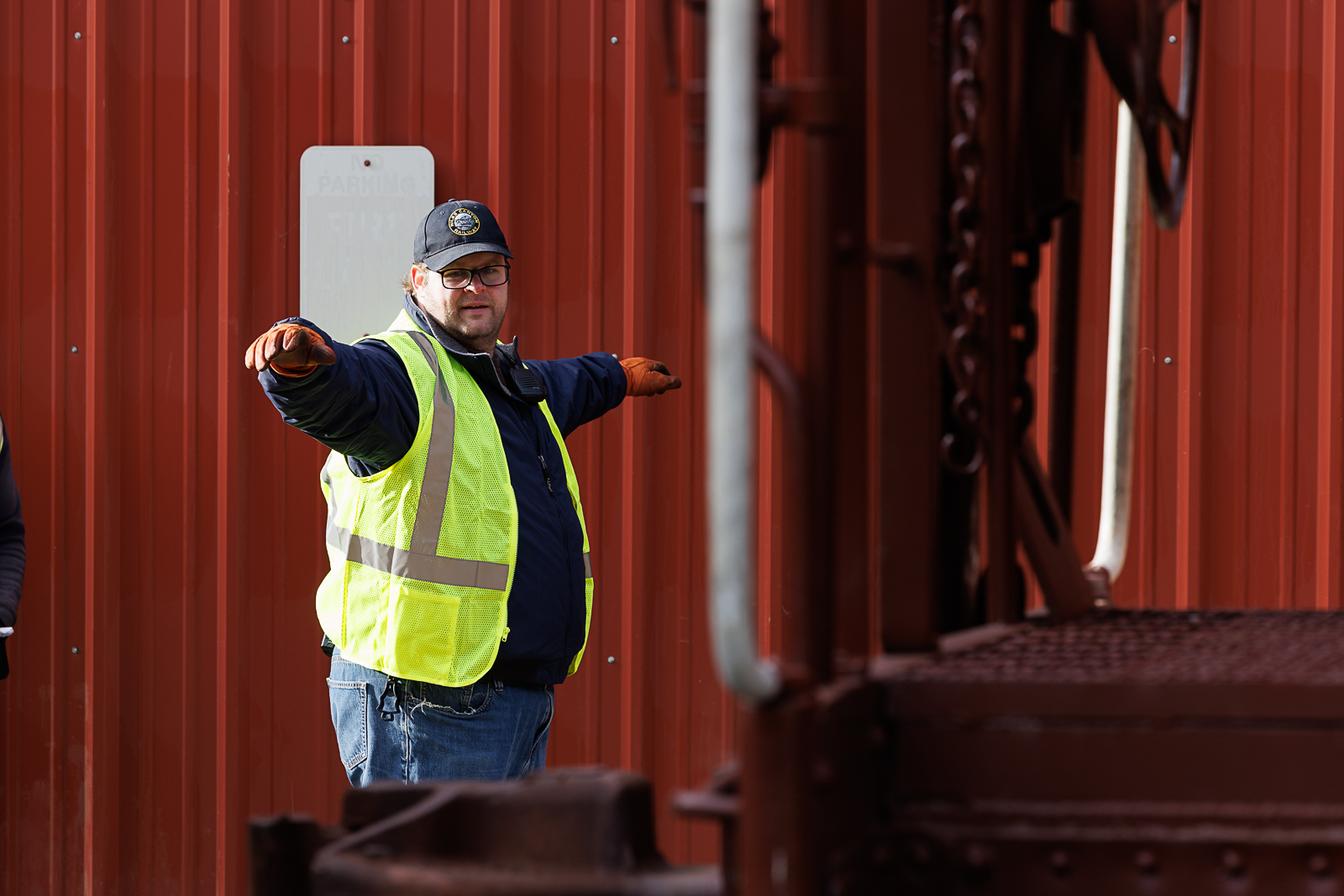
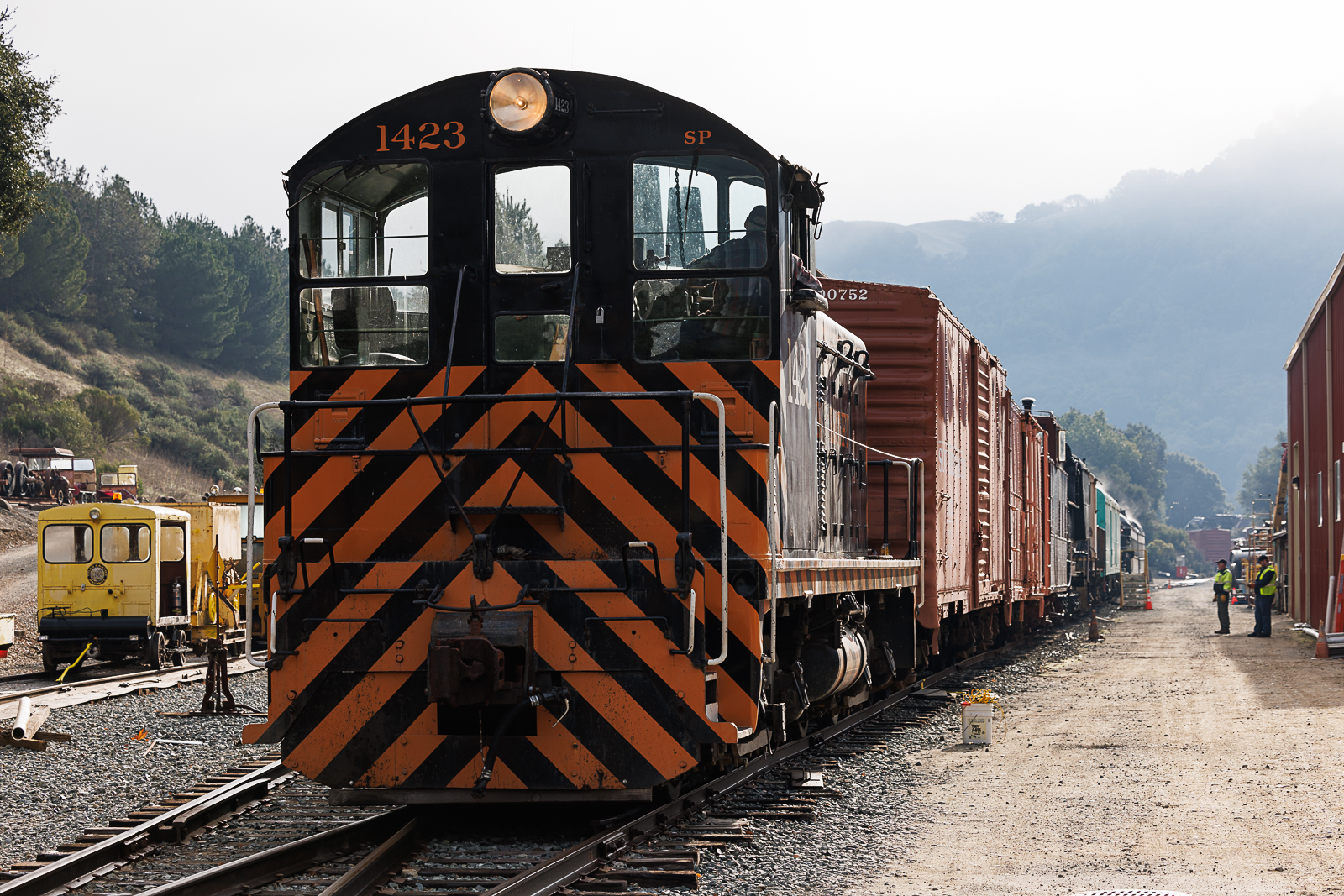
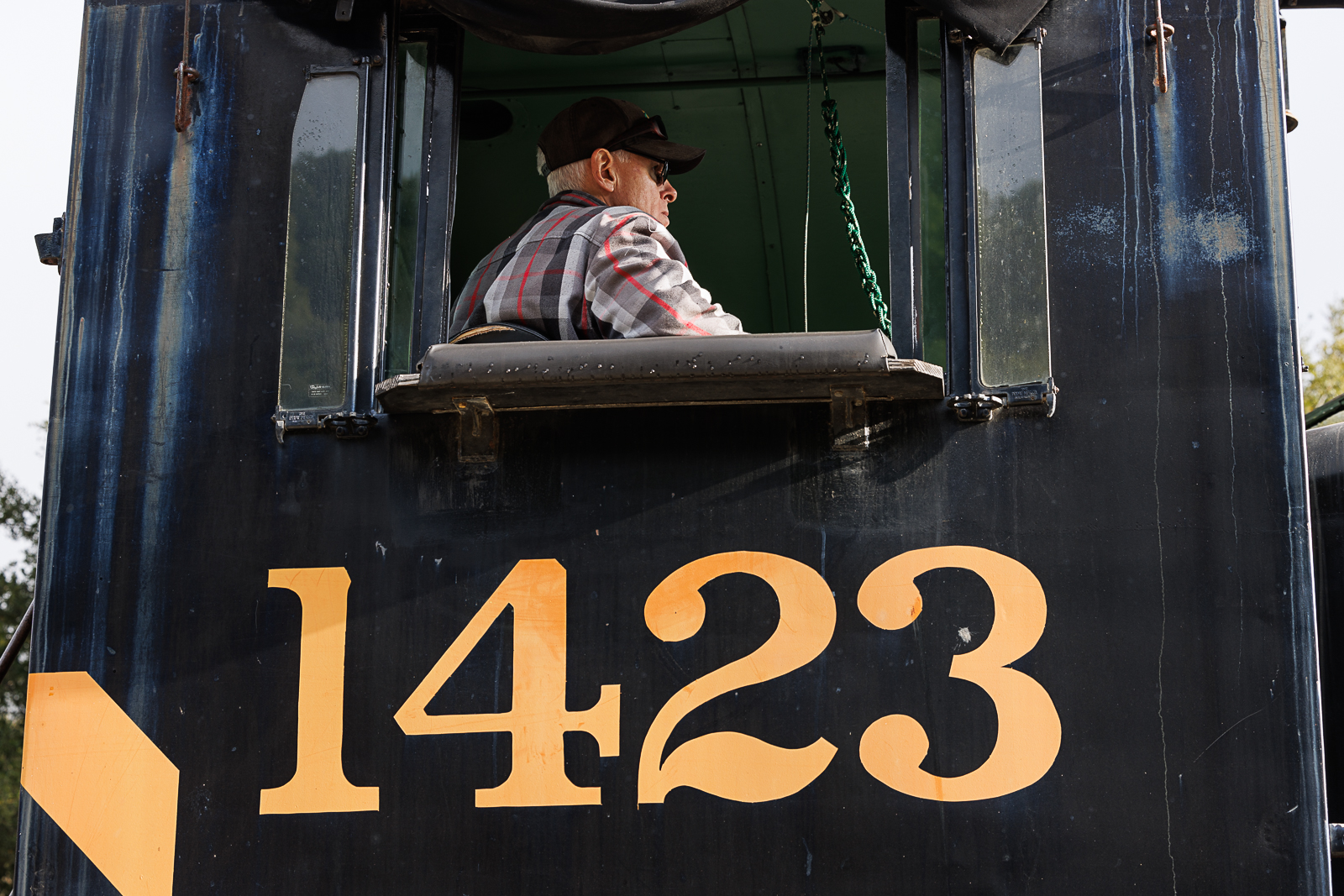
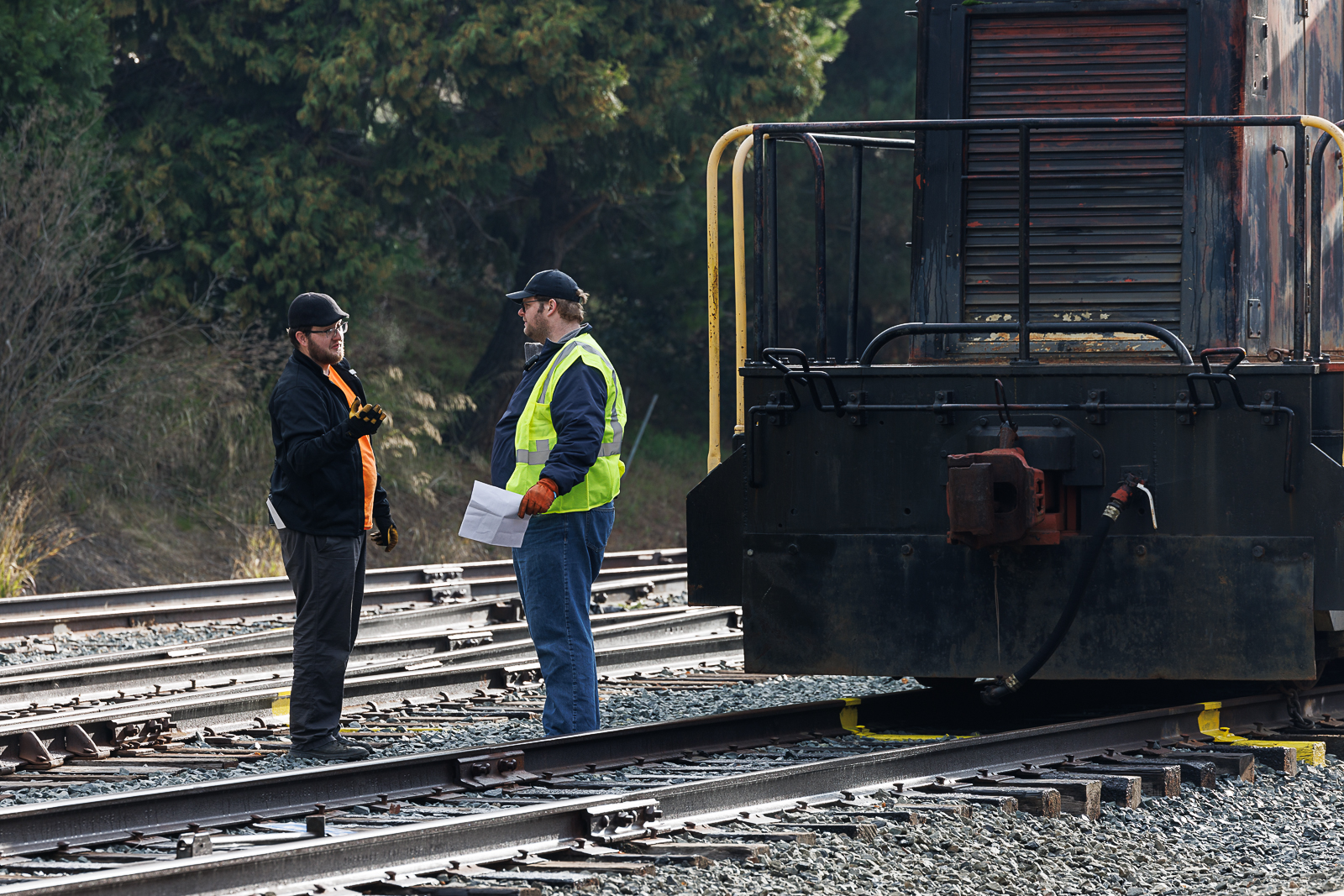
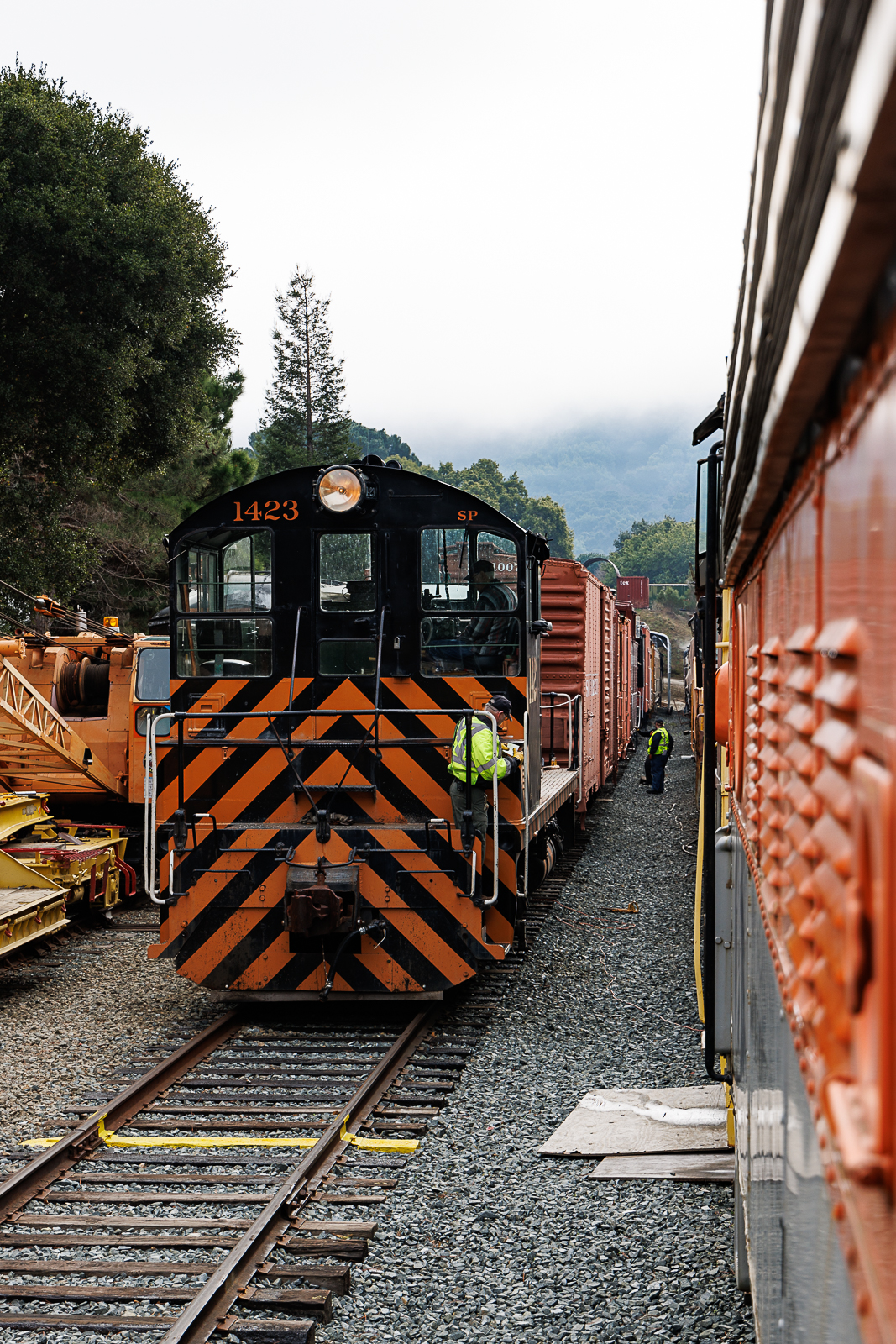
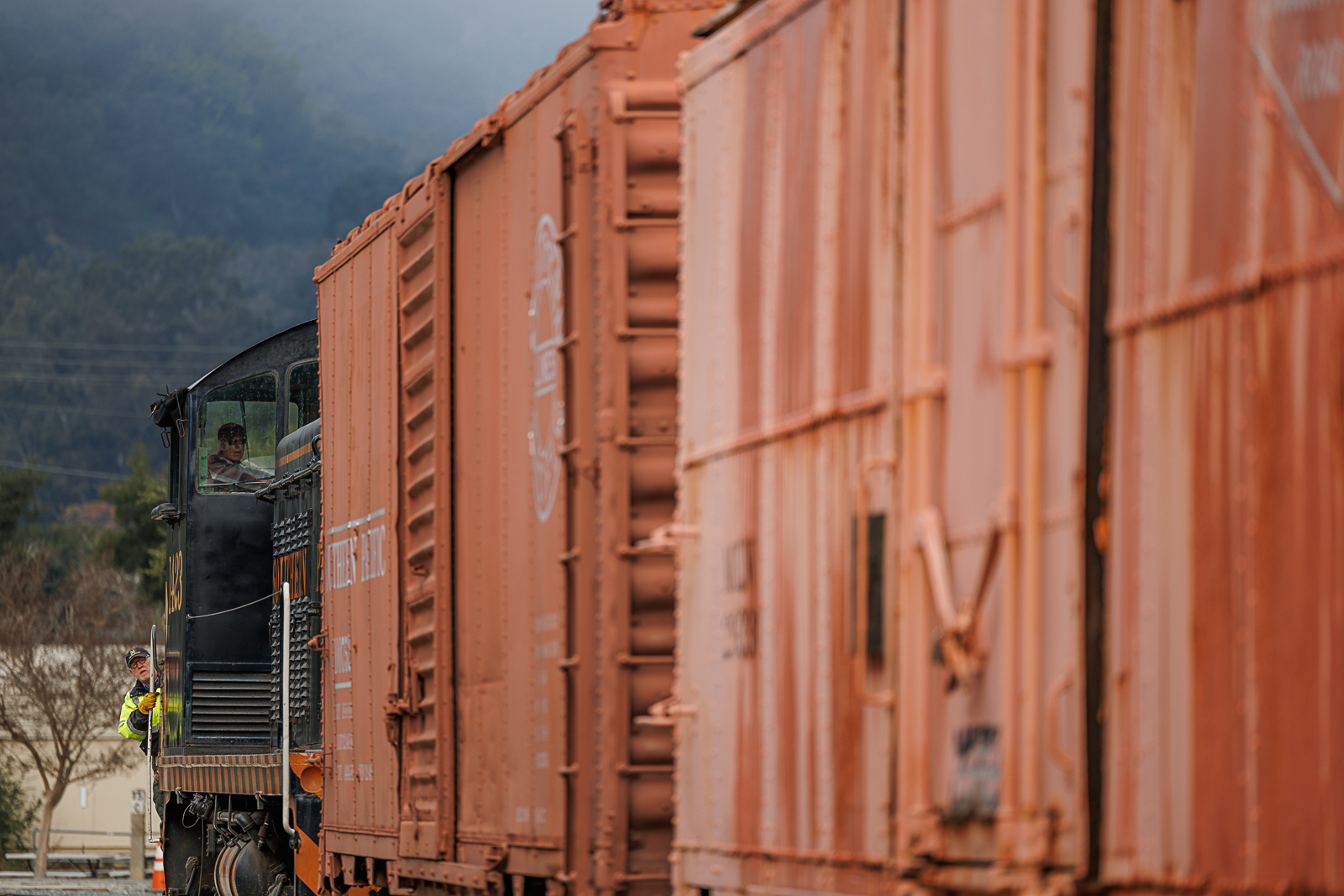
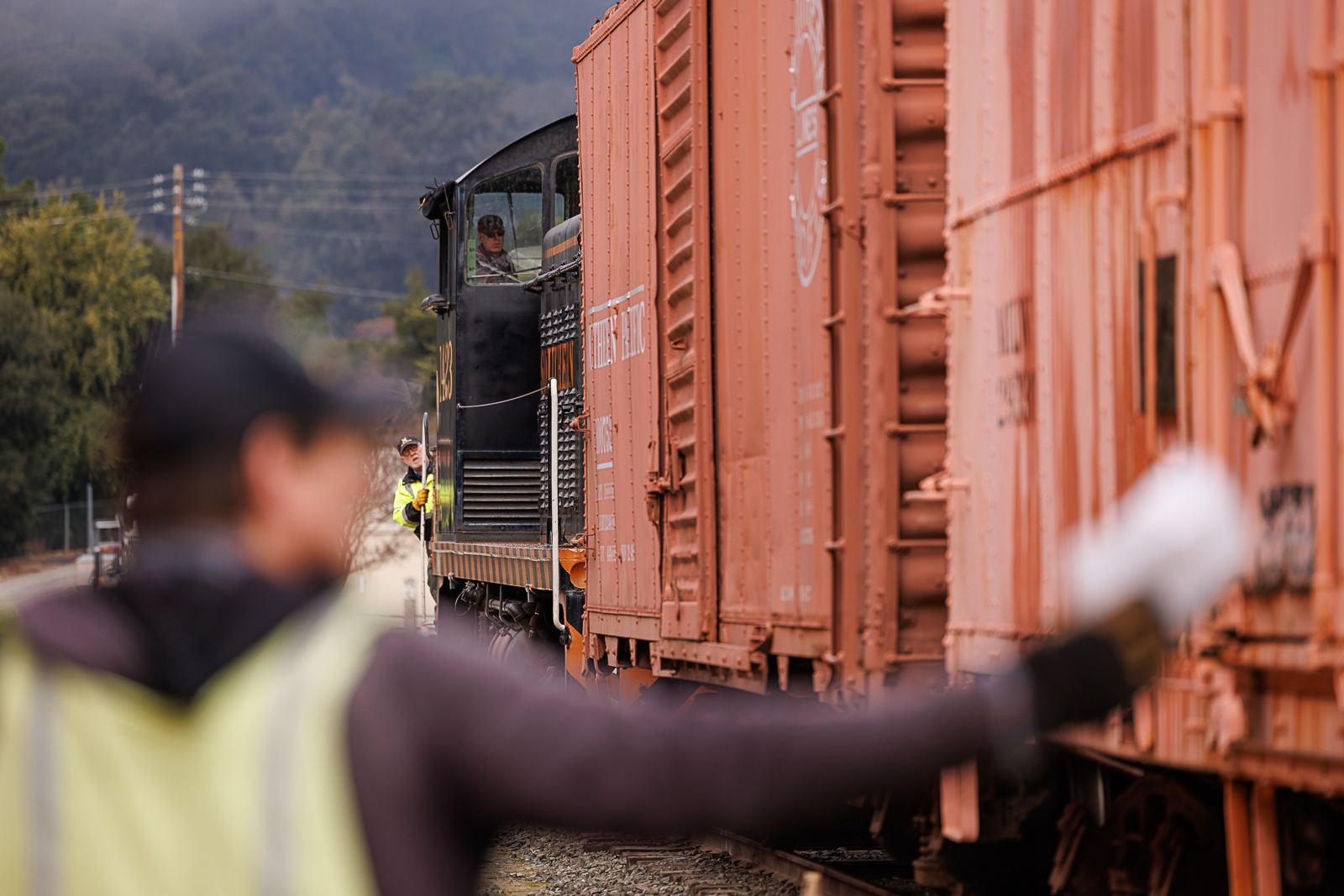
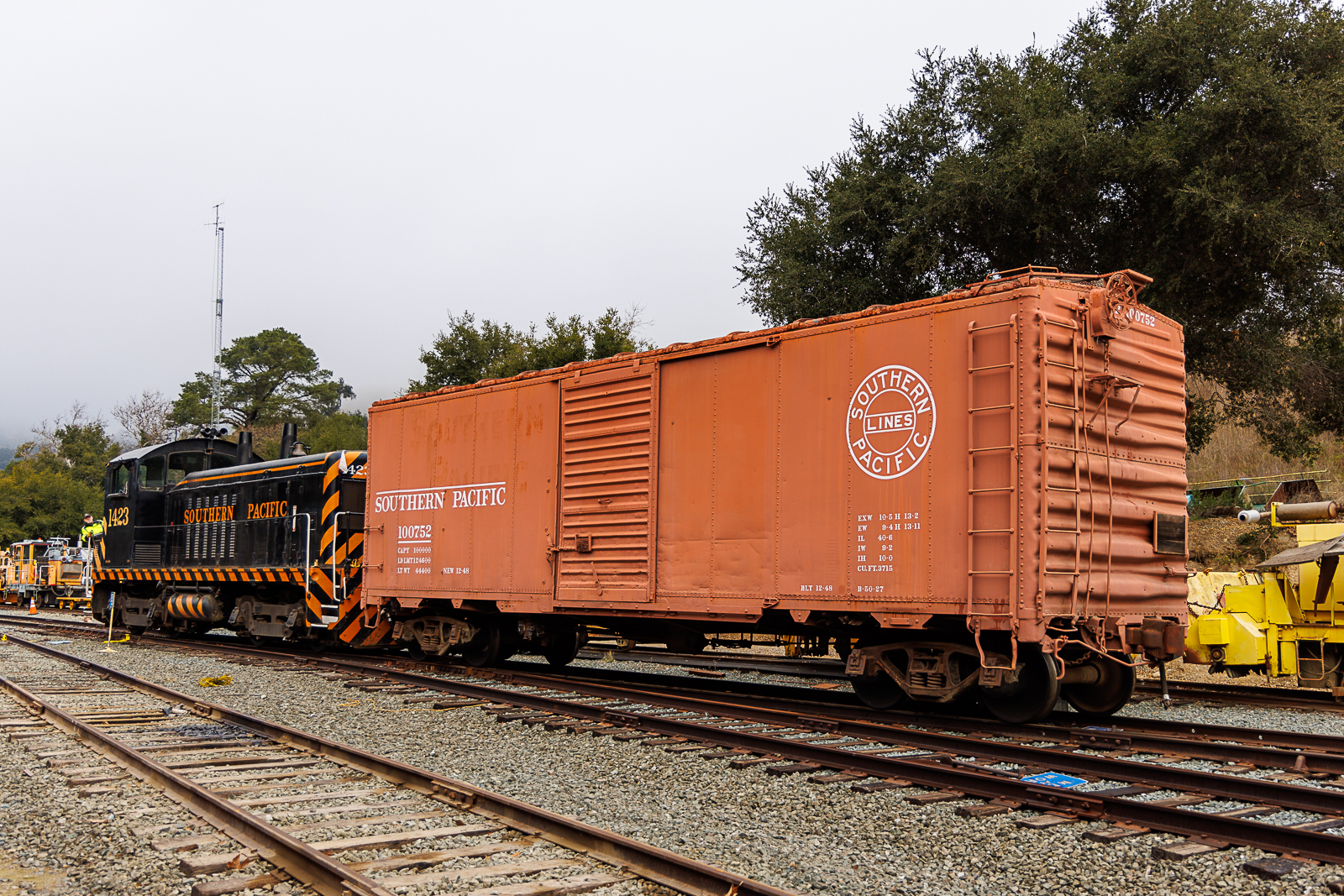
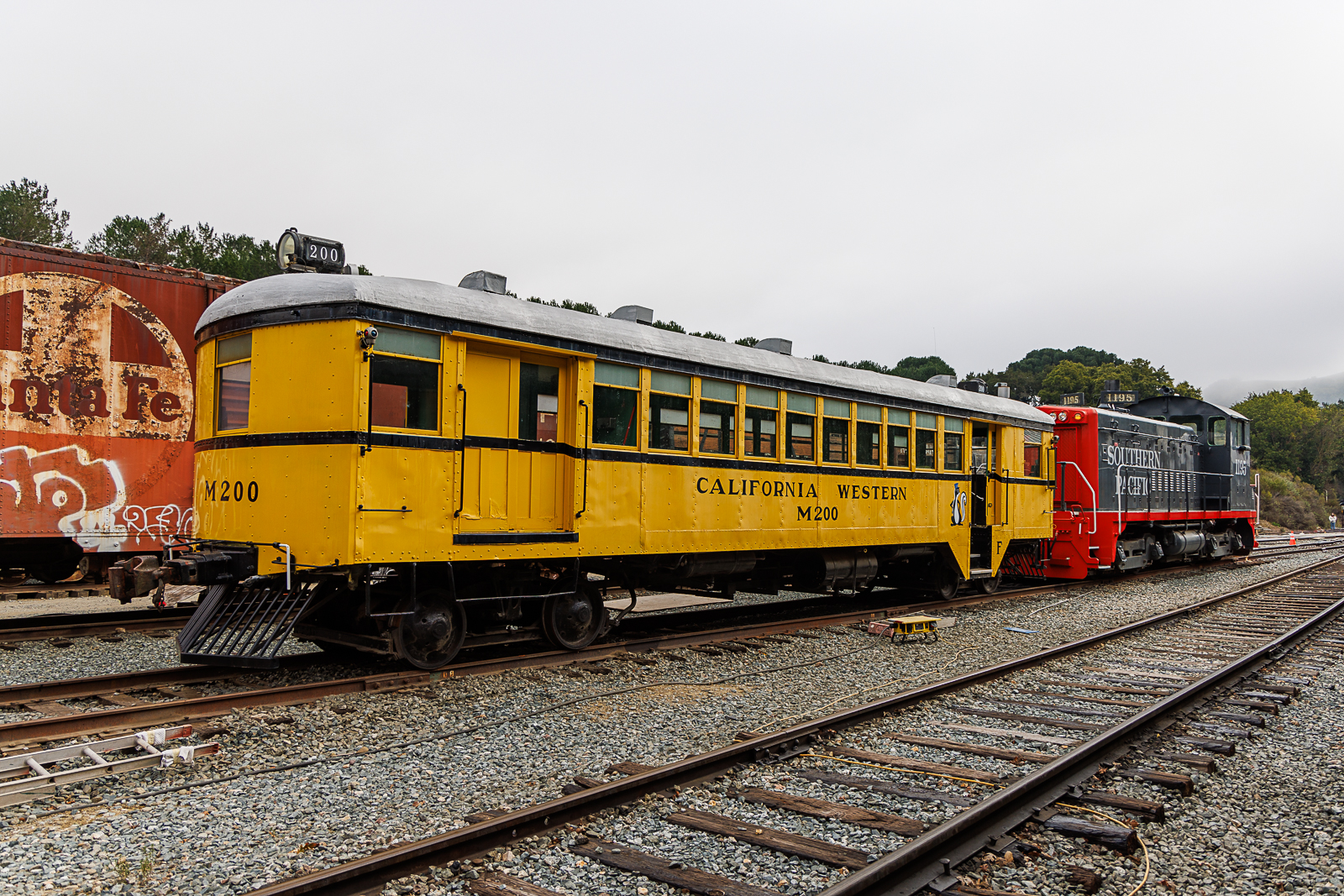
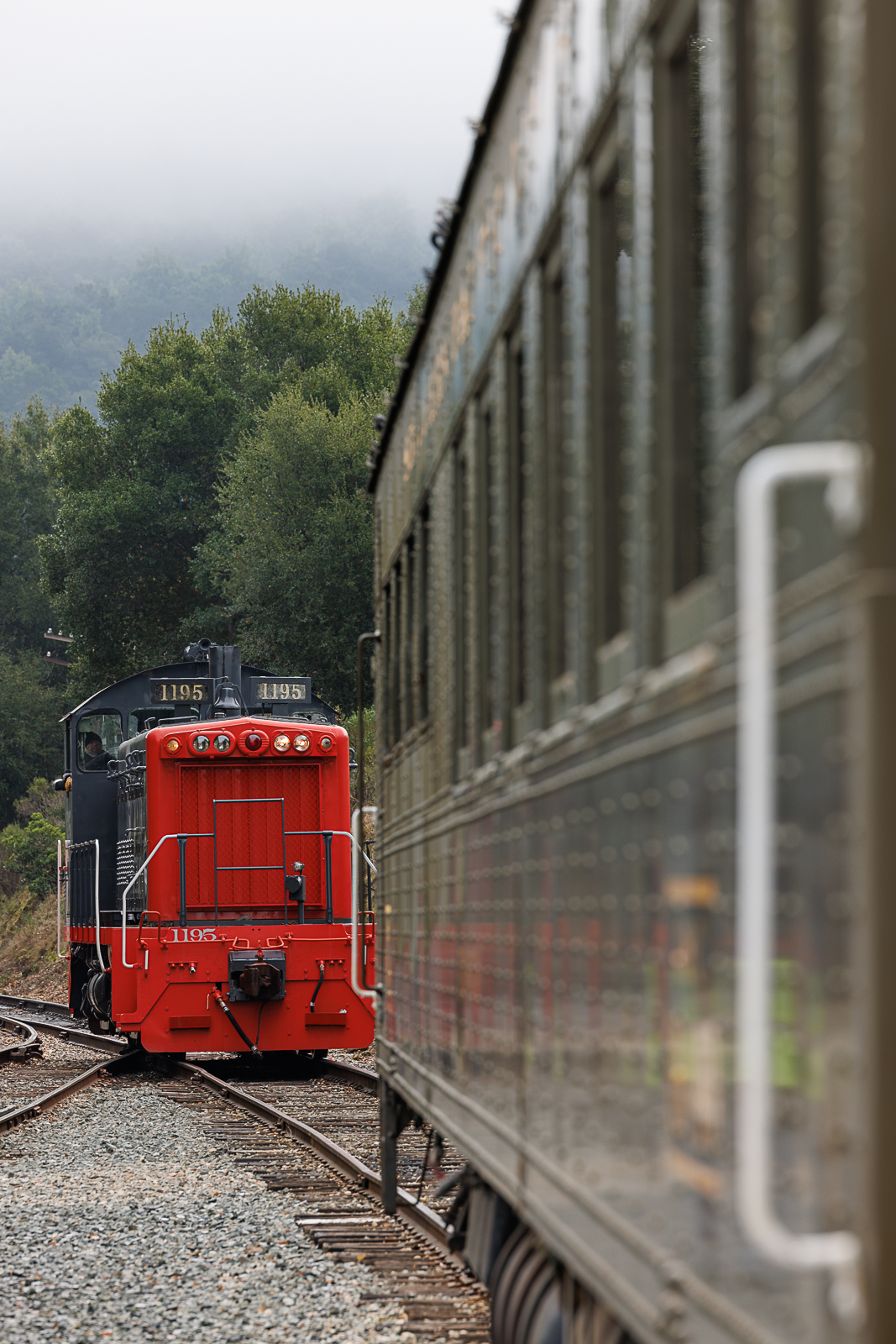
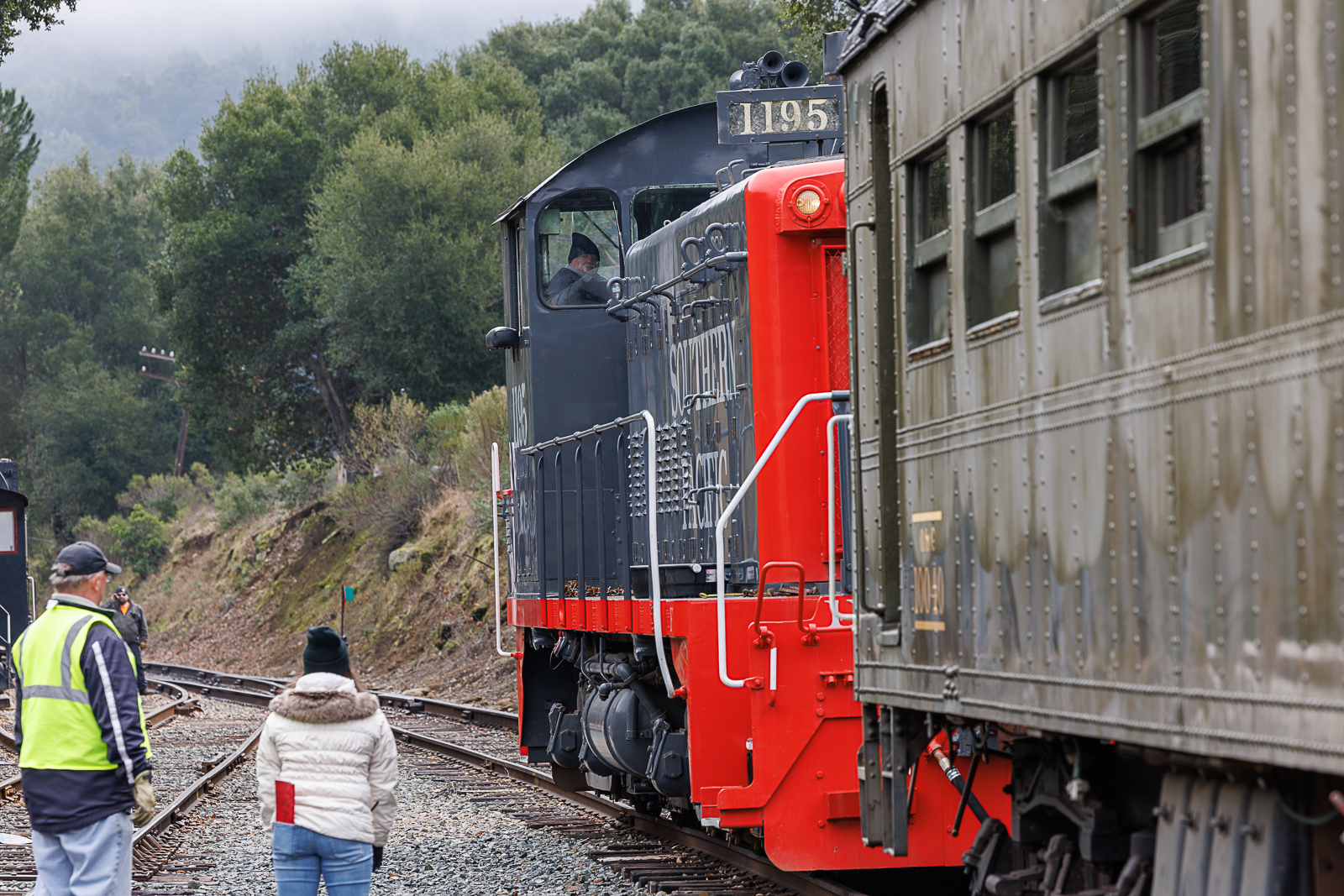
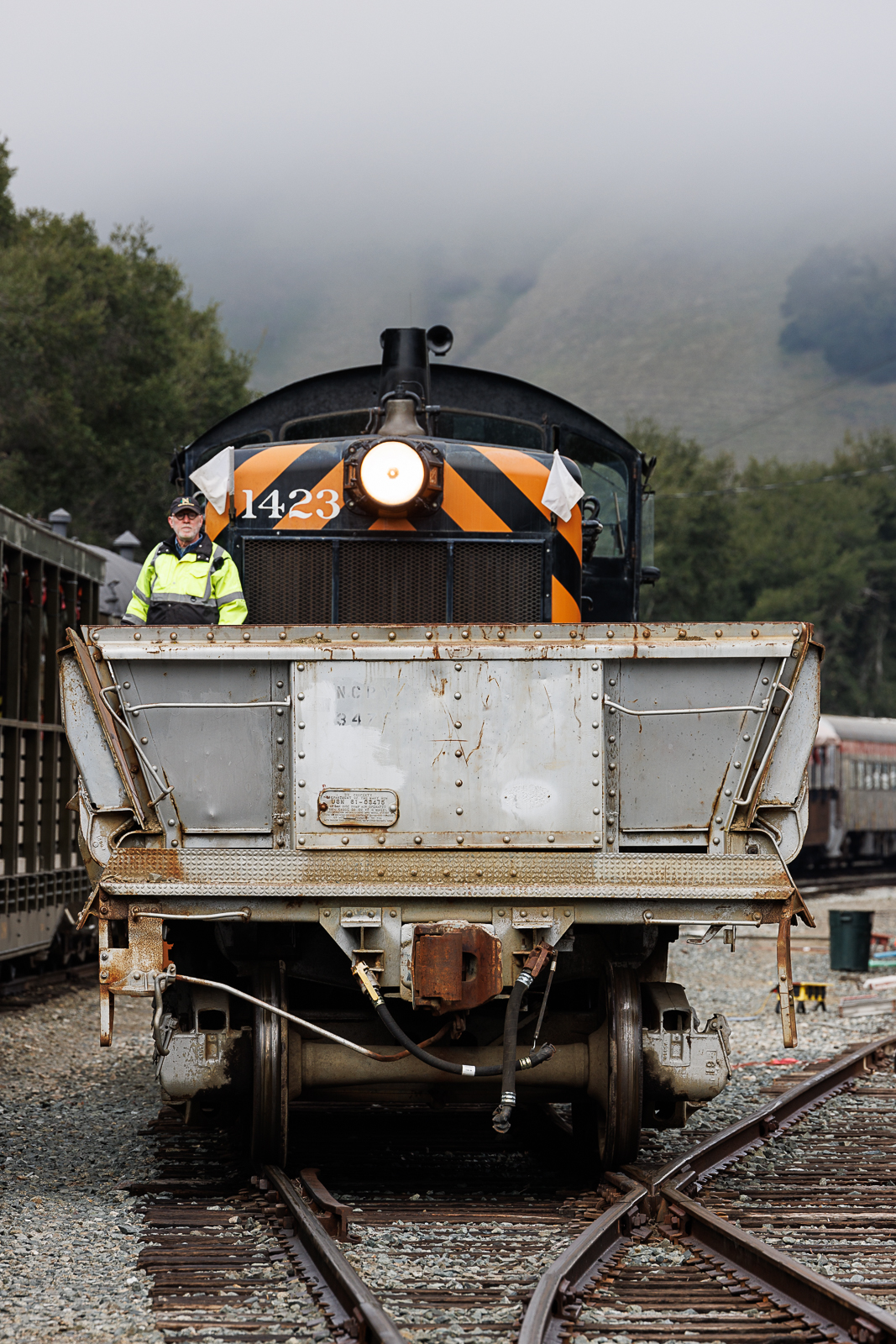
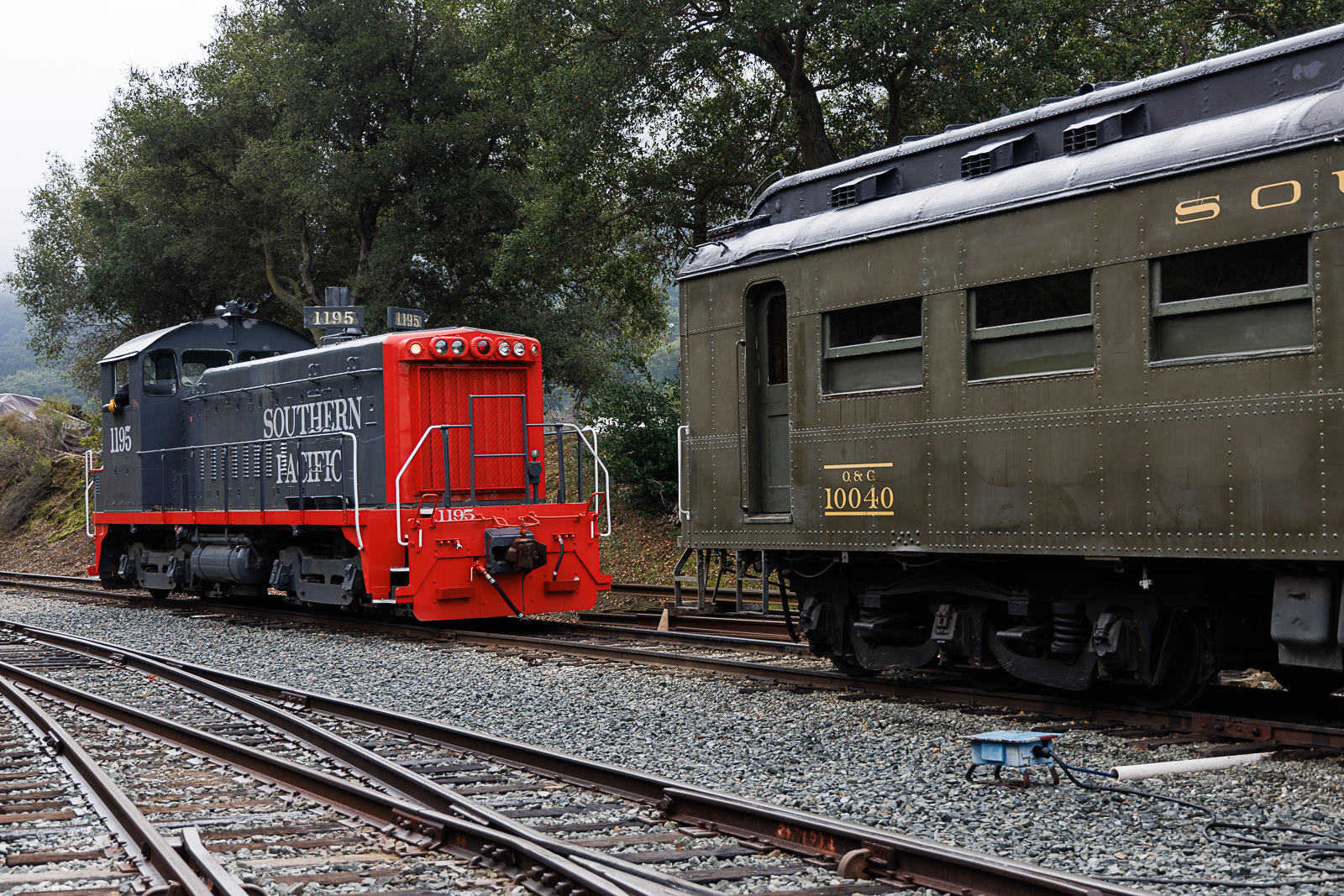
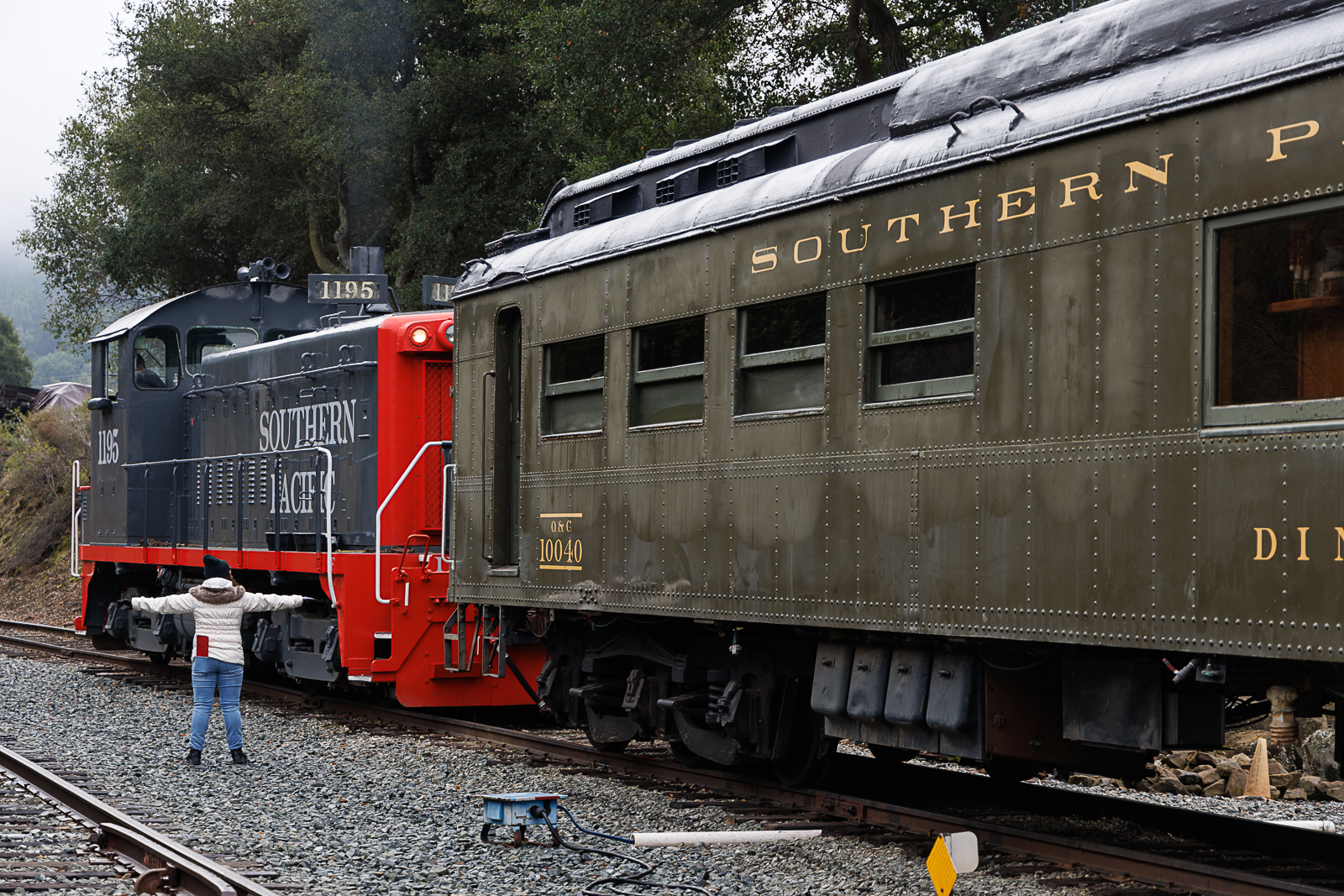
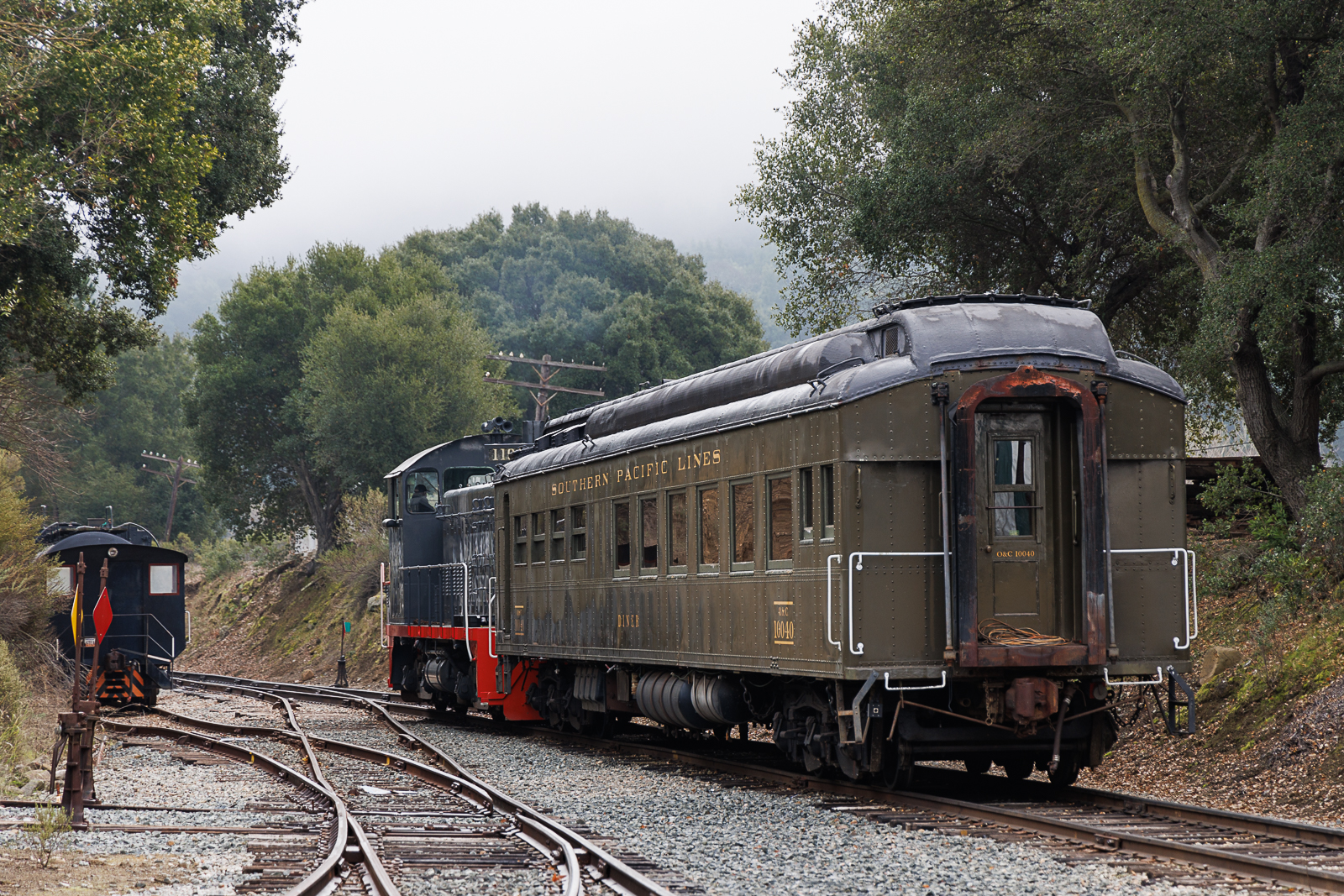
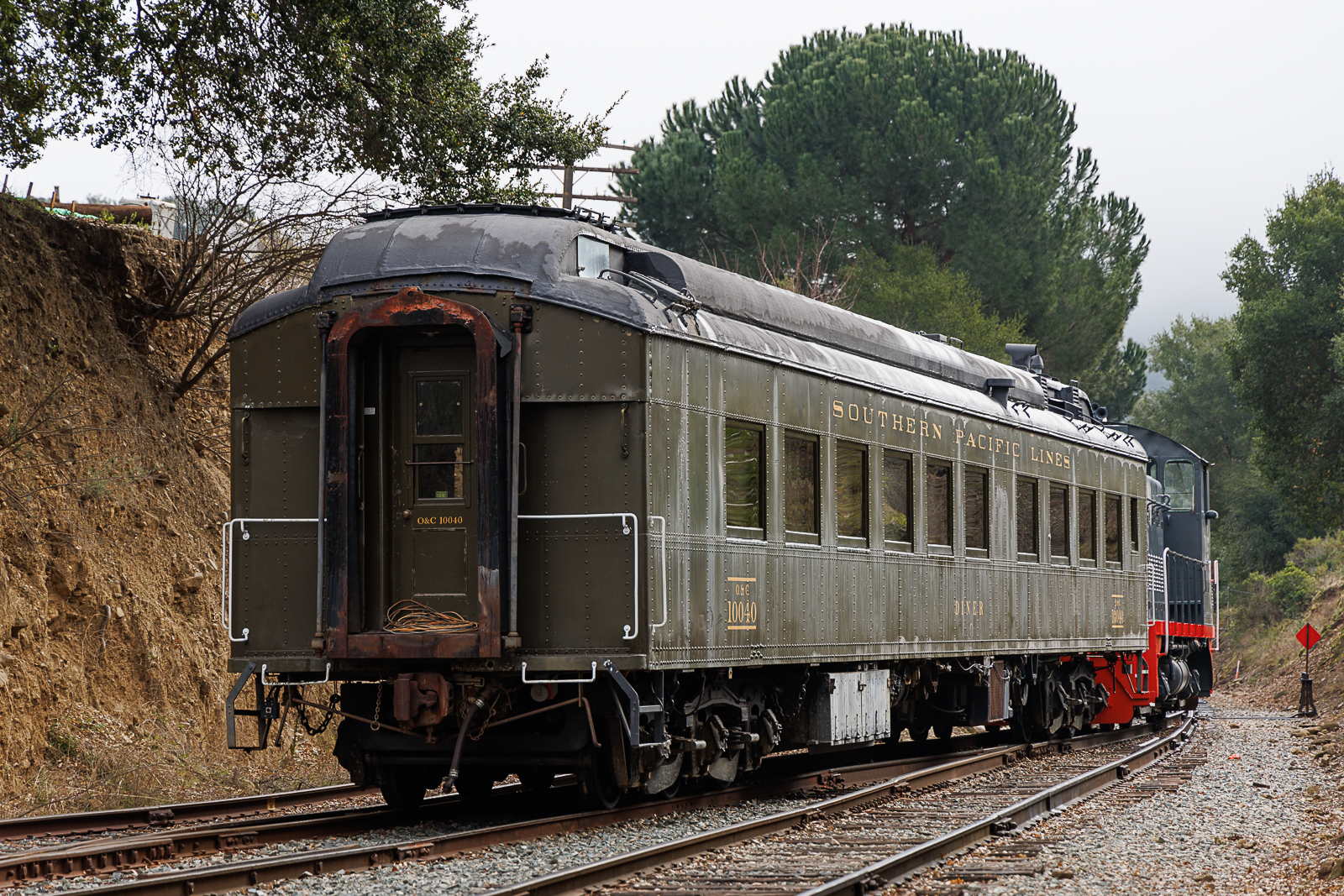
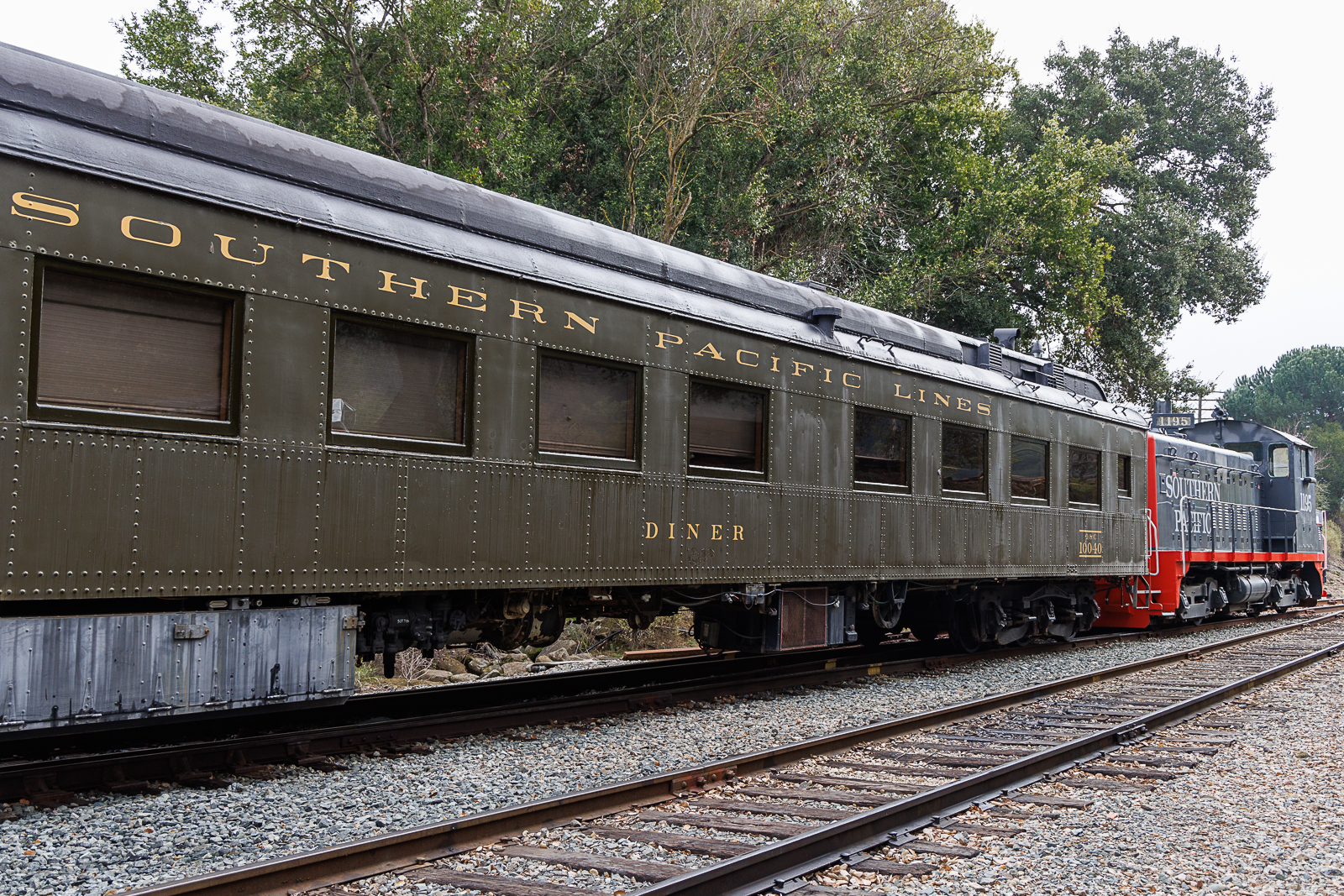
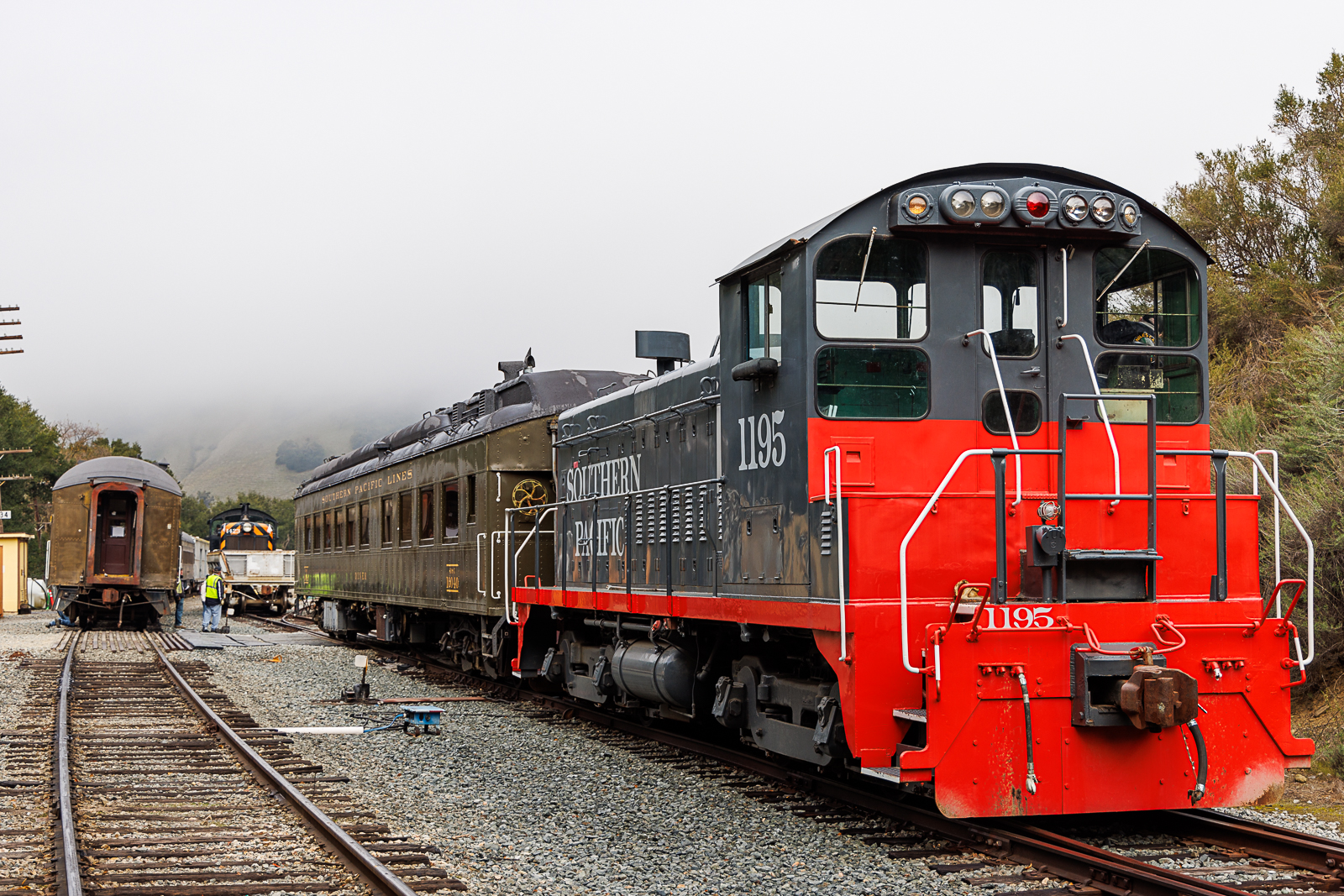
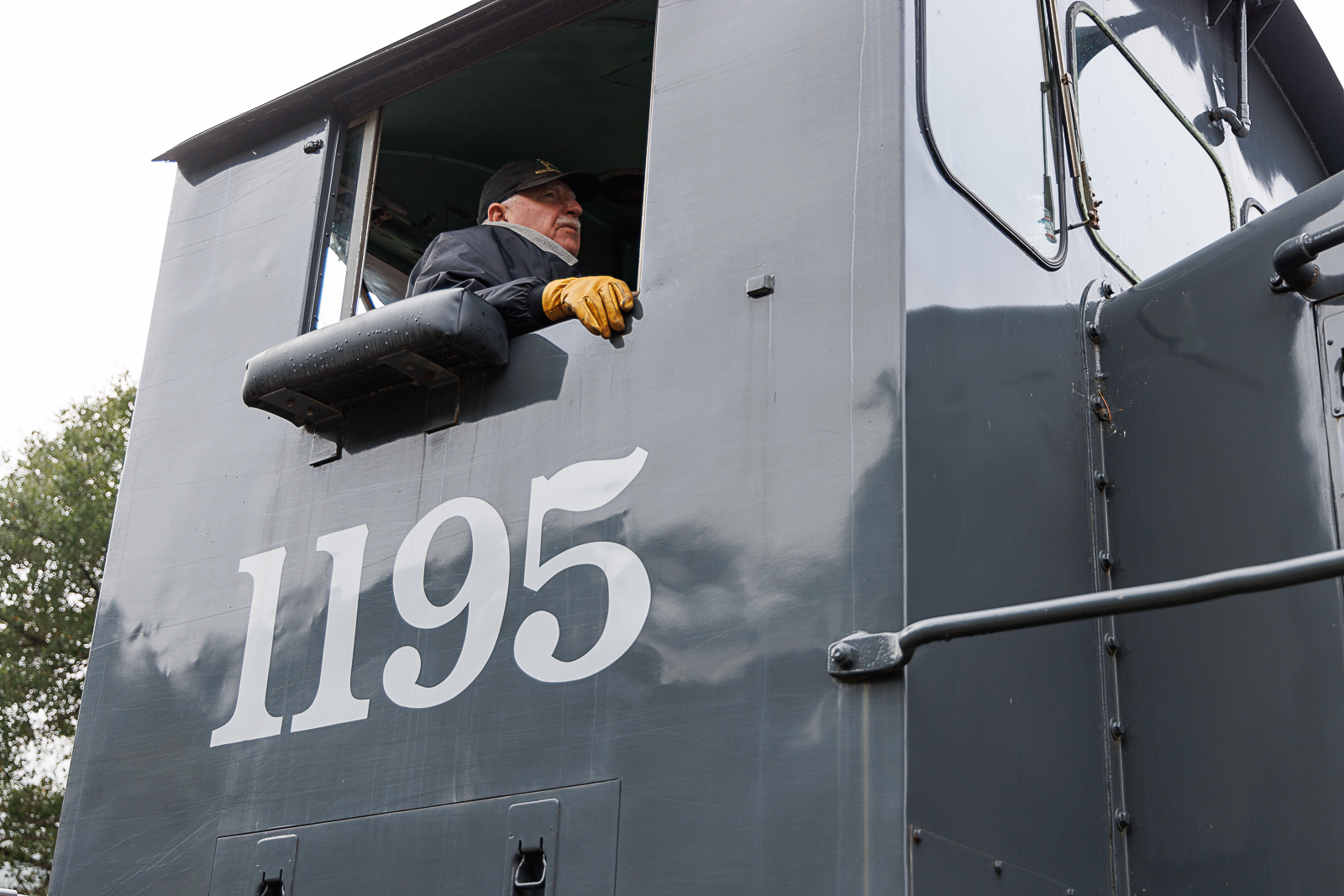
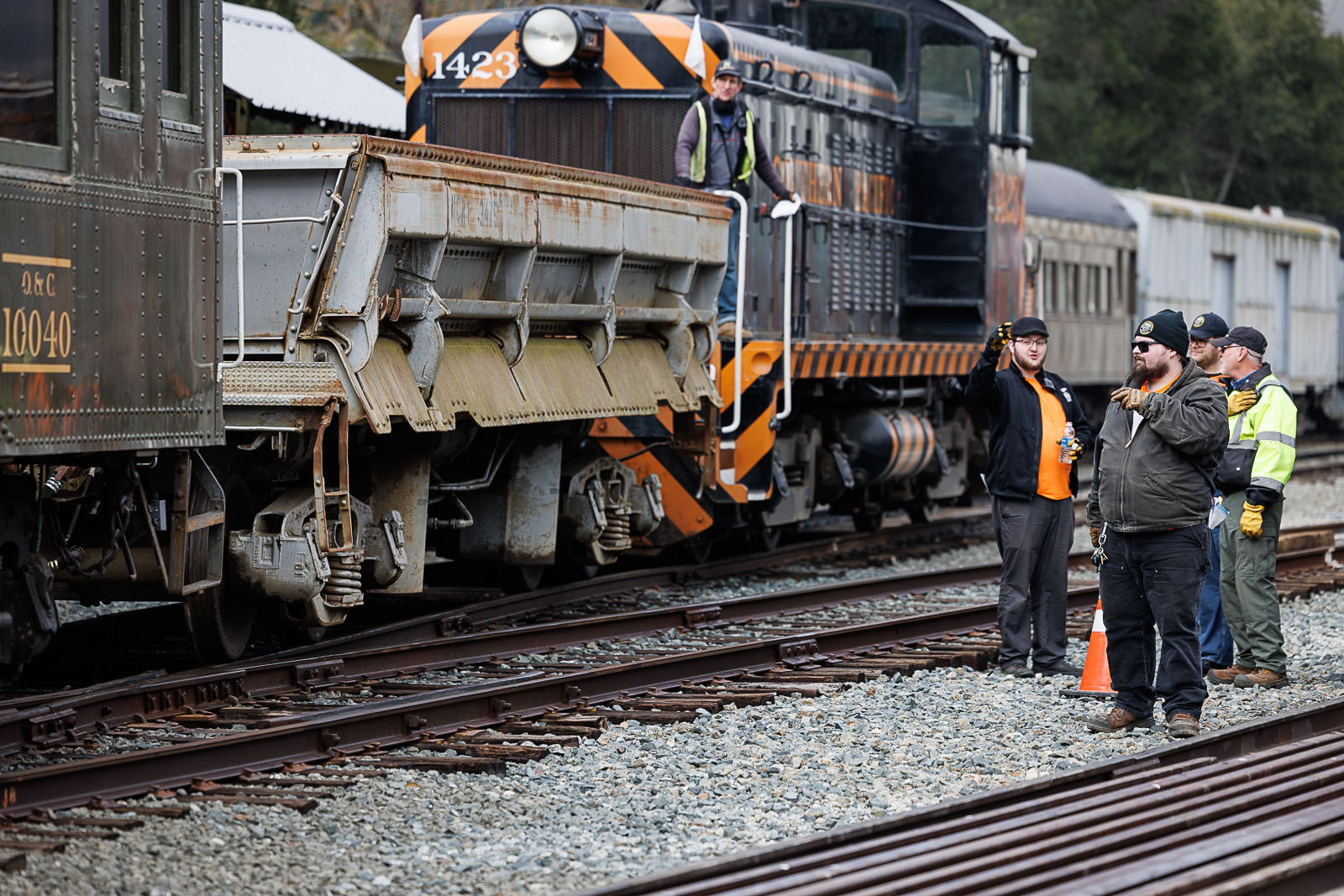
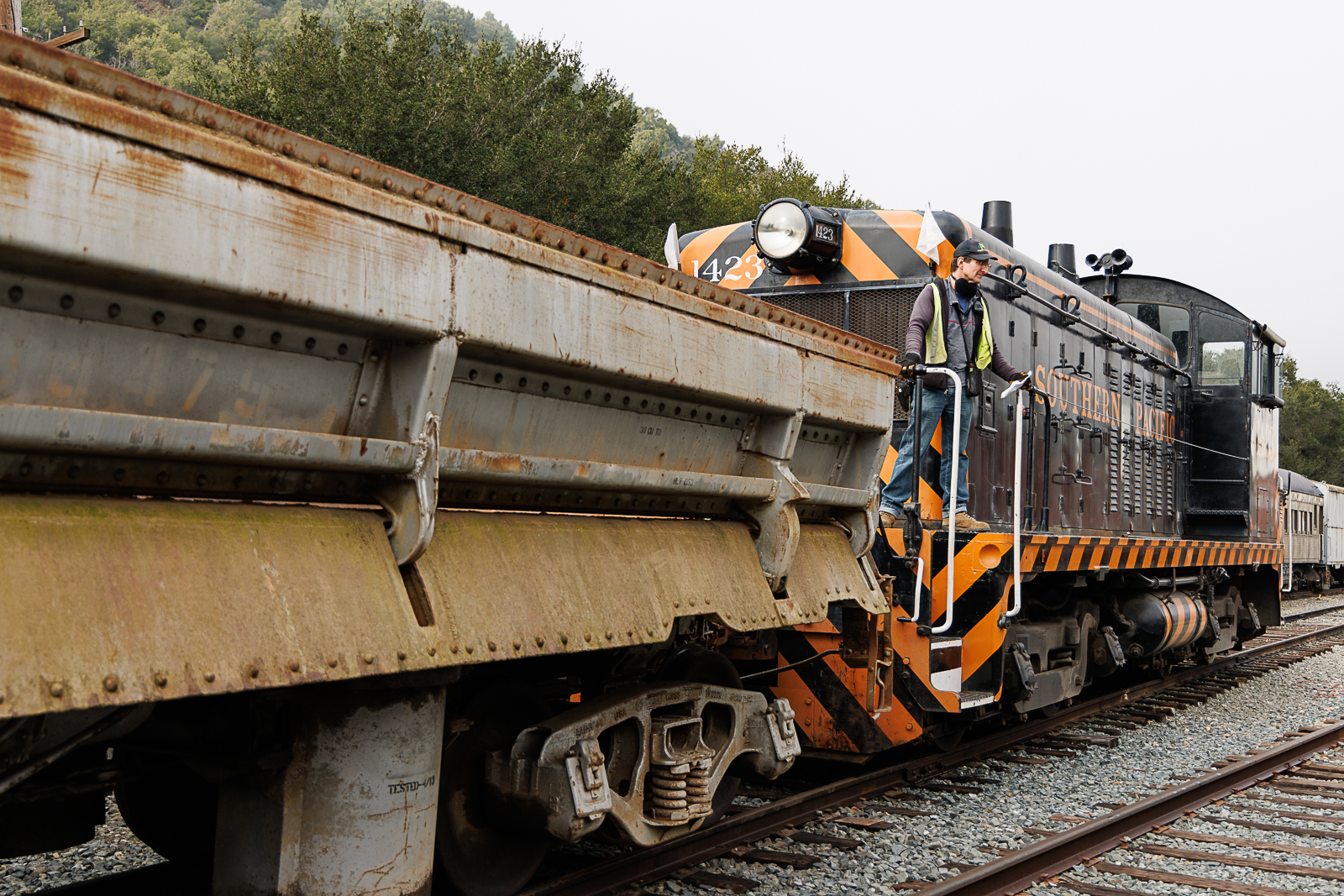
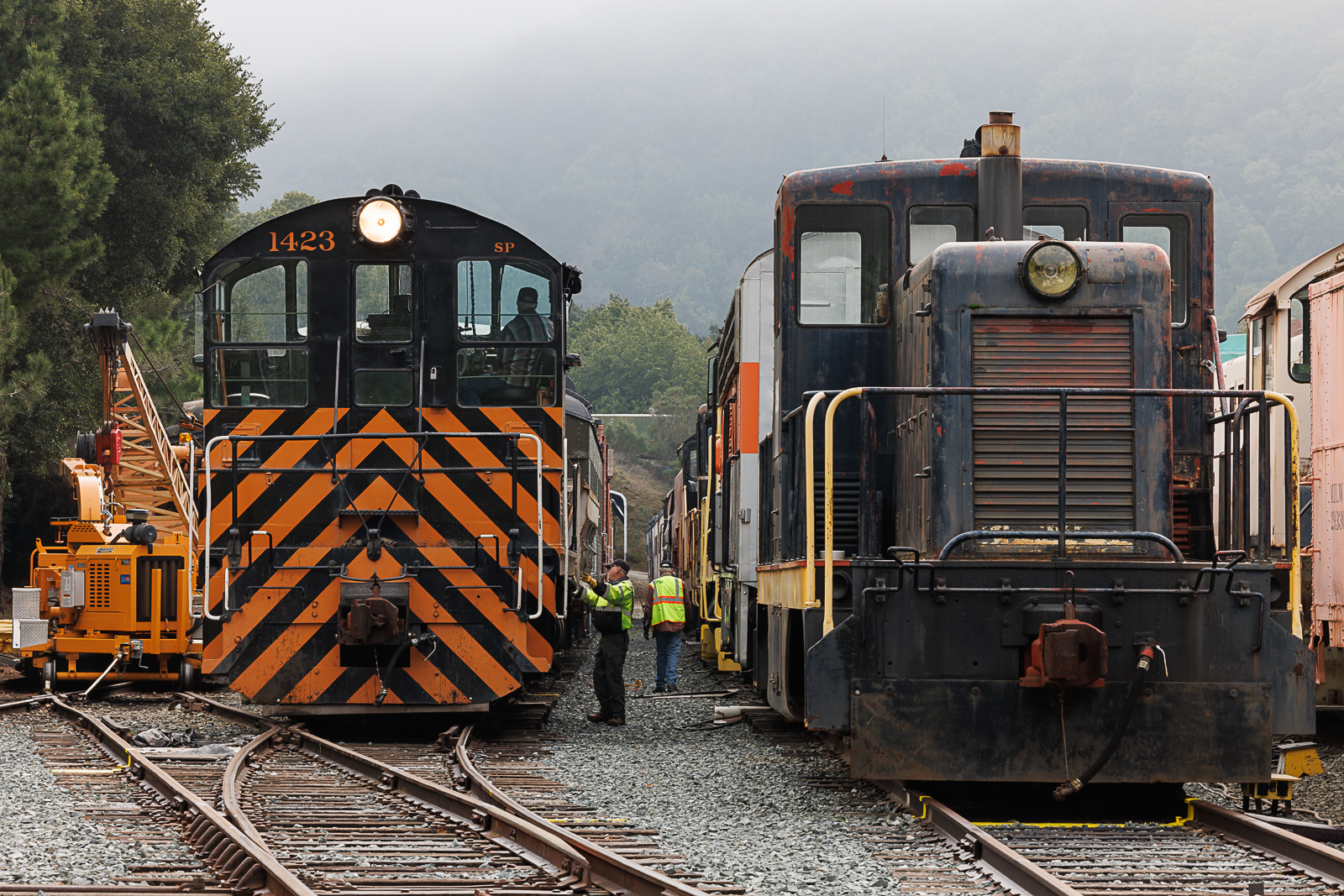
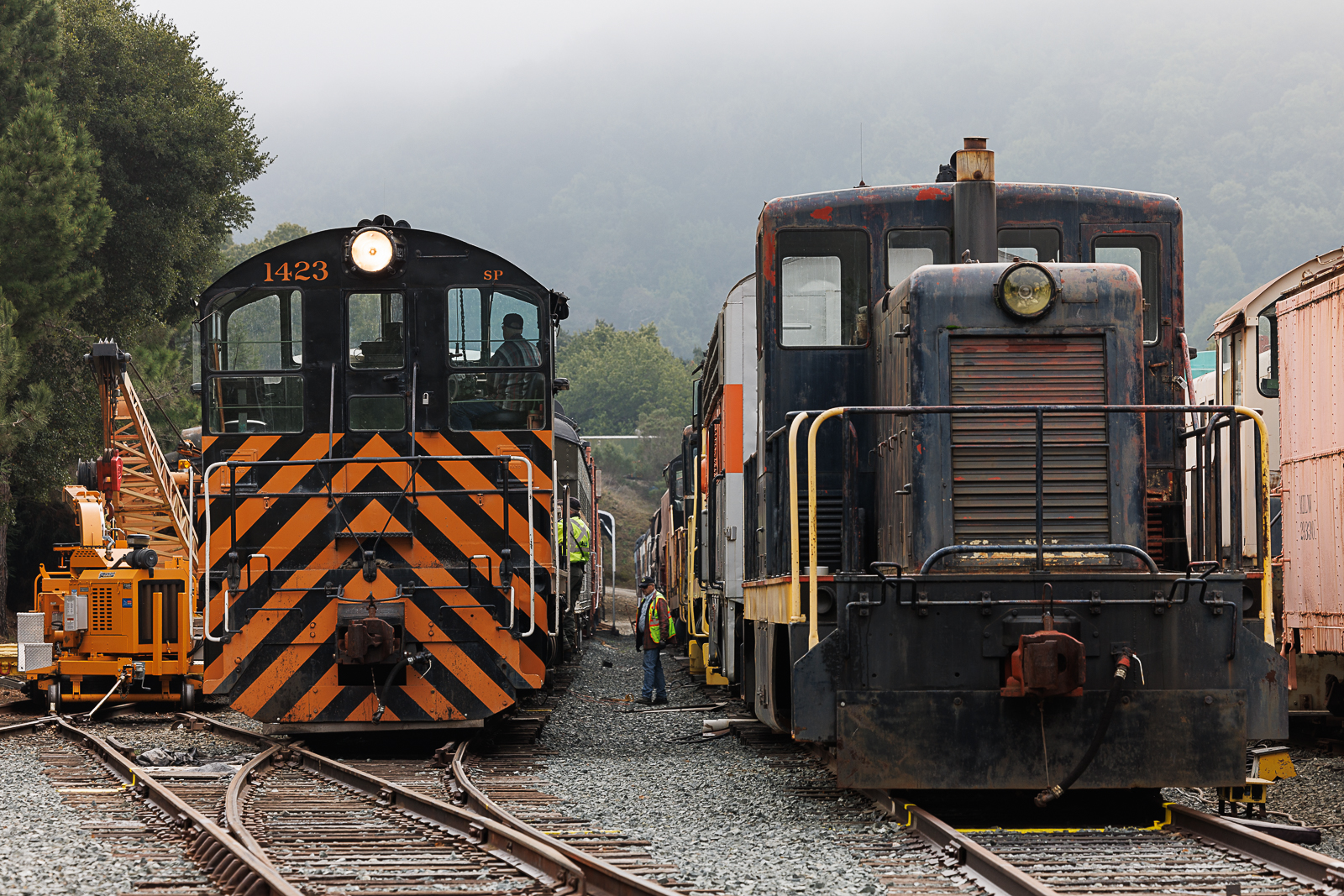
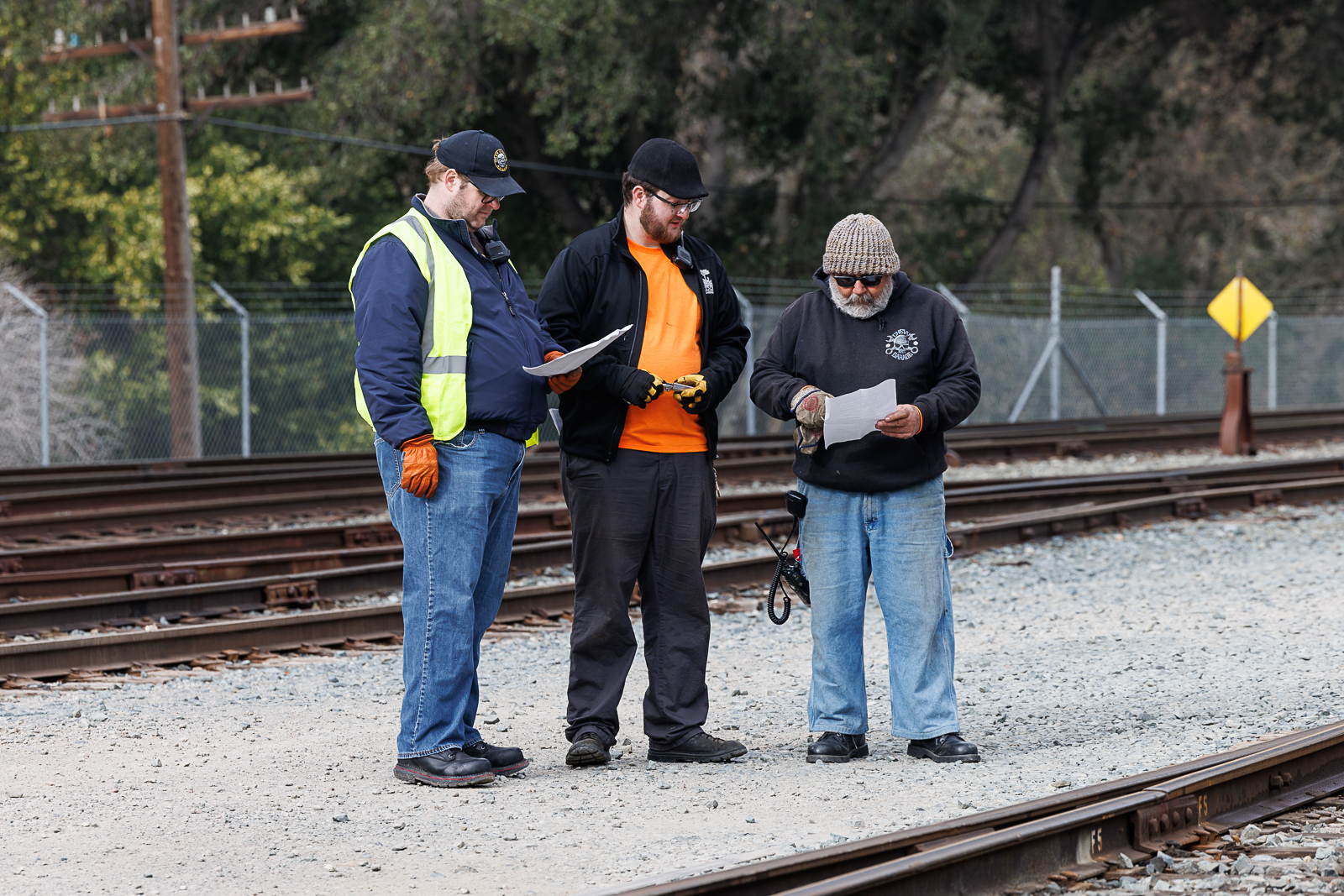
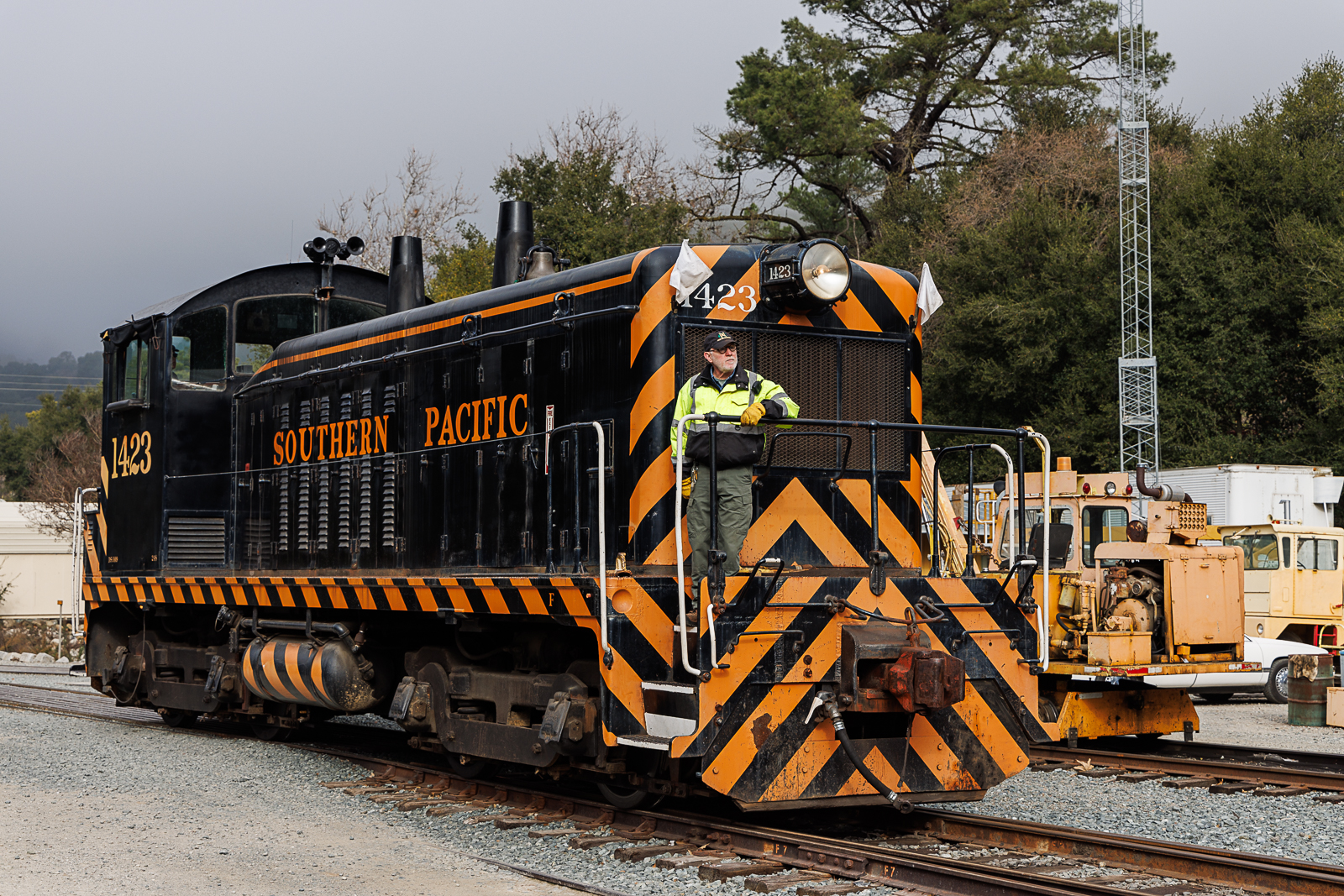
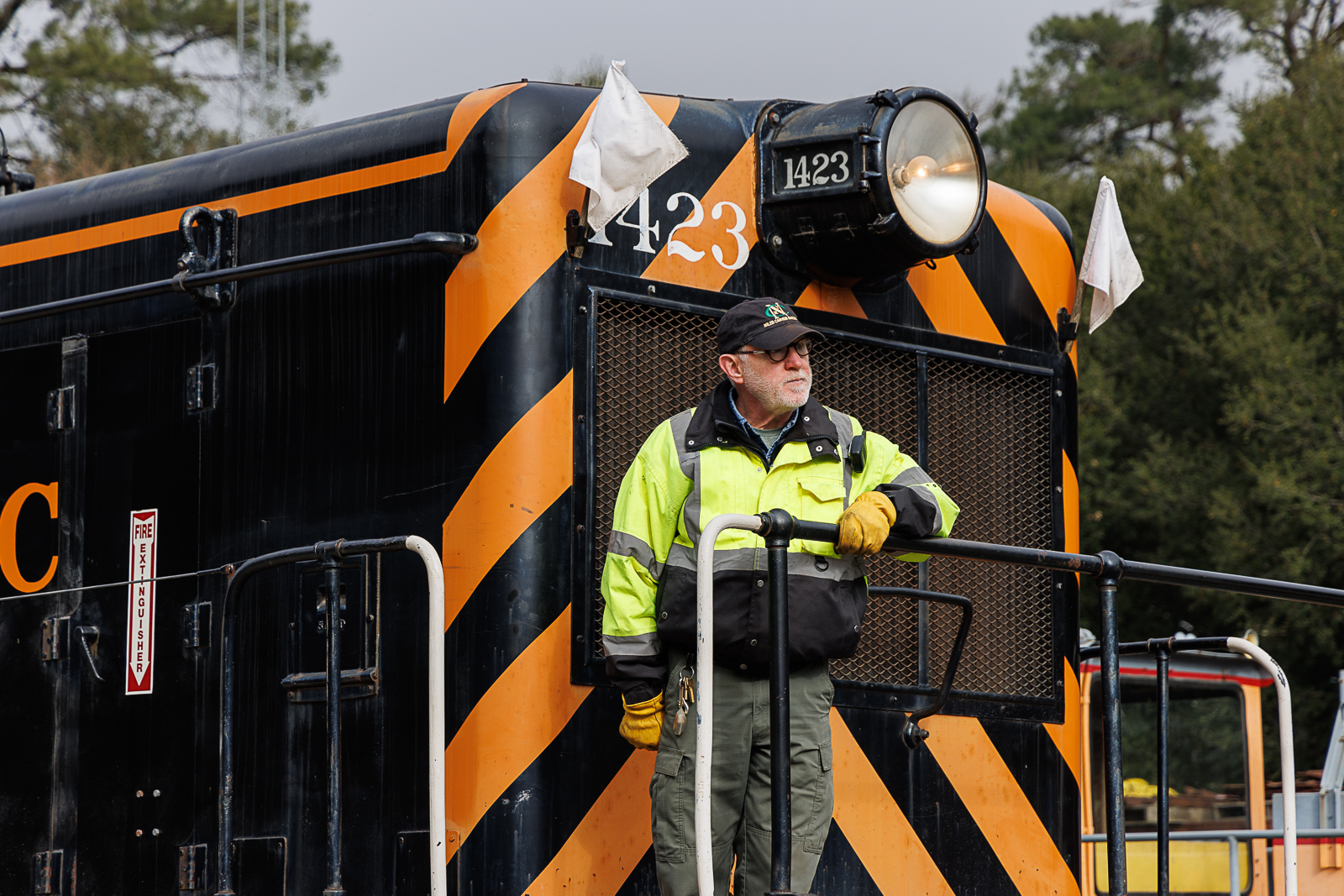
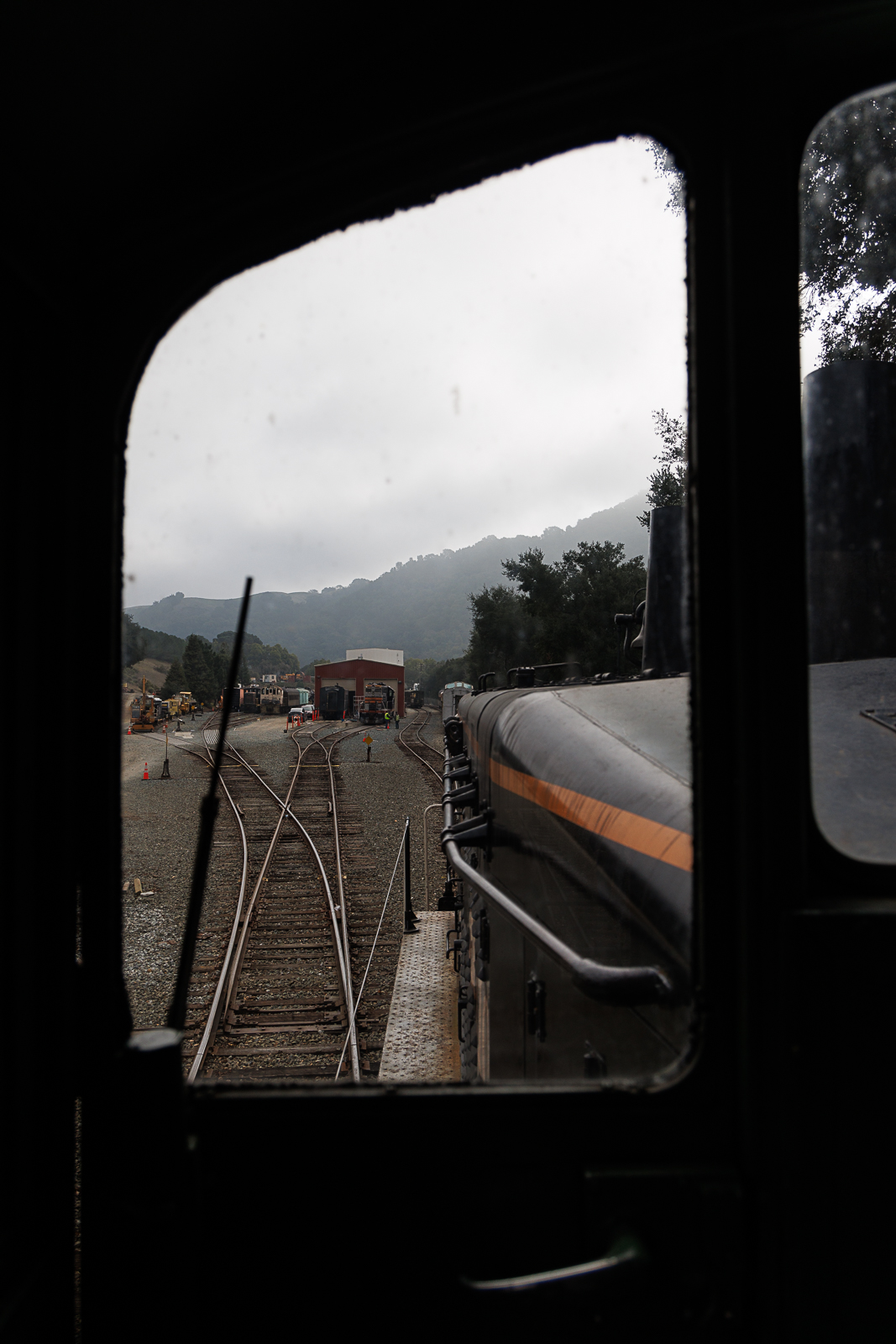
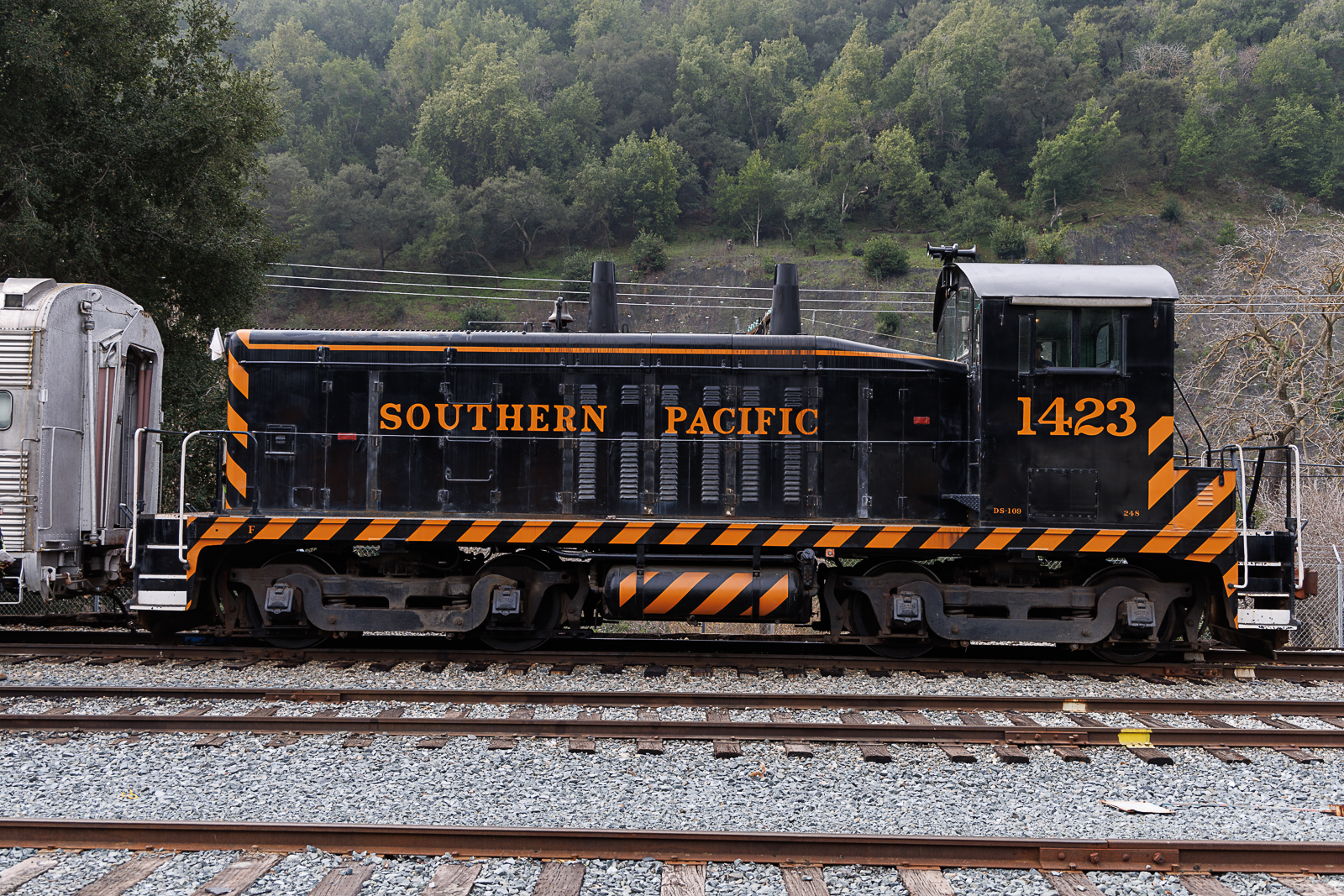
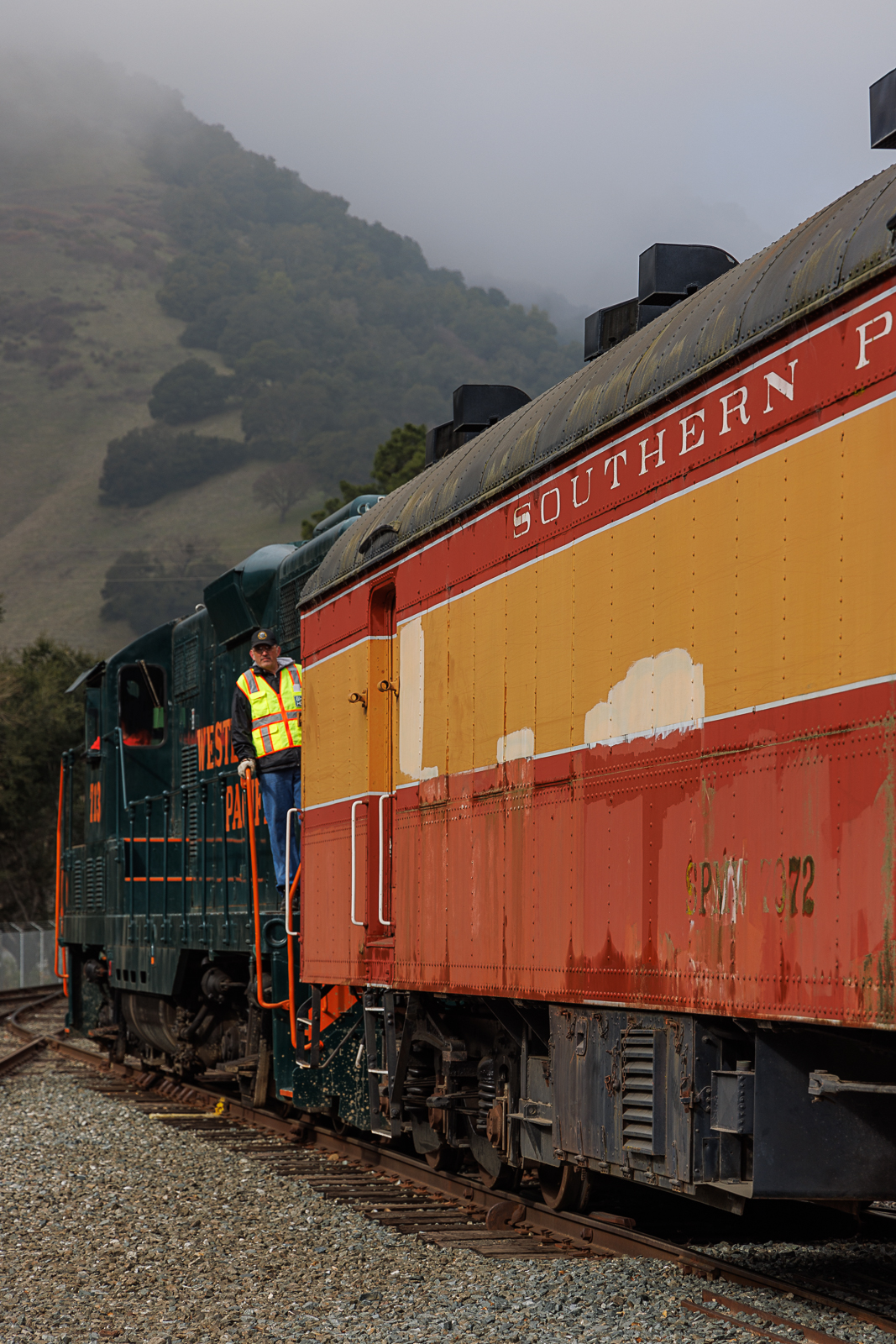
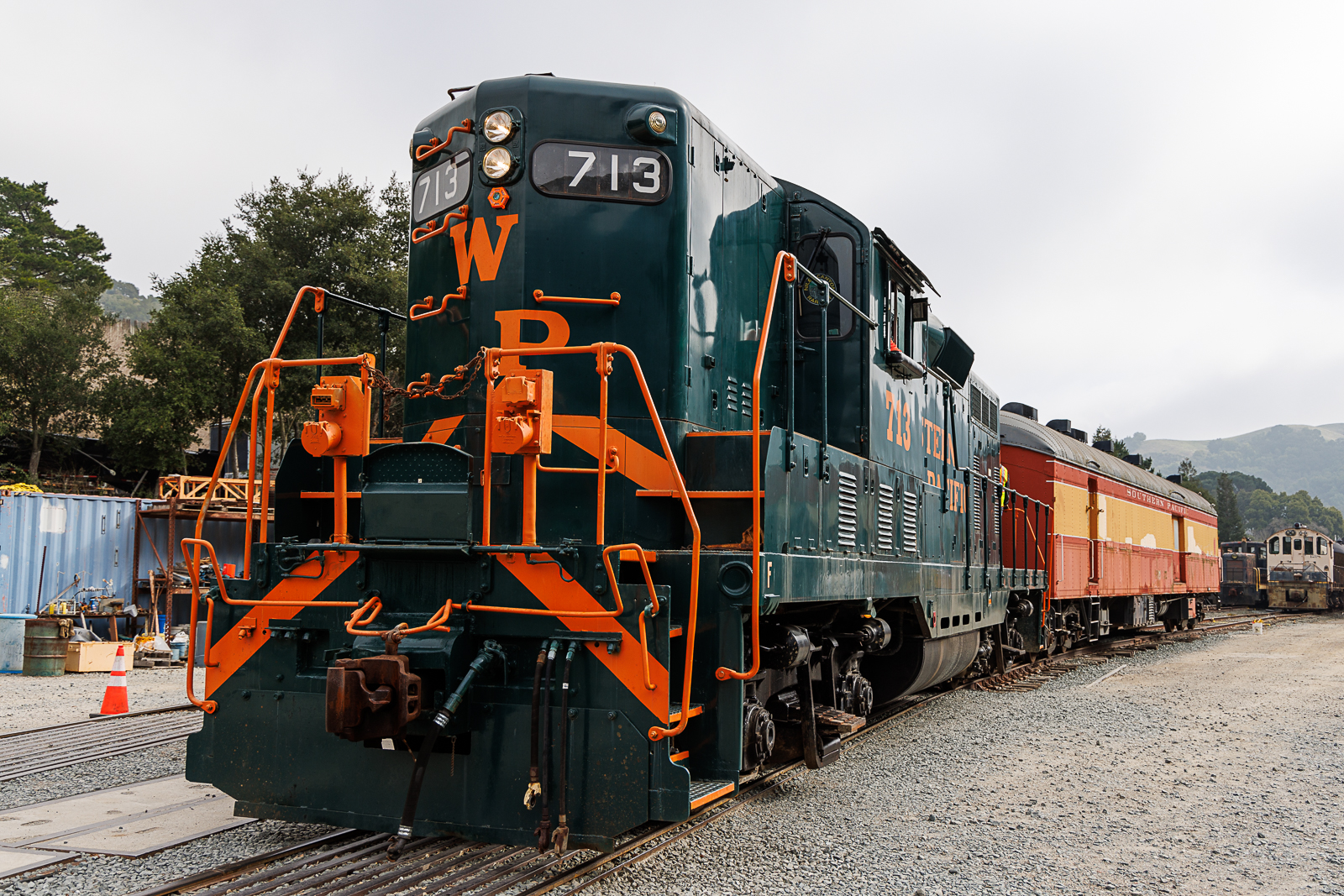
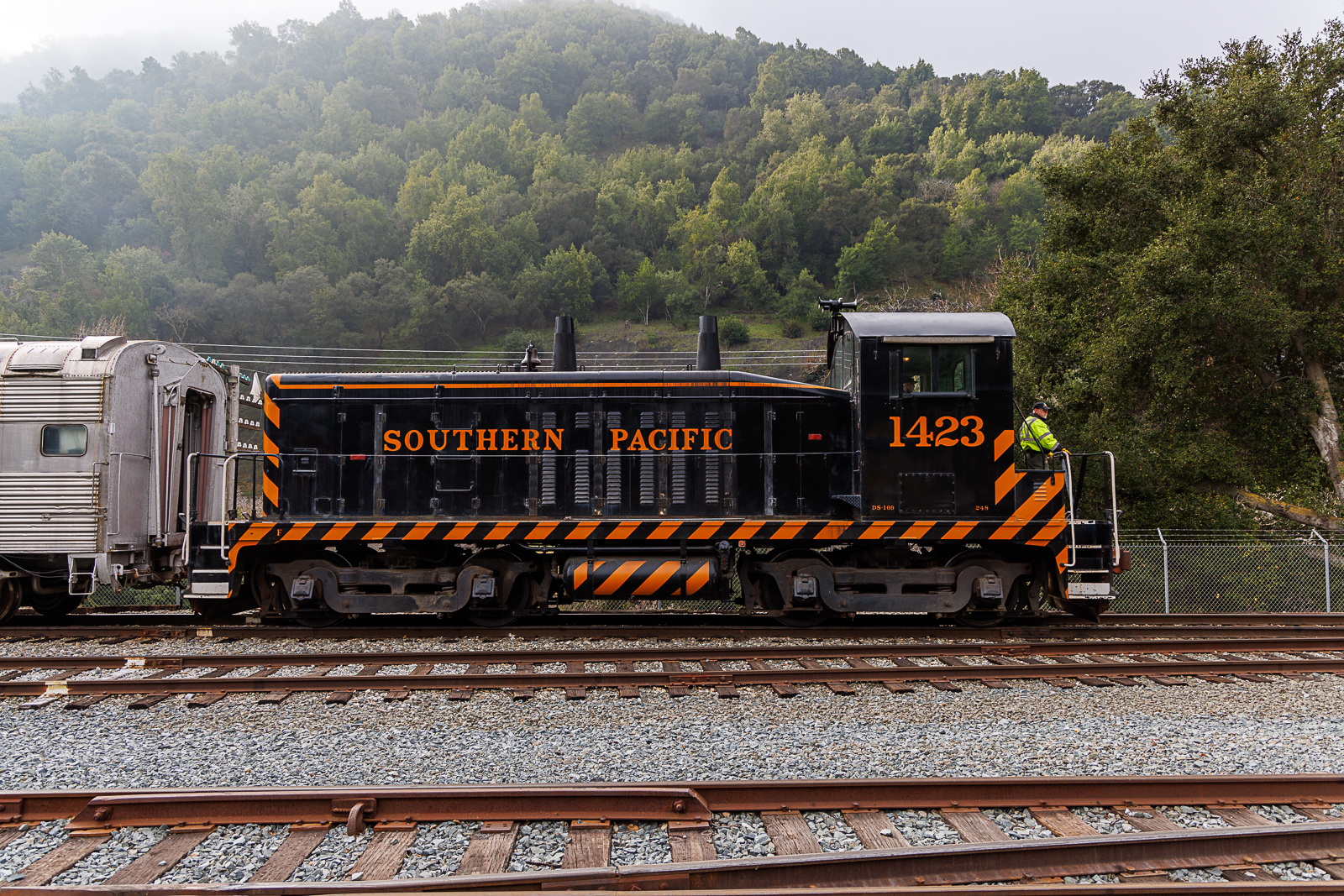
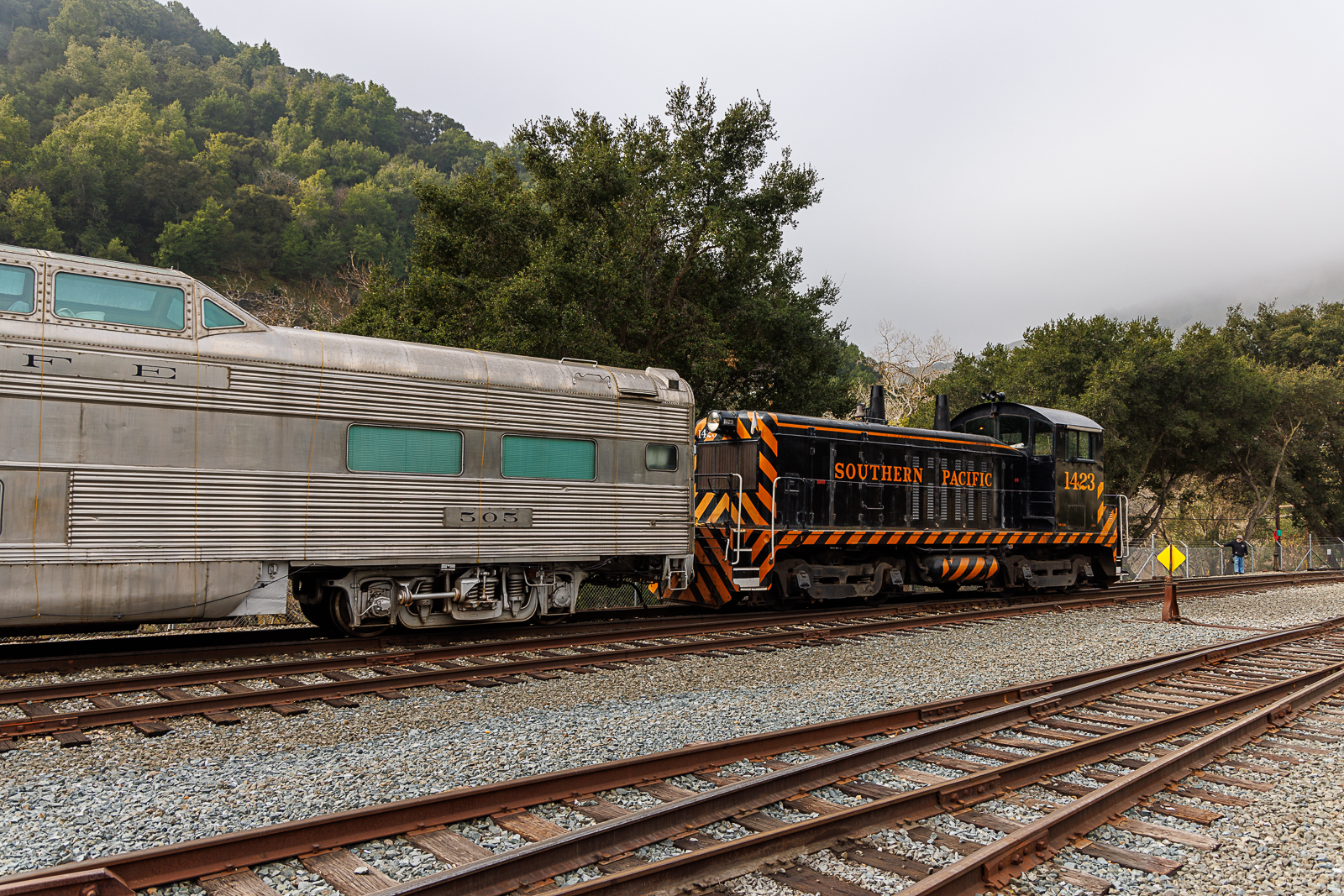
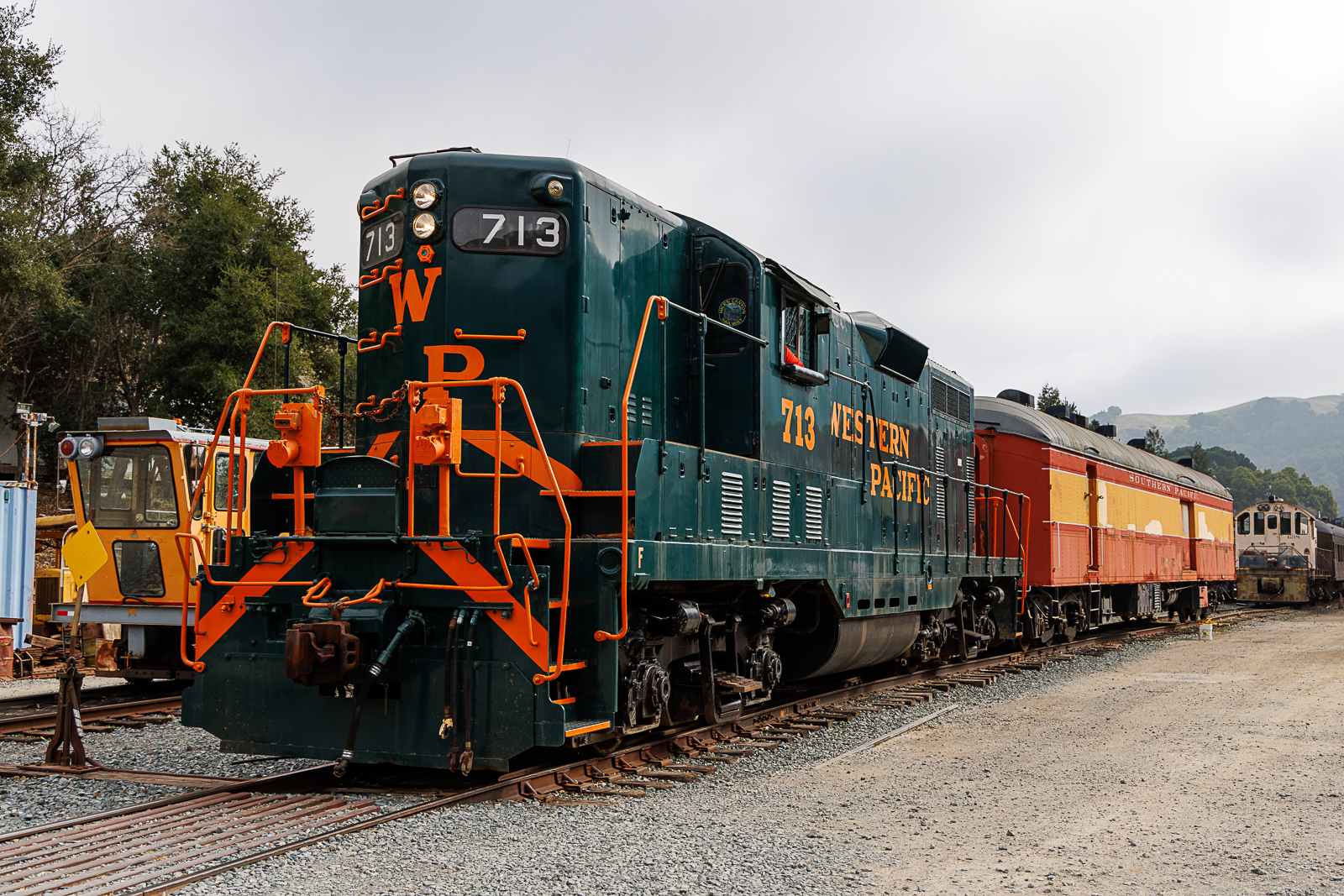
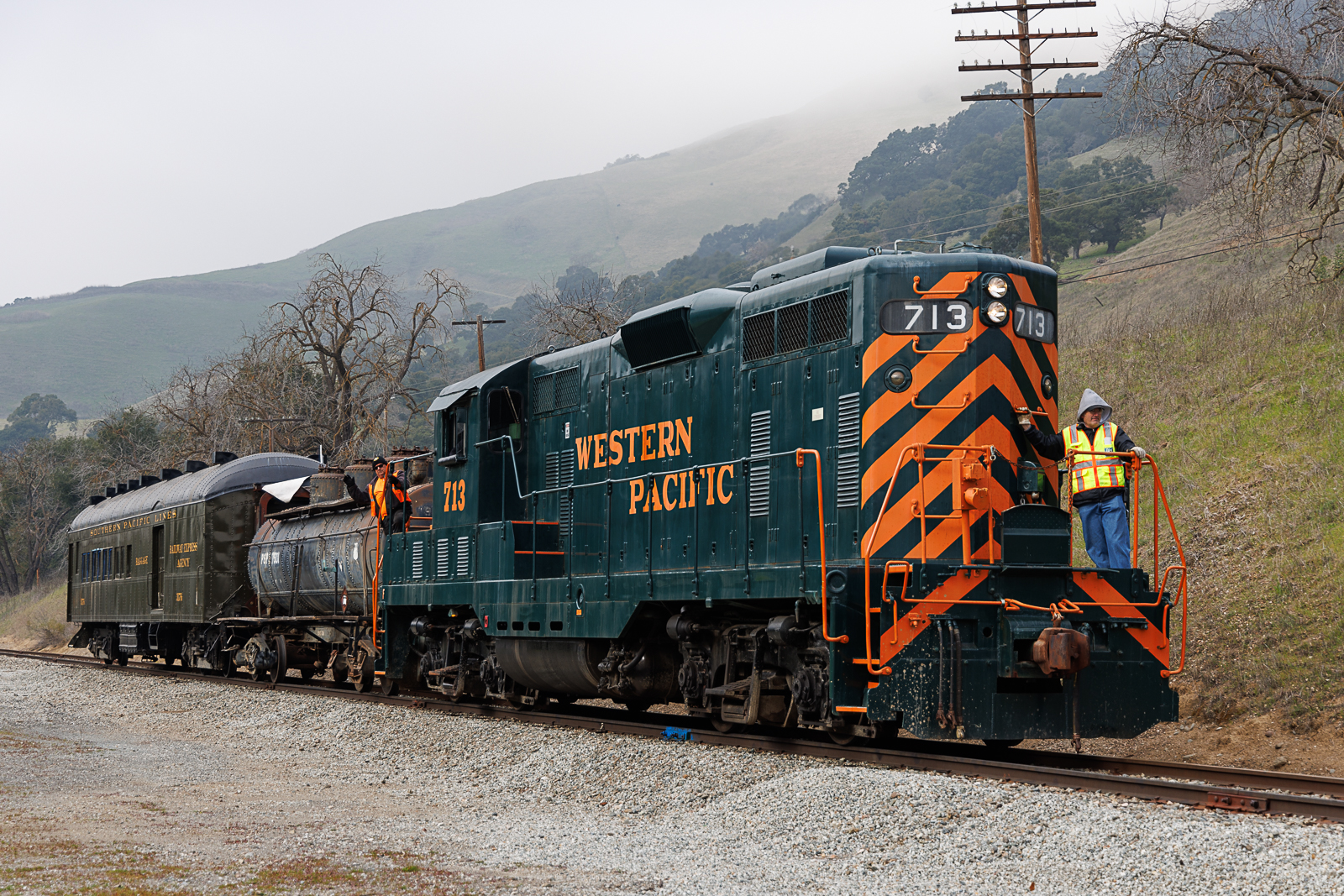
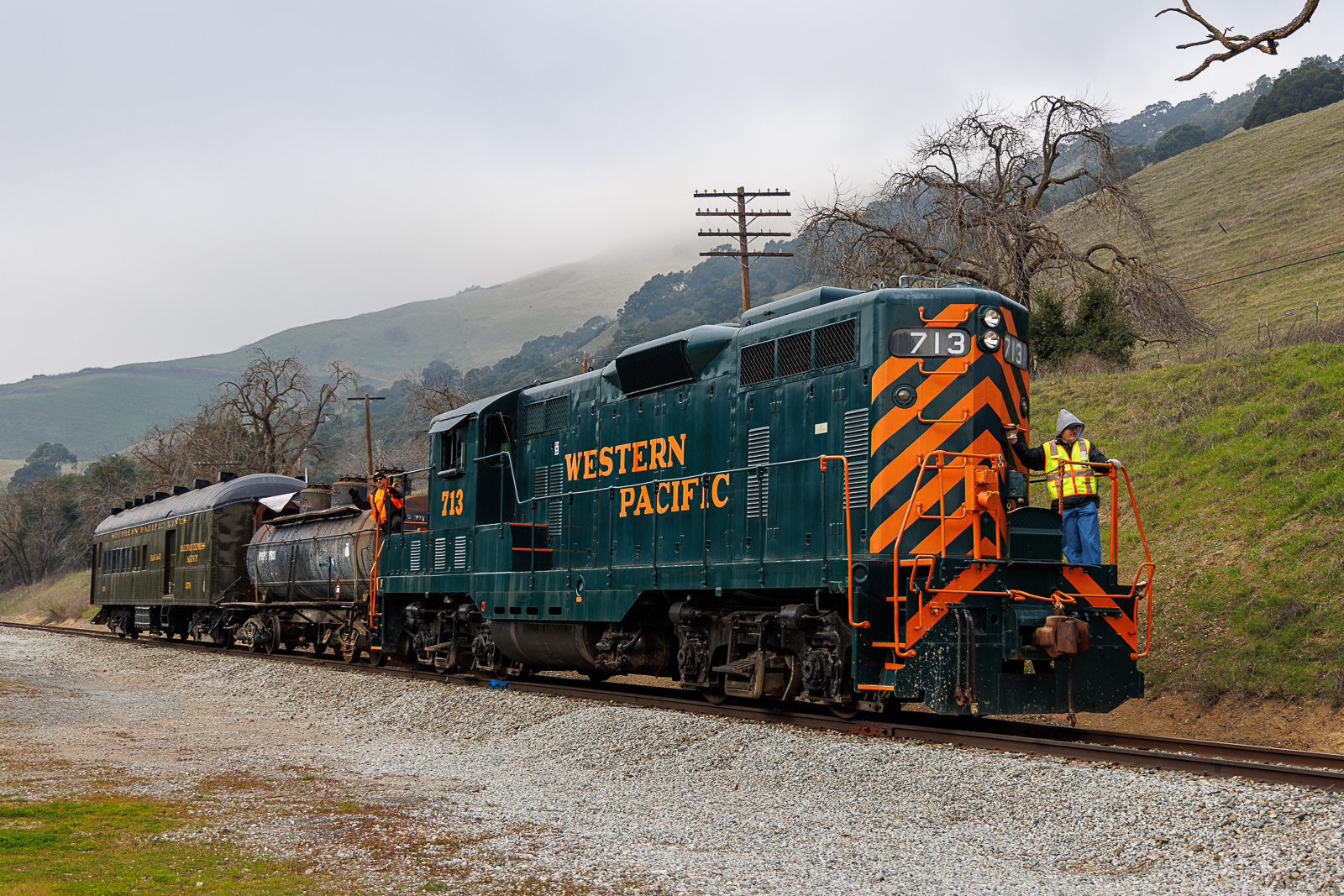
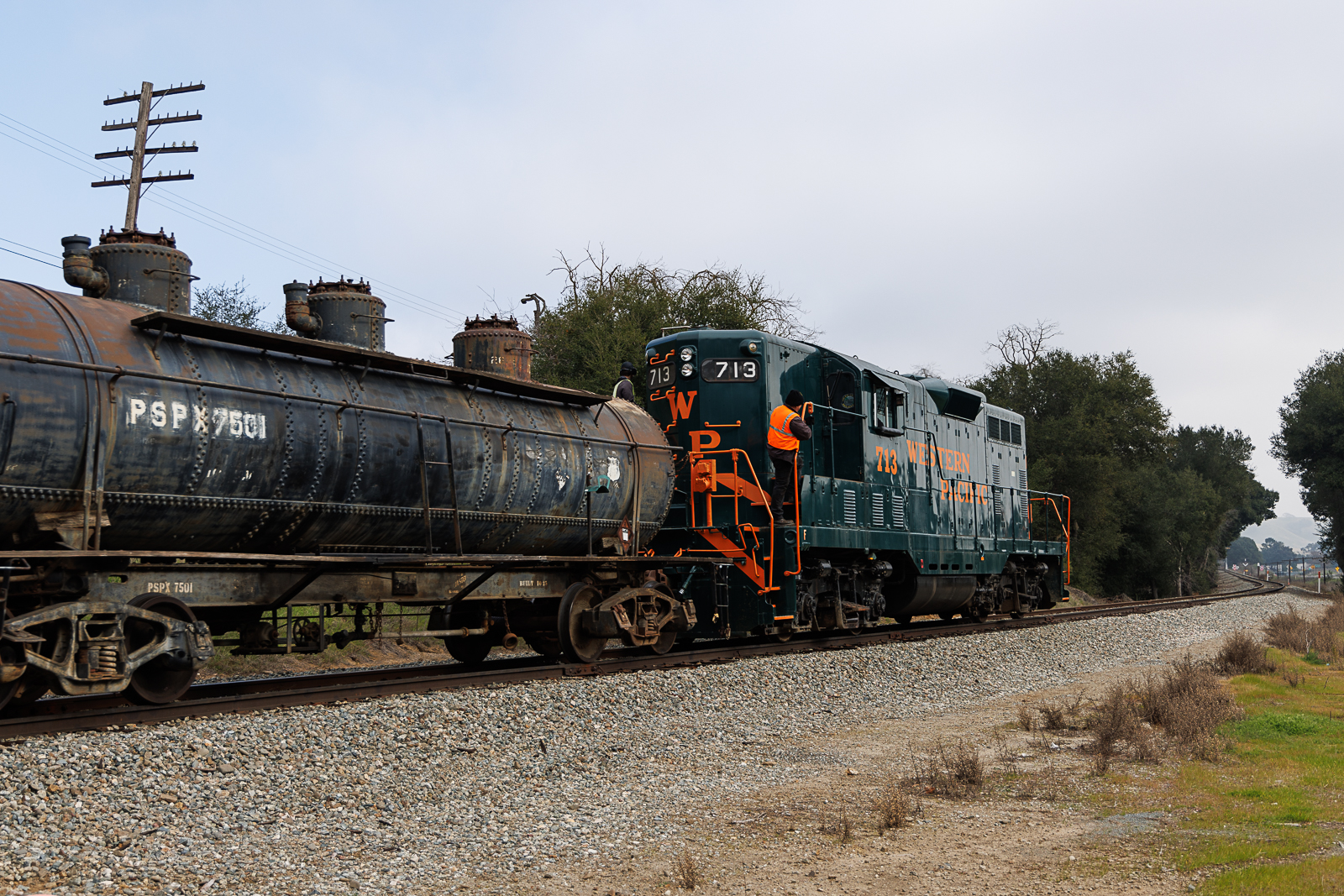
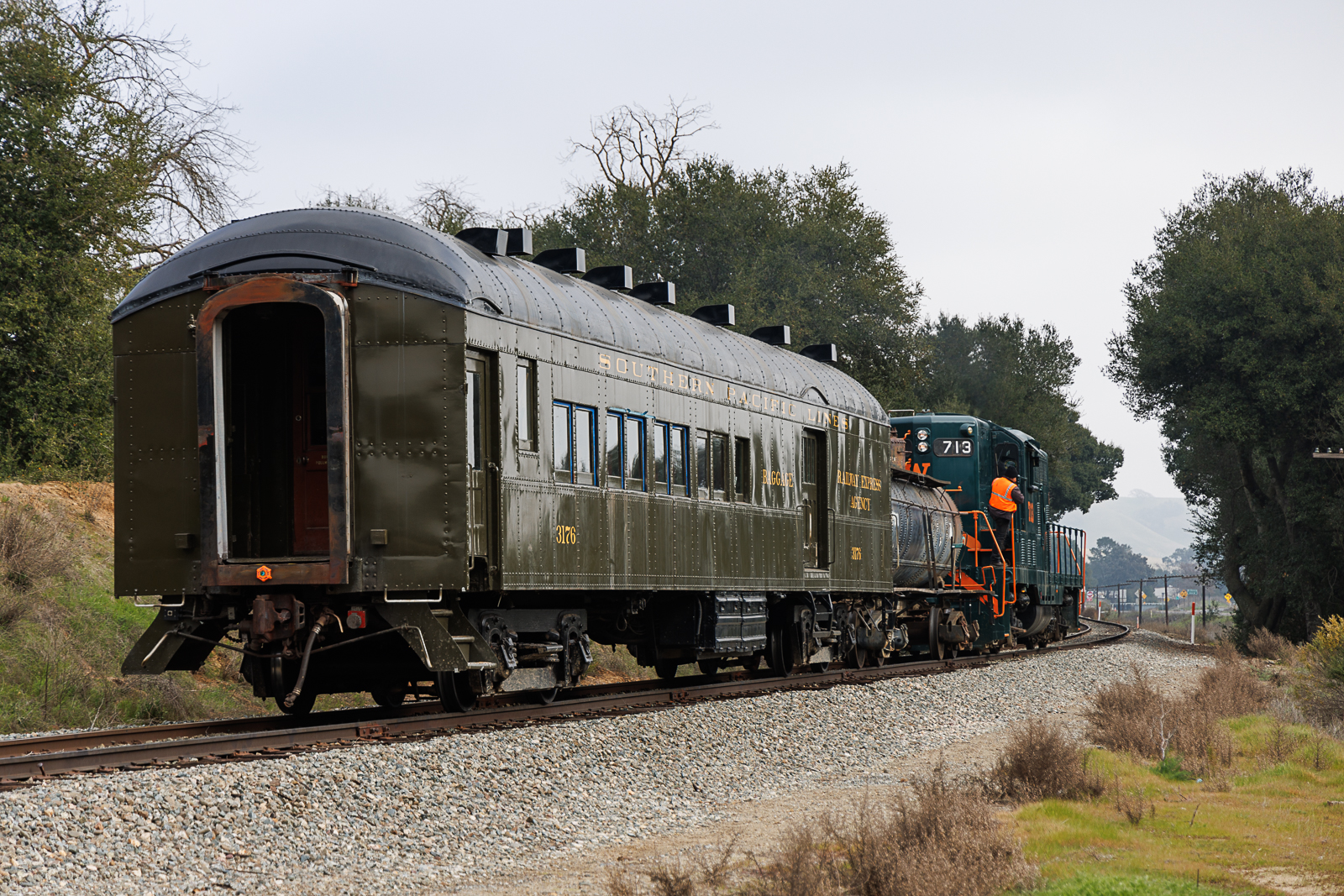
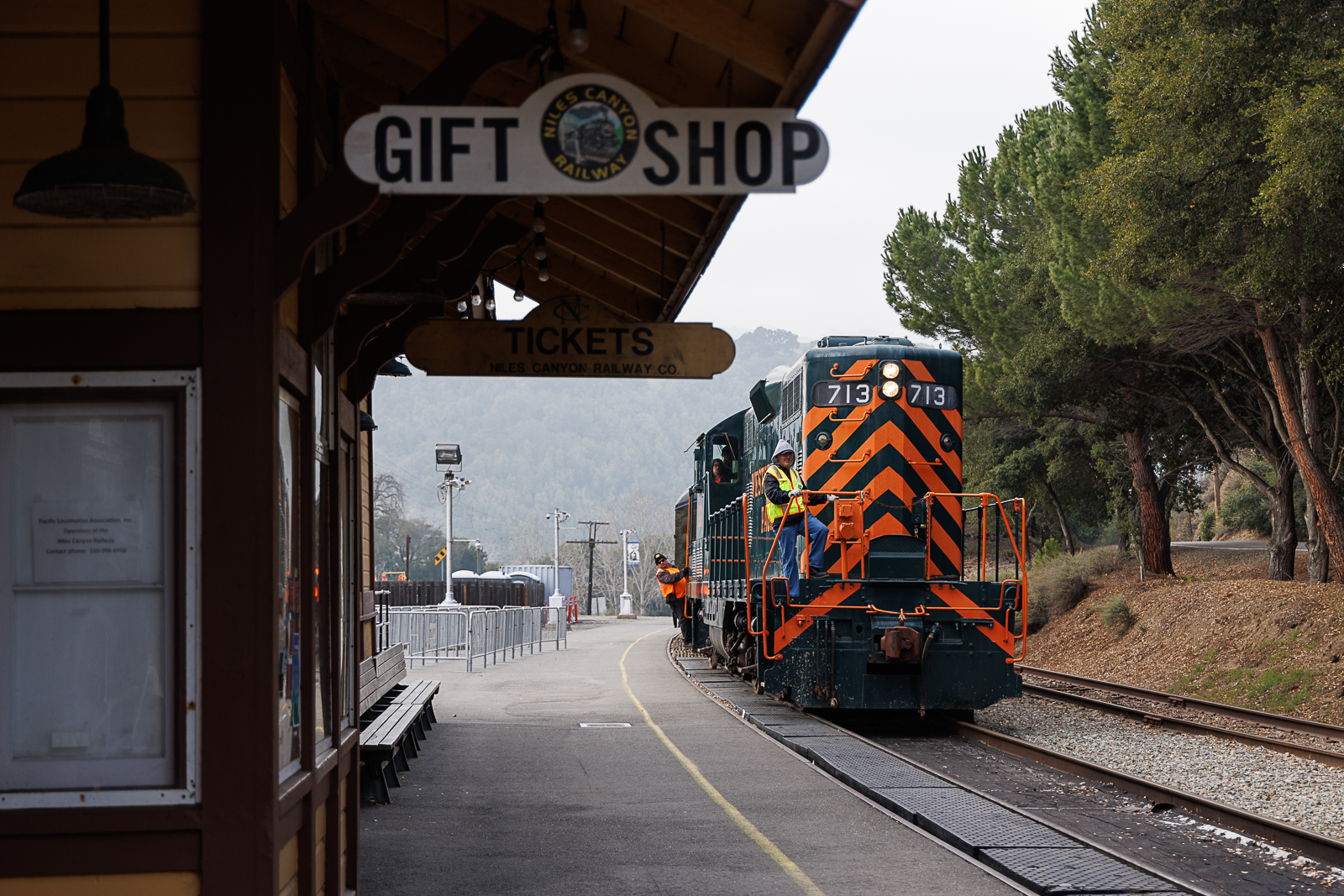
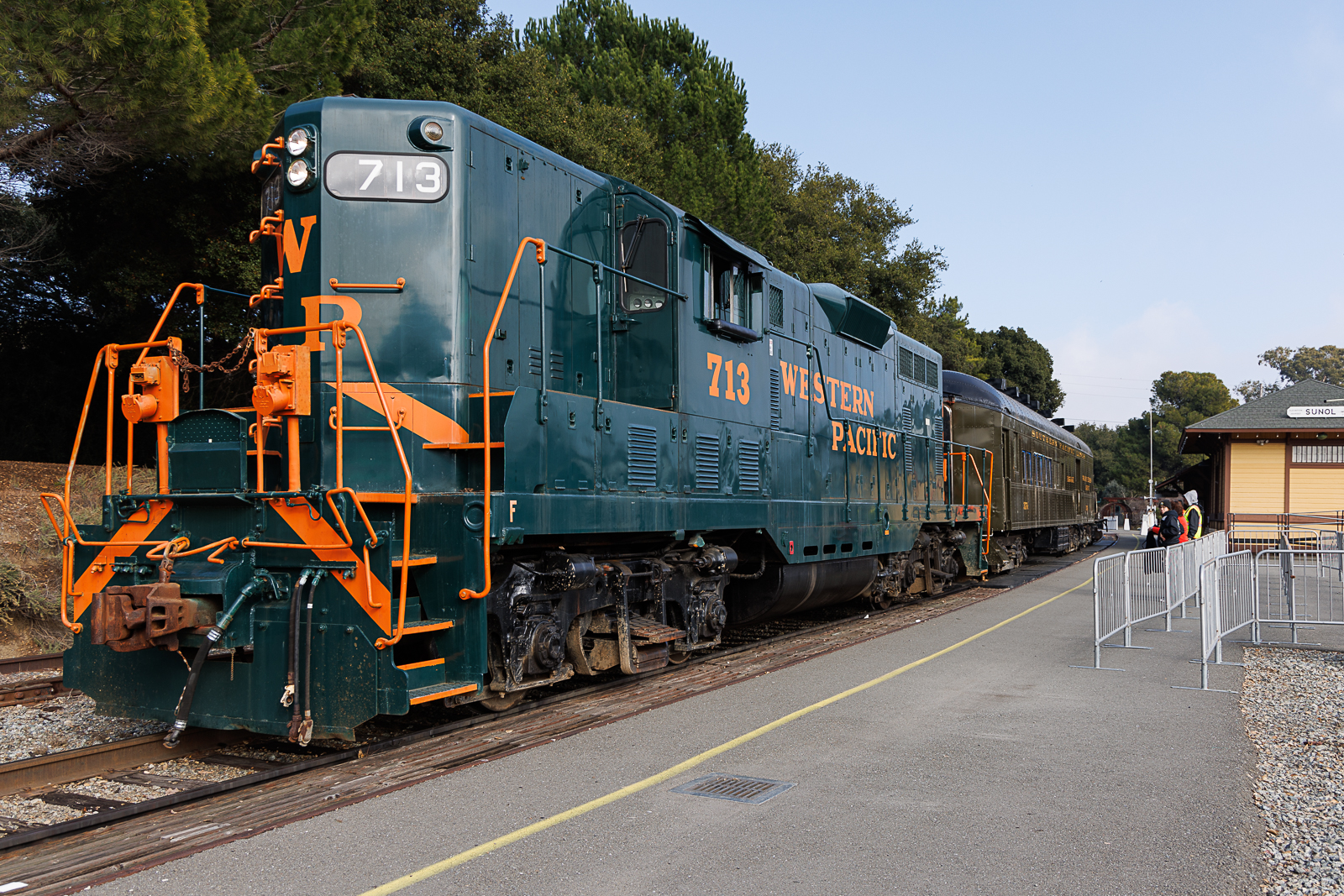
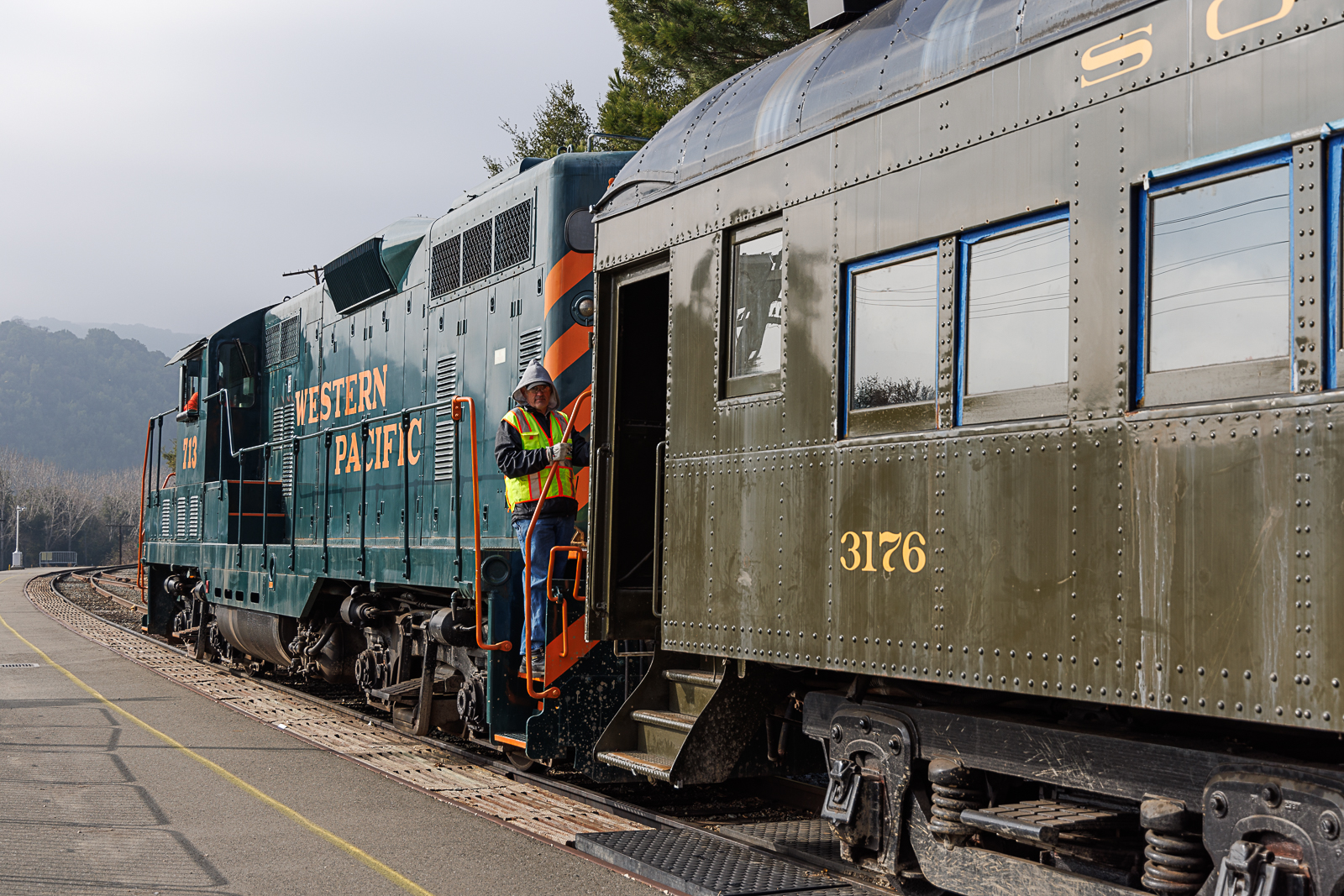
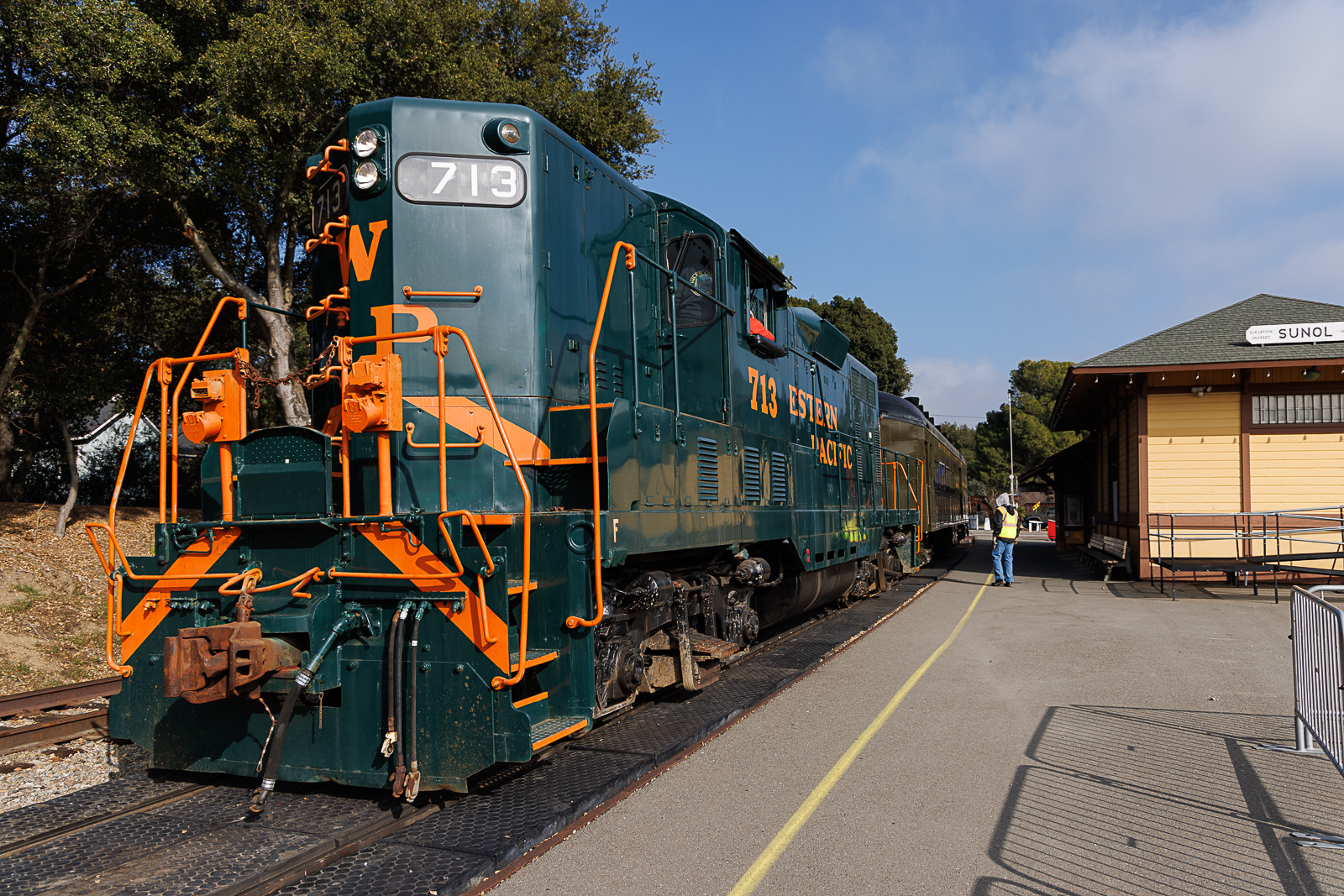
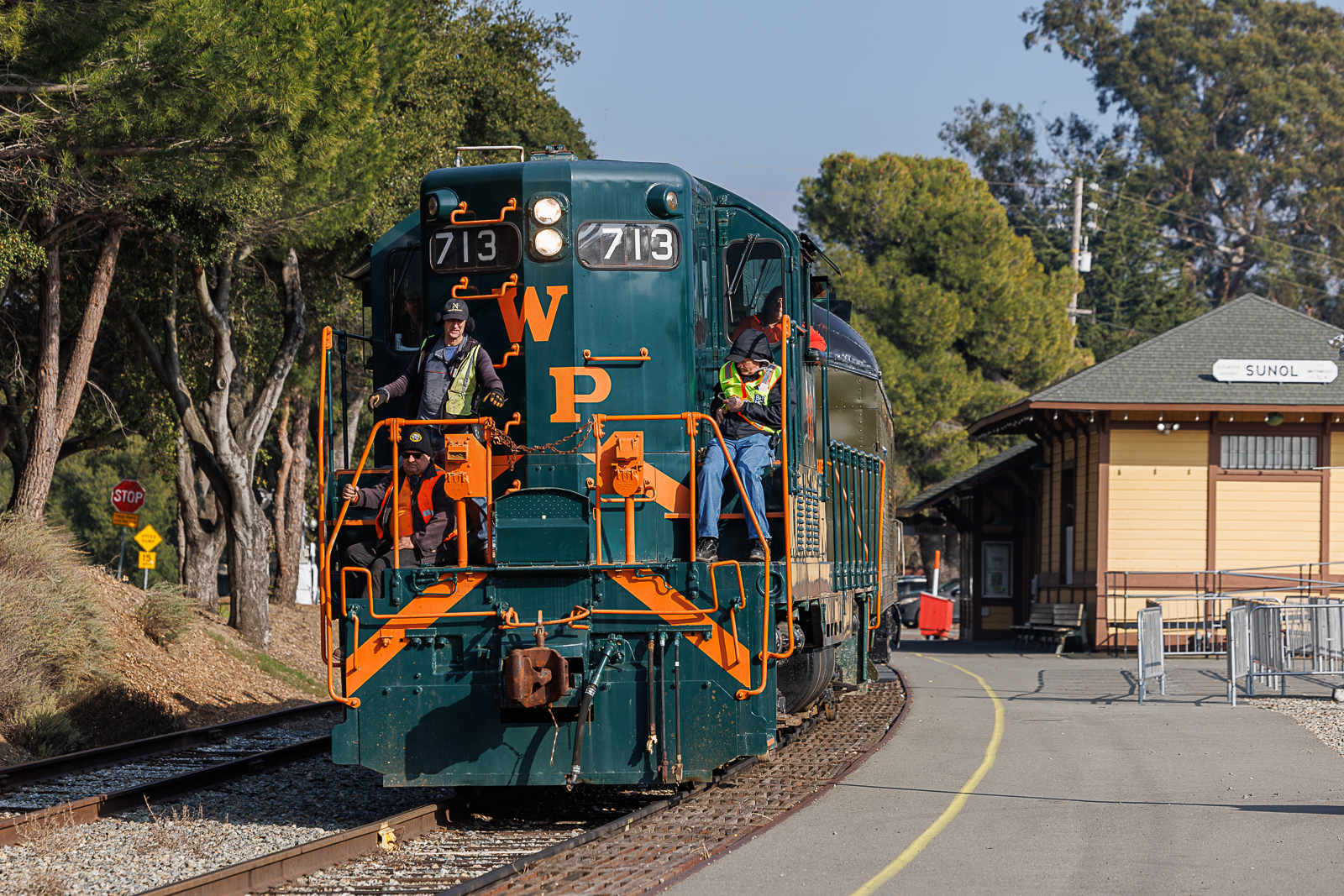
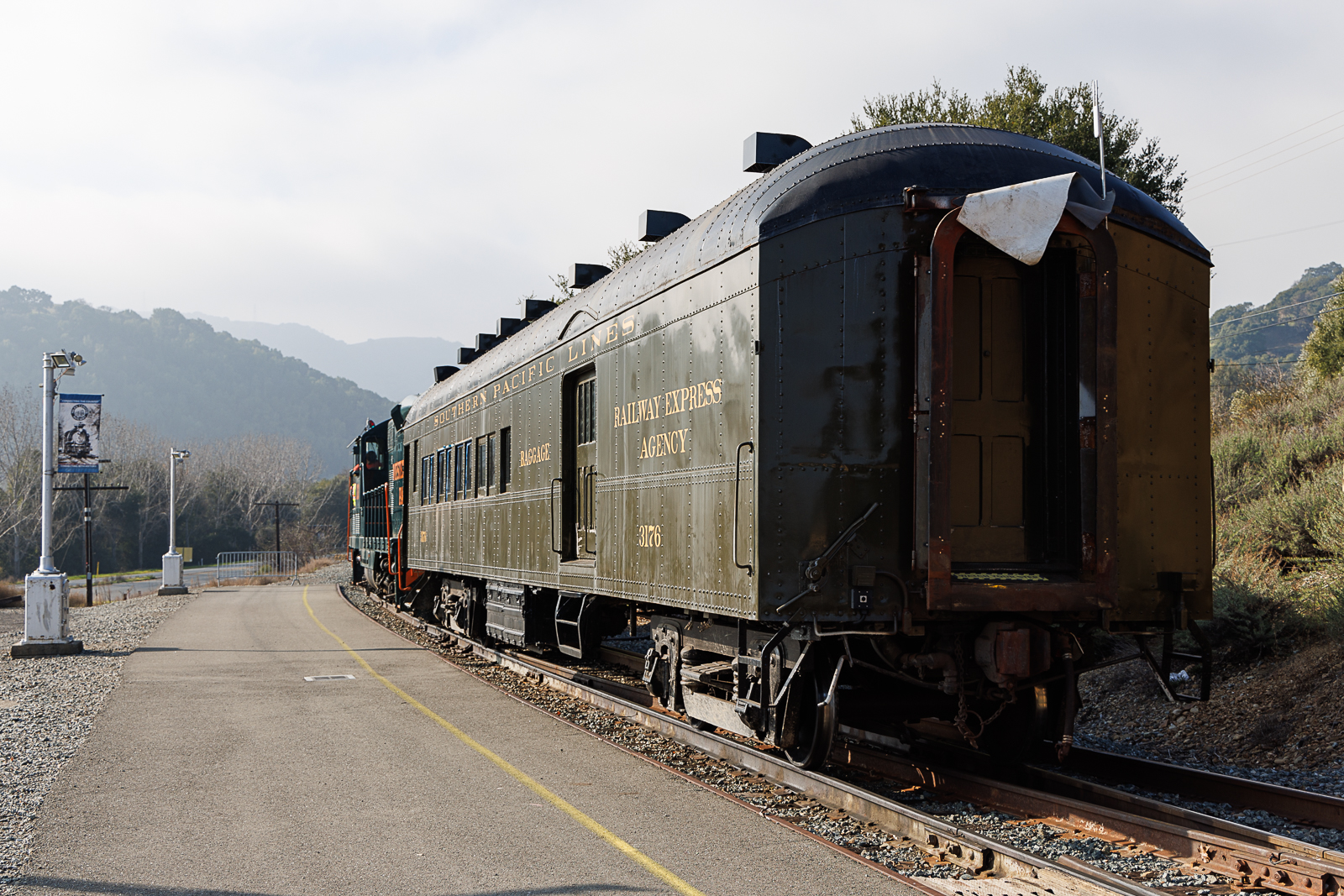
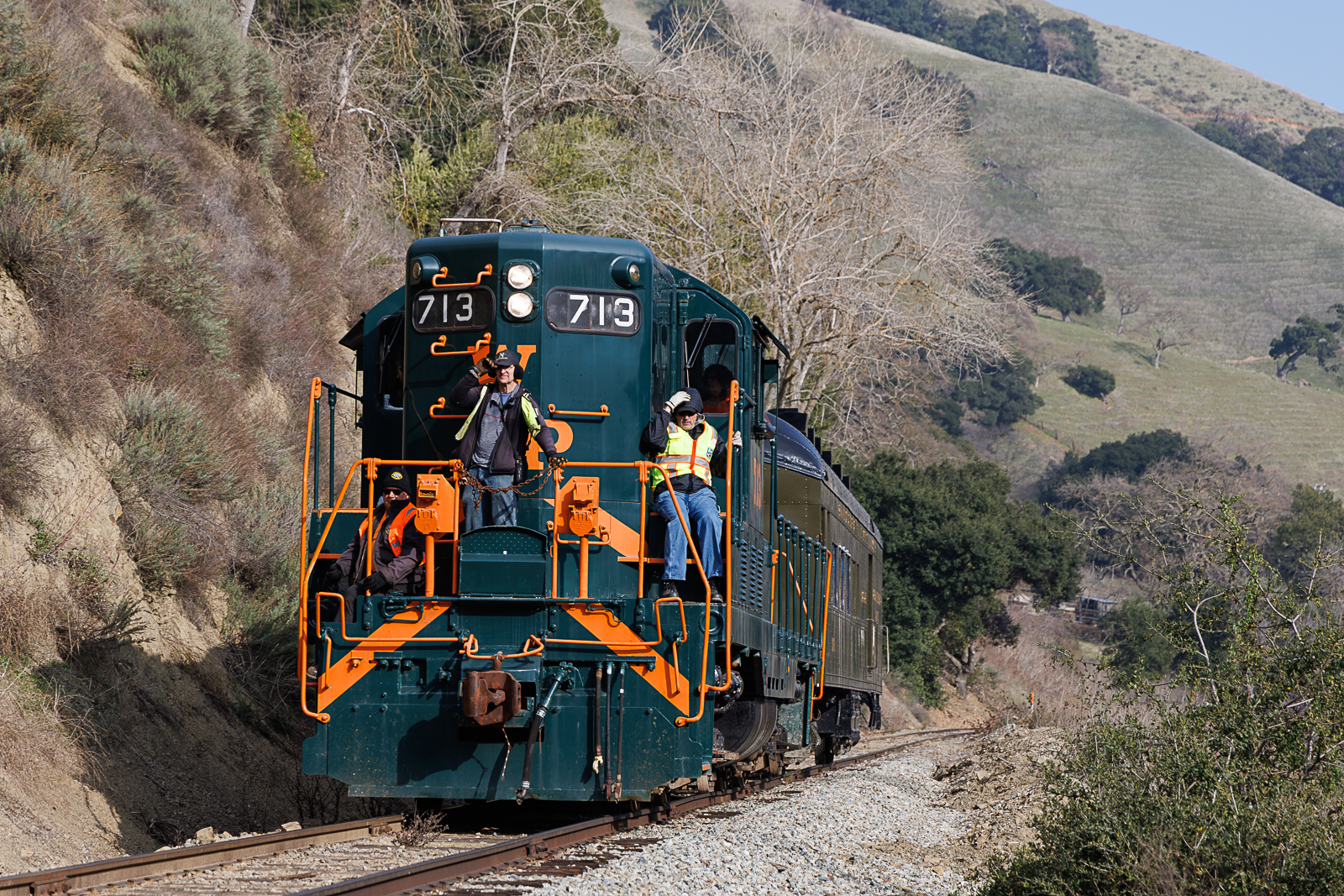
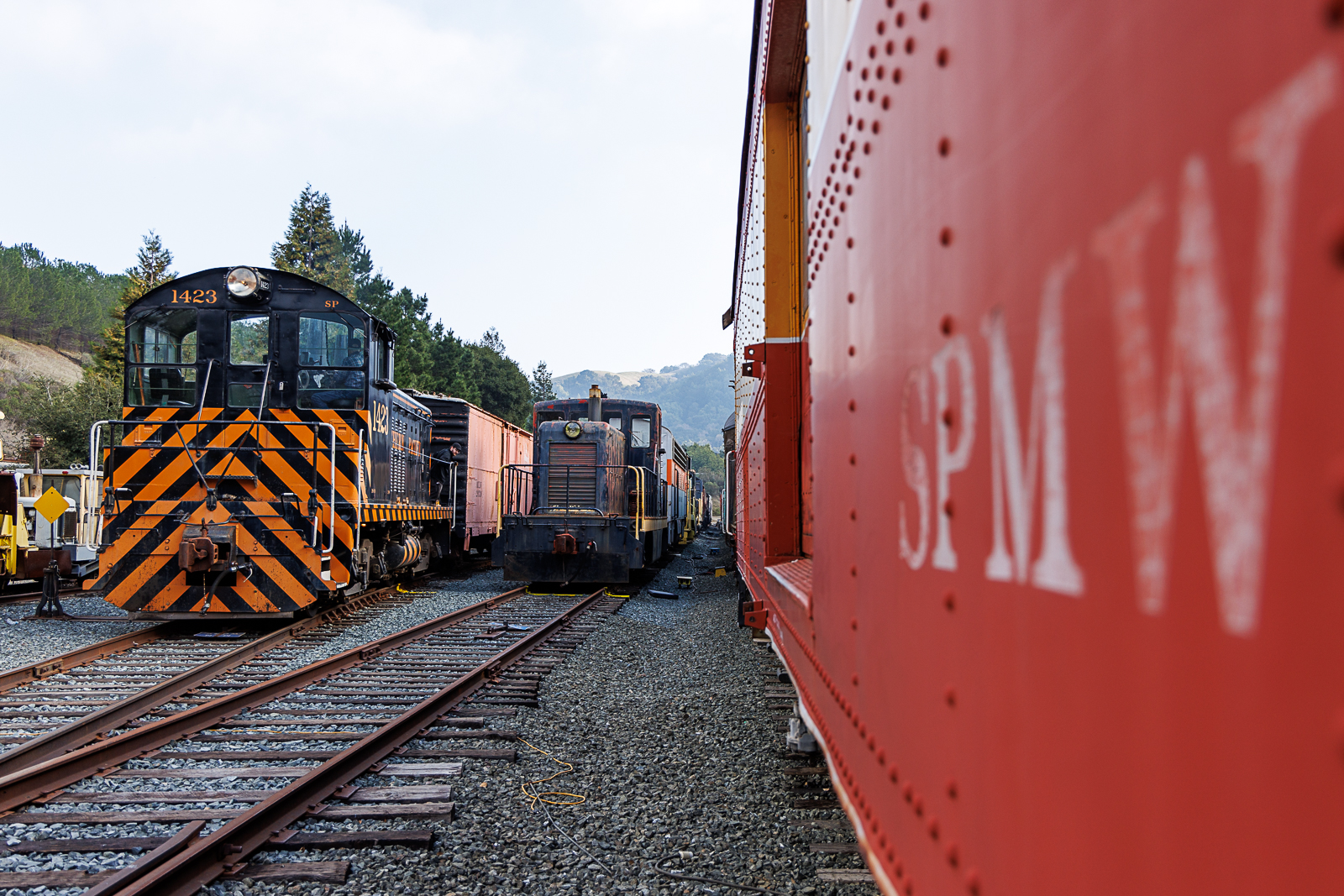
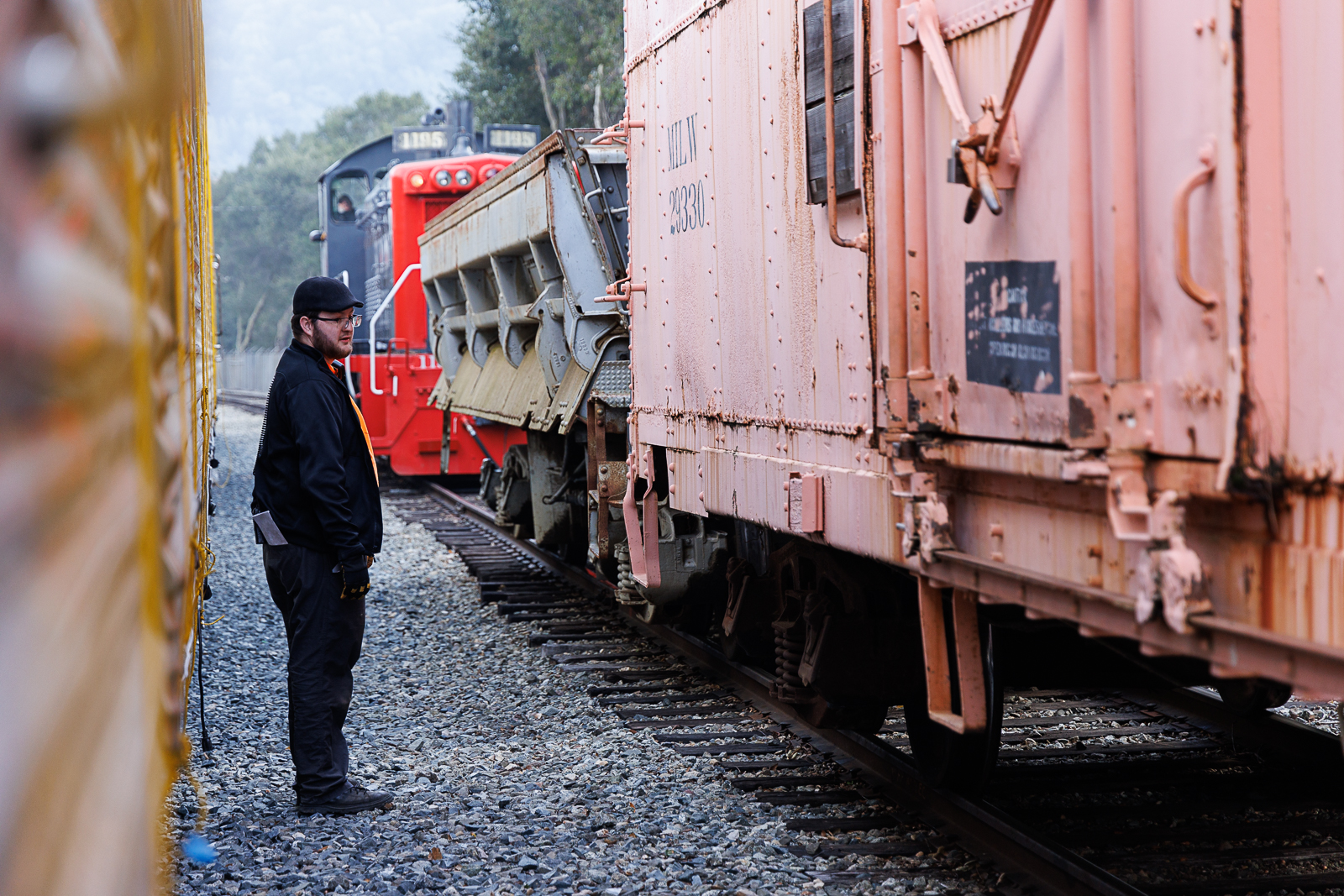
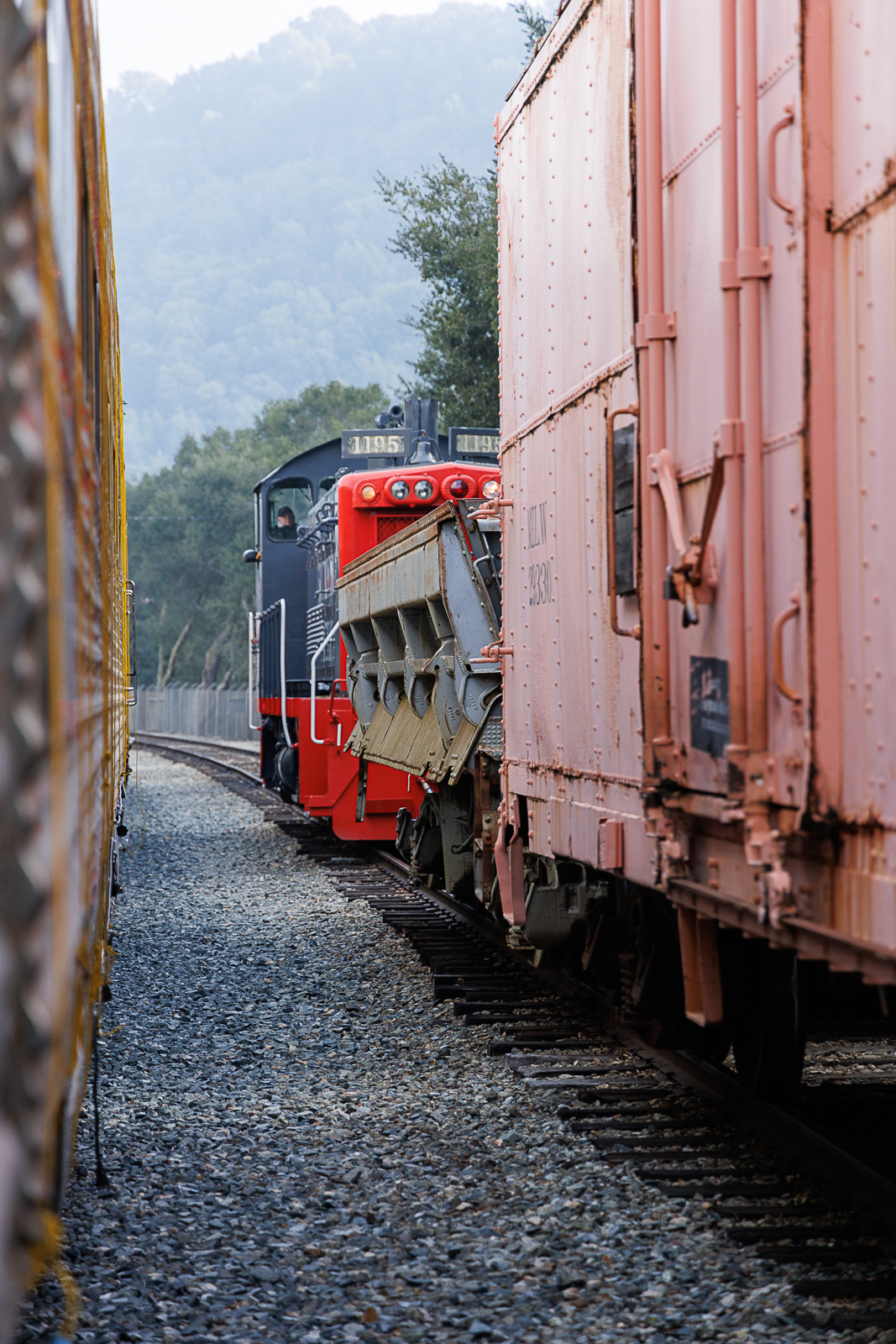
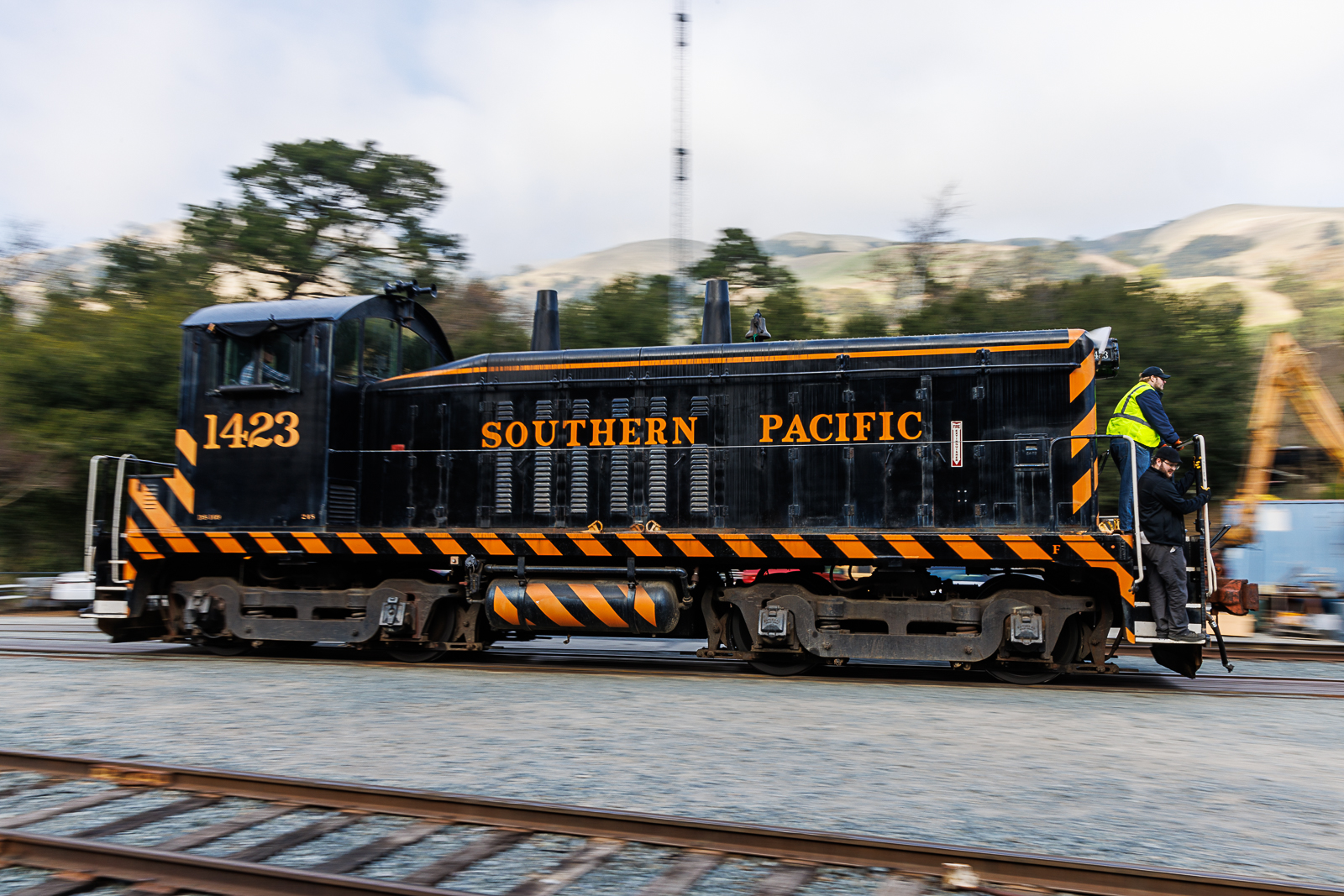
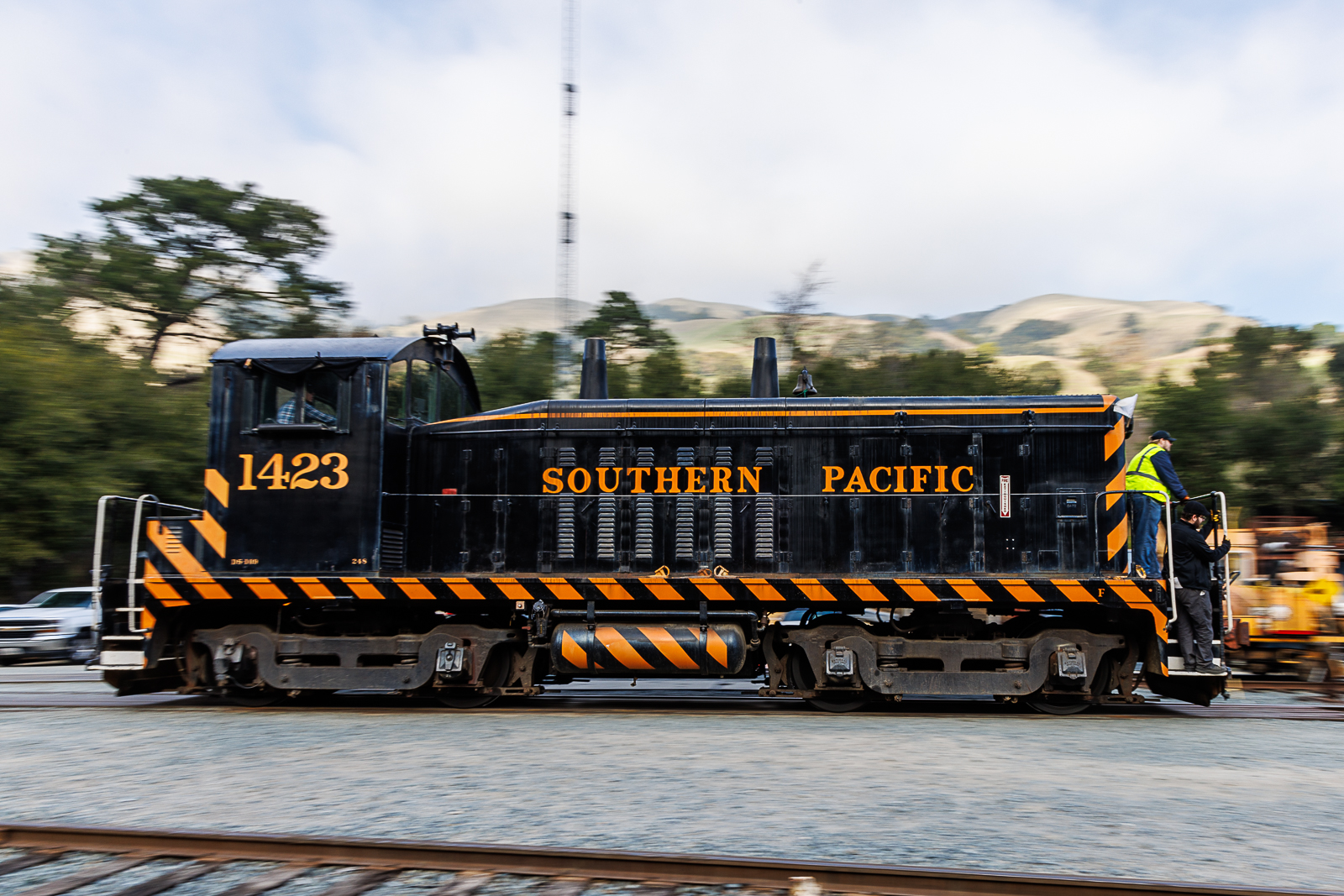
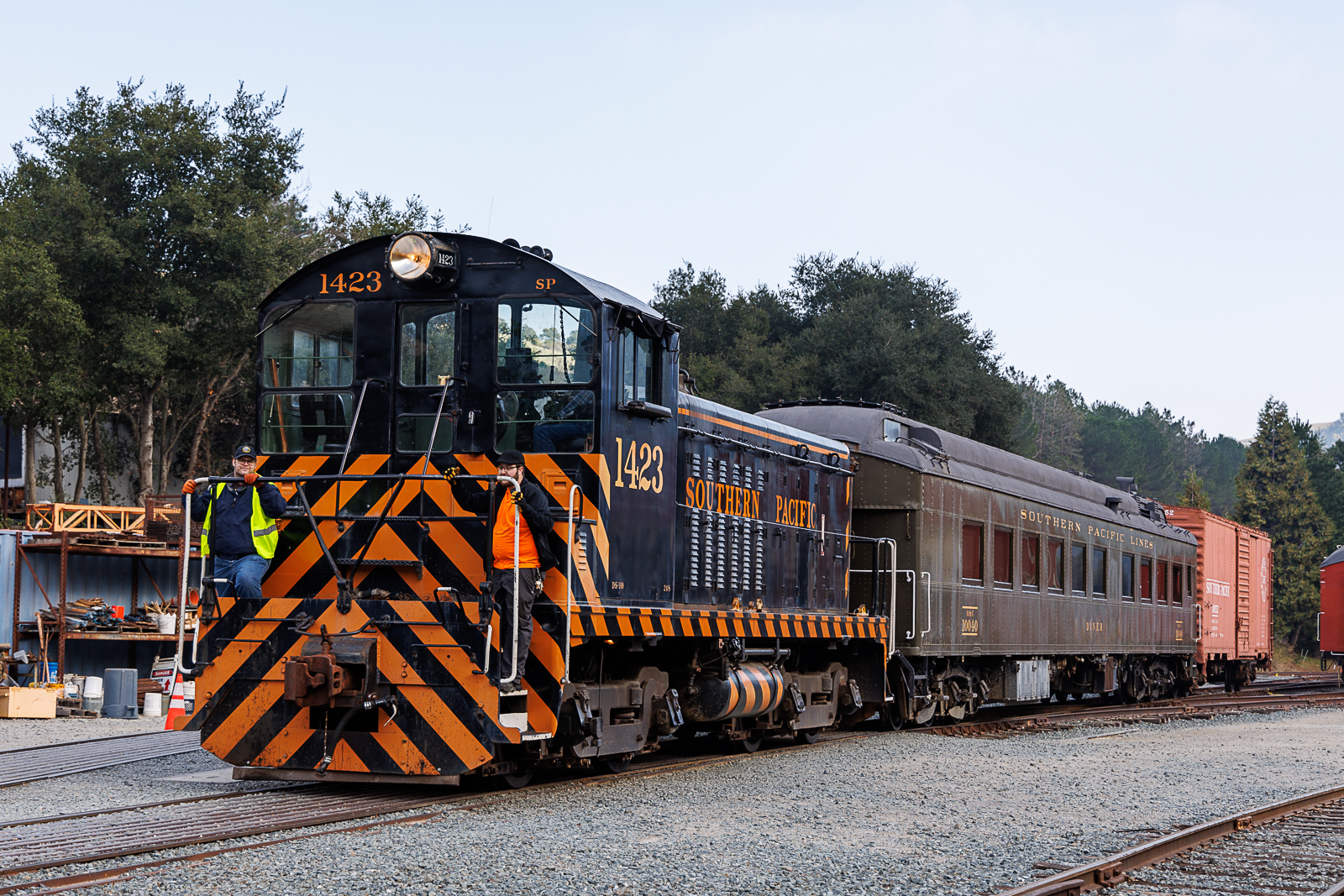
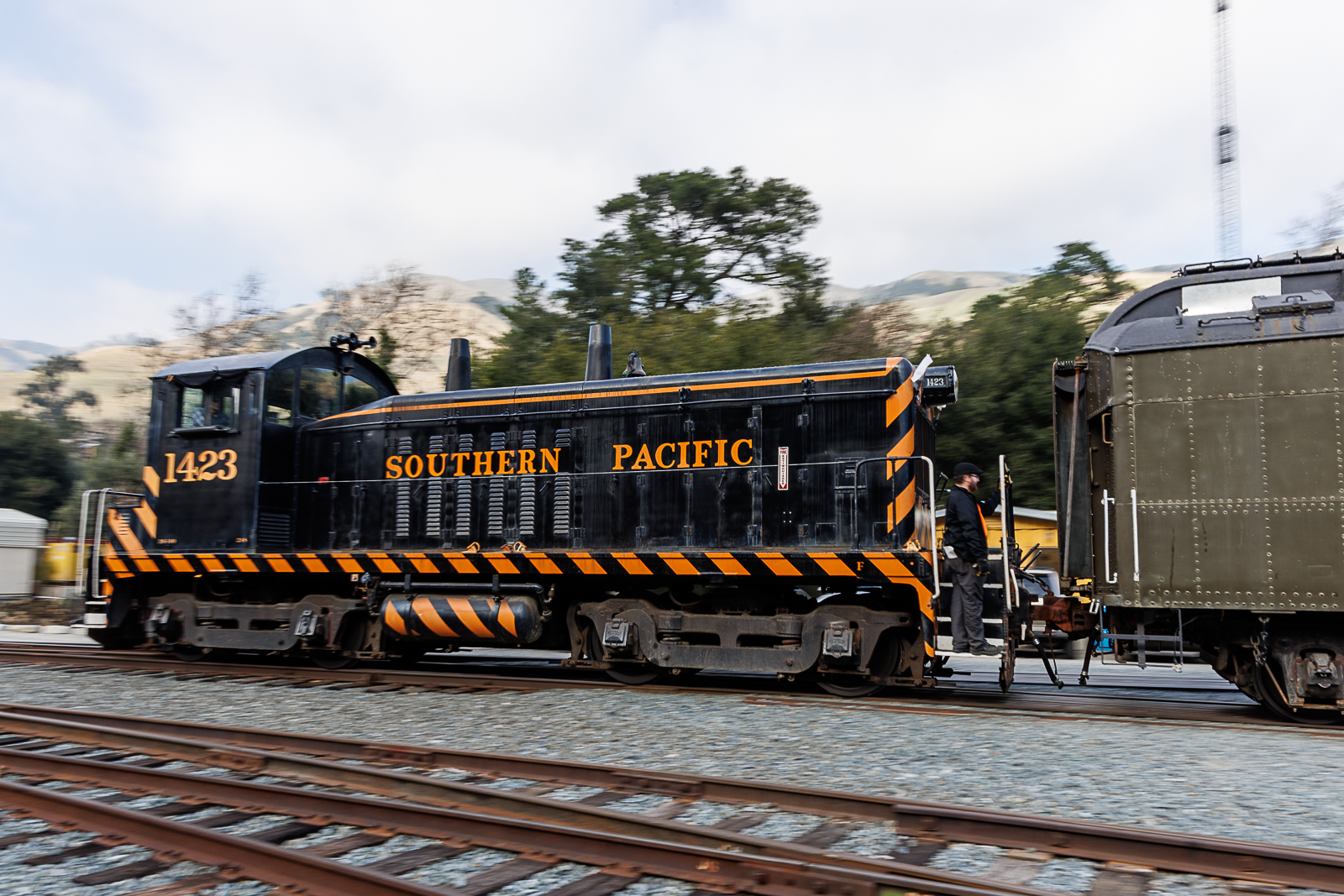
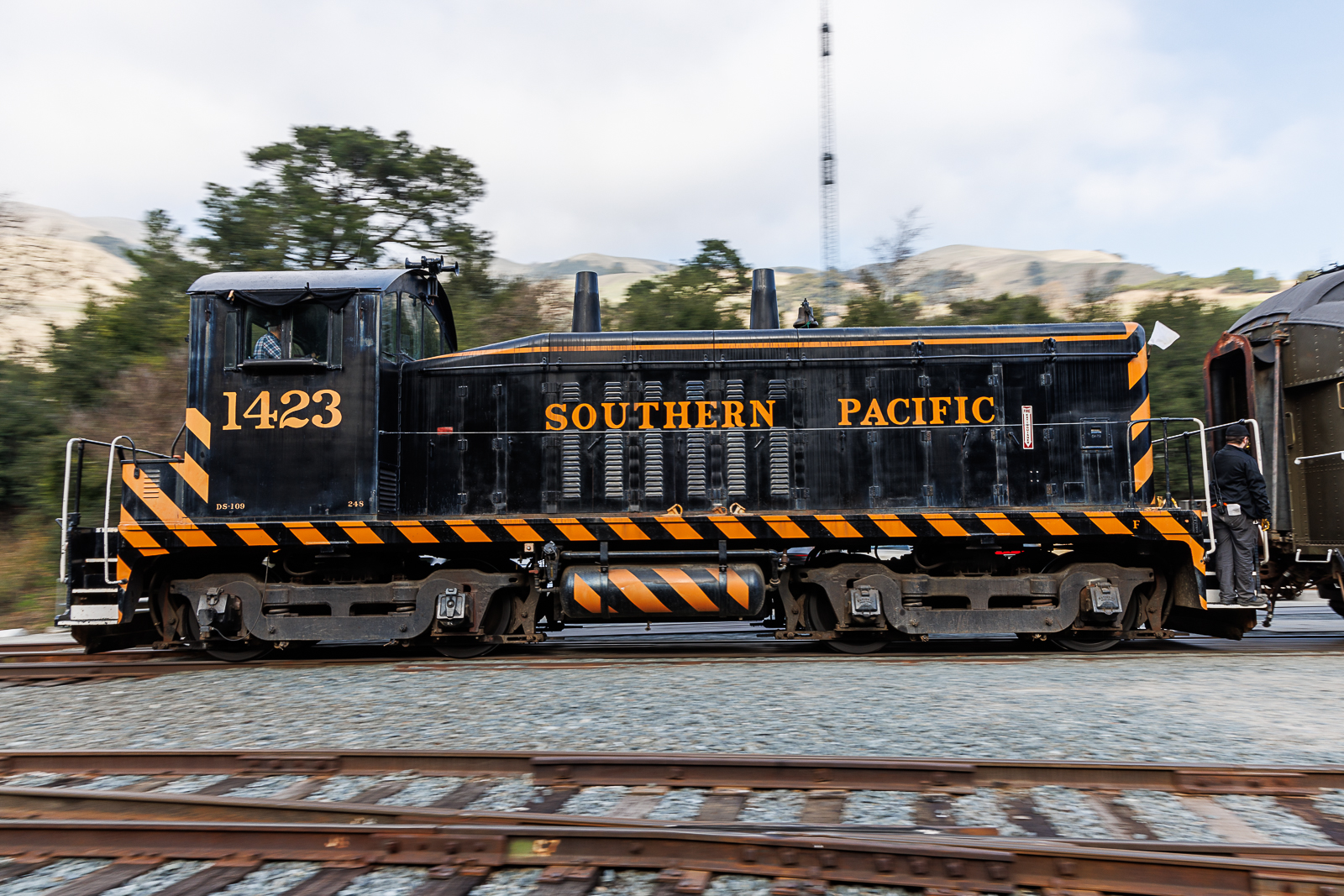
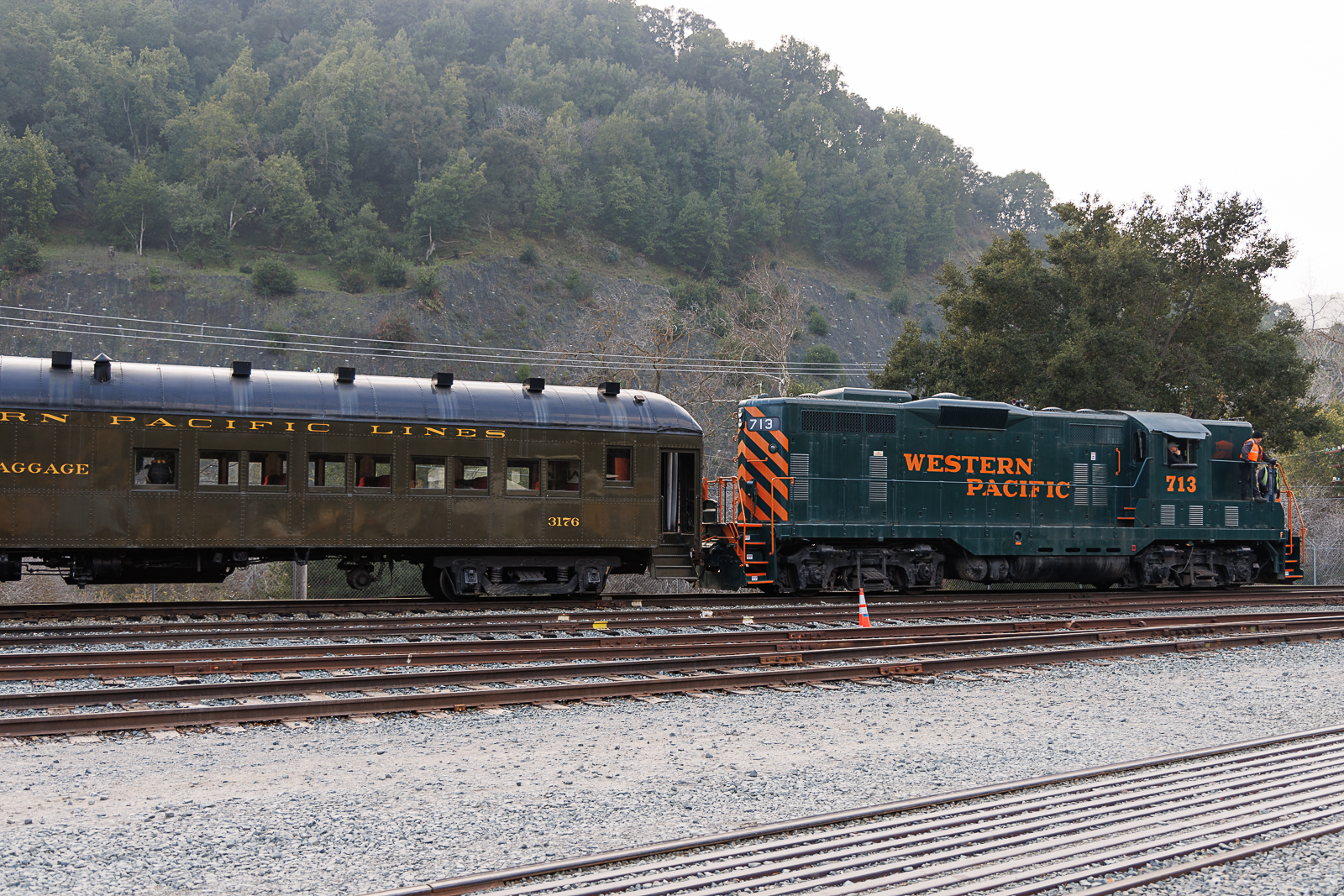
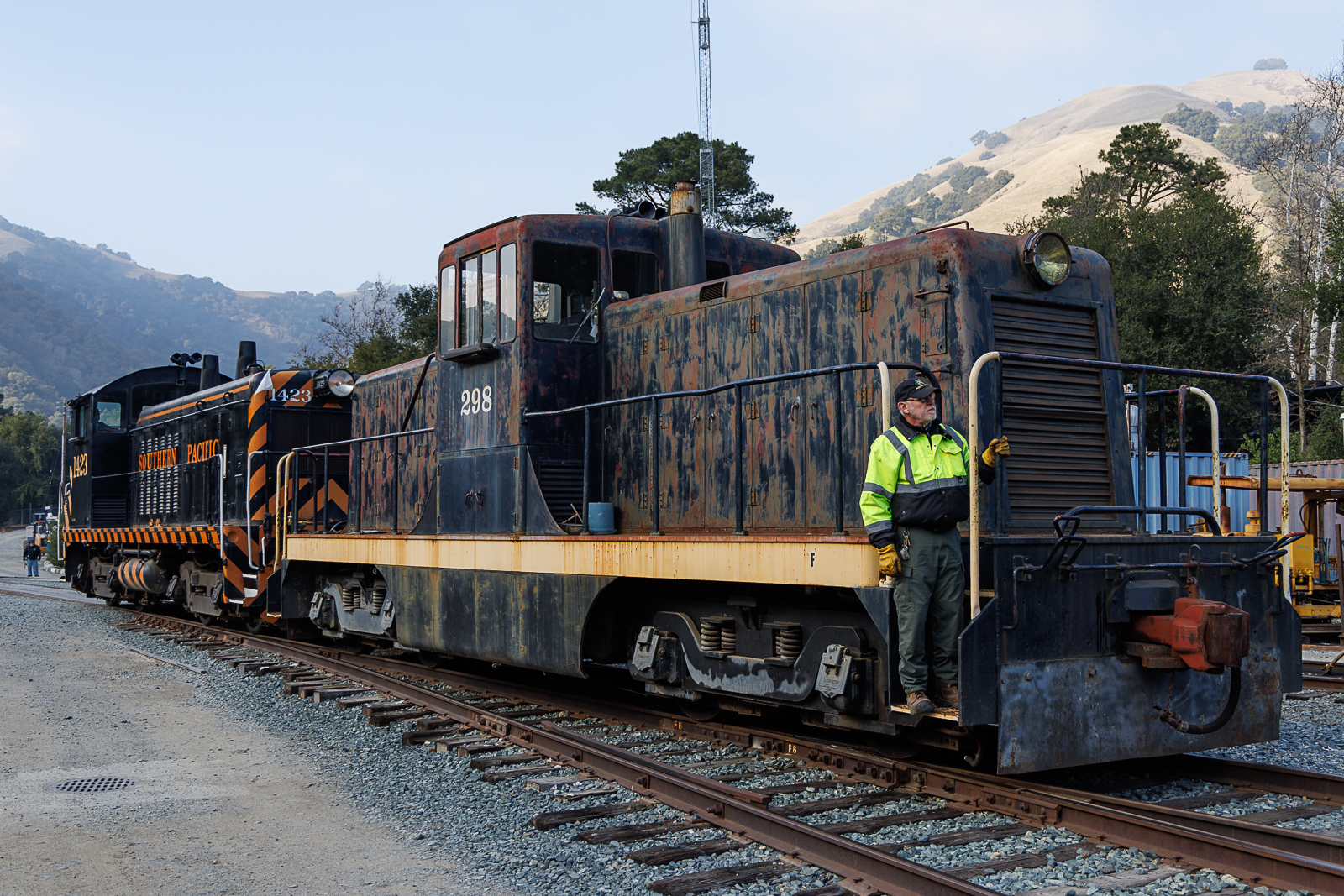
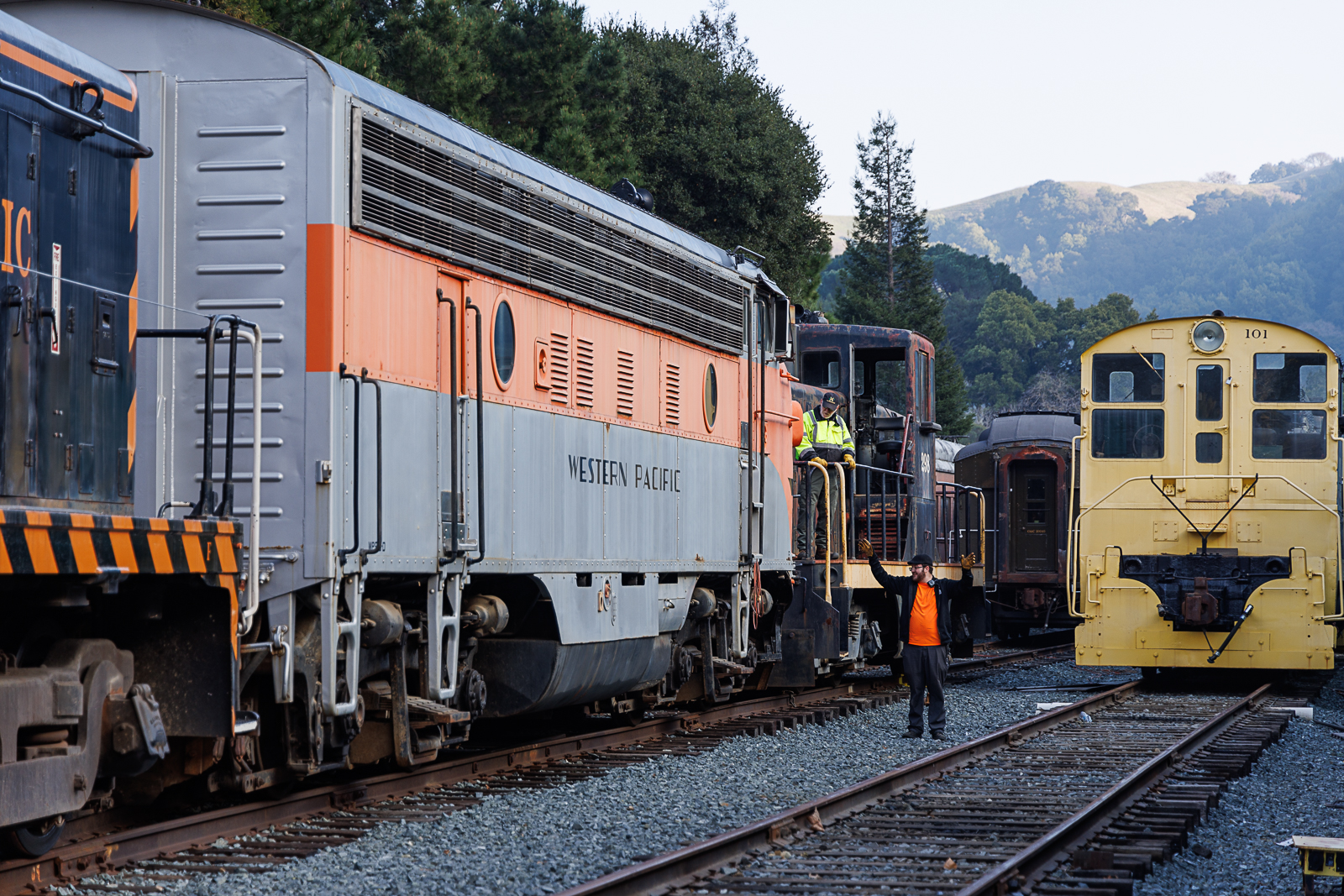
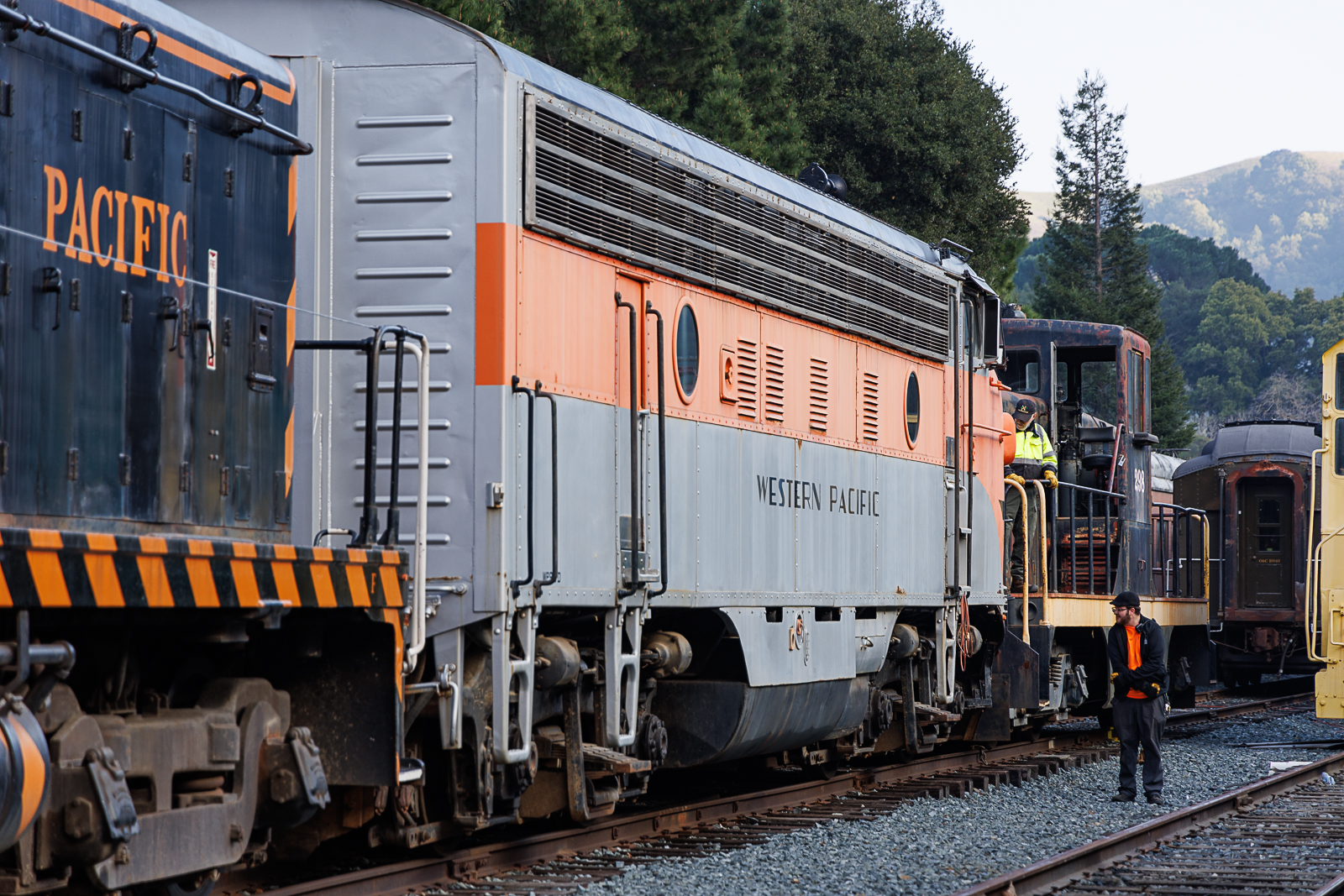
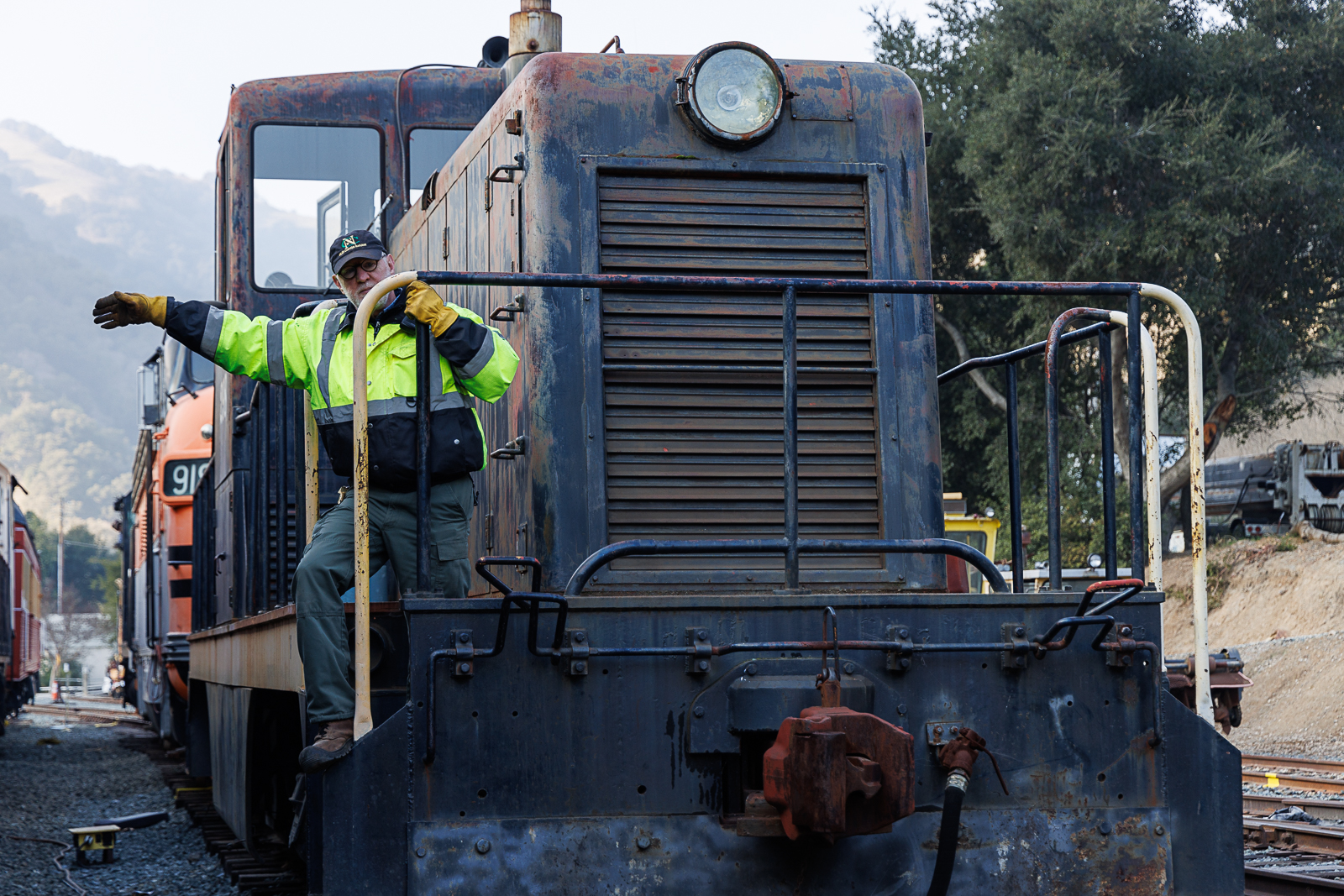
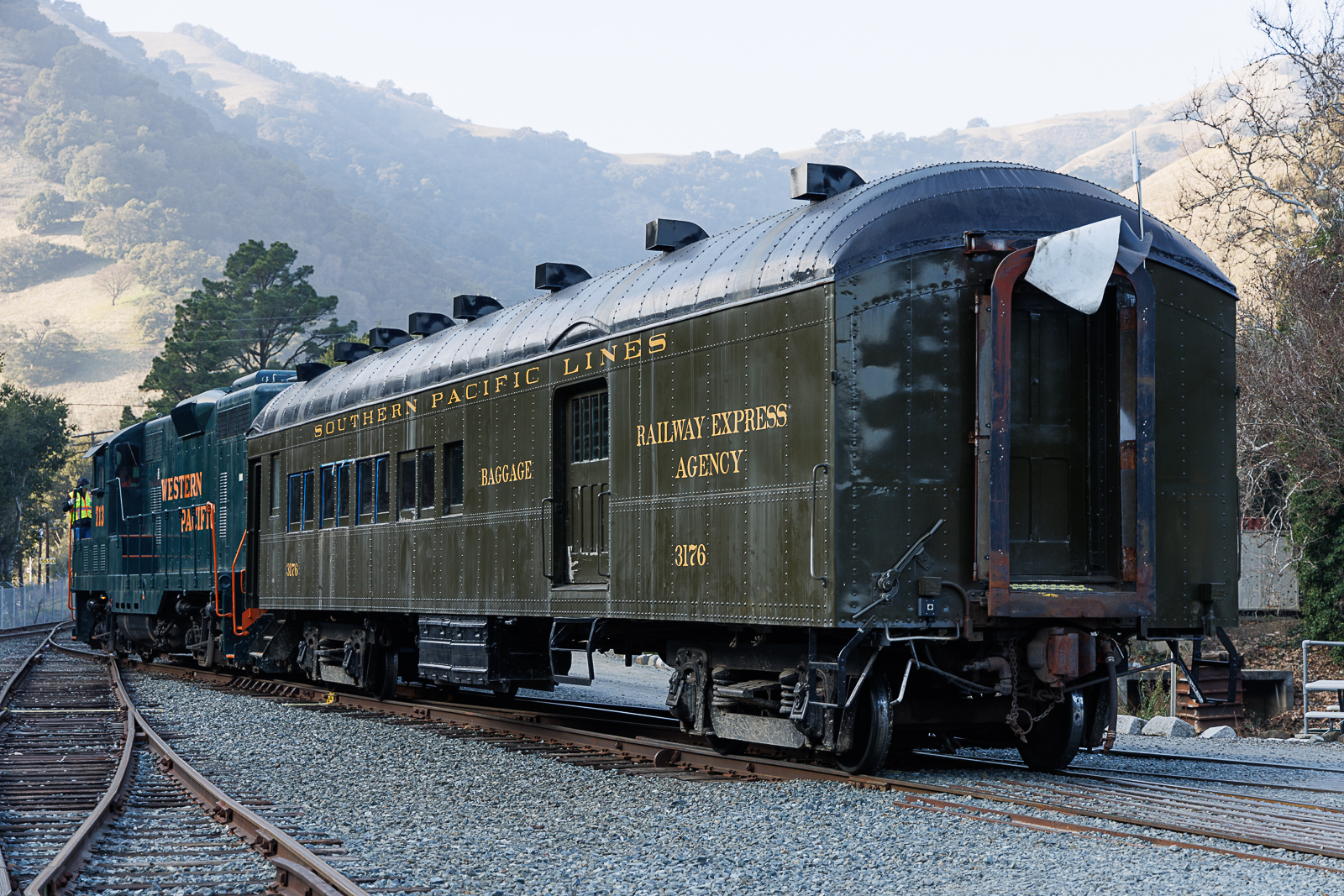
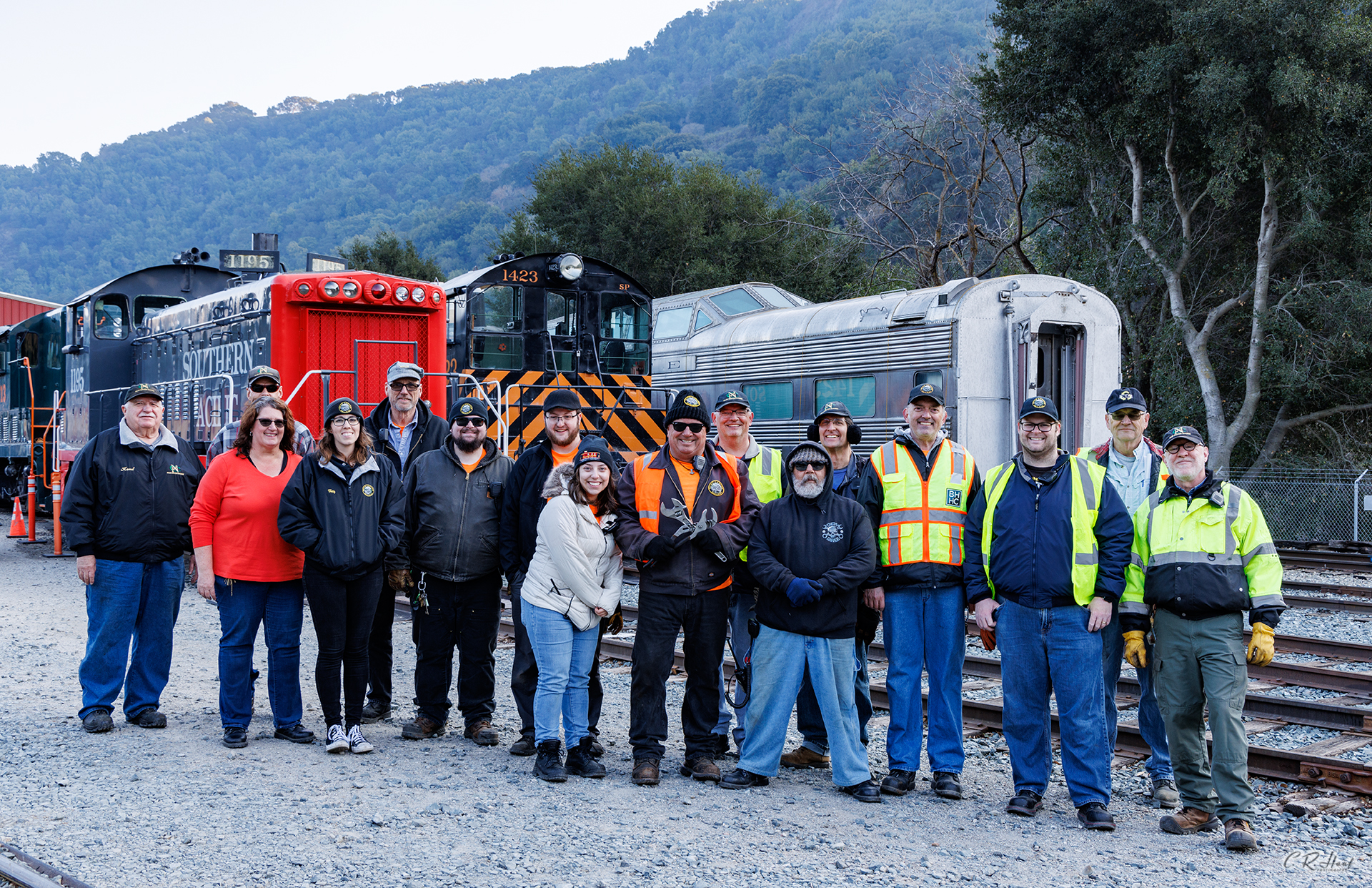
To facilitate all of this switching, we took Sunday, January 19th to assemble three trains crews and more along with three locomotives to get all of the jobs done. Southern Pacific switchers #1423 and #1195 held down working each end of our yard while Western Pacific #713 delivered a car to storage in Niles and ultimately a car to storage in Sunol along with taking our Southern Pacific combine up to our Sunol depot to allow our Gift Shop staff to move their inventory from their on train TOL Gift Shop back into our Sunol station gift shop. It took a village as they say and about 7 hours, but everything was complete by mid-afternoon and the engine safely tucked away.
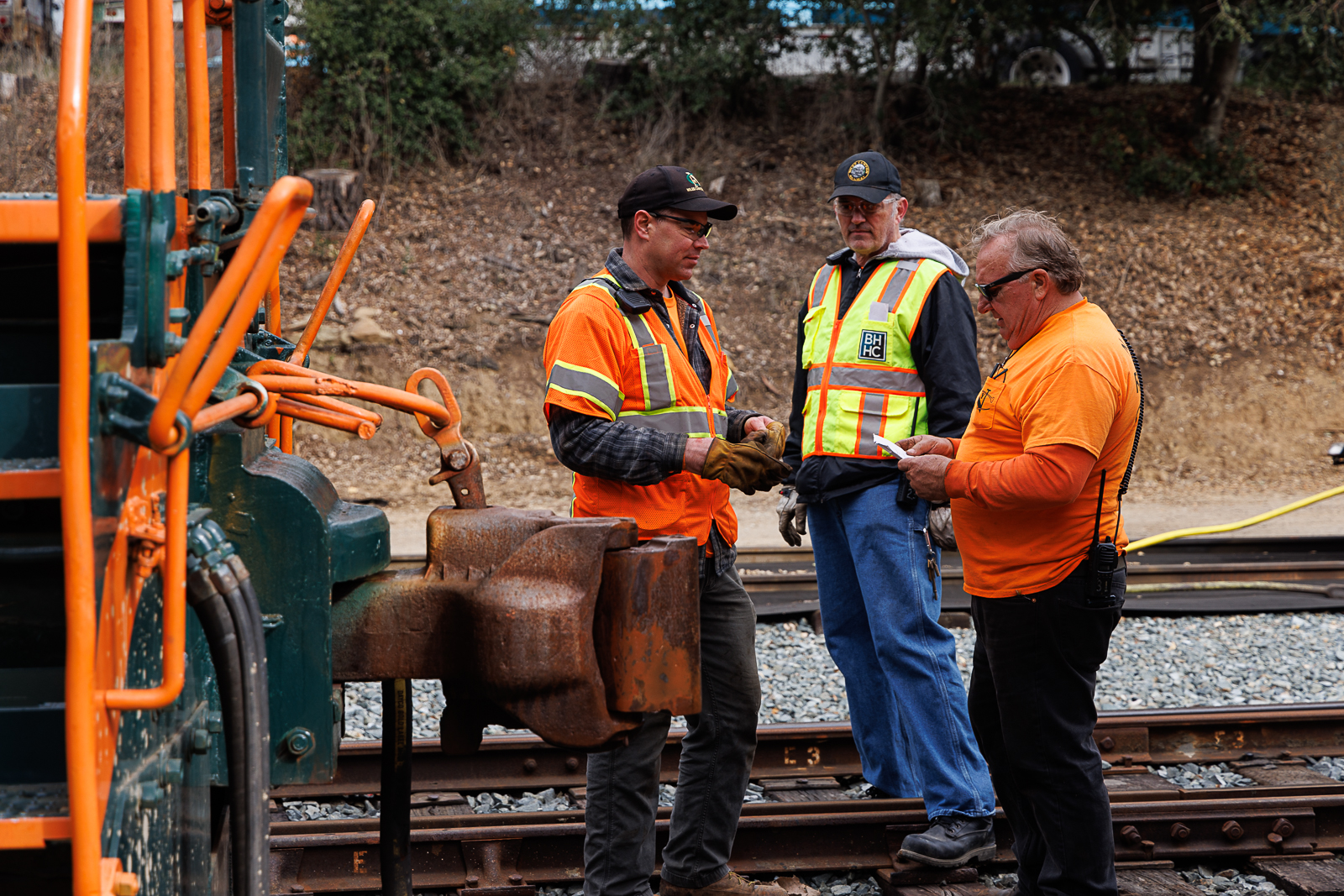
We want to thank our volunteers for all of their hard work; some of them out to learn more about being a railroader and switching a railroad yard. Many of our train crew learn their craft at our museum, and we hope to offer a new brakeman training class soon for anyone new who is interested.
Here is a large set of photos taken across the day as the crews moved a huge variety of equipment all over our Brightside yard and railroad. We hope you enjoy them, and maybe they will inspire you to come volunteer with us.
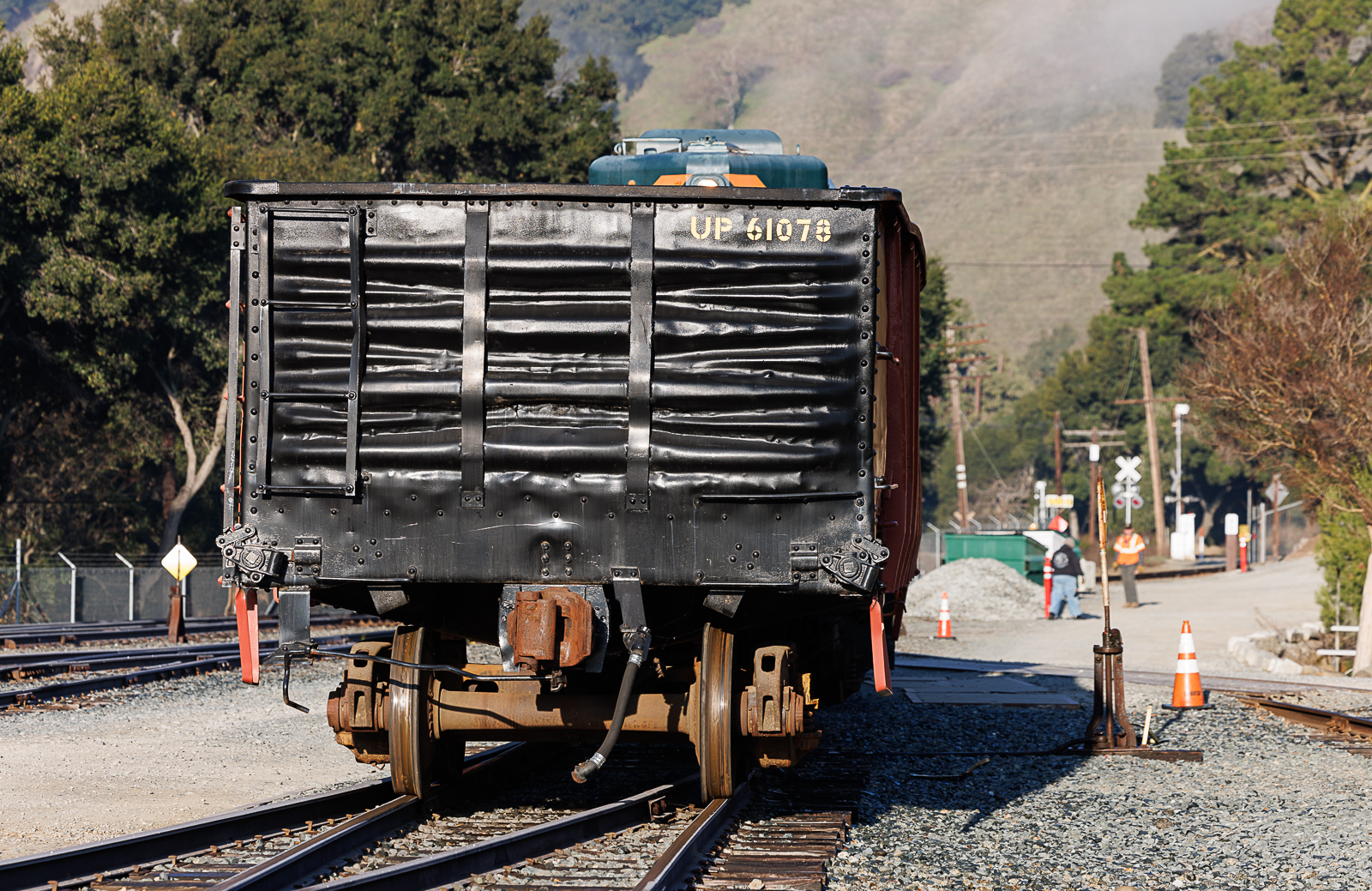
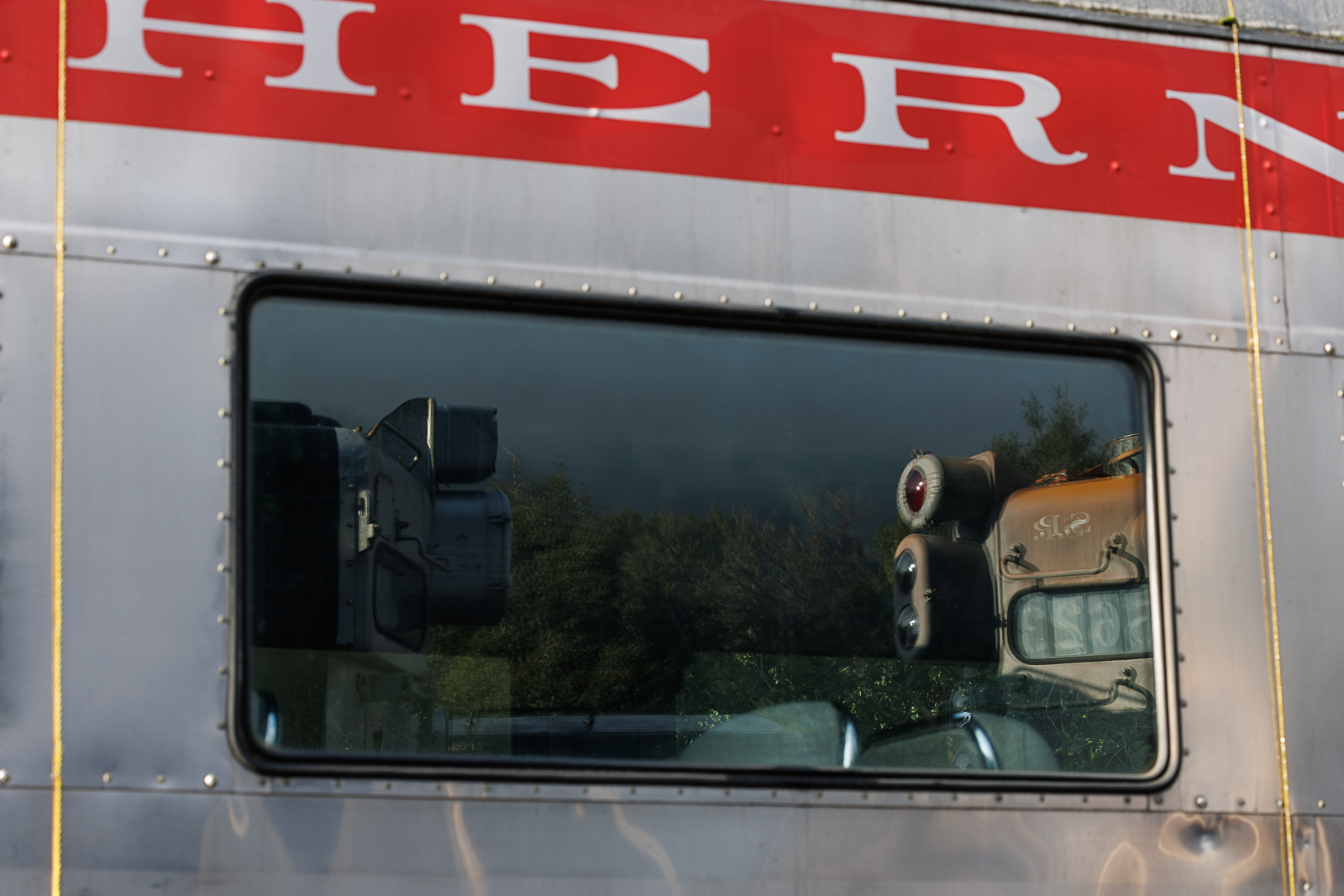
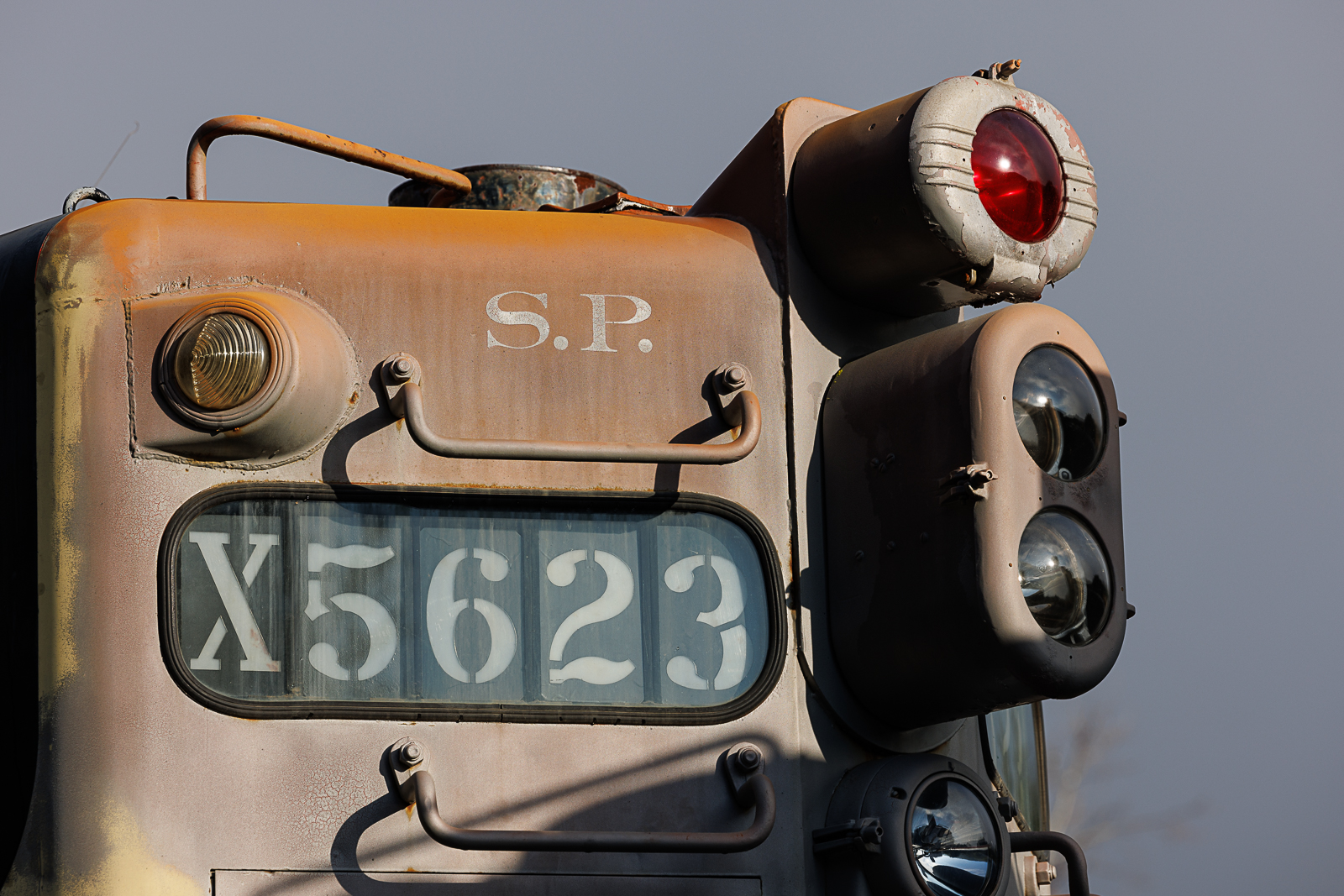
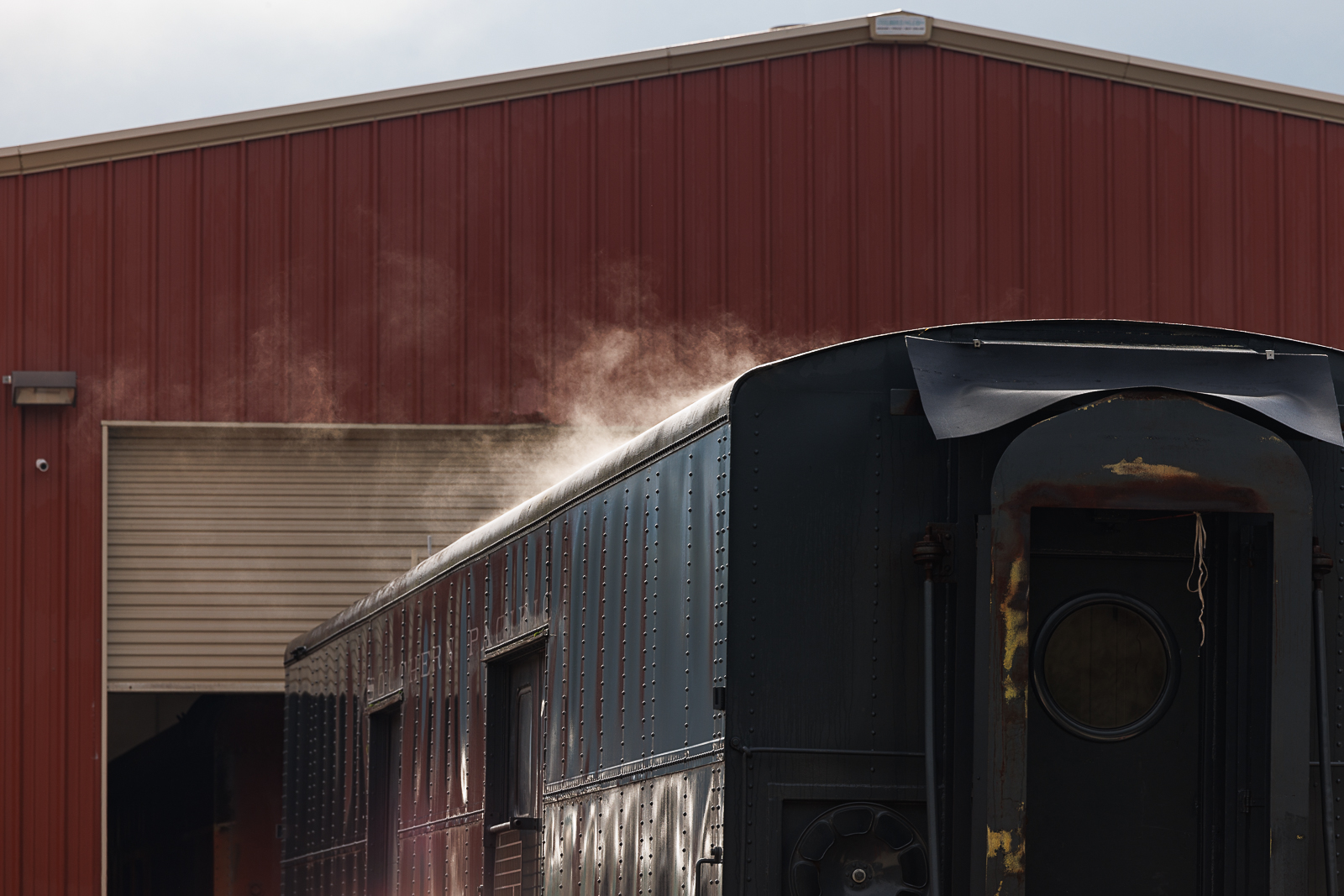
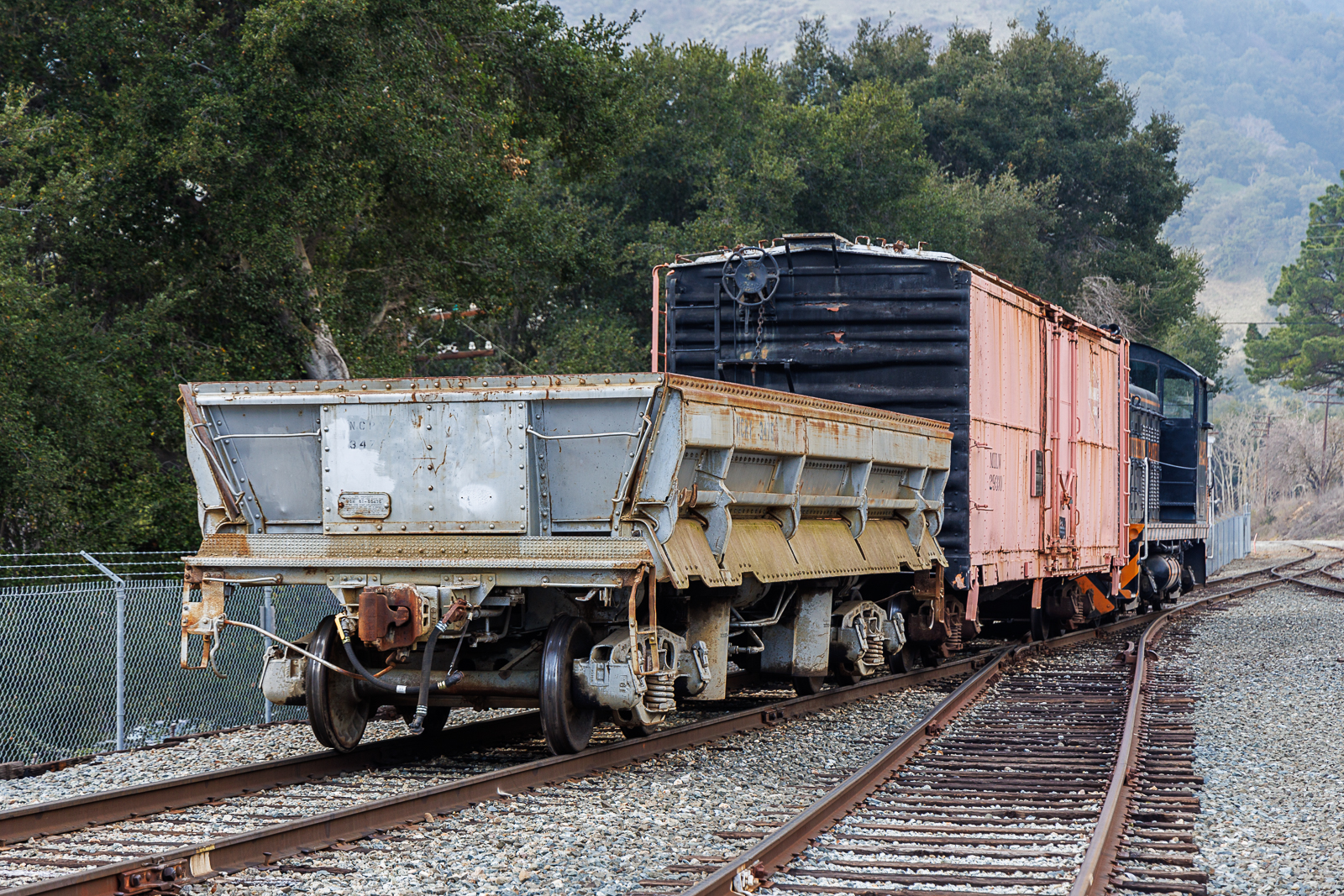
The morning started out below freezing with frost on the rails, ties and equipment.A cold start to the day…Working the Brightside yard ladder tracks…Our restored UP gon was taken to Niles for storage…SP #1195 delivers the museum side dump car for SP #1423 to pick up and store temporarily on the west end of the yard.Seeing double reflections of the Southern Pacific from both the two engines and the double pane glass windows in our SP Twin Unit coach.Heading in for another cut of cars…Temperatures were up and down throughout the day as first the sun came out, but was soon replaced by a layer of fog again dropping the temperature to around 32F at 1PM.Most of volunteer crew at mid-afternoon after a successful switching operation. We cannot do what we do without them. Thanks!
On the weekend of October 26th and 27th, a crew of six volunteers from our Niles Canyon Railway Steam Department headed north to the shop of our contractor, Stockton Locomotive …
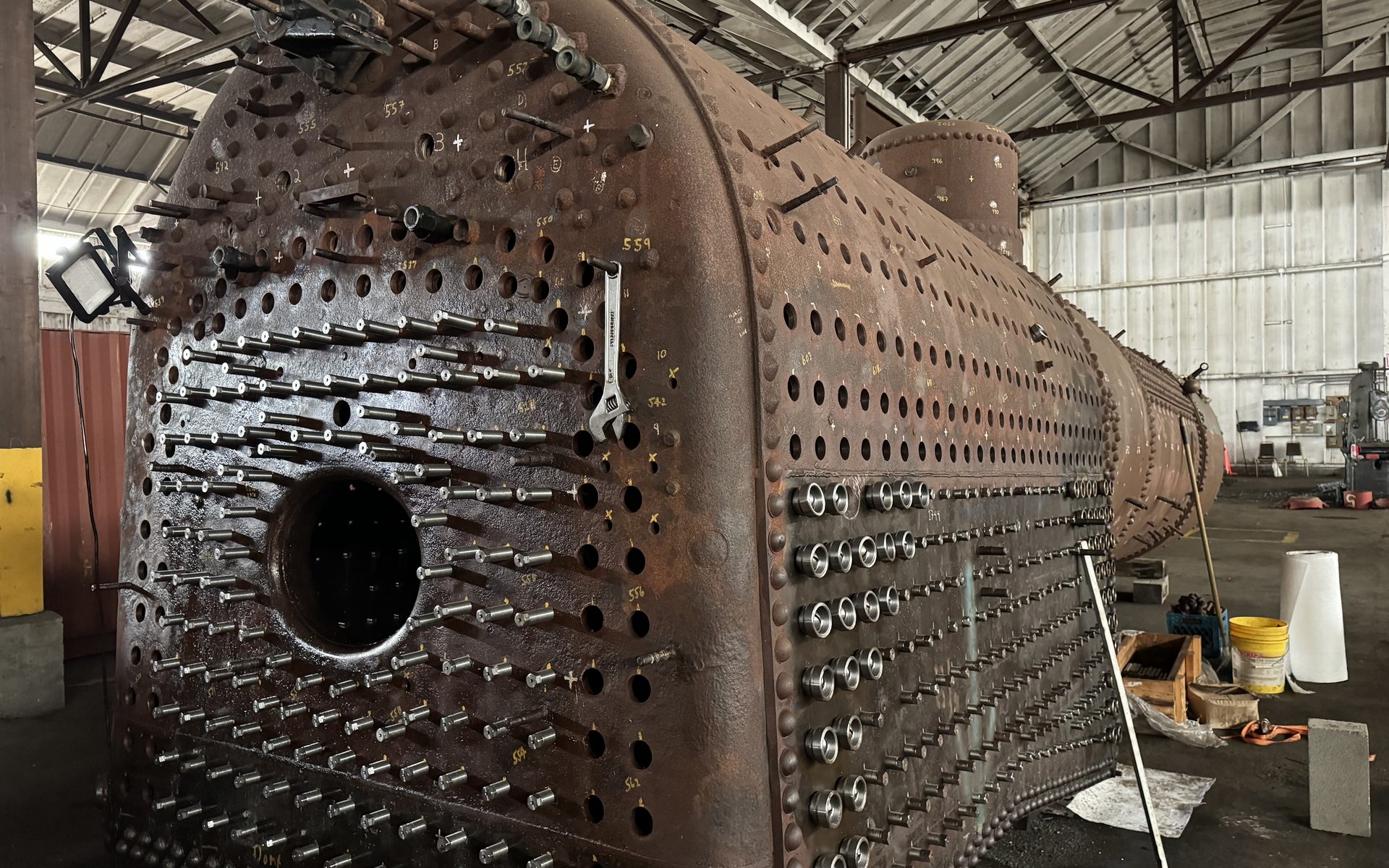
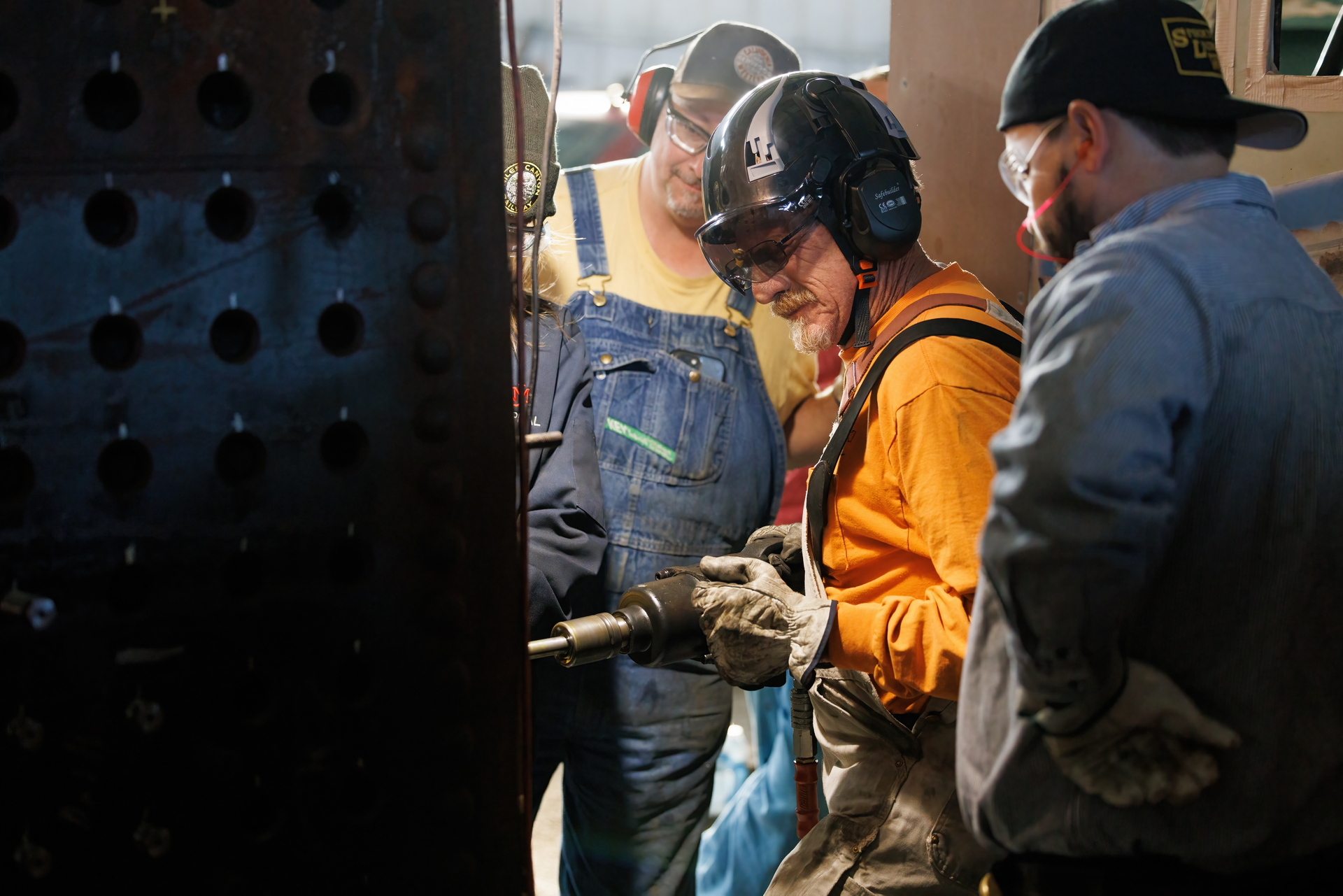
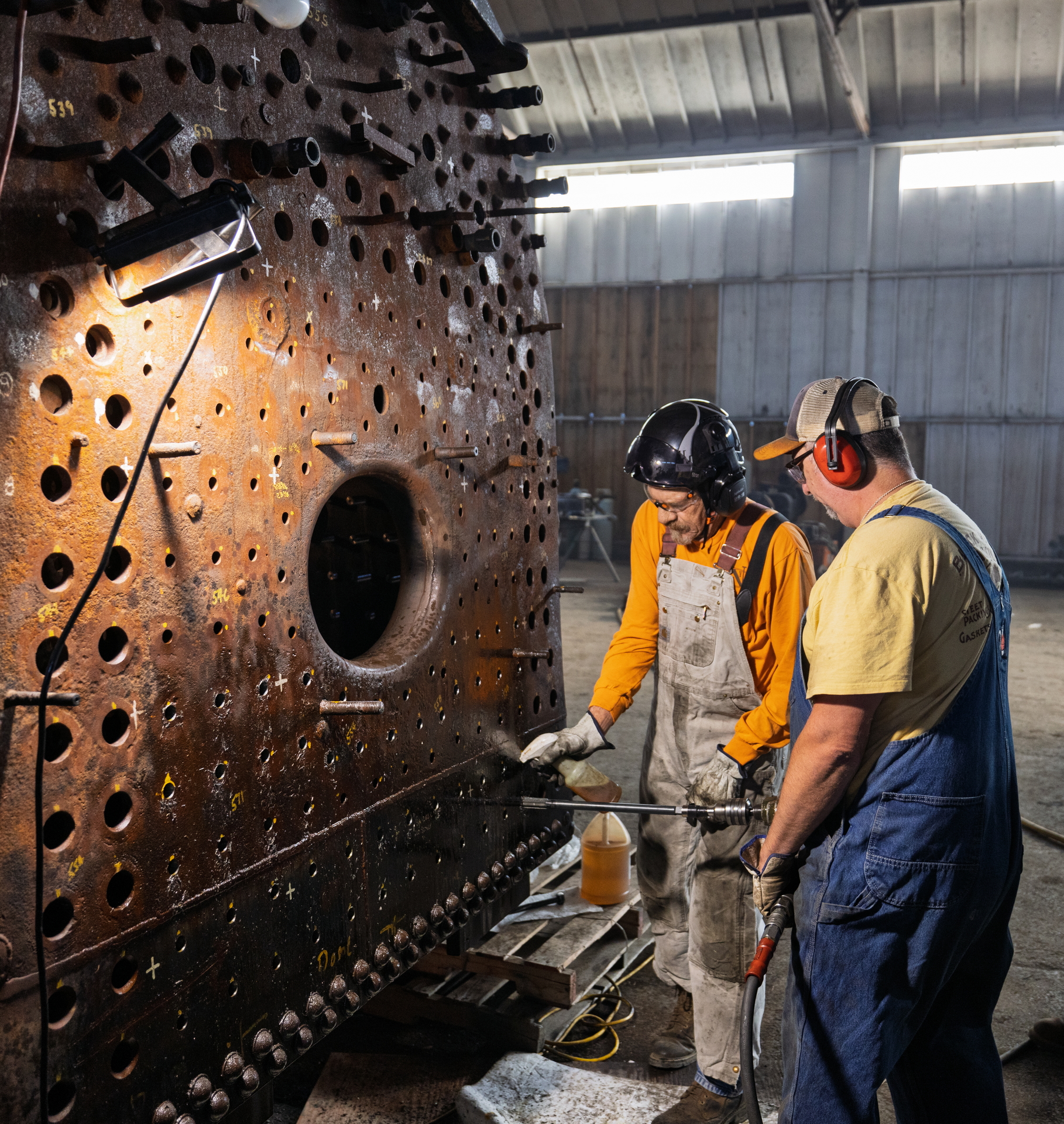
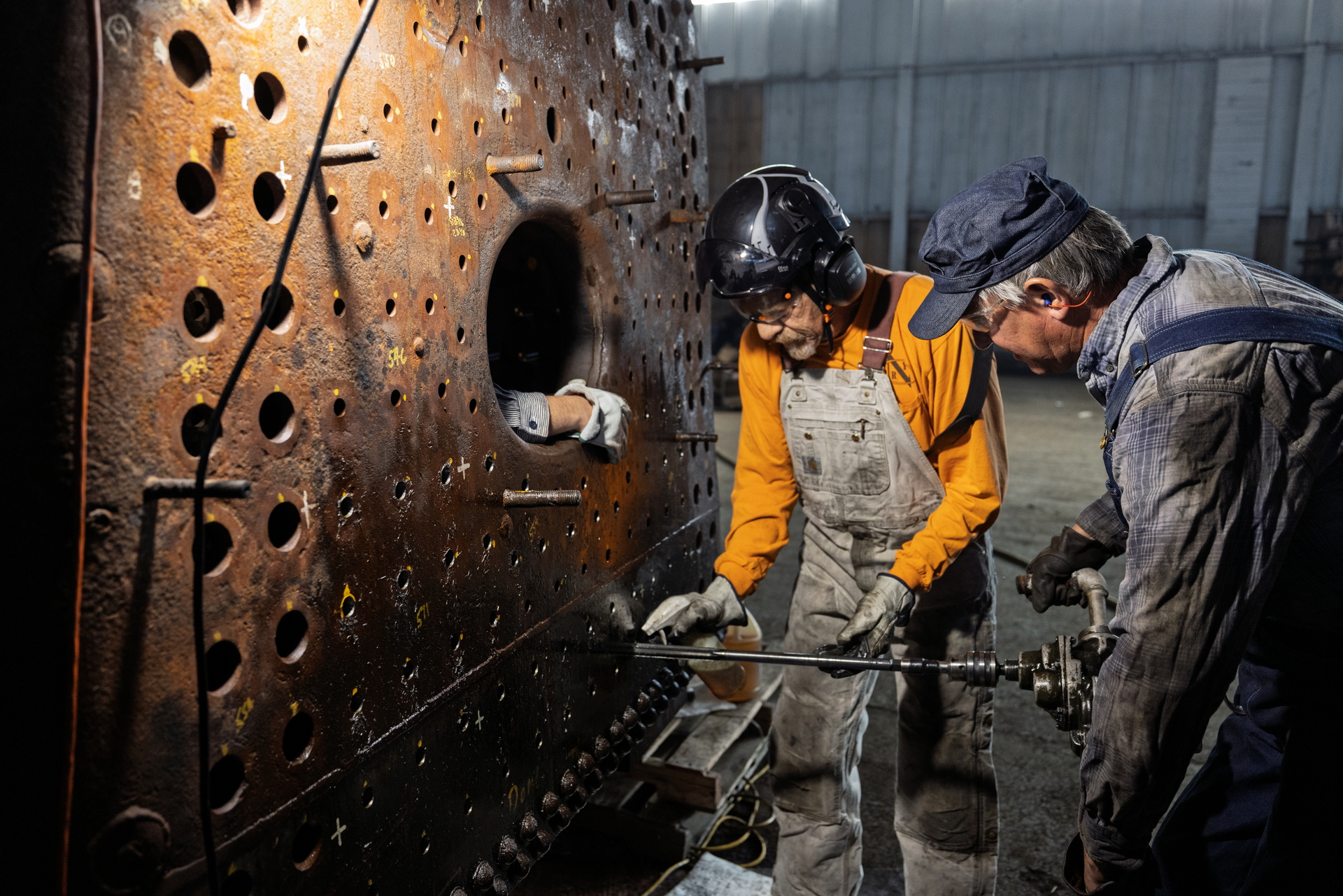
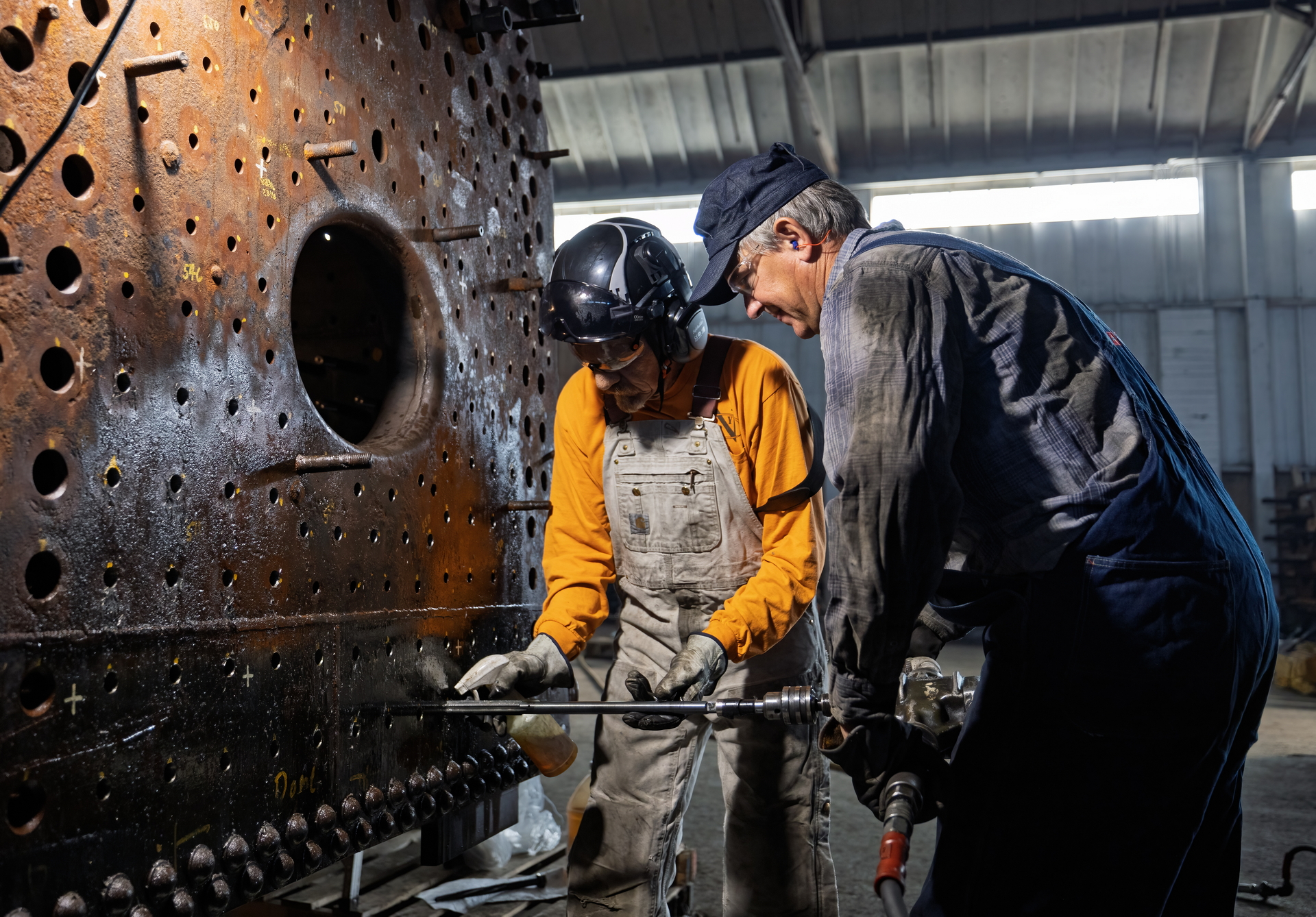
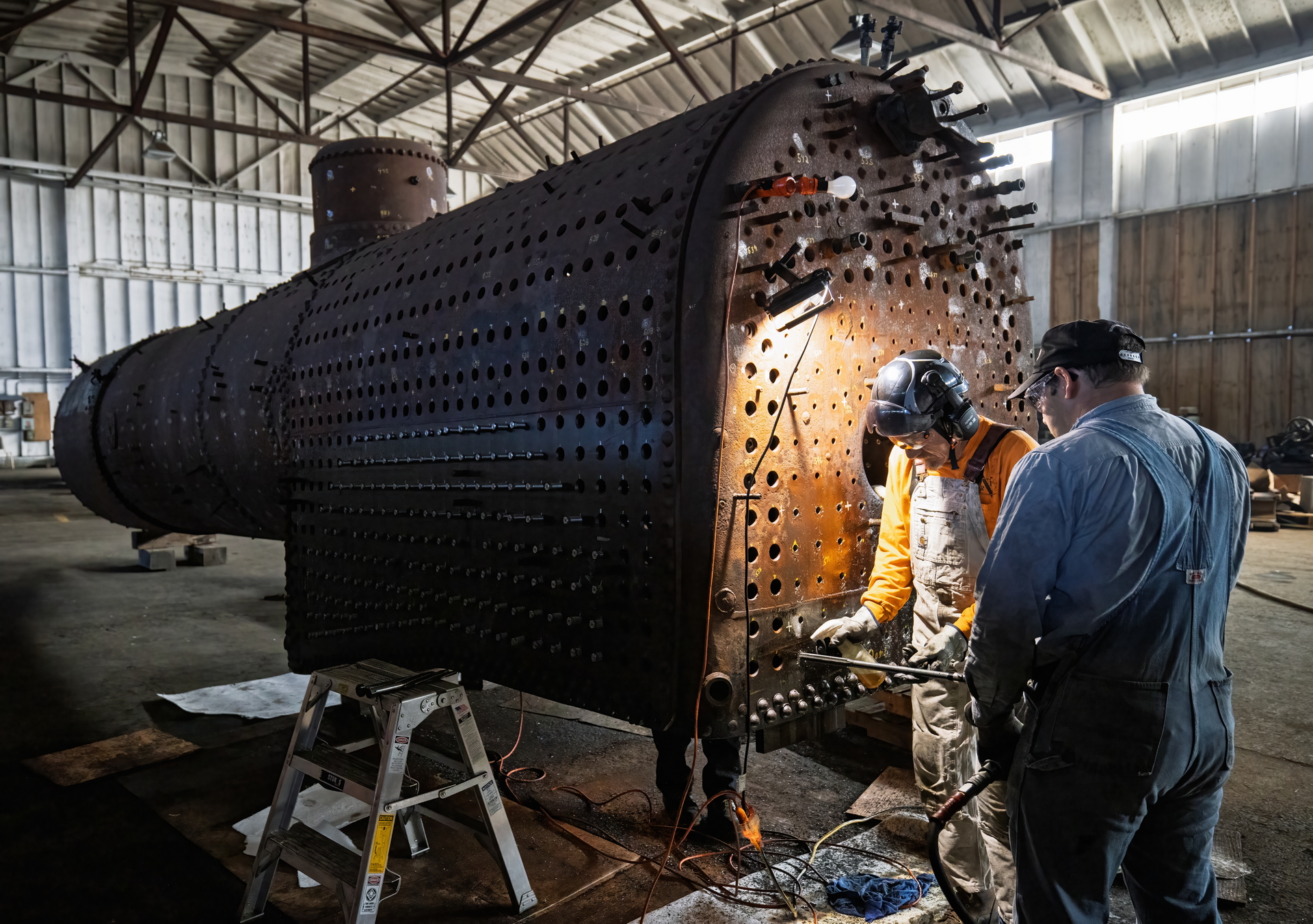
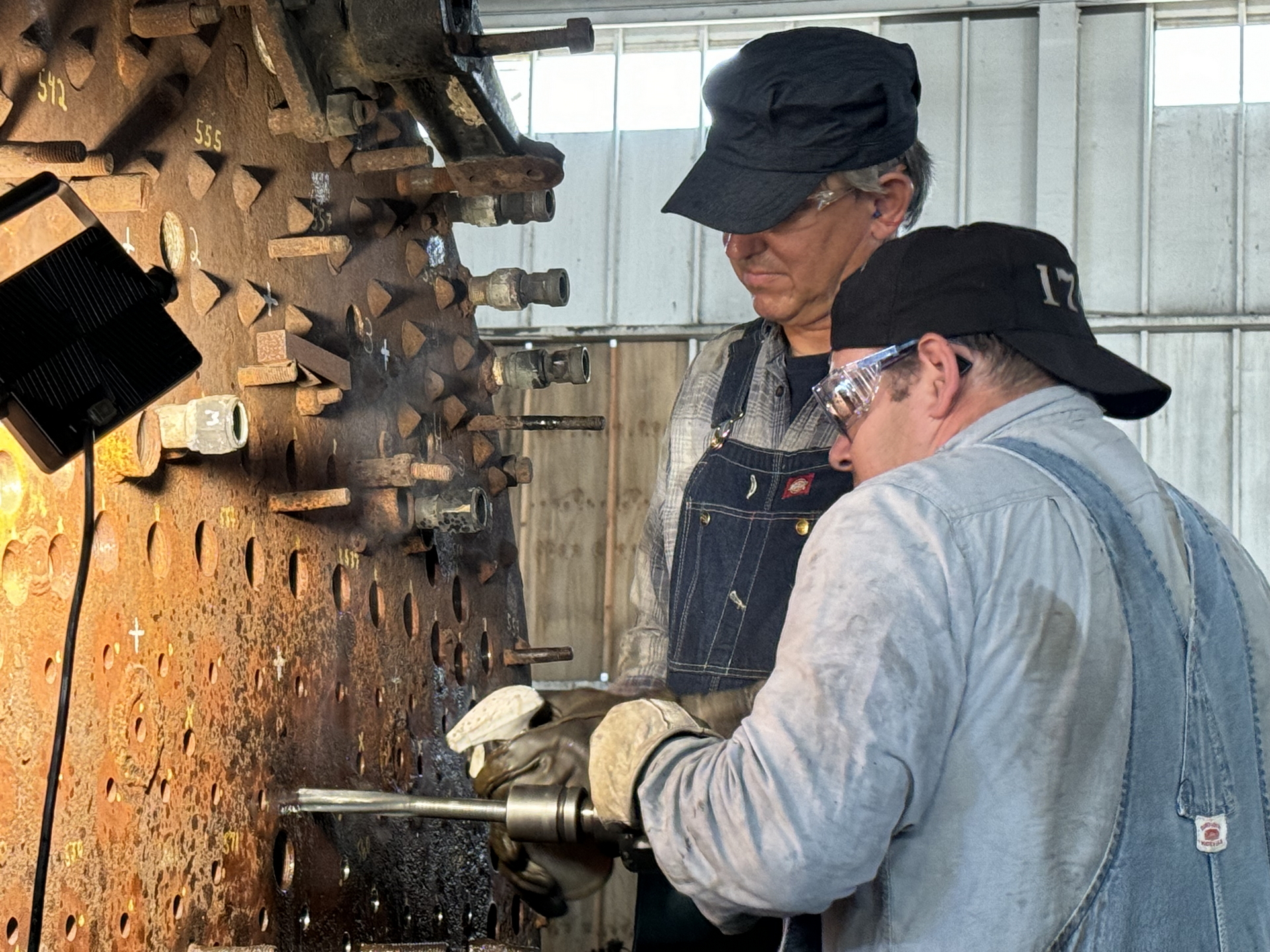
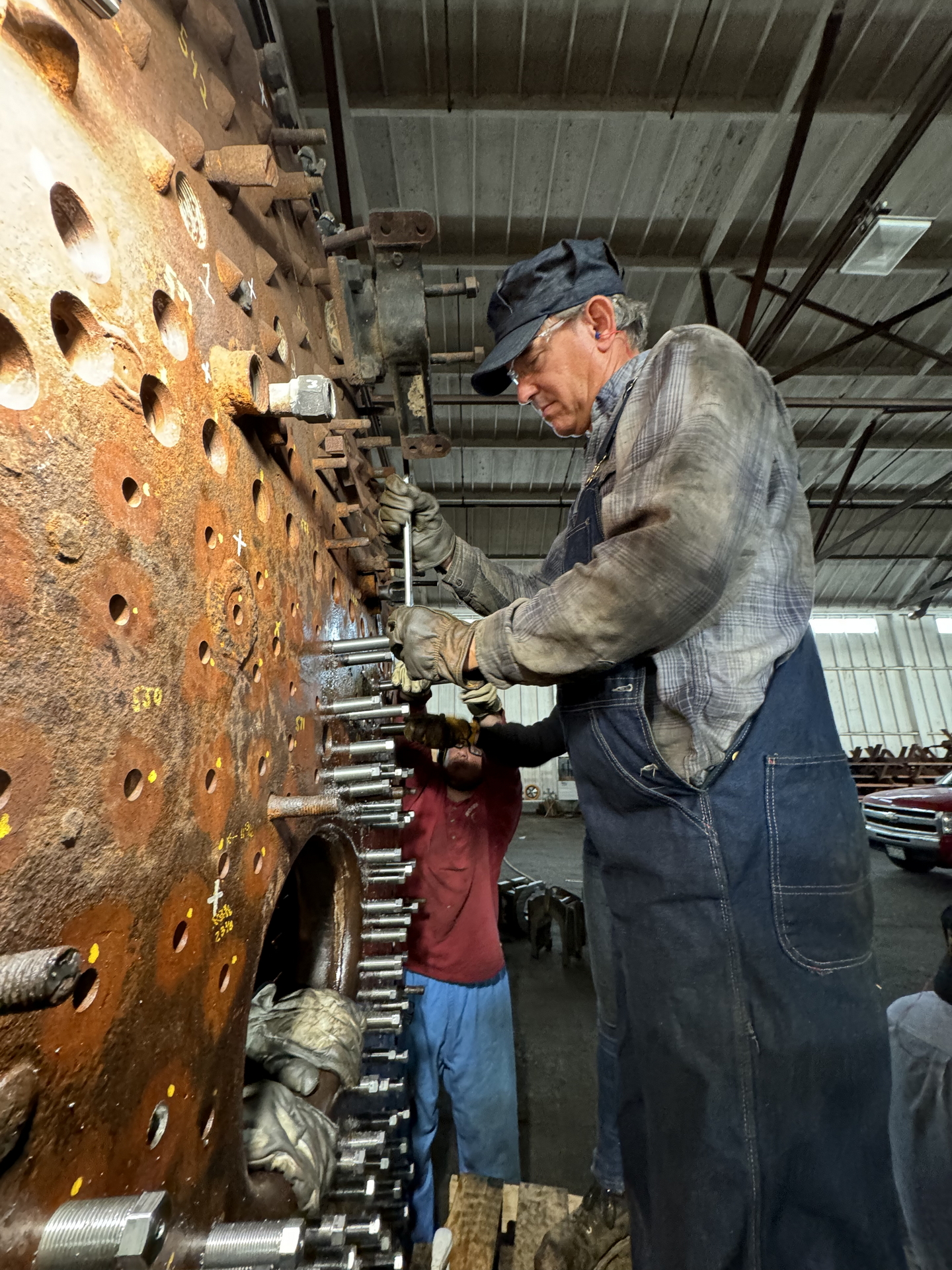
On the weekend of October 26th and 27th, a crew of six volunteers from our Niles Canyon Railway Steam Department headed north to the shop of our contractor, Stockton Locomotive Works, to do some more work on the boiler for our Southern Pacific steam locomotive #1744. Two other crews of volunteers had already gone up at different times between late 2023 and late 2024 to supplement our contractor’s resources since the boiler is seeing significant rebuilding.
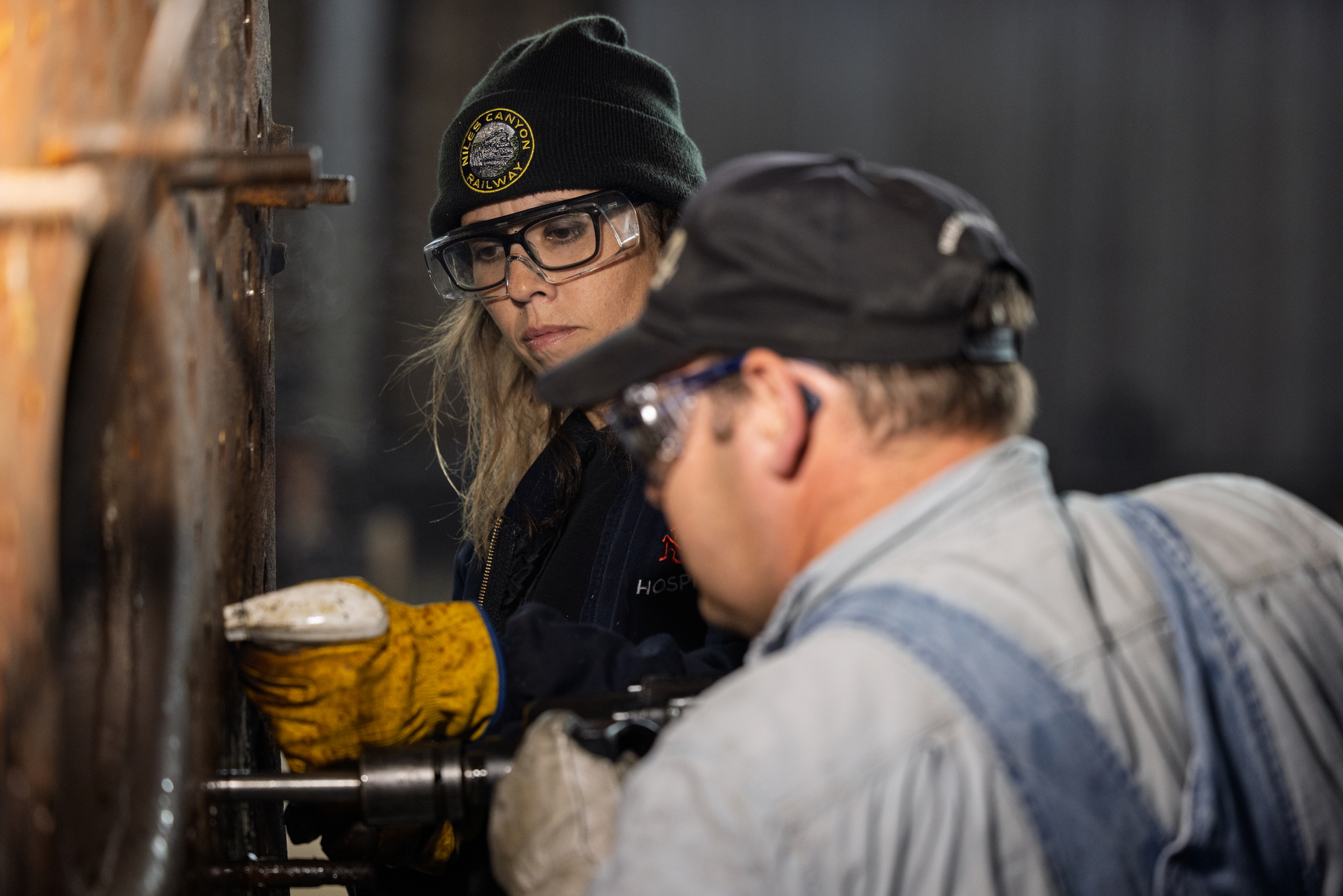
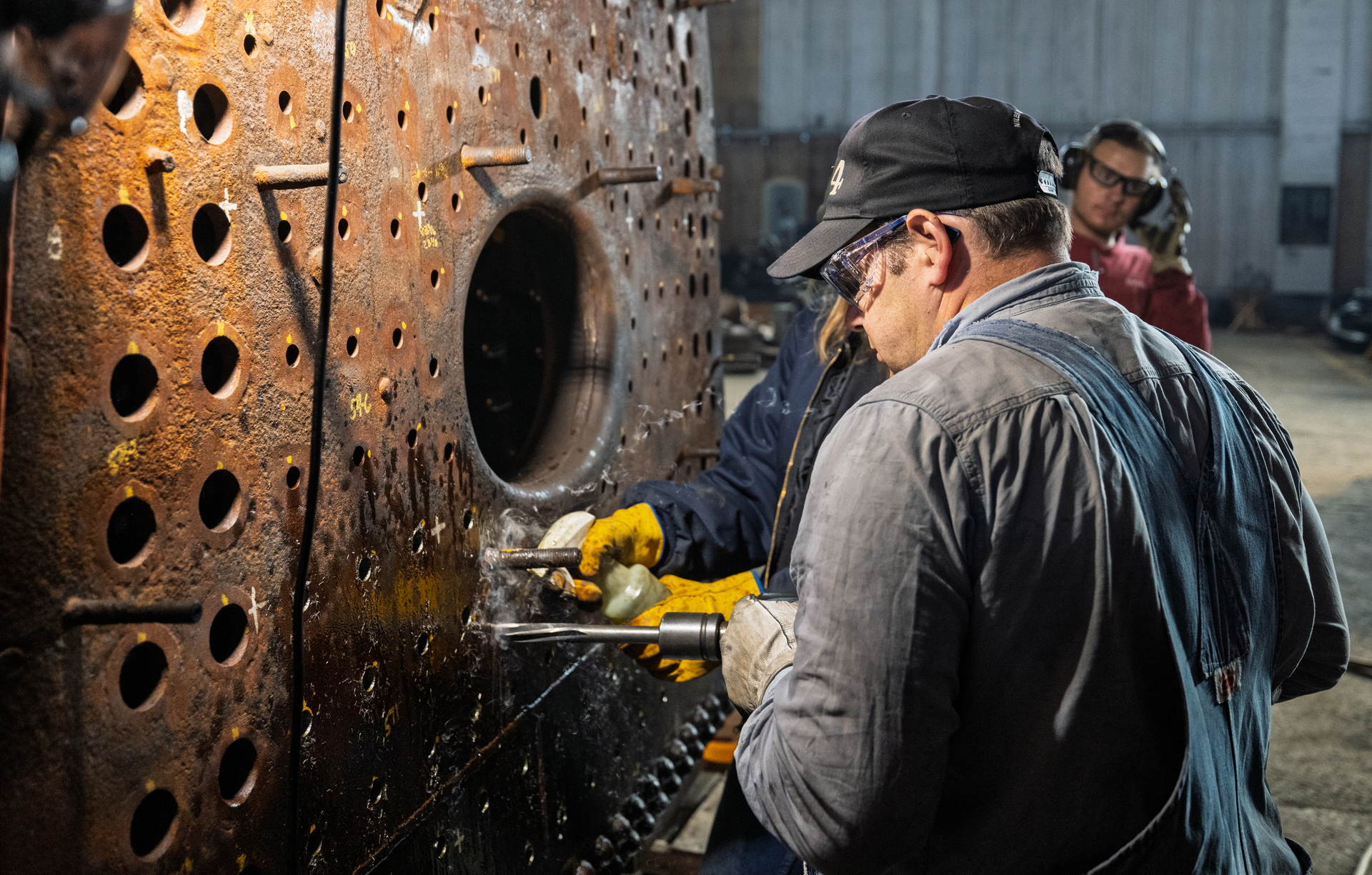
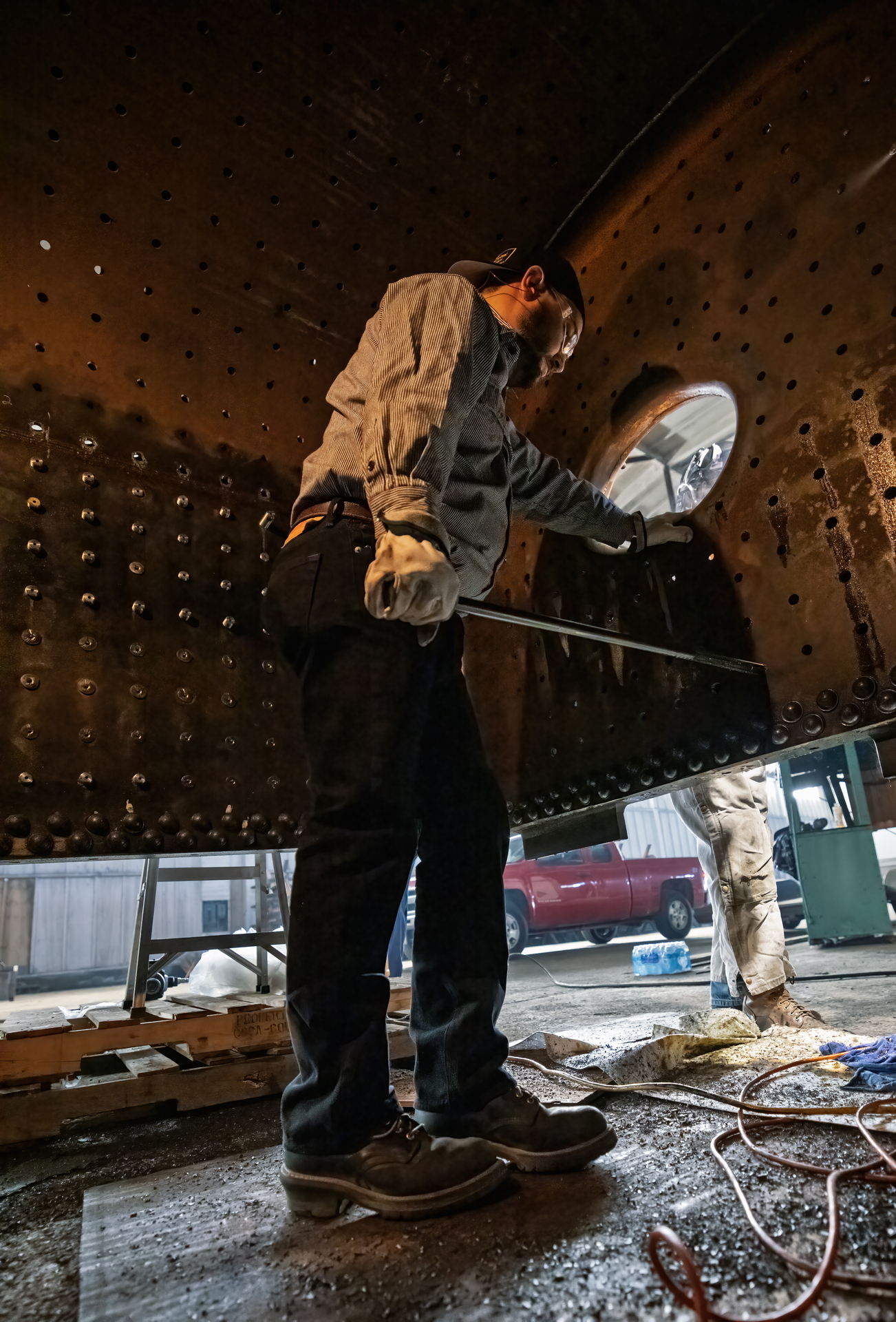
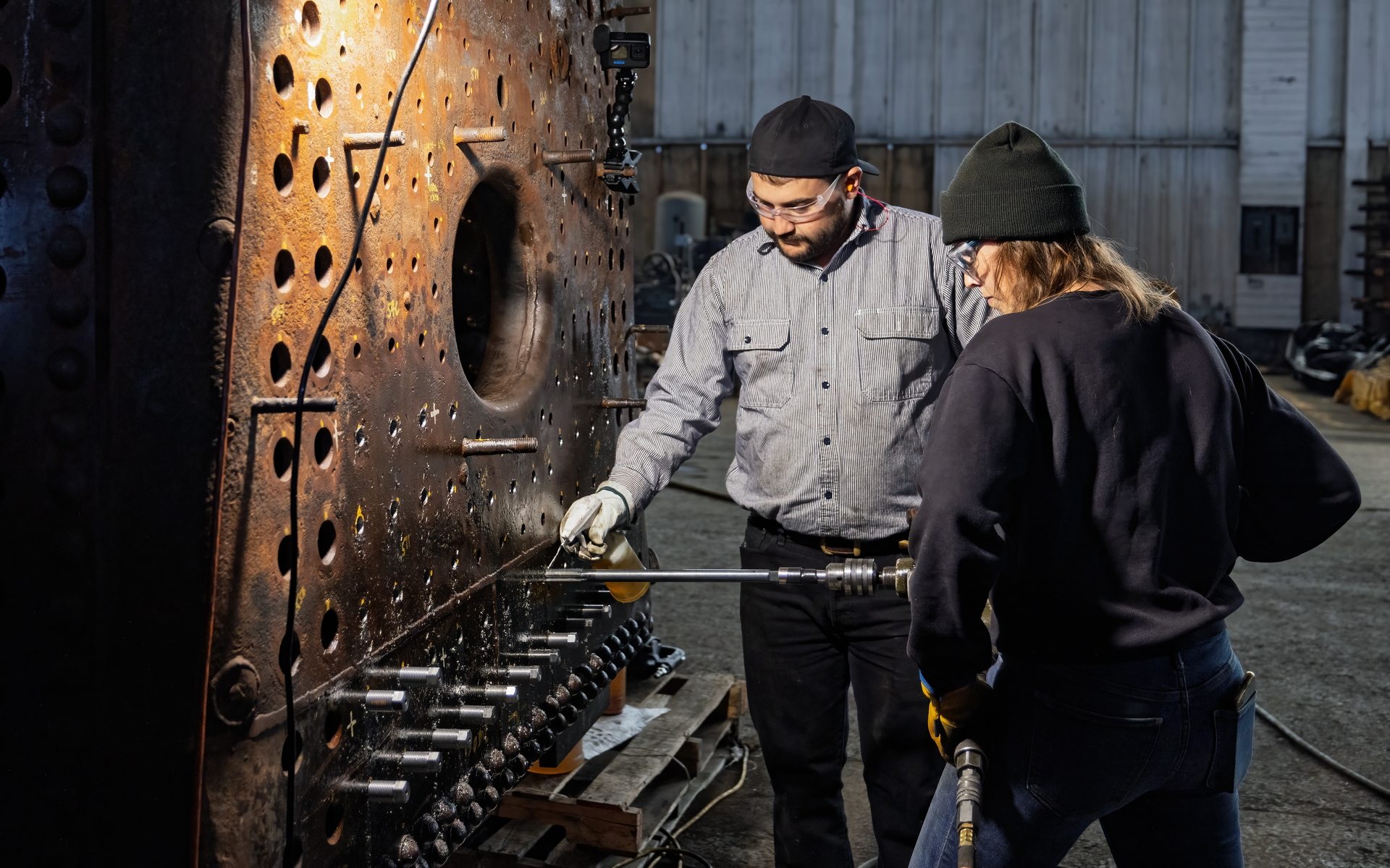
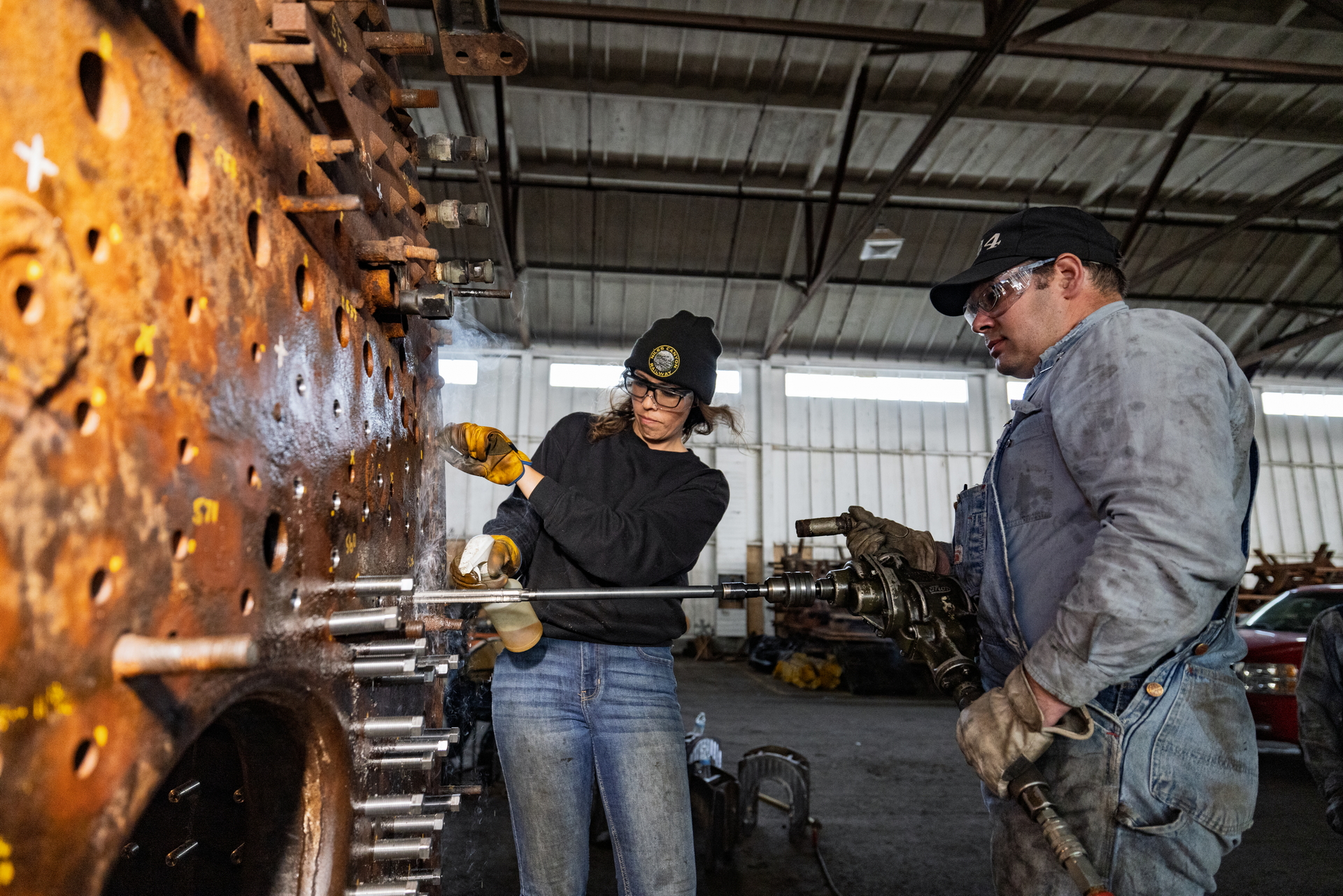
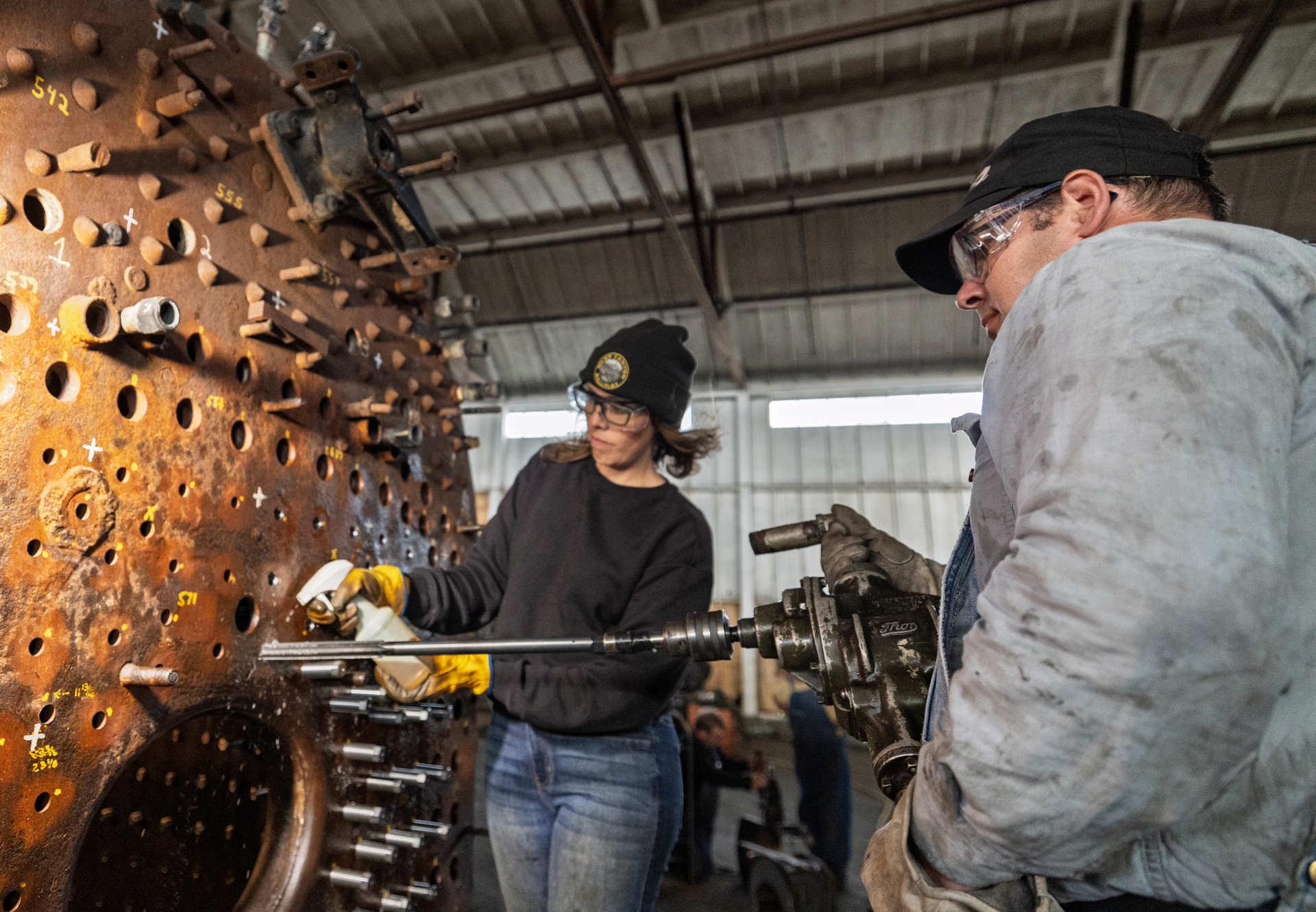
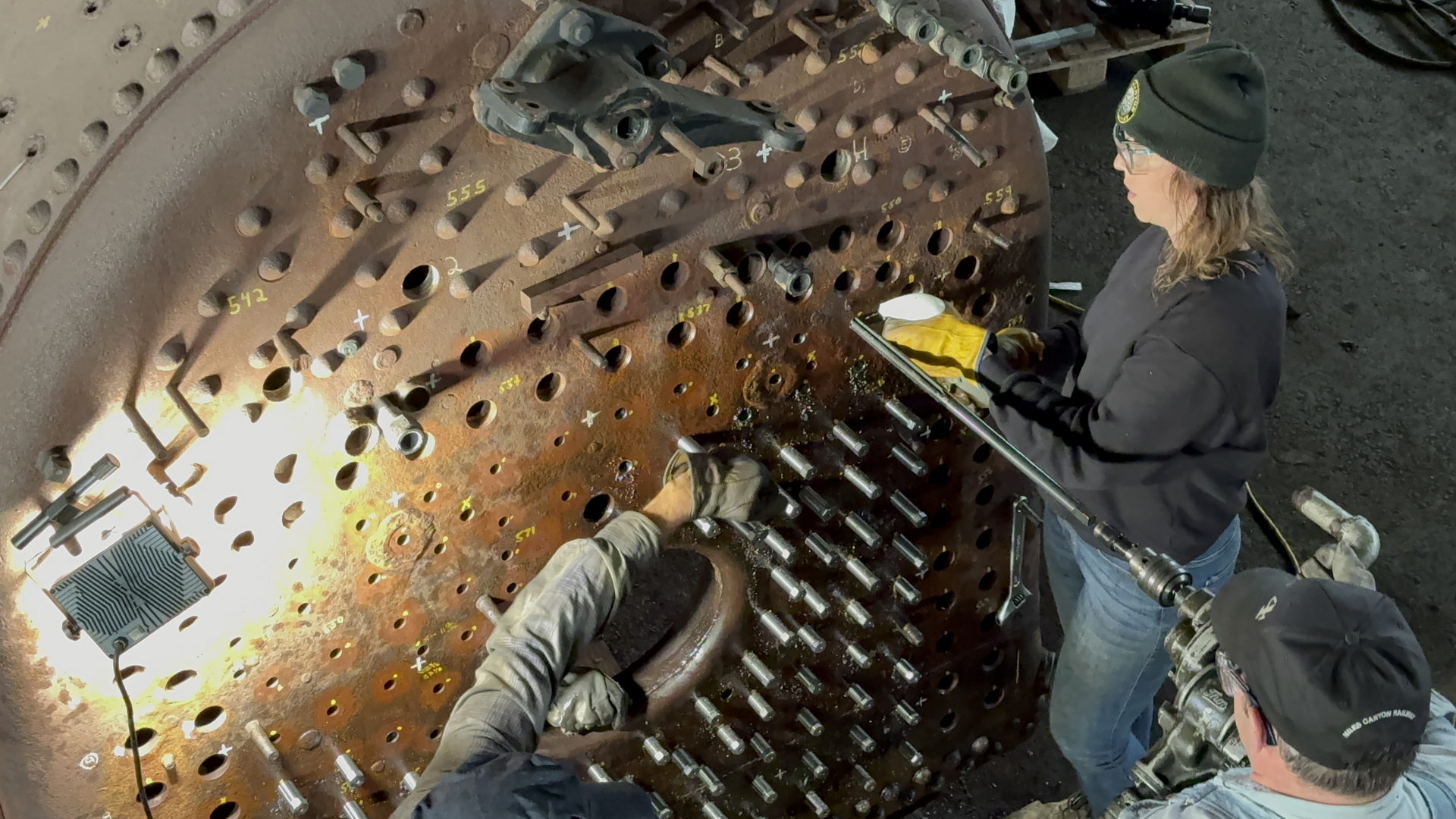
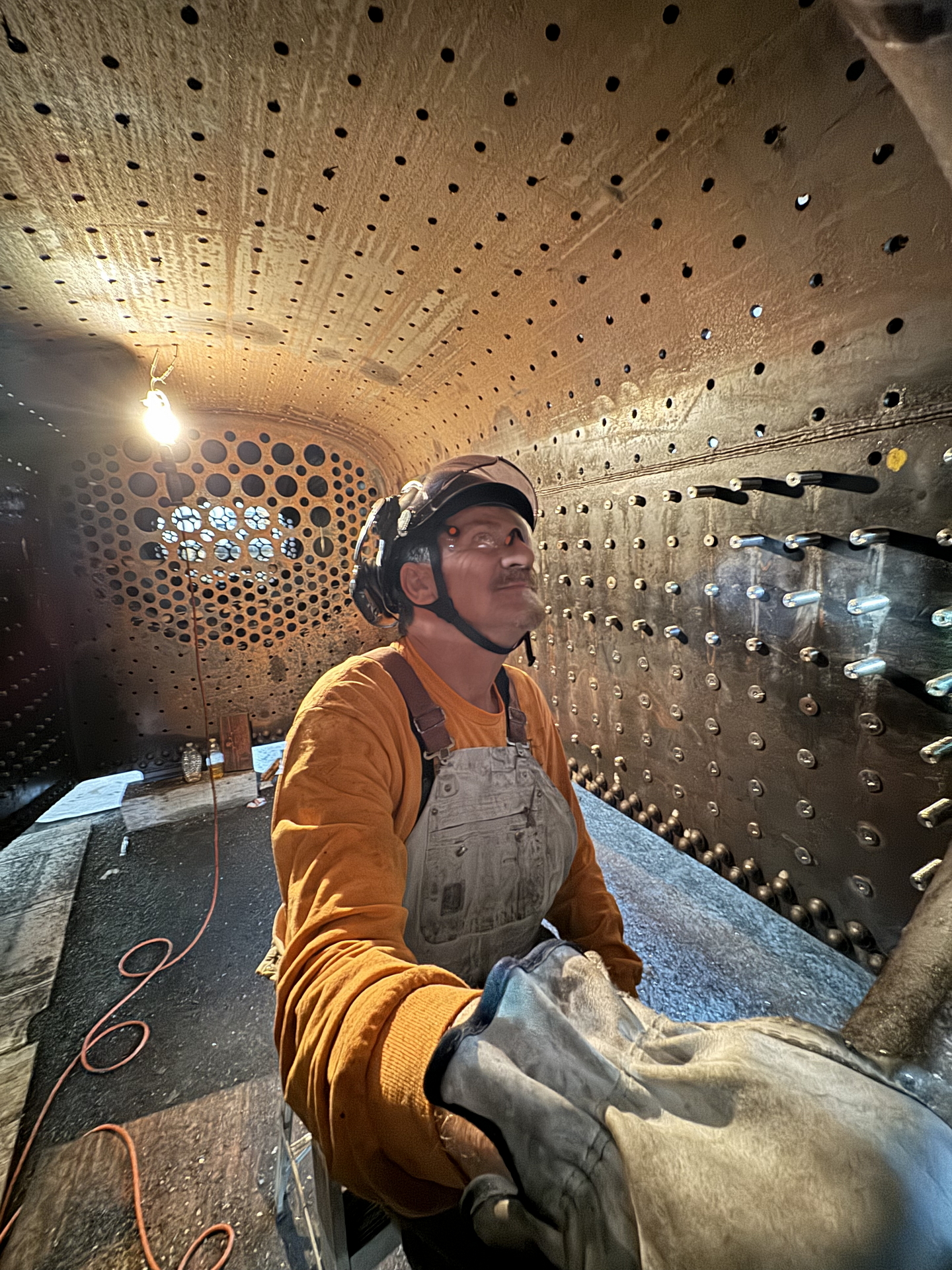
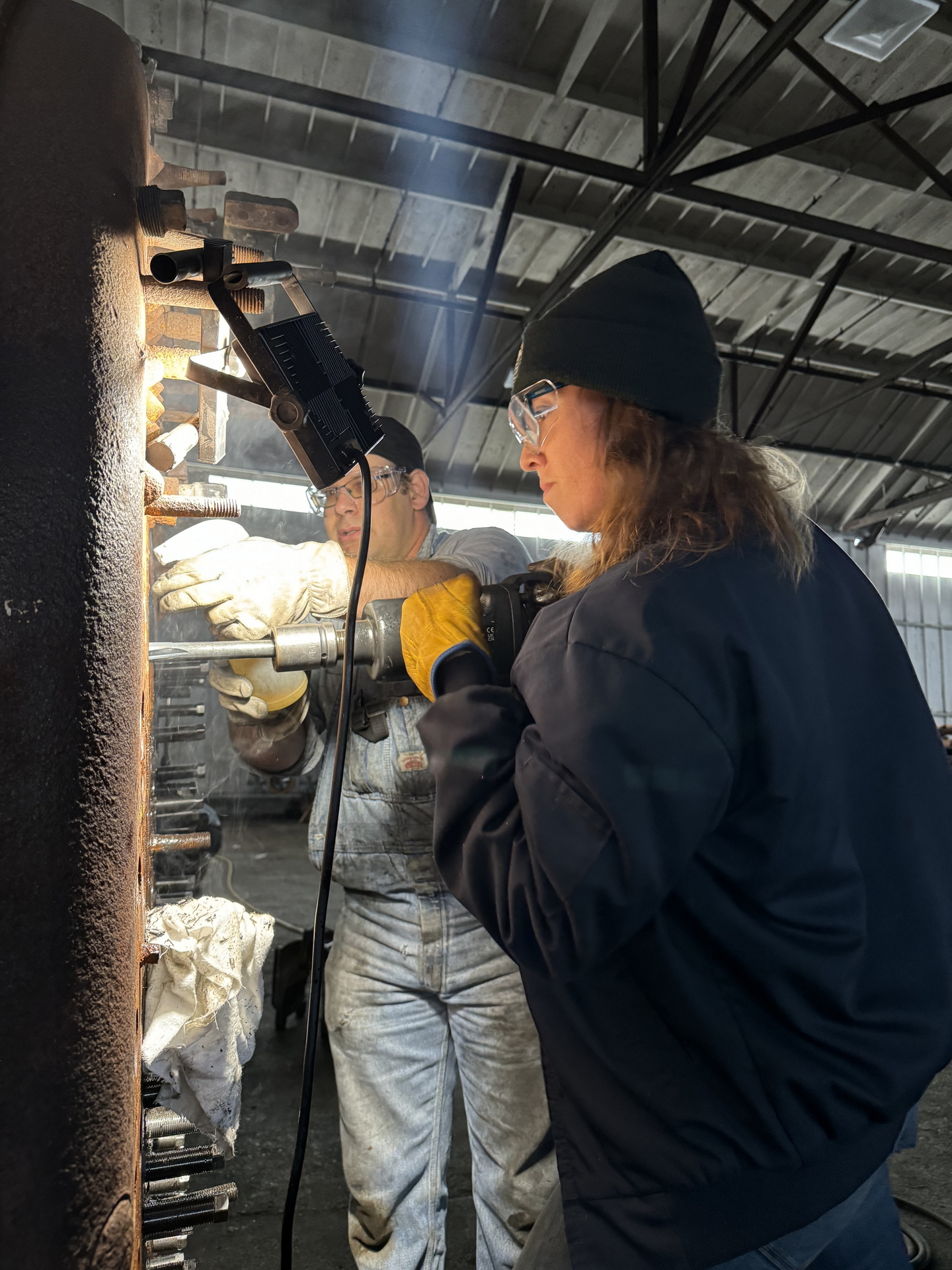
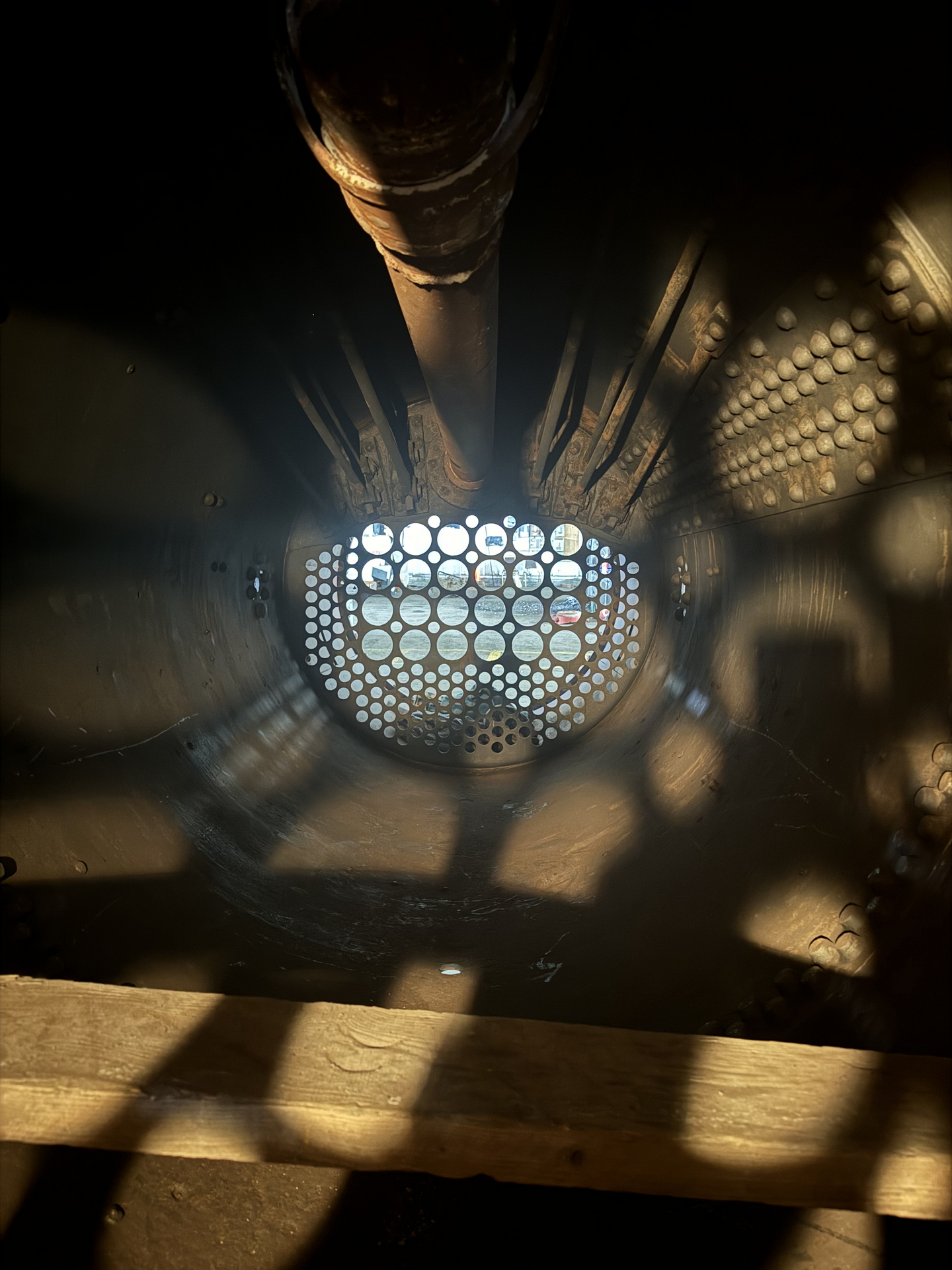
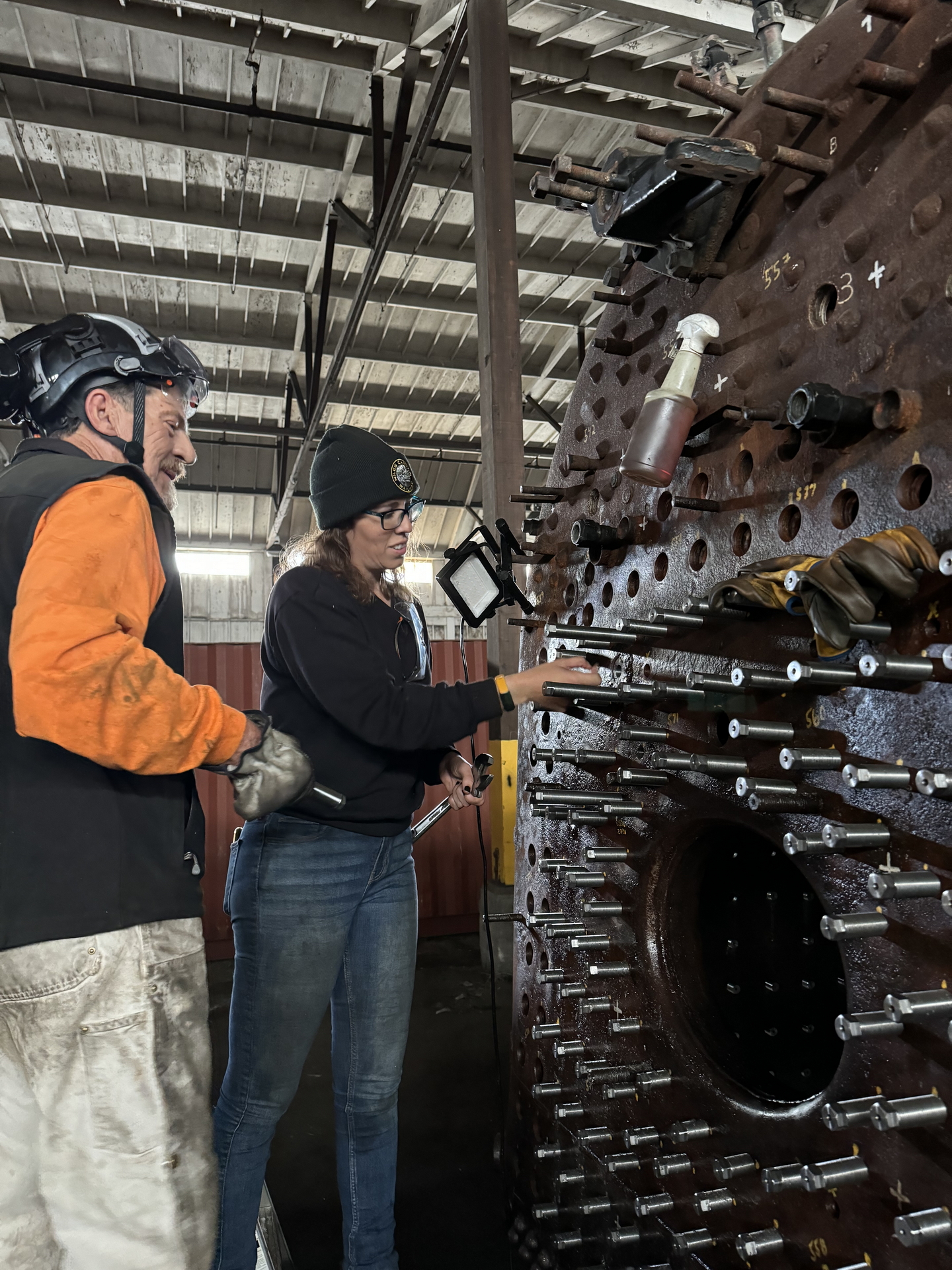
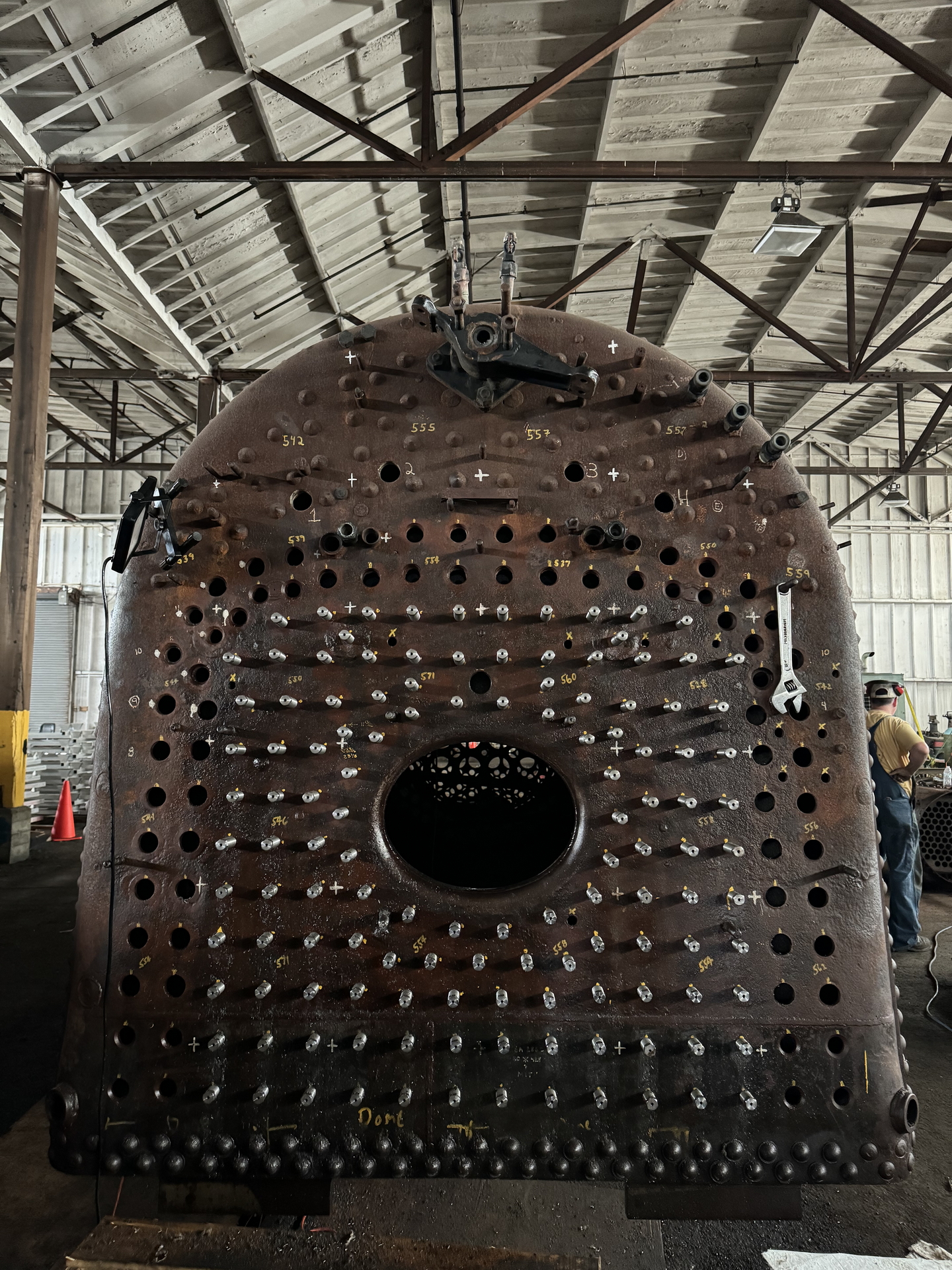
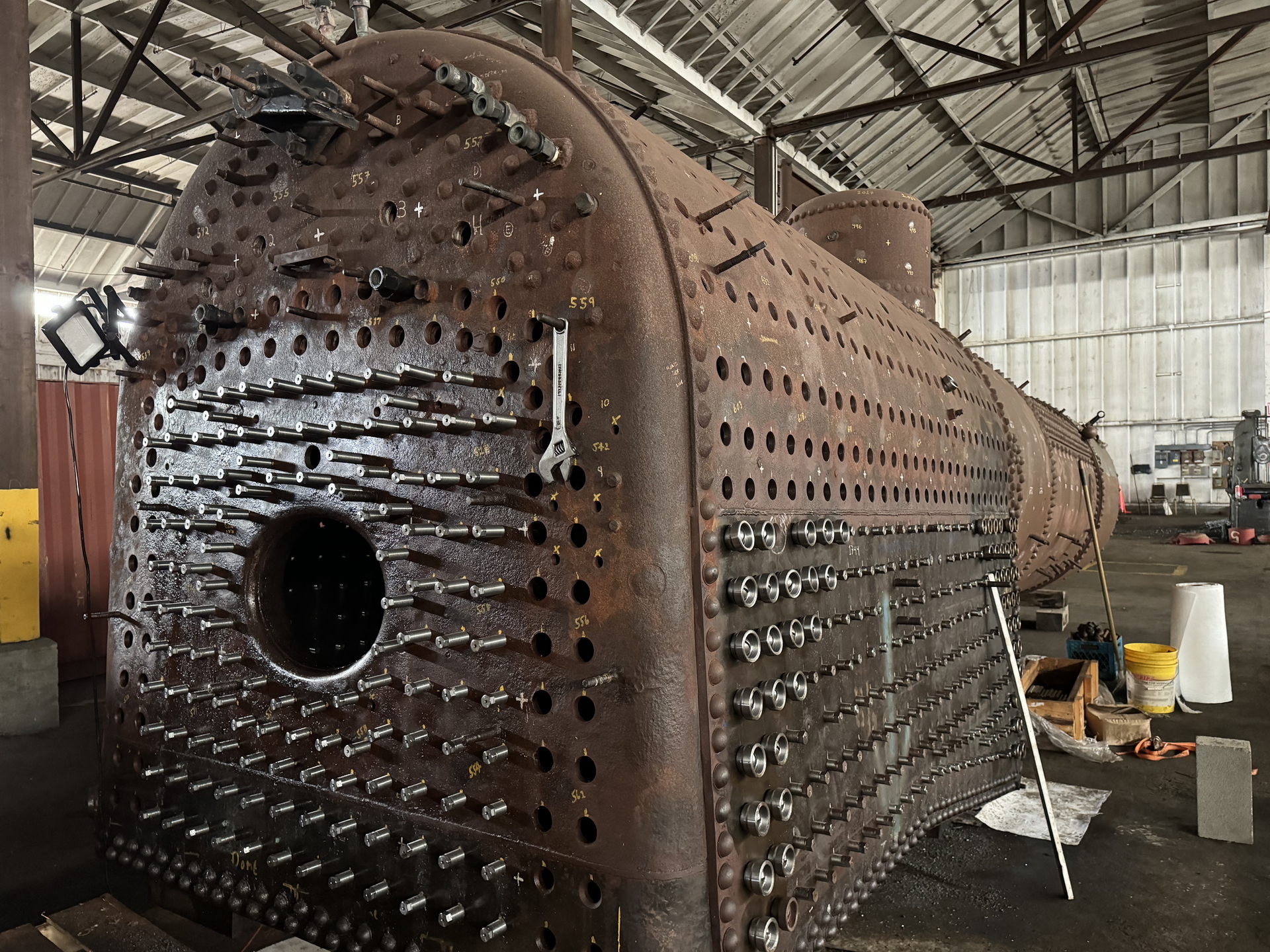
For this work session, the concentration was the reaming, tapping and insertion of all of the rigid staybolts in the backhead of the boiler. This work was necessary since all of the interior sheets of the firebox and the mud ring had been replaced with new materials. The two previous crews were able to get all of the rigid staybolts in the side sheets leaving only the throat sheet left to do rigid stays. There are still hundreds of flexible staybolts and sleeves still to be installed in all sections of the boiler along with peening over all of the rigid stays. One quickly learns just how incredibly labor intensive these boilers were to build, maintain and repair when doing this work.
Here is a gallery of images highlighting some of the work from the last work session along with a timelapse video showing the whole process for one small section of the backhead. Your ongoing support of this project is critical to keep the progress moving forward. Donations may be made via mail or online. All of the information is available on our website
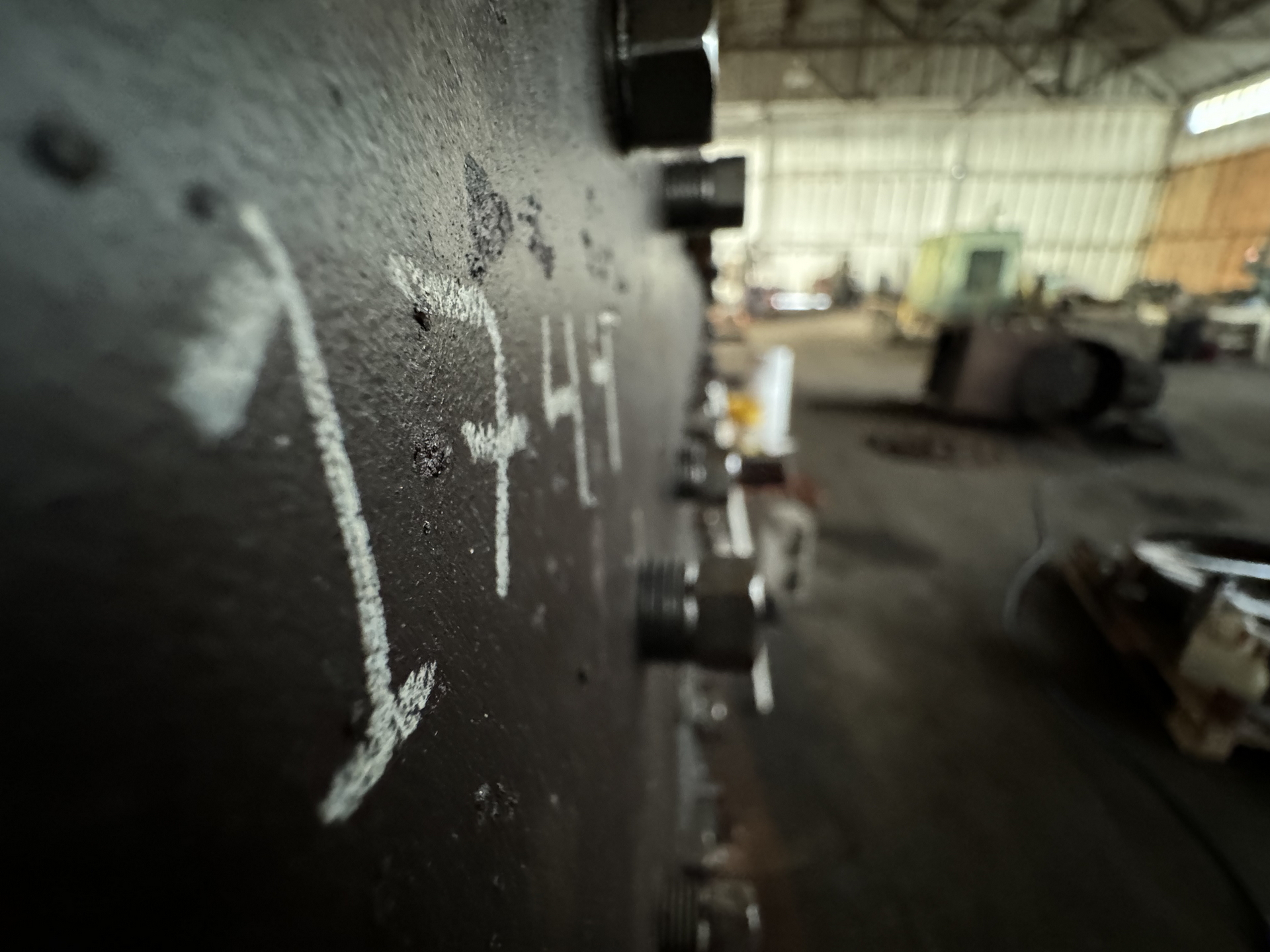
With Stockton Locomotive Works owner (yellow shirt), Stathi Pappas, and NCRy, volunteer, Charlie Franz, looking along, NCRy Steam Department volunteer, Gerald DeWitt, reams out one of the staybolt holes with a 3/4″ impact wrench. This work is hard so volunteers made frequent changes to who was doing the work to let people have a chance to rest. Photo by Christopher Hauf – Used with permissionVolunteer, Justin Legg, has taken over the reaming with volunteer, Sarah Fritz, handling the oiling tasks to help the reamer cut successfully through both the out and inner sheets. Photo by Christopher Hauf – Used with permissionReaming continues. Note the backhead is devoid of any new staybolts. This would change by the end of the weekend. Photo by Christopher Hauf – Used with permissionThe NCRy Steam Department is fortunate to have formed many partnerships with other groups over the years. One of those is the Roots of Motive Power in Willits, CA. One of their volunteers, Ed, wanted to come lend a hand for a day, and who were we to turn down another set of hands. He was a huge help, and we appreciate the continued cooperation between the two groups. Photo by Christopher Hauf – Used with permissionWith the bottom row reamed, Stathi demonstrated the tapping process for everyone. Half of this team had done this type of work before, but half had not so it was good to see how it was done. With the first few complete, the tooling was handed over to Steam Department Head, Alan Siegwarth, to continue. You will note the hand in the firebox door. Given the length of the special boiler tap, it was fed into the hole and allowed to cut all the way through to a blank area on the other end where the volunteer in the firebox would remove the tap from the hole, feed it back out of the firebox before being run into a new hole. Photo by Christopher Hauf – Used with permissionTapping continues.., Photo by Christopher Hauf – Used with permissionVolunteer, Charlie Franz, supports and guides the tap from inside the firebox. The tap will be fed all the way through and passed back out to the outside team to be inserted in the next hole to be tapped. Photo by Christopher Hauf – Used with permissionVolunteer, Justin Legg, has now taken his turn while Gerald continues to oil to tap to keep it running freely through the sheets. Photo by Christopher Hauf – Used with permissionAnother volunteer trade and Sarah Fritz has now taken up the air motor to keep tapping as Charlie oils. You can now see the first staybolts in place so this was the next set of holes to get attention. Photo by Christopher Hauf – Used with permissionMore tapping later in the afternoon. Photo by Christopher Hauf – Used with permissionTapping around the firebox door. Photo by Christopher Hauf – Used with permissionOur contractor has also been rebuilding 1744’s axle driving boxes. Here we are looking through one of them at 1744’s boiler barrel. Photo by Christopher Hauf – Used with permissionBack to reaming with Justin and Alan. We are getting higher on the firebox. Photo by Christopher Hauf – Used with permissionGerald watches at staybolts are inserted to a specific depth to allow for eventual peening on the inside, followed by the bolts being cut and peened on the outside as well. Photo by Christopher Hauf – Used with permissionA top down view as tapping is underway on Sunday morning. Photo by Christopher Hauf – Used with permissionAlmost there. Photo by Christopher Hauf – Used with permissionJust in case we forget which locomotive the boiler is for. Photo by Christopher Hauf – Used with permission
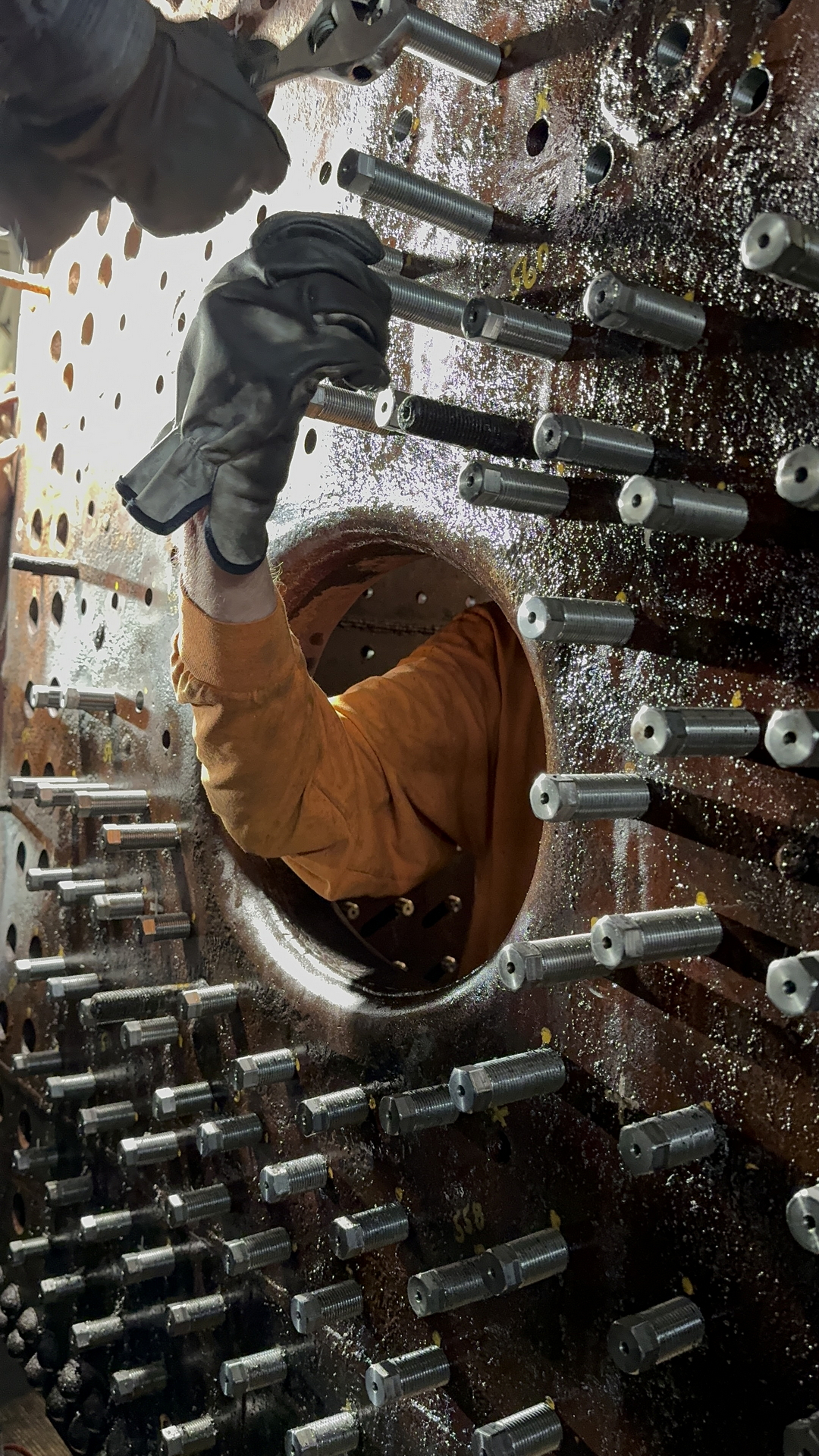
A bit like having Thing from the Addams Family, Gerald adjusts the bolt depths from inside the firebox. Photo by Christopher Hauf – Used with permission
More bolts going in. Photo by Christopher Hauf – Used with permissionGerald watches from inside the firebox where you can see some of the complete rigid staybolt work on the one side sheet and all of the holes in the crown sheet that will receive flexible staybolts. In all, 1744 will get over 1500 new staybolts inserted! Photo by Christopher Hauf – Used with permissionSarah takes her turn Sunday AM on the reamer. Just a few more holes to go. Photo by Christopher Hauf – Used with permissionA look at the boiler from the inner tube sheet toward the smokebox tube sheet. This will eventually filled with new flues and tubes. More work still to do! Photo by Christopher Hauf – Used with permissionInserting the last of the bolts near lunchtime on Sunday. Photo by Christopher Hauf – Used with permissionComplete! Photo by Christopher Hauf – Used with permissionThe backhead with all of the rigid stays complete and the engineer’s side sheet with both the rigid and flexible stays & sleeves installed. Photo by Christopher Hauf – Used with permissionThe fireman’s side again with all the rigid bolts in place. Photo by Christopher Hauf – Used with permission
Here is a YouTube video showing a timelapse of the reaming, tapping and insertion of the first set of bolts on Saturday AM.
Timelapse of some of the #1744’s boiler work.
Thanks again to all of our Steam Department volunteers for taking the time to travel to do this very challenging work. Thanks to Ed from the Roots of Motive Power for lending us a hand. Finally, thanks to the hospitality and cooperation from our contractor, Stockton Locomotive Works, for allowing us the ability to work with you on this project and continue to push the restoration of Southern Pacific #1744 forward.
Again your support is welcome, new hands are always welcome to help, and thanks for checking our update out.
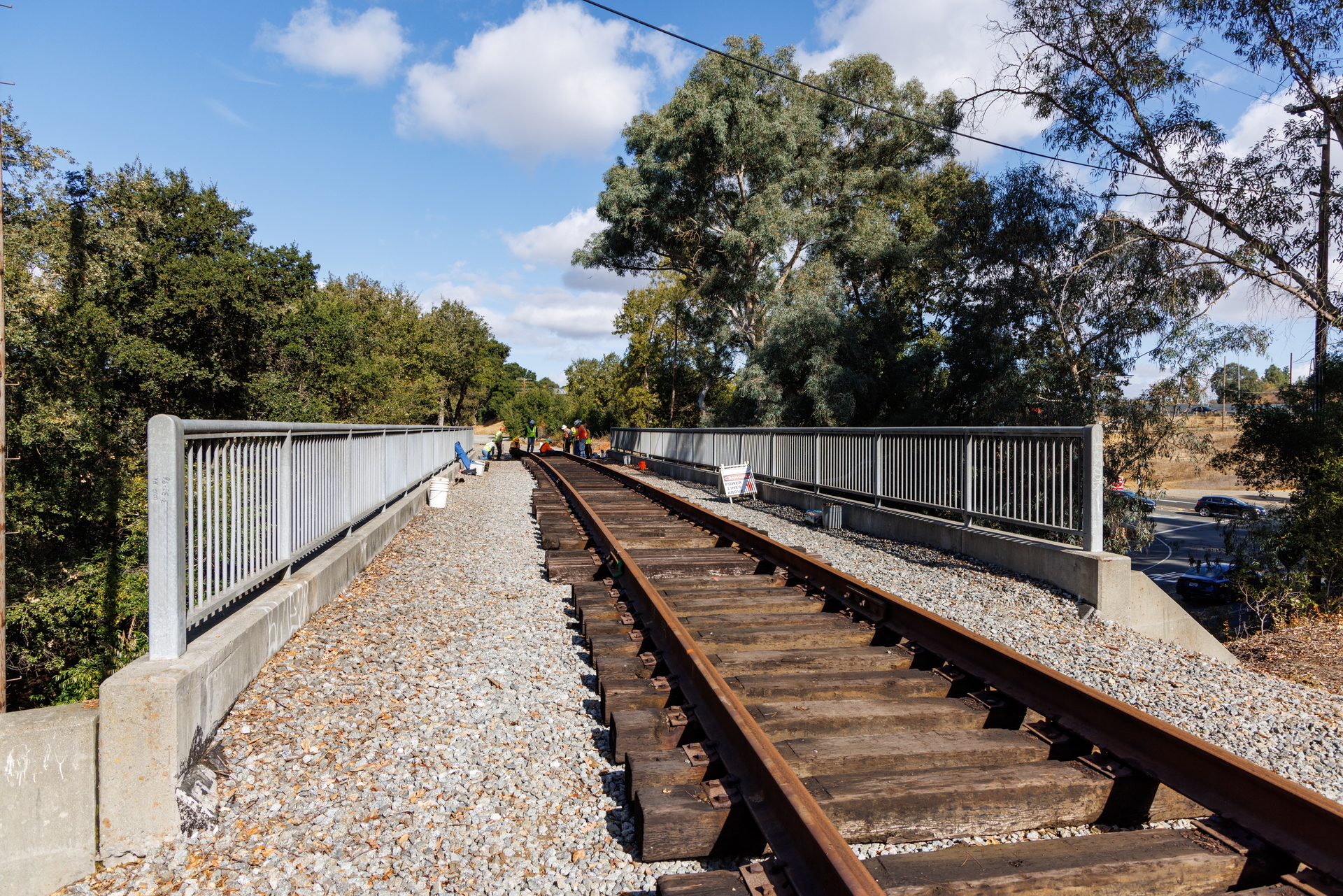
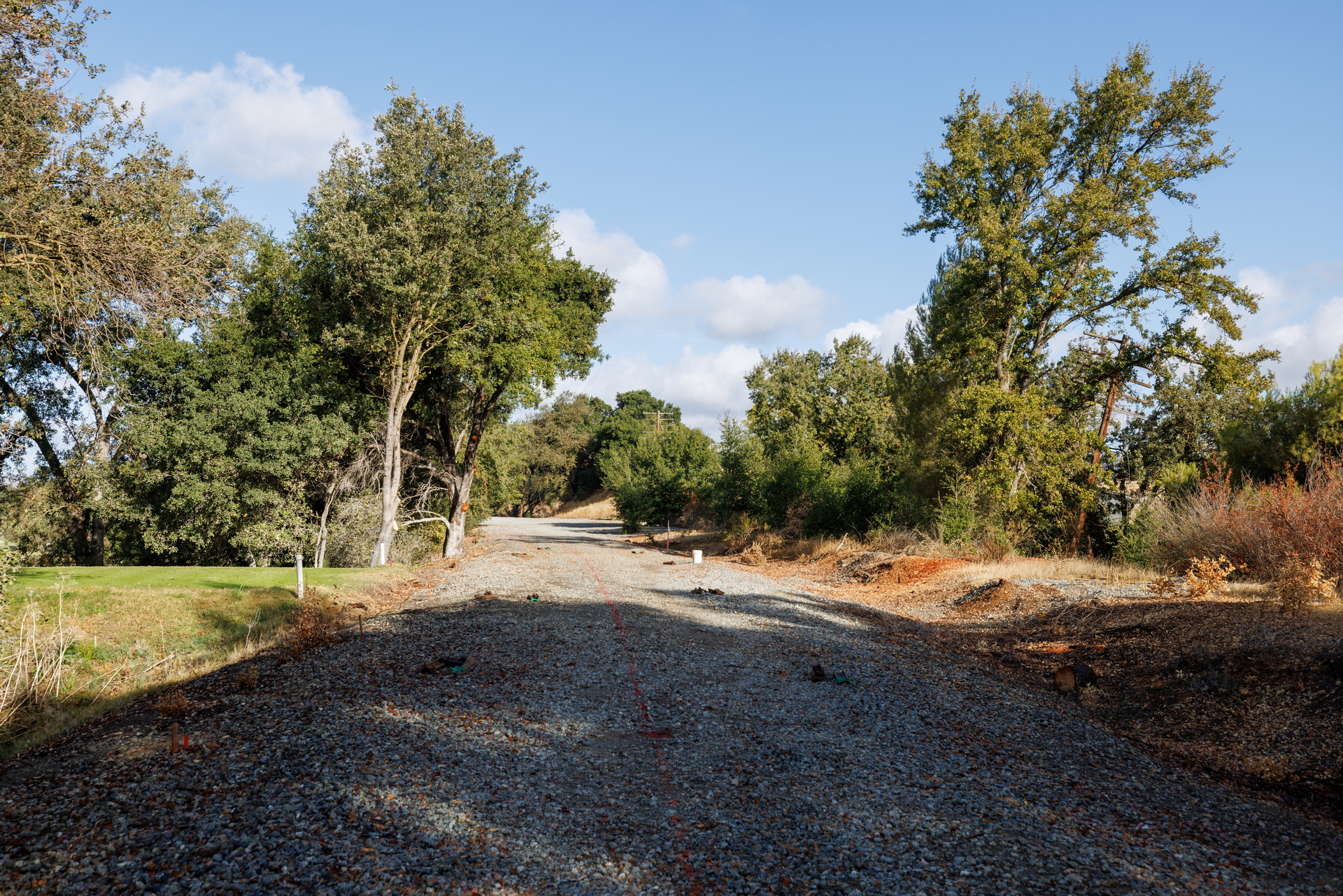
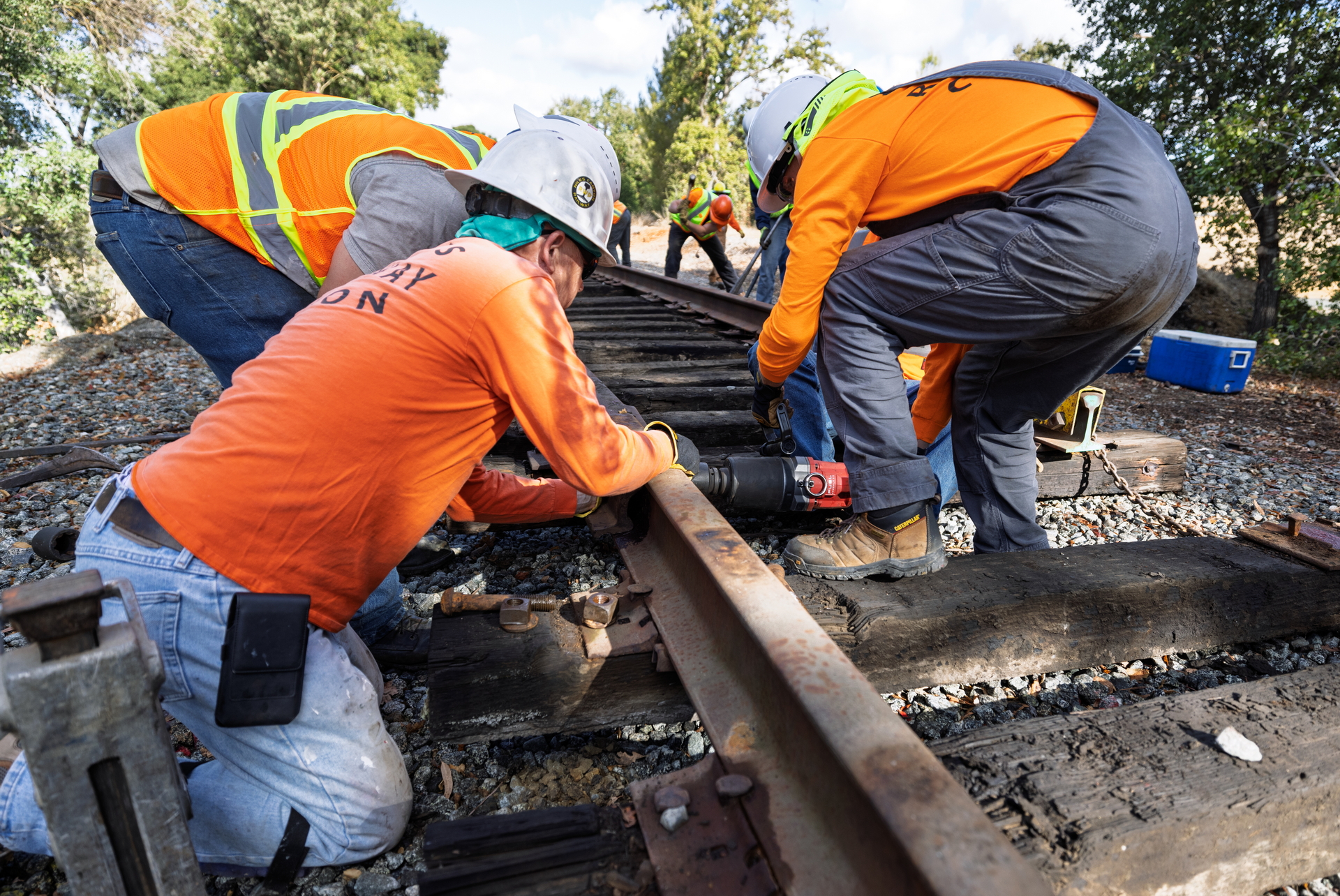
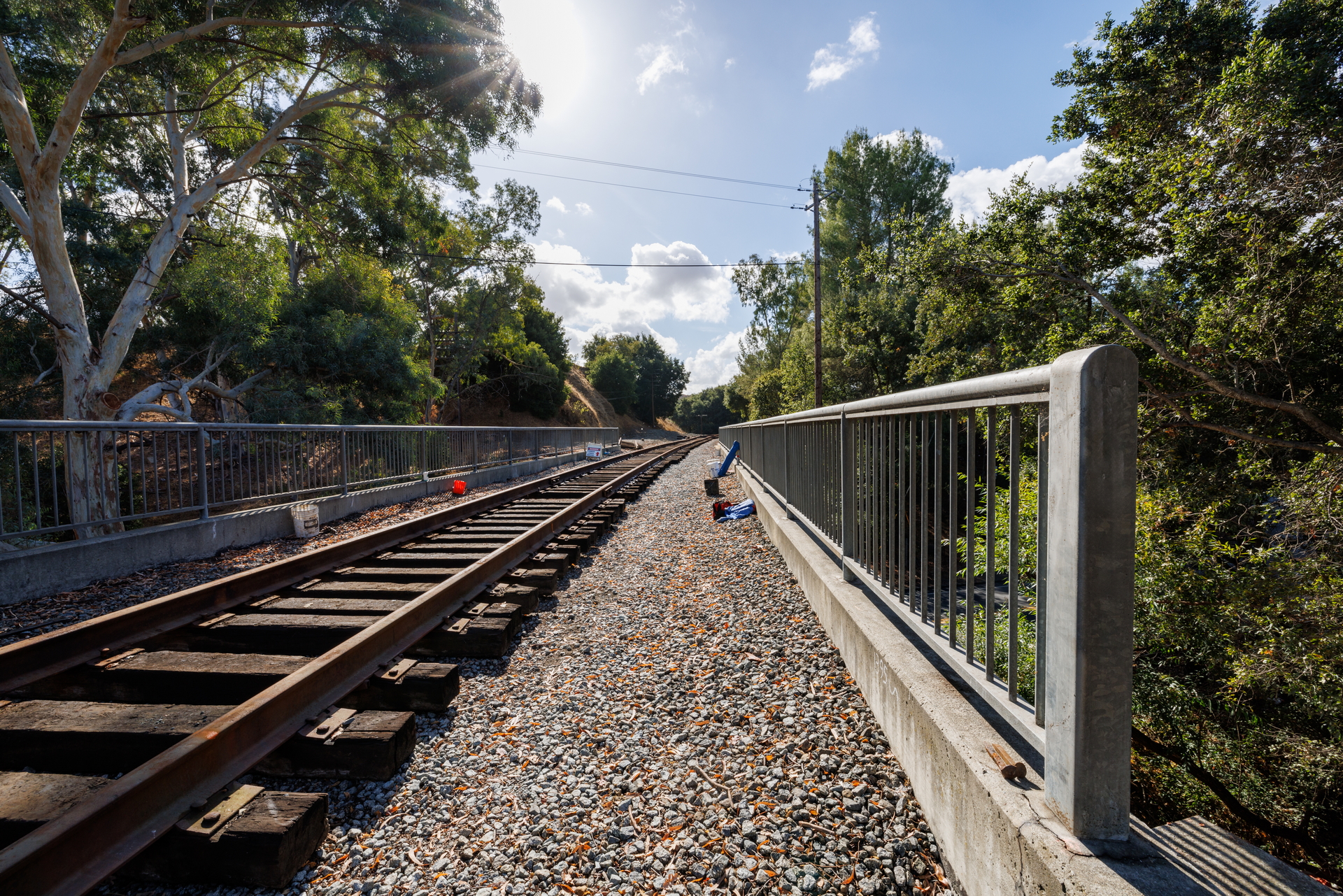
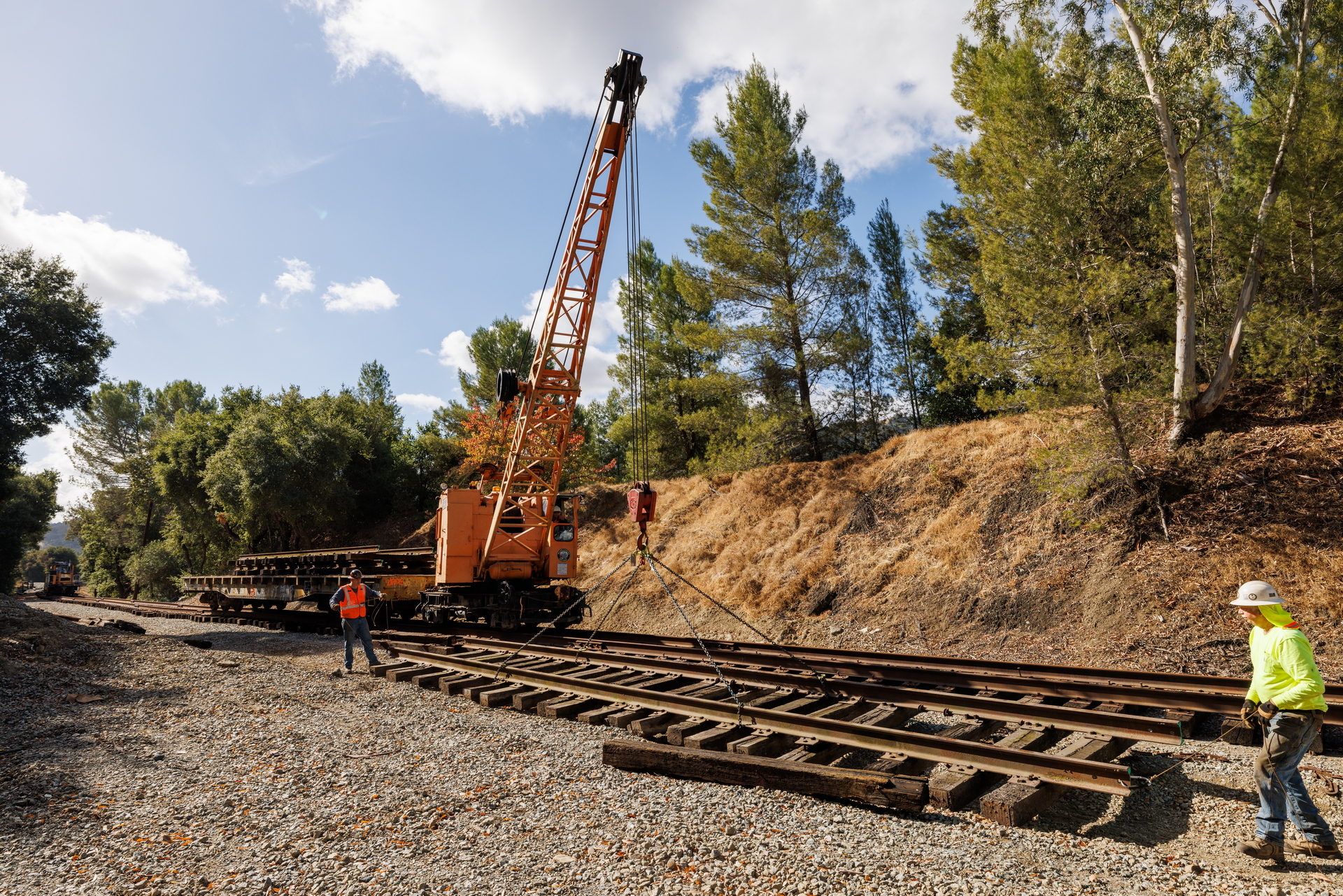
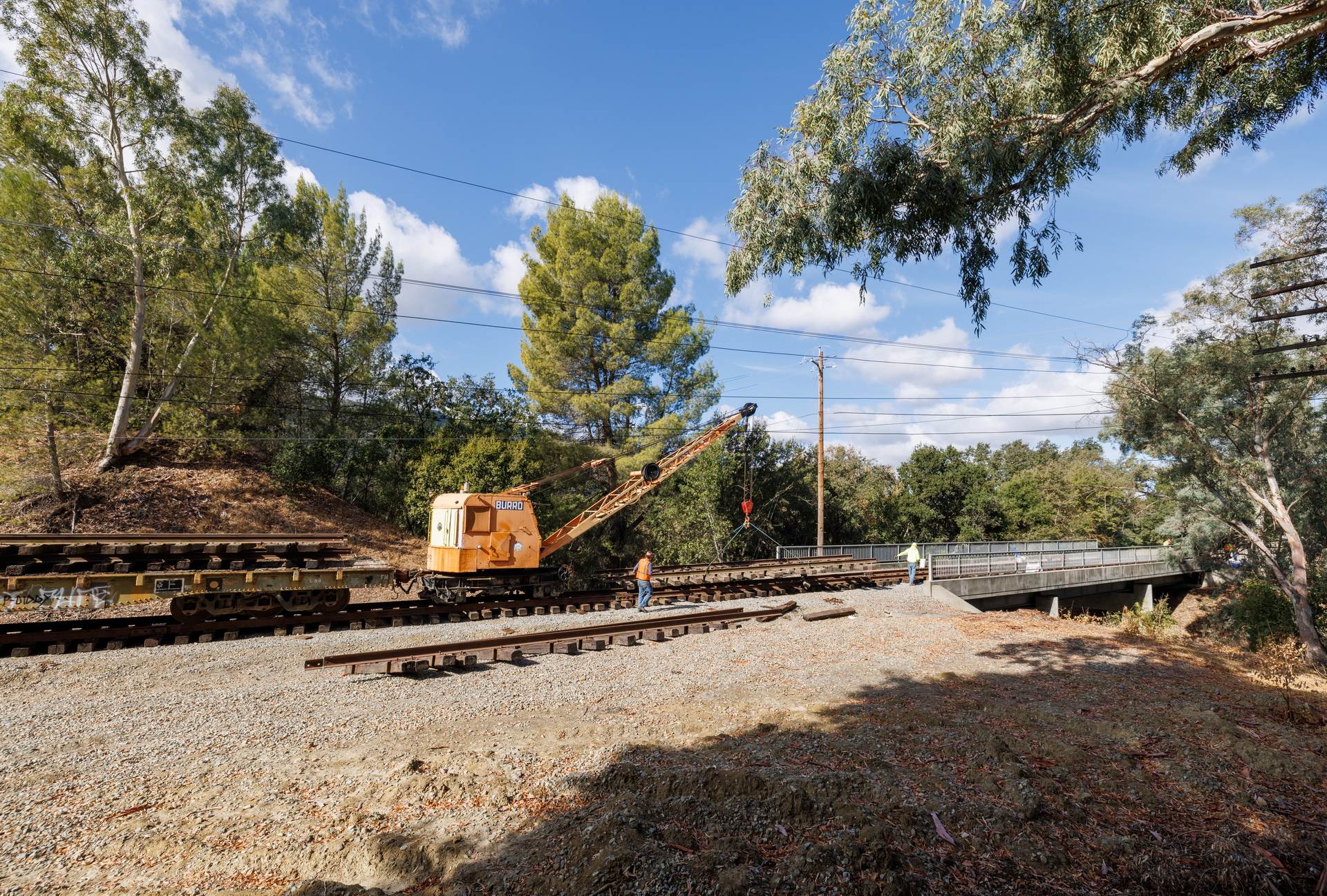
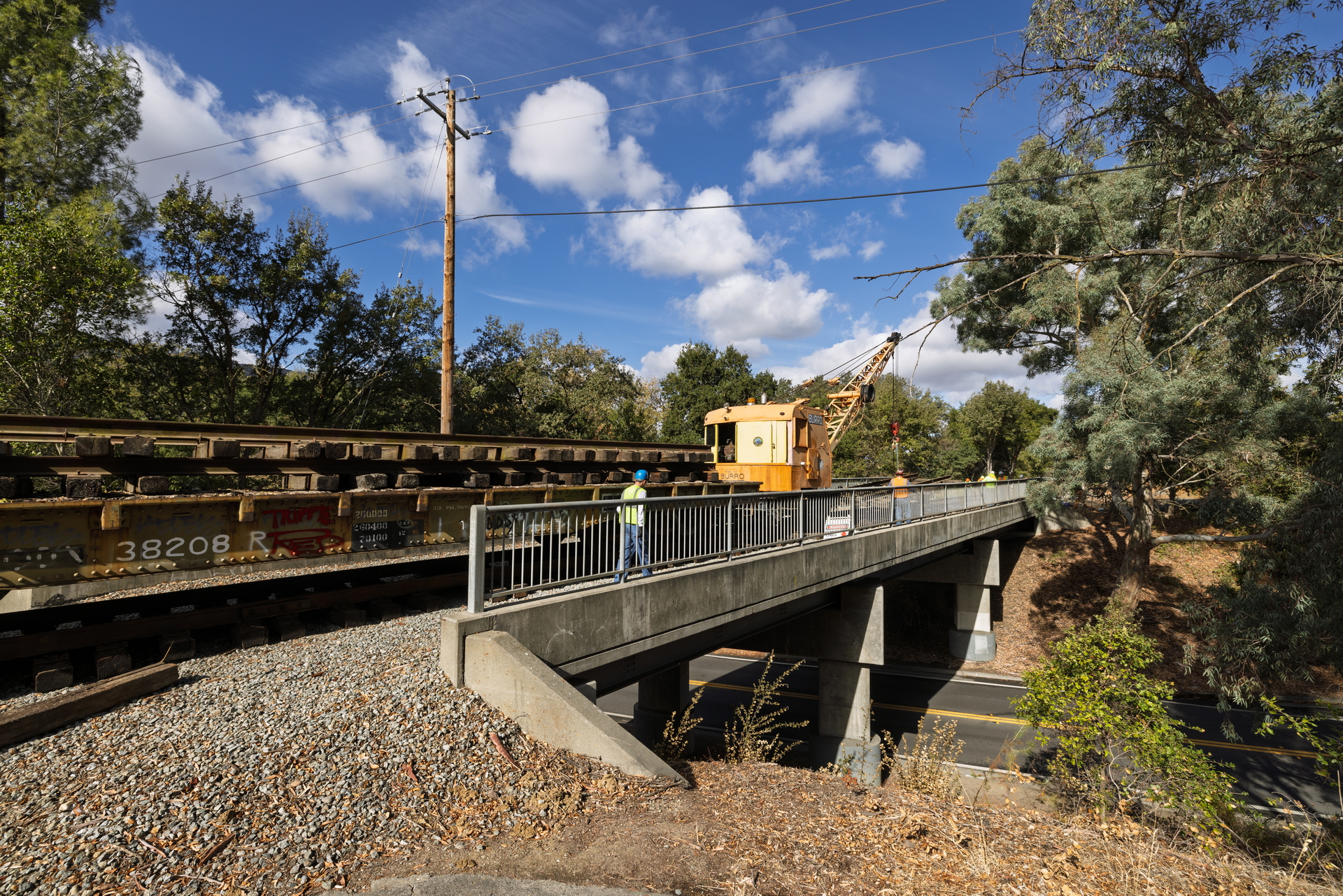
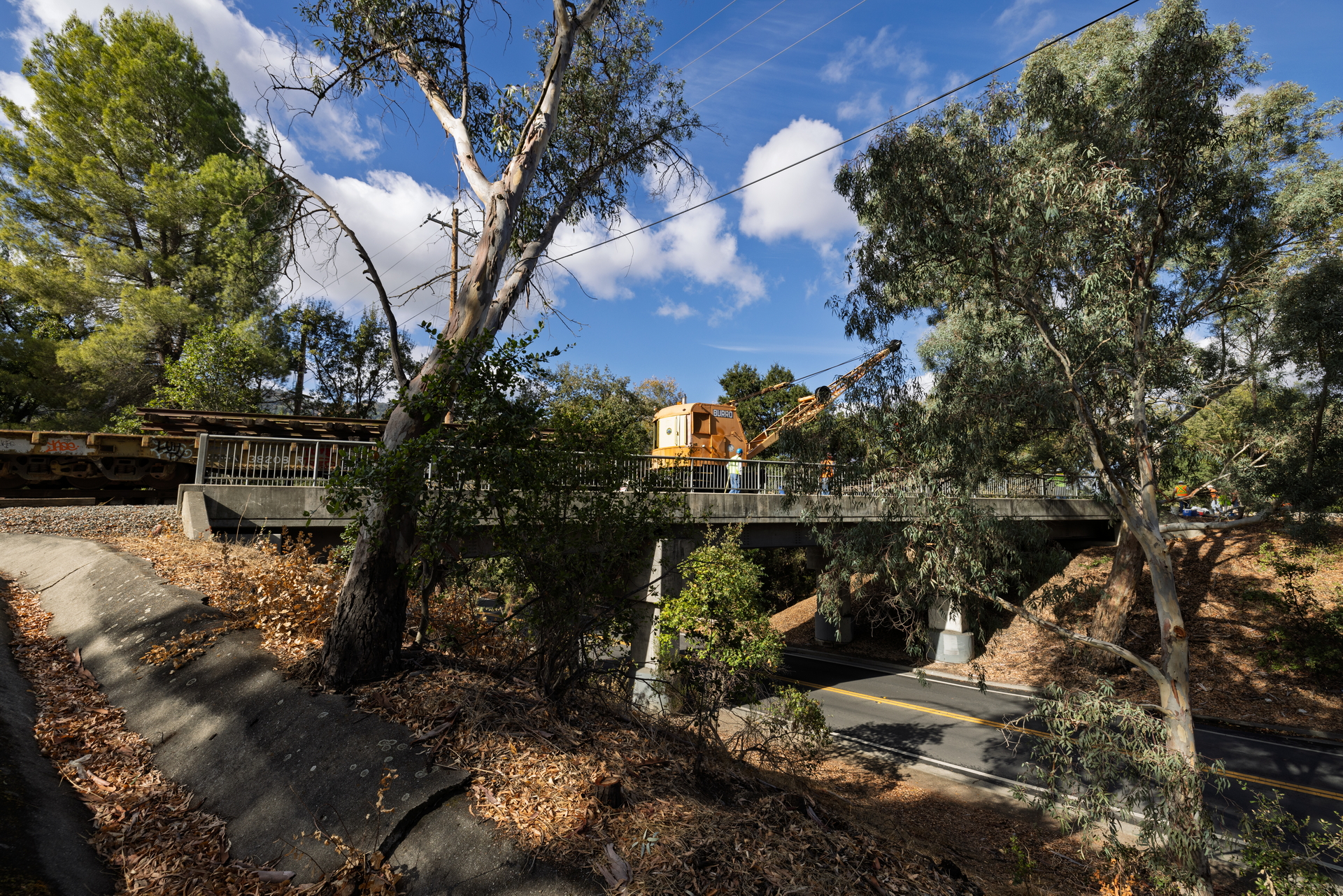
Our Build East Track Construction Team was back out on the railroad on Saturday, November 2, 2024 and reached another milestone with track now extending to the east side of …
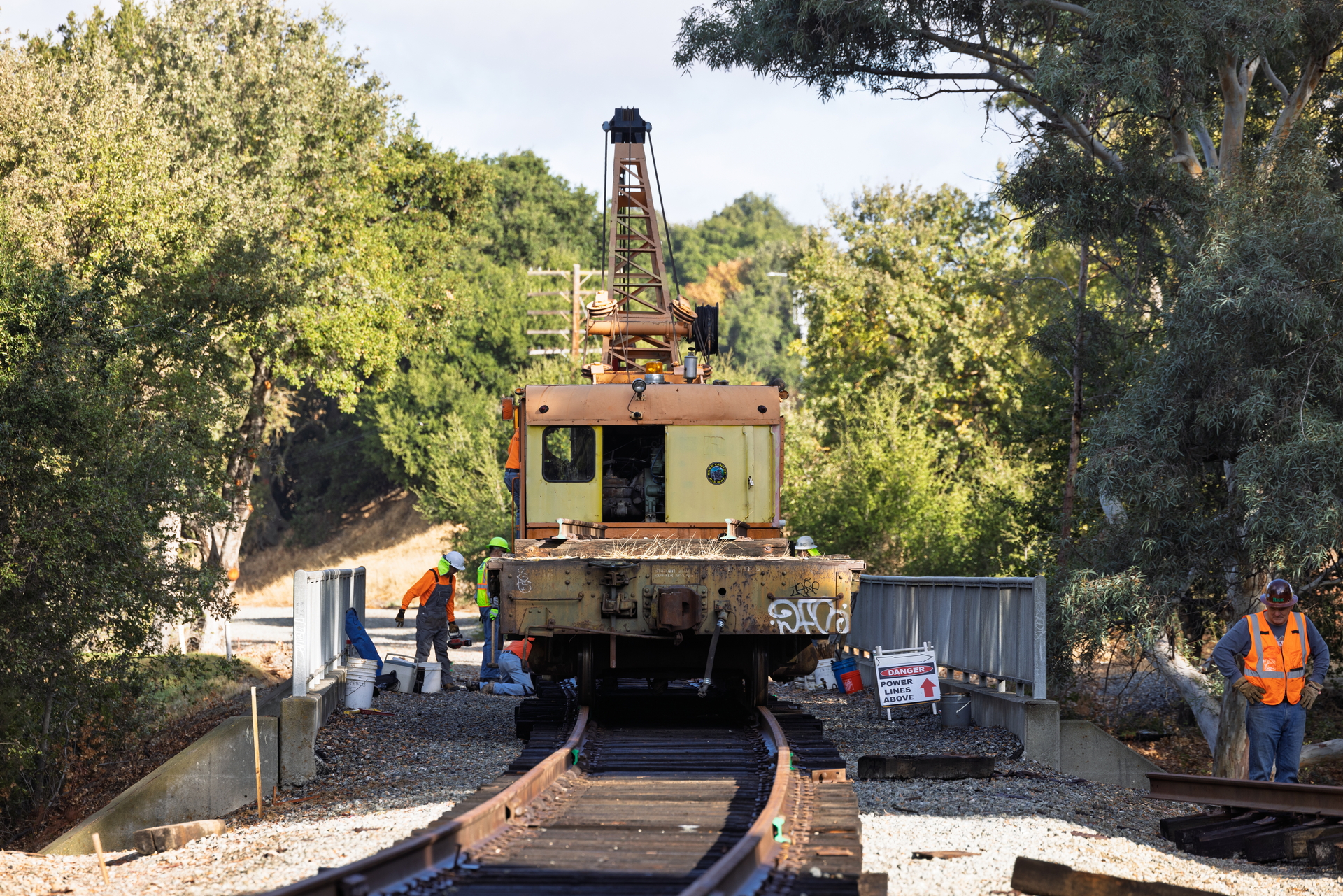
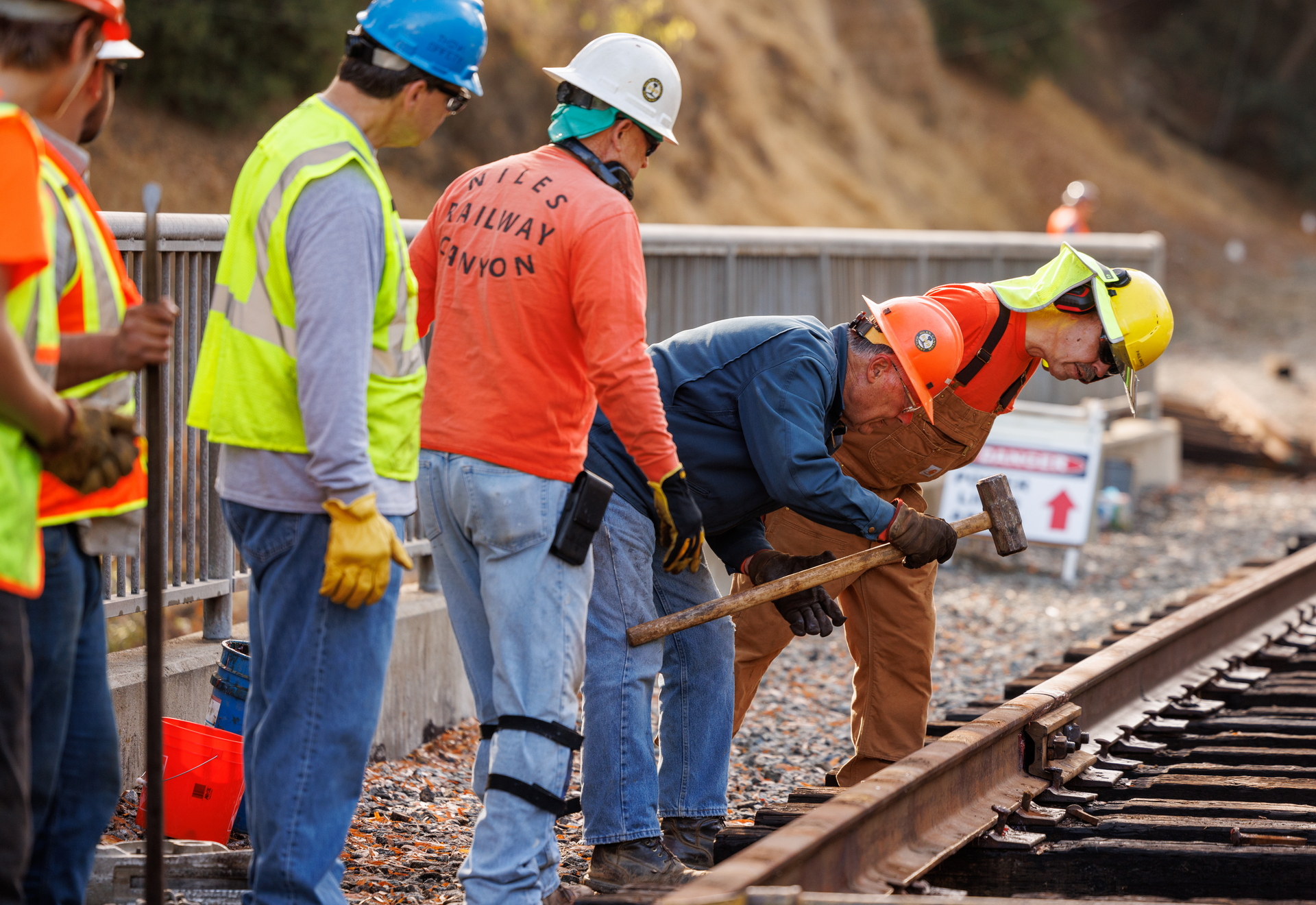
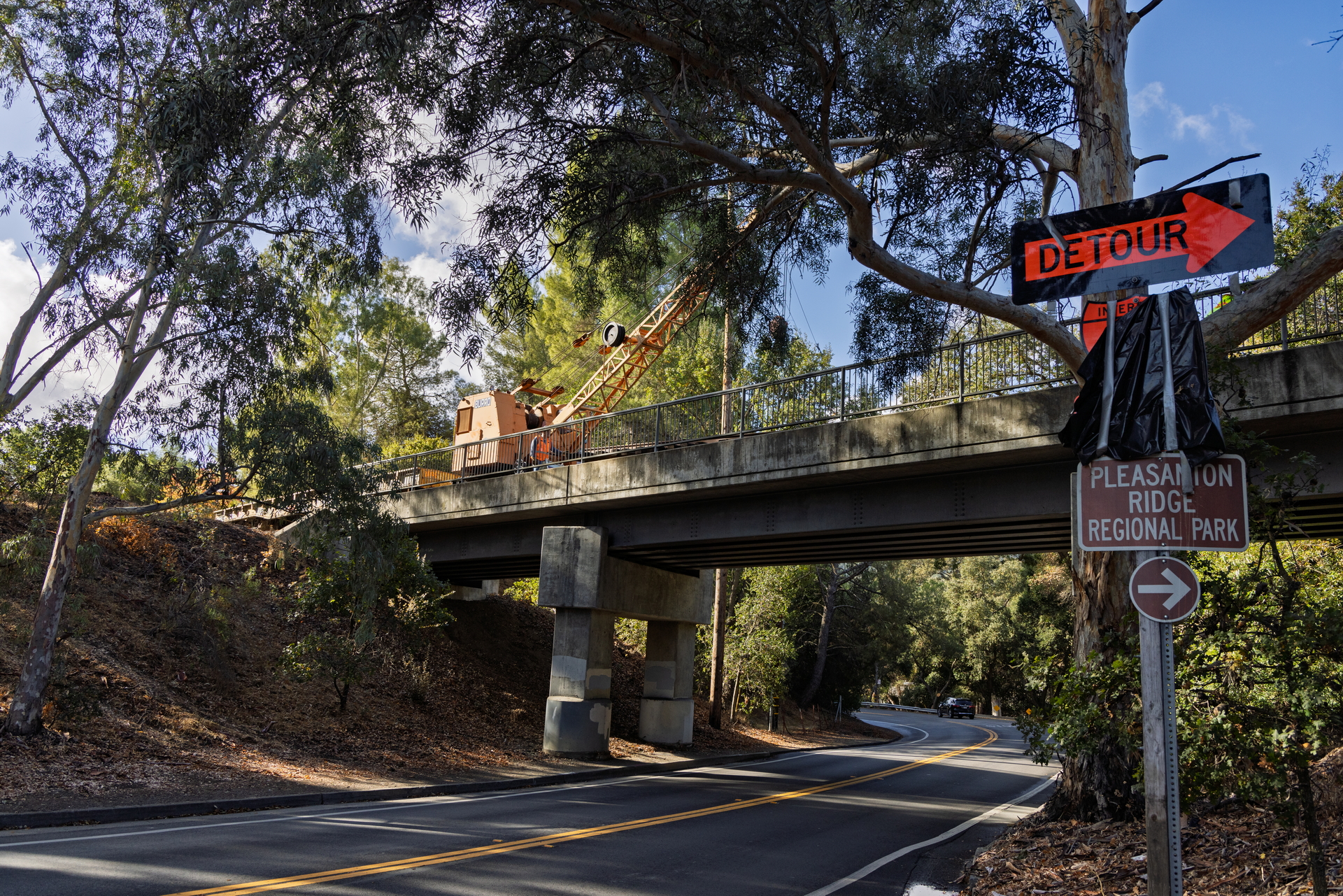
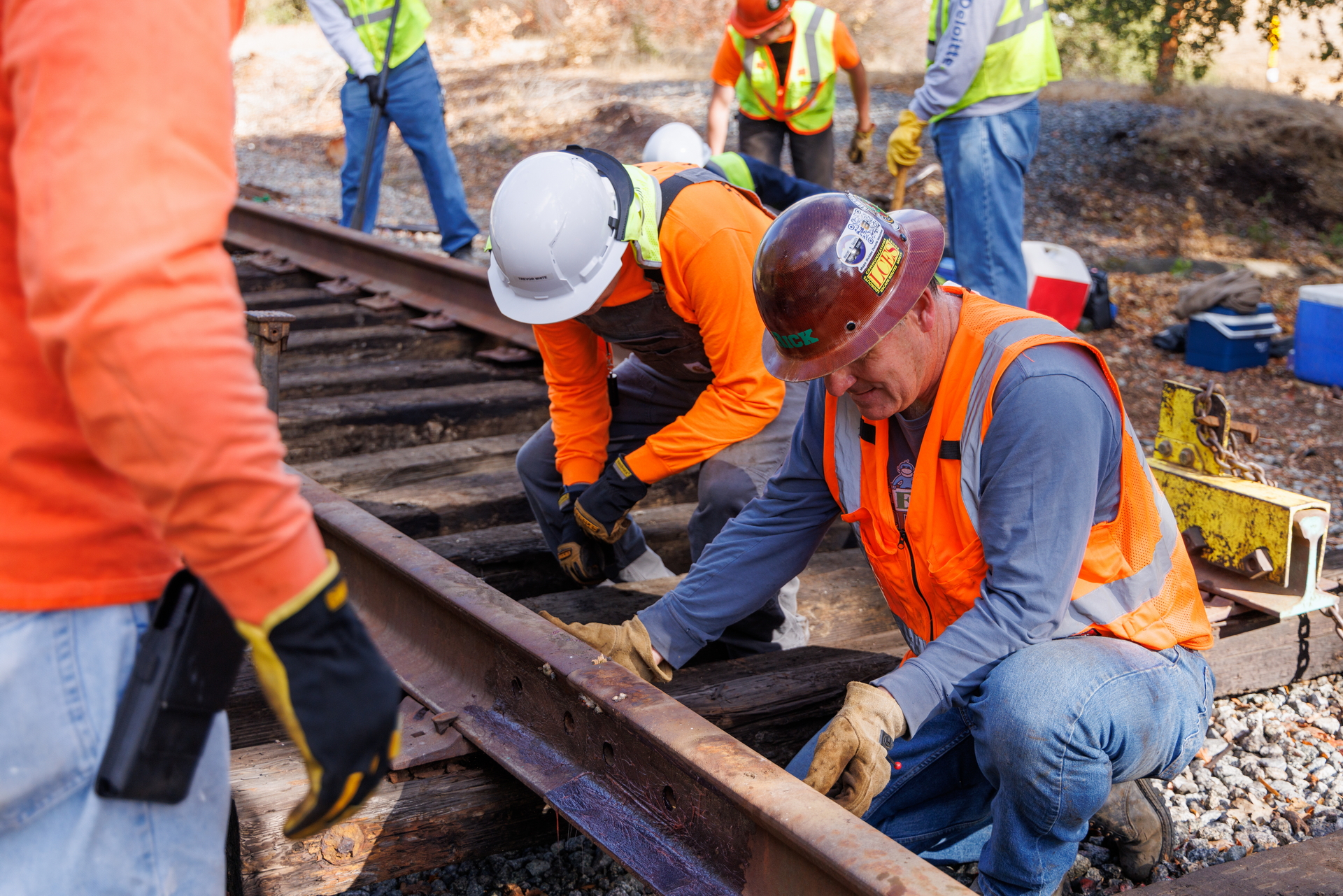
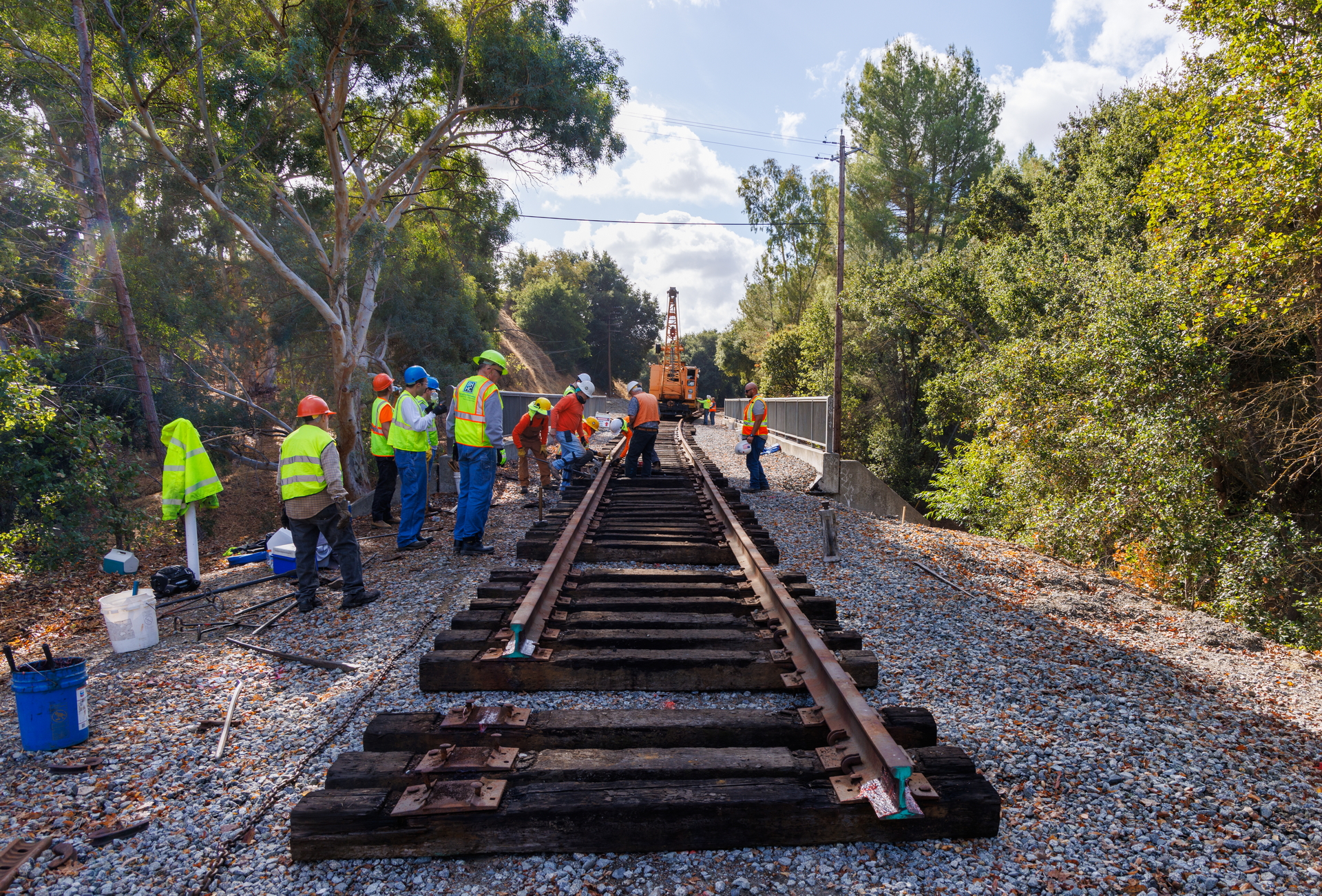
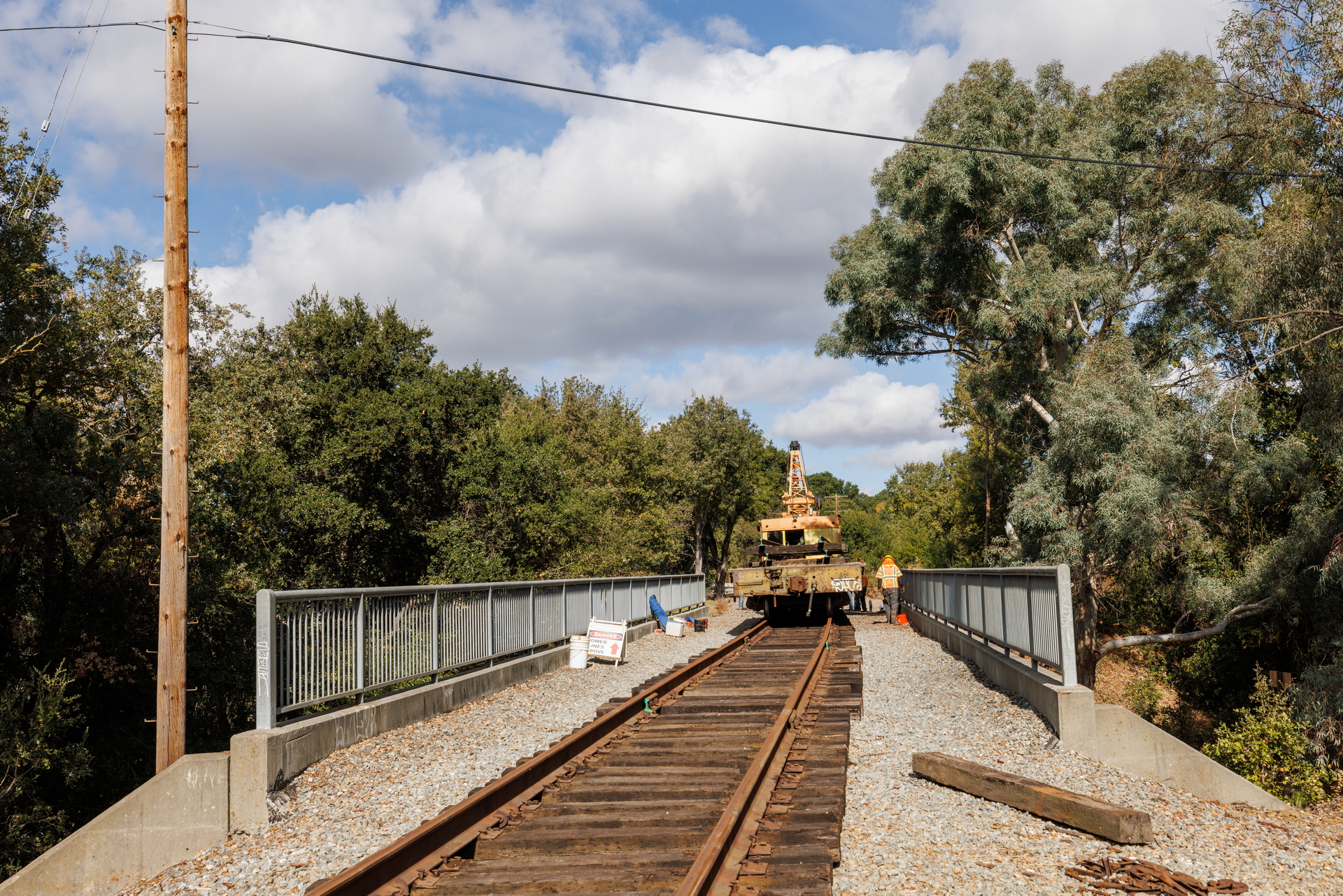
Our Build East Track Construction Team was back out on the railroad on Saturday, November 2, 2024 and reached another milestone with track now extending to the east side of Castlewood Bridge.
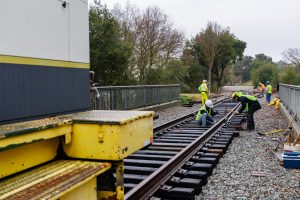
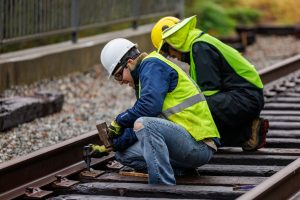
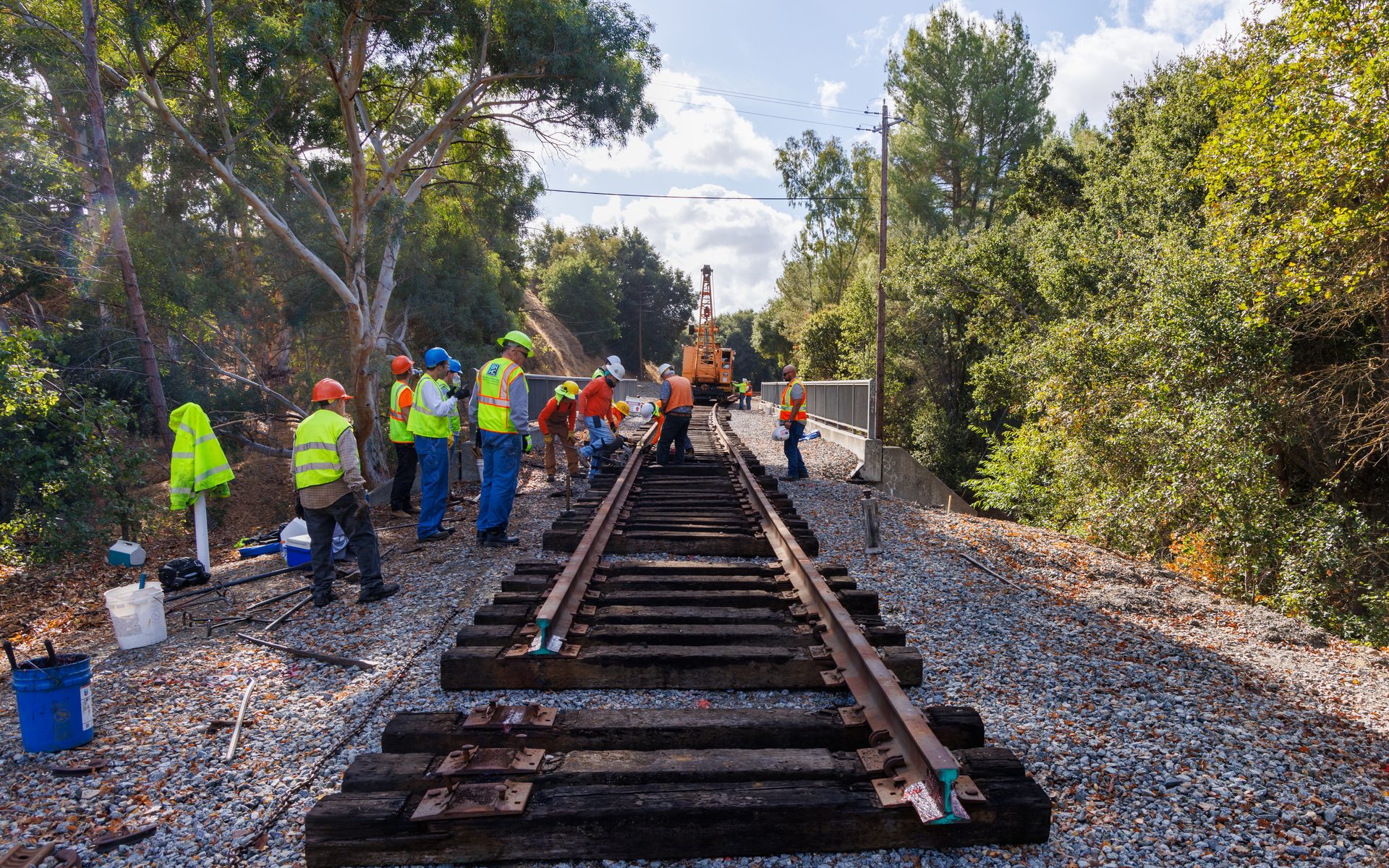
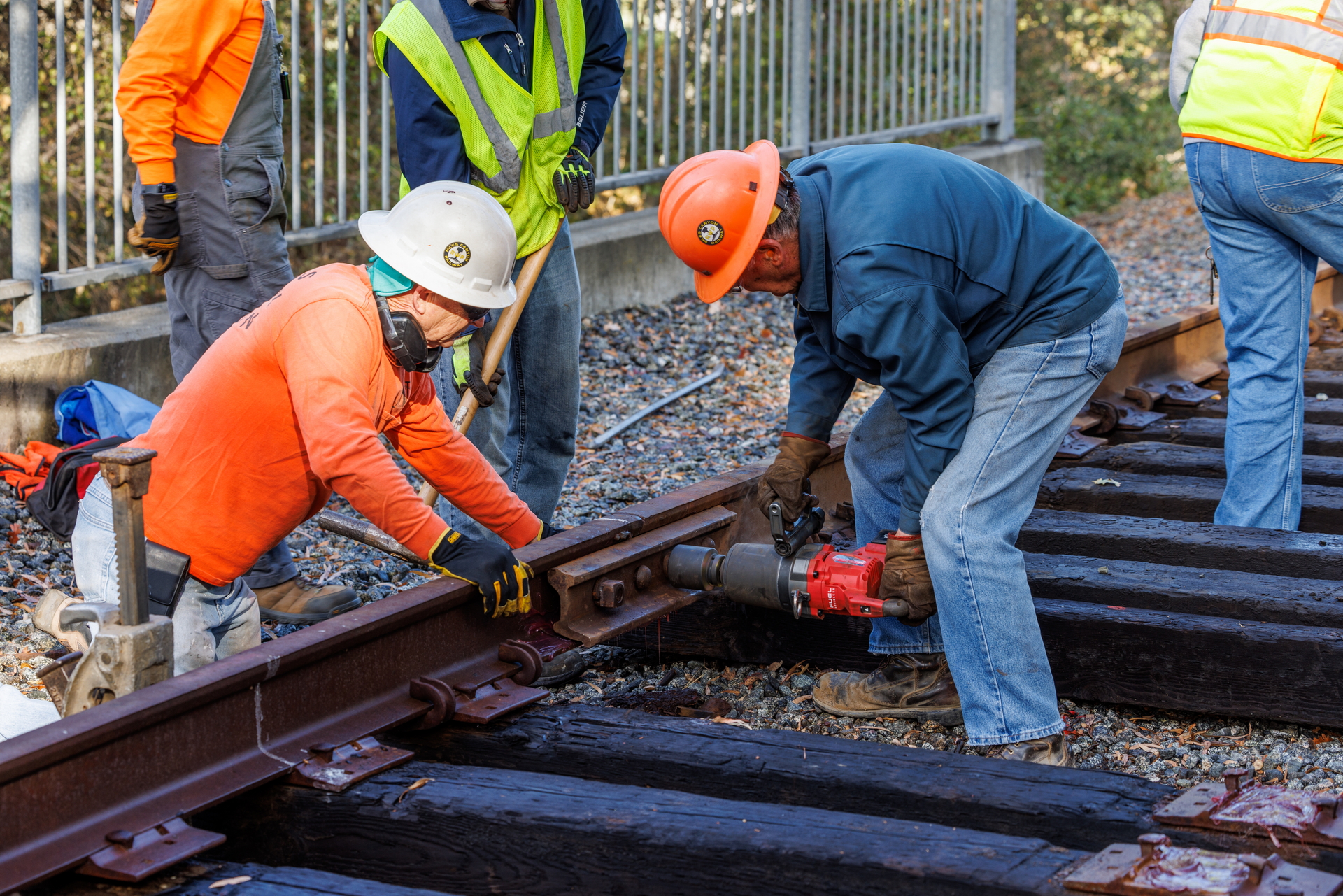
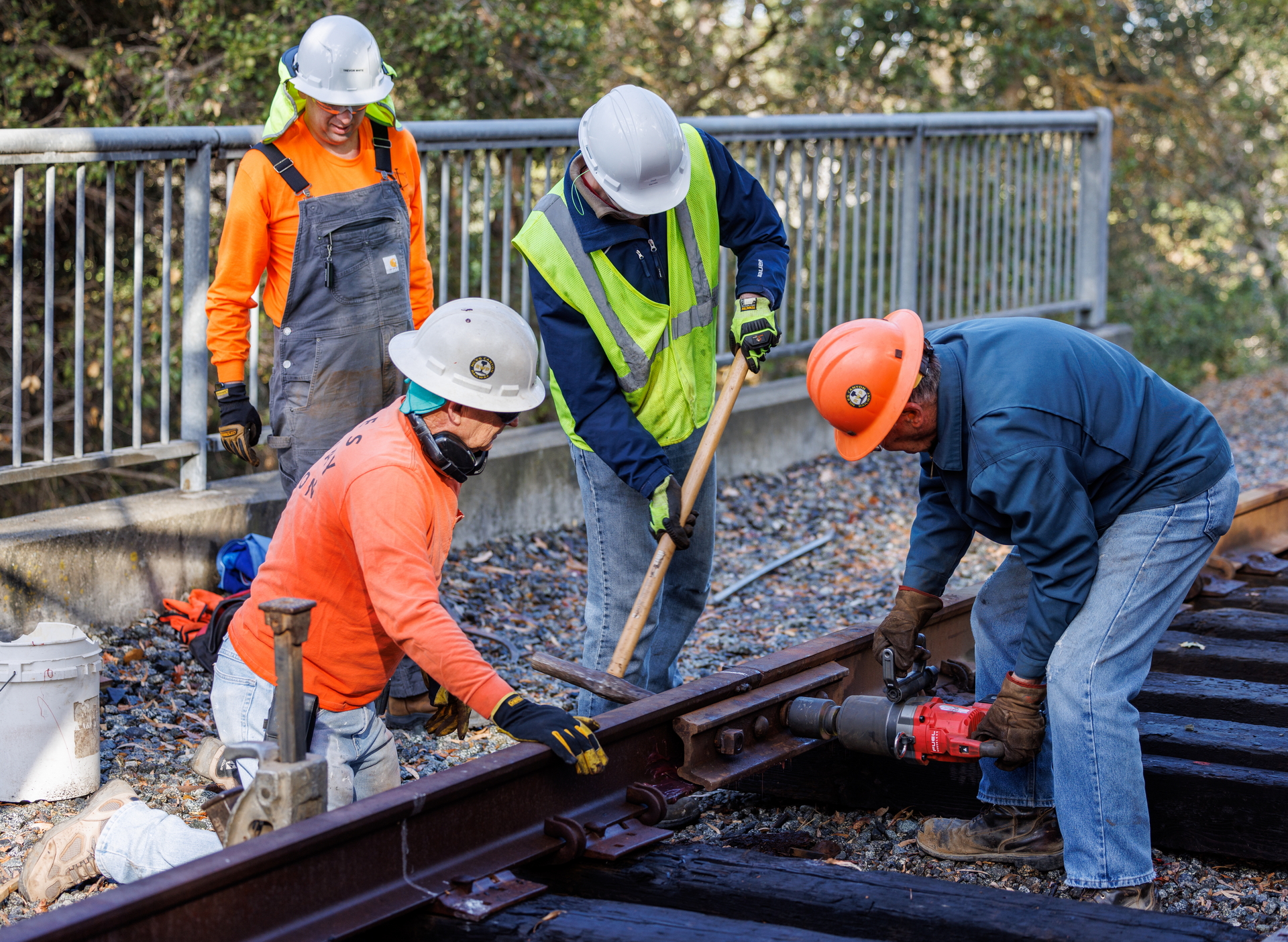
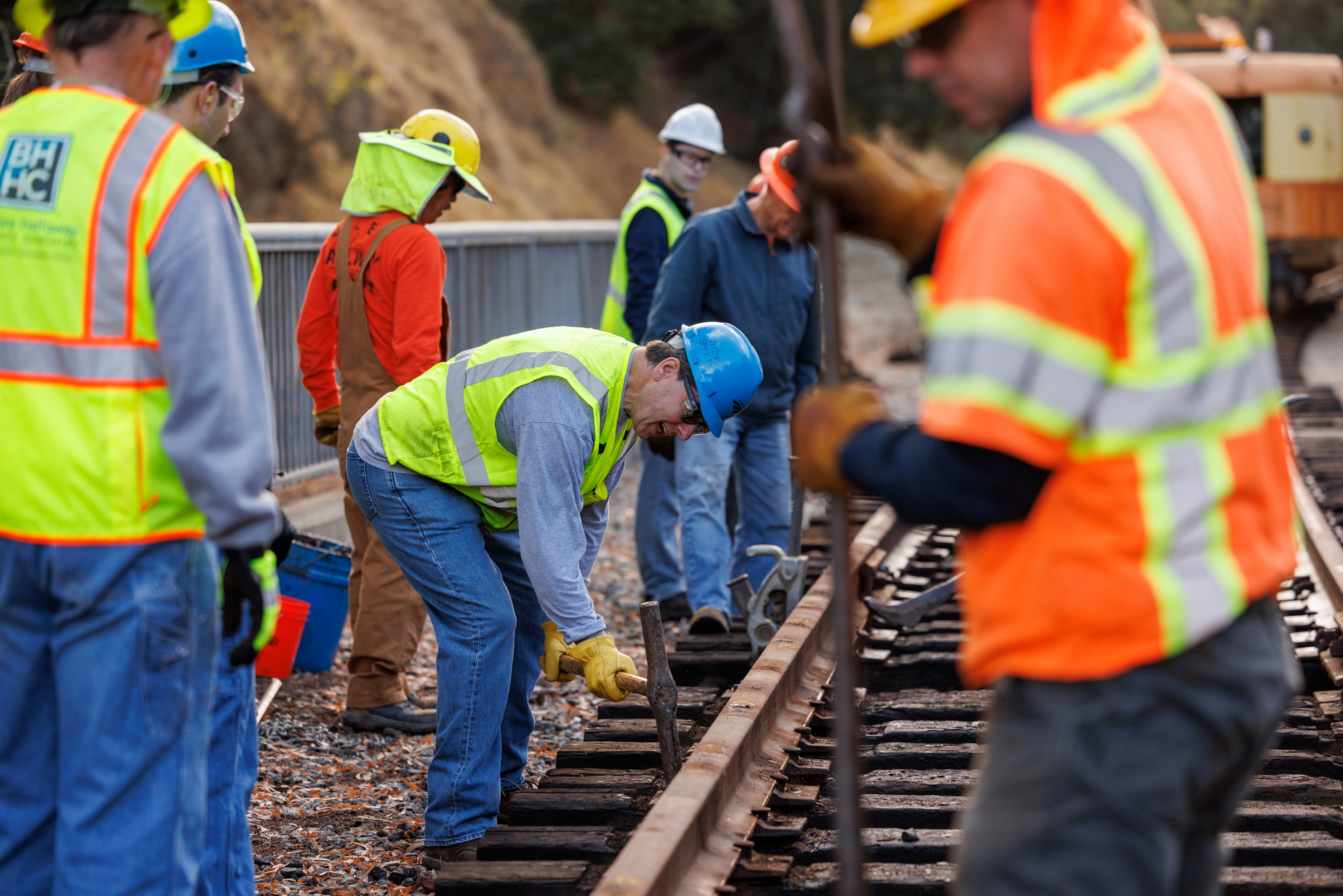
Here is an album of some of the work performed on 11/2 taken all before lunch. This will be the last of the panel laying as we have now consumed all of our pre-made panels there we acquired several years back. From about four panels past the bridge, we will return to more traditional stick rail building of settting ties then the tie plates followed by stick rail with one rail spiked and then used to gauge the other rail.
If you are interested in helping us in this work, the team works the first Saturday of the month weather permitting. We typically have a Facebook event listing, but you can always Contact Us to get more information. You can also learn more about volunteering here.
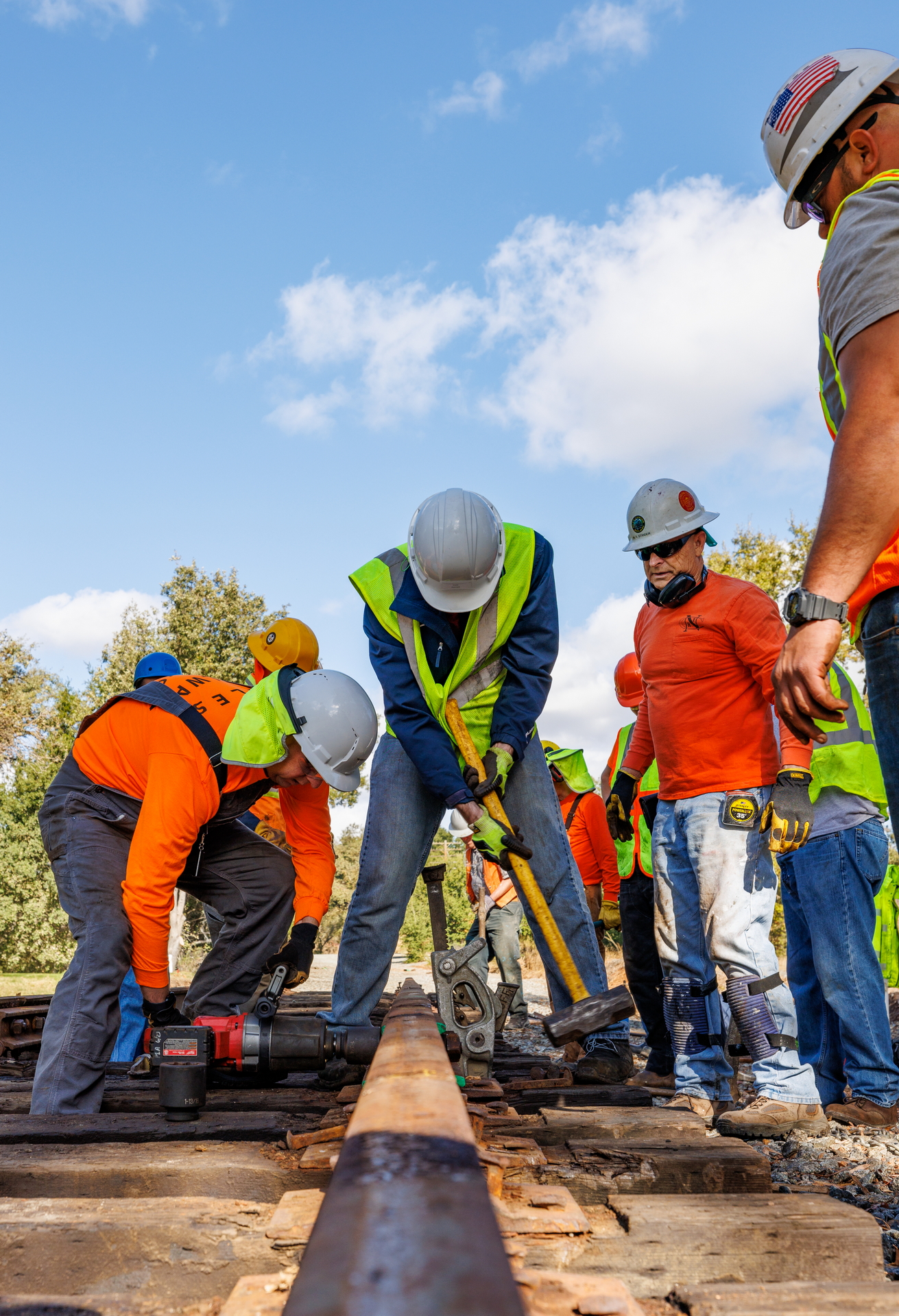
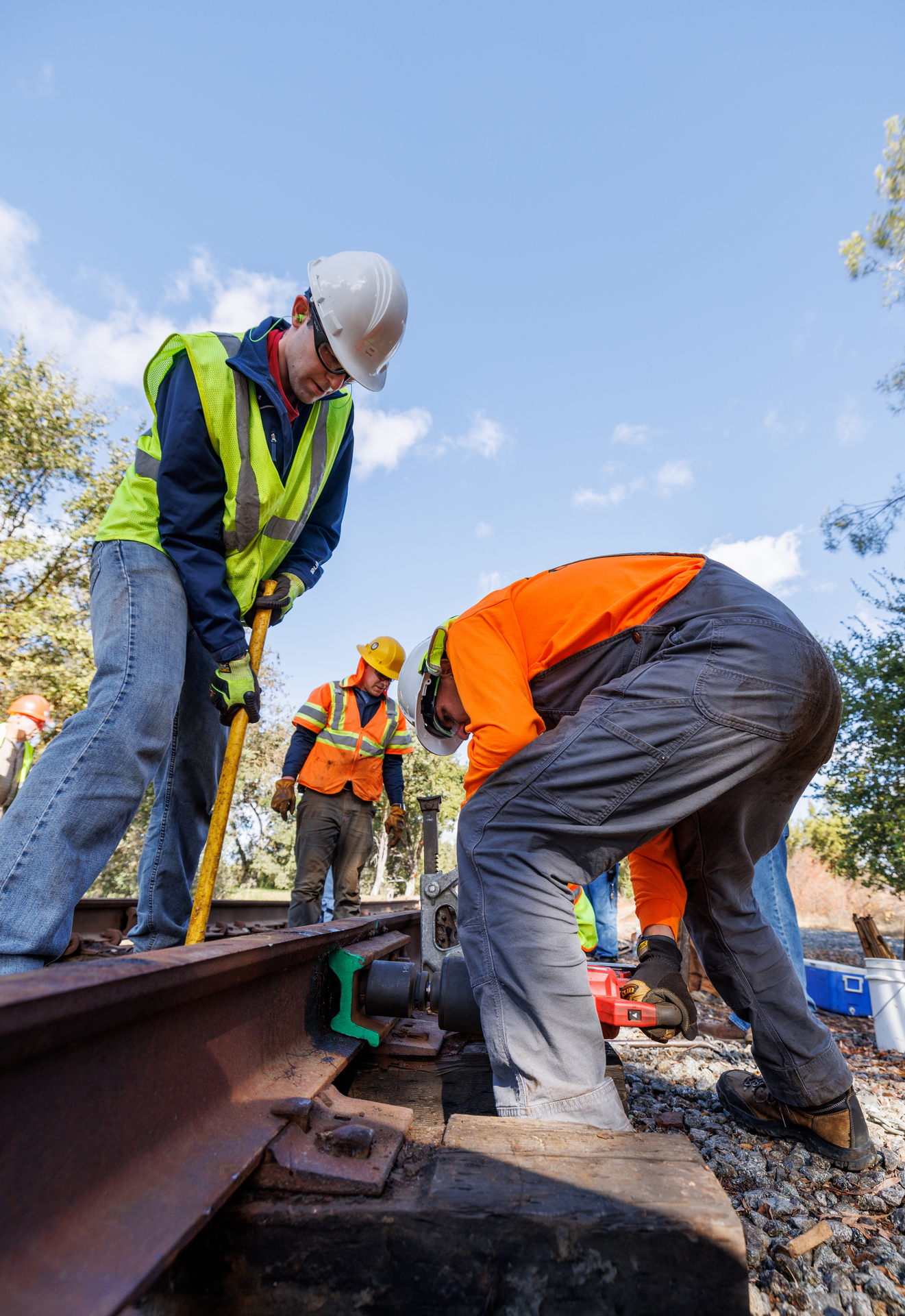
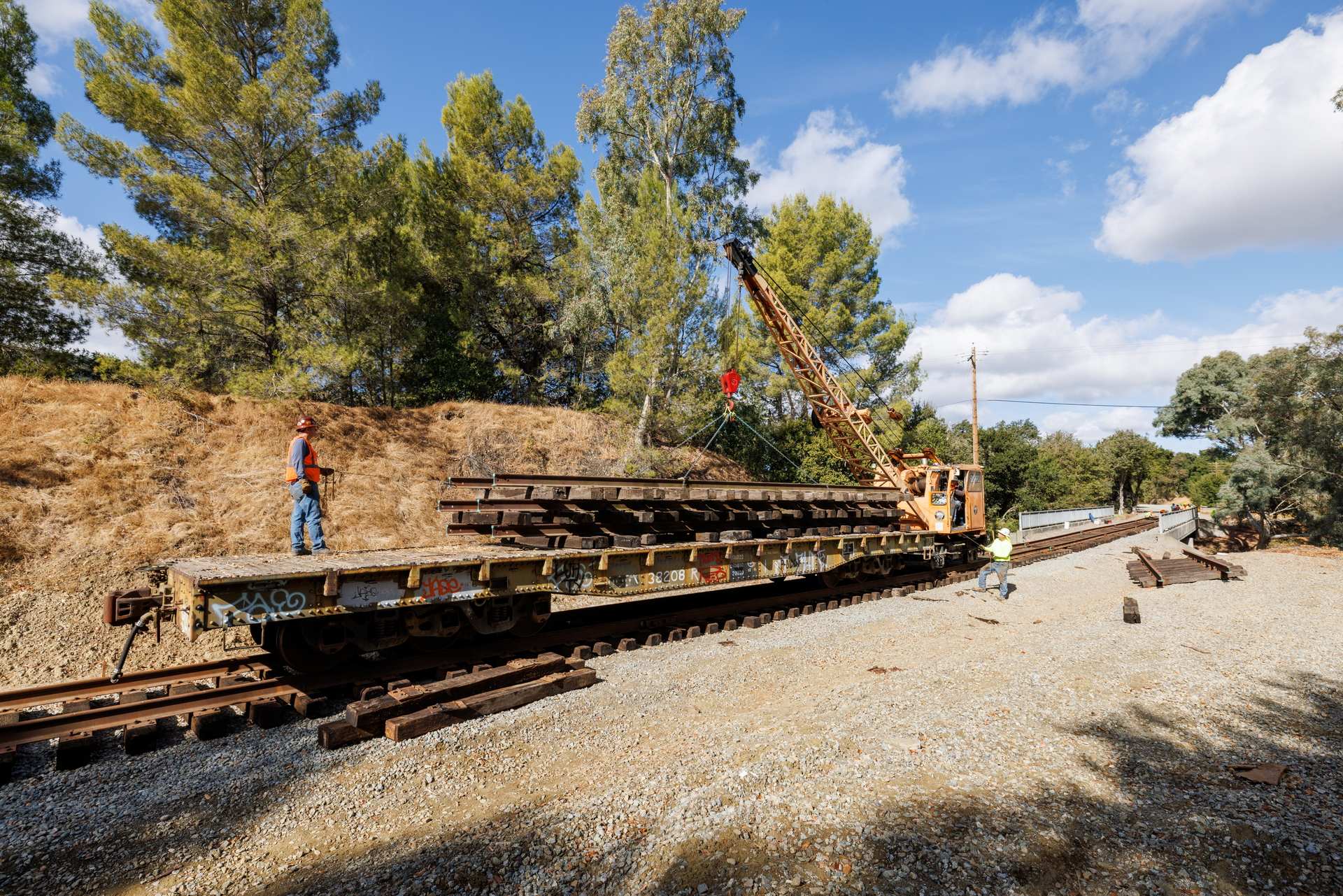
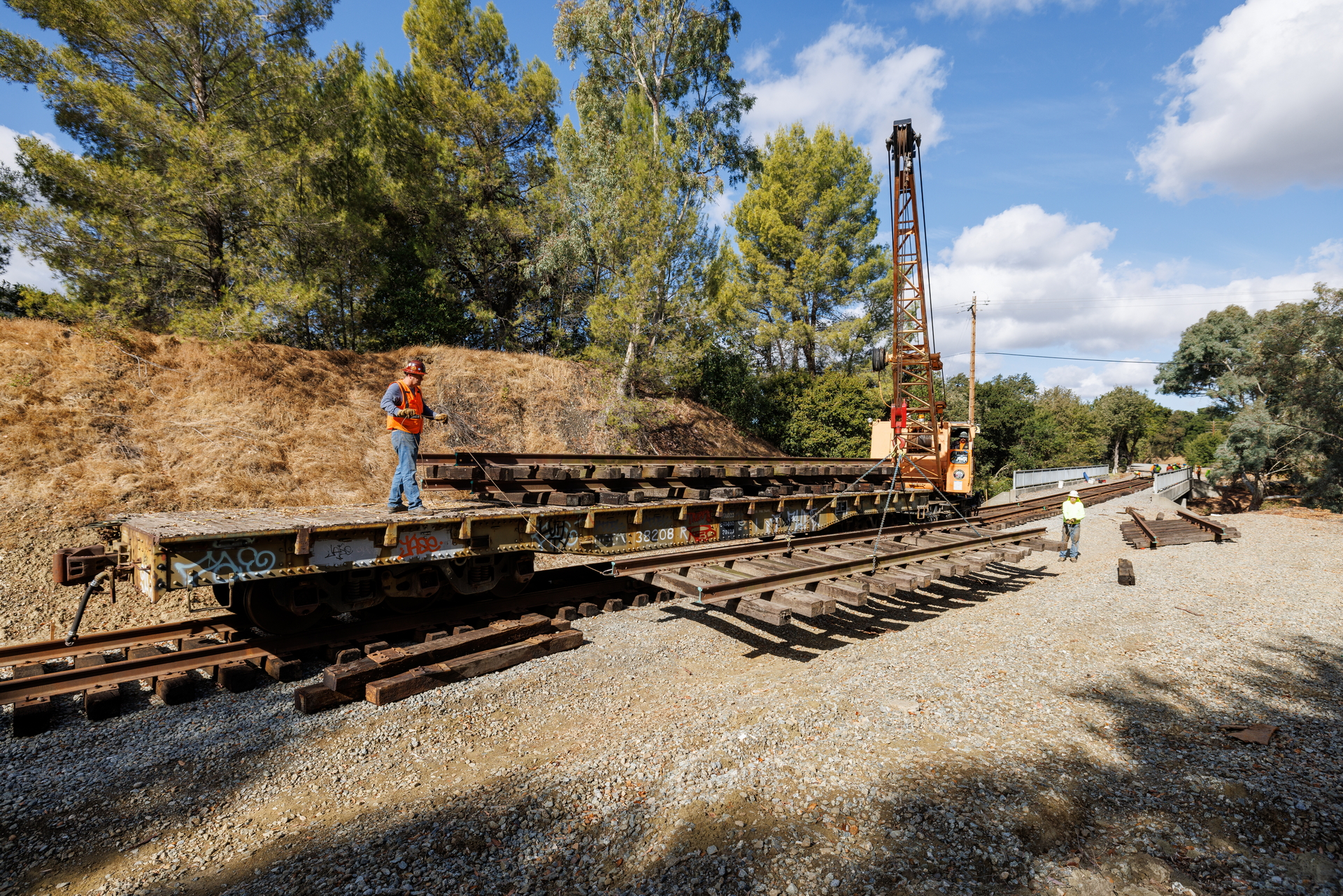
The museum’s Burro crane with attached flat car has delivered the second panel of the day which brought the track to the end of the bridge. Photo by: Christopher Hauf – Used with permissionThe bolts in the joint bar are tightened with an impact wrench. Cordless tools have really made this process MUCH easier. Photo by: Christopher Hauf – Used with permissionThe addition of a little persuasion with a hammer to set the joint bar into the rail. Photo by: Christopher Hauf – Used with permissionTo make sure the joints are staggered, the west rail is loosened from the ties to allow to to be slid to make the joint with the previously installed panel. Photo by: Christopher Hauf – Used with permissionSetting a spike… Photo by: Christopher Hauf – Used with permissionThe Burro heads over Castlewood Bridge as seen from Pleasanton-Sunol Road. Photo by: Christopher Hauf – Used with permissionInstalling more joint bars. Photo by: Christopher Hauf – Used with permissionTrack is now off of the bridge while the Burro heads off to get the last three available panels. Photo by: Christopher Hauf – Used with permissionTrack over Castlewood Bridge looking east. Photo by: Christopher Hauf – Used with permissionLooking further east from the end of track now on the east side of Castlewood Bridge. Photo by: Christopher Hauf – Used with permissionMaking up another joint. Photo by: Christopher Hauf – Used with permissionLooking west with rail complete across the bridge. Photo by: Christopher Hauf – Used with permissionTightening another joint. Photo by: Christopher Hauf – Used with permissionThere are four bolts in each joint; two going in from either side and alternating down the joint bar. Photo by: Christopher Hauf – Used with permissionUnloading the first of the last three track panels. Photo by: Christopher Hauf – Used with permissionUnloading the first of the last three track panels. Photo by: Christopher Hauf – Used with permissionPicklng the panel back up to start the move across the bridge for placement.. Photo by: Christopher Hauf – Used with permissionOn to the bridge to place the panel at the end of track. Photo by: Christopher Hauf – Used with permissionOn to the bridge to place the panel at the end of track. Photo by: Christopher Hauf – Used with permissionOn to the bridge to place the panel at the end of track. Photo by: Christopher Hauf – Used with permissionOne parting look with the Burro now on the EAST side of Castewood Bridge on 11/2/2024. Photo by: Christopher Hauf – Used with permission